 INTERSTICE Architects
Project Tag: Landscape
Middle Lake Rehabilitation, Golden Gate Park
Photos: all images Andrea Gaffney, unless noted
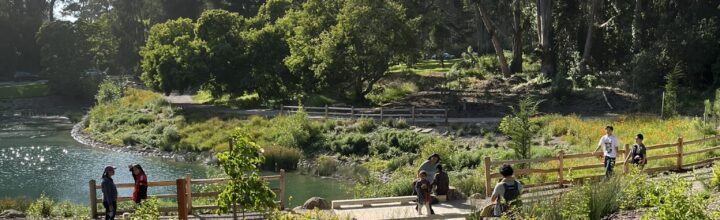
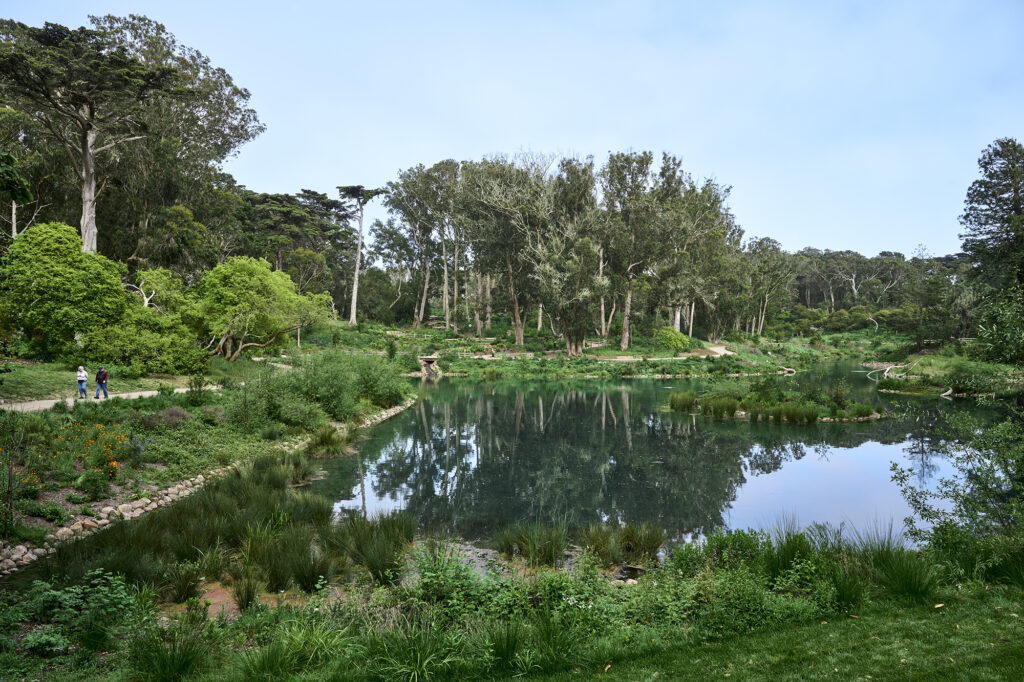
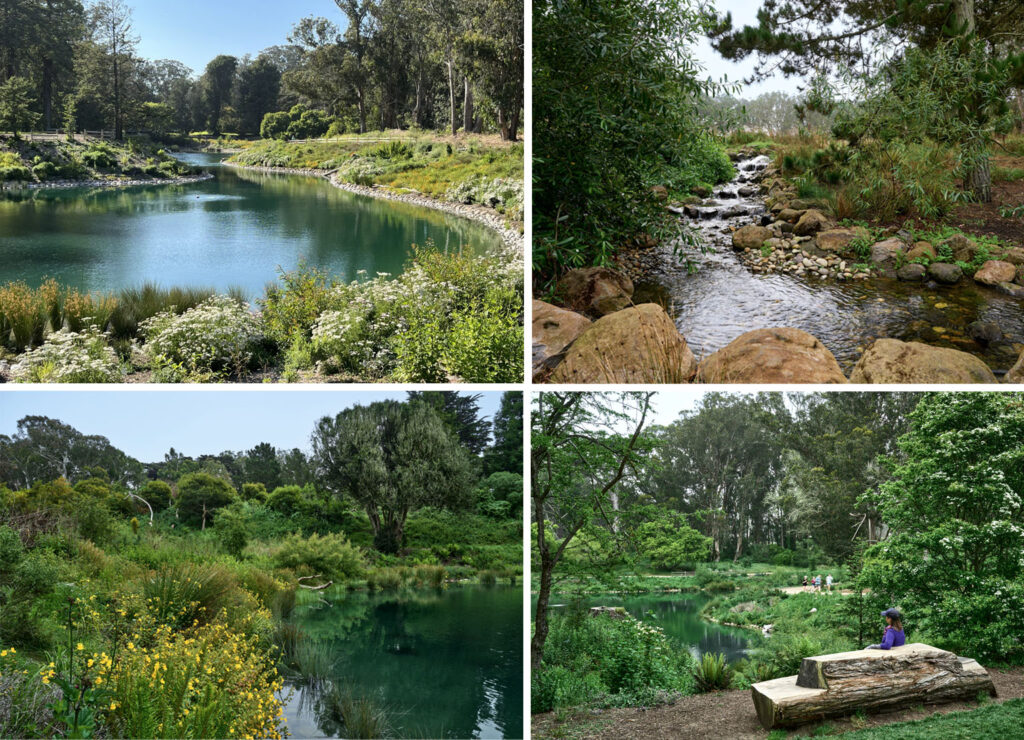
In 2022, INTERSTICE was engaged in an ambitious project to restore Middle Lake in Golden Gate Park, transforming it from a dried-up basin into a vibrant habitat teeming with life. Middle Lake, the missing link in the “Chain of Lakes” series of three interconnected lakes in the west end of San Francisco’s Golden Gate Park, has faced significant ecological decline over the past 150 years since the park was conceived, due to leaks in its clay liner, reduced water depth, algae buildup, and the encroachment of invasive species. Mere improvements were insufficient to save the lake; it required a comprehensive restoration.
Teamwork Creates A Healthy Community and Habitat
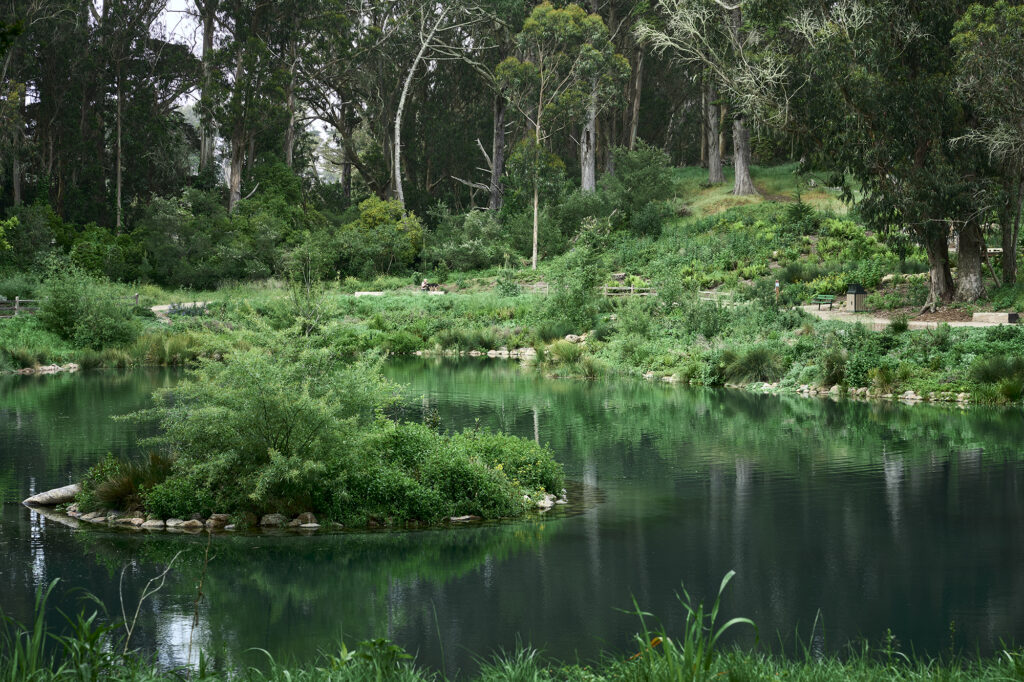
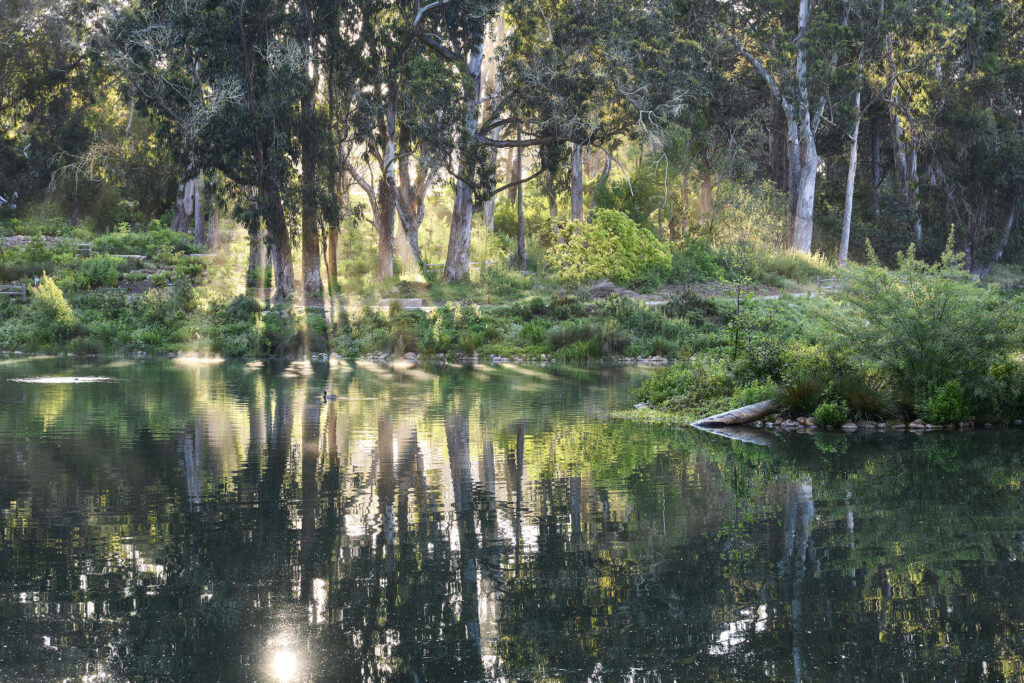
With INTERSTICE in the role of landscape architect on the Construction Team working with San Francisco Recreation and Parks, San Francisco Department of Public Works, Woodard & Curran Civil Engineers, AGS Engineering, Bauman Construction and Catmex Landscaping, over the past nearly two years – Middle Lake has been transformed into a stunning 85,000-square-foot body of sparkling luminous water surrounded by over 10,000 plants including native shrubs, grasses, aquatic plants, wildflowers, native oaks, confers, and dogwood trees. The community input and design effort led by SF Recreation and Parks and developed by Woodard & Curran with the Office of Cheryl Barton engaged numerous stakeholder inputs, including the adjacent residential community, park operations, and multiple city departments related to the environment and its stewardship. The lake is now a lively ecosystem buzzing with insects, bees, and birds and is already home to a goose family that moved in during late construction, gracing the area with six goslings this spring. Raptors tour the skies over the new lake, alongside perching songbirds and numerous shorebirds.
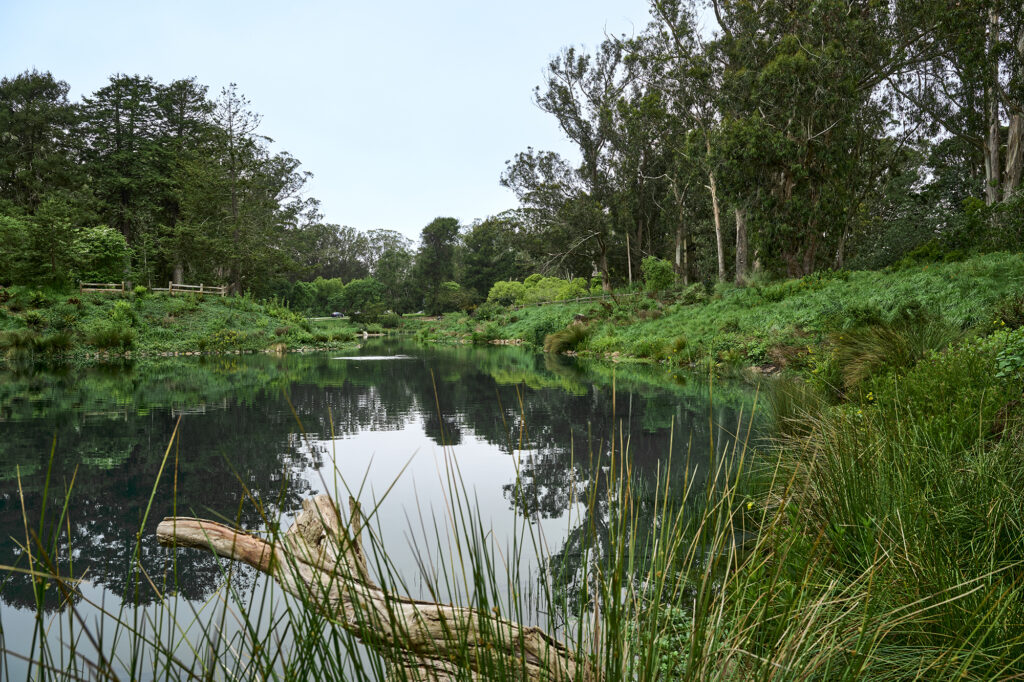
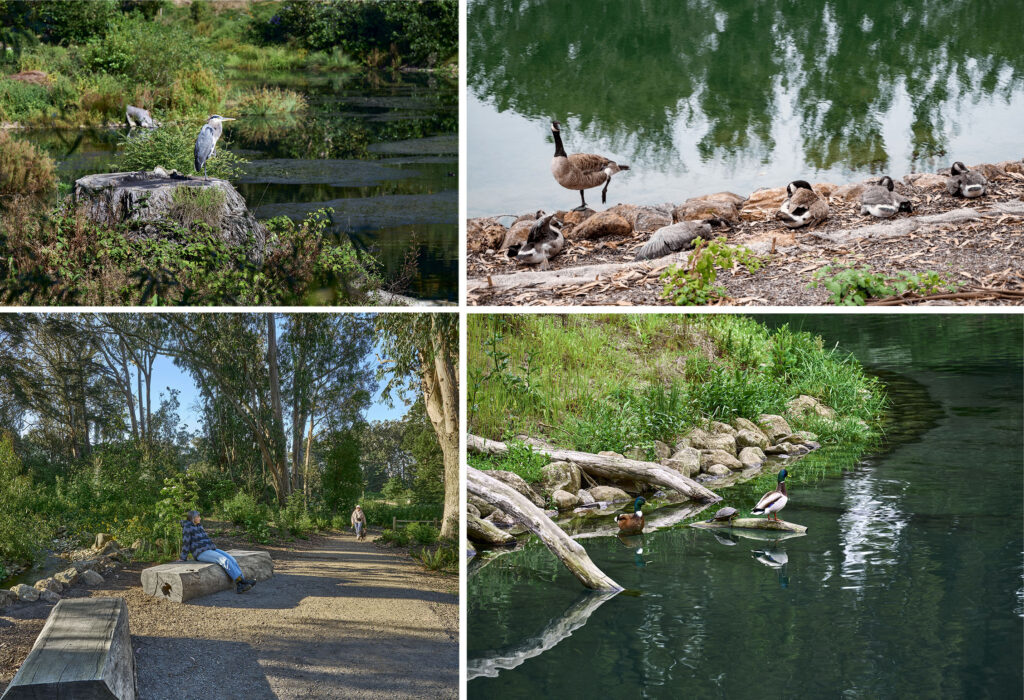
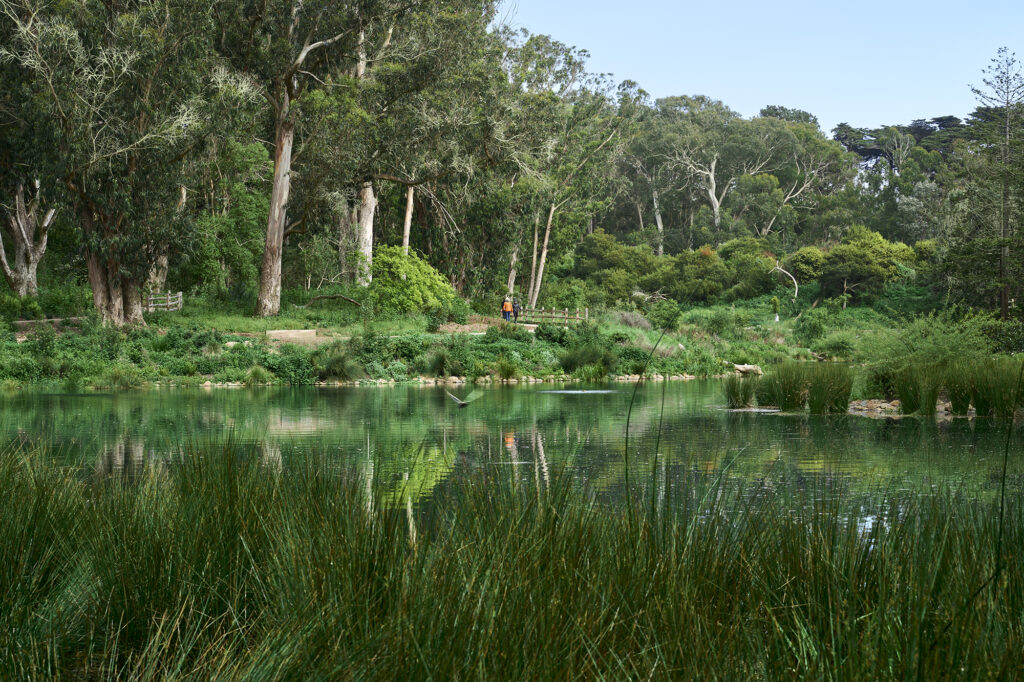
Even prior to its official reopening, the lake had drawn many eager park users, who sneaked through small openings in the fencing to take a look and enjoy walks on its trail that wraps around its half-mile edge. Construction was delayed to accommodate a hawk family that had nested during the construction start-up. Now there is a thriving raptor community soaring above this new and growing riparian ecosystem.
A System Designed to Create a Healthy Aquatic Ecosystem
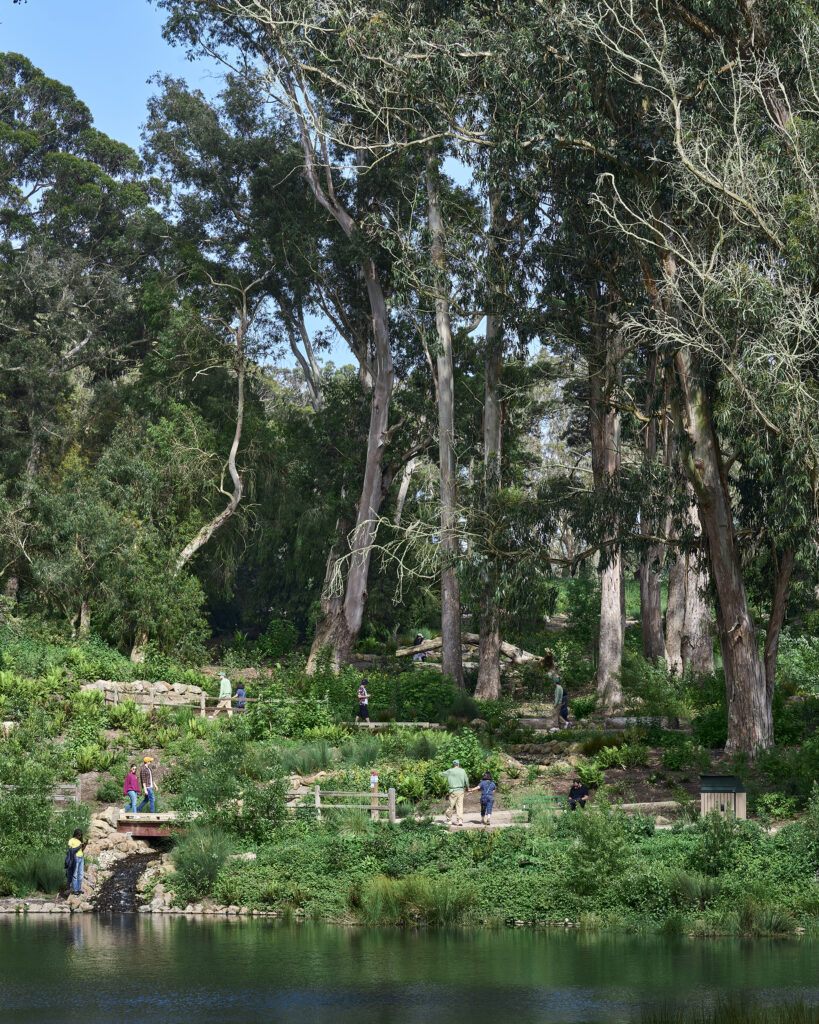
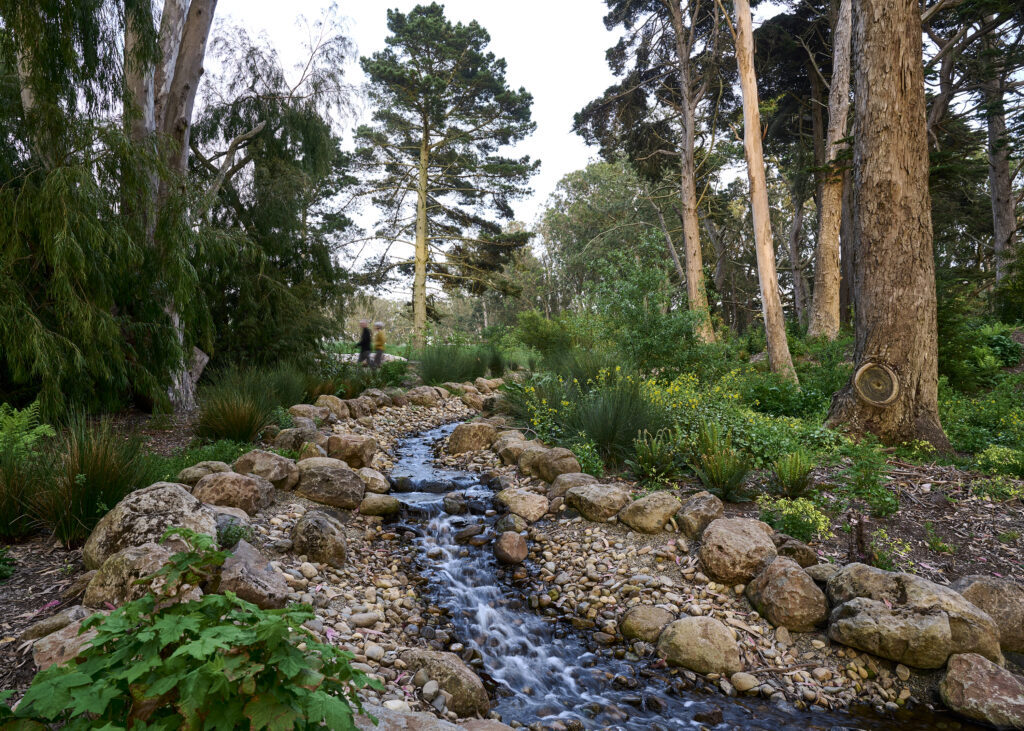
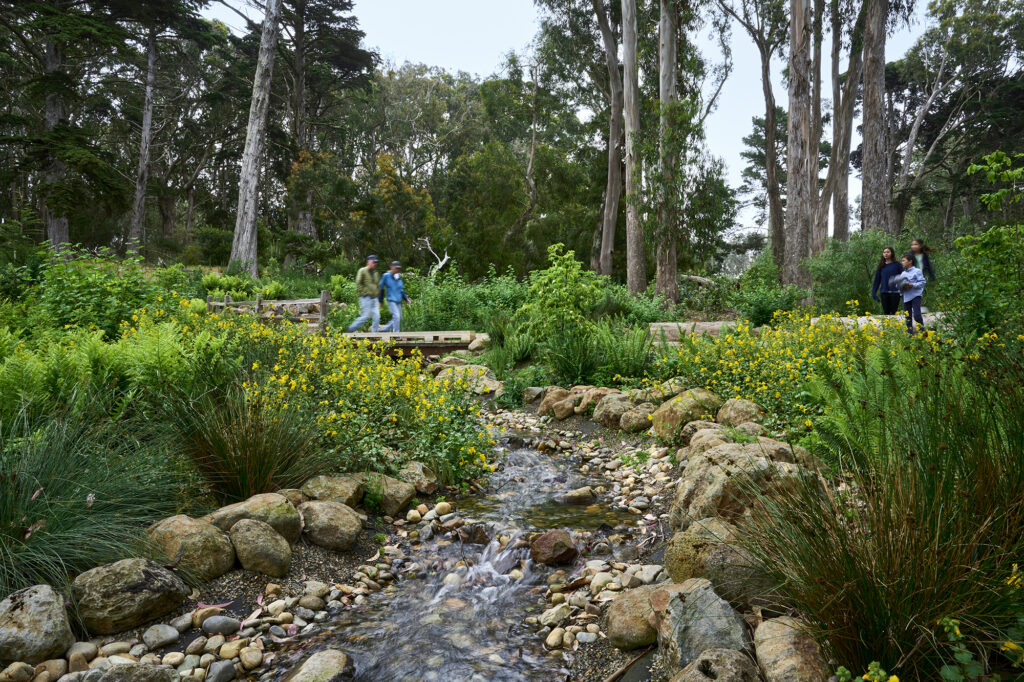
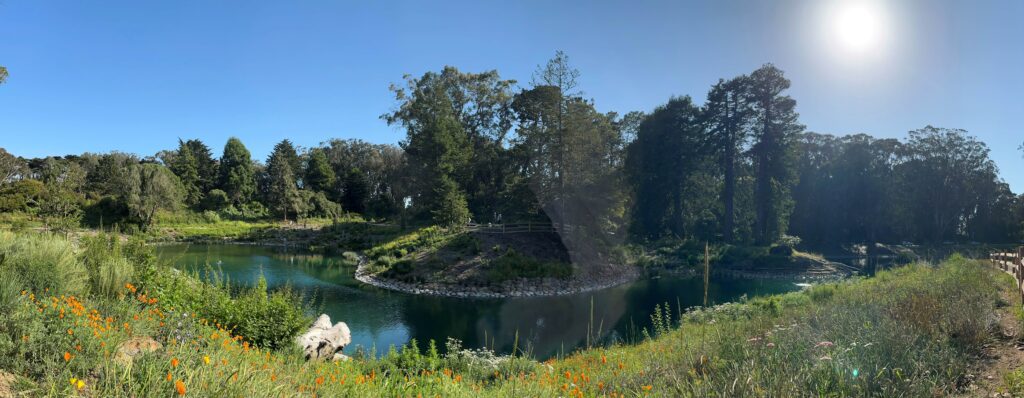
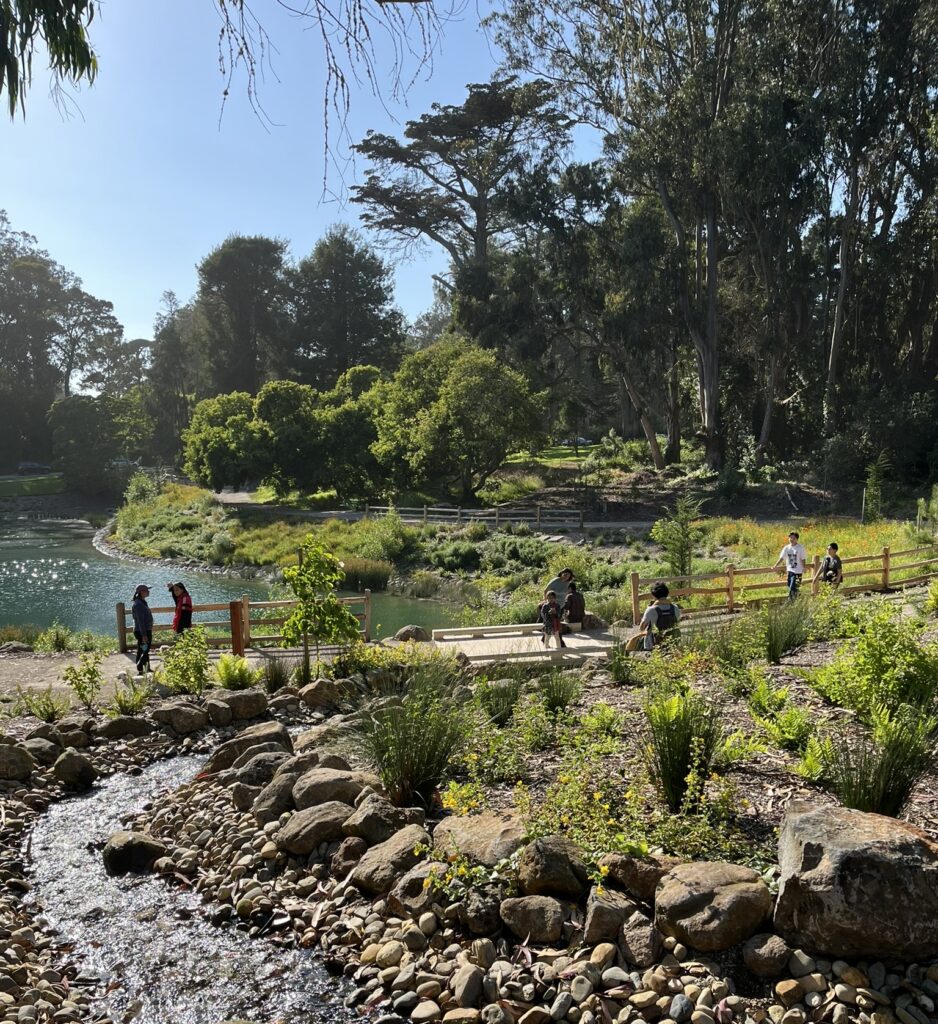
The restoration process involved an initial assessment of the lake, followed by the removal of 25,000 cubic yards of silt to create and contour a seven-foot-deep basin with two historic islands, and the installation of a new nearly 2-foot-deep clay liner meant to maintain the water level long term. To ensure a healthy water level and good water quality, the design added a cascading stone streambed (the Cascade) that flows adjacent to an intentionally meandering and accessible path, crossed by footbridges, that provides water to the lake below from the park’s Fly-Casting Pools situated to the east of the Lake. Aerators at the lake’s bottom recirculate water and oxygenate the lake’s hydronic column. Overflow from South Lake flows into Middle Lake’s newly designed, stone-lined inlet and circulates out again at the new outlet spillway, into North Lake, connecting the Chain of Lakes with a constant flow of fresh water.
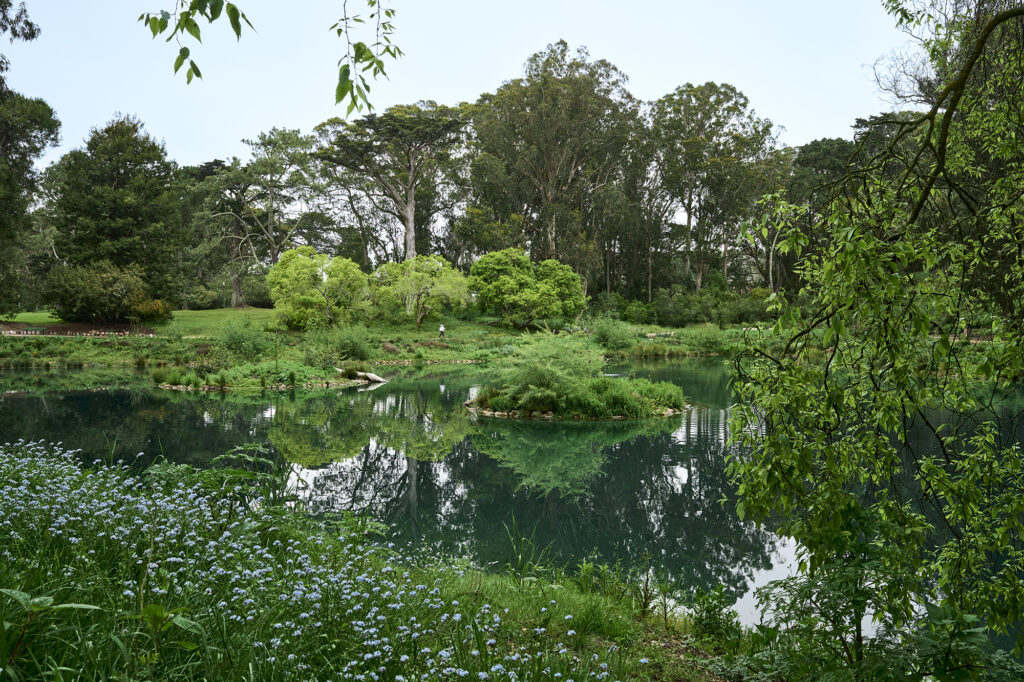
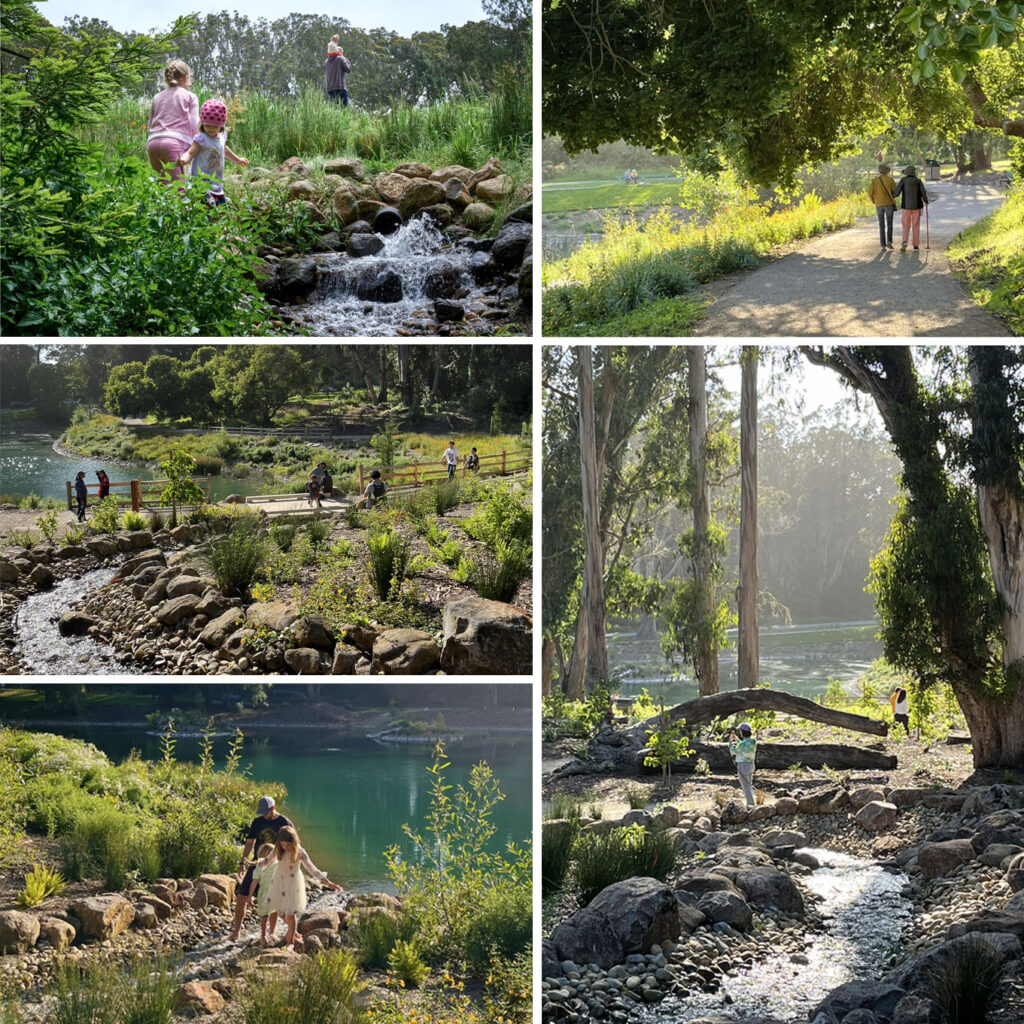
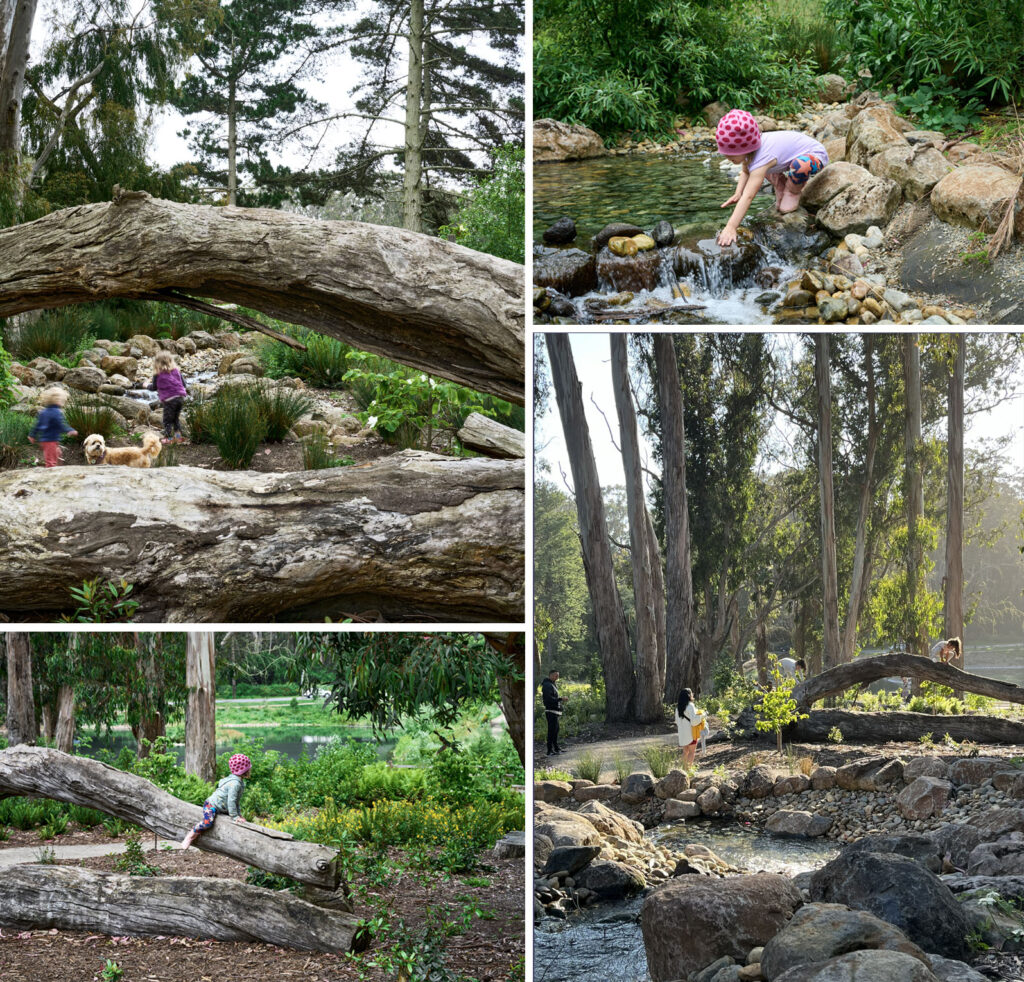
The Cascade stream, along with the south-to-north cross flow, not only significantly reduces algae growth by keeping the water’s surface in motion, creating a healthier aquatic environment, but it also creates the delightful experience for park visitors of the sound of a burbling creek, flowing over natural stone water weirs and check-dams, swirling between deeper pools on its sinuous journey down the eucalyptus-forested slope – a visually and aurally exhilarating and memorable experience.
Native Plants Increasing the Biodiversity of Both Flora and Fauna
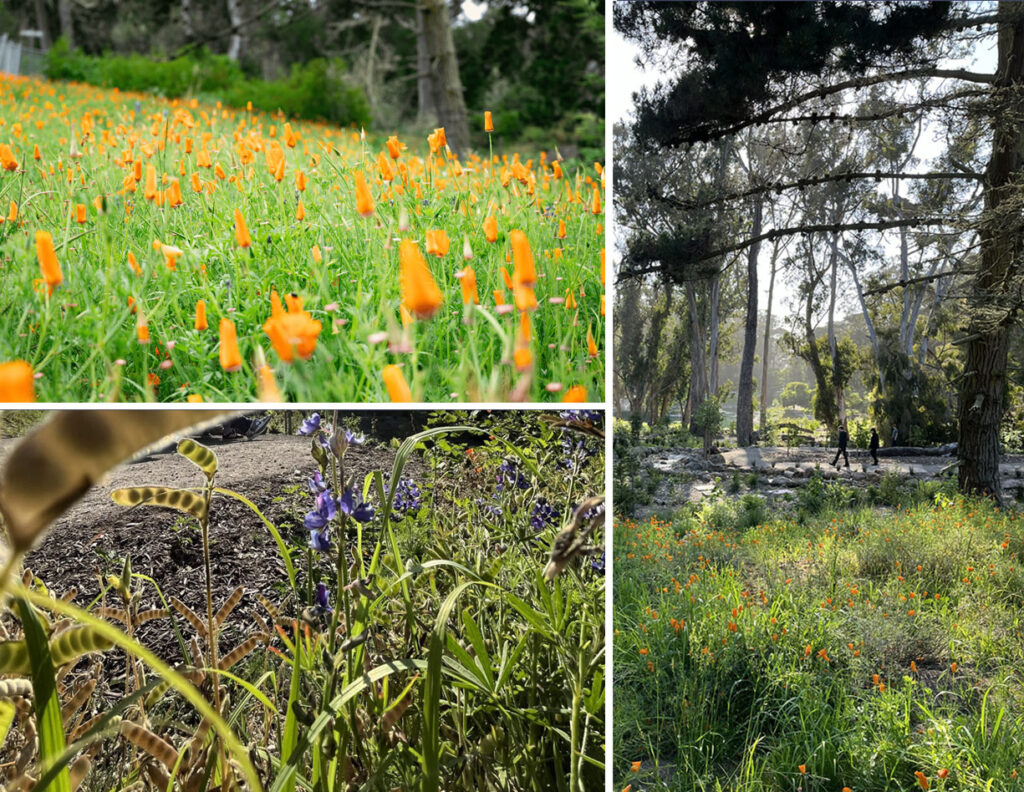
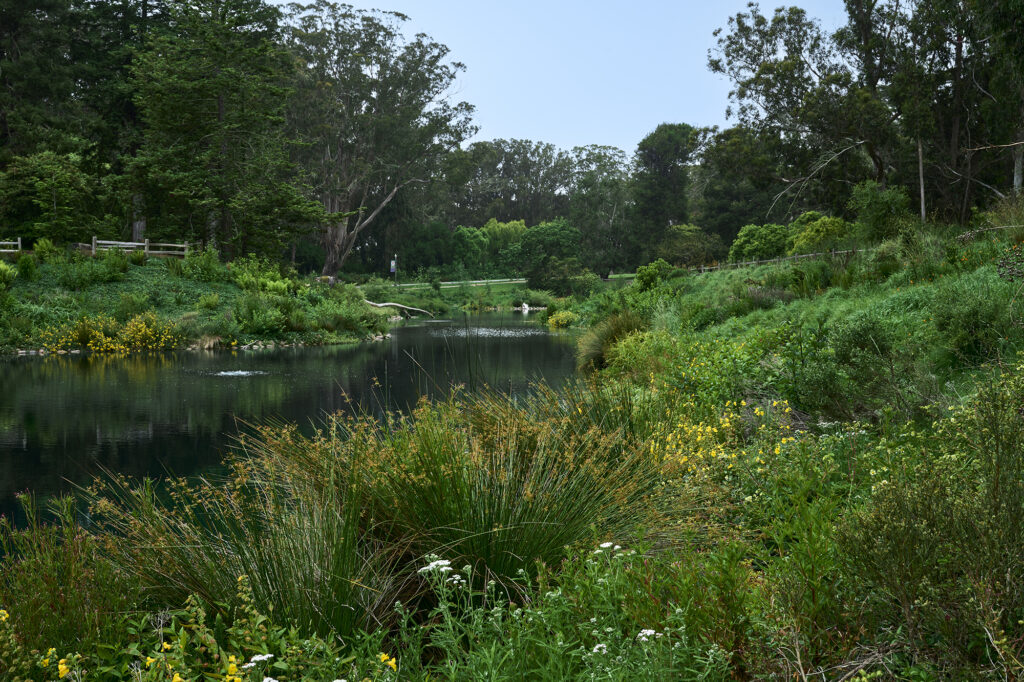
The planting of native upland species such as California sage, beach strawberry, Coyote Brush, wild rose, California poppy, and lupine attract butterflies and hummingbirds, help stabilize the soil, and provide protected habitats for many of the park’s wildlife. Other important plants that are creating and conserving habitat include newly planted coast live oak trees, coast redwoods, Monterey cypress, alders, and woodland flowering dogwoods, whose canopies will expand to further frame views and provide shade and intimacy along the lakeside paths that circumnavigate the new water body. Numerous native grasses, perennials, ferns, and shrubs fill in the extensive palette of understory flora carefully selected to enhance the biological interdependence of the park’s thriving ecology. The lake’s restoration is expected to attract about 350 different animal species to its shores, including ducks, frogs, salamanders, turtles, dragonflies, and a multitude of bird species.
Aquatic Specific Design
The design of the lake-reinforced shore and small island prioritizes a sequence of shallow “literal zones” where sunlight and oxygen are easily accessible to aqueous plants and small creatures that find shelter from predation in these teaming shallows at seven locations along the lake’s edge where additionally large fallen tree trunks are strategically positioned to enhance this productive protected edge. Here the base of the food chain is born and develops, allowing the lake ecology to flourish. The largest aquatic shelves are situated at the lake’s outlet and inlet where these 4 to16 inch-deep shallows are built up to create the lake’s natural filters and most generative biological zones.
Another ecological and environmental benefit of the lake, besides enhancing biodiversity, improving water quality, and increasing habitat, is that it acts as a significant source of carbon sequestration. The lake bed captures and stores carbon from organic matter that settles there. The newly planted vegetation also aids in capturing carbon and helps mitigate the impacts of global warming. Moreover, the lake helps regulate local temperatures, supports groundwater recharge, and contributes to the overall health of Golden Gate Park’s natural environment.
A Place for Plants, Animals and People
As of July 2024, Middle Lake is now open, offering the community a serene place to relax by the water amidst bright, colorful flowers, with ample opportunities for walking, bird-watching, contemplation, and picnicking. The main entrance to the lake is from Chain of Lakes Drive East, which features a small parking lot and connects to the lake’s curvilinear pathway loop. The lake can also be accessed from the fly-casting pools located above the lake by way of a winding path, lined by flowering dogwoods beside the creek, leading down across two wooden footbridges towards the lake edge path loop.
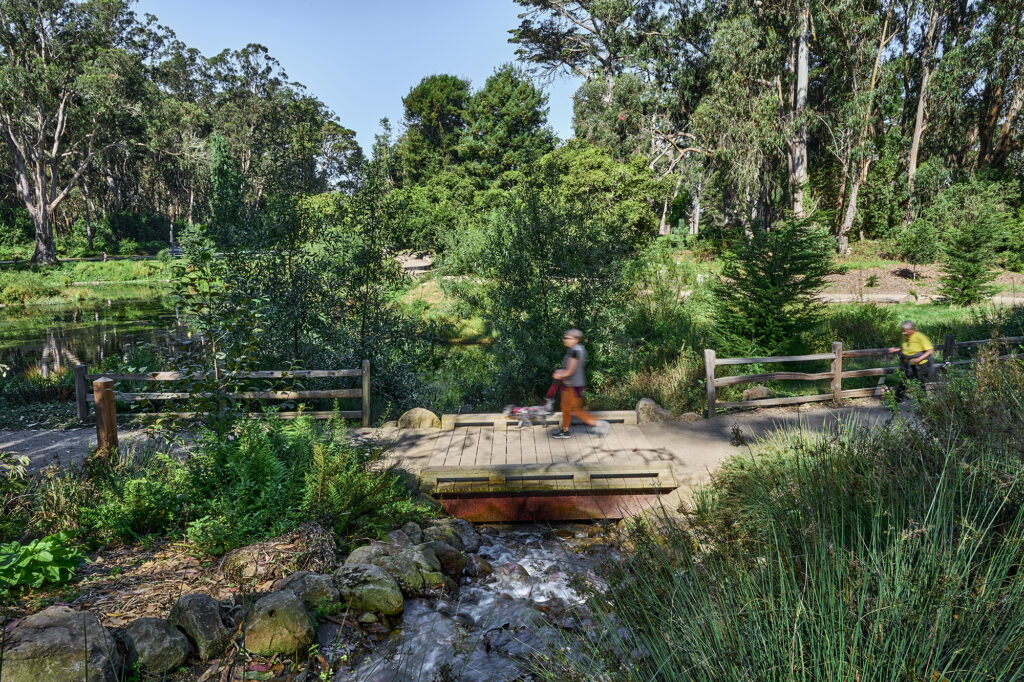
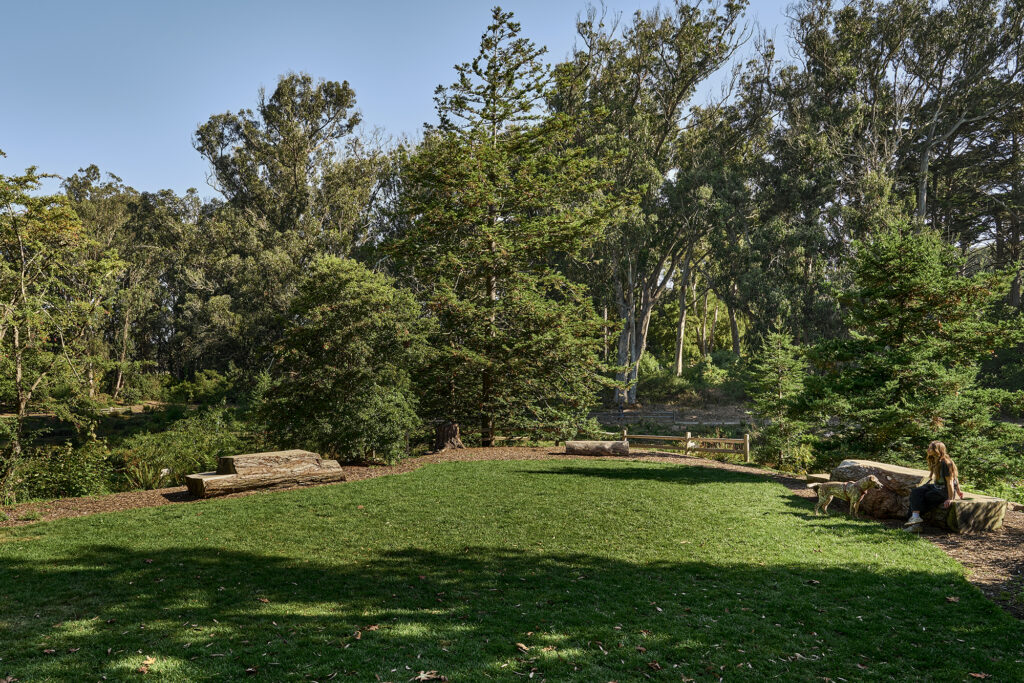
Visitors to Middle Lake will also discover numerous places to enjoy vistas of the lake and contemplate this new environment – the Wedding Lawn on the south that overlooks the lake and is found within a grove of Redwoods, both existing and new and surrounded by benches fabricated from a repurposed and harvested redwood from the site; around the perimeter are park benches to enjoy lake vistas, and large sit-able logs made of harvested eucalyptus trees that were removed due to hazardous conditions and recontouring for the routing of newly proposed pathways; more log seats and sculptural logs along the Cascade path as places to pause, hear and see the adjacent cascade waterway, and spots to allow youth to engage with the natural environment through a series of informal goat paths.
Gratitude for our Team and a Mission Fulfilled
Participating in the conservation of this lake has been an honor and a testament to teamwork. Through restoring Middle Lake’s natural beauty and ecological value, and enhancing its role in our local ecosystem, our team has had the opportunity to contribute to our City community and our region’s health, biodiversity, and resiliency. We are excited to share it with the community and invite everyone to experience its transformation firsthand. This restoration is a testament to the power of thoughtful design and community collaboration. The rejuvenation of this area in Golden Gate Park will have lasting benefits for both the environment and the community – hopefully for at least another 150 years to come. We invite everyone to visit and enjoy!
Location: Golden Gate Park, San Francisco.
Owner/Client: SF Recreation and Parks Department / SF Department of Public Works
Scope: Public Park
Status: Construction Complete
Photography: Andrea Gaffney and Oscar Roussel
Sutter Street Highrise
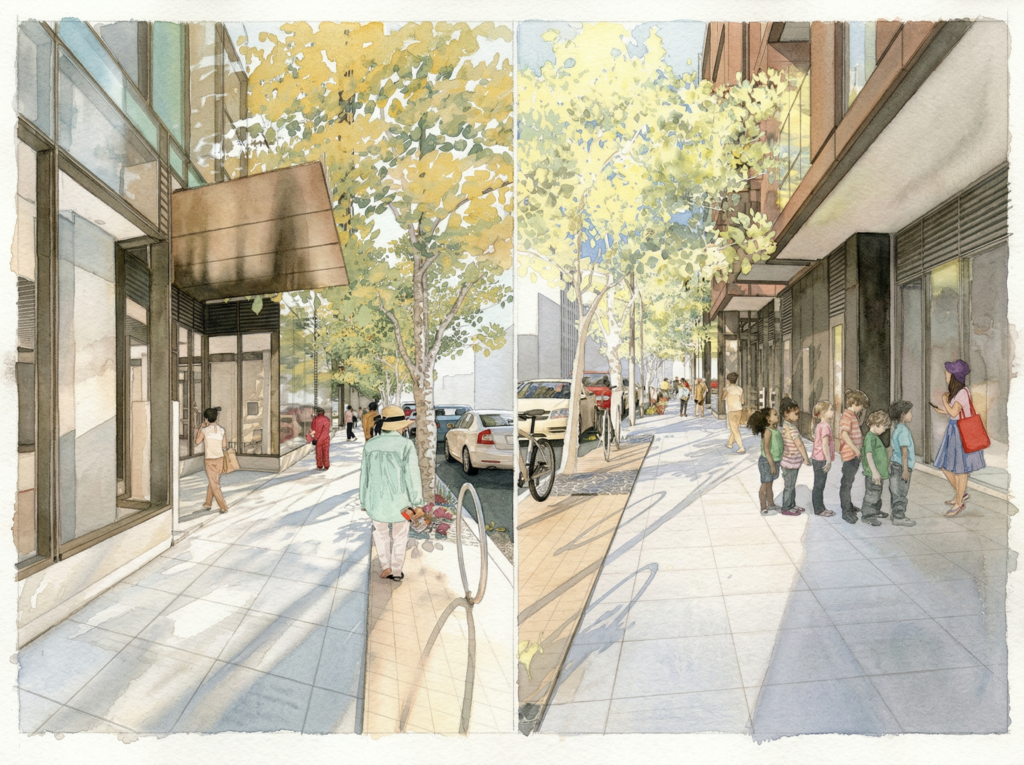 Sutter Streetscape
 A Place Apart
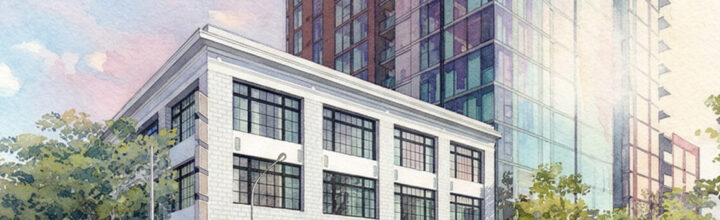
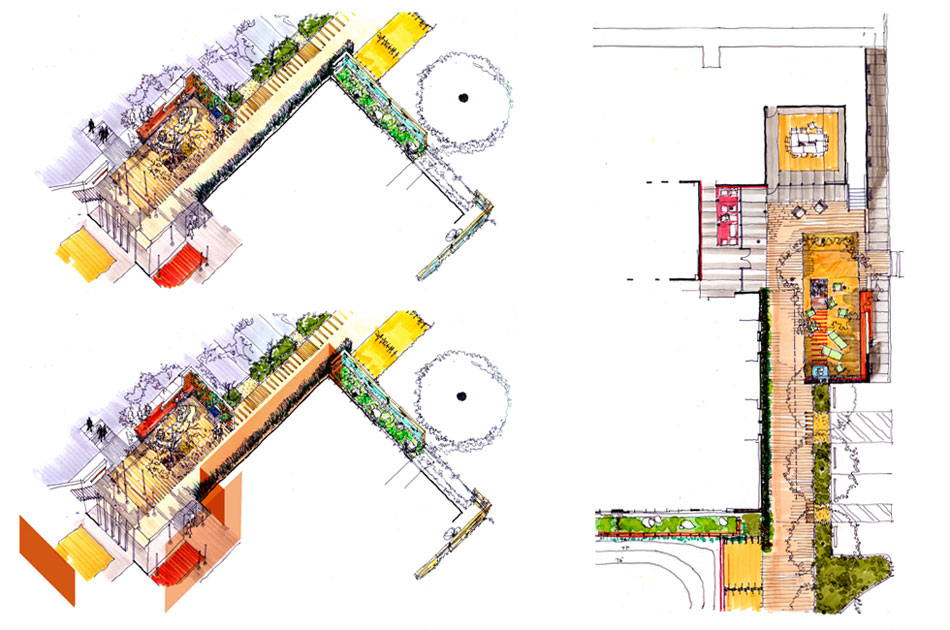
The first uniquely funded and integrated residential Highrise to be developed in the Polk Community Corridor in the Heart of San Francisco will be a place of retreat from the bustling commercial corridor where small courtyard’s, and multiple roof top amenity terraces will provide the green spaces and exterior community gathering spaces that are so rare in this urban central area just north of the cities Civic Center. INTERSTICE designed a series of elevated landscapes to serve as a dog park, a meditative health and fitness environment, a recreational roof deck, and an extensive outdoor dining and social center with breathtaking views for the new 406 unit community on multiple levels throughout the building.
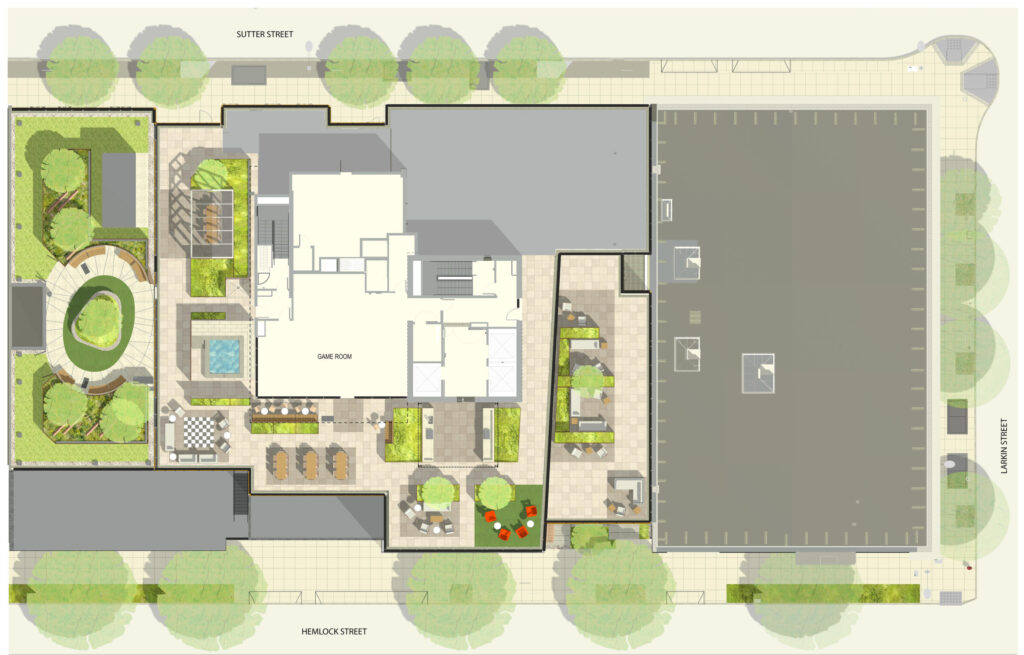 Plan all levels
 An Intimate Court
At the street scape level the new building has a new gym, a childcare center, bike storage entries and two lobby spaces that support its connection to the commercial activity of the surrounding streets and alleys. The Entry Courtyard serves the gym as a meditative yoga breakout “room” while providing a visual amenity to the two story work-out spaces inside.
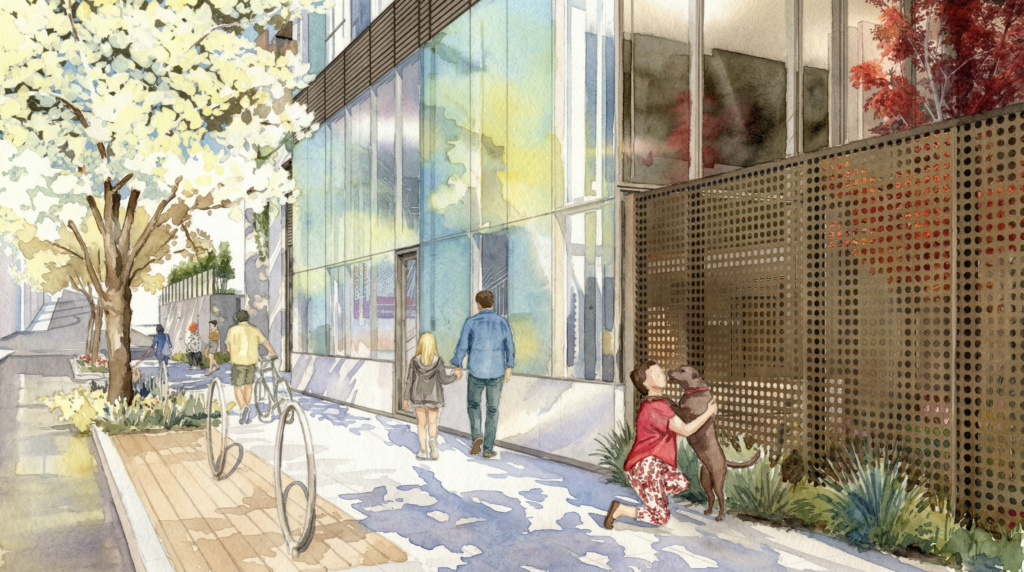 Hemlock Streetscape & Courtyard
 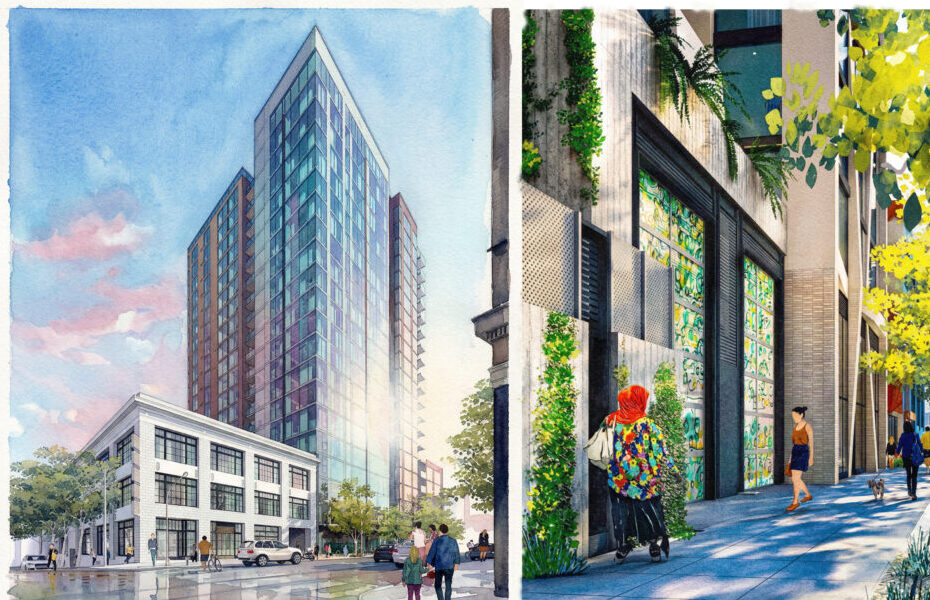 Larkin & Sutter View | Sutter Streetscape
 A Puppy Play-Deck
On the 7th floor the first building setback provides the site for an open lushly vegetated roof that surrounds a dedicated pet area for the community to sit and visit with their 4 legged companions. Here places to sit and work, or lounge and gather over play-dates are integrated beside an exterior dog wash station and generous seating and small trees to offer shade and buffer winds.
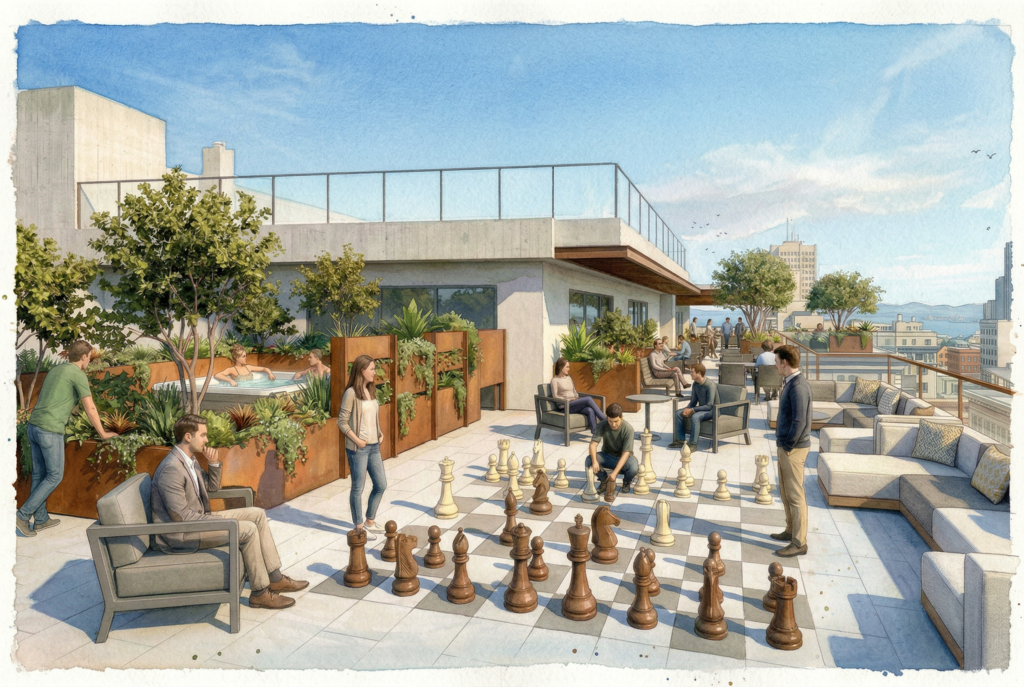 Amenity Terrace
 A High Perch
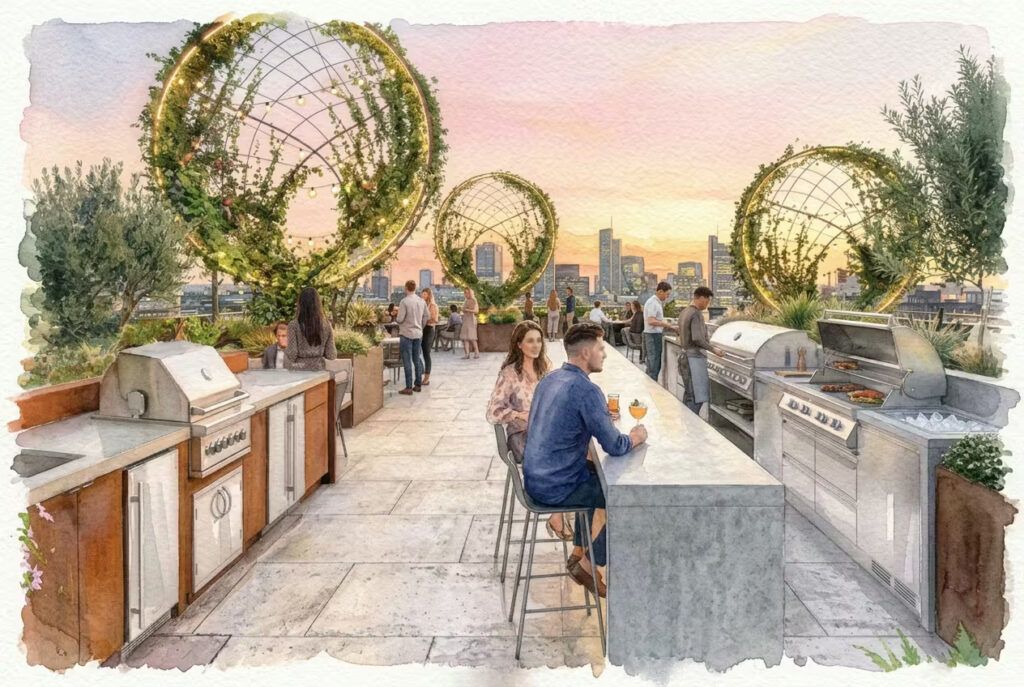
The top two floors have the most commanding views and here one social deck extends the community gathering space outside to provide a variety of dining and seating “rooms” divided by deep planters and ample furnishings. The top floor has the most extensive “wrap-around” landscape that provides outdoor cooking, high and low top dining, an Algonquin Cahir turf social area, in addition to a parade of couched and planter seated areas that allow casual gathering and dinning, to more formalized areas for games, an exterior hot-tub enclosure, and an enclosed glass green house dining room with exceptional views to the west.
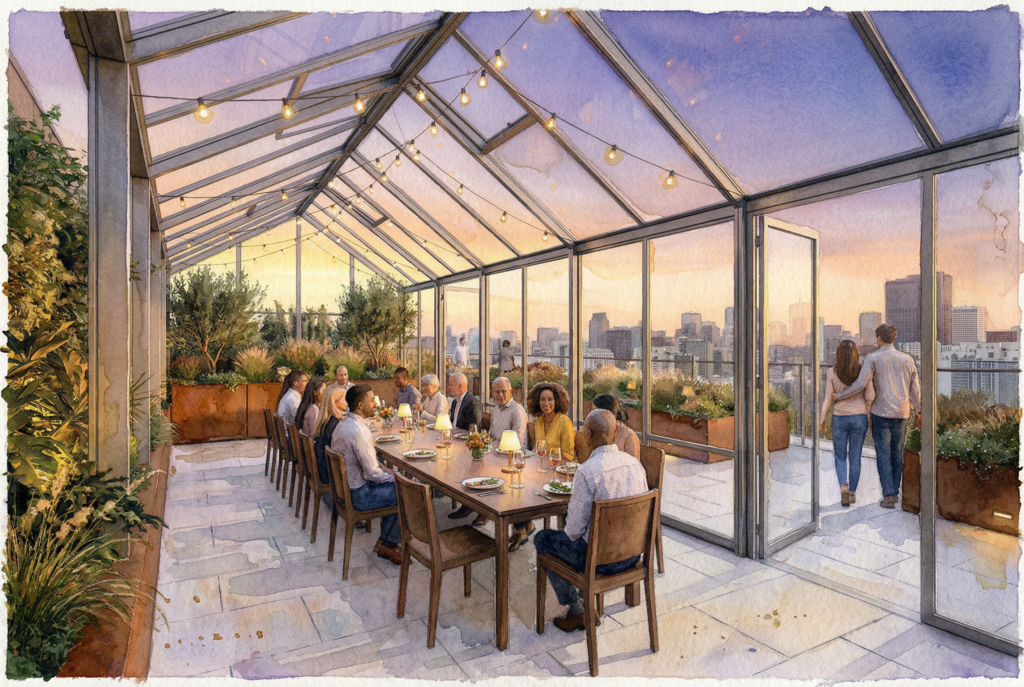 Terrace Dining Pavilion
 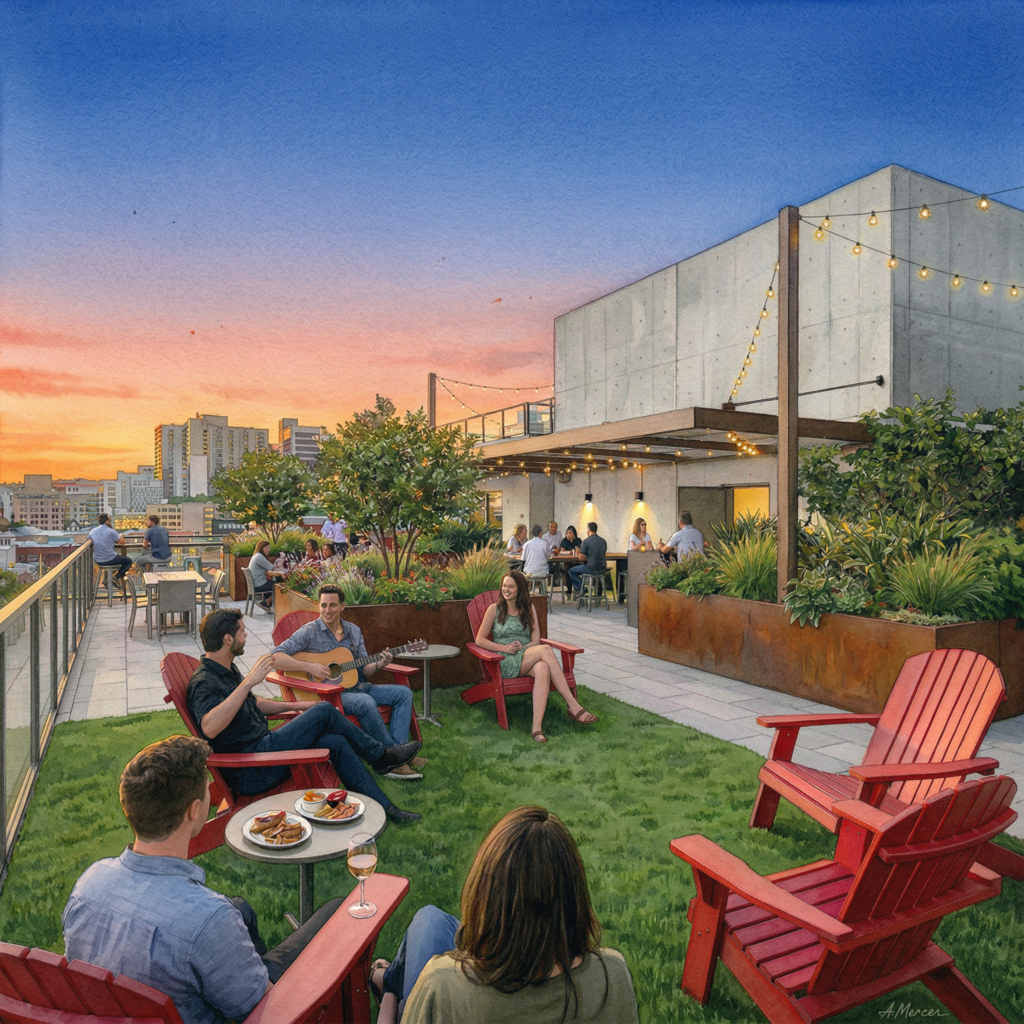 Terrace BBQ & Seating
 [/one_half]
Location: San Francisco
Owner/Client: Martin Building Company | David Baker Architects
Scope: Landscape, Design to Construction
Status: Under construction
Photography: N/A
[/one_half]
Stanford Freidenrich Center for Translational Research Landscape
 Bruce Damonte
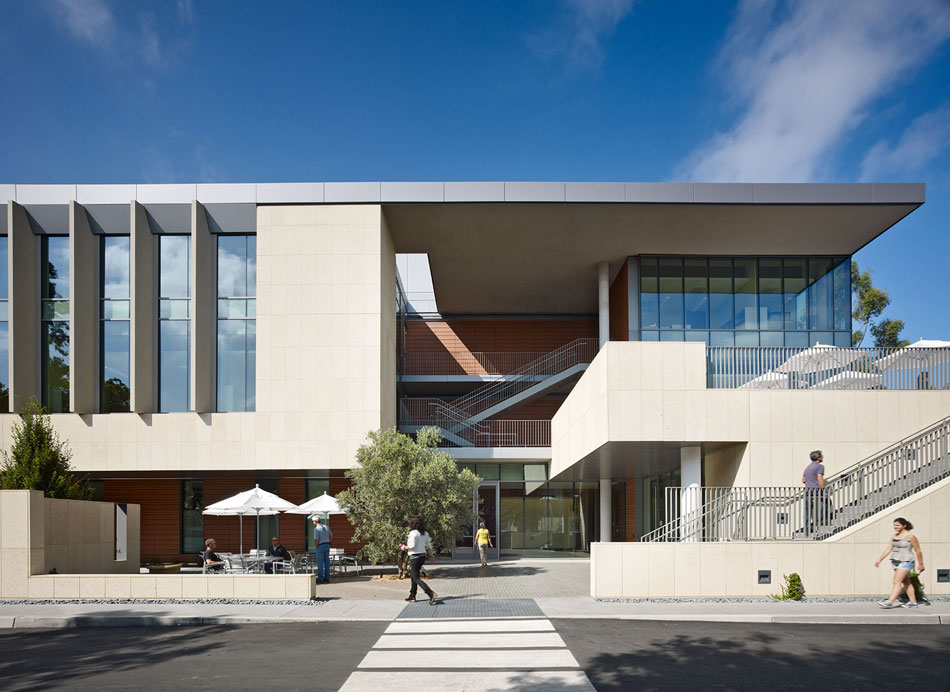
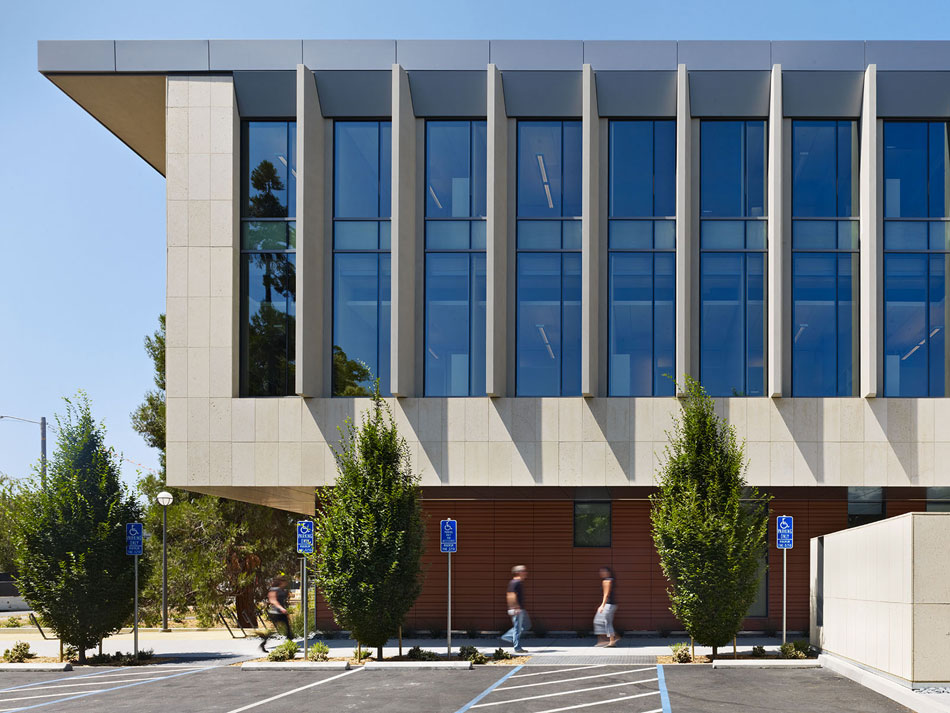
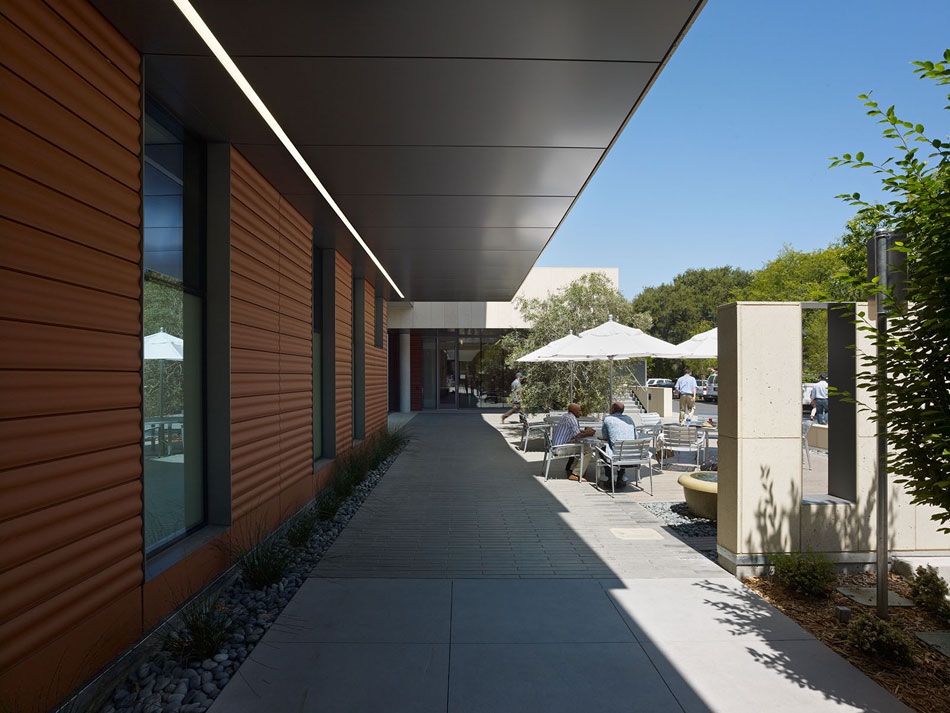
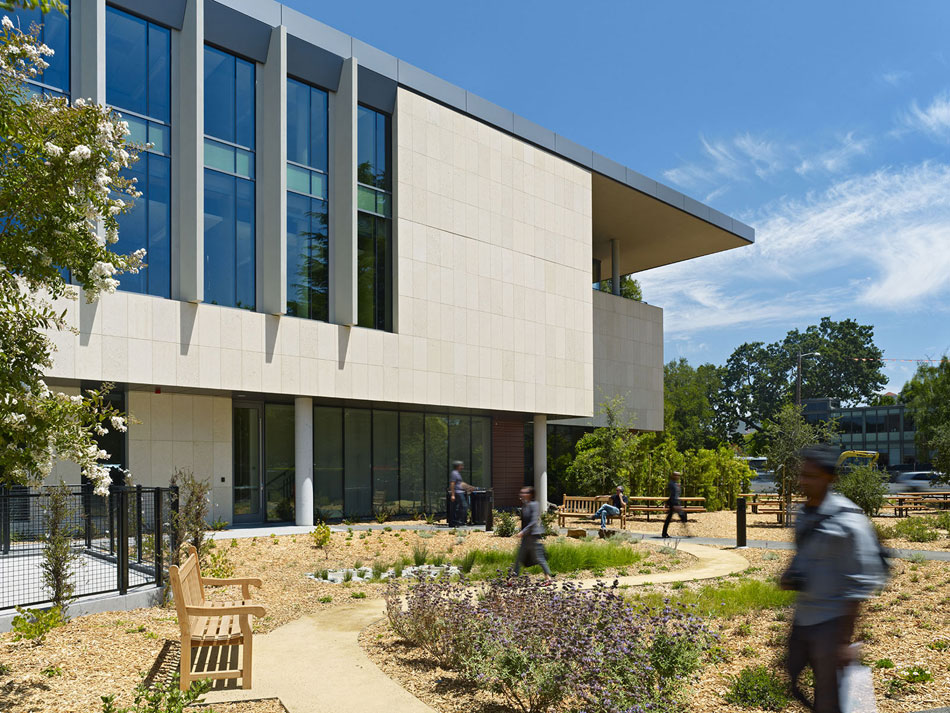
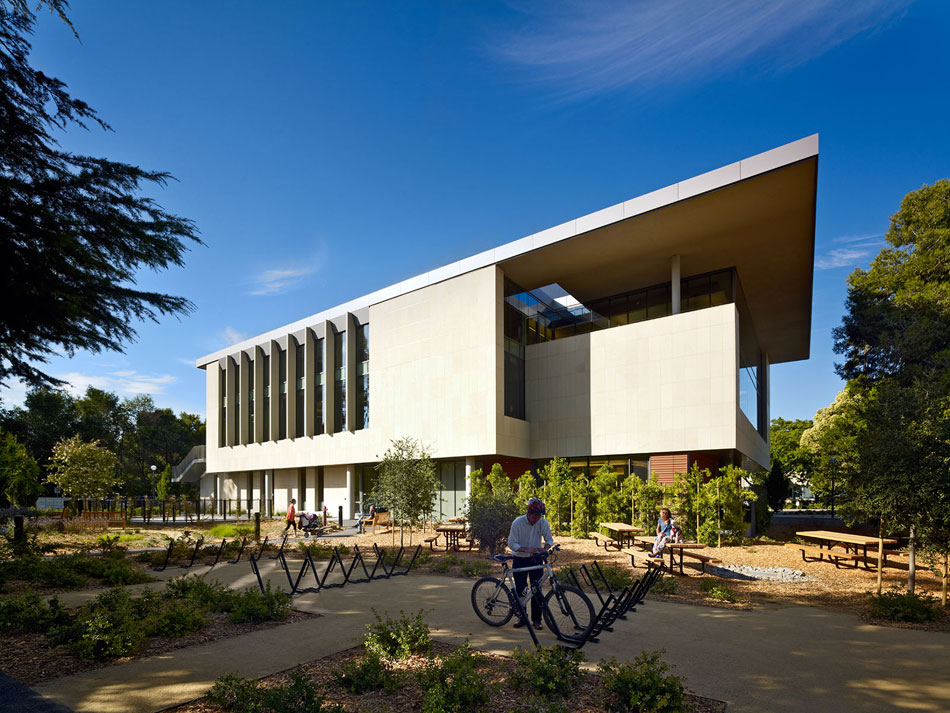
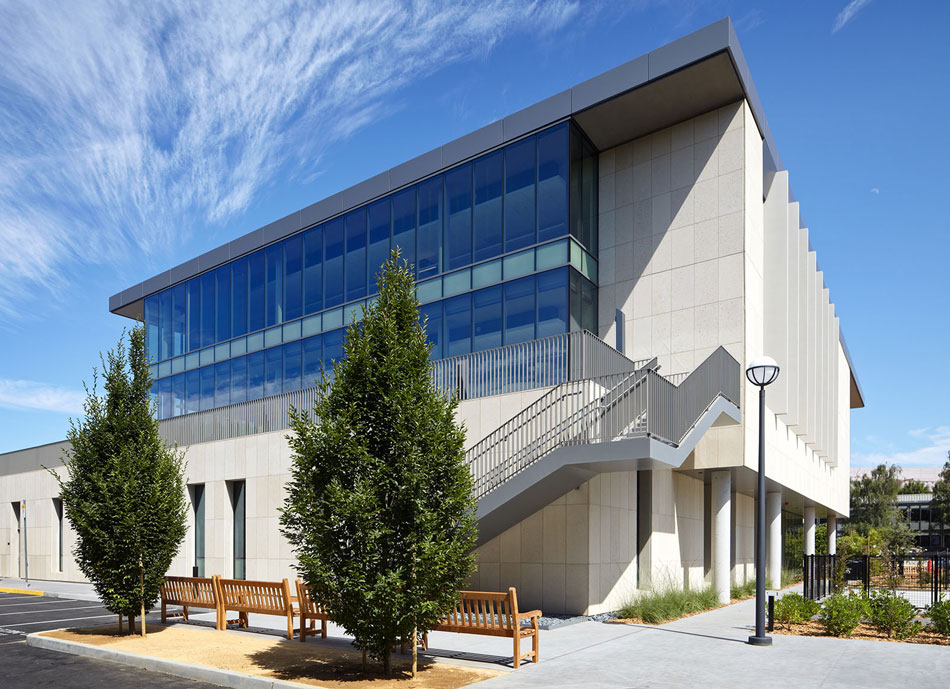
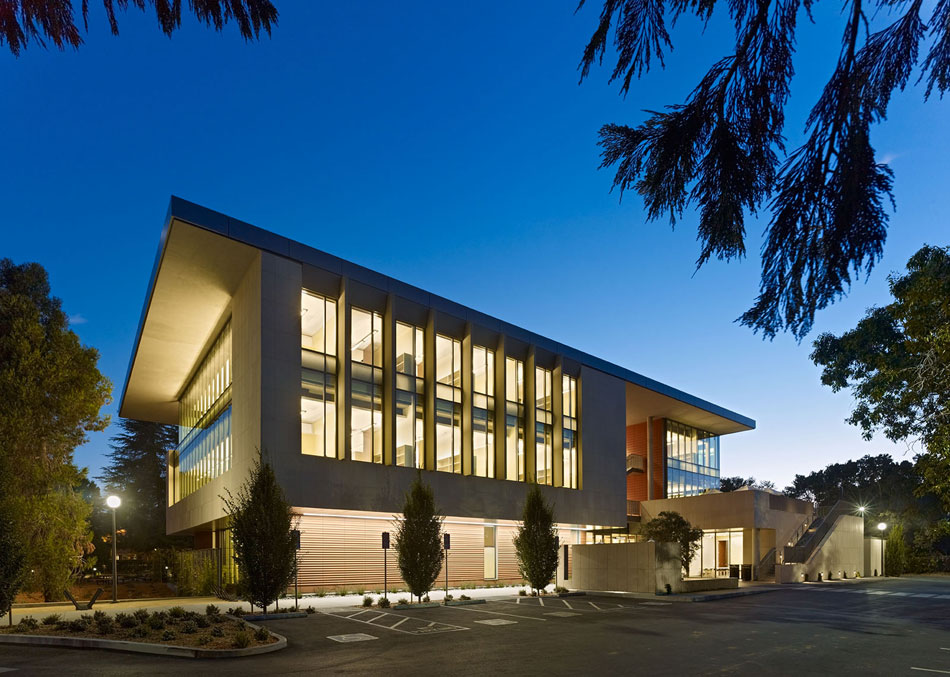
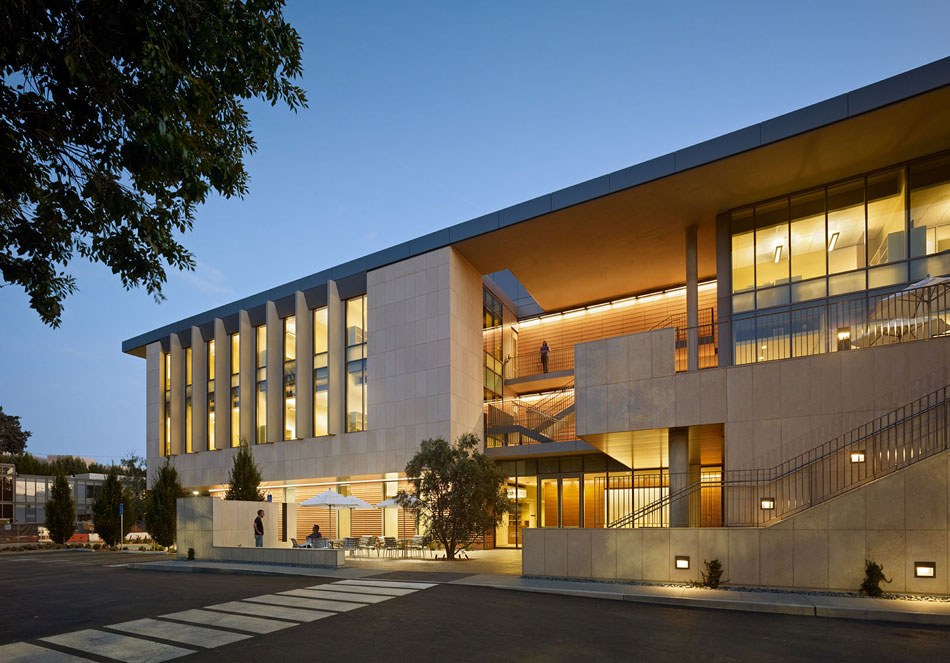
The landscape for this first new building in the expanded medical campus at Stanford University Medical Center provides a rich textural and programmatic setting for the new Jill and John Freidenrich Translational Research Building, which brings together previously dispersed scientific researchers and clinical testing into a single facility. The entry is a sequence of exterior rooms from Welch Road which gradually become more private before ending in the sensuous entry court that extends the building’s emphasis on interaction into the landscape.
 Bruce Damonte
  Bruce Damonte
  Bruce Damonte
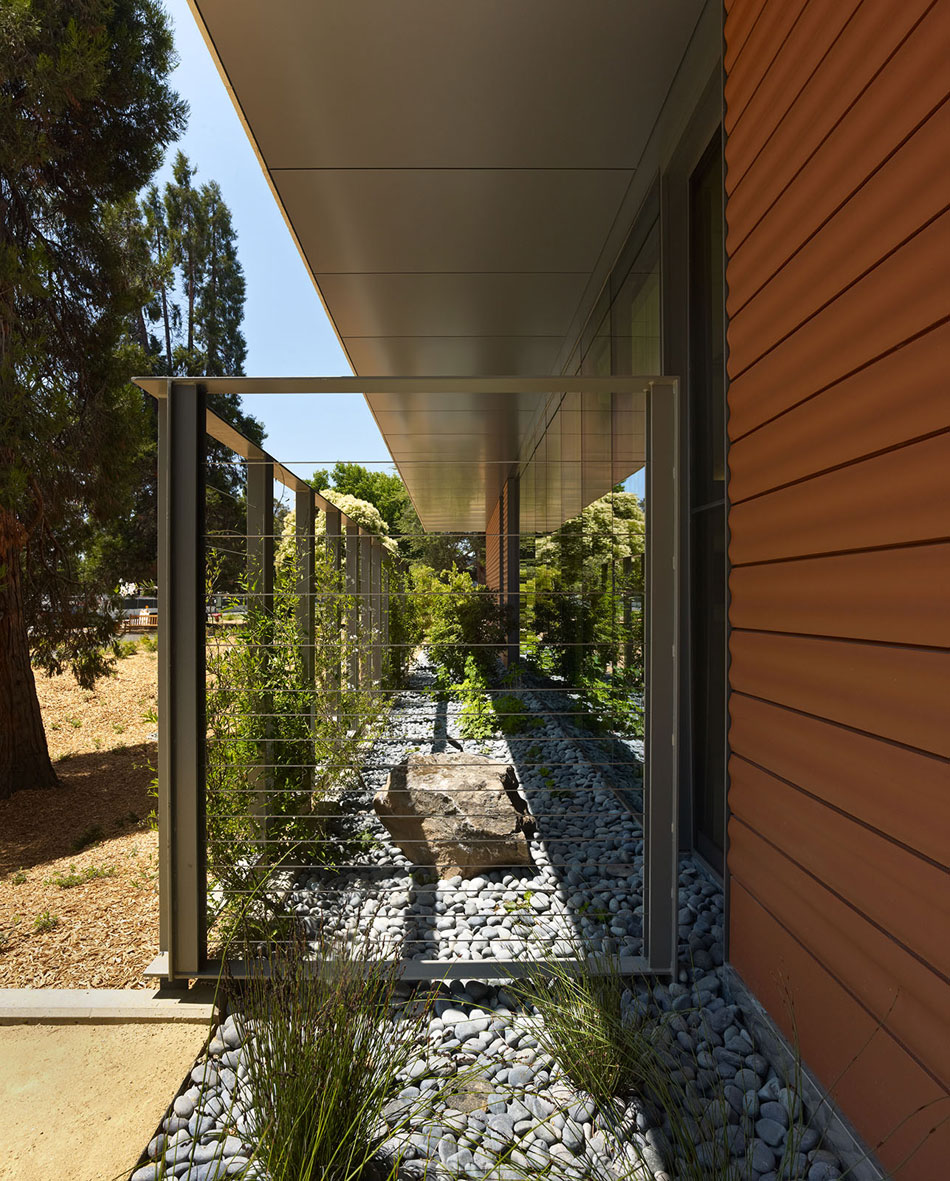
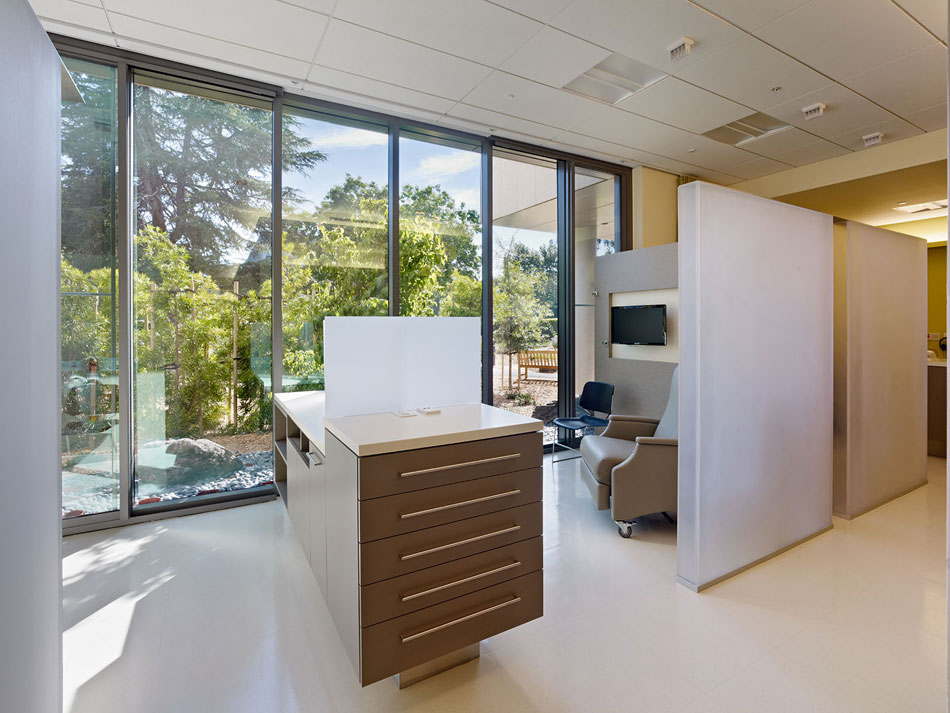
Small, closely fenced micro-gardens of highly refined material palettes extend treatment rooms out into the building’s perimeter, thus blurring the interior with the lush changeability of Stanford’s campus landscape.
 Bruce Damonte
  Bruce Damonte
  Bruce Damonte
Mature heirloom trees are preserved and integrated into a topography of paths and recreational amenities which are engineered to capture and filter stormwater, while providing a variegated and rich landscape for staff, patients, and the extended campus to enjoy.
 Bruce Damonte
  Bruce Damonte
  Bruce Damonte
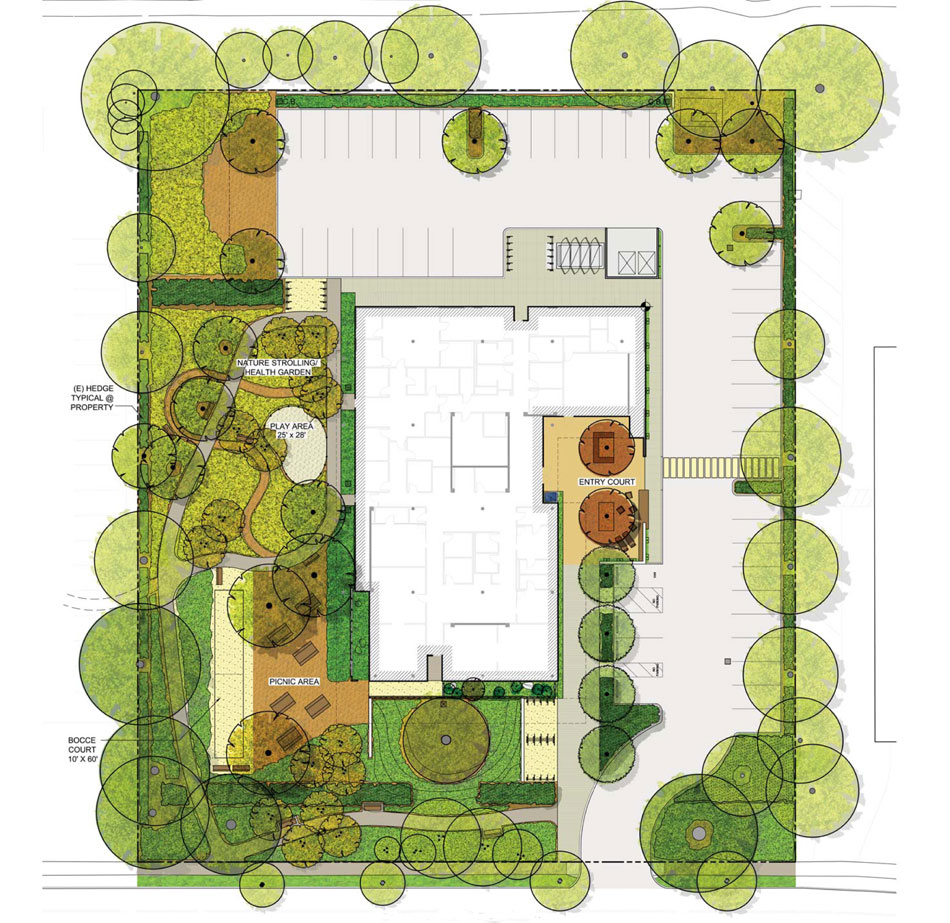
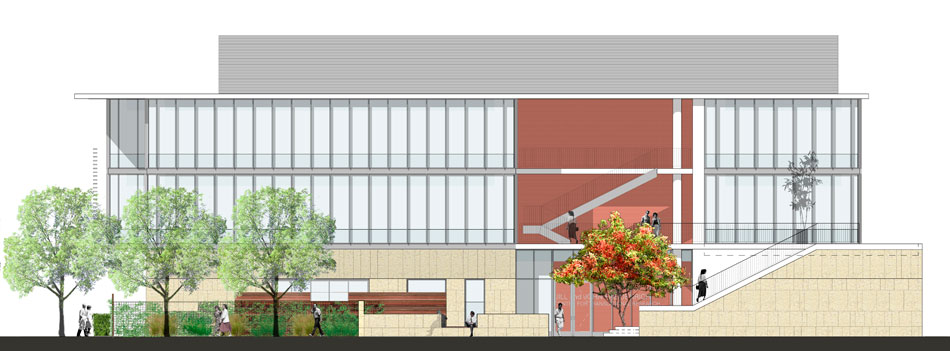
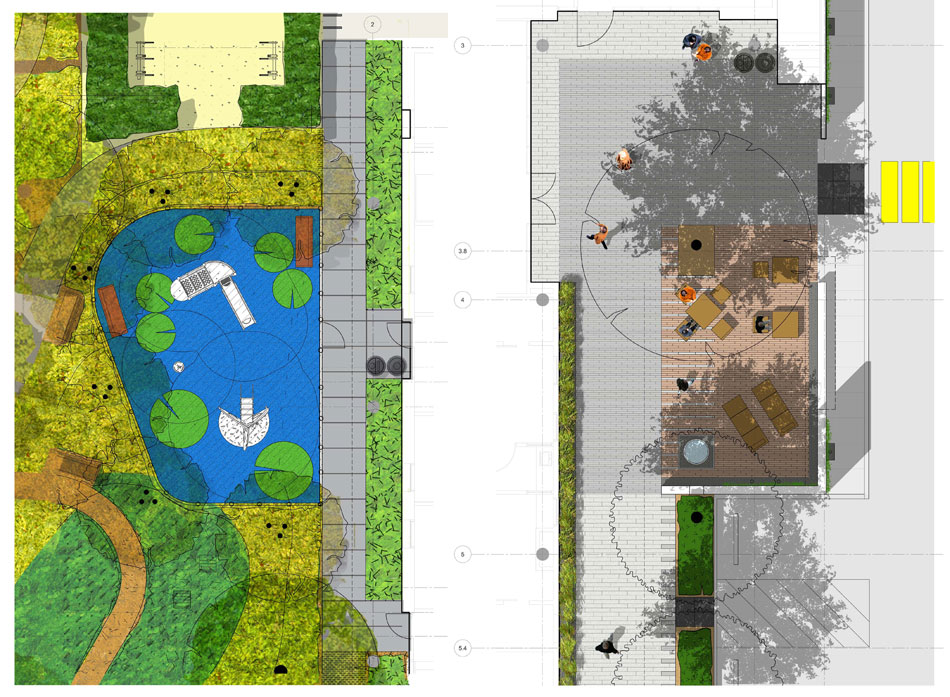
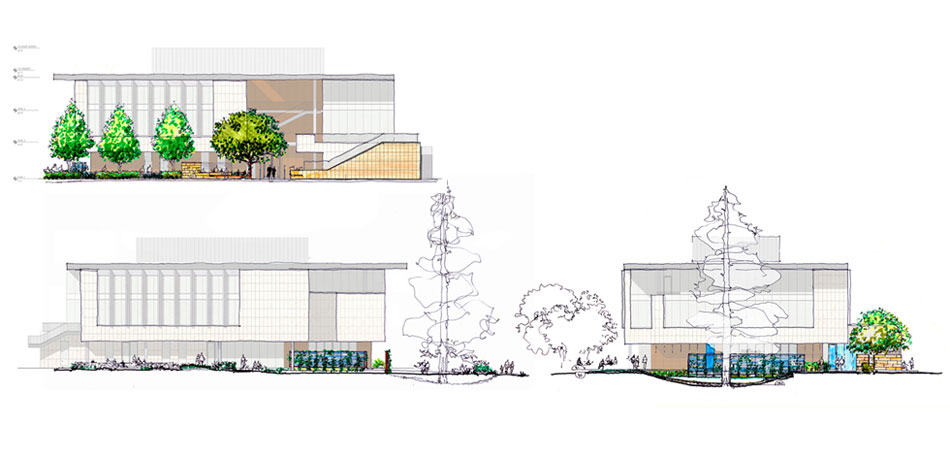
SITE: Palo Alto, California / SIZE 16,000 sq. ft. landscape
SCOPE: Entry Court, landscape design
DATE: Completed 2012
TEAM : INTERSTICE Architects (landscape), WRNS (architecture)
MIRA SF – Transbay Block 1
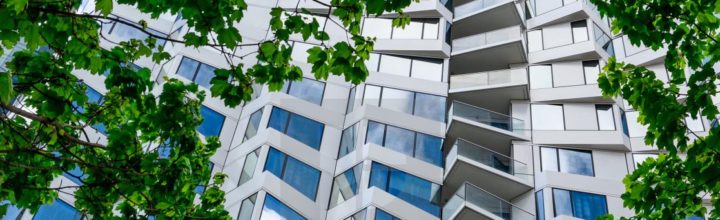
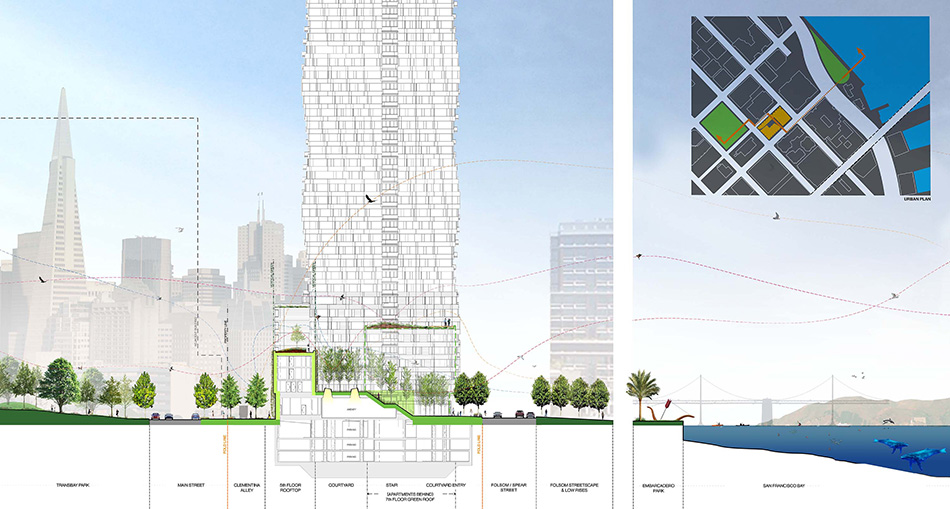
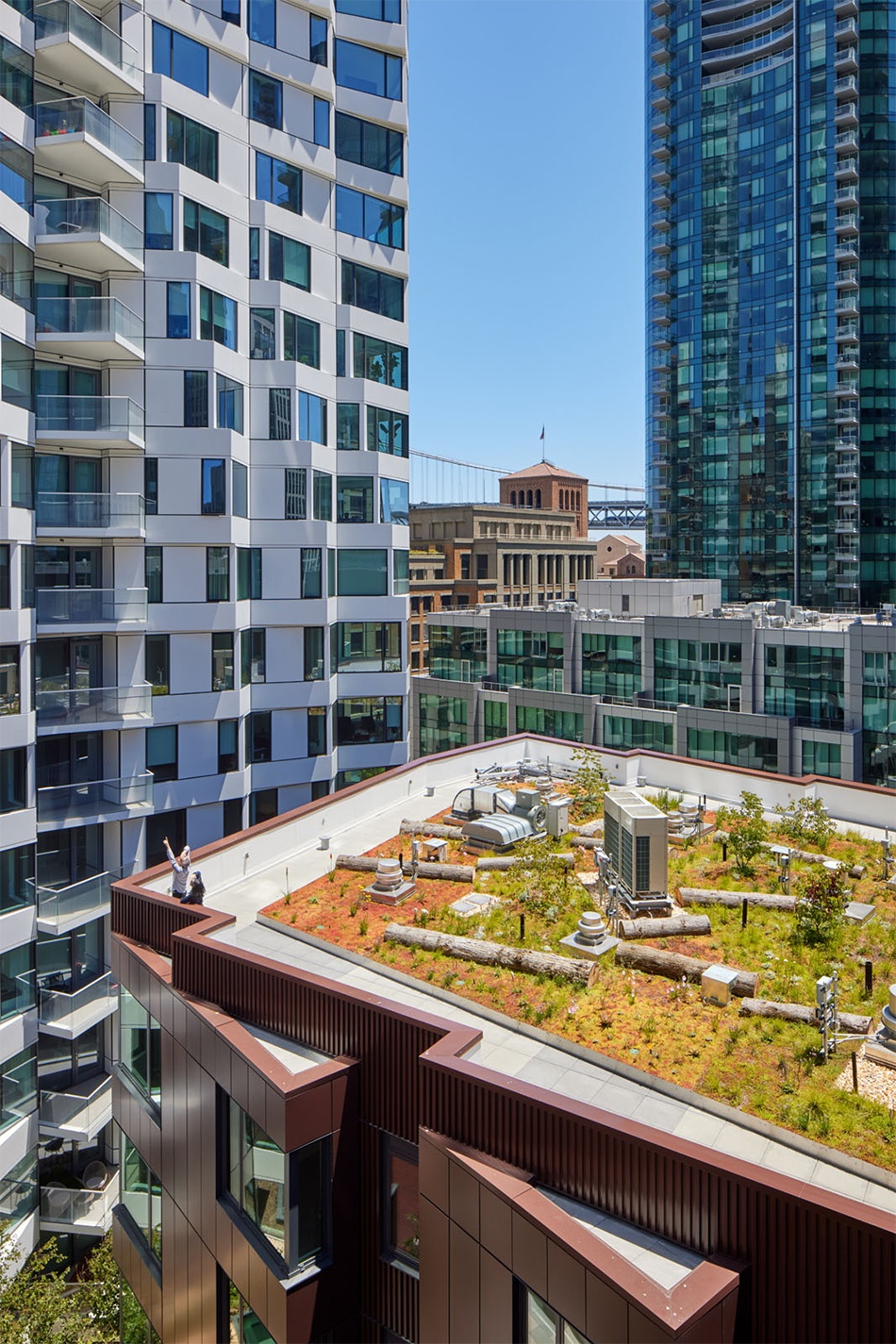
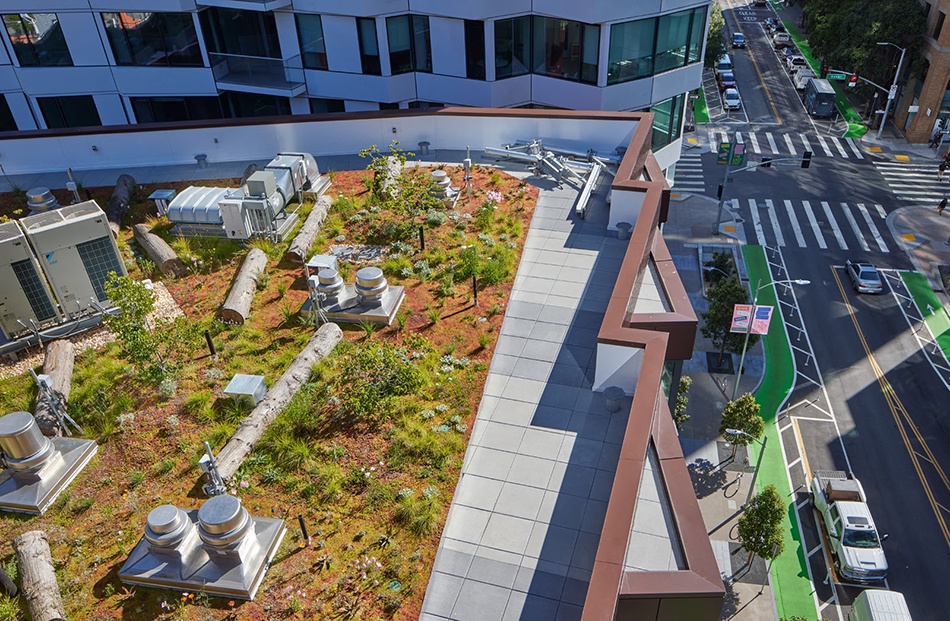
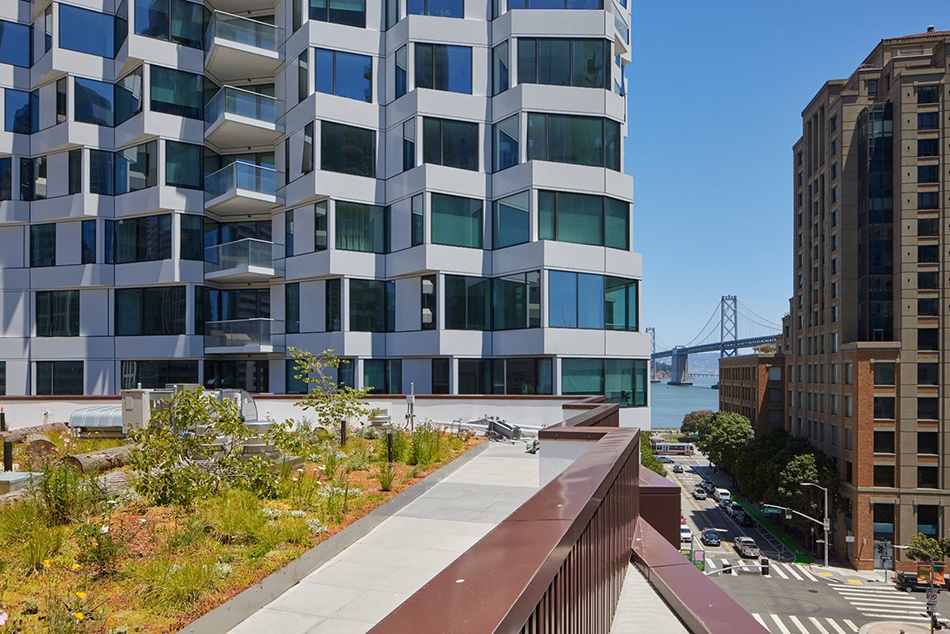
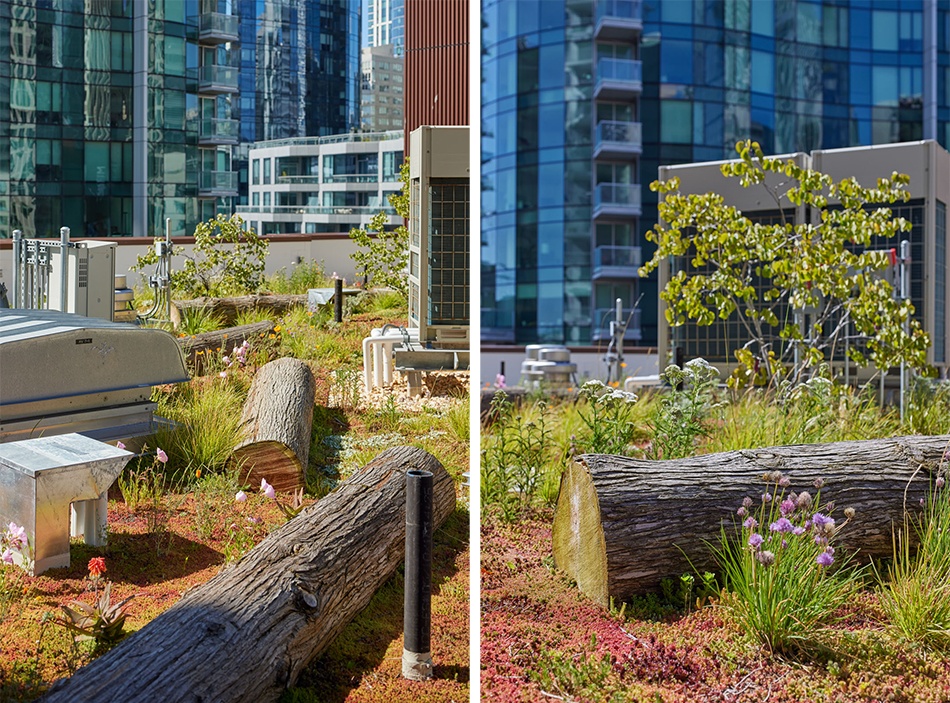
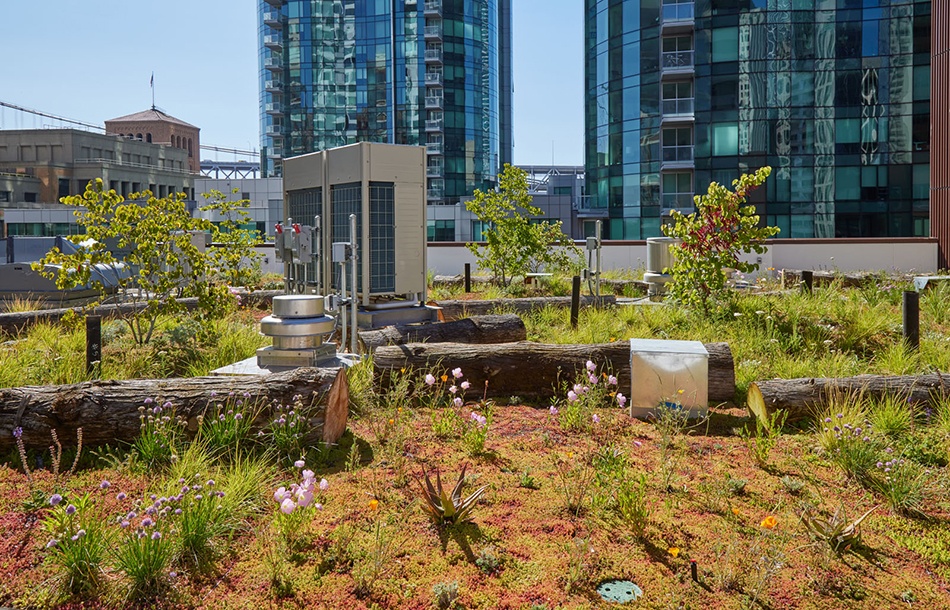
INTERSTICE’s early sectional drawing, “Ecological Corridor Concept”, illustrates the connection from Embarcadero to the Transbay Park and to the new Transit Center (Salesforce Park) beyond. The site design focuses on native species and habitat that serve native hummingbird and insect populations through careful plant species selection for food and nesting sources, and includes elements on the uppermost roofs that serve as micro-habitat, in the form of dozens of natural logs embedded in the living roofs, providing cover as they naturally decompose over time.
Streetscape
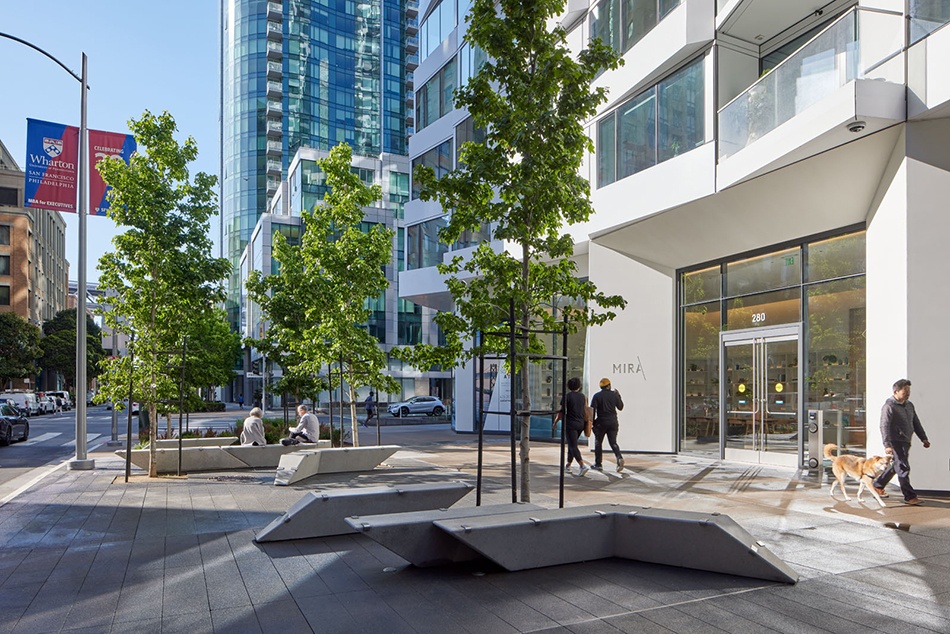
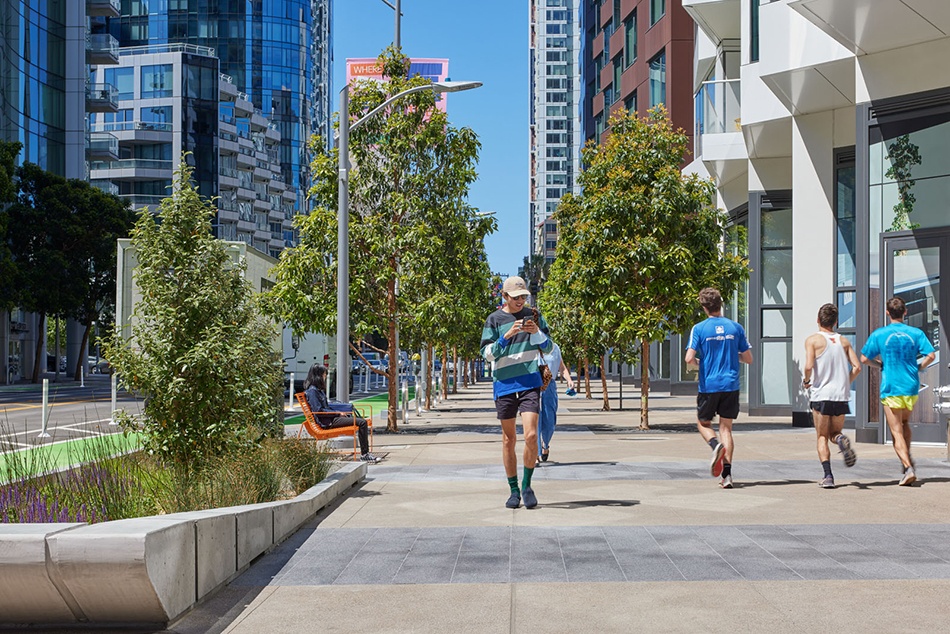
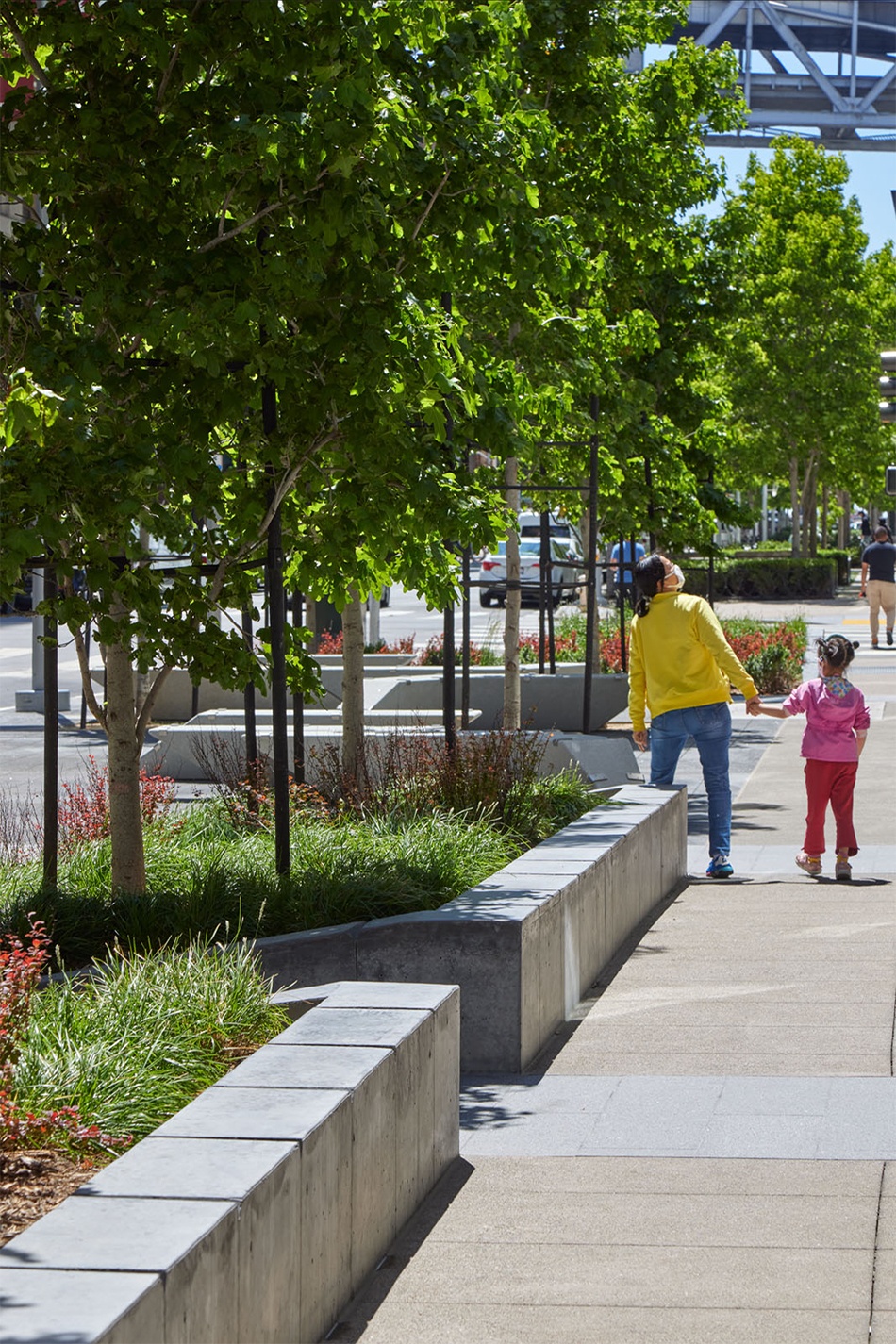
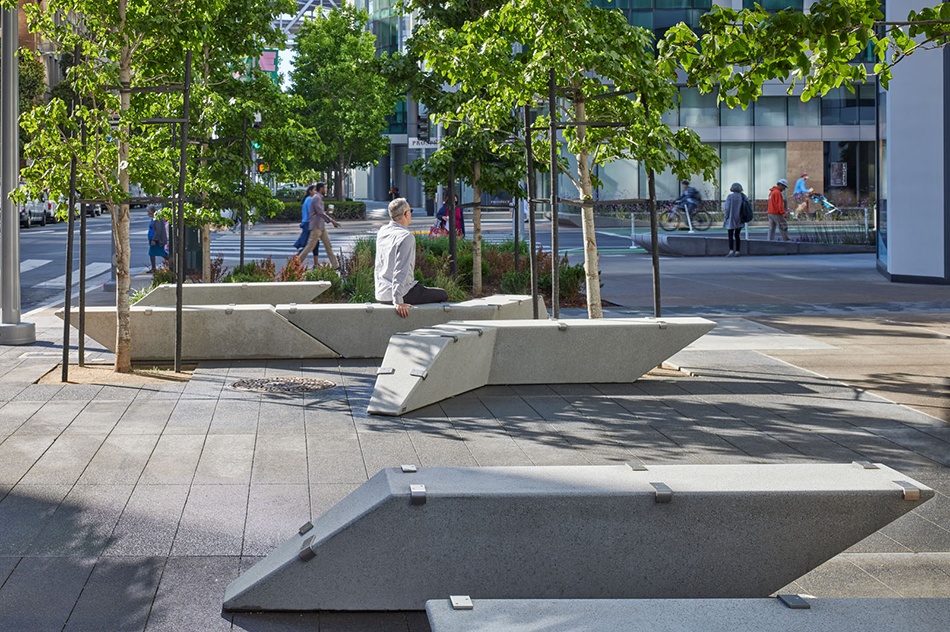
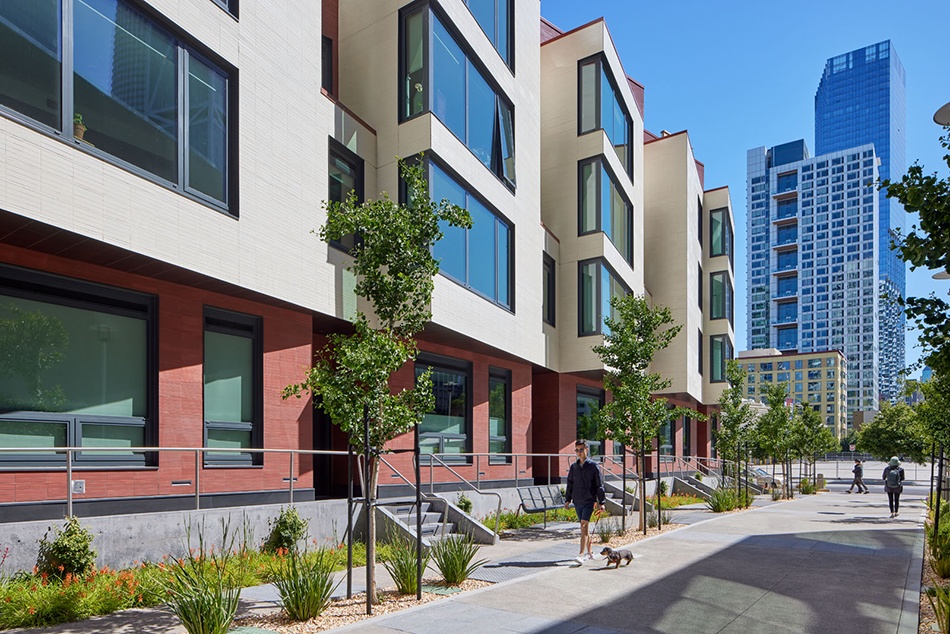
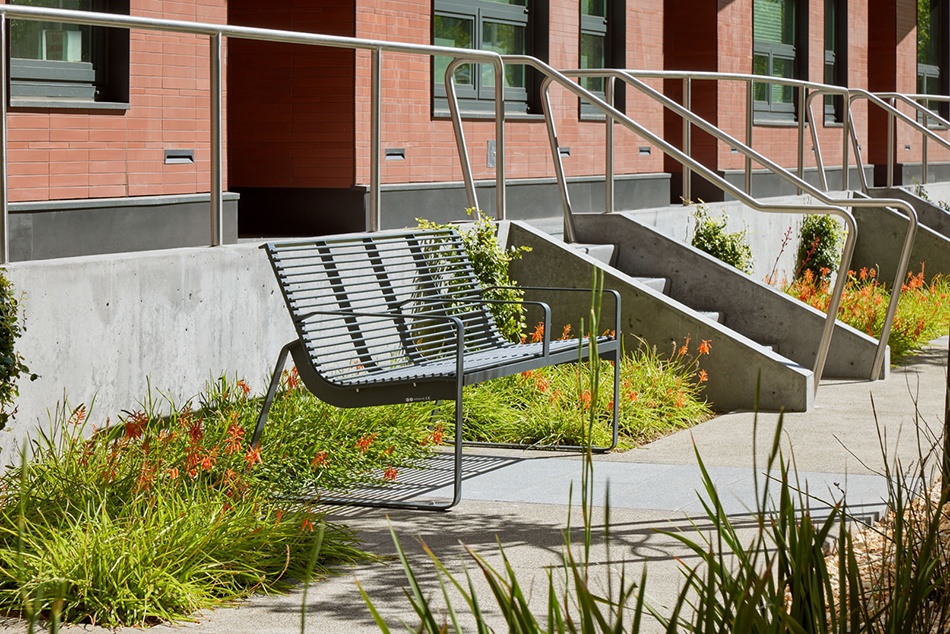
The streetscape design re-imagines Folsom street as pedestrian-prioritized boulevard with tree-lined widened sidewalks, commercial activity, rain gardens, seating, bike lanes and other amenities and safety improvements. The new Clementina Alleyway POPOS is an unusual opportunity to create an intimately scaled shared street connecting this new vertical neighborhood to the Embarcadero. A front door to new homes, this green, plant-lined habitat corridor, widens to the east, where the lane creates the Clementina Commons – an intimate open space with seating for people and their pets.
Level 2 Podium Courtyard – “The Nest”
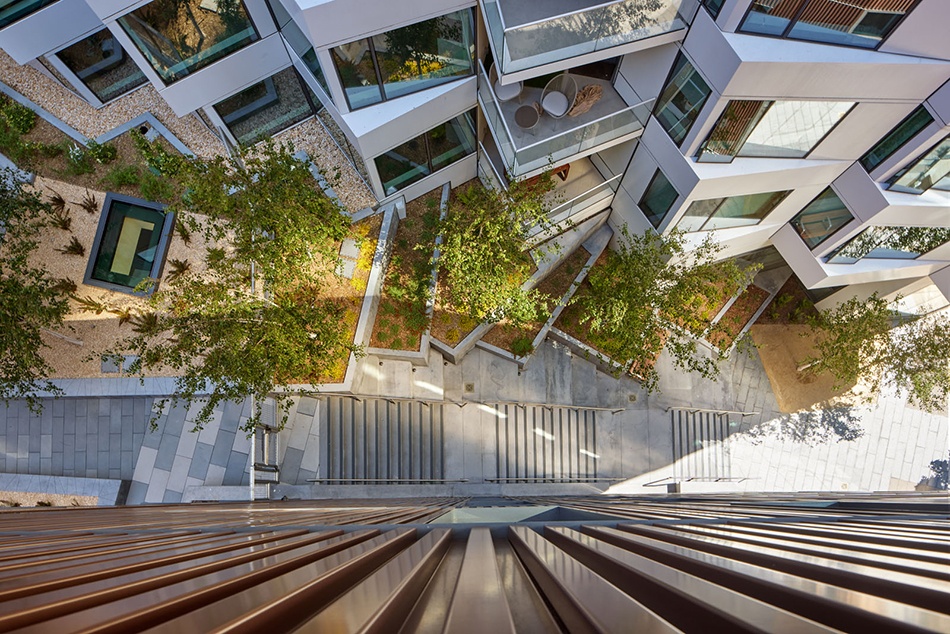
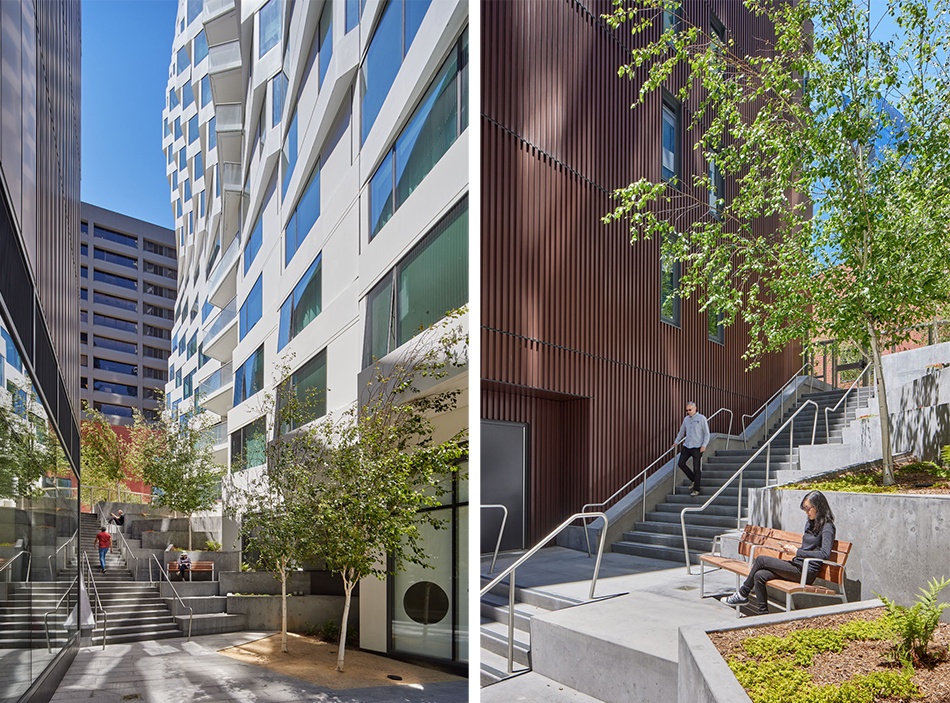
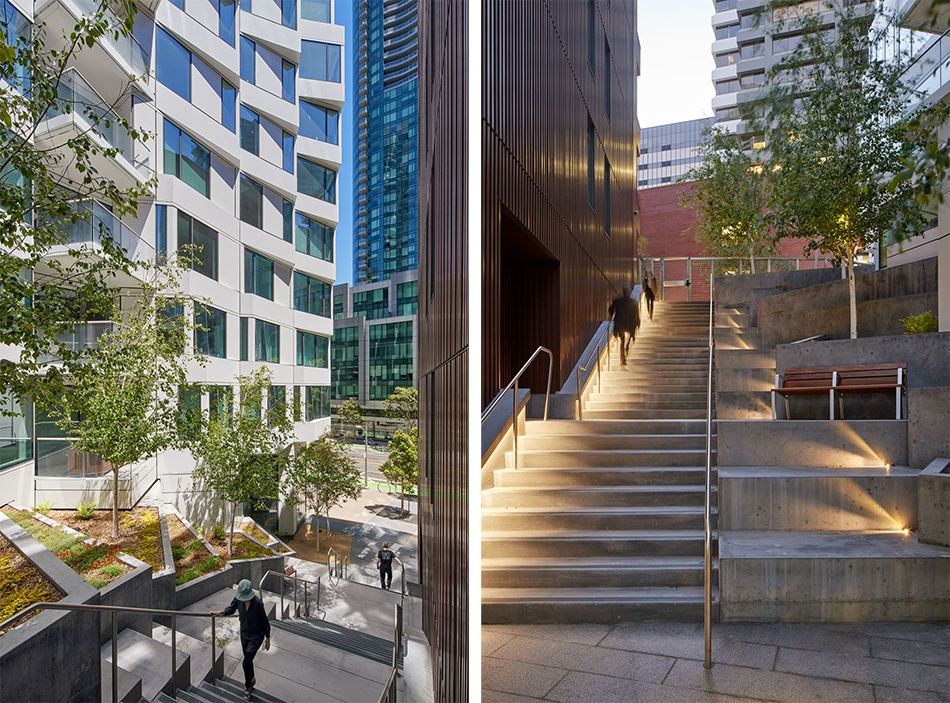
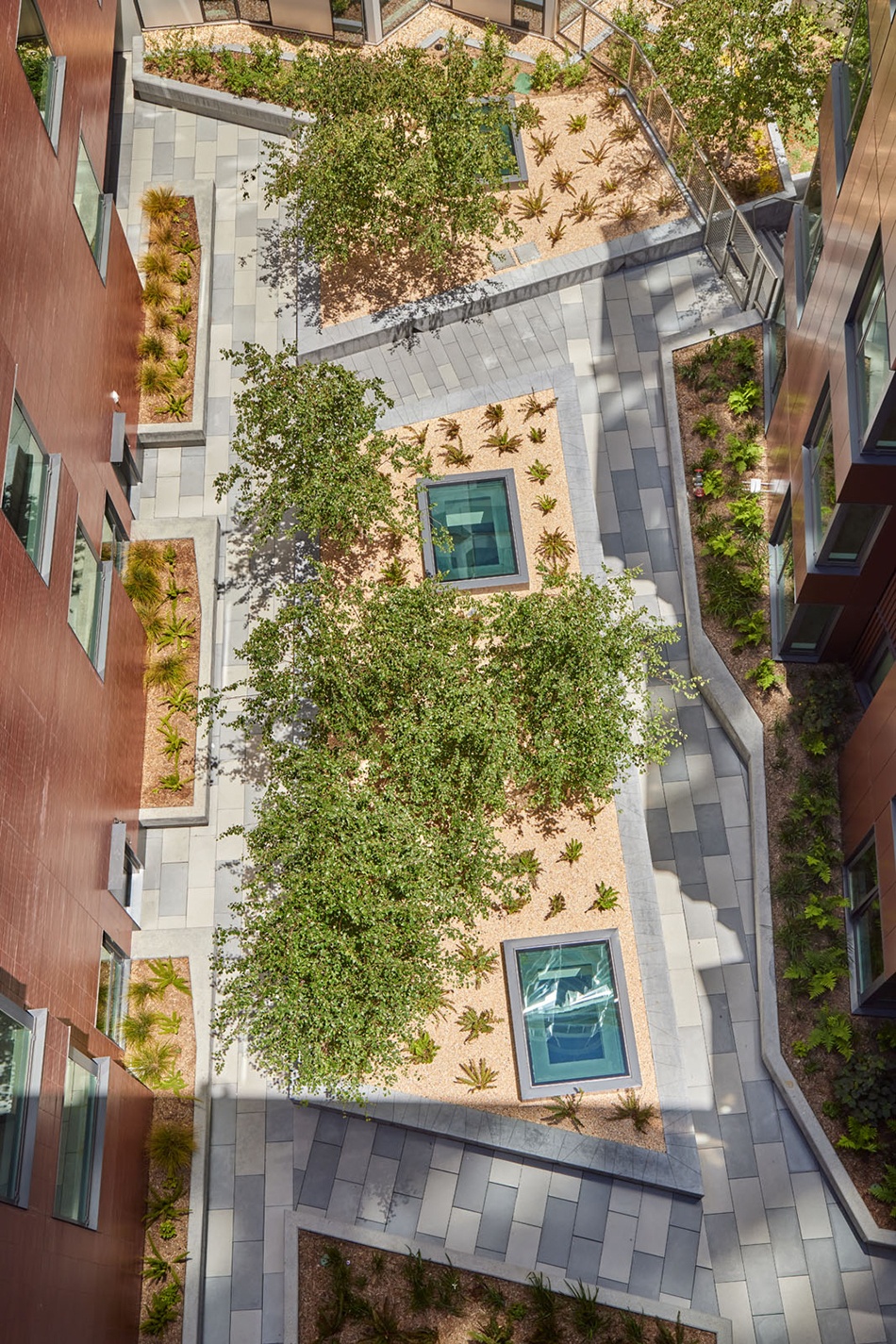
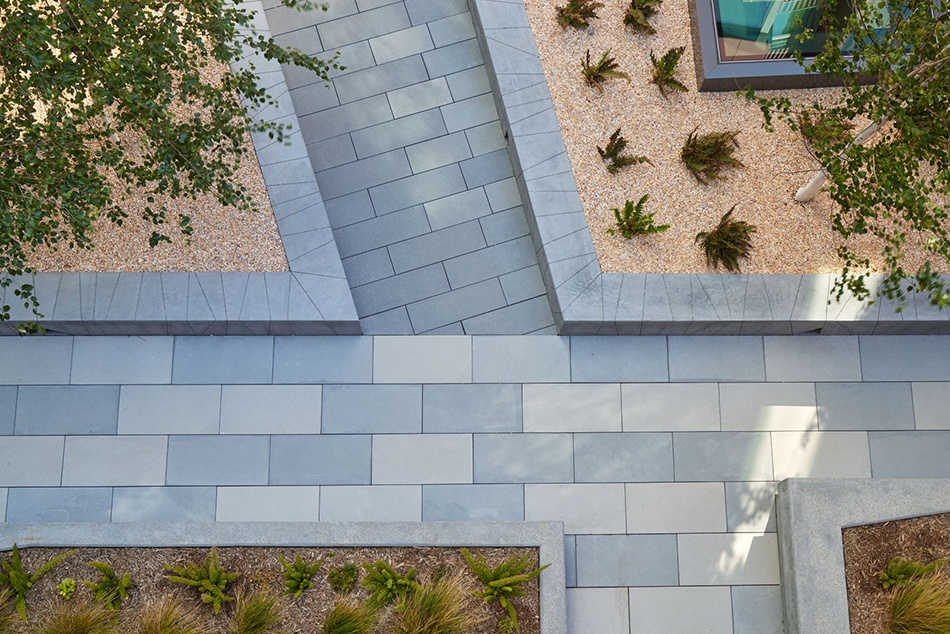
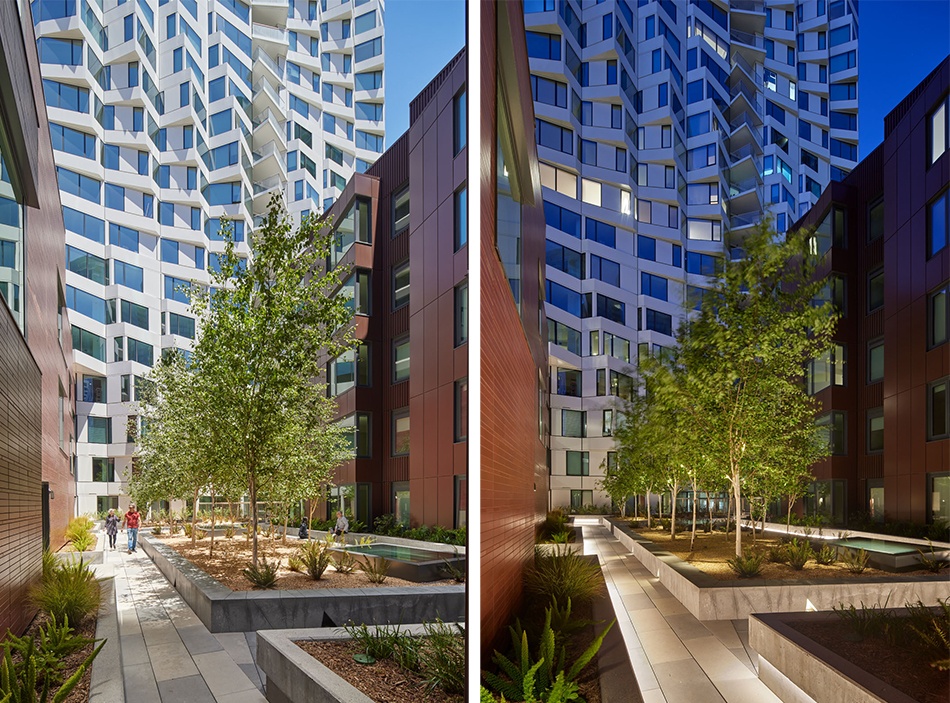
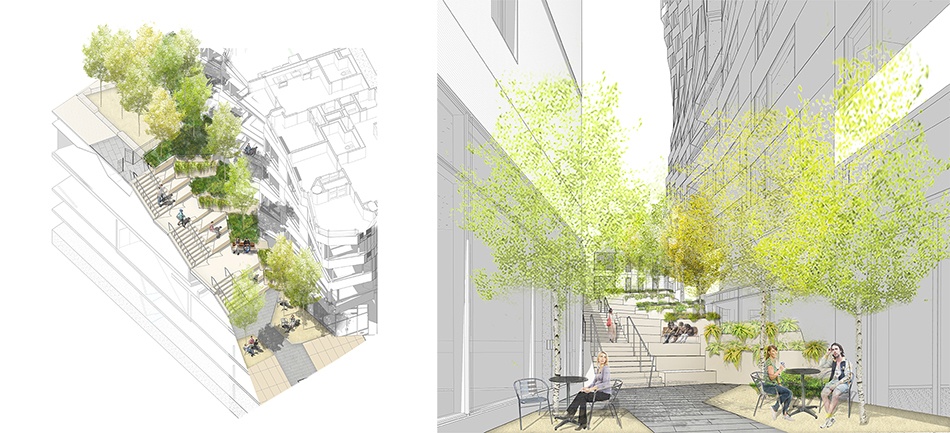
This elevated podium-level courtyard is the protected “heart” of the residential complex with a grove of slender Himalayan Birch trees with a fern understory that is accessed from Folsom Street by a broad stair. The Tribune Stair is a series of terraced platforms that rises like a folded alleyway between building volumes, creating a terraced forest leading from the “eddy” plaza space off this busy retail corridor. This cascading landscape is an invitation to sit and linger perched where one can see the street level commercial activity.
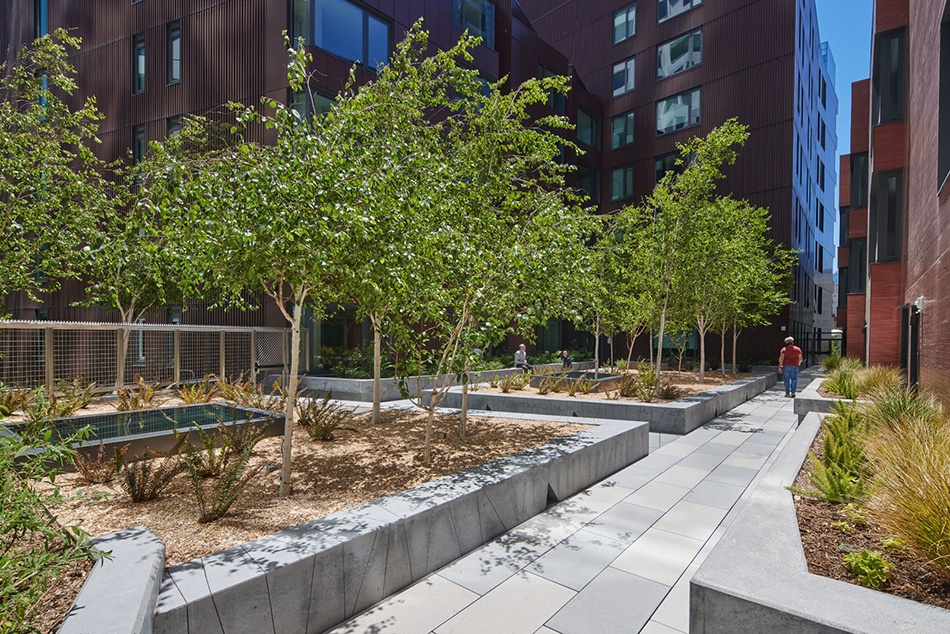
The quiet “forest” at the foot of the Tower is the residential entry to the second level town-home units, and is a dynamic visual focus, for all the surrounding, units, town homes and tower. This green oasis of open foliage trees draw light and movement through their bright canopies deep into the space. The white birch bark and seasonal foliage reflect light and animate the court as bright green summer foliage changes to yellow in autumn, then opens up to a tracery of fine white branches through the darker winter months; lighting the lush fern understory, of textured seat walls and variegated paving stones.
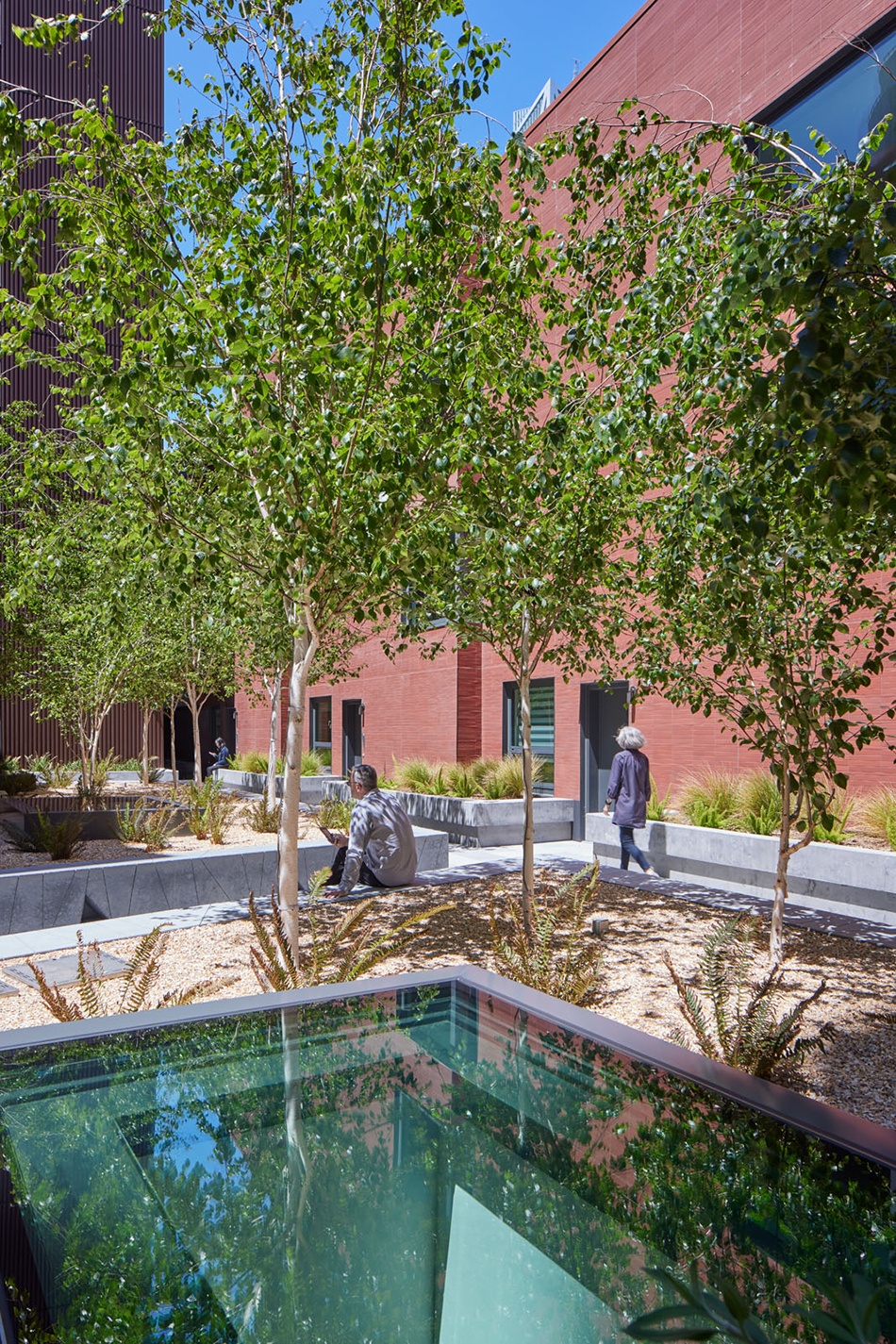
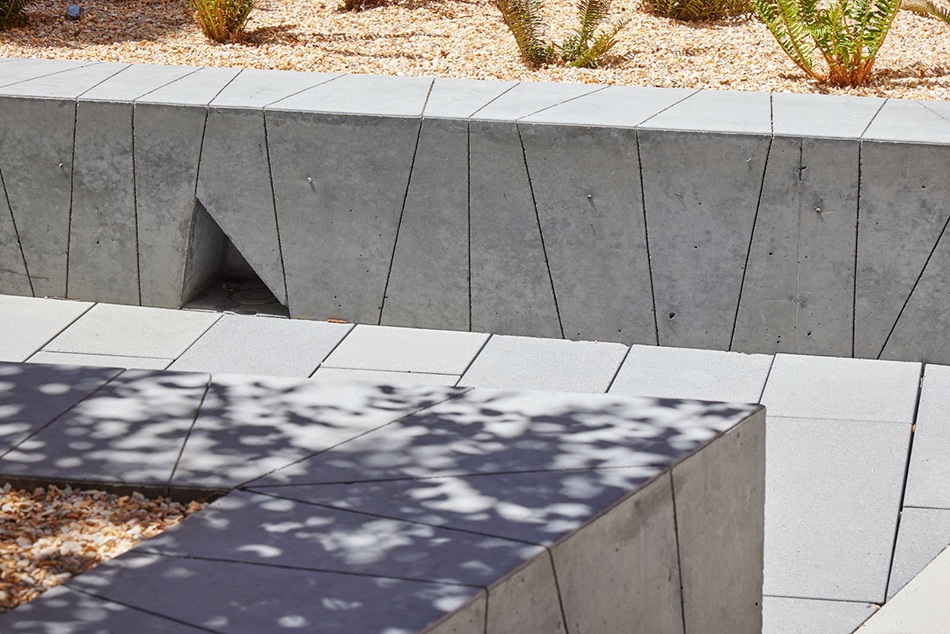
Materials are soft in color, smooth and refined, with carefully detailed joints and recessed lighting with perimeter planters of lush plantings that provide privacy to surrounding living spaces, and informal seating ledges near unit entry doors. Large sky-lights connecting the indoor gymnasium below are purposefully expressed as oversize “lanterns” that emerge from below the forest floor to glow at night.
Greenroofs – “The Ledge” and “The Perch”
The upper level roofs are living roofs, that while providing a visual amenity from above, are actually very alive, and contribute a significant ecological and sustainability asset to the project. In addition to cooling the building, and extending the life of the roof, these mini habitats form part of the storm water management system by slowing and retaining rainwater. Selected species are native and adapted plants that create an ecology for hummingbirds and other native bird species, and numerous insects on down the web. Here banded patterns of varying foliage color and texture are intermixed with seasonal blooms, and divided by massive logs of wood that slowly decompose over decades to maintain plant types and enhance ecological habitat. The soil media depth of 8″ supports sedum species and smaller perennials, while deeper soils of 18″ at level 7, allow for more varied planting selections of taller sedums, grasses, shrubs and even small trees.
Level 5 Shared Amenity Space – “The Wing”
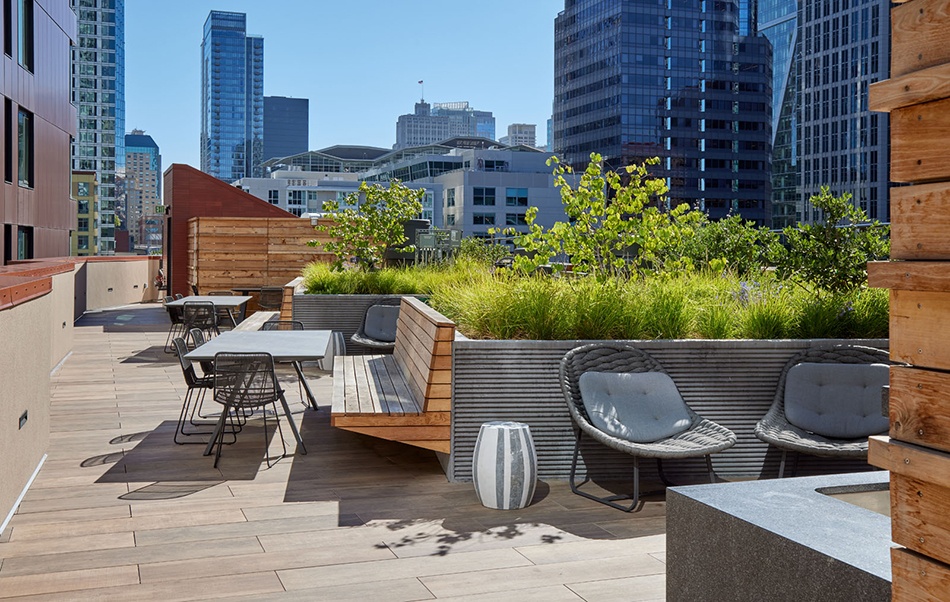
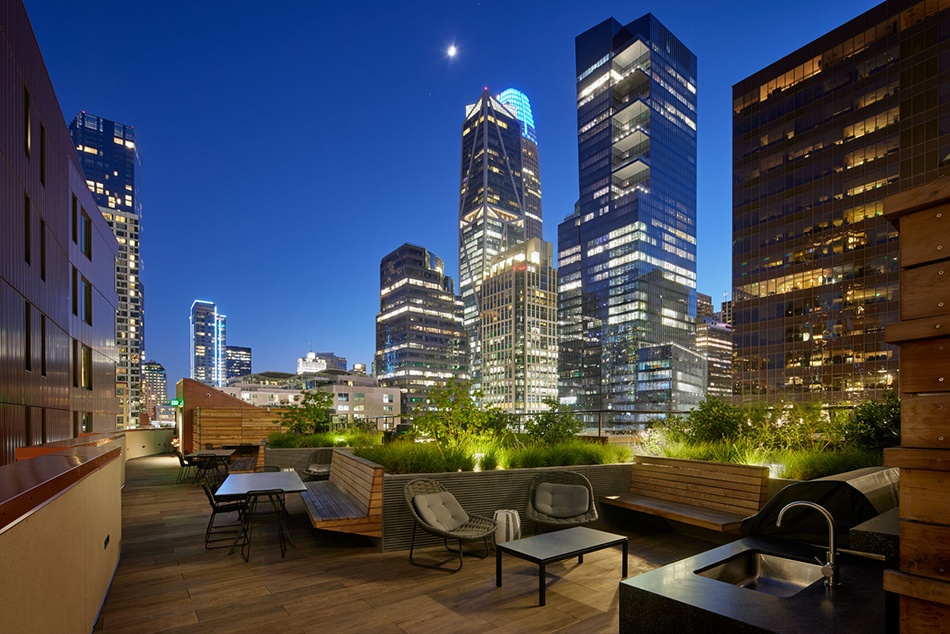
In contrast to the inner sanctum of the central court Level 5 is a more extroverted space. The Wing is the primary shared Social Gathering Space. Laid out as a linear progression of enfilade outdoor “rooms” contained within the embrace of raised meadow plantings and warm wood divider walls. The first “room” directly adjacent to the interior common lounge, is an outdoor dining area, furnished with a perimeter of large built-in benches. The next is the “entertaining” room serving flexible uses, overlooking the level 2 courtyard Birch grove, with communal tables, two outdoor kitchens, moody evening lighting and plentiful seating. The western-most “room” is a glass protected promontory with sunset view over Transbay Park. Separated from the rest of the rooms it is the most private and enclosed, for more intimate evening gatherings around a linear outdoor fireplace, with cozy furnishings and glowing floor lamps.
Location: South Market District, San Francisco
Owner/Client: Tishman Speyer / Studio Gang Architects
Scope: Landscape & Streetscape, design through Construction
Status: Completed 2020
Photography: Bruce Damonte
KQED Headquarters Renovation
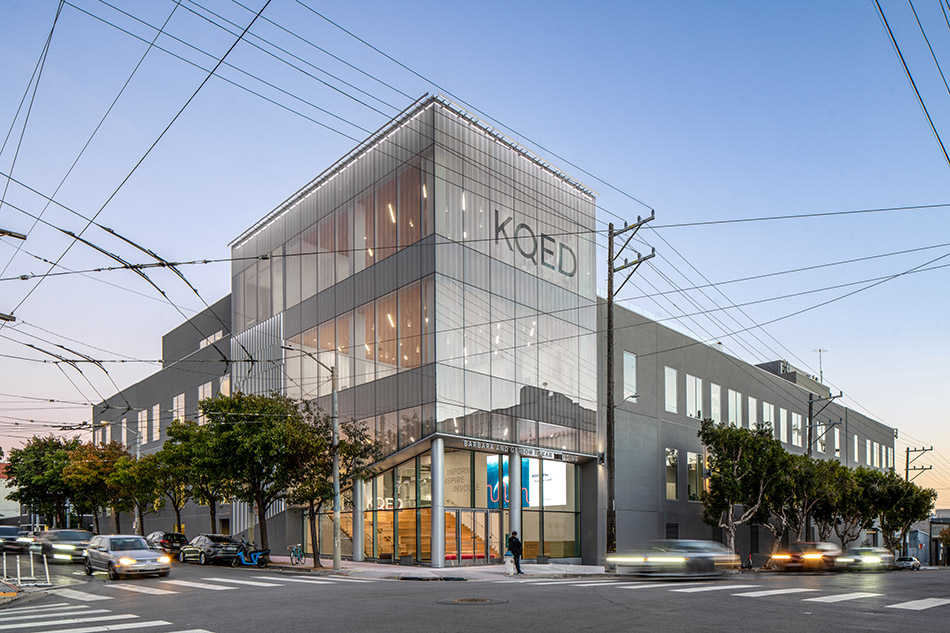 Photography Jason O'Rear
 The Power of Transparency
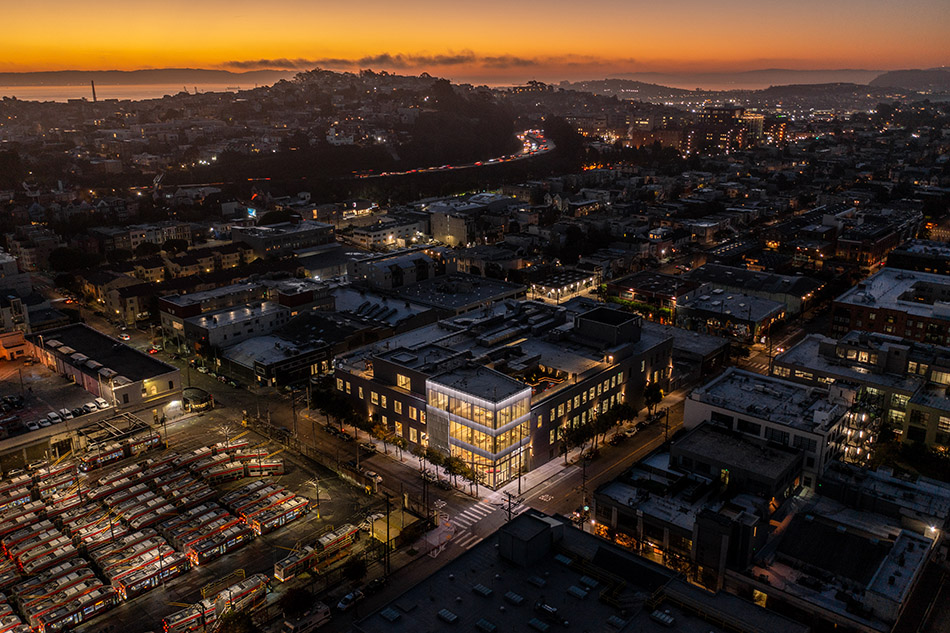
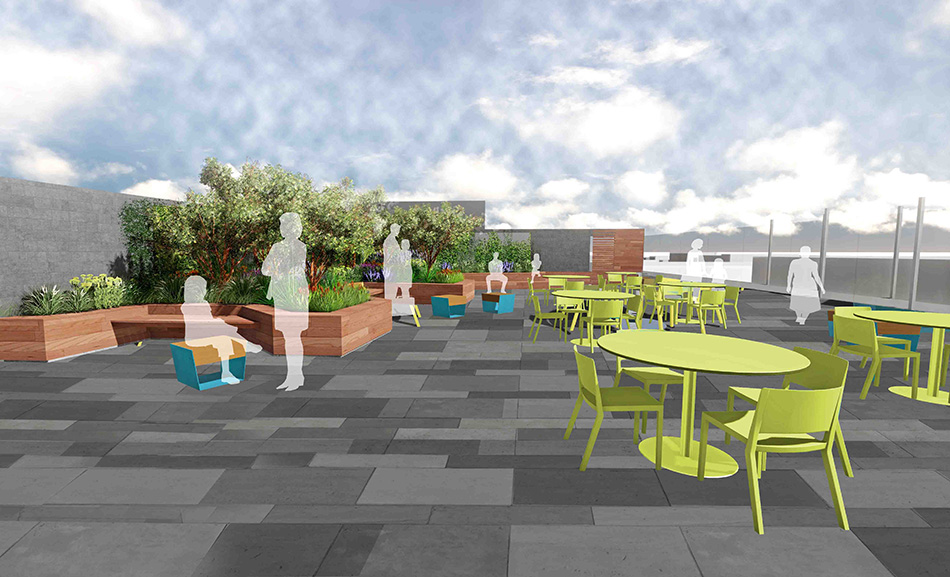
Northern California’s beloved public media outlet, KQED’s newly renovated headquarters based in San Francisco’s Mission District neighborhood. INTERSTICE is working with the architecture team led by EHDD to create a publicly oriented streetscape and a new lobby that welcomes the community, providing a new street-facing amenity to the neighborhood, visitors, and staff of KQED. Additionally, INTERSTICE designed an outdoor rooftop terrace with a sweeping view of downtown San Francisco. It will be used 24/7 by staff as an outdoor informal meeting and break space, and will serve as a special event space for the KQED community.
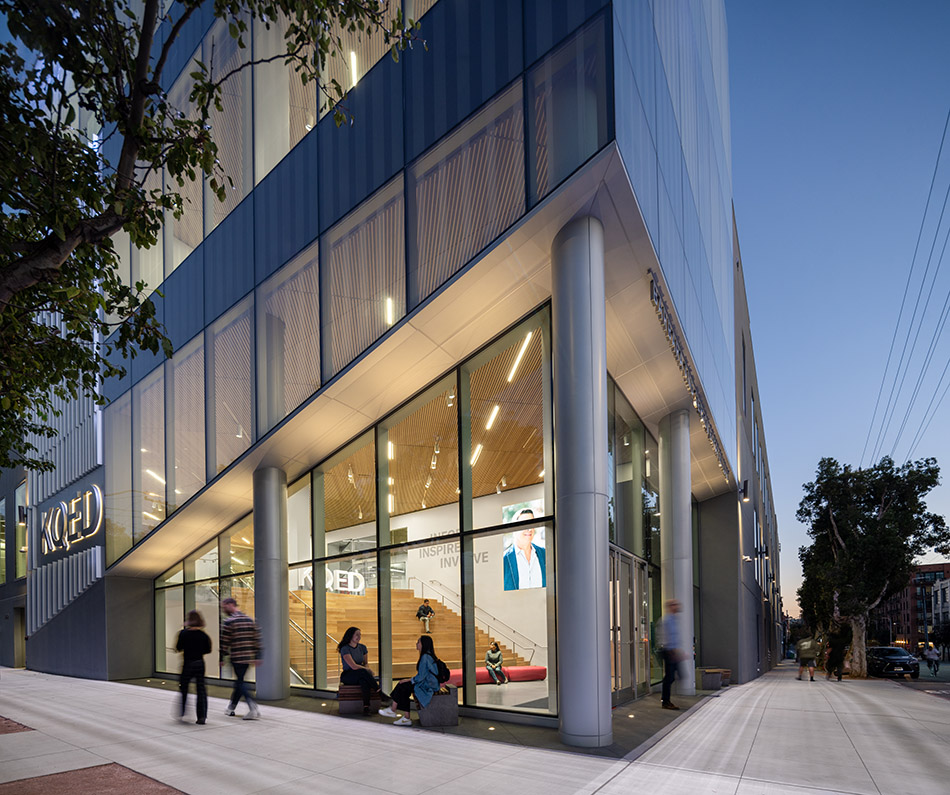
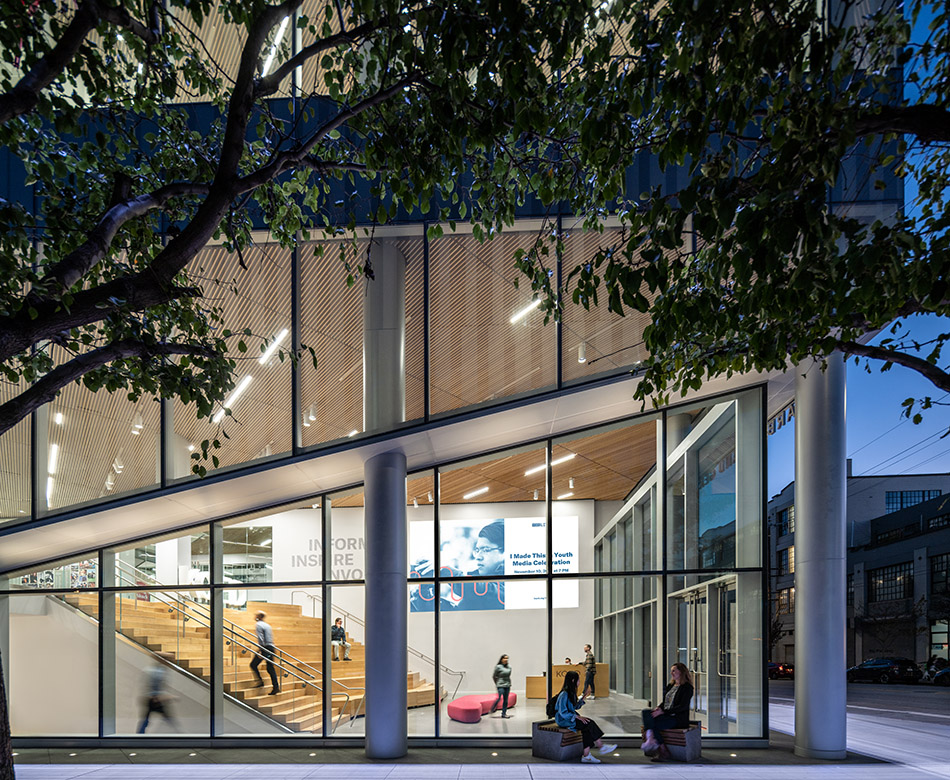
Invitation to the Community
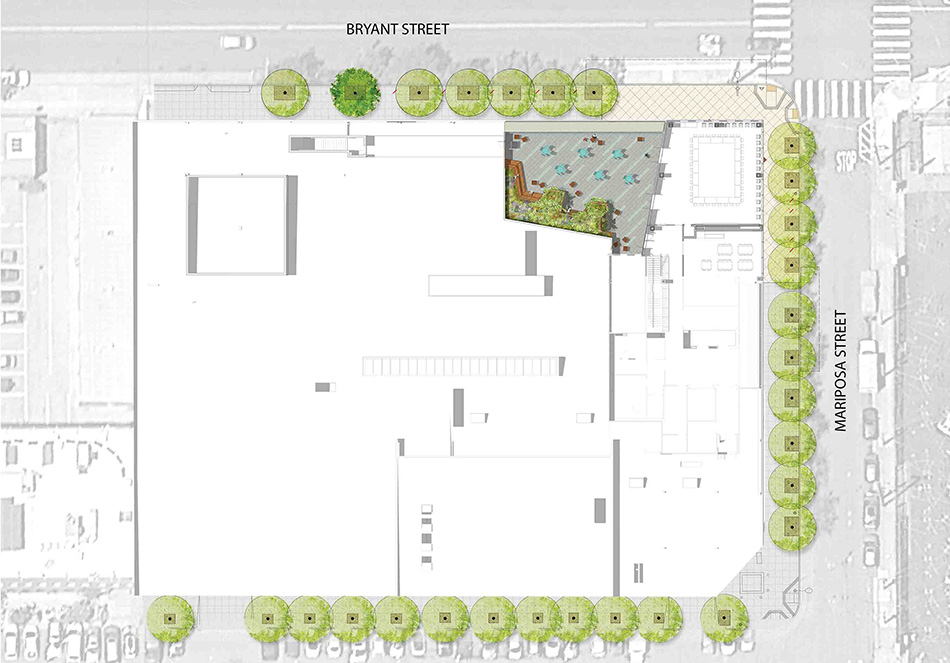
The new design transforms KQED’S presence at Bryant and Mariposa Streets to make this corner the focal point of the block and emblematic of KQED’s engagement with their community. A primarily glass facade provides visual connection between the street and the entry lobby, where this new bright lobby space features a stepped seating amphitheater that is open to the public. The lobby is complemented by streetscape furnishings that reinforce the publicness of these two newly connected spaces.
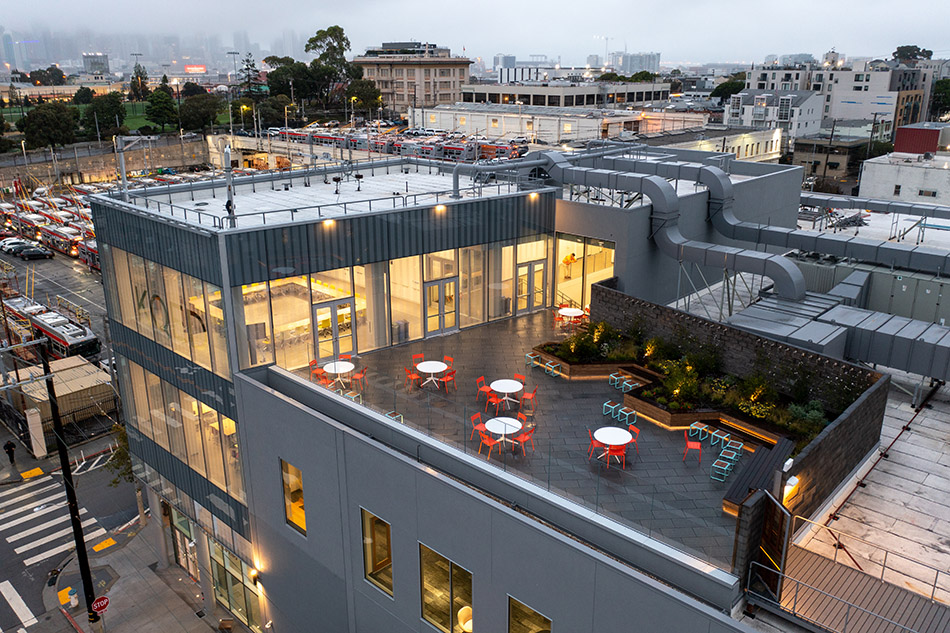
Rooftop Hub
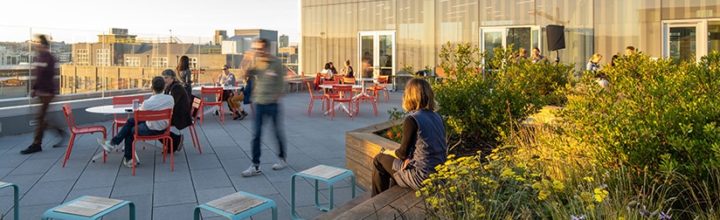
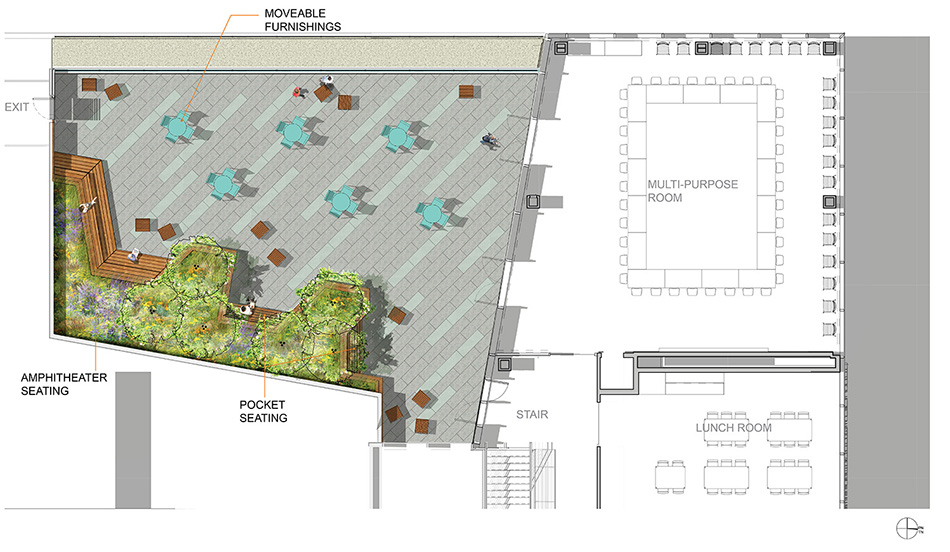
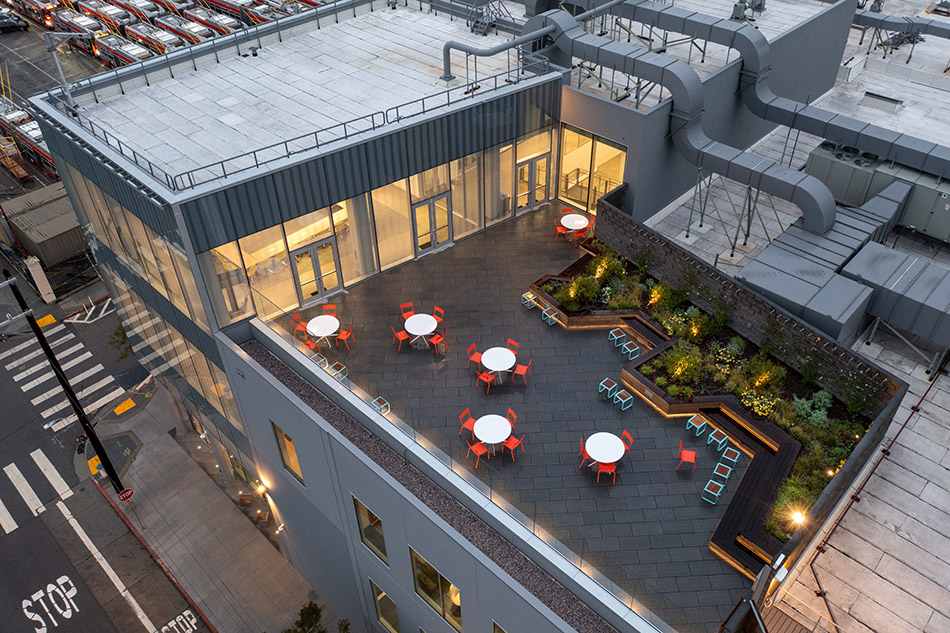
The new roof terrace is created as an exterior environment for staff—an outdoor space for breaks, impromptu meetings, and staff events, as well as a place for the Board of Directors to gather, and for fundraising and public events. The roof terrace has a 360-degree view of San Francisco—including downtown, Twin Peaks, and Bernal Heights—with the design integrating wind protection, seating, native plantings, and colorful and moveable furnishings to accommodate various daily activities. The terrace’s design concept is to provide both smaller outdoor rooms created within a planted edge and a flexible-use central space for larger events and gatherings.
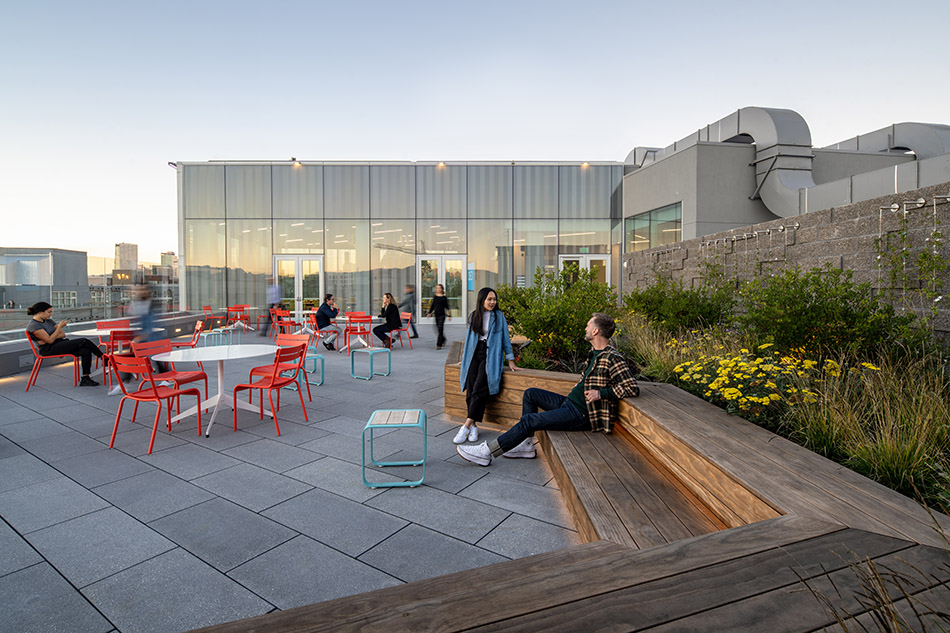
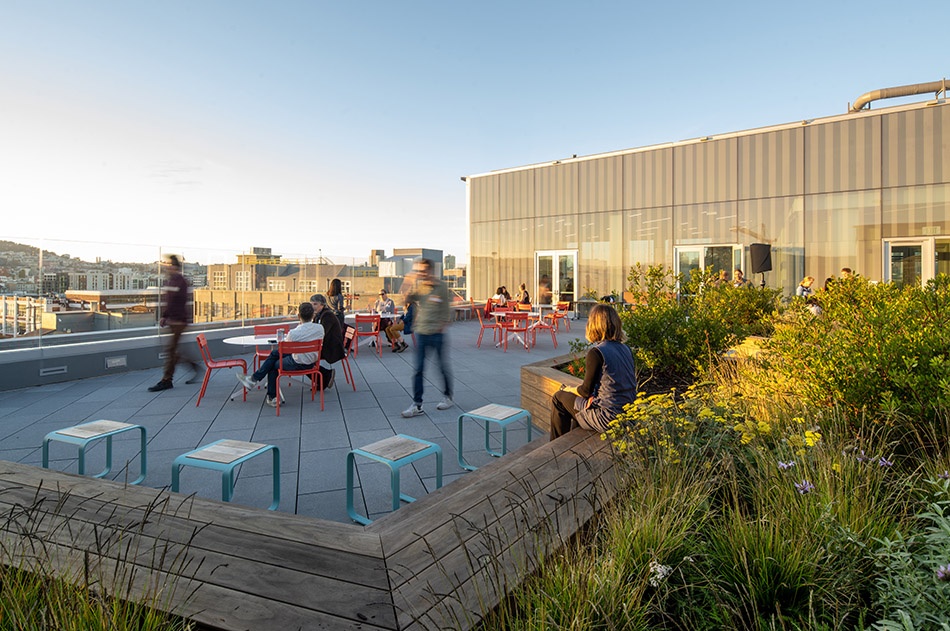
The primary design element is a lengthy, raised planter that runs along the east edge of the terrace, with a surrounding screen wall to separate the terrace visually and acoustically from the adjacent roof and its mechanical structures. The built-in raised planter has niches for seating and a raised terraced edge to the south that accommodates a stepped, amphitheater-like seating edge for small groups. The screen wall has a sculptural, woven block texture and panels of vine climbing cabling to create a vertical green backdrop to the terrace. Plantings have been selected to create bird and butterfly habitat with an emphasis on native flowering species.
Public Geometry
With KQED being a public media outlet squarely at the intersection of art, politics, and culture, it seems fitting that their new headquarters are geographically oriented towards the intersection of two busy thoroughfares in the Mission District. With this reorientation in mind, the architects on the project decided to add details into the design of the building and the multipurpose terrace that are also oriented towards the corner of Bryant and Mariposa Streets including the terrace planter geometry, the rooftop pavers, the lobby and workspace lighting, and boardroom flooring, all of which are aligned on a 45° angle that brings the geometry to the corner of the building, and creates an outward-facing, thematic grain to the project.
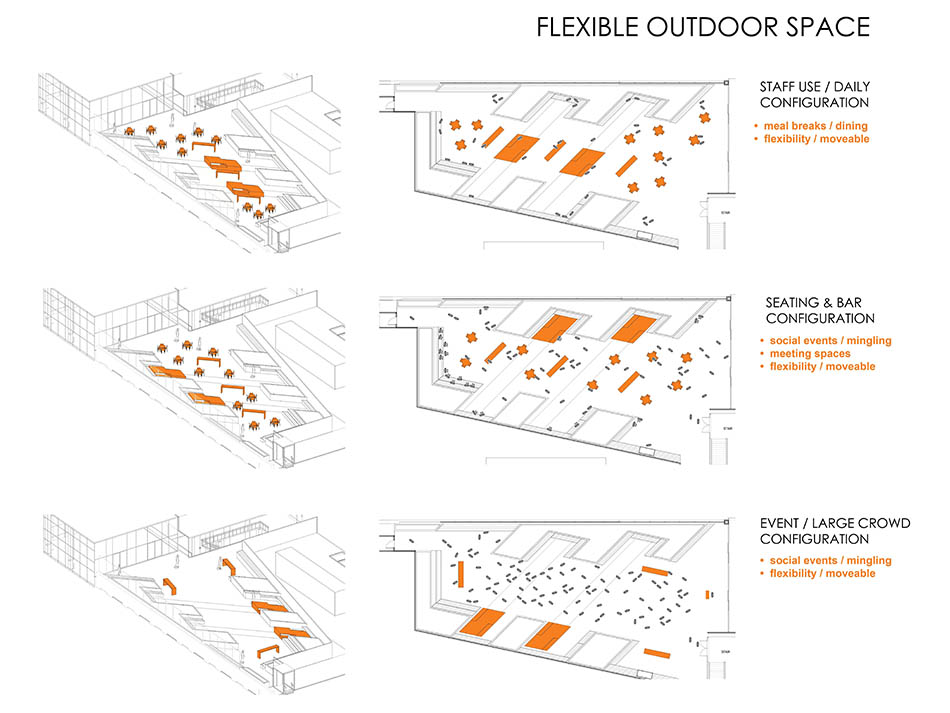
Program/Use Study
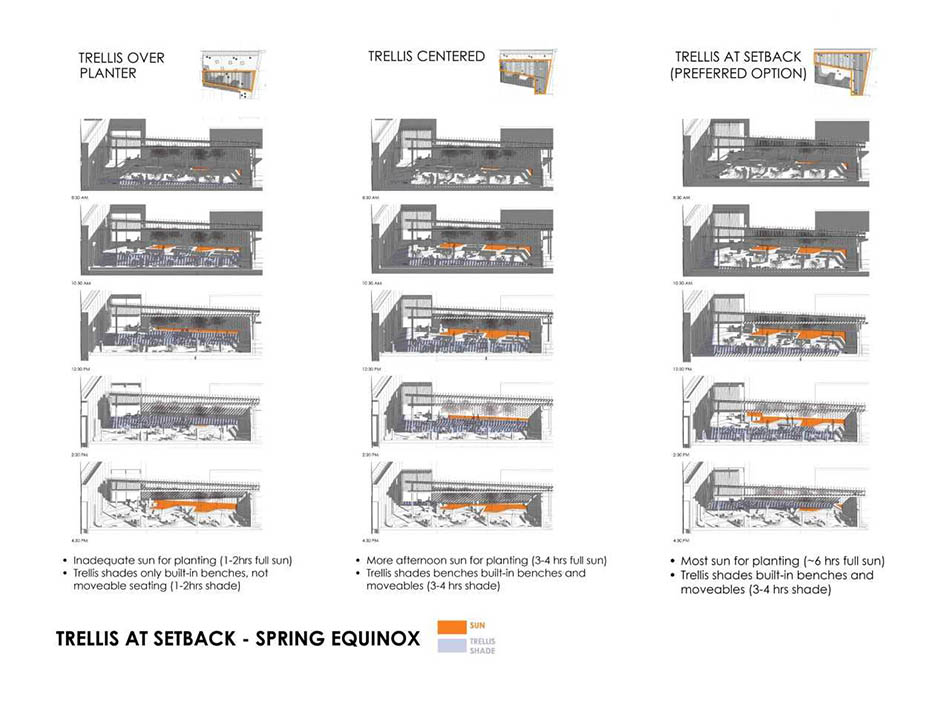
Trellis Form Study
Location: Mission Neighborhood, San Francisco
Owner/Client: KQED / EHDD
Scope: Roof Terrace & Streetscape
Status: Completed 2021
Photography: Jason O’Rear
Palo Alto Public Safety Building Landscape
 Public Entry Ramp and Stair
 With the Neighborhood in Mind
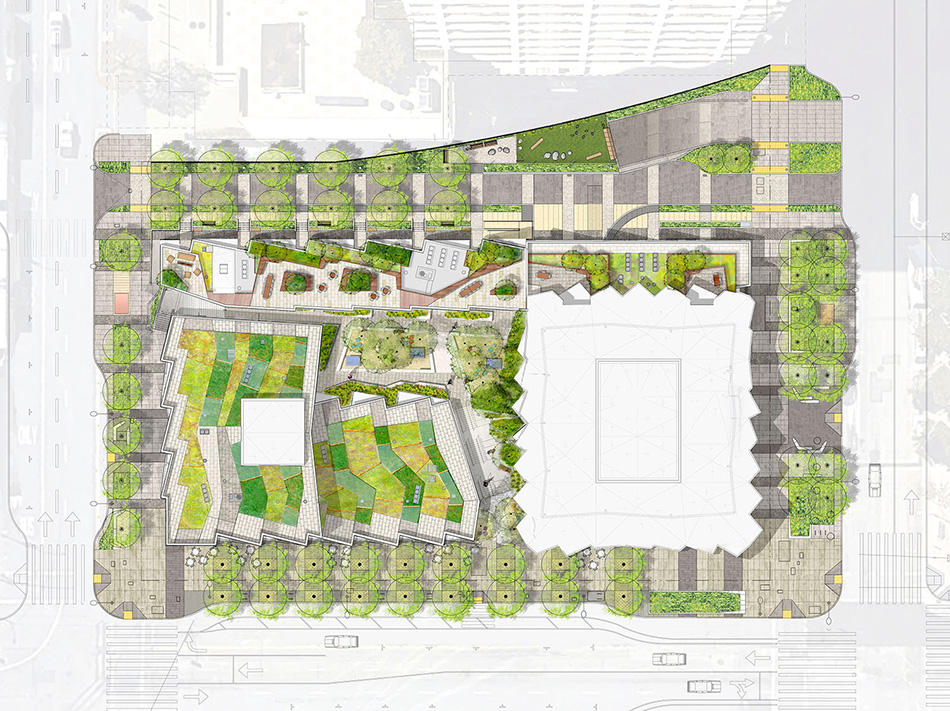
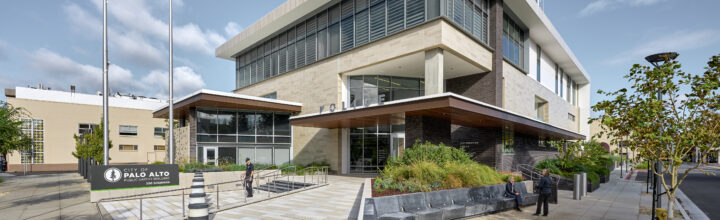
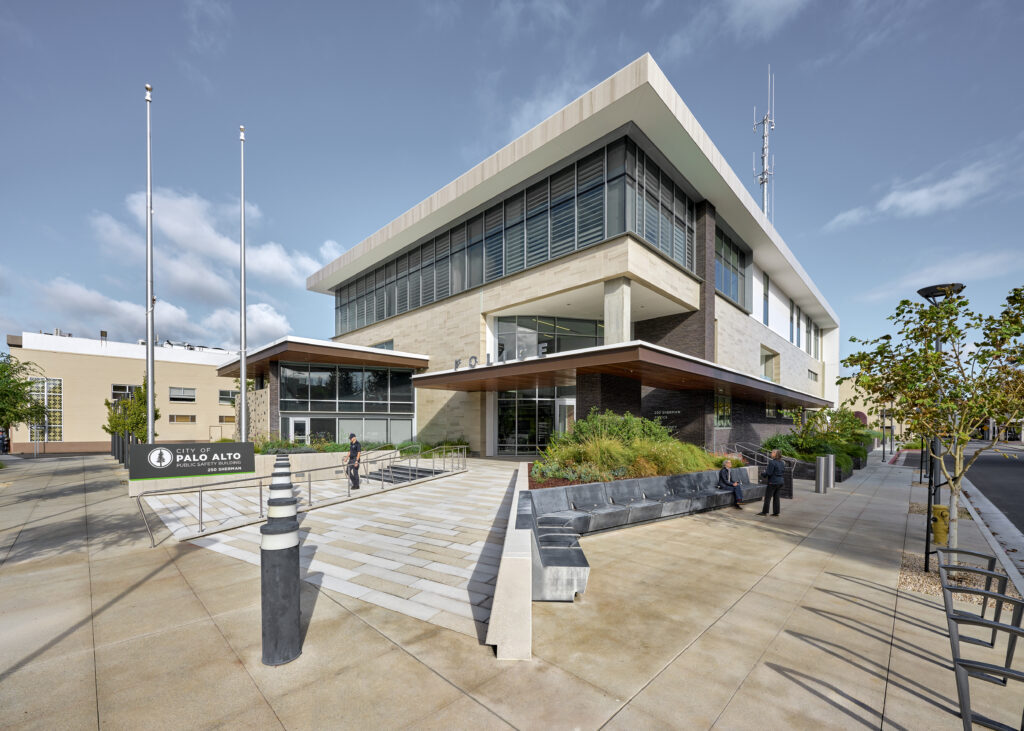
INTERSTICE designed the landscape of the Palo Alto Public Safety Building to privilege the public pedestrian realm and. While each of the four frontages are treated uniquely, they are designed to create a unified streetscape that enhances the pedestrian experience for the California Avenue neighbors and residents. The civic perimeter of the Public Safety Building creates a welcoming place with broad walking areas and various integrated seating amenities for the surrounding community that pass by each day on their way to and from their homes, workplaces and the California Avenue commercial district. The new landscape of the Public Safety Building is meant to reinforce the public safety officers’ role in the lively Cal Avenue neighborhood as good neighbors and important guardians of the community, while discretely providing a protective perimeter that is hardened to vehicular traffic.
 Rendered Site Plan
 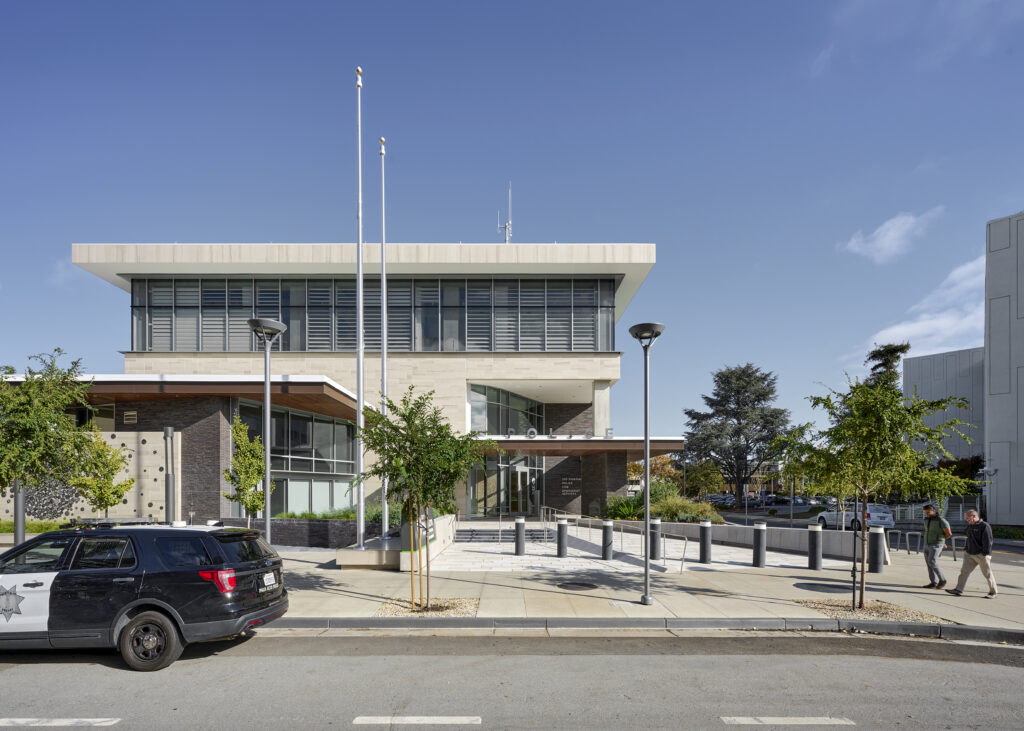 Birch Streetscape
 Street by Street
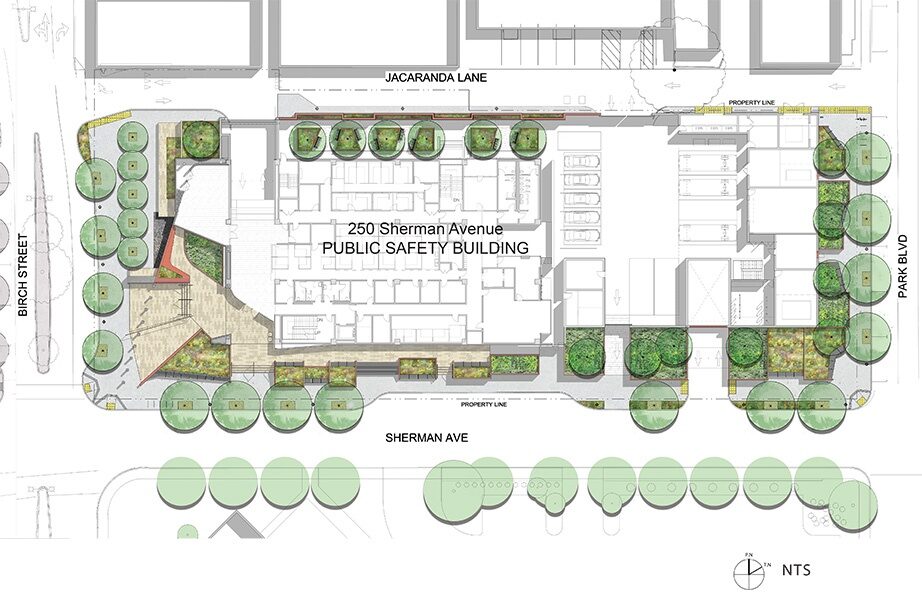
INTERSTICE has ensured that each streetscape on the project is unique to its function and presentation of the Public Safety Building to this neighborhood of Palo Alto.
The Birch Street frontage is a generous tree-framed sidewalk completed by the streetscape at the parking Garage across Birch, also designed by INTERSTICE. The broad stair and welcoming ramp lead from the intersection of Birch and Sherman Avenue to the Public Safety building entry. Seating opportunities are integrated into the plantings that face this wide sidewalk at the Birch Plaza and turn the corner along Sherman Avenue.
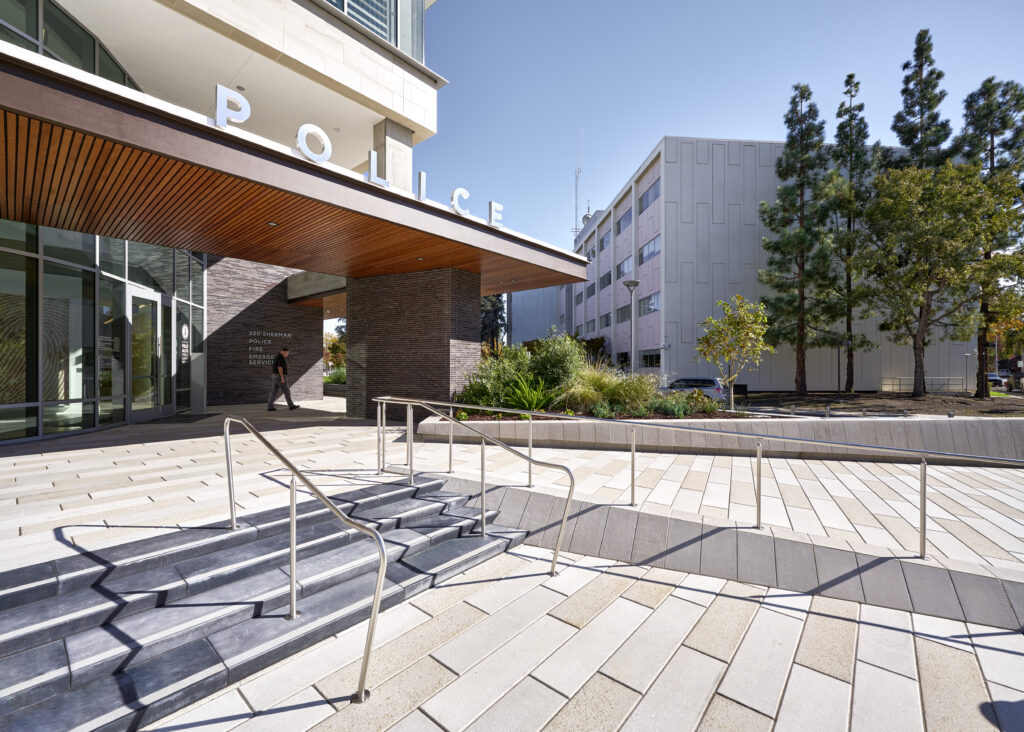 Integrated Ramp and Steps
 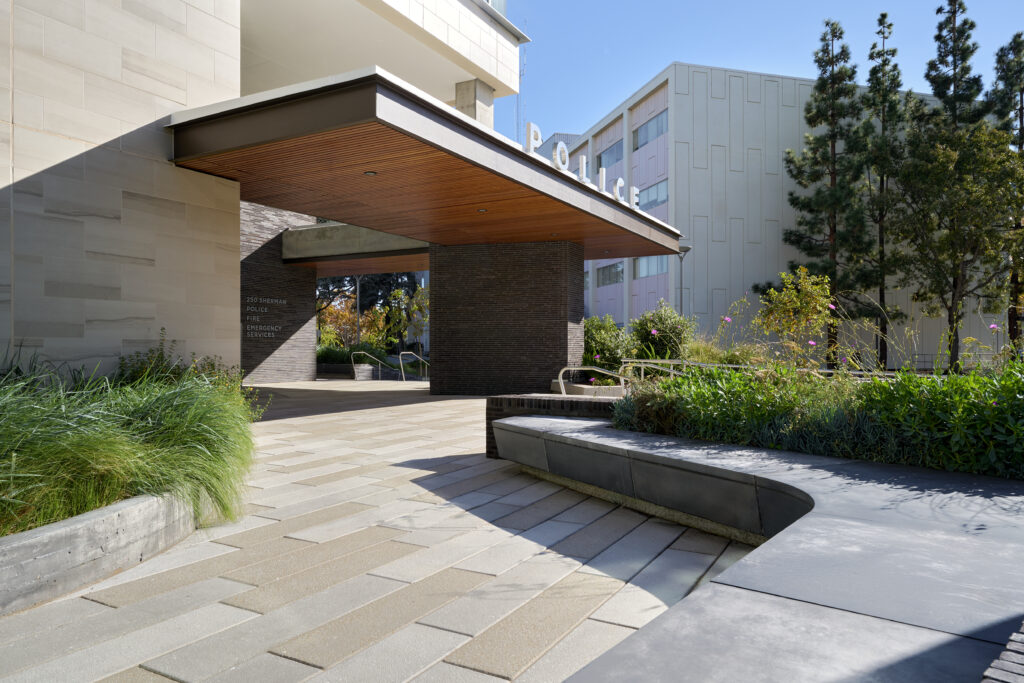 Integrated Seat Wall Planter
 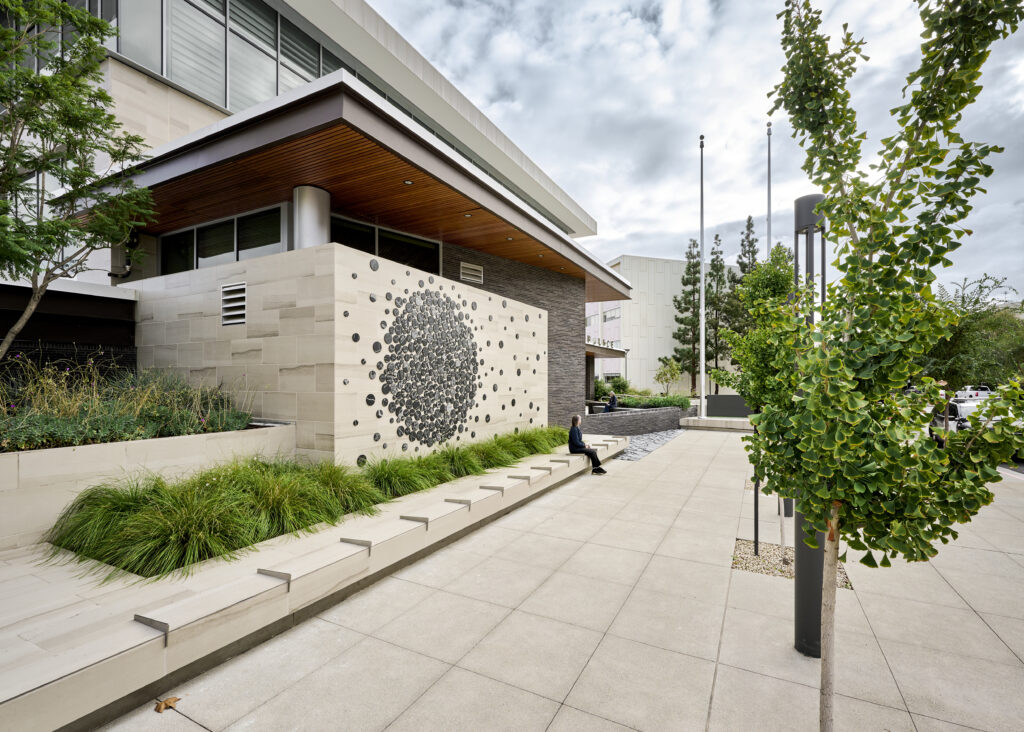 Birch Plaza
 Place & Space For Art
Plantings, seating and artworks are combined to create a softened plaza that sits over the underground parking and public safety functions below grade. The sittable plinth provides a place to pause, take a break or eat lunch in the foreground of an interior meant for community meetings and staff briefings. Columnar ginkgo trees and pedestrian scale light columns frame the plaza creating shade, shelter and seasonal change, as the ginkgoes change from spring chartreuse to summer green, to autumn gold, to leafless winter tracery.
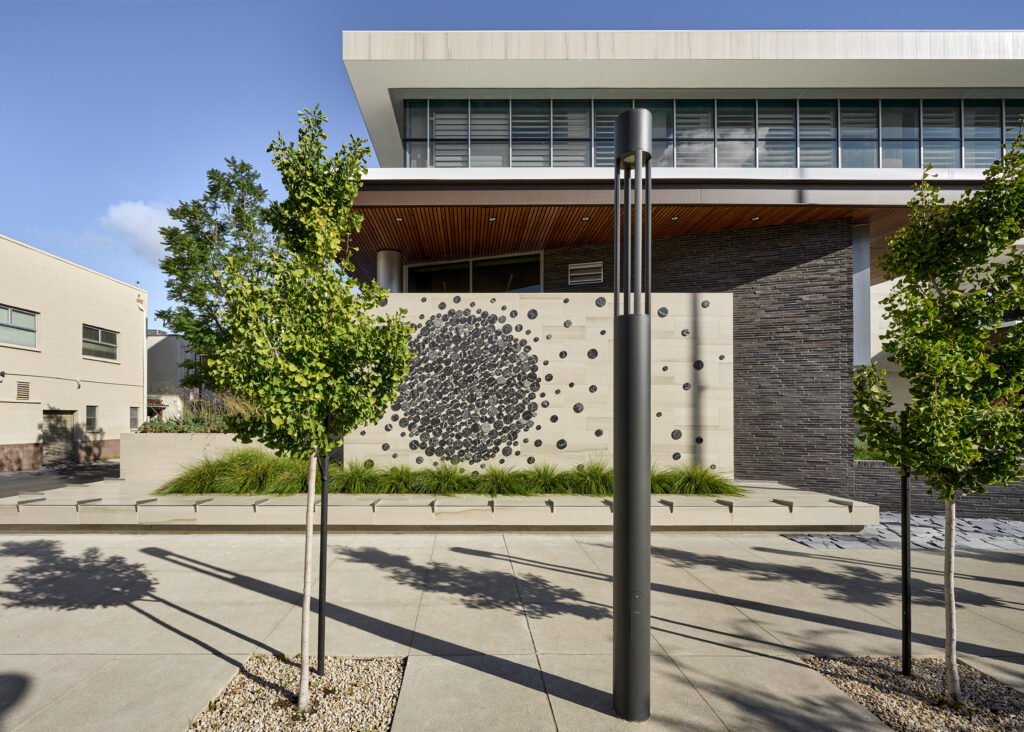 Birch Plaza w/ Public Art: Space, Time & Palo Alto by Peter Wegner
 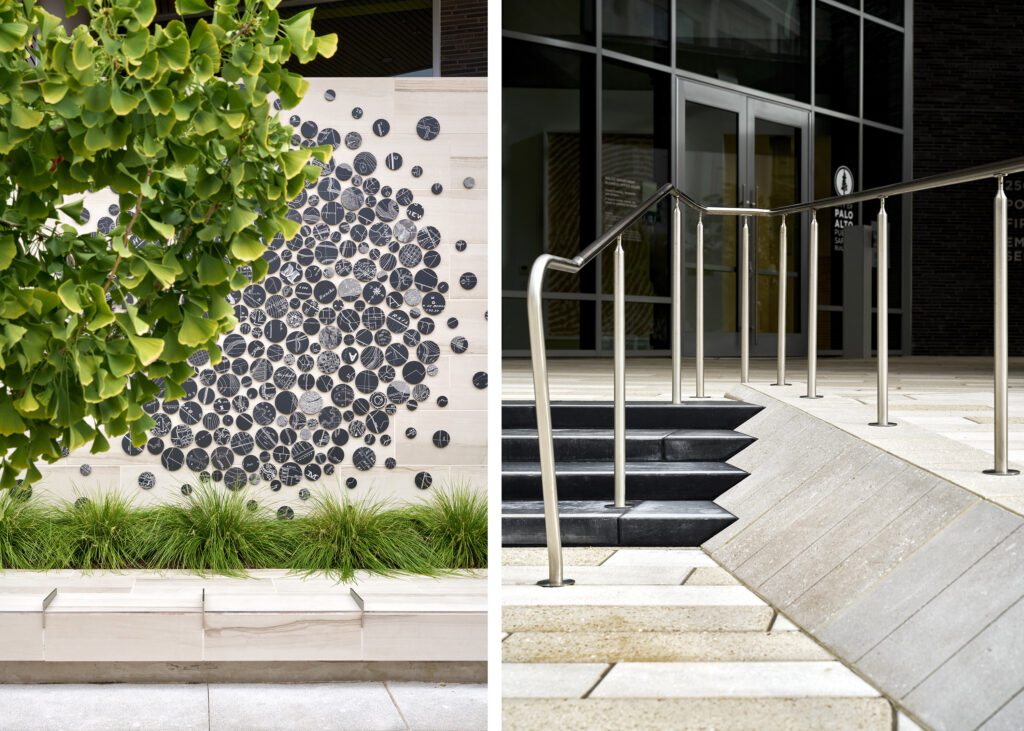 Details
 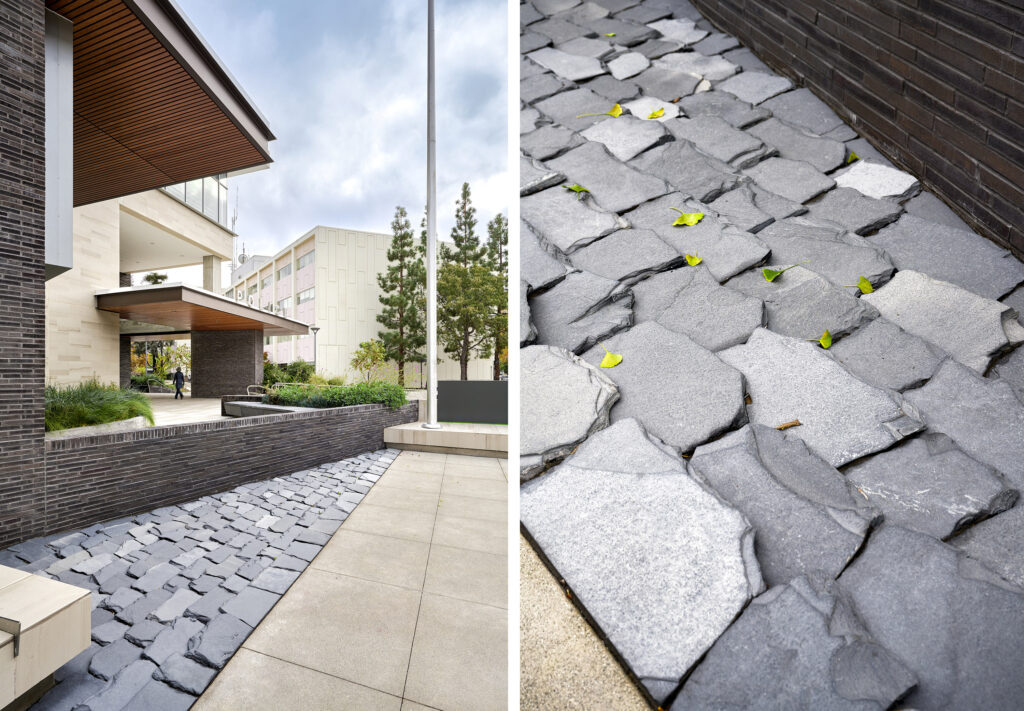 Scaled Paving Detail
 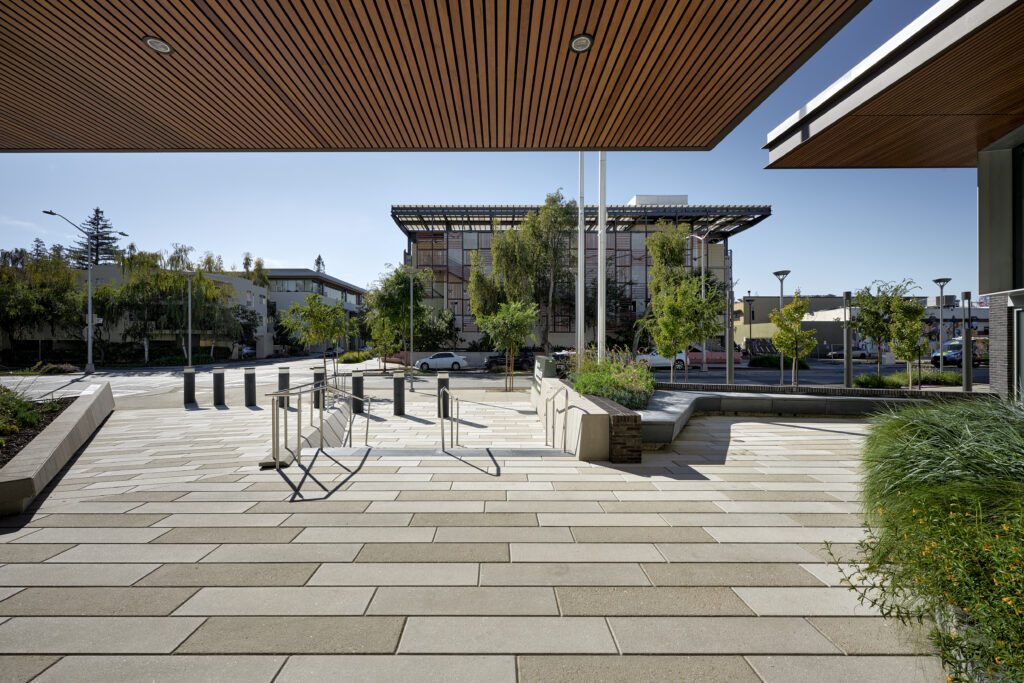 View from Lobby to Birch Street
 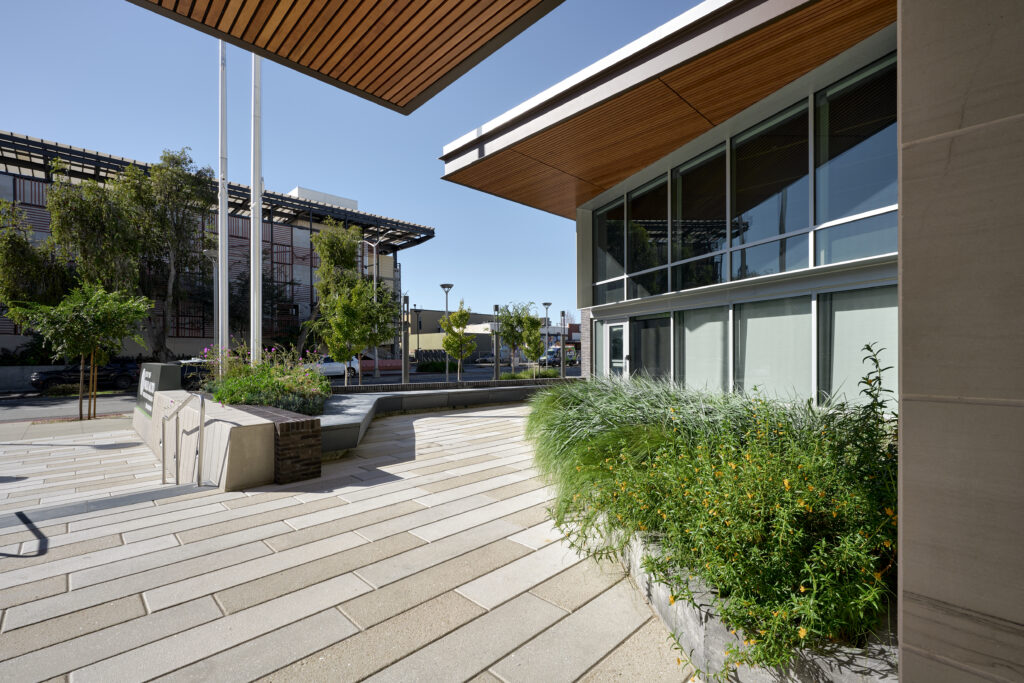 Stormwater Planter & Seating at Community Meeting Room
 Softer Edges
The paving is a linear sandy-hues and modulated texture that unifies the ramp and entry plaza and continues into the lobby, in contrast to the darker, weighty brick of the building, planters and pre-cast seating. Soft elements up against the hard tile, aluminum and glass of the building’s entries help to humanize the passage from street to lobby, creating a more welcoming impression of public safety interaction.
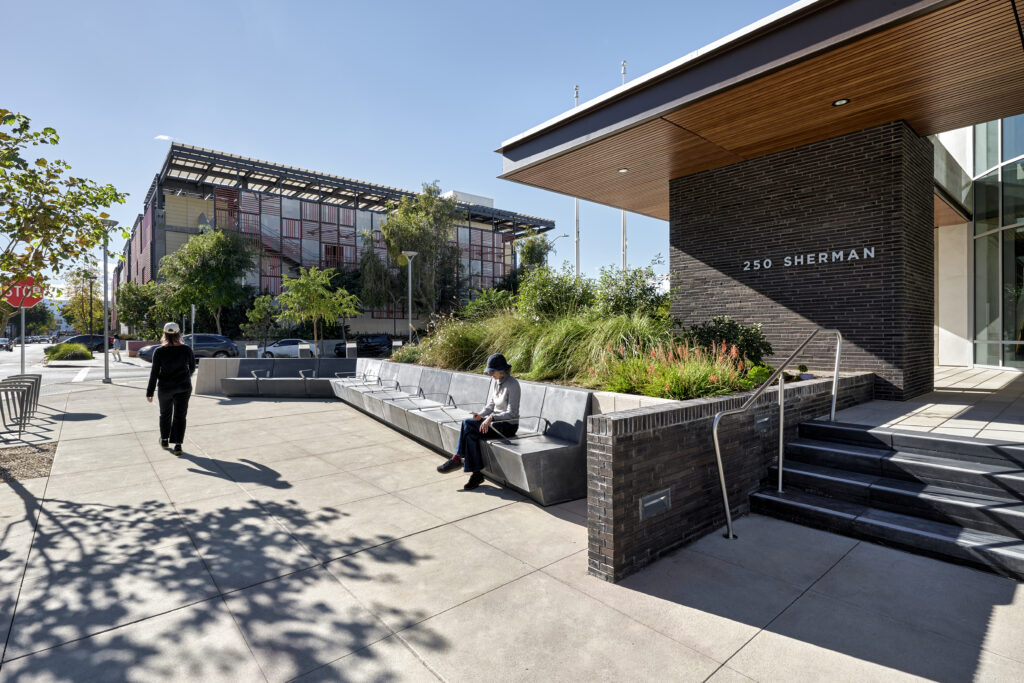 Sherman Avenue Grand Bench
 Climate Forward
Along Sherman Avenue planters are intentionally designed to serve numerous functions – visual integration with the building, climate adaptation – reducing heat islands, slowing and treating stormwater, creating bird and butterfly habitat, providing visitor seating, and creating a defensible perimeter for public safety staff inside the building. A series of raised rain gardens form an inviting and crenelated edge between public safety facility and public sidewalk.
The circulation is designed to create a building-sheltered paseo and a street level walkway with a threshold of rain gardens, raised planters and seating options to invite pedestrians to linger for conversation or meet at lunch time.
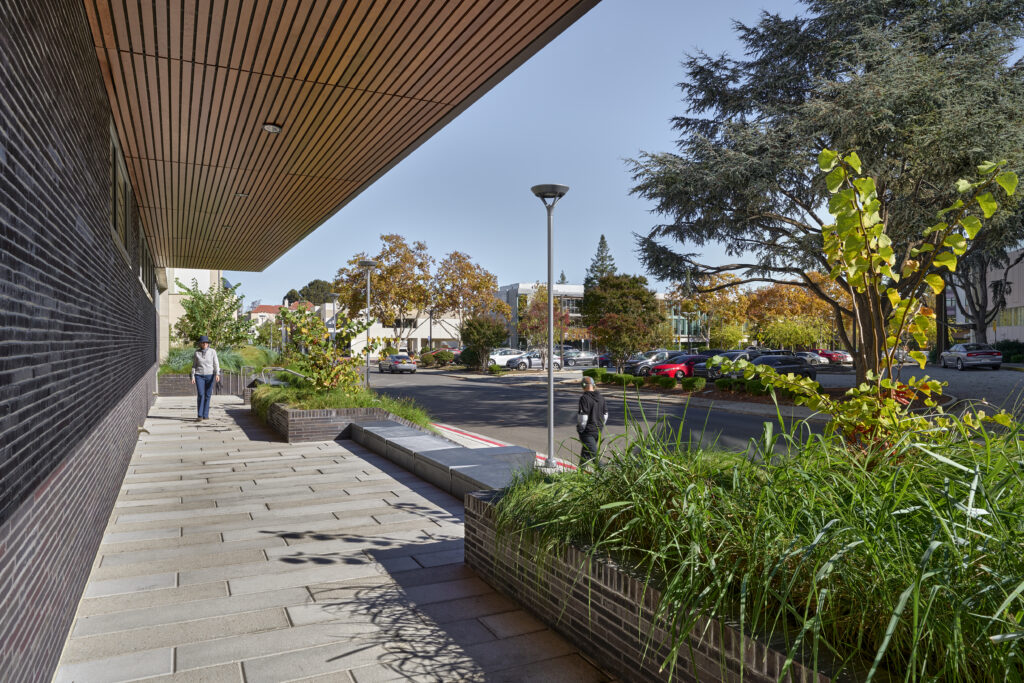 Upper Paseo at Sherman Avenue
 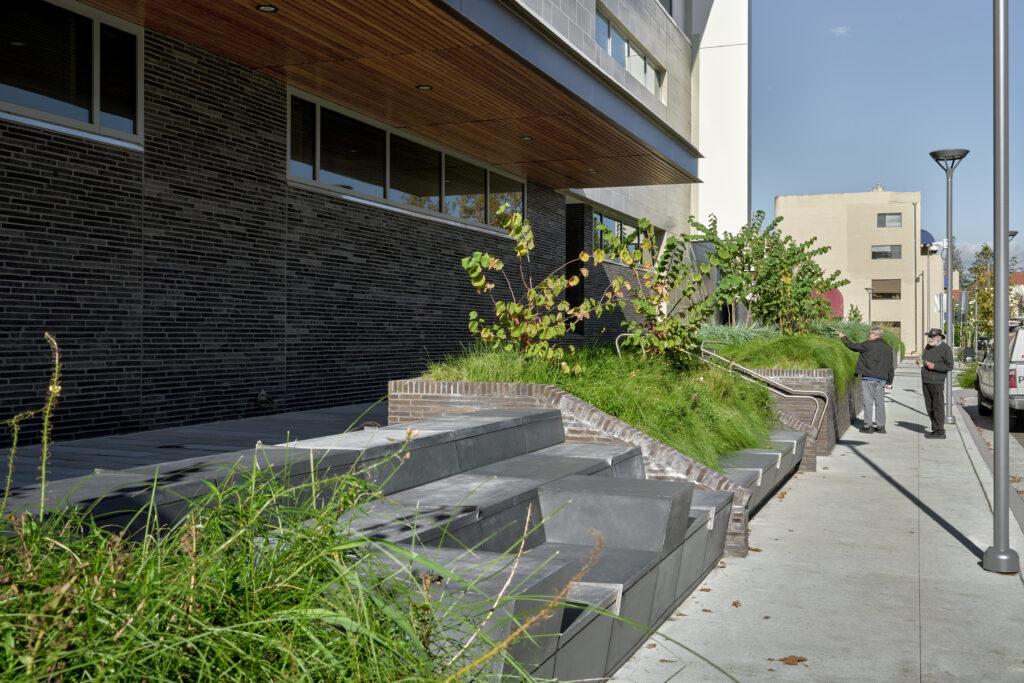 Native Meadow Plantings and Stepped Seating
 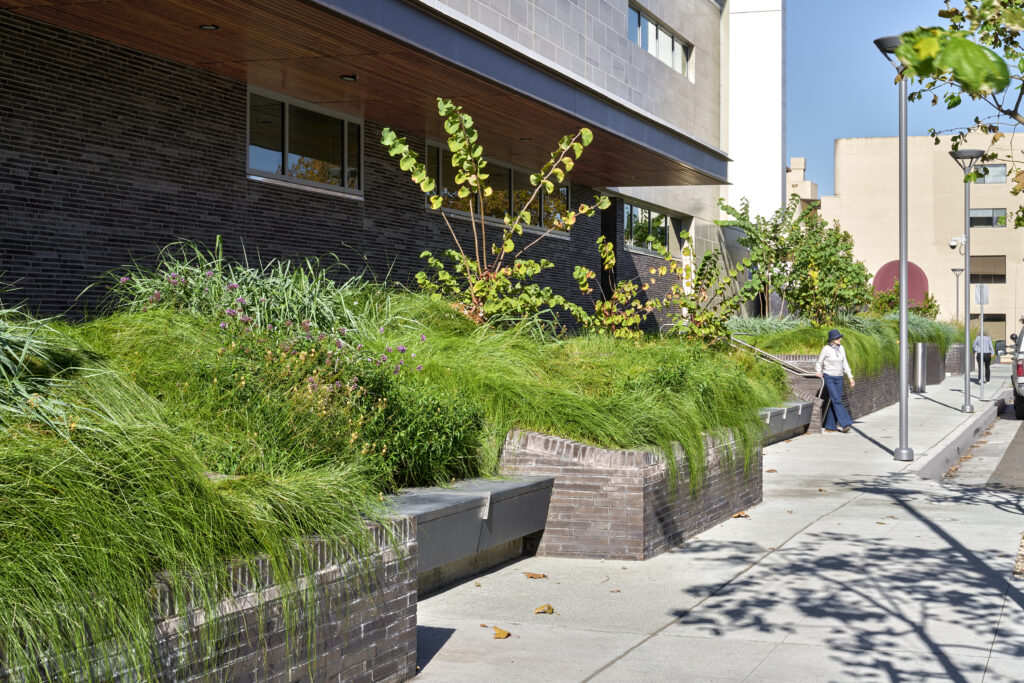 Sherman Avenue Sidewalk Planters & Rain Gardens Beyond
 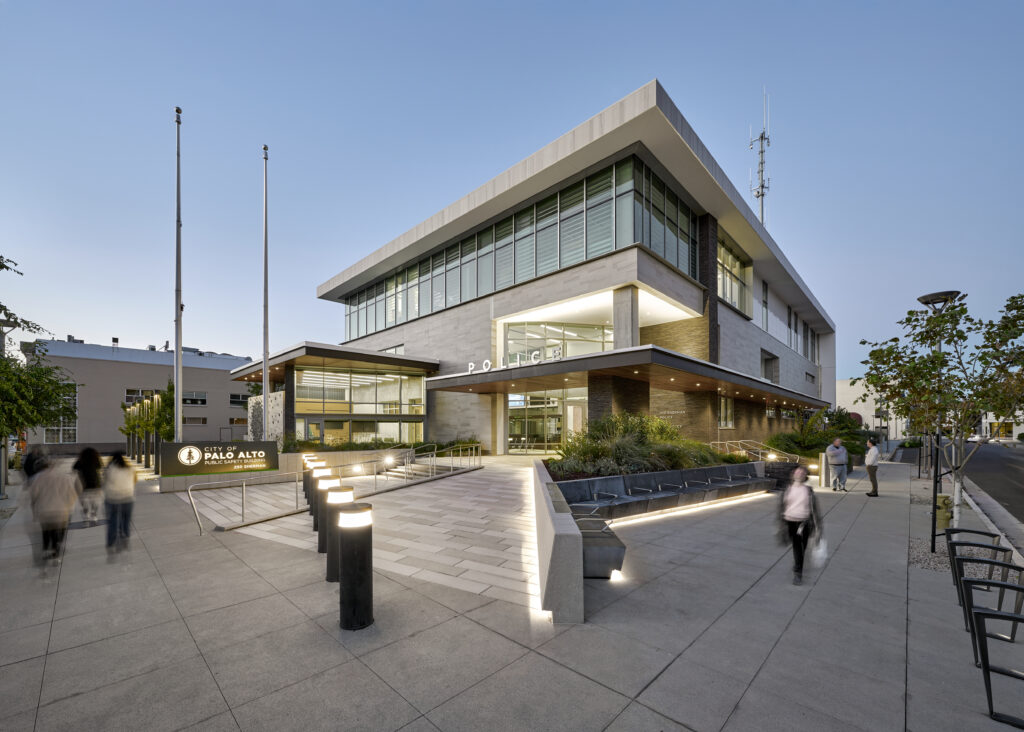 Birch & Sherman | Glowing Elements at Dusk
 Palette of Plantings
Diverse street tree plantings line all three of the frontages and help us to meet the City’s urban forestry plan goals through the selection of native California Sycamore and Arbutus and the use of pavement support systems to provide significant tree rooting area and stormwater reservoir for stormwater surges and infiltration. A varied palette of habitat-producing understory plantings was developed: rain garden plantings, native and adapted grasses and flowering perennials, and shade tolerant courtyard plantings for the staff courtyard. On Birch Street the emphasis is on ornamental grasses, flowering and ground covering perennials, and low shrubs. On Sherman species include open shrubs such as Western Redbud, primarily native grasses, sedges, rushes, and California native perennials. On the Park Boulevard frontage plantings are composed of an alternating rhythm of rain gardens and meadow grasses and shade tolerant understory plants.
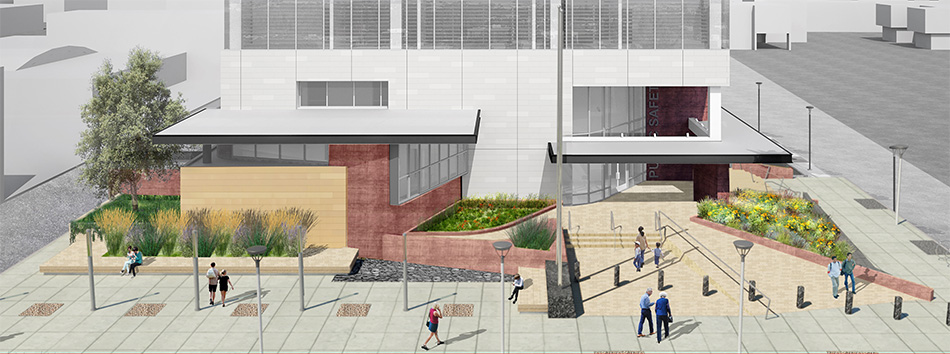 Birch Street Plaza and Entry
 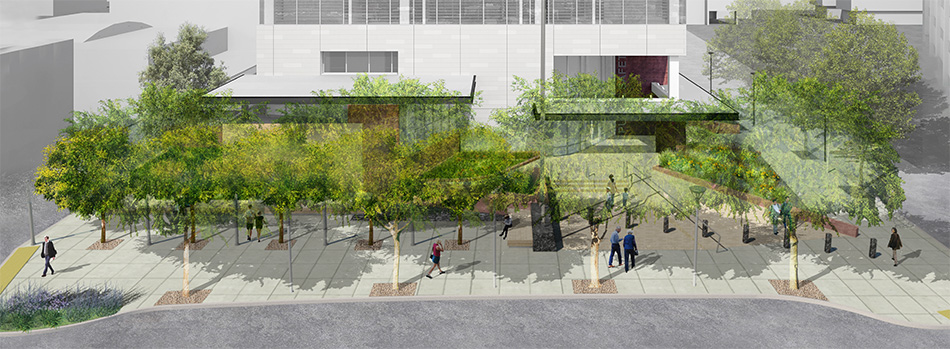 Birch Street Streetscape
 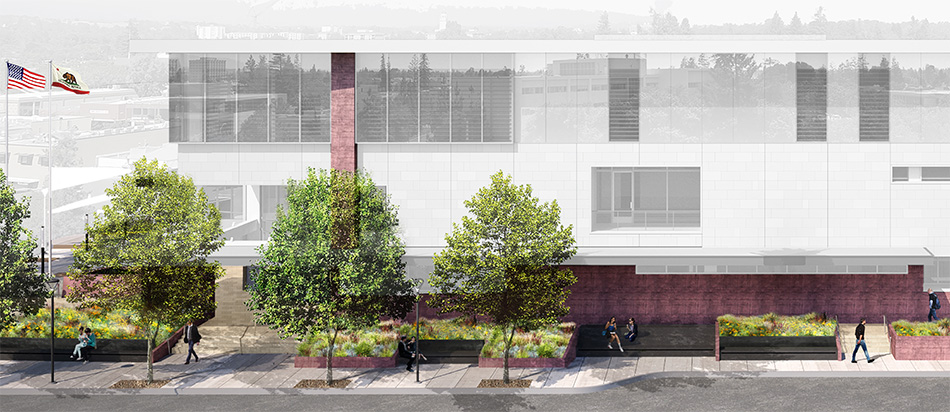 Sherman Avenue Sidewalk
 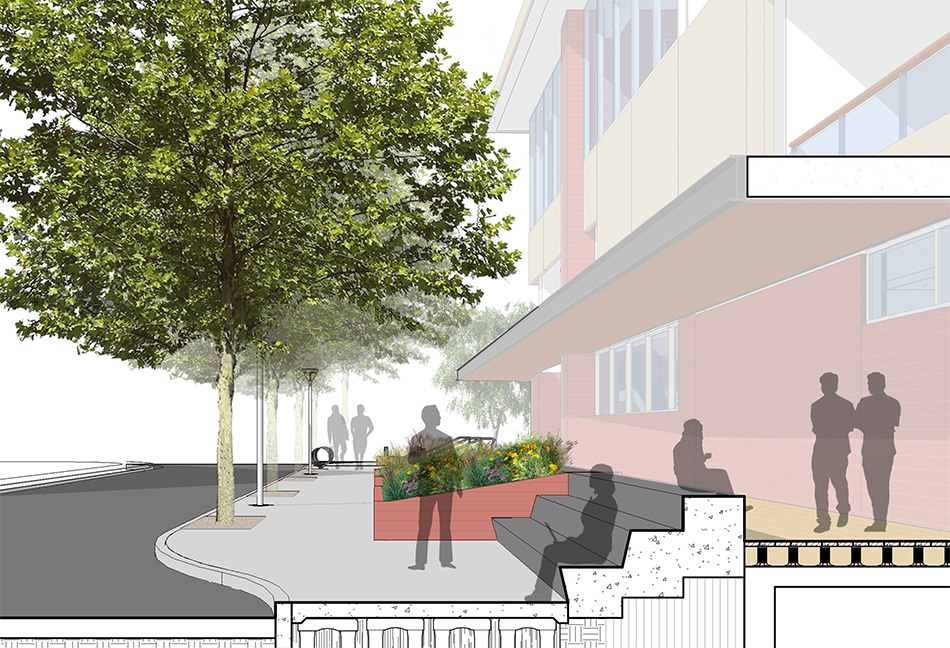 Sherman Avenue Stepped Seating
 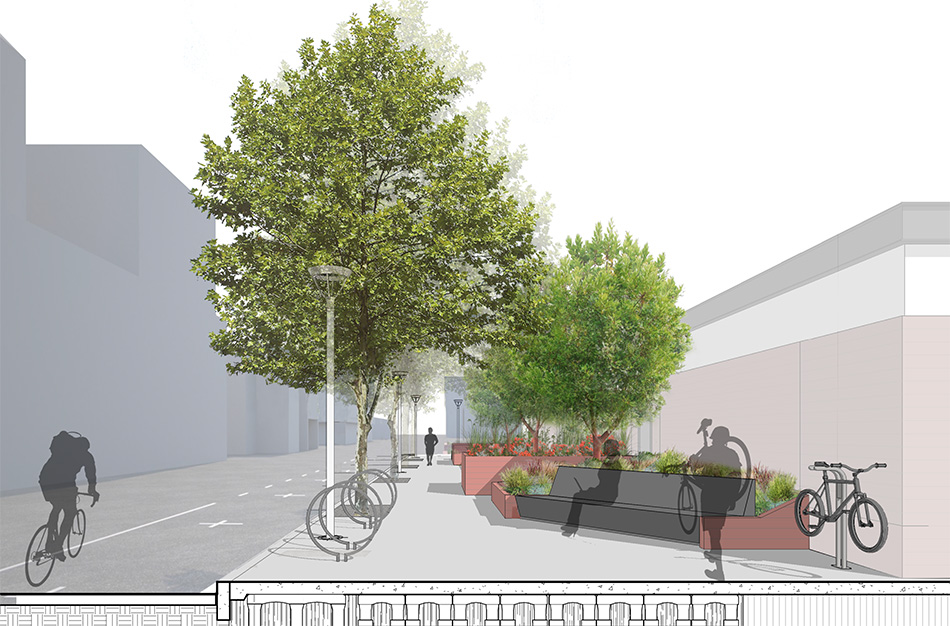 Park Avenue Bicycle Parking & Seating
 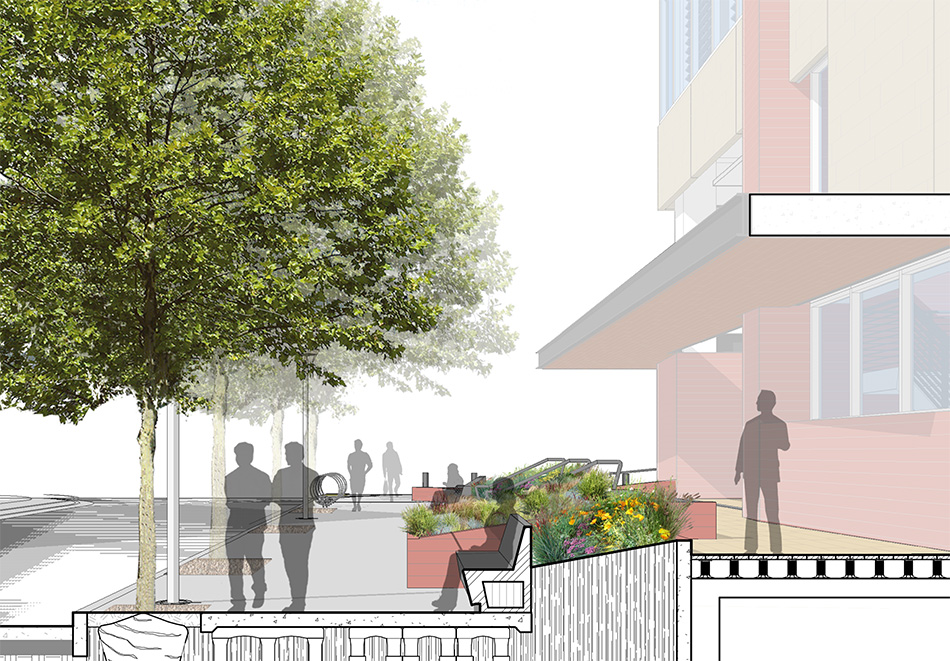 Sherman Avenue Planters
Location: Palo Alto, California
Owner/Client: City of Palo Alto | RossDrulisCusenbery Architecture
Scope: Landscape and Streetscape
Status: Completed 2025
Photography: Andrea Gaffney
Amani and Nia at Sunnydale
Building New Affordable Southern SF Neighborhoods
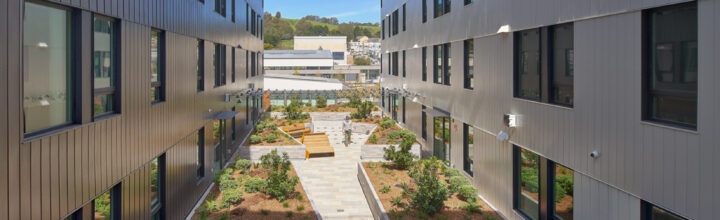
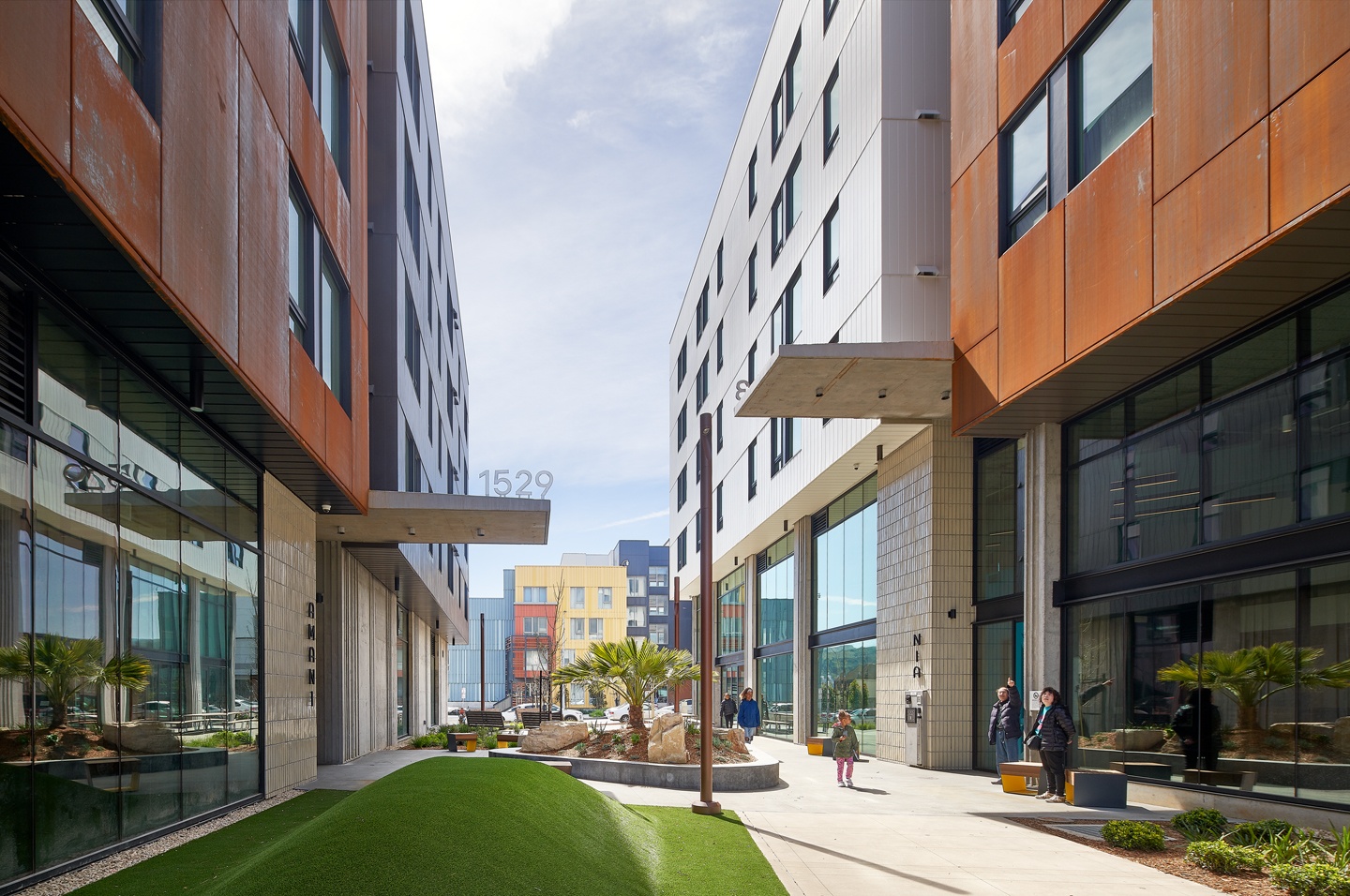
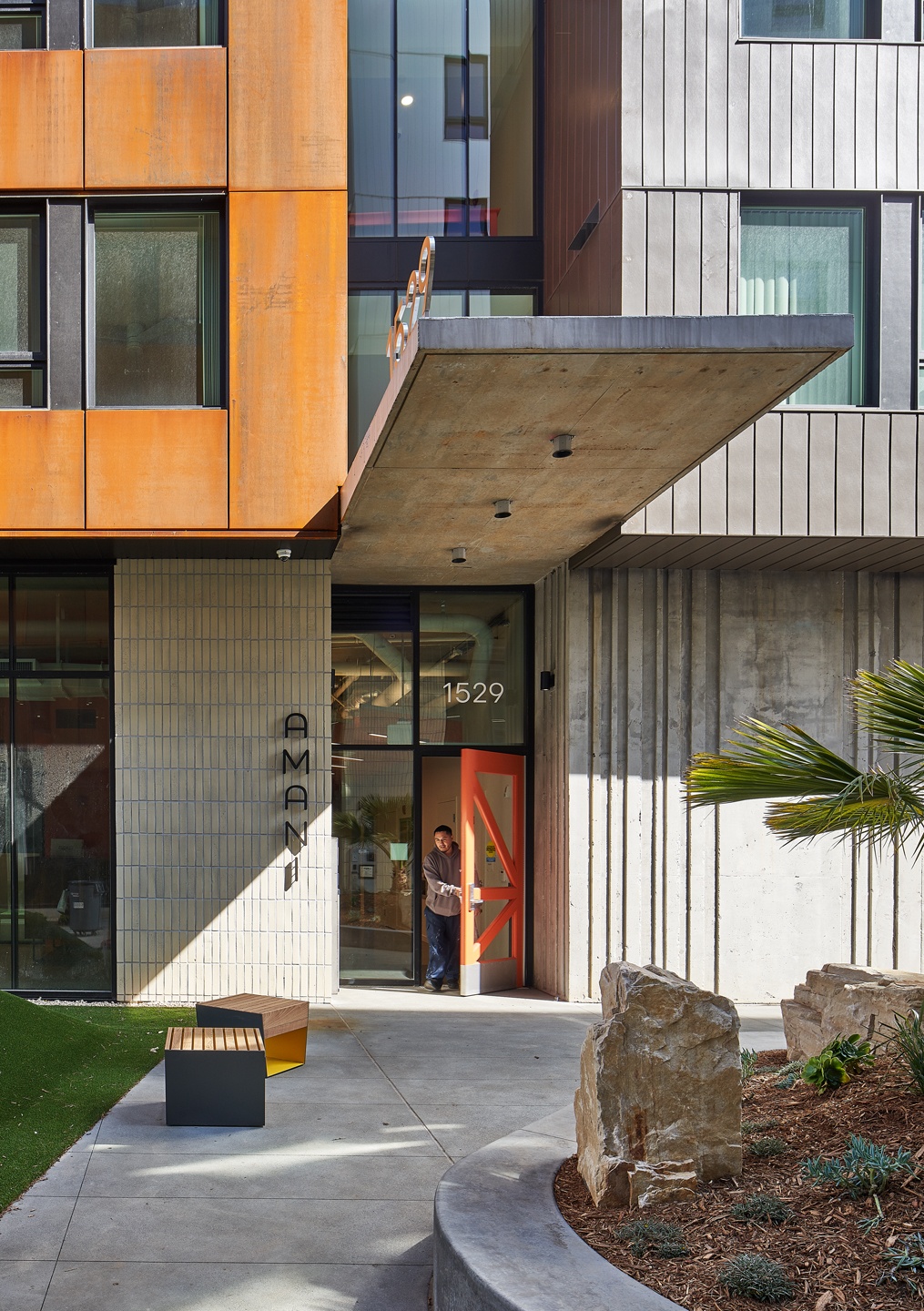
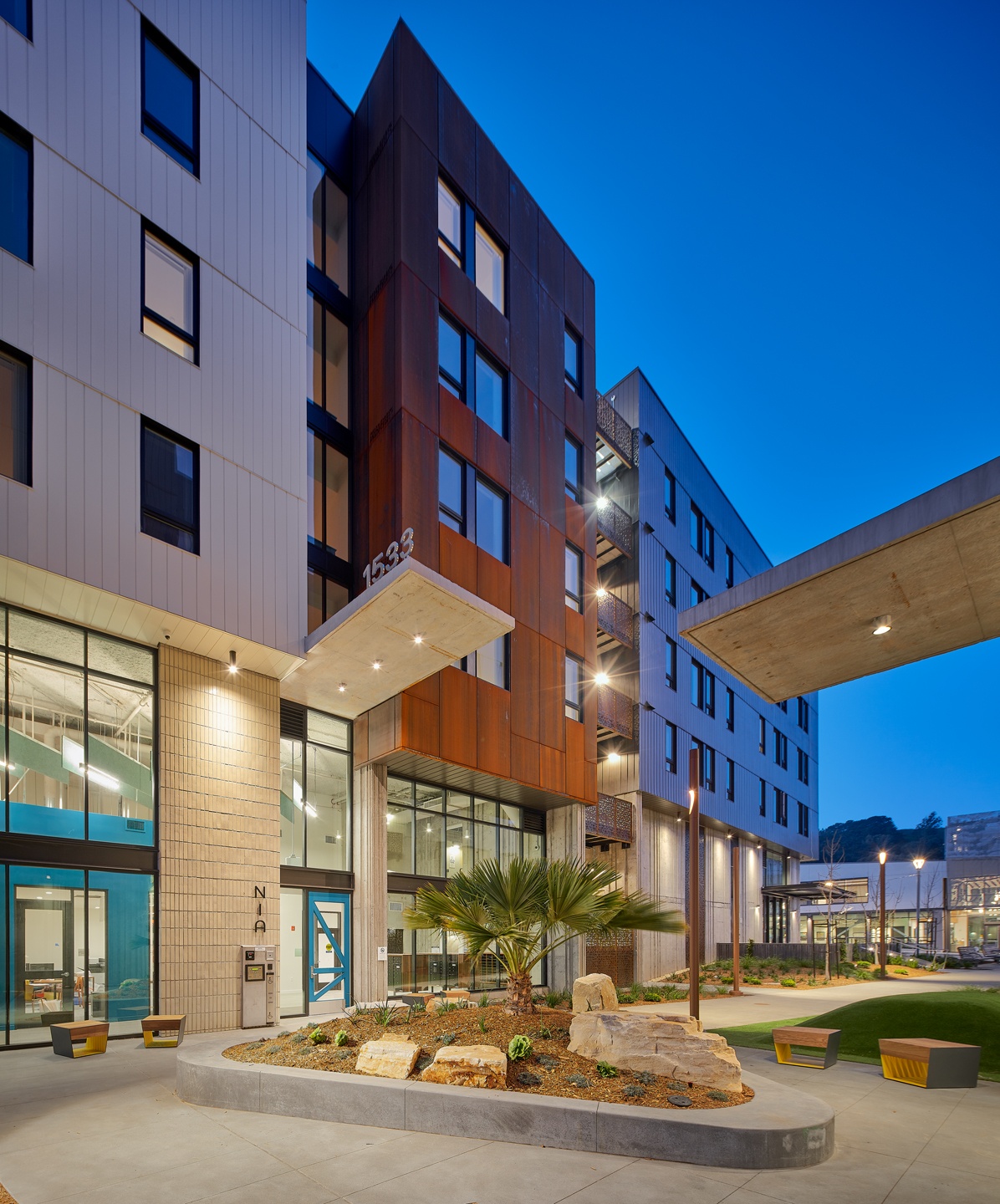
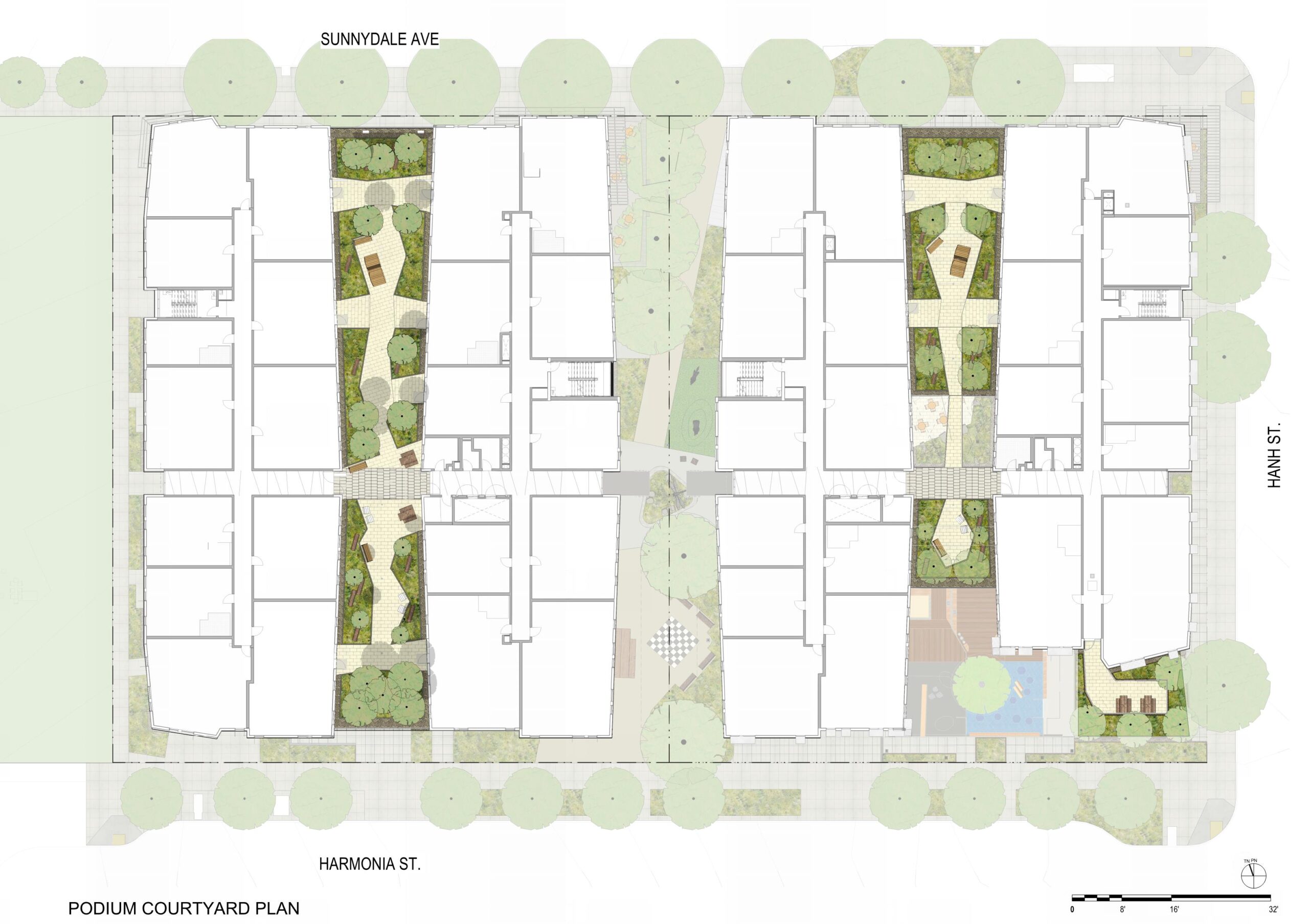
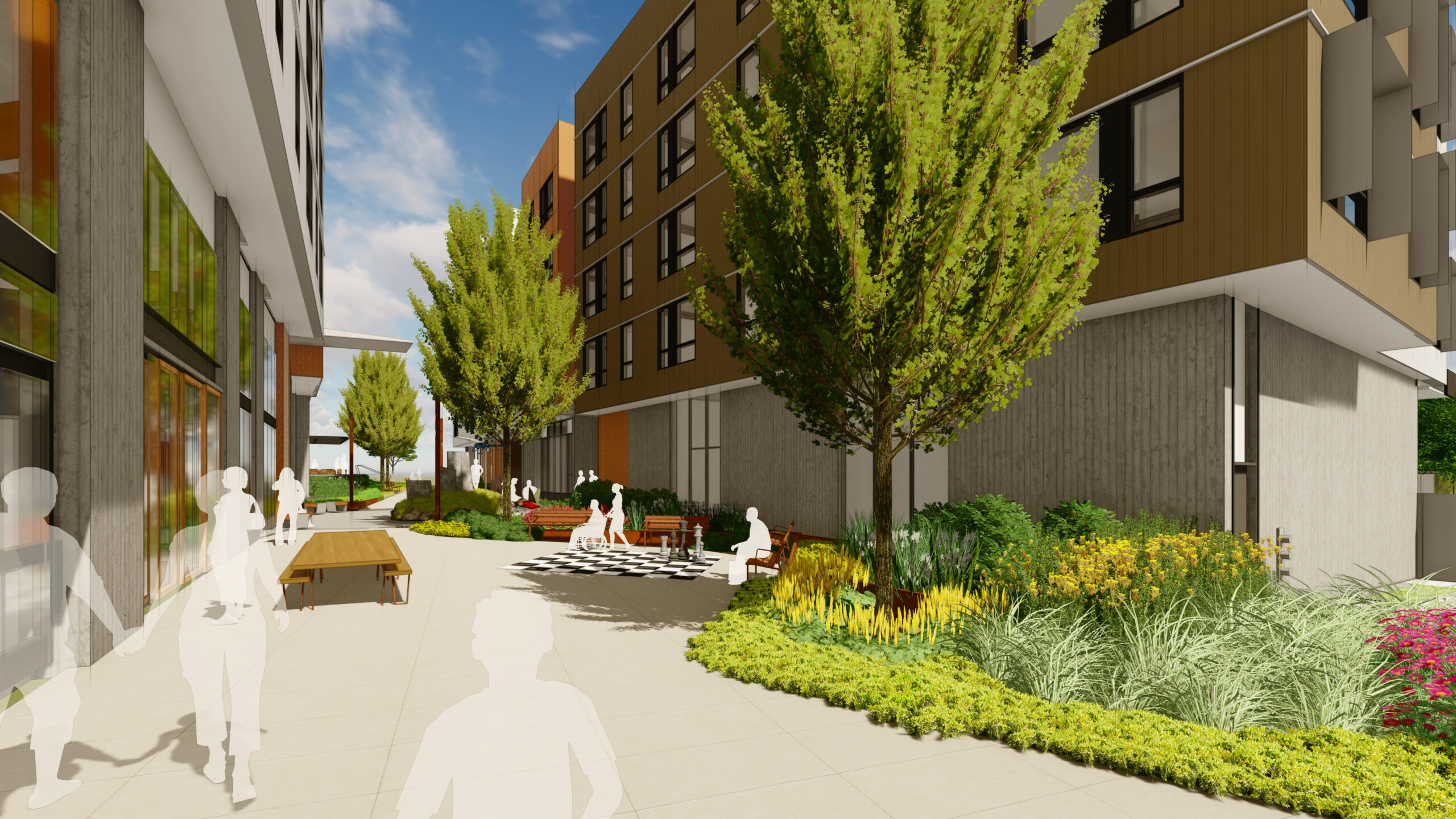
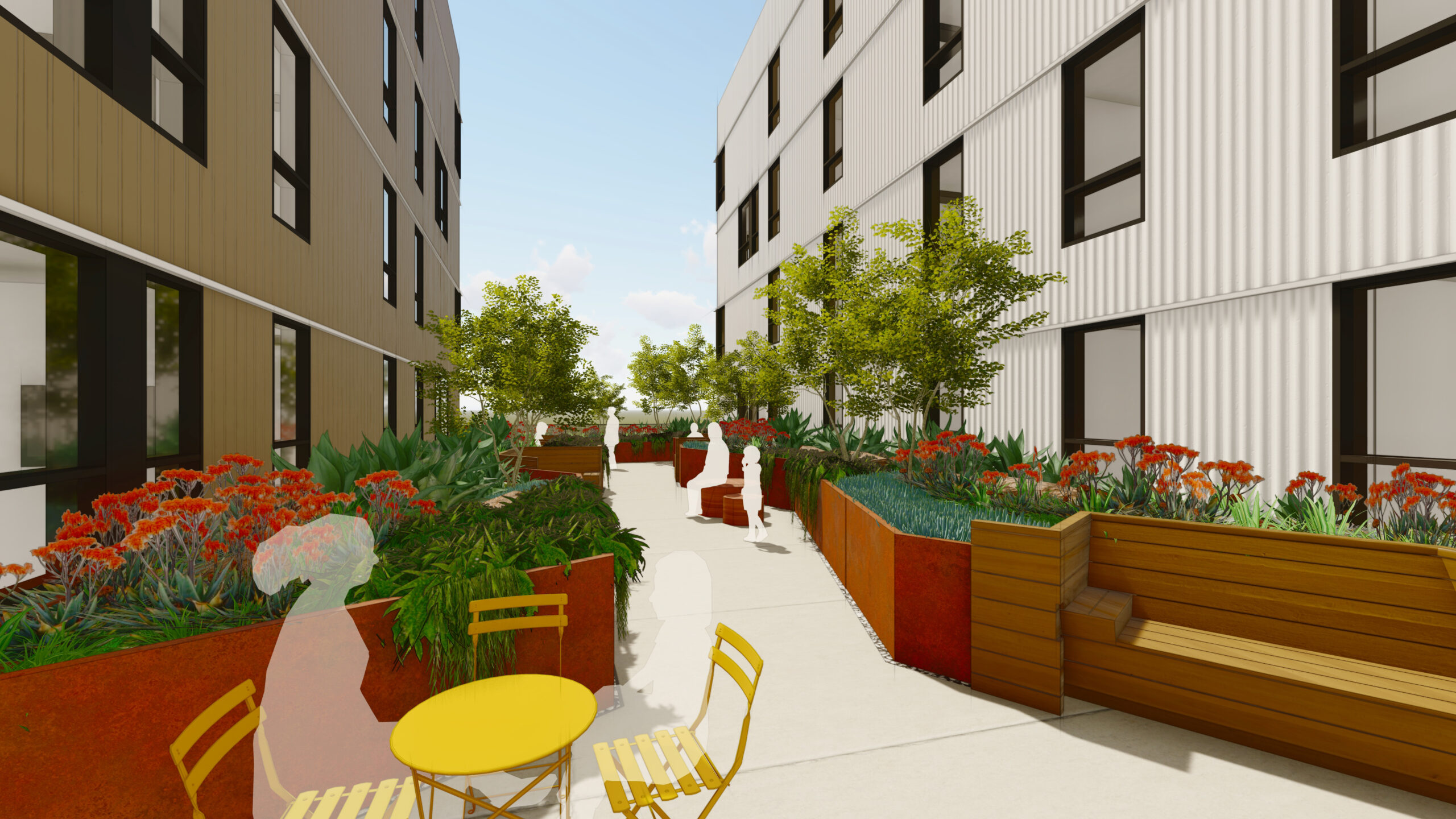
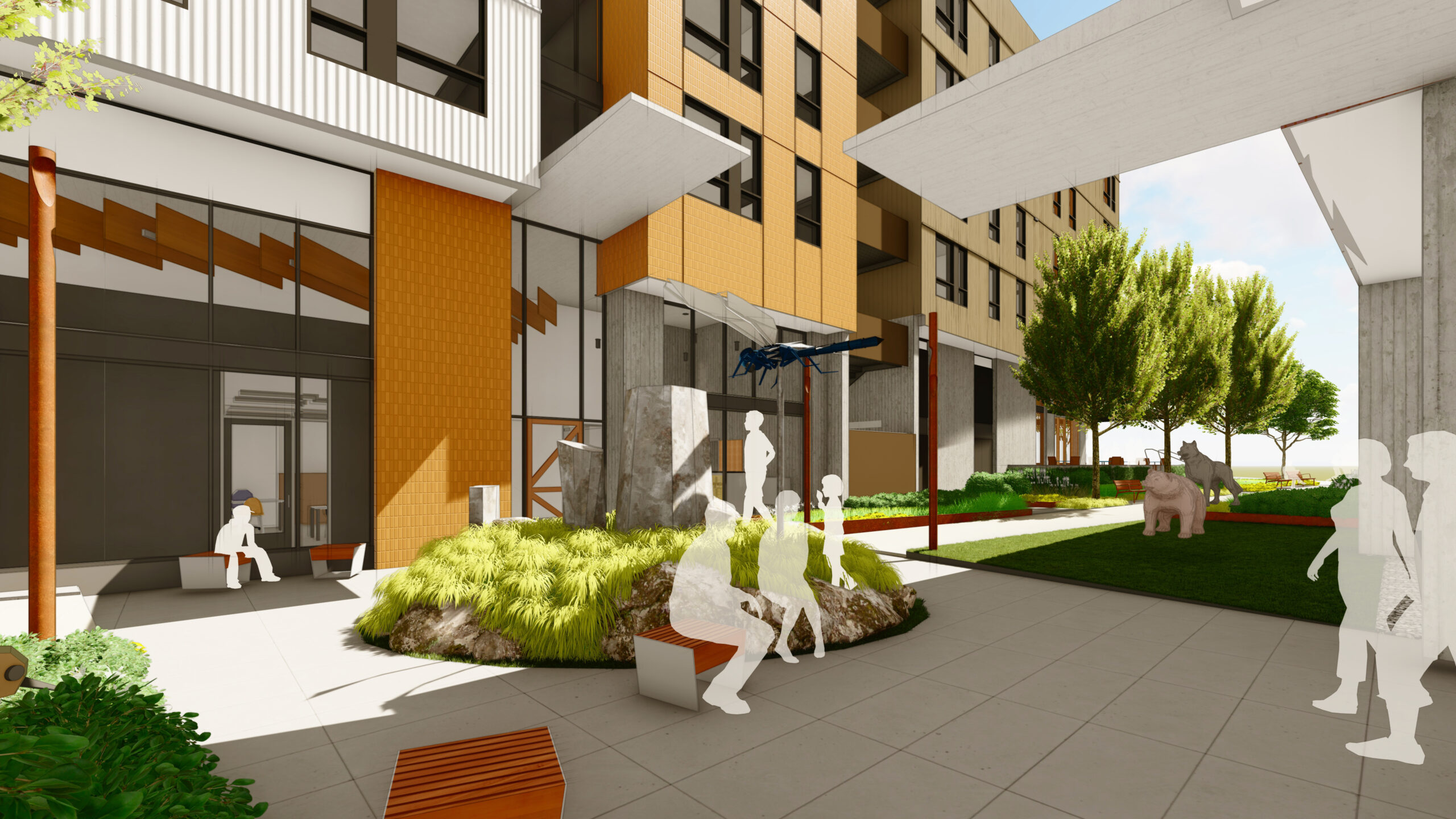
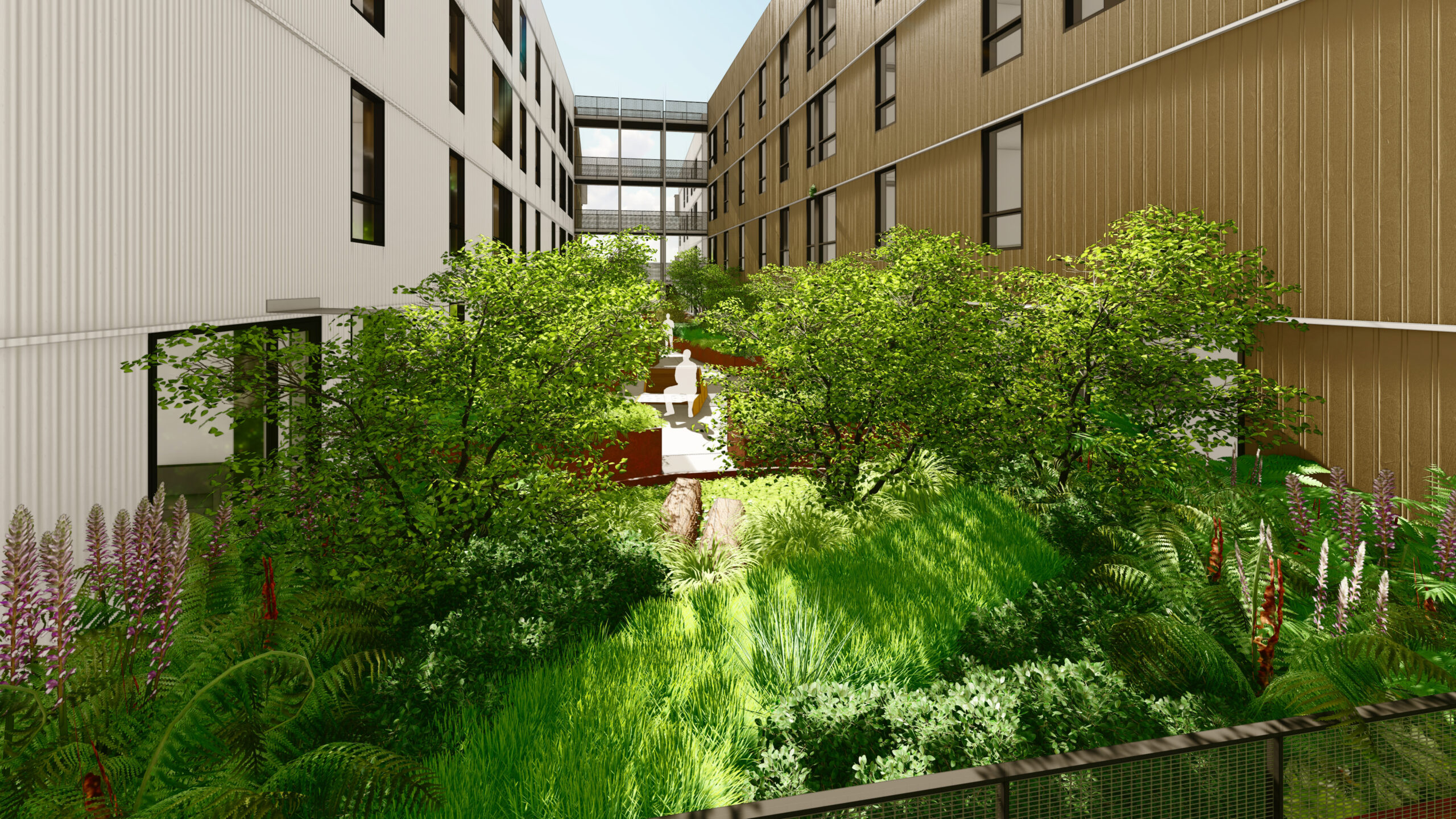
The Sunnydale Mixed Use and Affordable Housing Landscape creates a vibrant place for community from its at-grade pedestrian mews of turf mounds, with oversized animal sculptures, chess boards, and long picnic tables supporting family and neighborhood celebrations, to its more intimate podium-level communal courtyards, where perimeter plantings frame social spaces.
Neighborhood Focused Design
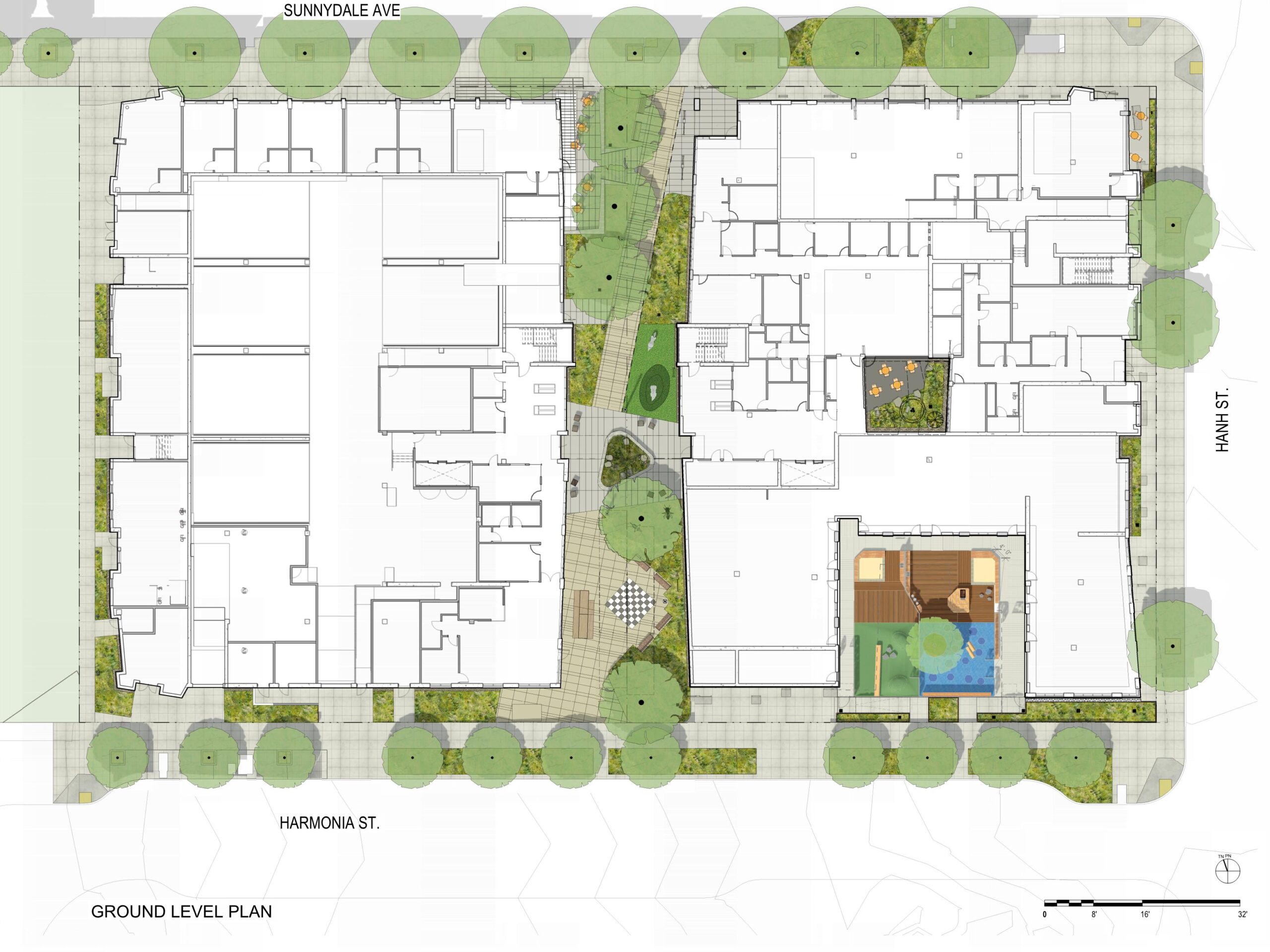
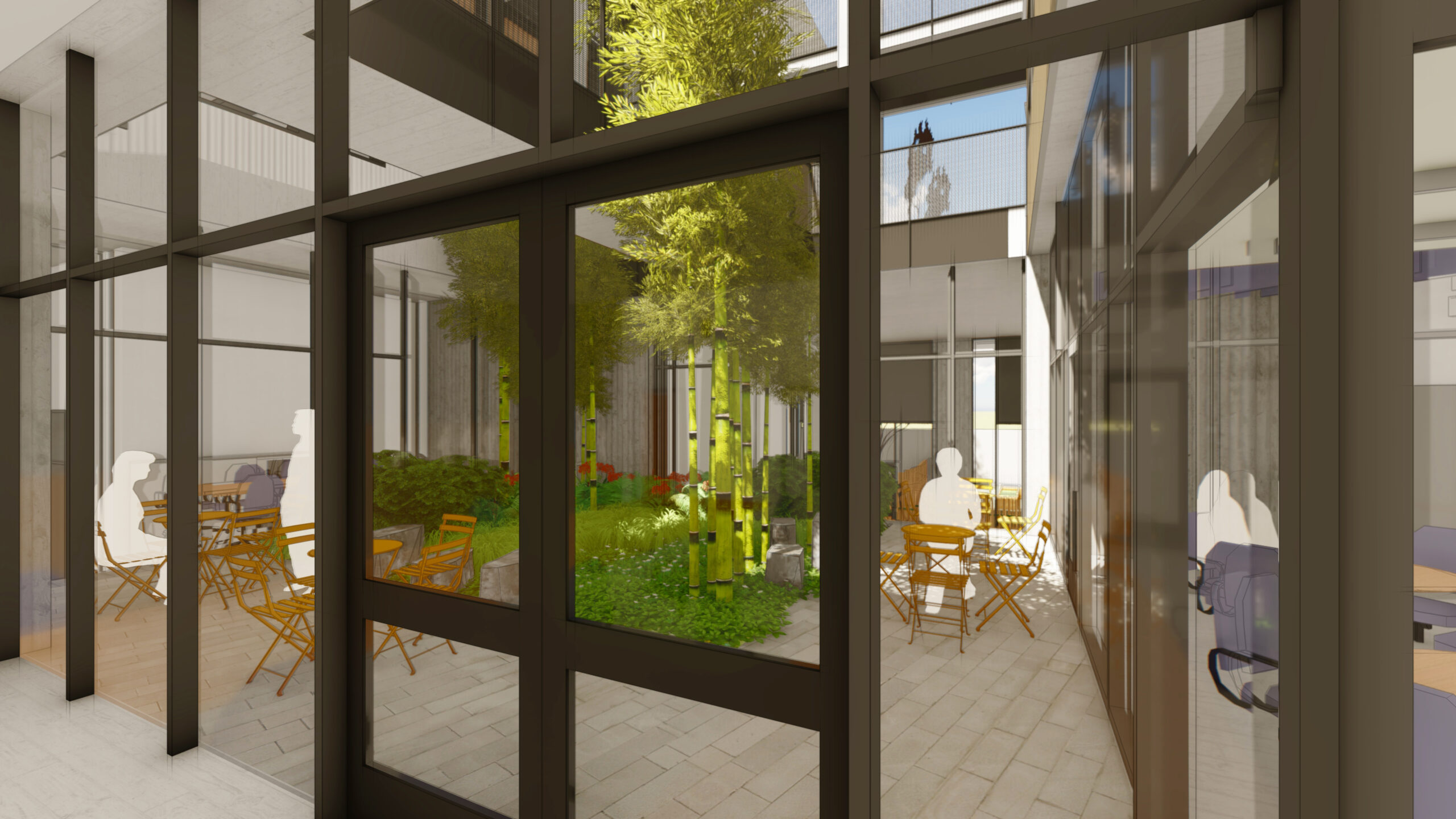
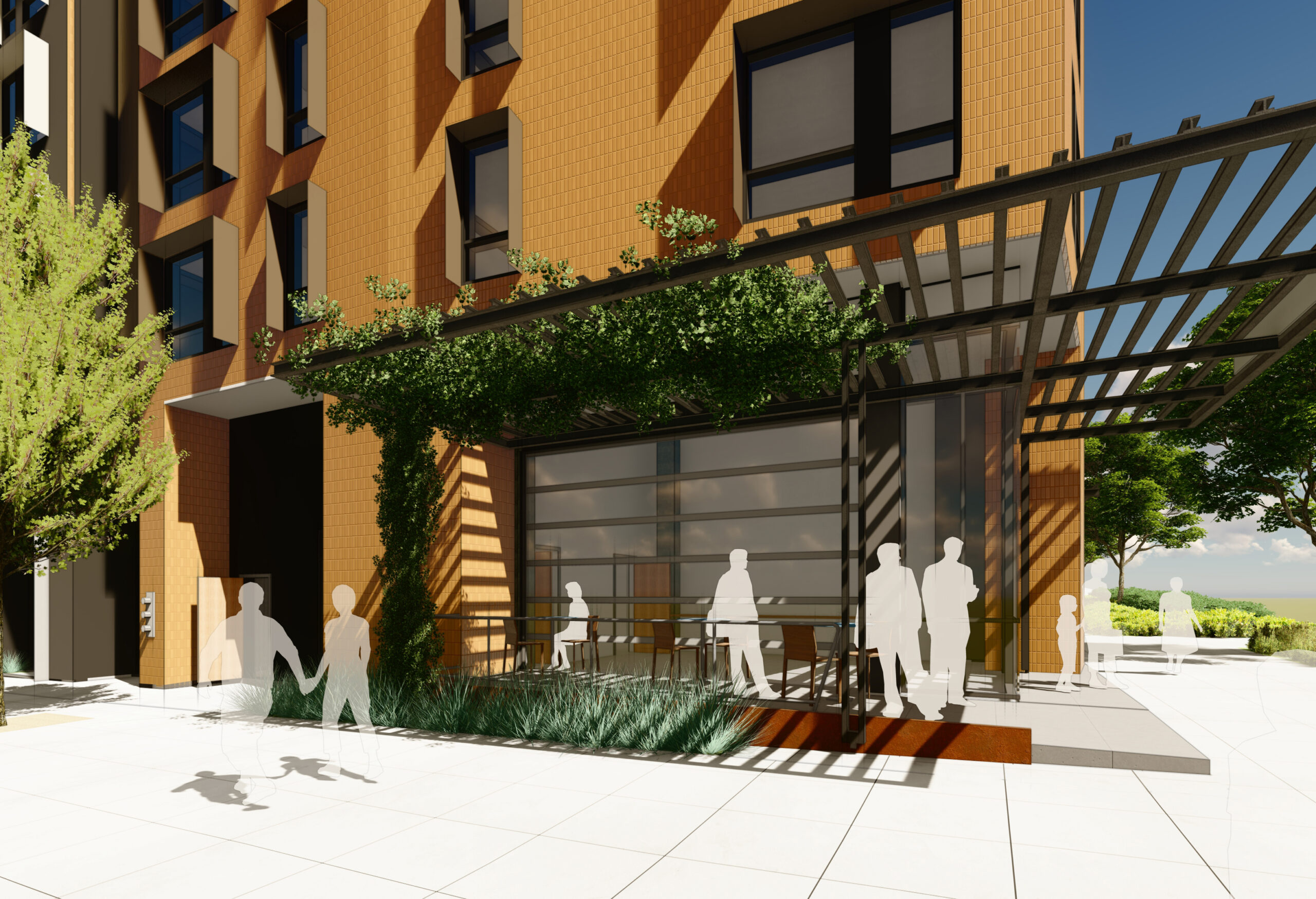
The ground level is a service-rich mix of uses including space intended for a future market hall and grocery where two landscape terrace areas support food-related use with outdoor dining. Across the Mews, a large office suite of housing management offers resident services for the larger Sunnydale development, including a Wellness Center and early childhood education center with a private outdoor courtyard. The office suite has a lushly landscaped courtyard that provides light, natural boulders and seating for lunch breaks and impromptu meetings. At the western side of the site, the housing units face a future park and includes ground-level micro-retail spaces activating the street edge and providing opportunity for local residents to serve their community.
Public Facing Mews as Spine
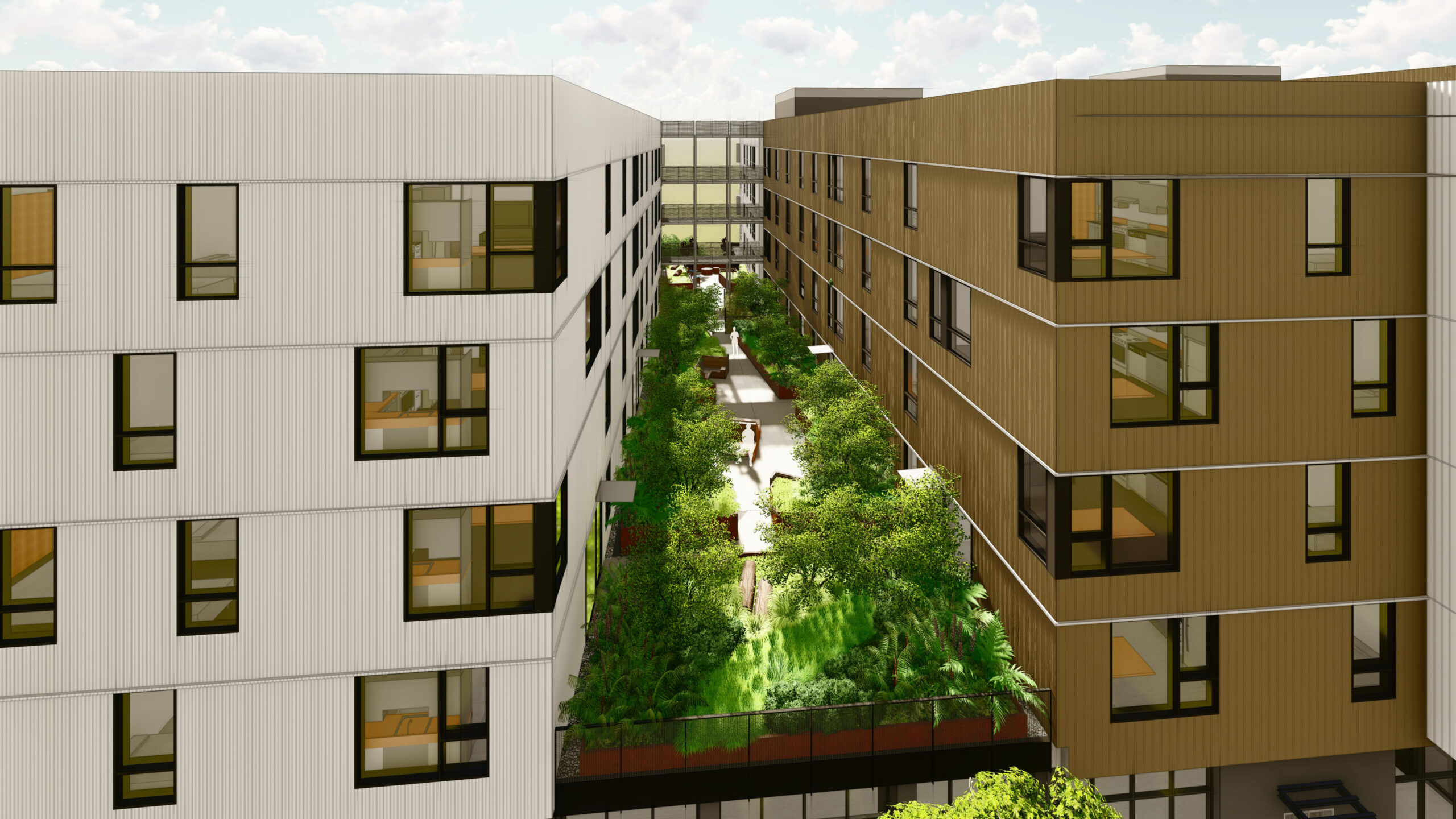
The site design connects two new affordable housing communities creating a village-like pedestrian passage of vegetated, activated, and socially-oriented spaces. This new San Francisco POPOS takes the form of a central Mews lined with retail, collective gathering spaces, and lobbies for the two residential communities, located as a public “spine” connecting the larger neighborhood-serving mixed-use perimeter and the community center to the north and housing community to the south.
Shared Green Courtyards
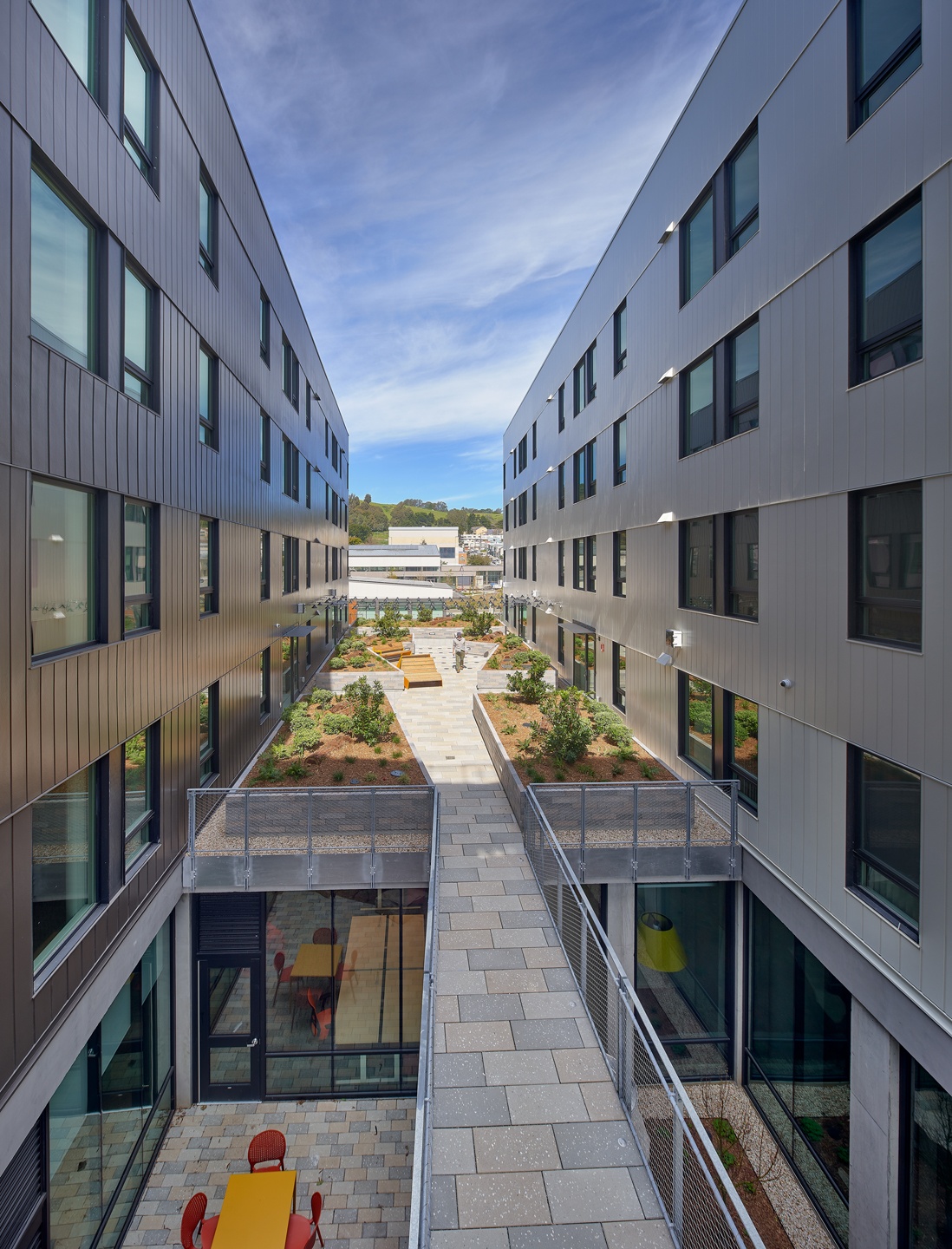
The podium level of each building parallels the ground-level mews and are enclosed garden courtyards that provide access to adjacent living units. These second-level podiums are open to the street and sky. The internal pathways weave through these rooftop gardens to provide smaller intimate gathering spaces for residents, where they can dine outdoors, sit and enjoy the garden, or lounge with friends on larger furnishings. Outdoor open bridges connect the wings across the central axis providing covered seating with views onto the long vistas over the deeply planted courts.
Outdoor Recreation
Games and dining areas are integrated into the surrounding landscape on multiple levels and the on-site child care has its own playful courtyard with carefully differentiated age groups occupying forest and meadow-themed play areas closely connected to the adjacent classrooms, cultivating an integrated creative environment for educational gardening, sand play, and imaginative partitions and furnishings to maximize cross-disciplinary learning and play. A ceiling of festoon lights brings down the scale of the space and radiate from a central column, while a new tree provides additional canopy and shade for this safe and stimulating learning space for toddlers.
Sun Terrace
The south-facing upper terrace provides a warm and sheltered respite from the other more shaded court spaces and looks out over the street-edge plantings that surround the project maximizing porosity and groundwater recharge throughout the block of the 170-family unit housing complex. this space is furnished with picnic tables to accommodate family gatherings and celebrations.
Location: Visitacion Valley, San Francisco, CA
Owner/Client: Related CA/ Mercy Housing/ David Baker Architects
Scope: Landscape Site Design, All Phases of Construction
Status: Completed 2025
Project type: Landscape, Residential
500 Santana Row
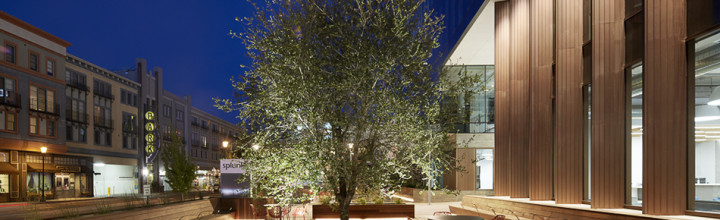
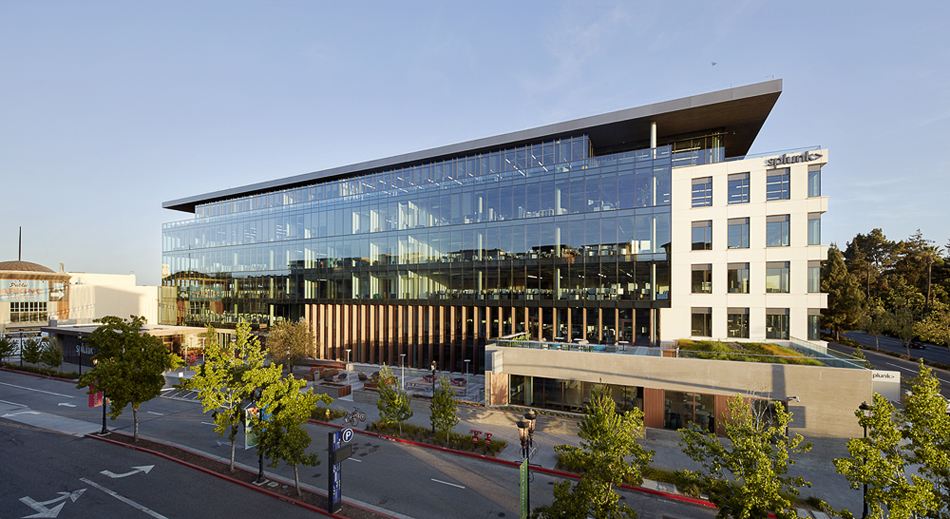
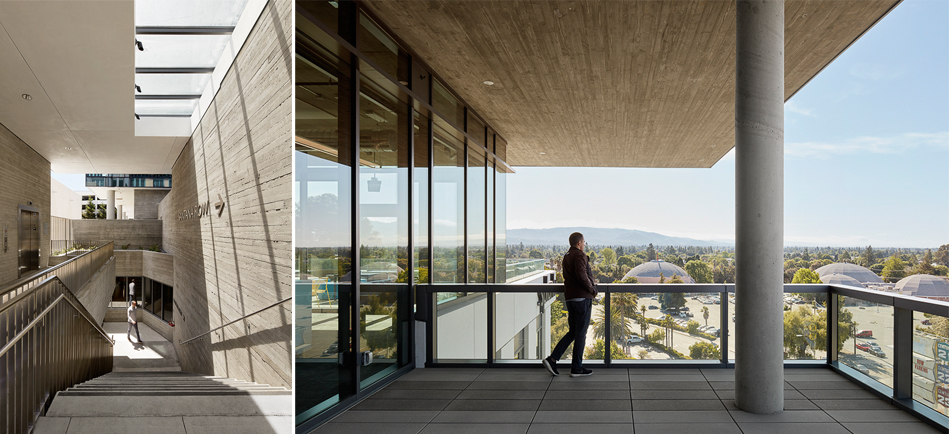
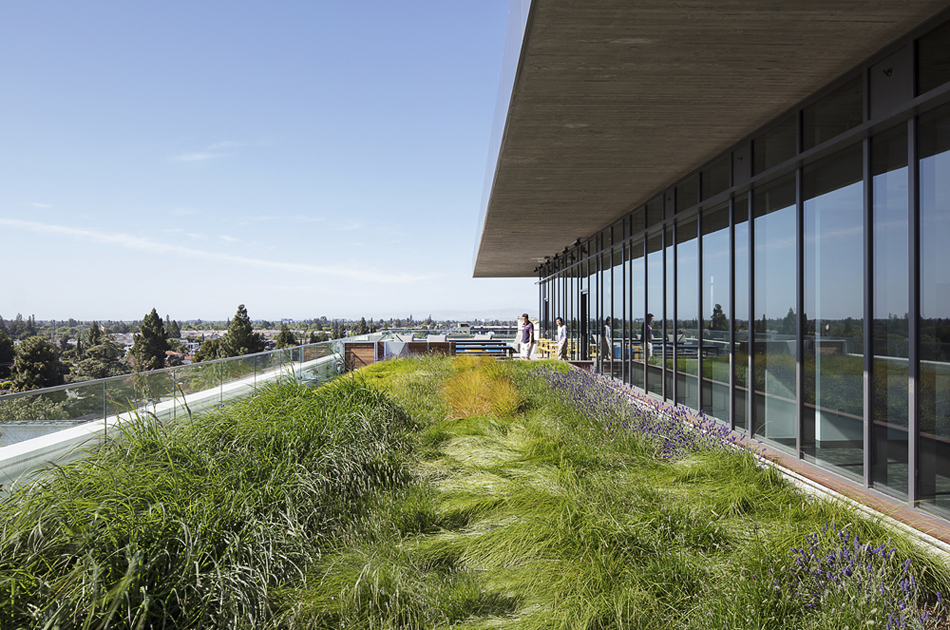
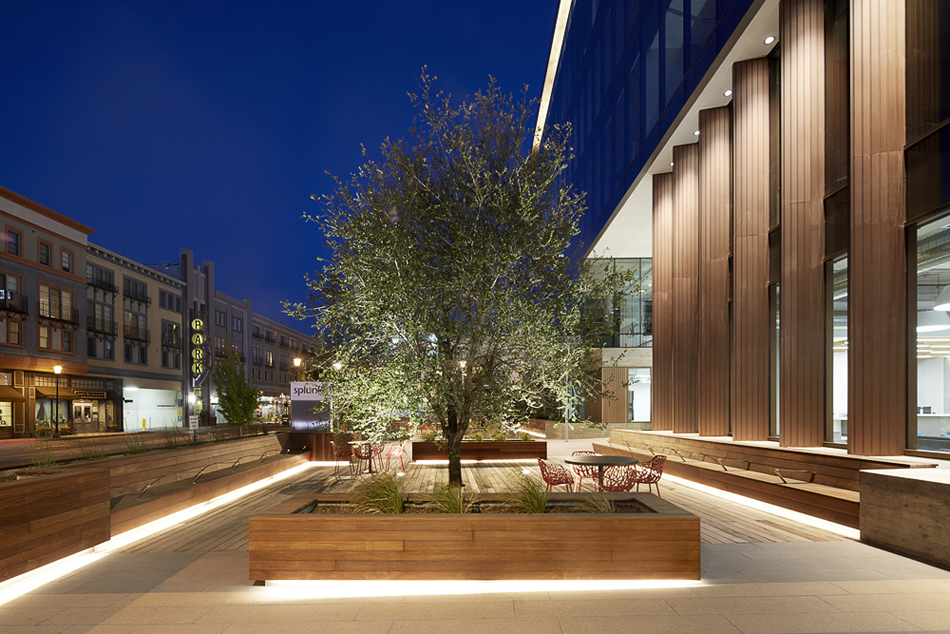
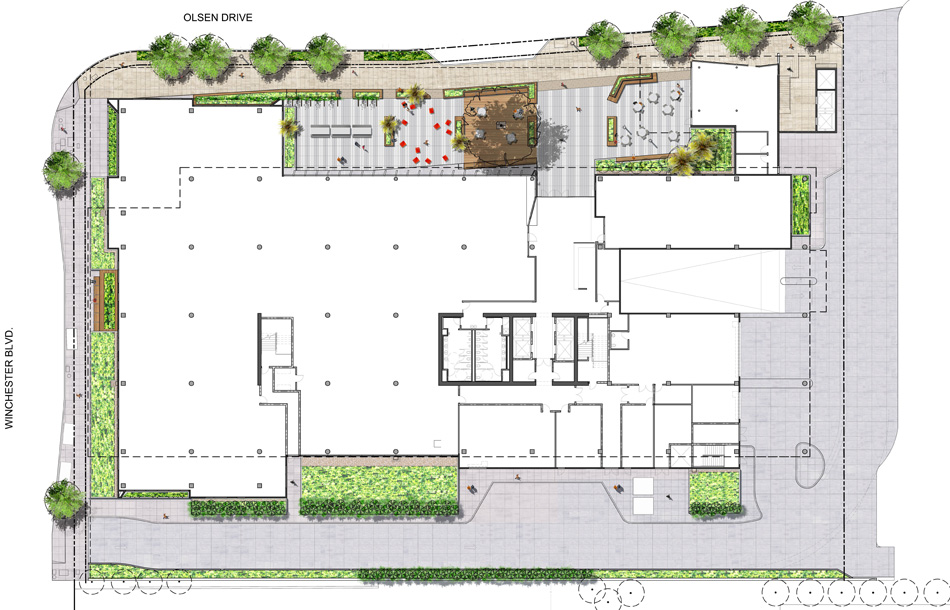
The landscape at 500 Santana Row commercial office buildings enhances the pedestrian experience by connecting the new office structure to the existing shopping district, while also providing an outdoor meeting space and rooftop amenities with site-wide stormwater treatment. The landscape is situated primarily over structure, with all planting either in raised planters or recessed into structure below the first level. The planters are clad with wood to create a wood-lined, barge-like container, supporting a series of smaller outdoor rooms. Wood seating is integrated into the patio for a retail space and under the solitary oak tree where refuge from the hot summer sun is found.
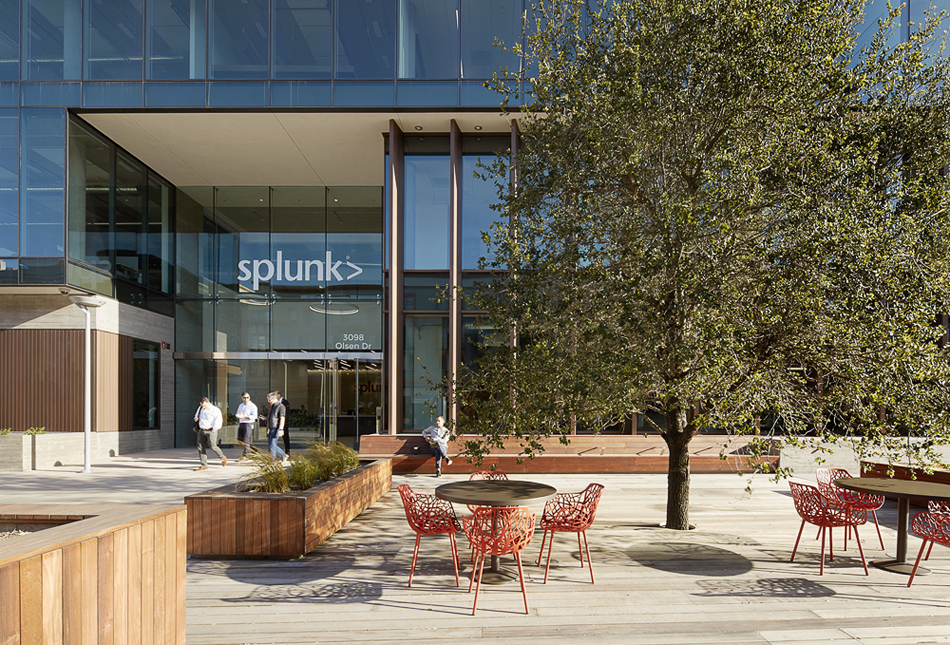
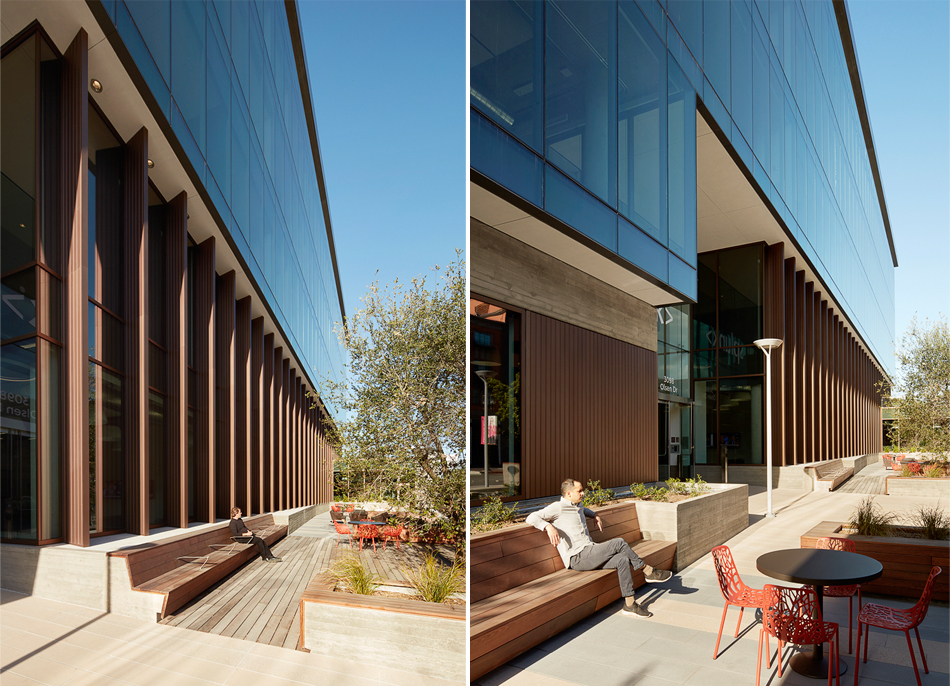
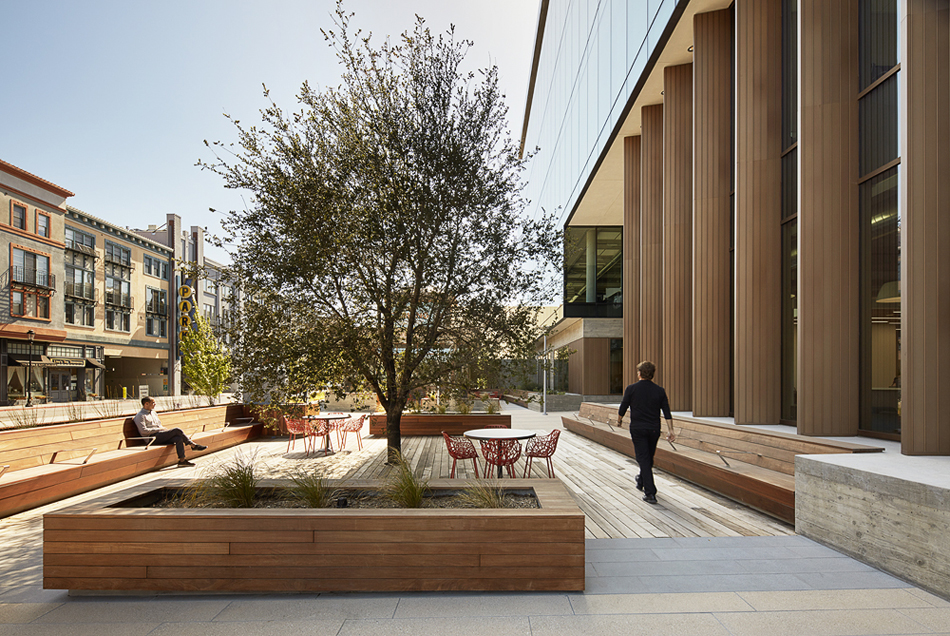
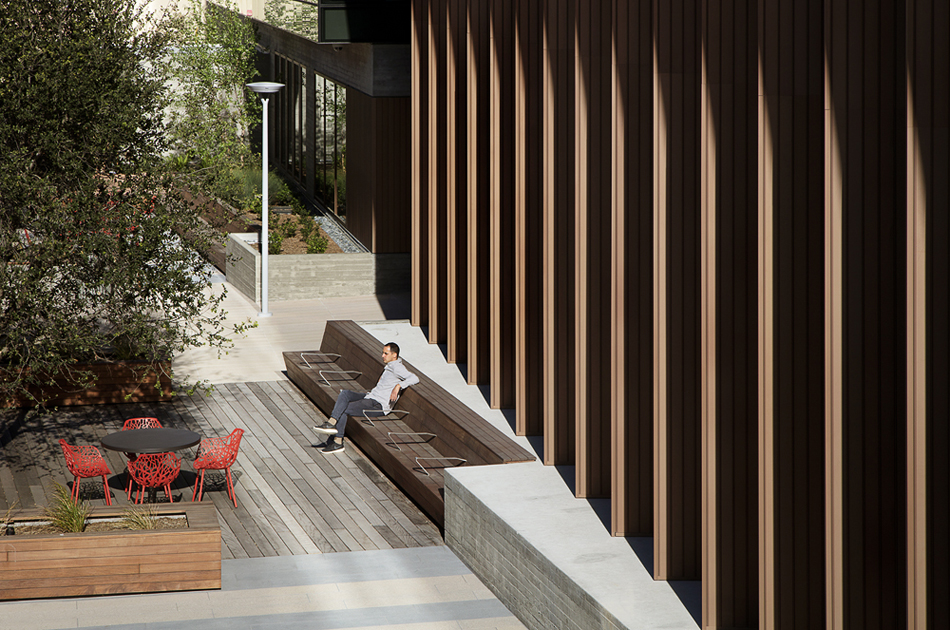
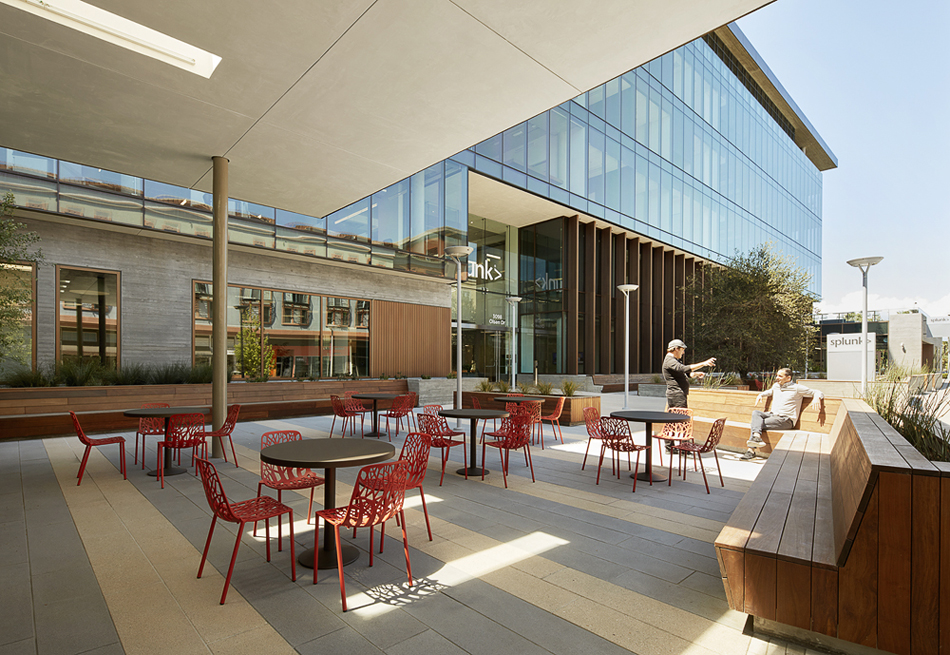
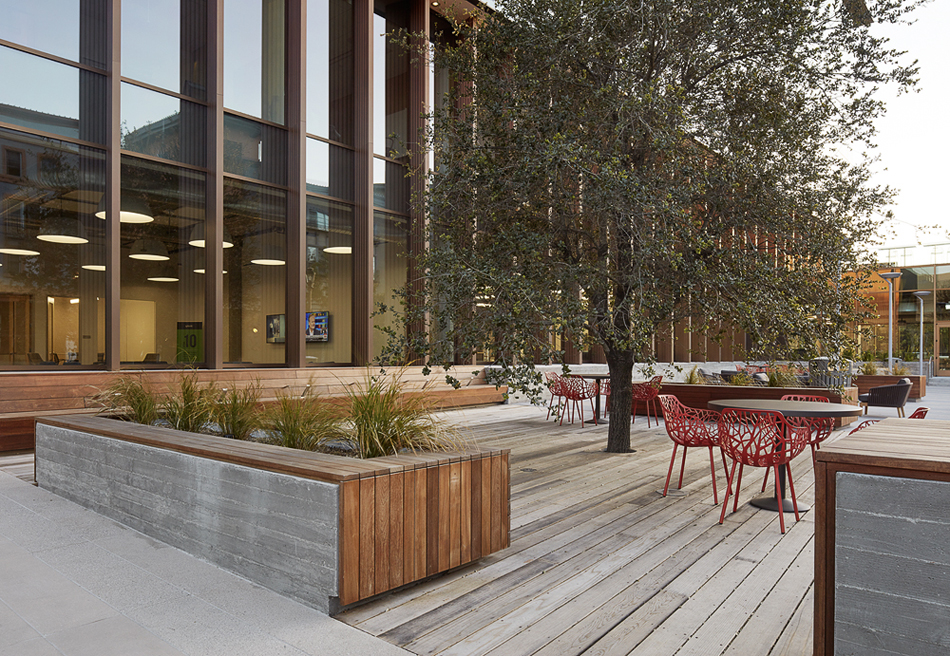
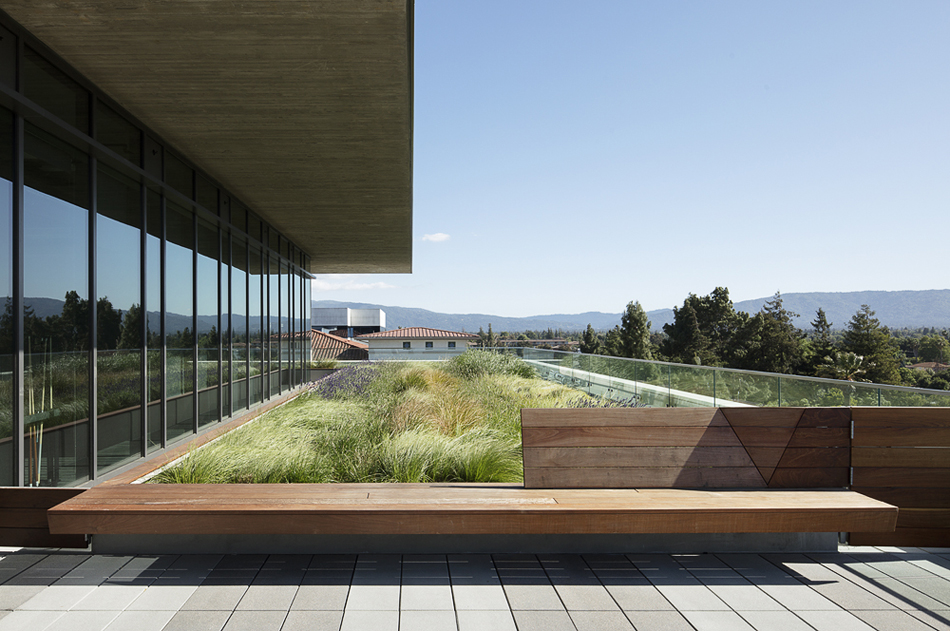
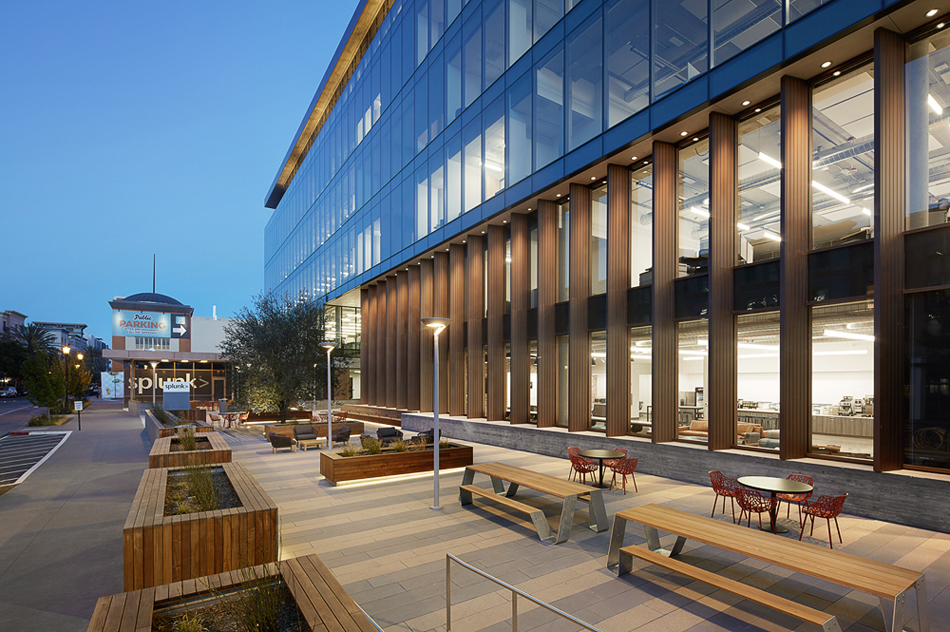
The new street tree planting on Olsen Drive and Winchester Avenue and the plantings throughout the project is predominantly native and/or climate-adapted planting including a native oak, under-story grasses and perennials, and ground-covering plant types.
Location: San Jose, California
Owner/Client: Federal Reality Investment Trust / WRNS Studio
Scope: Entry Plaza and Streetscape
Status: Completed 2016
Photography: Matthew Millman
Kaiser Oakland Medical Office Building Landscape, Phase 2
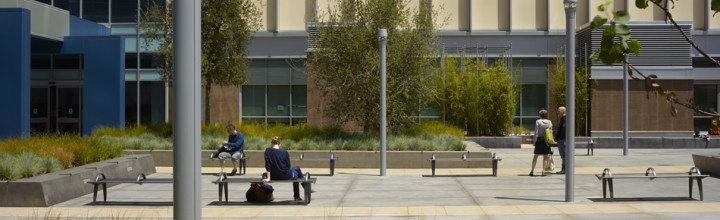
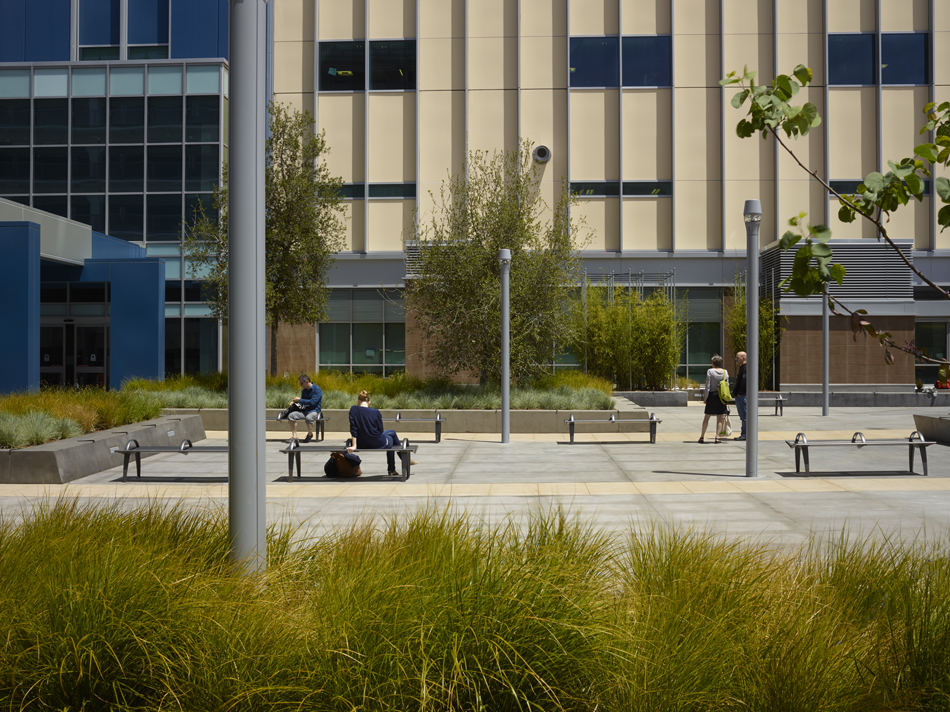
Critical Connections
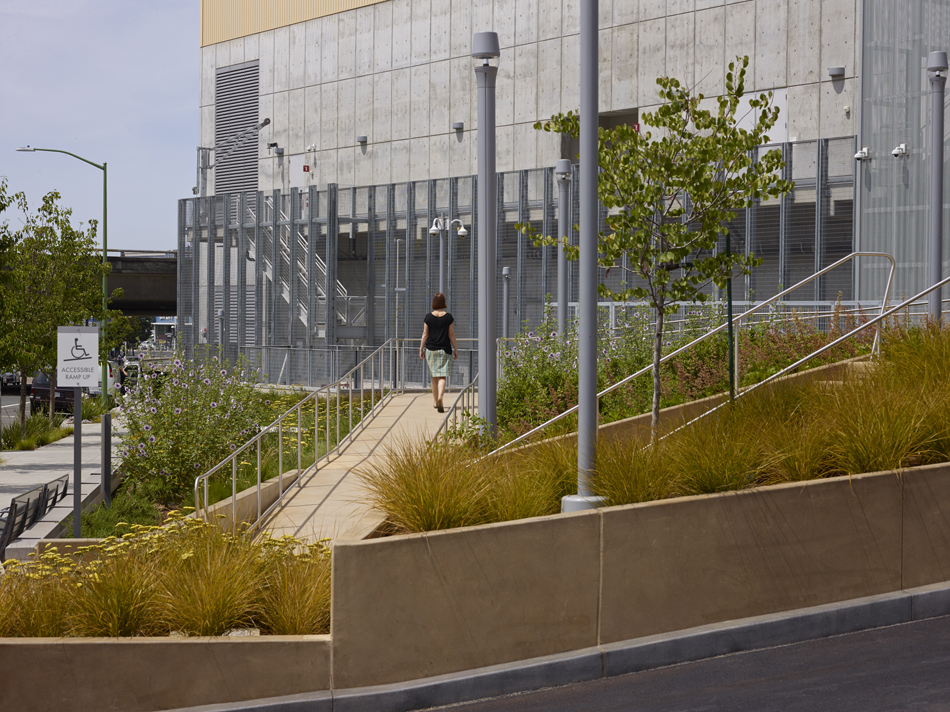
Phase 2 of the Kaiser Permanente Oakland Medical Campus landscape project, the Hospital Entry Plaza, establishes a critical connection between the Piedmont Street residential area and Mosswood Park. This generous pedestrian-oriented greenway connects a neighborhood to a park while establishing a formal drop-off for visitors and patients to the hospital, lush with plantings and a grove of native live oaks, all above-structure to conceal the hospital services loading docks below.
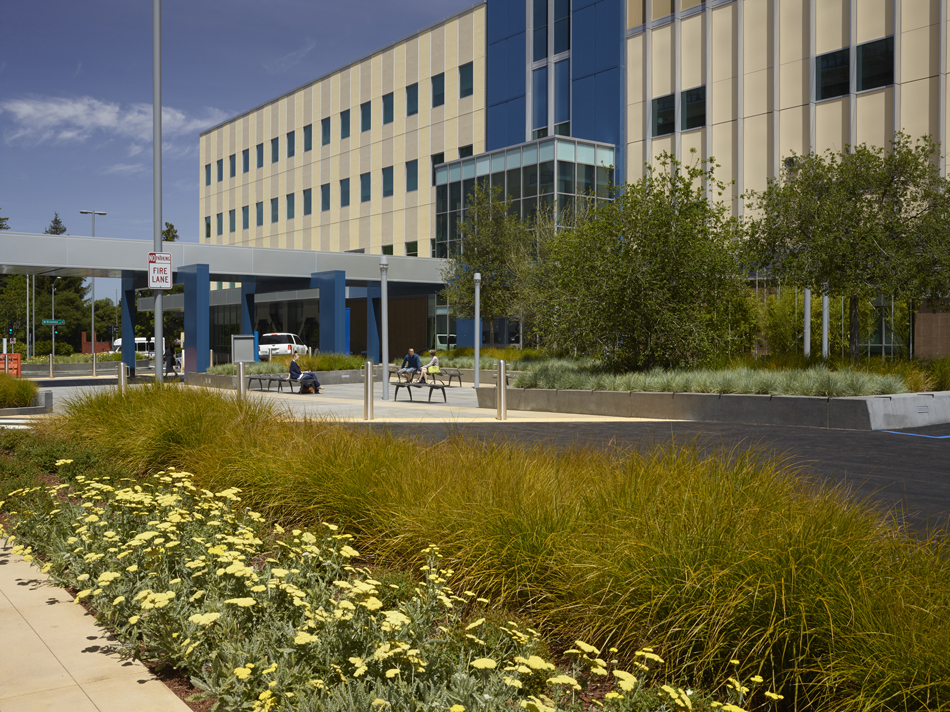
Differing Orientations
The plaza links the hospital to the parking garage, the Central Utility Plant (CUP), and the emergency entry while serving as an impromptu public open space for events and informal gathering for a staff of over 500 people and the general public. The campus is composed of major planting volumes which clearly organizes the public spaces and screens vehicles from pedestrian-oriented areas. A linear path is established along a tree-lined promenade reconciling the grade difference between the vehicular-oriented Broadway Boulevard and the pedestrian-oriented Piedmont Street.
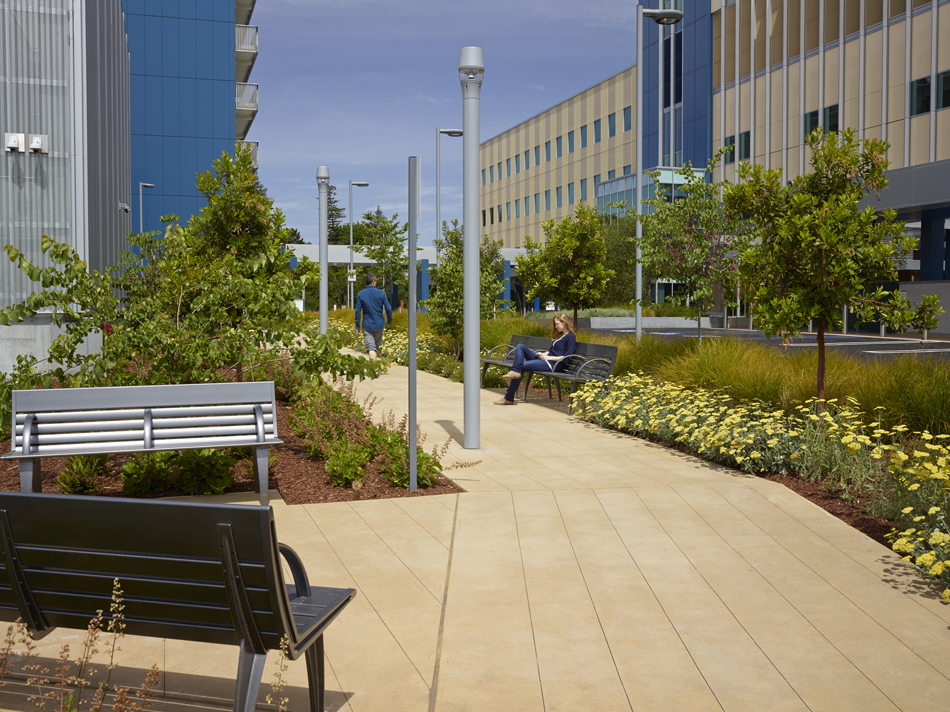
Bringing the Walls to Life
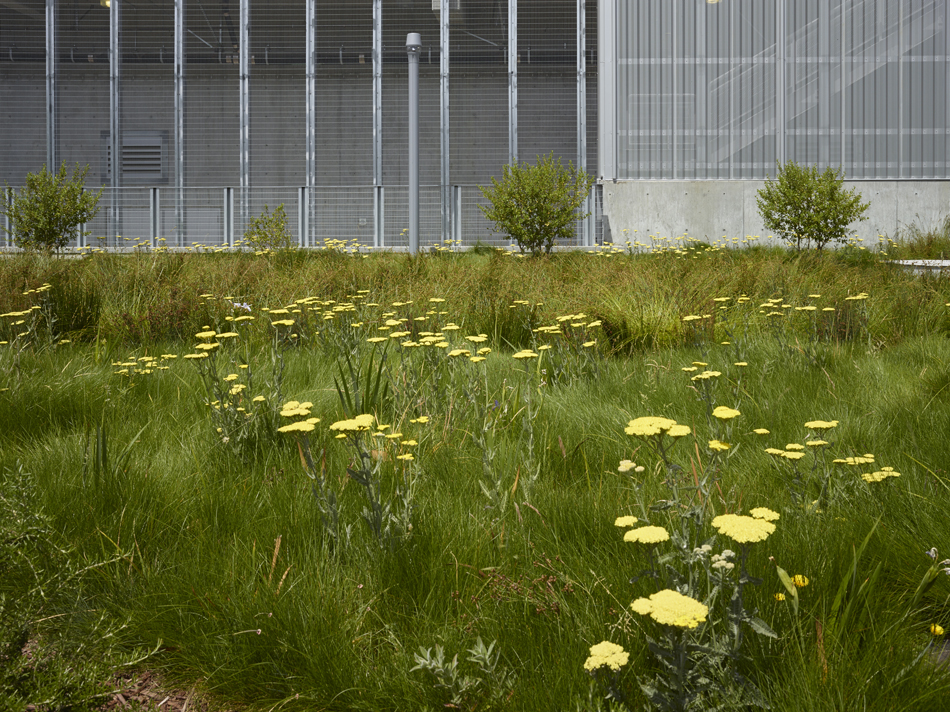
Substantial storm treatment plantings dominate the southeast corner of the site, handling the entire run-off of all four buildings and hard-scape while allowing for significant inundation and retention in a hundred-year storm event. INTERSTICE Architects designed the landscape to integrate substantial screening and living walls which surround the CUP, forming wellness conditions critical to the hospital’s mission to create an environment that not only cures disease but actively promotes health.
Location: Oakland, California
Owner/Client: Kaiser Permanente / NBBJ Architects
Scope: Landscape Design, Creek Restoration & Streetscape
Status: Completed 2013
Photography: Marion Brenner
Vallejo Street Residence
Expanding Into the Outdoors
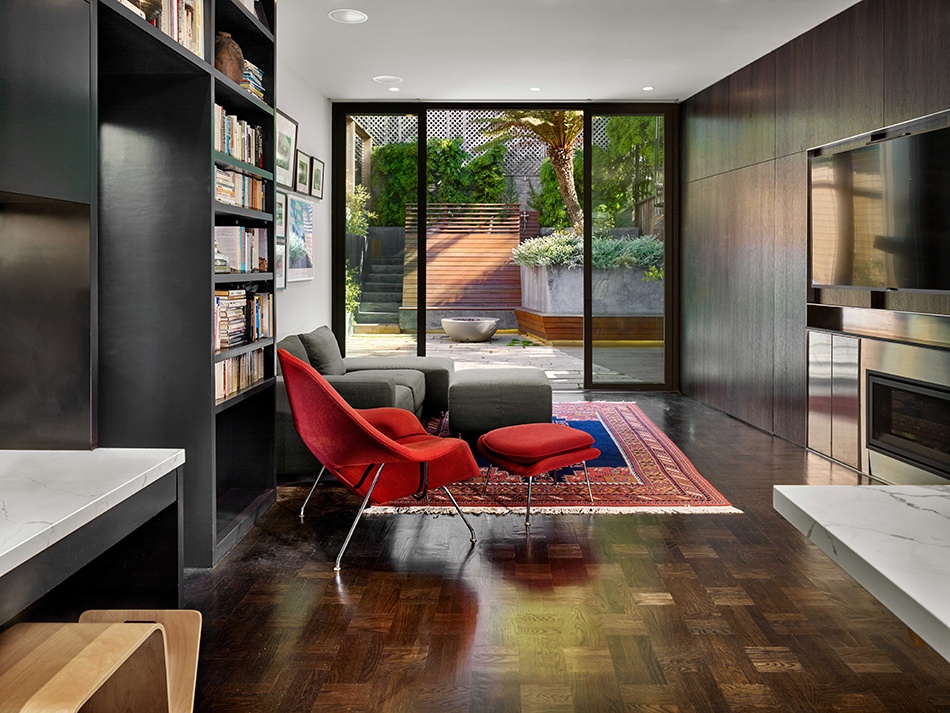
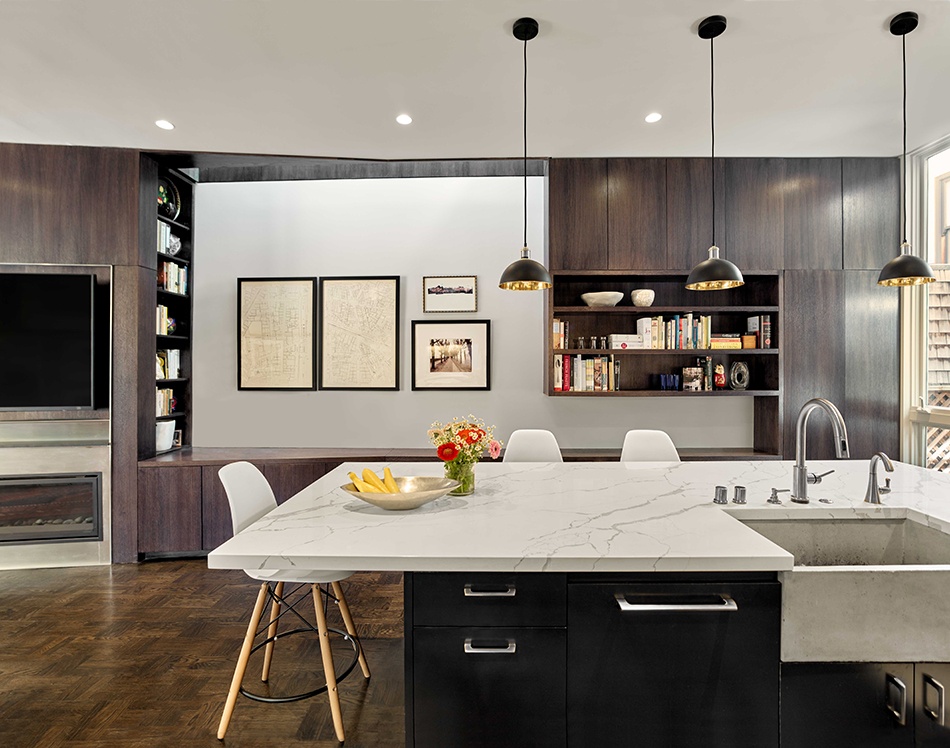
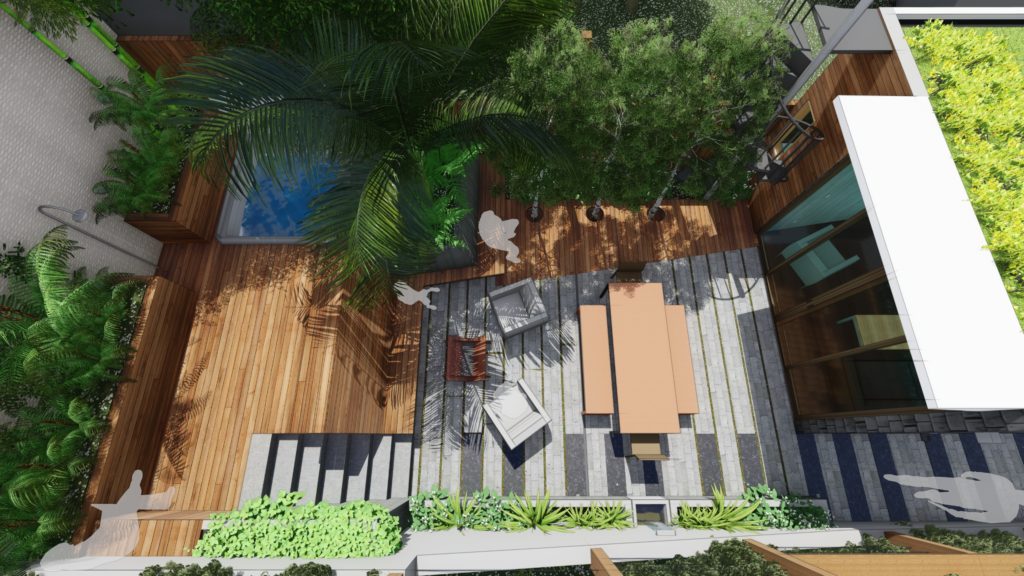
A home in the Pacific Heights neighborhood of San Francisco expands to create a garden connector, allowing a realigned kitchen to become the conduit between the original formal dining room and a new informal family room that opens out onto a transformed garden extending the home outdoors.
Home and Garden
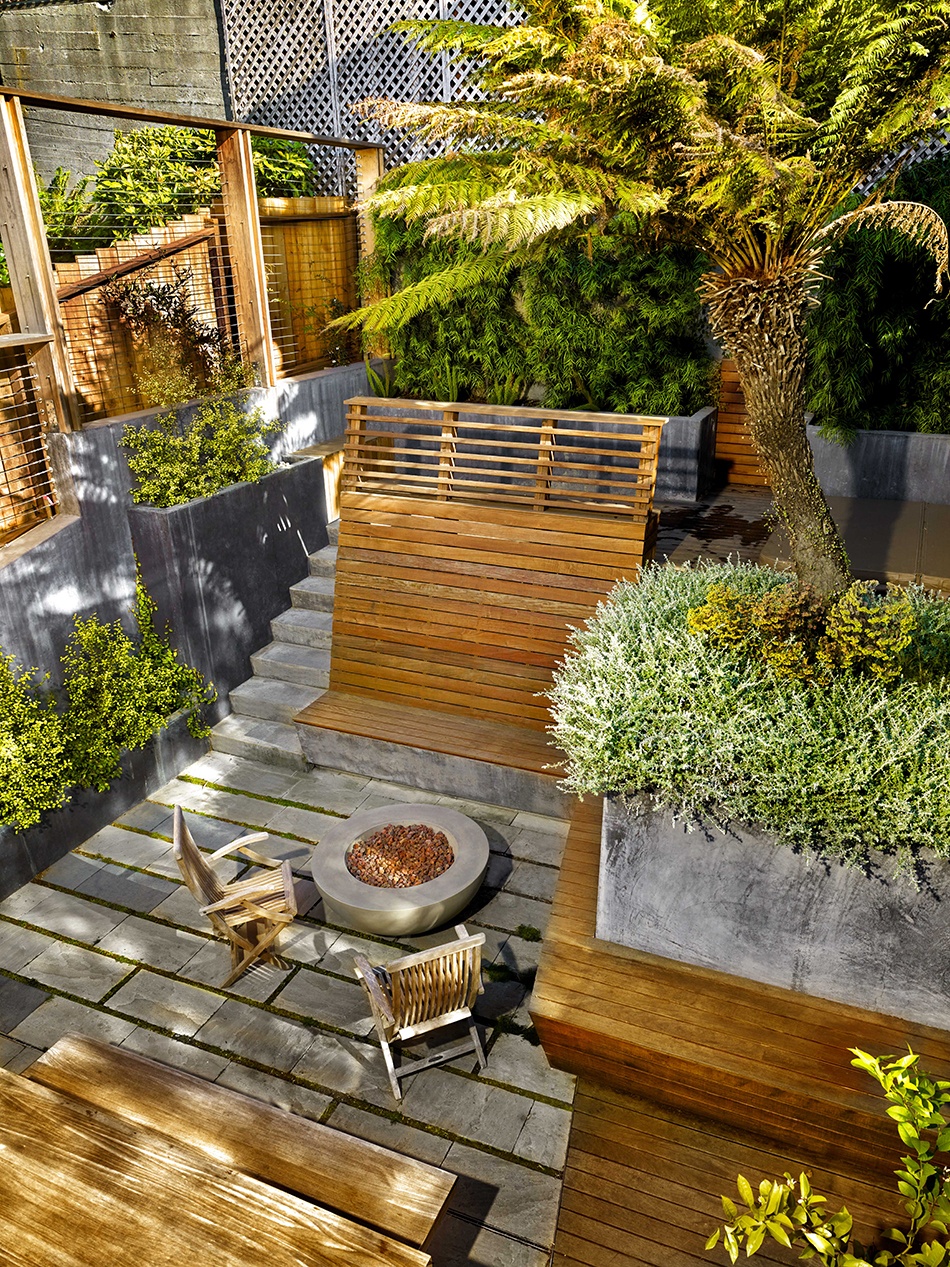
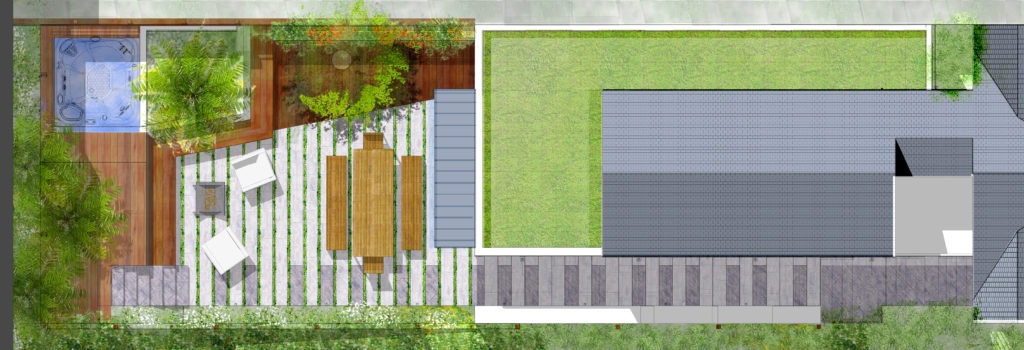
This elegant, historic Dutch-style home in San Francisco was in need of a better connection to its garden, an under-used and difficult-to-negotiate rear yard. INTERSTICE Architects knew the solution was both architectural and landscape-focused. It was a question of reconfiguration of both the kitchen and its awkward relationship to the steeply sloped site, which had limited the gardens usability for decades. The home was expanded and dug out to create new space at the lower level, while allowing the yard to establish a continuous relationship to the main living floor. The interiors were realigned to establish the kitchen as a connecting social space between the new informal, private family room, while the exterior garden was remade to be a clearly articulated extension of the social and entertainment level of the home.
Shaping the “Smart-Wall”
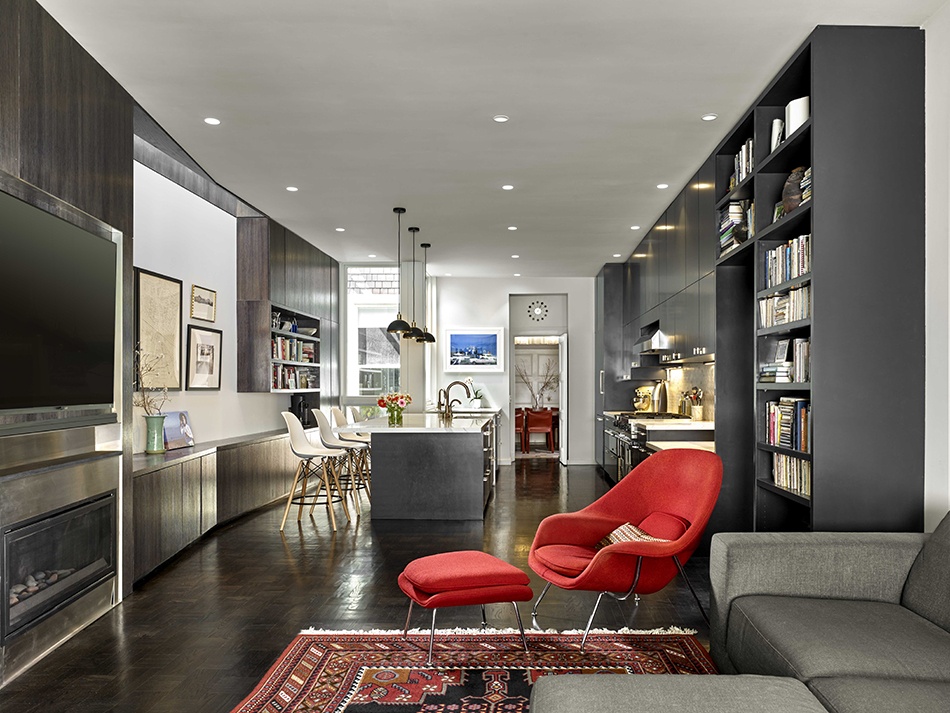
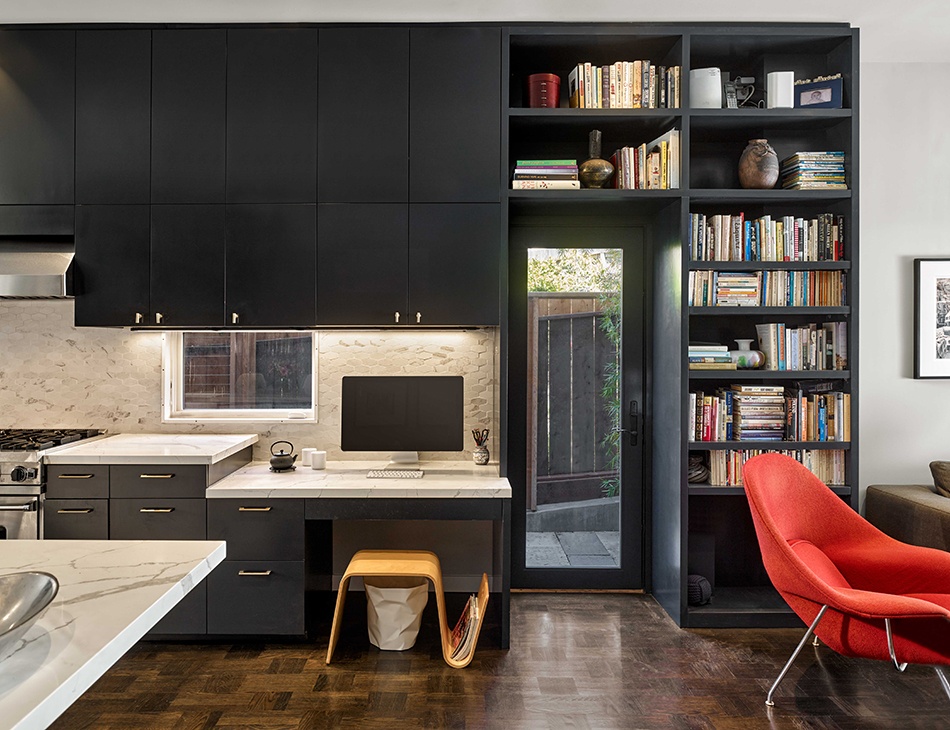
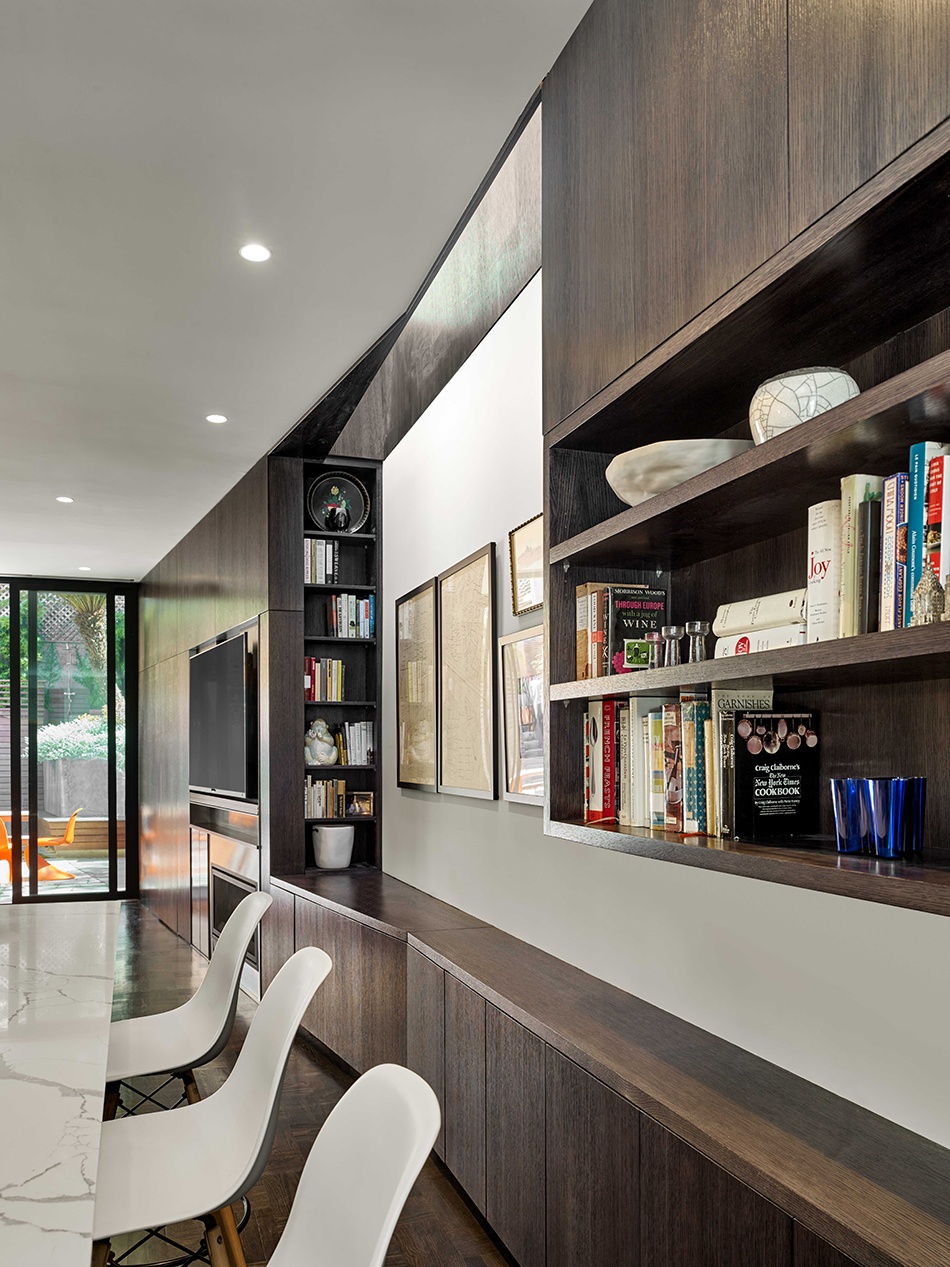
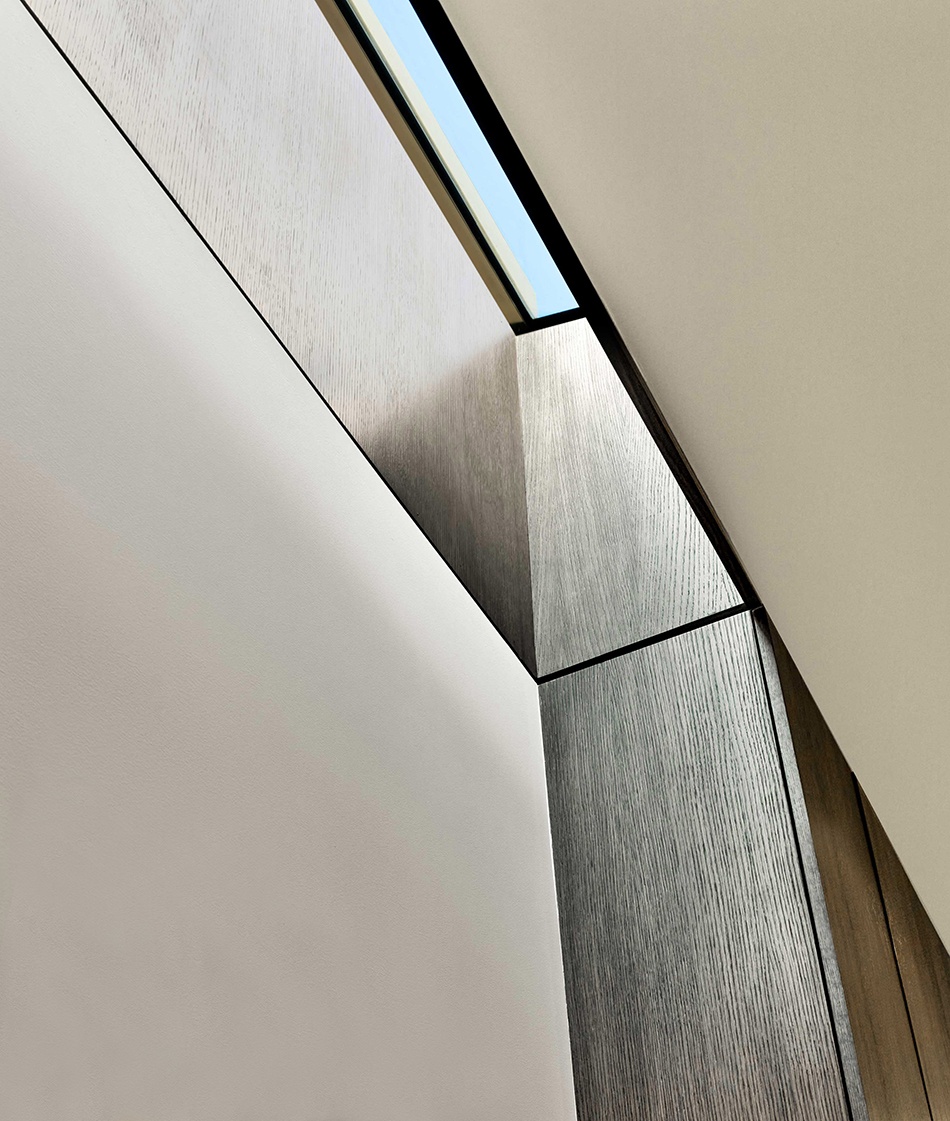
A full height cabinet “smart-wall” inside the residence epitomizes the key aspect of this project: the integration of spaces. This smart-wall establishes a material transition between the kitchen where it acts as a storage and shelving wall into the family room. From this living space, the design transforms, containing a new hearth, skylight, and entertainment center, before moving all the way through to the garden patio window wall where it thickens to conceal a secret, private full bathroom.
Framed by Wood
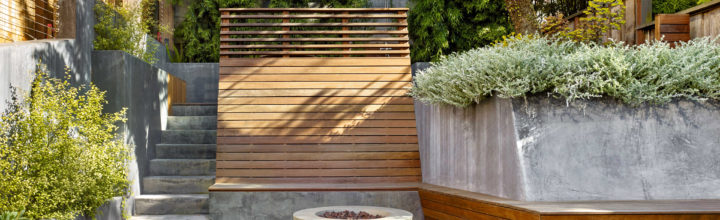
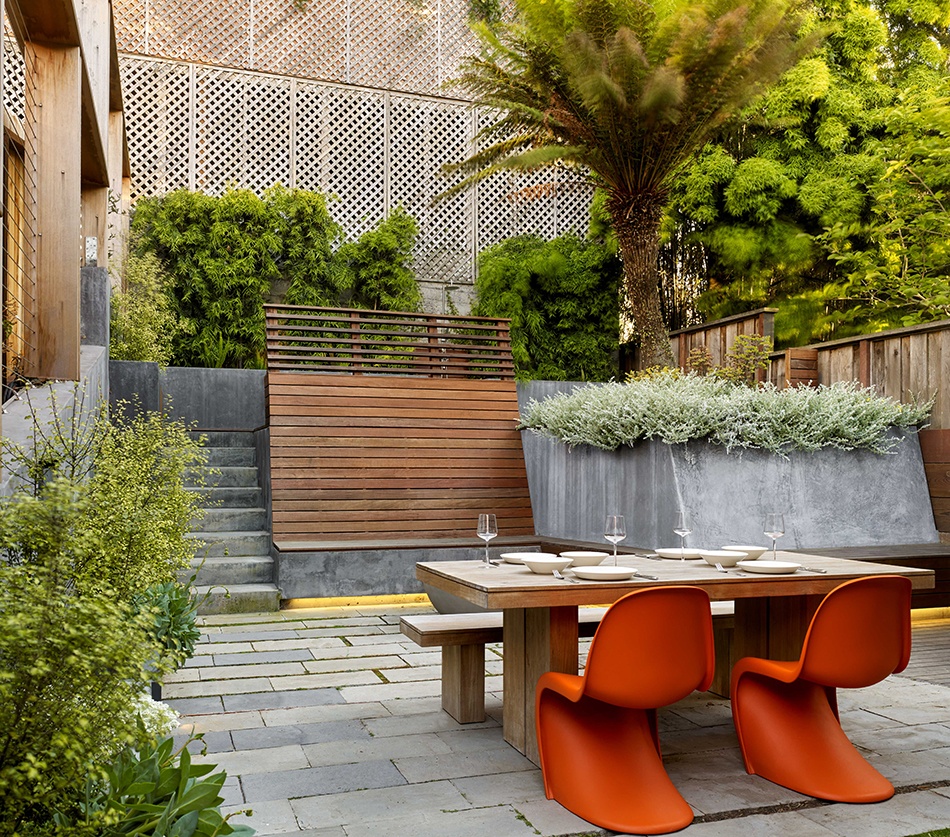
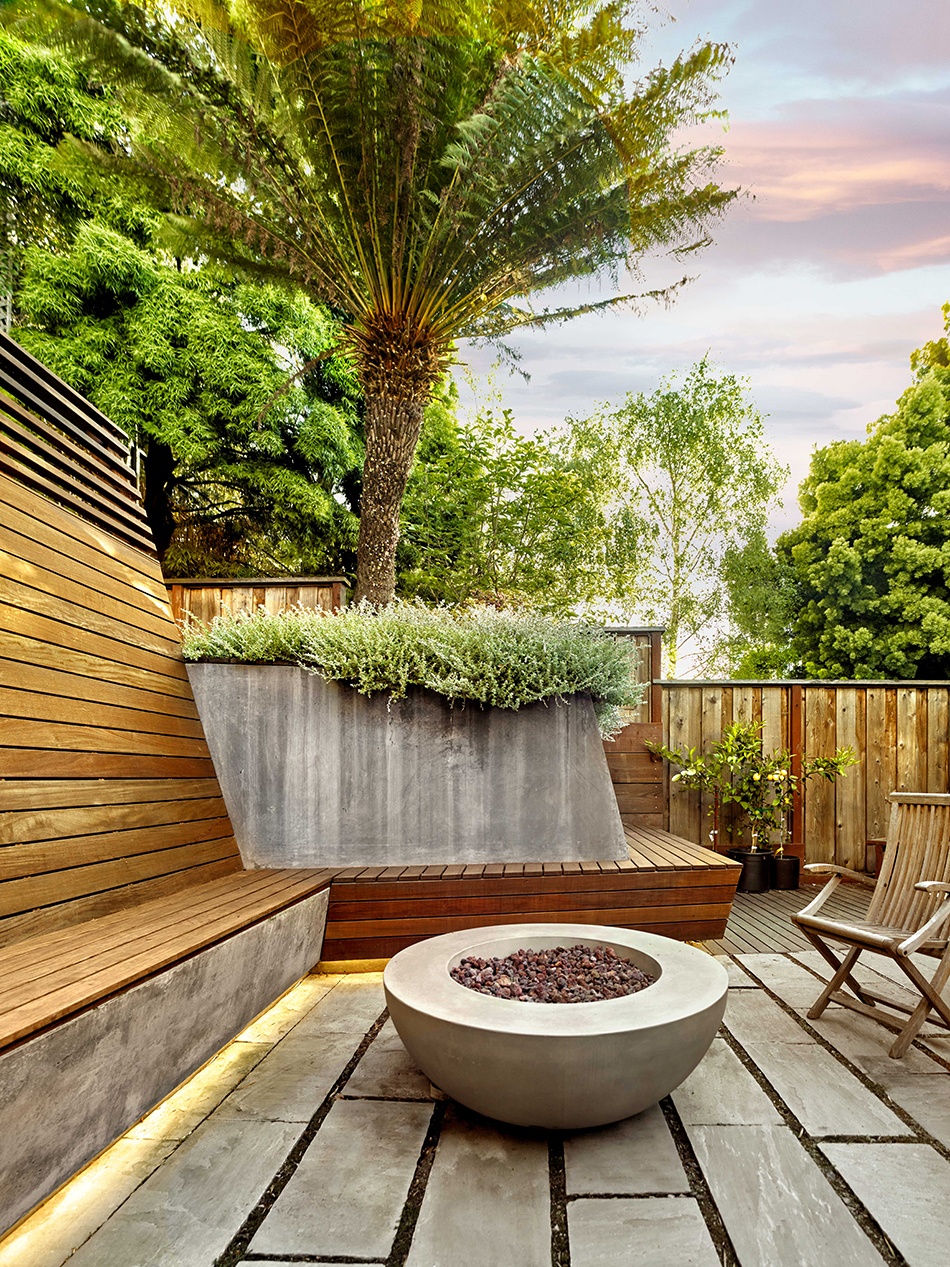
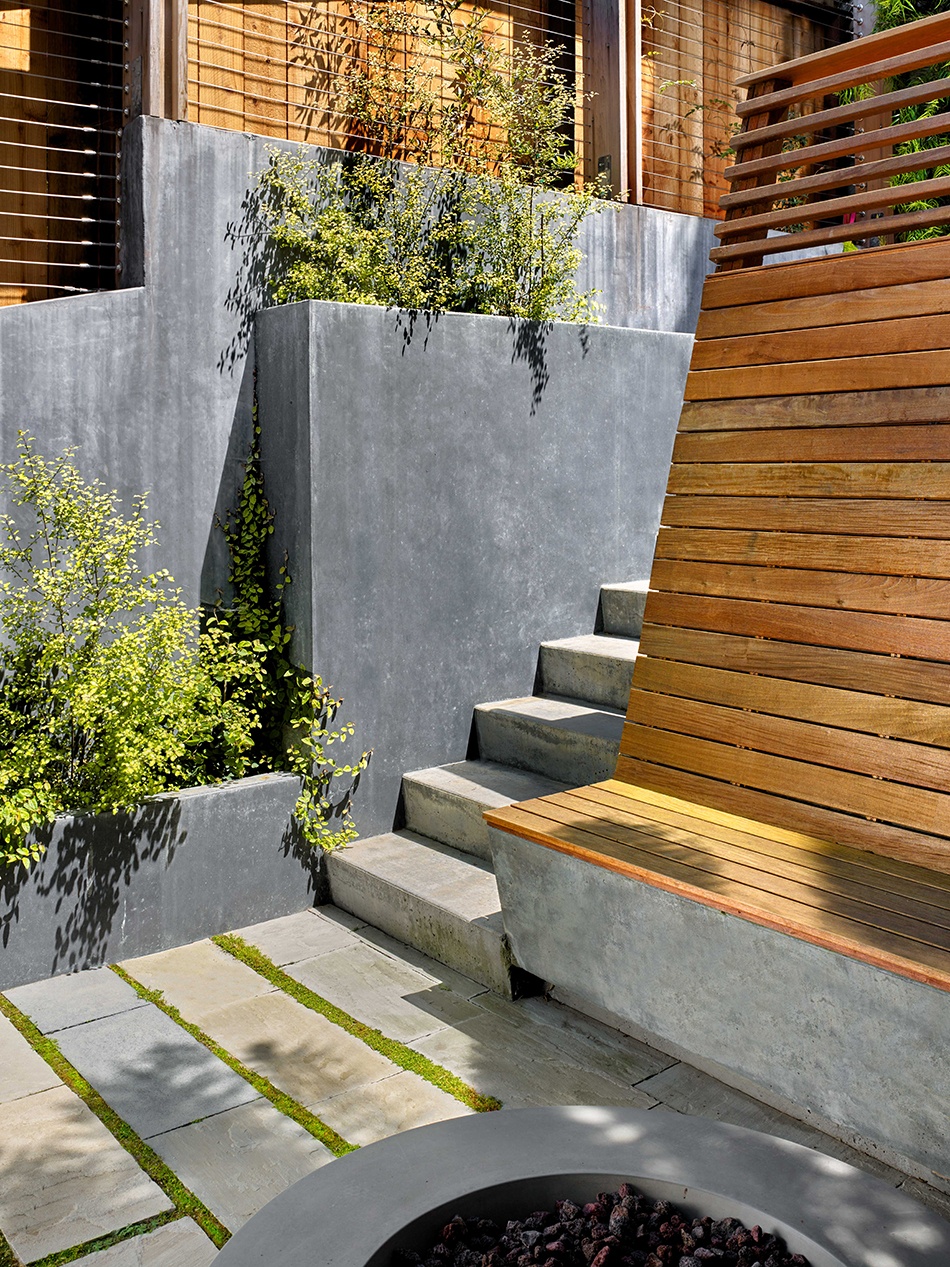
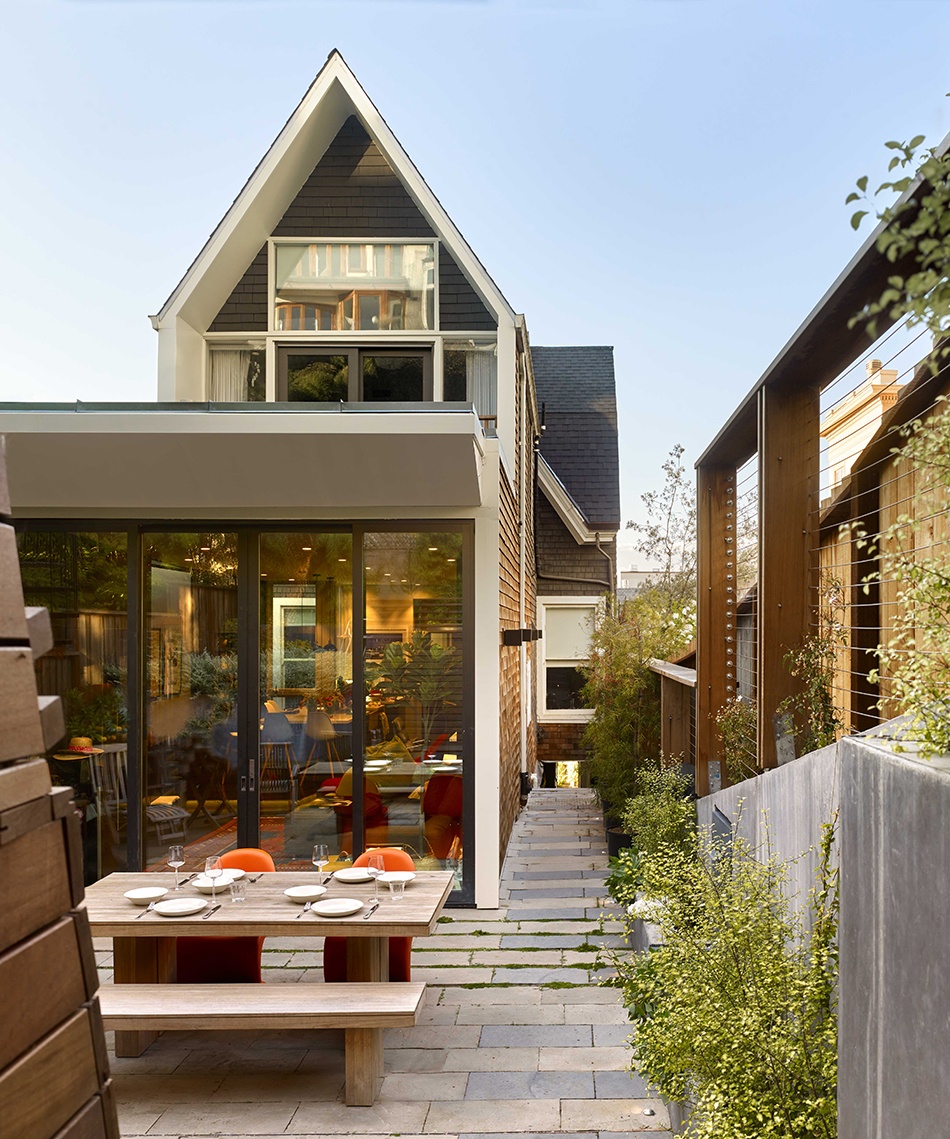
Outside, the landscape is restructured from three unusable levels into a spacious two-level terraced garden. The living level provides a patio deck beyond the dynamic glass wall of the family room for exterior dining. An in-wall fountain anchors one end, along with a wood clad raised sun garden and a cozy fireplace, all framed by the warmth of wood and dark, smooth concrete. Together these materials form a seat back that wraps the retaining walls and connects the more remote and private upper garden level. The upper garden is set on a wood clad deck with a sunken hot tub, an outdoor shower, and a hammock, all sheltered by deep plantings and mature tree ferns.
Natural as the Counterpoint
The predominance of natural exposed materials permeates the garden and the interior palette, allowing for a more sensual counterpoint from the rest of the formal and more traditional home. Warm materials and discreet lighting create an inviting and pleasant night presence, while communicating an easy comfort as the home dissolves from interior to outdoors across the expansive glass facade. Festoon lights above and a spiral stair to the upstairs extended green garden roof improve the second level private studio.

Bringing Light Down
INTERSTICE designed the kitchen and light-well as a light-emitting garden column planted with tree bamboo. This space was particularly meant to bring light down into the new, lower media and guest room, excavated to host service spaces including an independent laundry room and full bath that allows for connection or full separation from the home office level below, and for the owners to enjoy increased privacy.
Location: Vallejo Street, Pacific Heights, San Francisco.
Owner/Client: Undisclosed
Scope: Residential Renovation & Garden Design
Status: Completed 2020
Photography: Cesar Rubio