 INTERSTICE Architects
Project Tag: Landscape
California Street Cable Car Turn-around Vision Plan
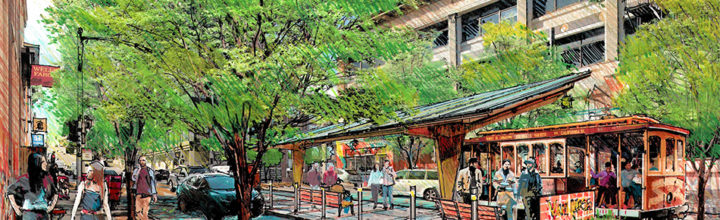
Realizing an Urban Vision
The Lower Polk Community Benefit District, working with the Lower Polk Neighbors, brought together neighbors, city agencies, and business owners to harness the power of collective interest – working to find the confluence of hopes and aspirations for a better, safer and more invitingly pleasant Cable Car Turn-Around, and focusing those interests on making their collective vision a reality. By mobilizing the various local and City coalitions, the collective expects to optimize the LP-CBD’s ability to tap into future funding sources to actualize over time these street improvements and pedestrian enhancements. This is what IA set out to do when The California Cable Car Vision Plan, was commissioned by the Lower Polk Community Benefit District in October 2019 to embark on a neighborhood-led collaborative design process that would result in a new vision for the California Cable Car Terminus.
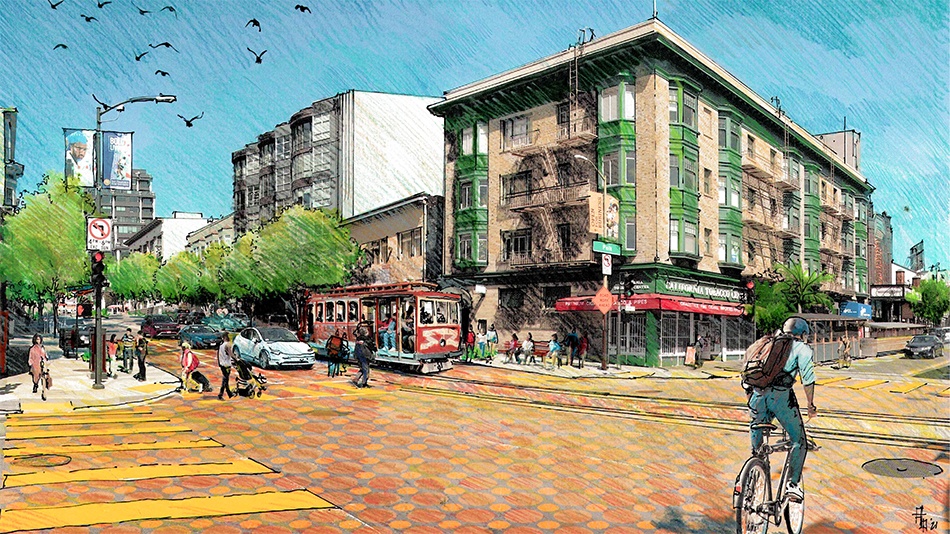
Polk Plaza Concept
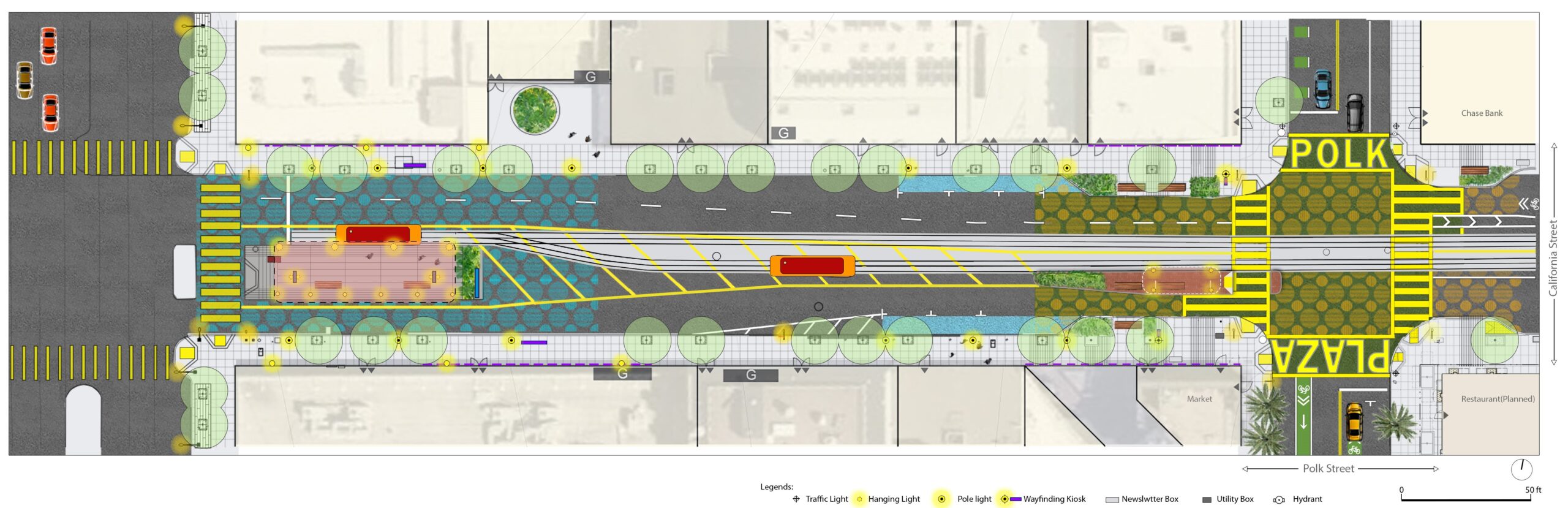
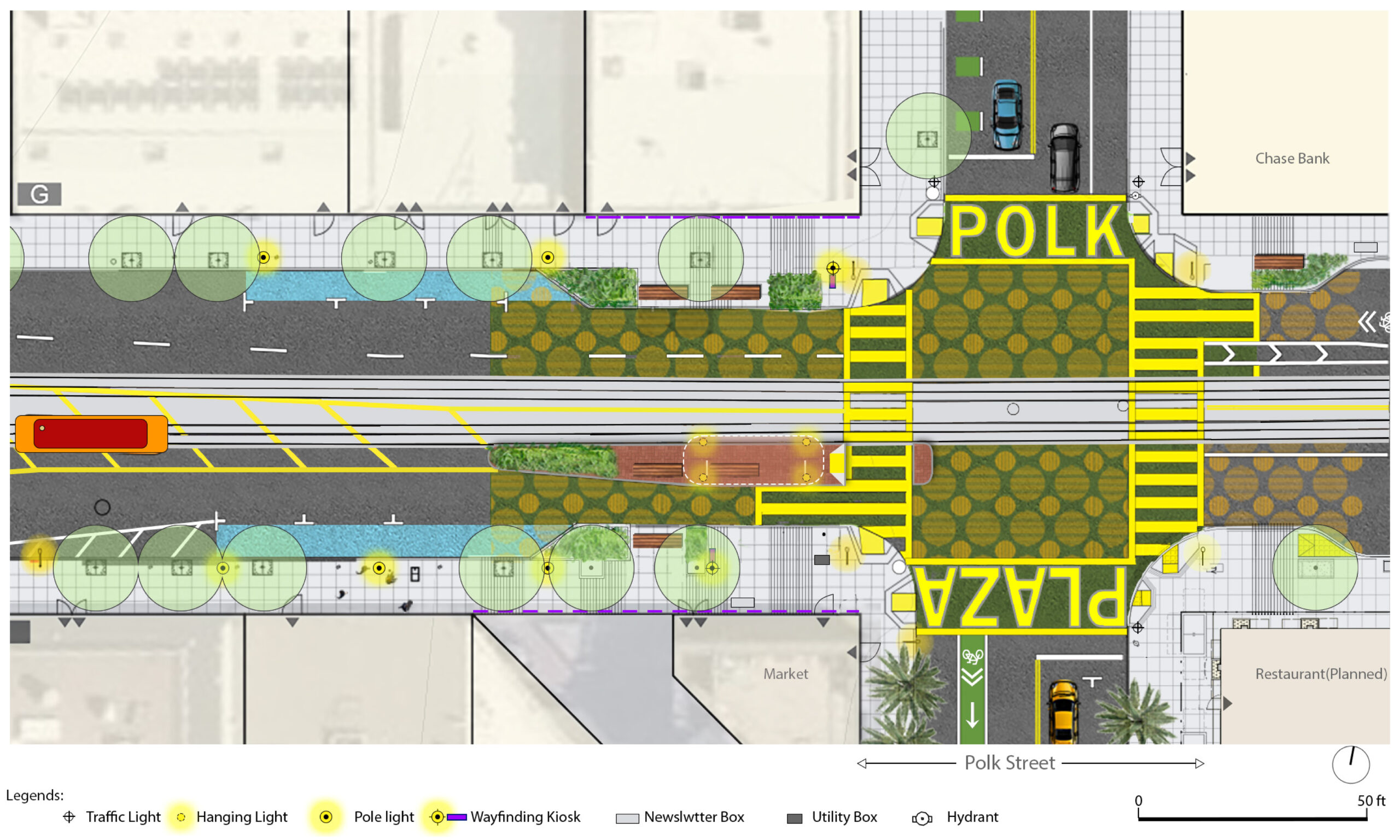
A critically important new focus is on the intersection at Polk Street: The Polk Plaza. The Plaza will be at the actual intersection of Polk and its four cornered enclosure. At this first stop (In Bound) or penultimate West bound (outbound) stop, a distinct pattern and color is meant to differentiate it from the Van Ness Platform area. The plaza’s signage and graphics are proposed to expand on and elucidate the cultural life and unique mercantile mix of this community and its distinct neighborhood that extends south to Civic center and North towards Fort Mason and the Bay.
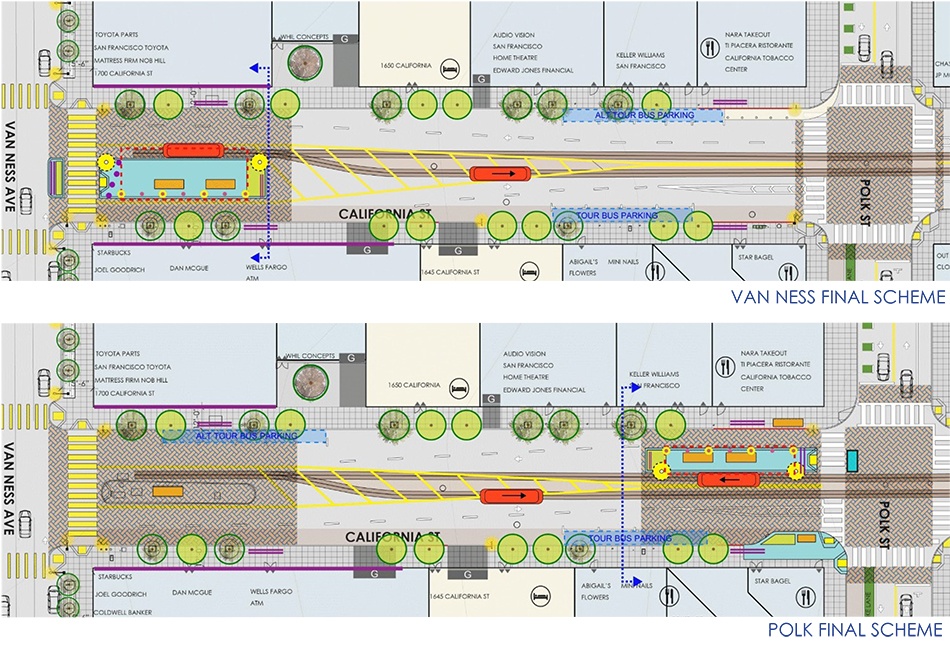
Here, bulb outs would allow and encourage street performers and a more gracious lingering, a hub and way-finding for those entering the Polk Corridor. At the Plaza, protected from the noise and traffic of the busier Van Ness Gateway, street musicians and sidewalk food stands might make better use of the slower more leisurely paced Polk corridor foot traffic. To this end, the plan and guidelines provide an integrated tool kit of strategies and graphics to communicate a visual and material link between the Cable Car line and the Polk Street Corridor. The existing stop at the Polk intersection is envisioned to be the pedestrian privileged extension of the larger Transit Hub to the west at Van Ness. This location would be the logical place to disembark for those not continuing on to transit points north or south or West. We propose a Polk -centered Plaza that would allow tour buses to park and unload or reload their camera classed cargos. Here, the bike paths and enhanced crosswalks would clearly signal a place for people, where cars are guests to be tolerated and accommodated, but not prioritized. This would be a place to begin exploring the Neighborhood and its restaurants and famous bars, or, a starting point to walking down to the Civic Arts Center along Polk. All without compromising the main thoroughfare of commuters as they might proceed on to the Rapid Transit Options further west at the main turn-around on the same block.
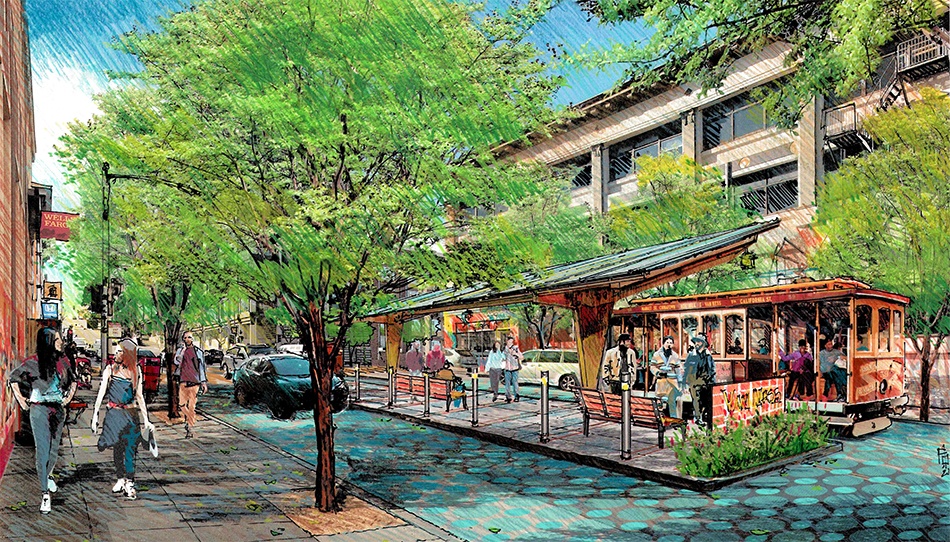
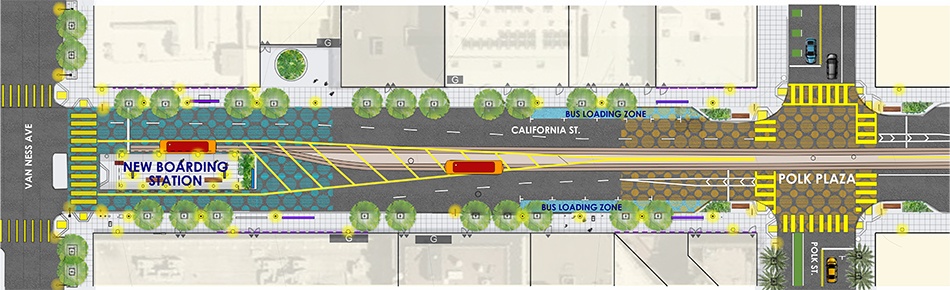
A Great Cable Car Terminus and Polk Plaza Benefiting the Whole Community
The intent of this vision plan, and the illustrations included within, is to describe a possible future. It recognizes that this change will take coordinated efforts of multiple agencies and a large capital investment that is beyond the capacity of any one of the many community voices that have helped create and propel its direction. The total vision described here concentrates on the Van Ness Station point, but has implications for change that extend to blocks west and east that will enable that infrastructural change. Traffic will need to be organized through striping and right turn lane only signs, or directive signaling for trucks and other special vehicles, one block west of Van Ness for those traveling east to allow for the enlargements of the terminus platform proposed here. At this Polk Street Gateway, bulb-outs and traffic calming intersection upgrades and super graphics are used in conjunction with furnishings, lighting, bollards and other described amenities to create a very different and exceptional intersection. The intent, as illustrated here, is to ensure that the other circulation systems, be they vehicular, bicycle, or pedestrian, will all arrive on this block to understand it clearly as a pedestrian oriented precinct.

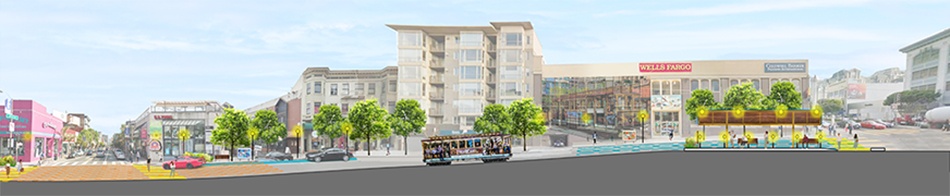
The public realm is the place where we need to be making these major investments on behalf of the people. It is the goal of this Vision Plan process to allow the people to speak in one voice towards actualizing change in those areas of the public realm that most directly affect them and have the greatest chance of doing the most widely distributed good. These are expensive things to realize and expensive places change, but first we must know how to ask for what we want and need. It is the hope of this Vision Document that that voice is clear and the goal is well defined – such that it might next be actualized.
Location: Polk Merchants District
Owner/Client: Lower Polk Neighbors / Lower Polk CBD
Scope: Cable Car Turn-Around Vision Plan
Status: Completed 2021
Photography: N/A
Polk Plaza Vision Plan
Grass Roots Urbanism
The culmination of many community-focused design workshops, and stakeholder input, that created the California Cable Car Turn-Around Vision Plan ignited the formation of a separate group committed to seeing this area become the gateway to the Polk Street mercantile corridor. The idea of creating a more formalized pedestrian focused transit node, away from the busy Van Nes corridor, here at the Polk intersection was the starting point for the Polk Plaza Vision
A New Cable Car Social Hub
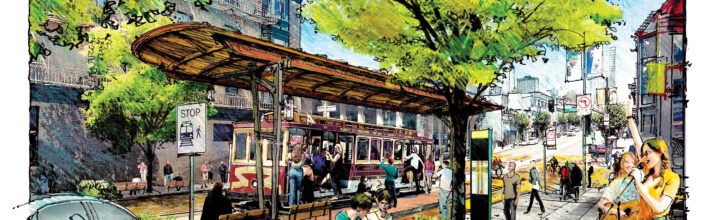
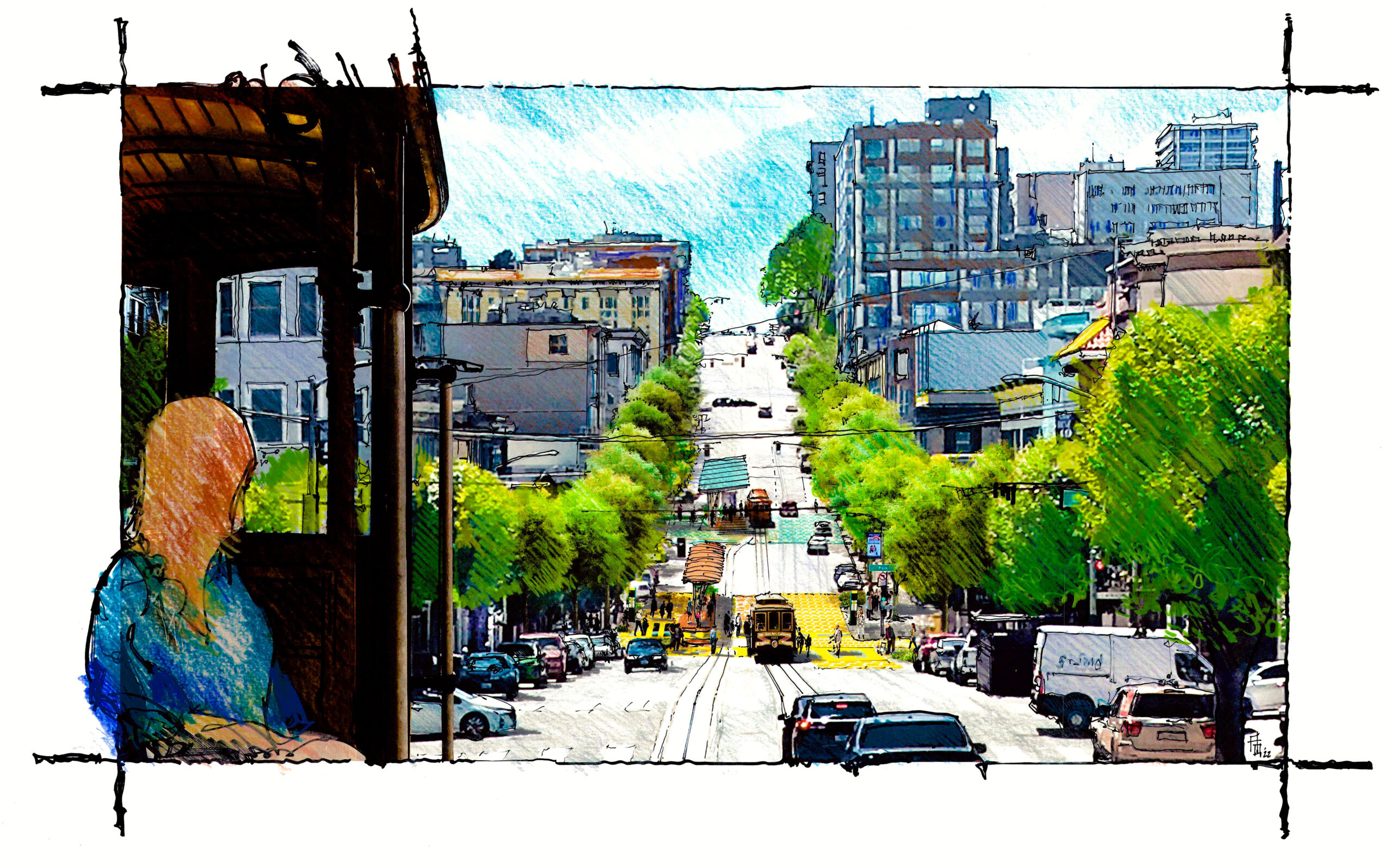
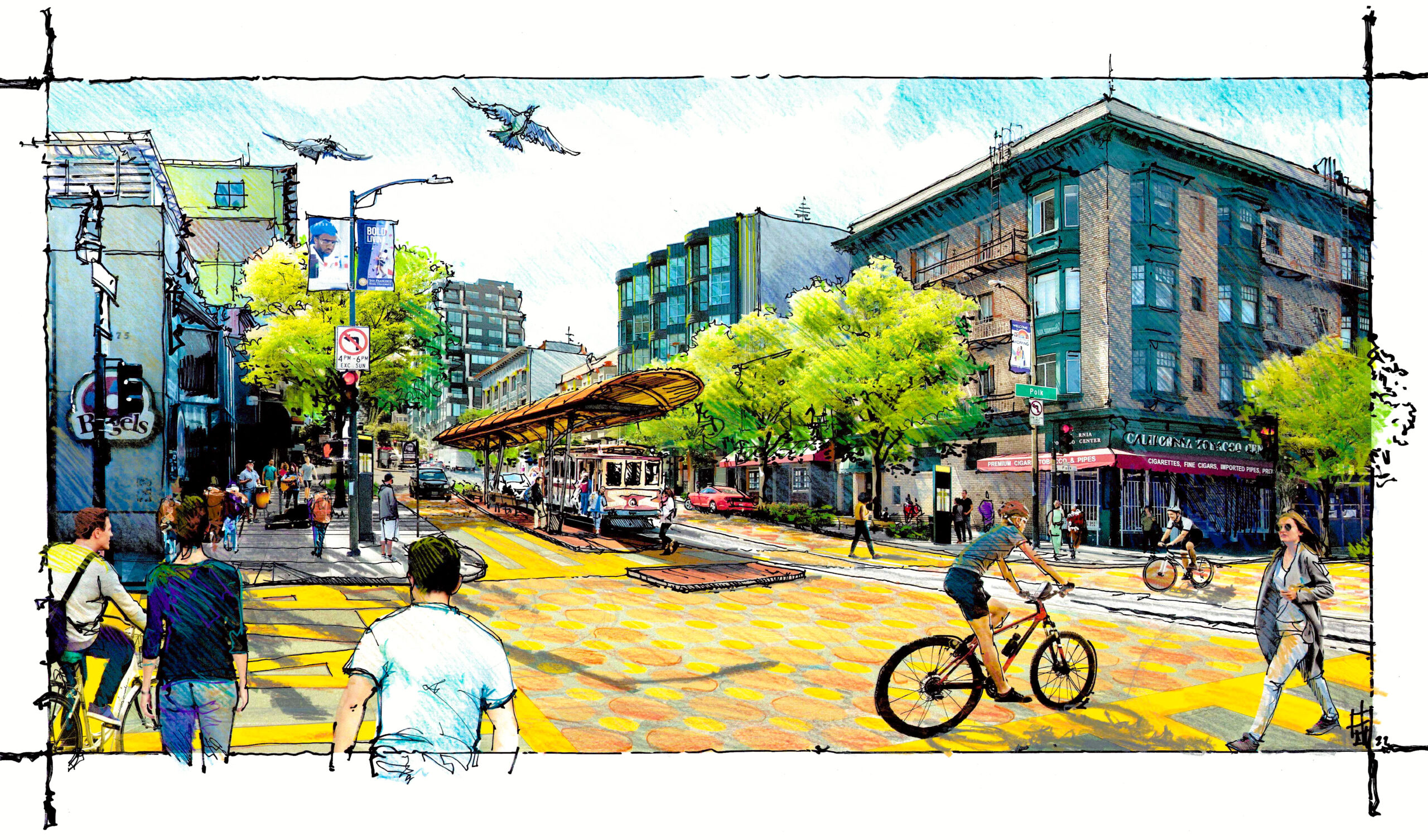
Working with the growing group of “friends” of Polk-Plaza, INTERSTICE was asked to create an addendum to the original vision plan that focused on the Polk intersection cable car stop, with its obvious connections to the community, and to the heritage of San Francisco’s iconic cable car past. The intersection is envisioned to serve as the gateway to the city’s western center – With widened sidewalks, bulbed curbs, street amenities and plantings at the four corners, the intersection at California street forms a larger hub connecting the bike lanes, and personal mobility routes to this very walkable neighborhood, with its heritage merchants, eateries and lively bars, that characterize this thriving Polk Gulch neighborhood.
From this new activated area, visitors and locals are just steps away from Nob Hill, Russian Hill, Cathedral Hill, Civic Center and the Tenderloin neighborhoods – so, it seemed the natural place to envision a lively orientation point at the western most terminus of the Cable car system.
Focusing Community
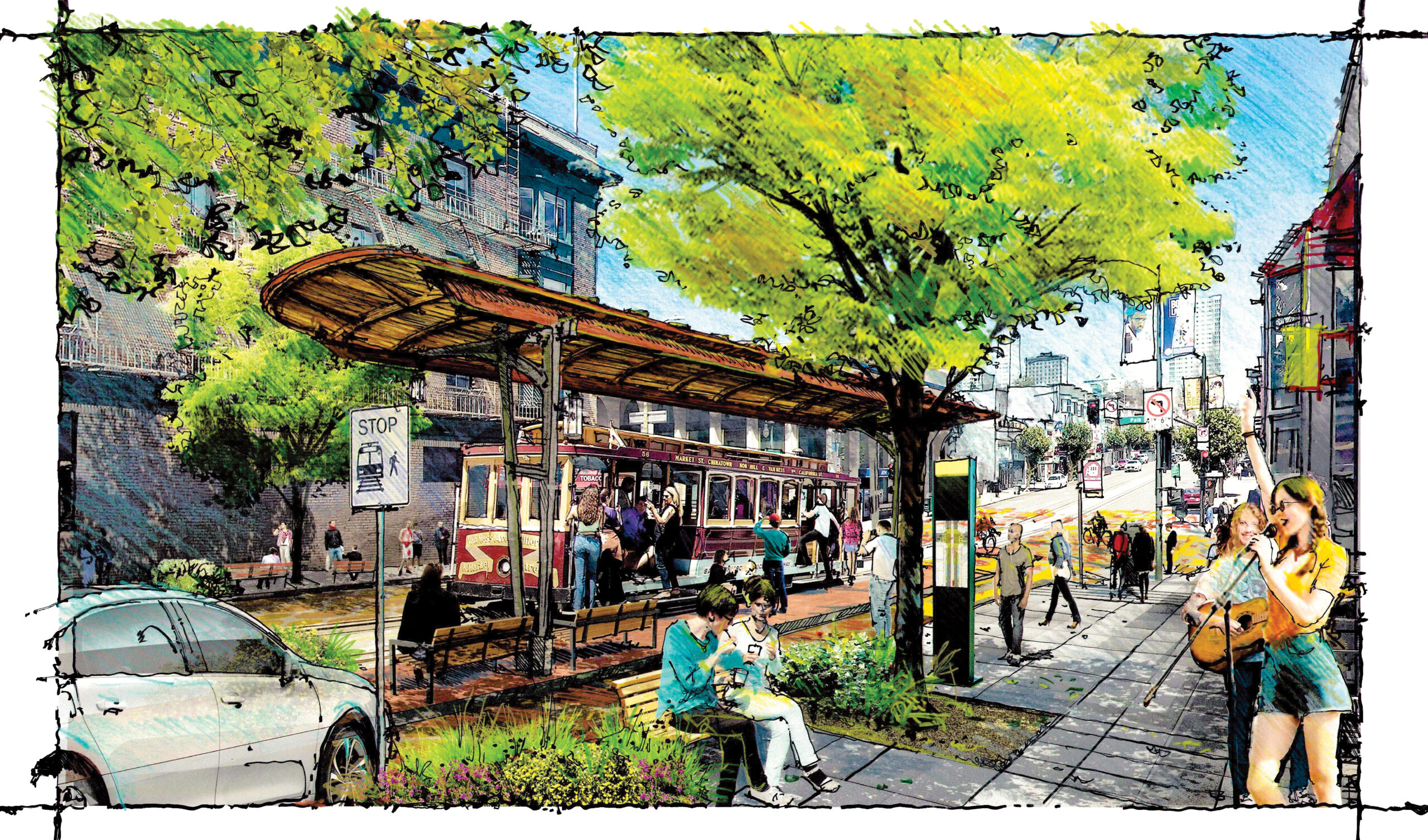
Here Street musicians would serenade the waiting commuters, the passing shoppers, and the tourists on their elevated journey over the hills – to and from the Embarcadero and Chinatown. The plan imagines a redesigned civic space that makes people welcome and provides opportunity for interpretive signage, wayfinding , and musical programming from the nearby Music City Studios and hotel. The entire Vision plan can be found here – with the Polk Plaza addendum published here as a standalone document.
Join the friends of Polk Plaza and the Polk Corridor Neighbors as we continue to work on the best public commons for our San Francisco neighborhood.
Location: California and Polk Streets, San Francisco.
Client: Lower Polk CBD and Friends of Polk Plaza
Scope: Urban Design
Status: Vision Plan
Stanford Public Safety Building
Photos: all images Andrea Gaffney, unless noted
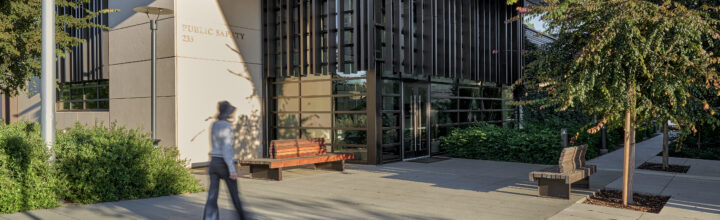
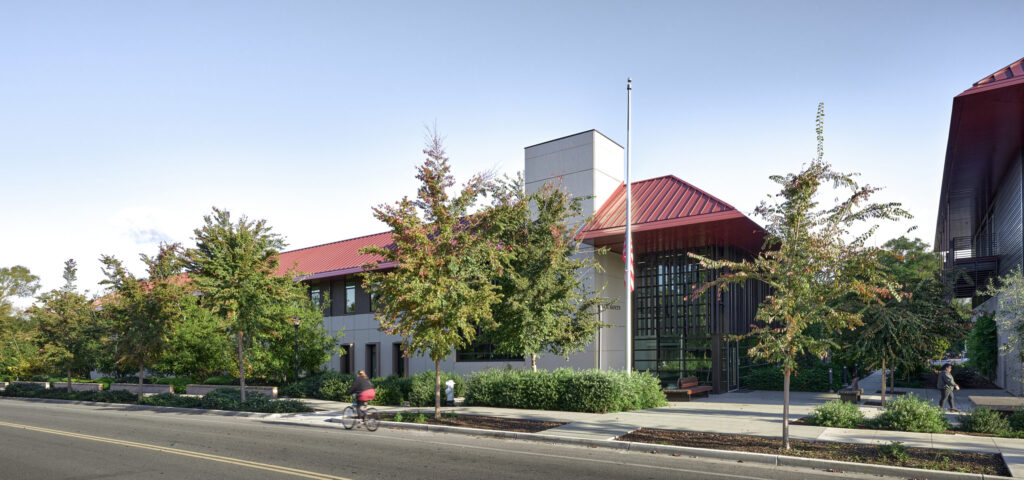
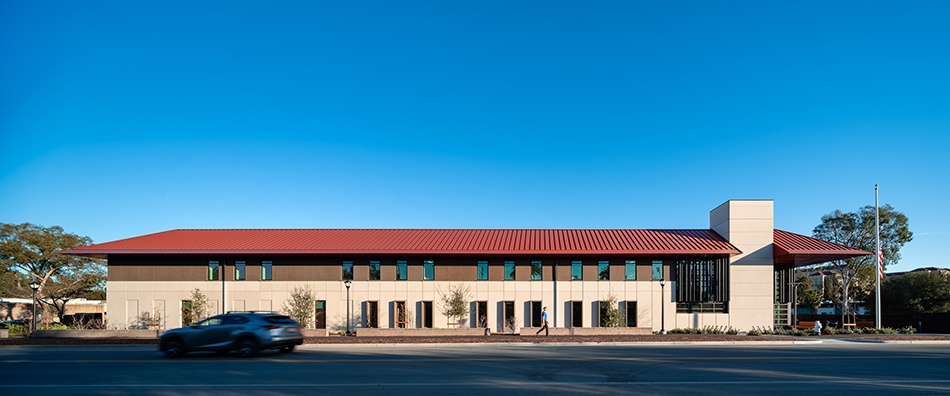
The landscape for this welcoming law enforcement and emergency services presence is situated on the world class Stanford Campus. IA designed an entry landcape that is an inviting shared arrival plaza in the foreground of the two companion facilities of the Public Safety Building and Emergency Communications Center.
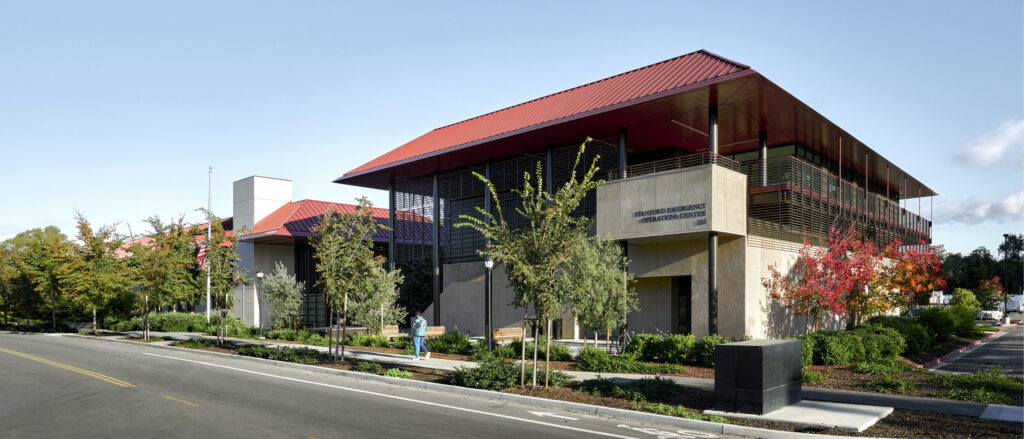 Emergency Communications Center
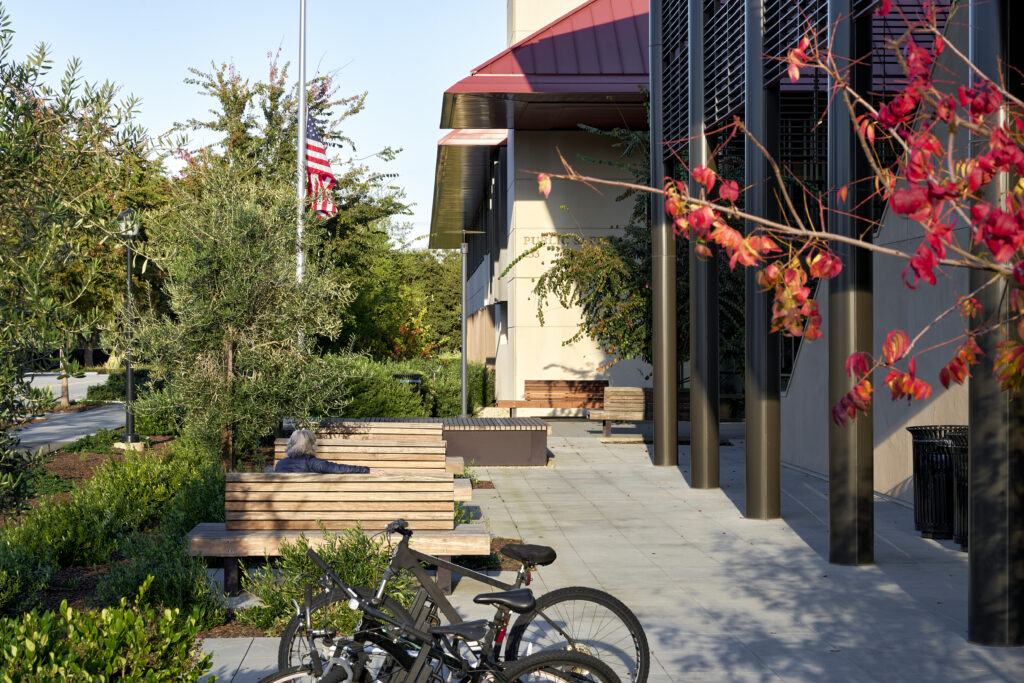
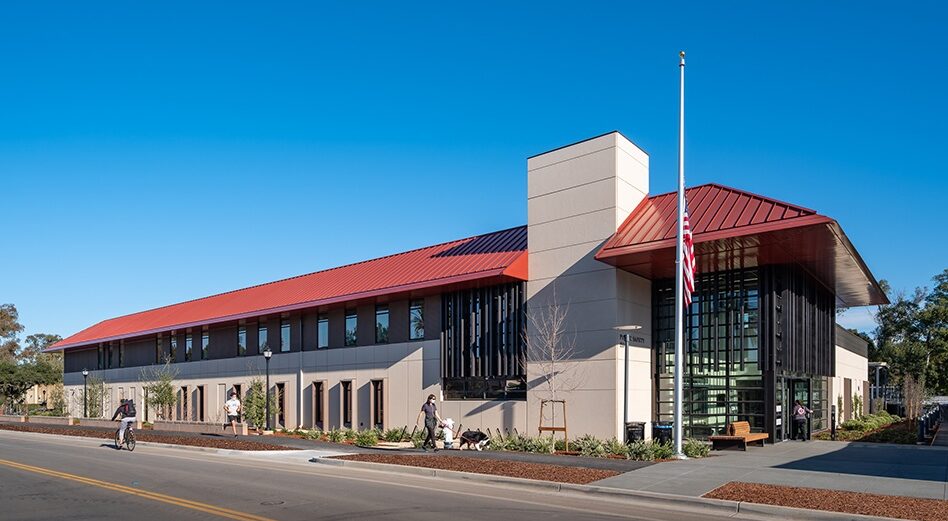
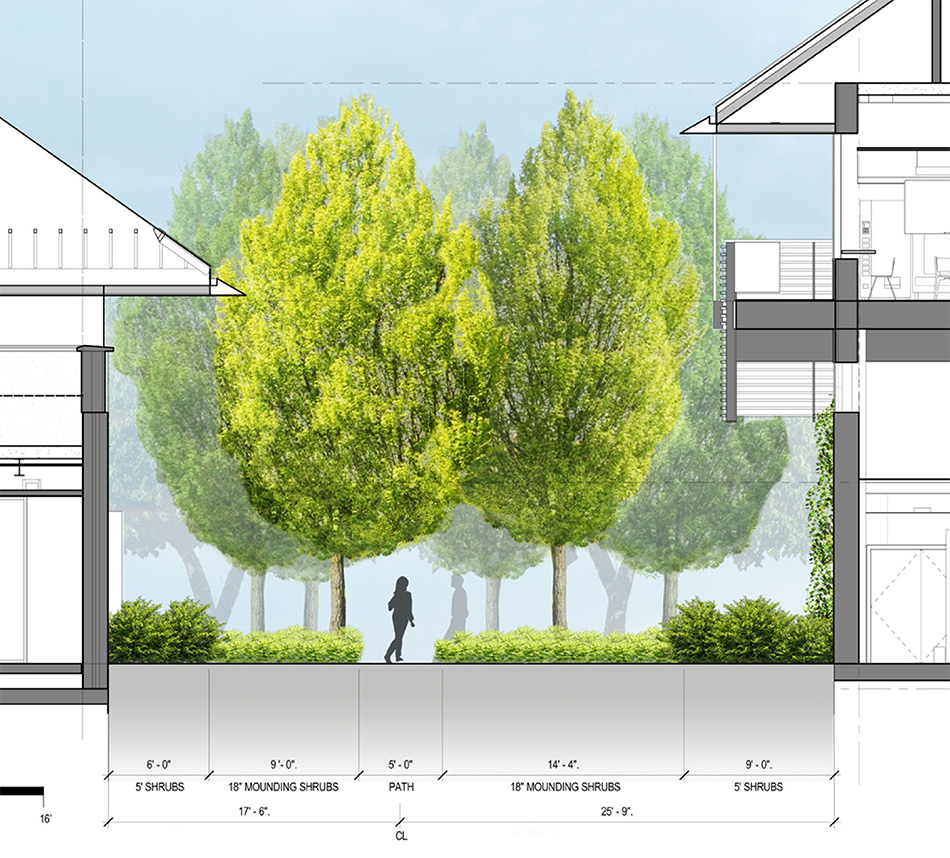
 The plaza is a slow space that interrupts the sidewalk circulation along Bonair Siding Road and creates a civic yet intimate scaled entry place with shade tree plantings, benches, and seating islands that double as vehicular barriers to protect the building entry.
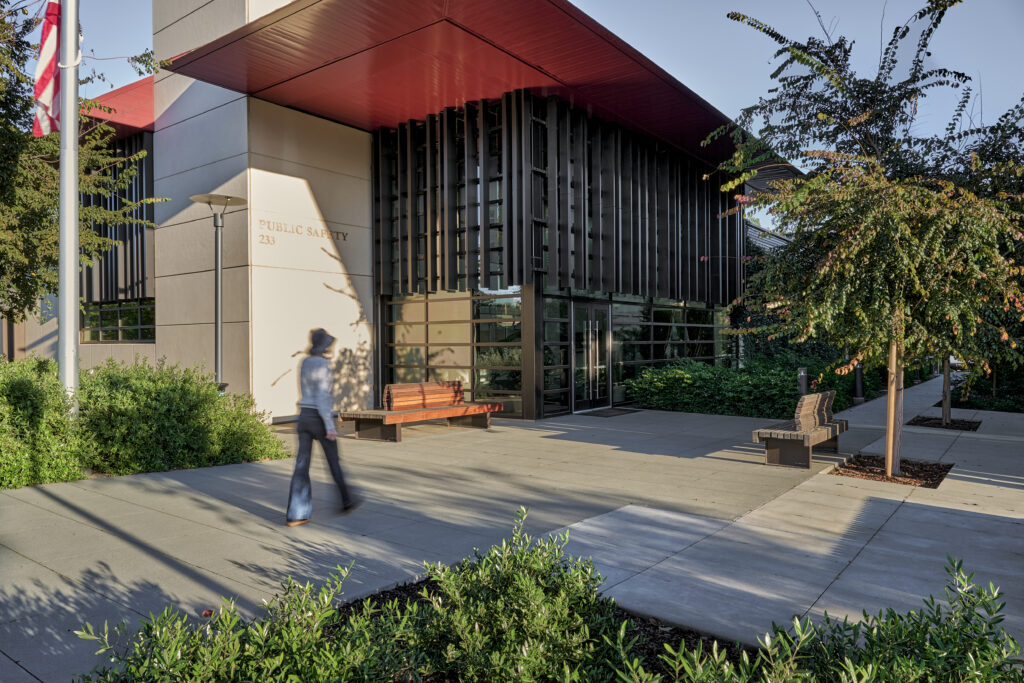
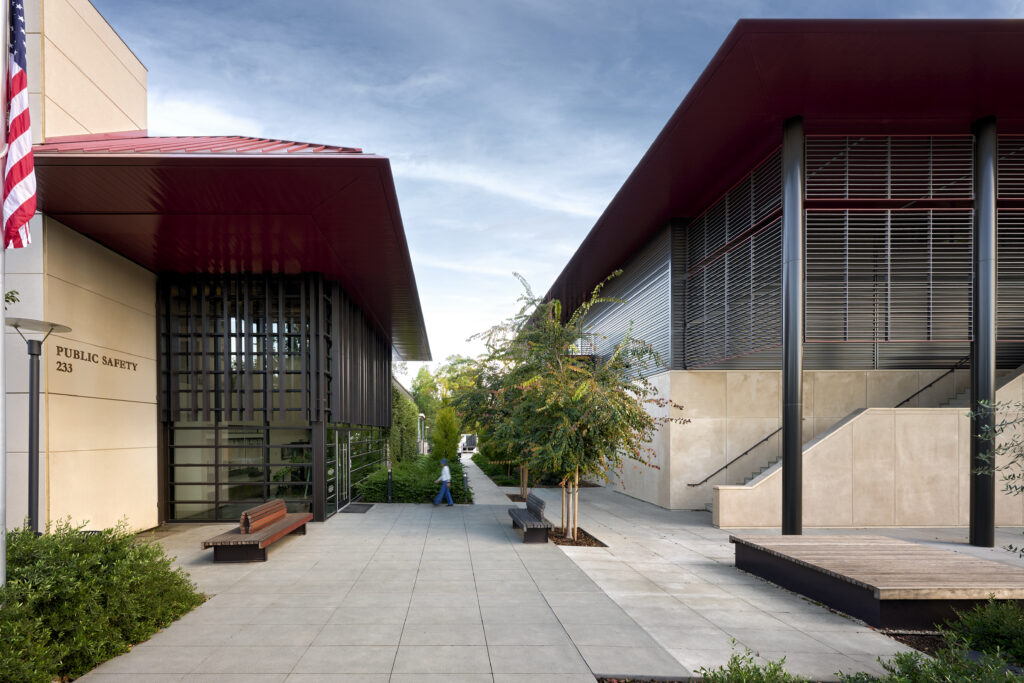
The plazas serve as the public entry for students and the general public, as well as integrating bicycle parking among native Coast Live Oak grove plantings that run the length of the frontage along Bonair Siding Road. The sidewalk edge is defined by a low seat wall acting as a protective vehicular barrier, and a sculptural mounding topography of native California wild lilac and coyote bush plantings between the sidewalk and facade.
 ECC Plaza Seating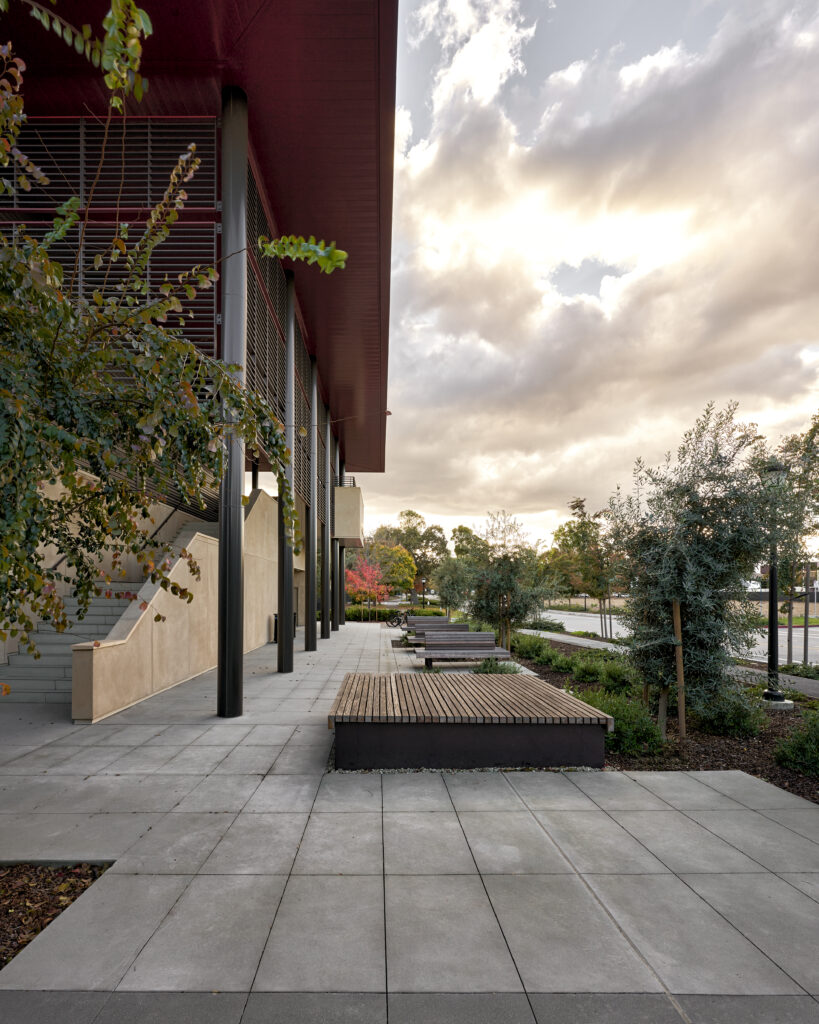
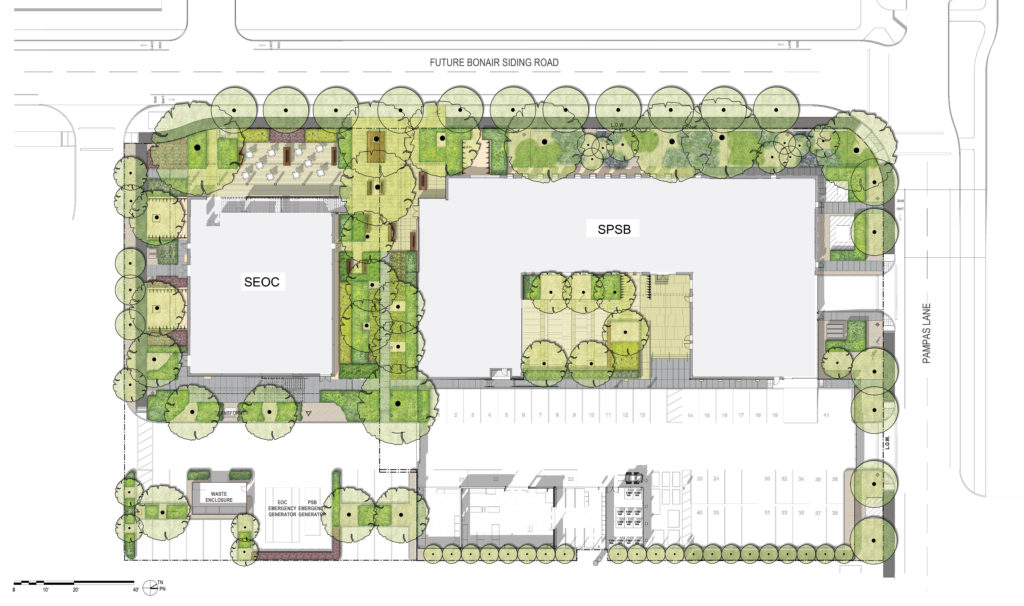
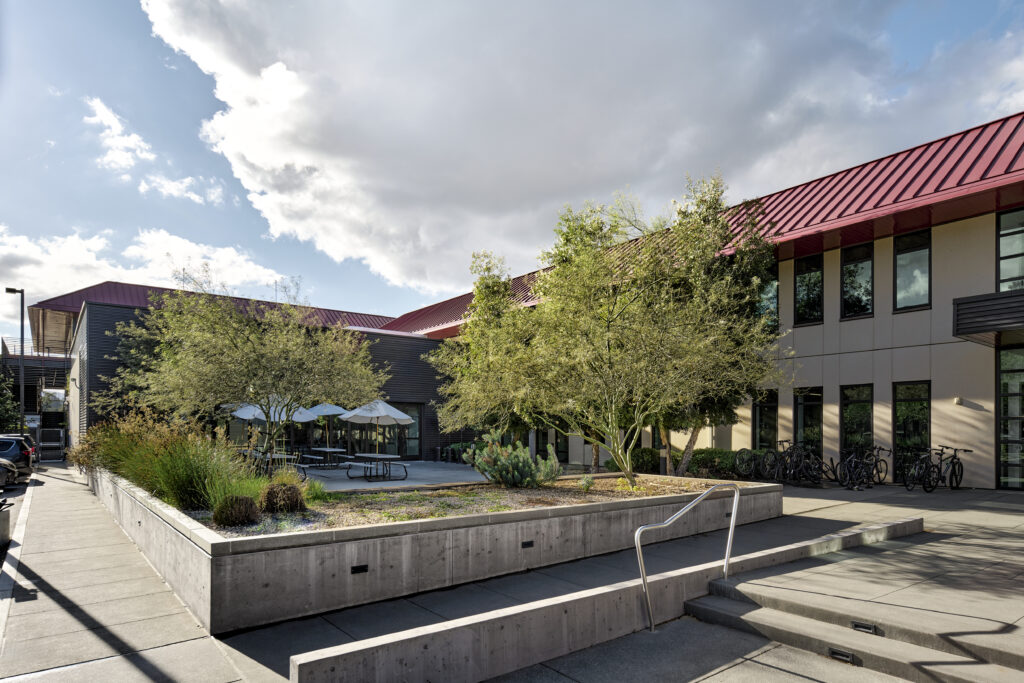
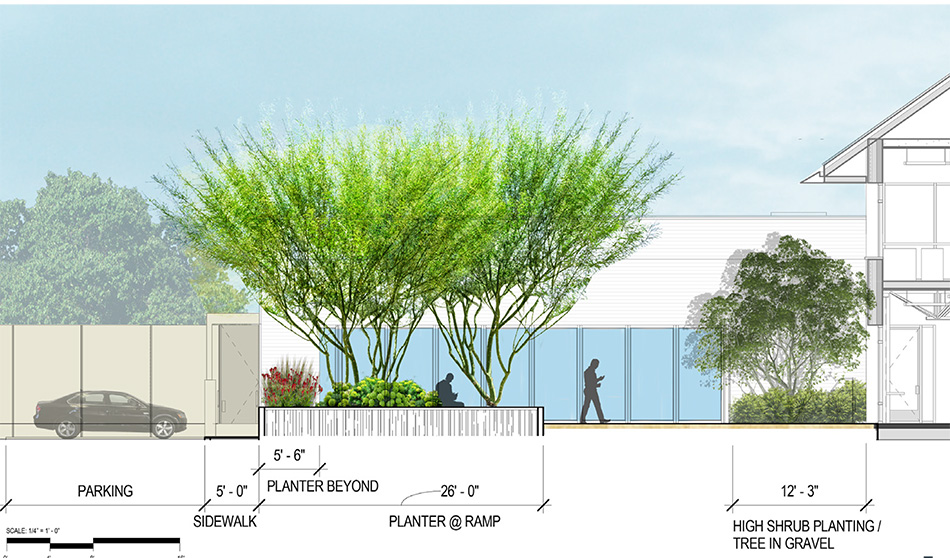
The staff entry and briefing plaza is a secured courtyard space that serves multiple programmatic functions, including staff entry, public safety briefings and logistics, lunchtime dining, staff social events and barbecues, and significant bicycle parking. The courtyard is framed by a raised planter and fine-textured Palo Verde trees providing shade and enclosure.
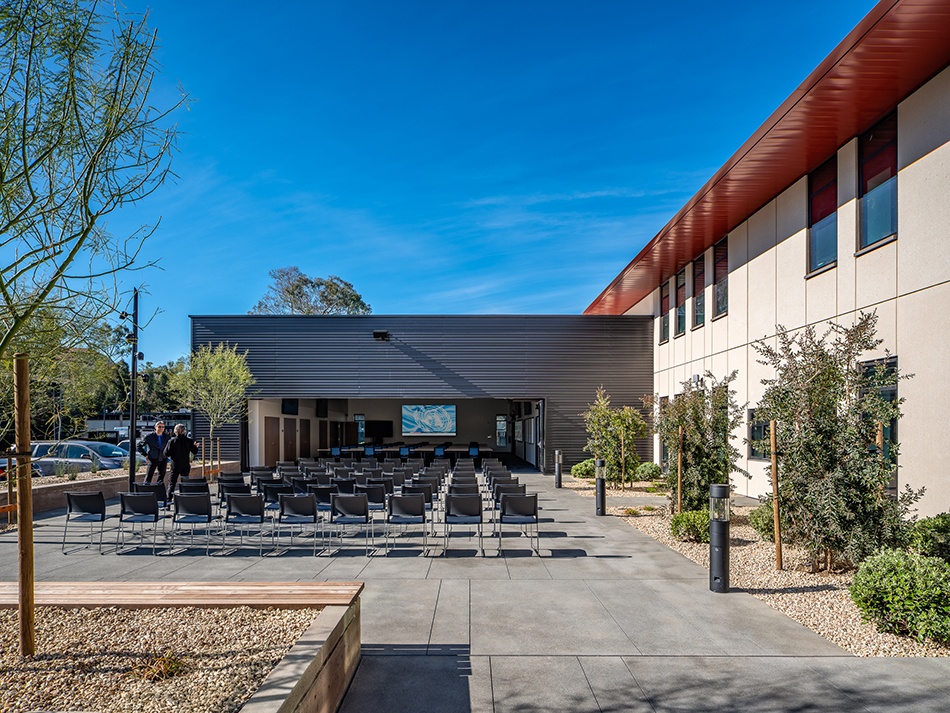 Security Briefing Room and Courtyard set-up
 Kyle Jeffers
Kyle Jeffers
Kyle Jeffers
Location: Stanford, California
Owner/Client: Stanford University LBRE / RossDrulisCusenbery ARCHITECTURE
Scope: Site Design & Landscape
Status: Completed 2020
Photography: Andrea Gaffney and Kyle Jeffers
555 Larkin / 500 Turk
Honoring History through Revitalization
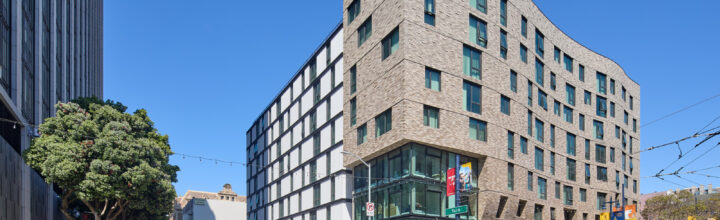
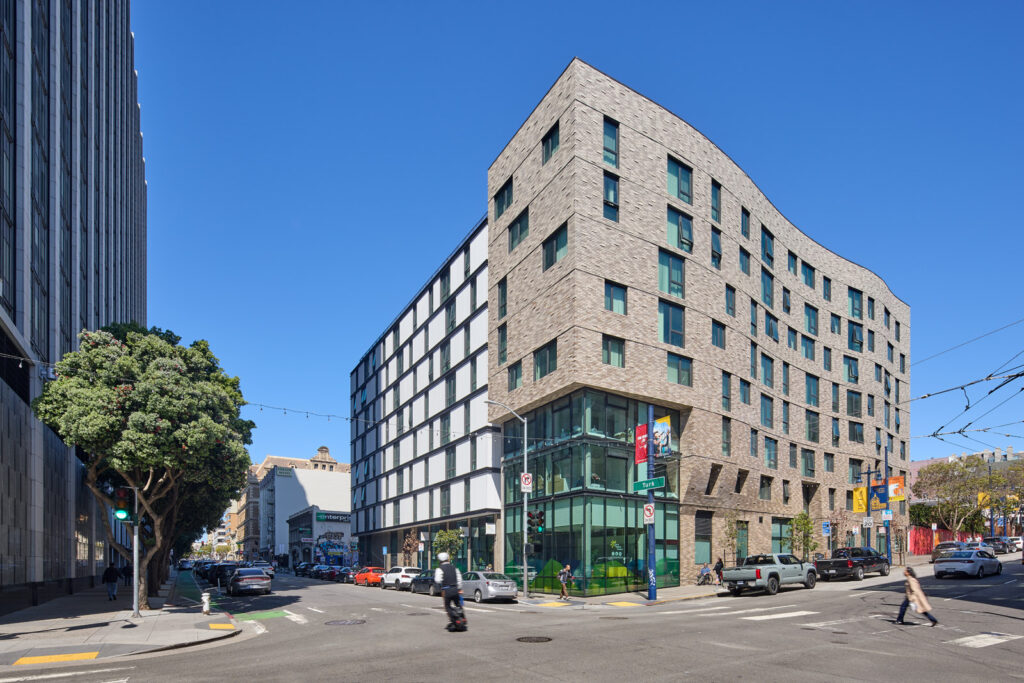
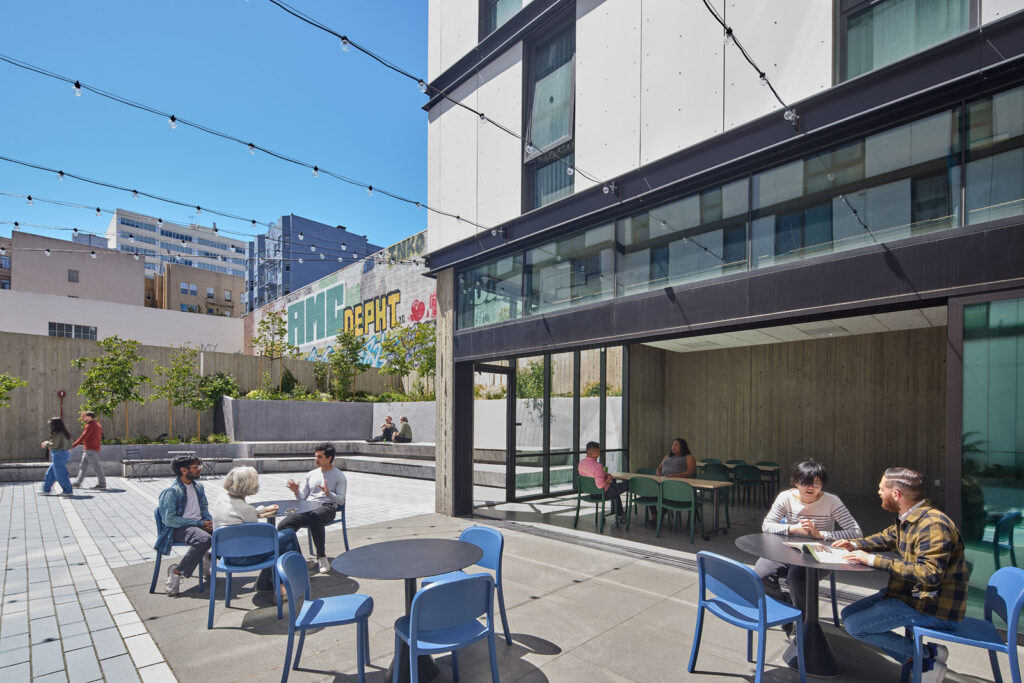
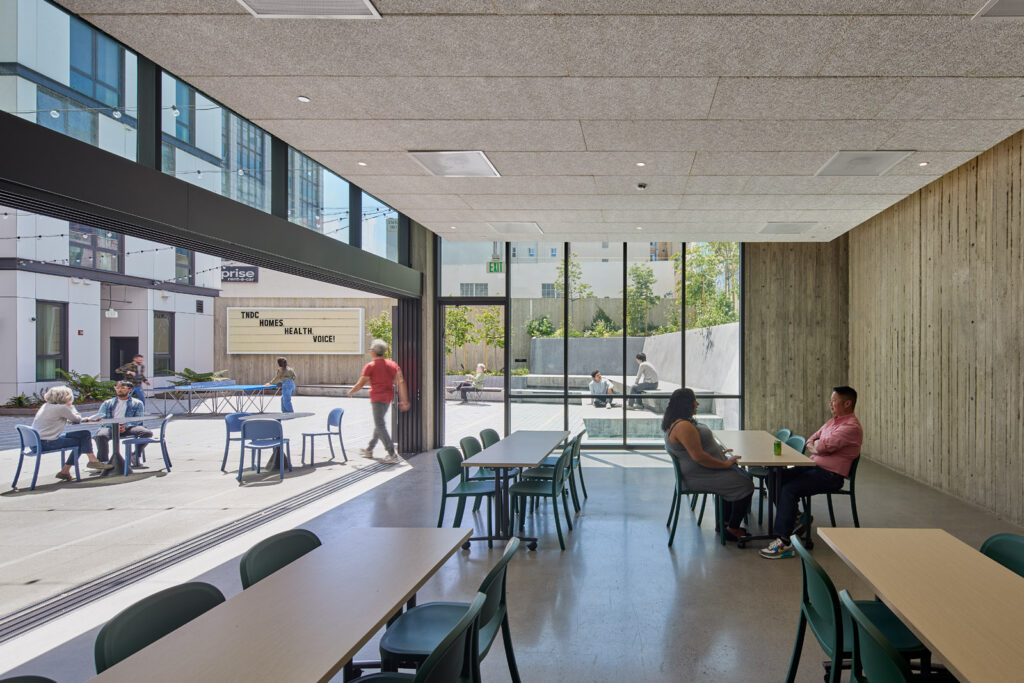
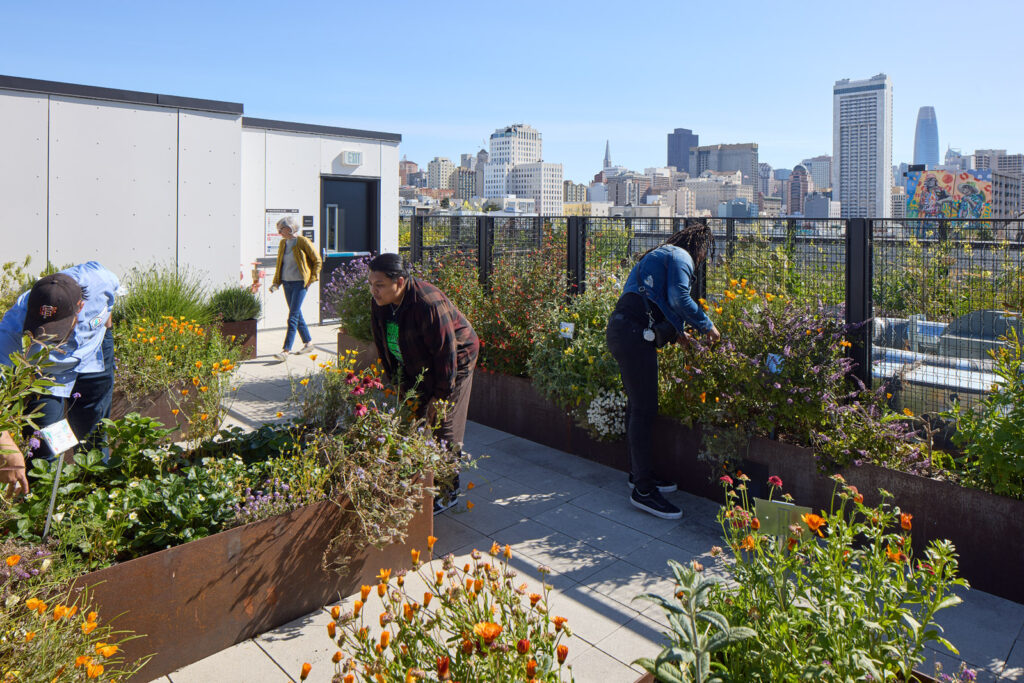
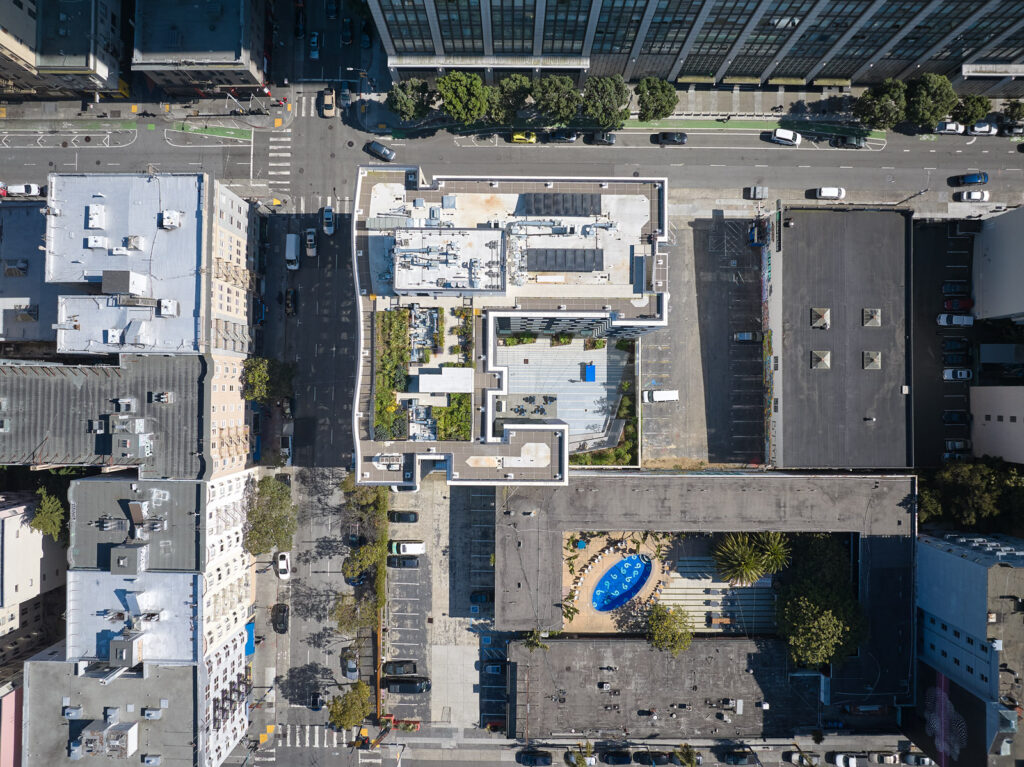
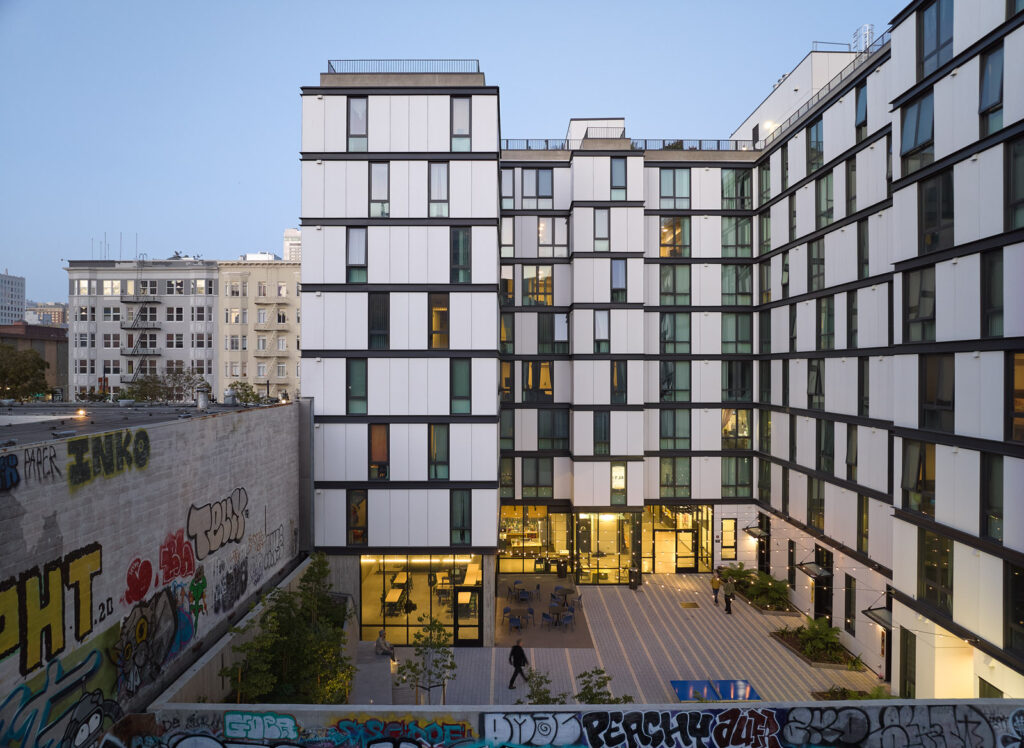
Located in the Tenderloin neighborhood of San Francisco, 555 Larkin/500 Turk Streets is a new mixed-use development comprising ground-floor retail space and 108 units of 100% affordable and supportive housing for formerly homeless residents, along with a shared courtyard, community room, and rooftop urban agriculture. INTERSTICE Architects is working with the Tenderloin Neighborhood Development Corporation (TNDC) to convert what was formerly Kahn and Keville automotive garage, a beloved Tenderloin business for over 100 years, into the lively, community-oriented development that will provide much-needed housing to this San Francisco neighborhood.
In the (Playful) Details
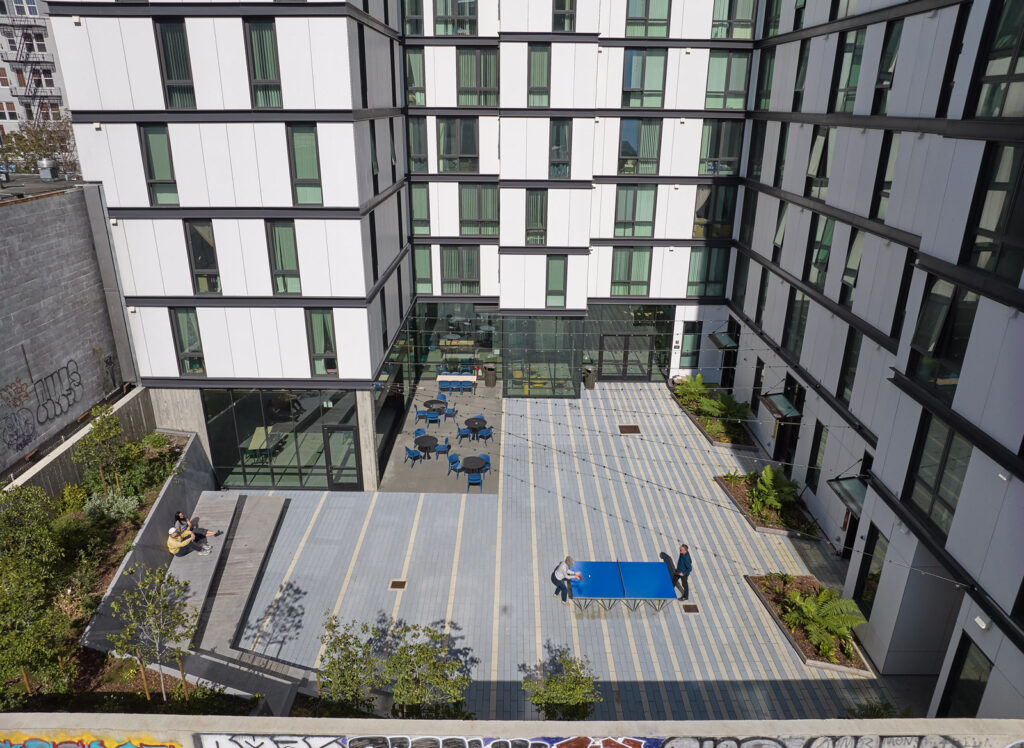
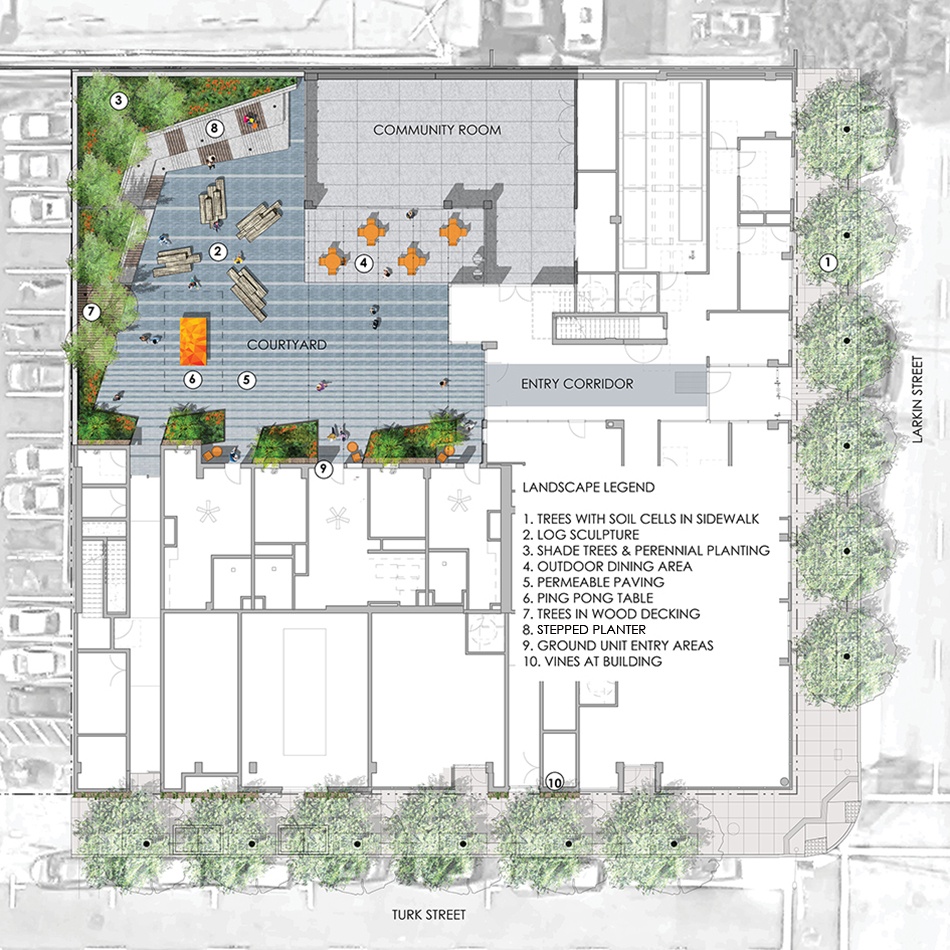
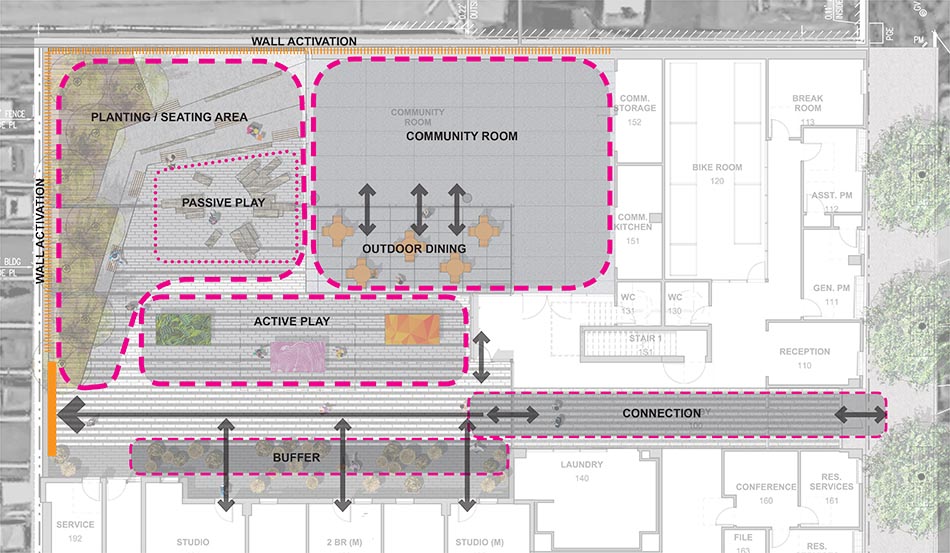
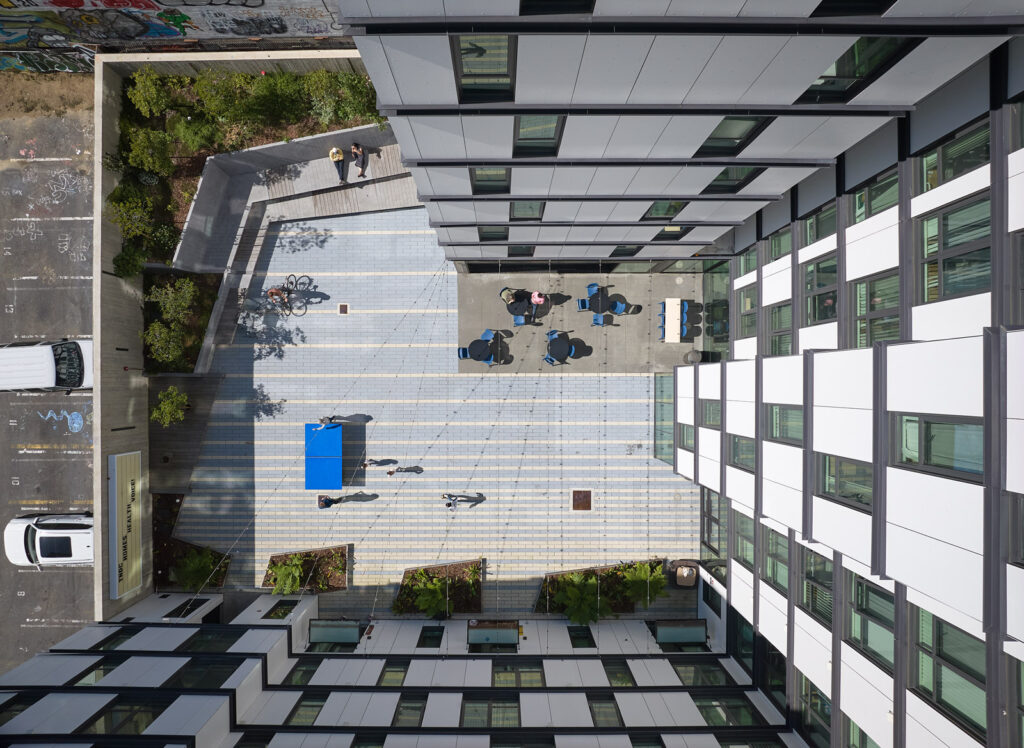
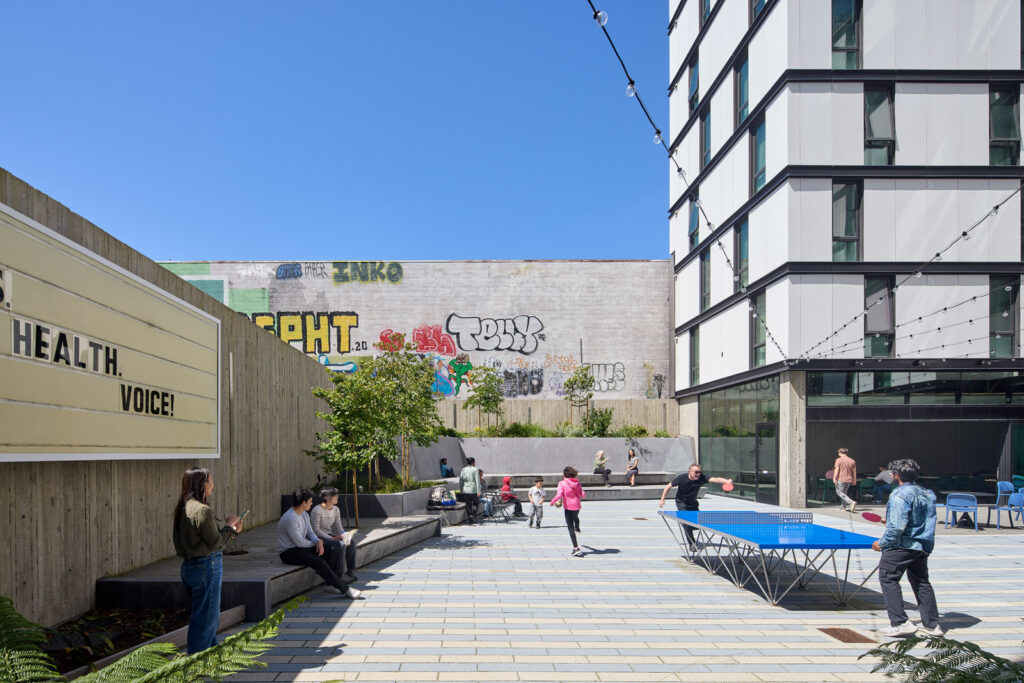
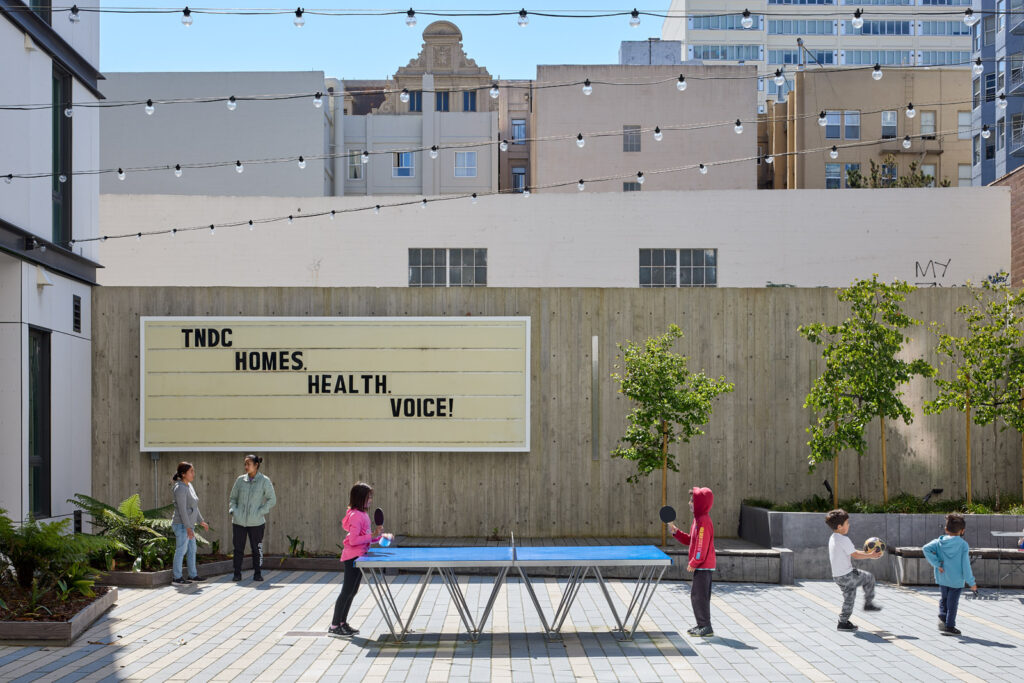
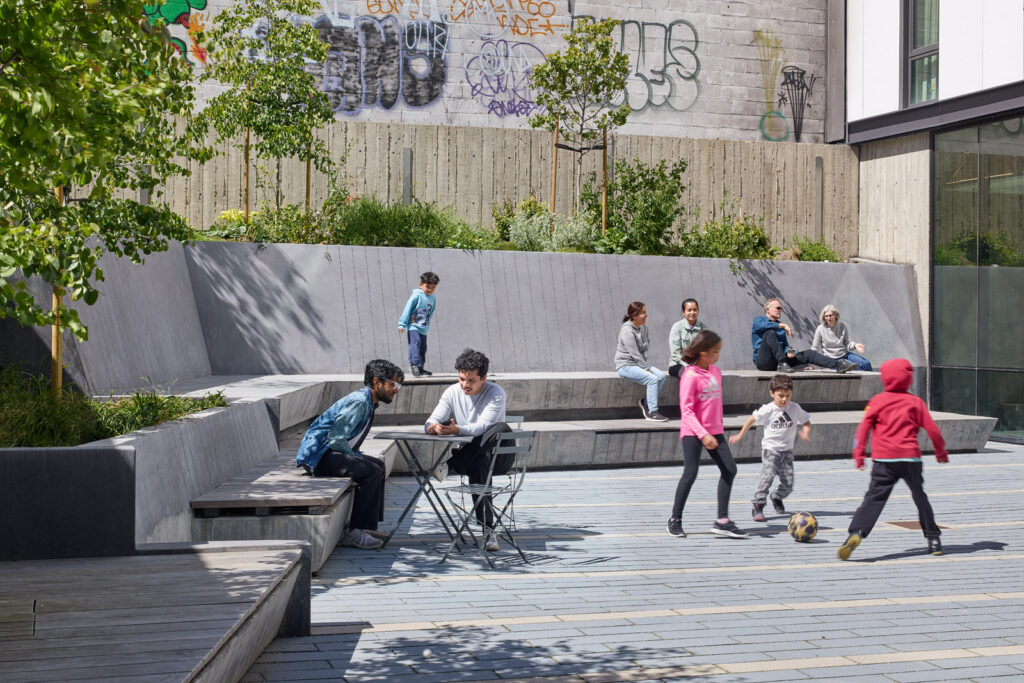
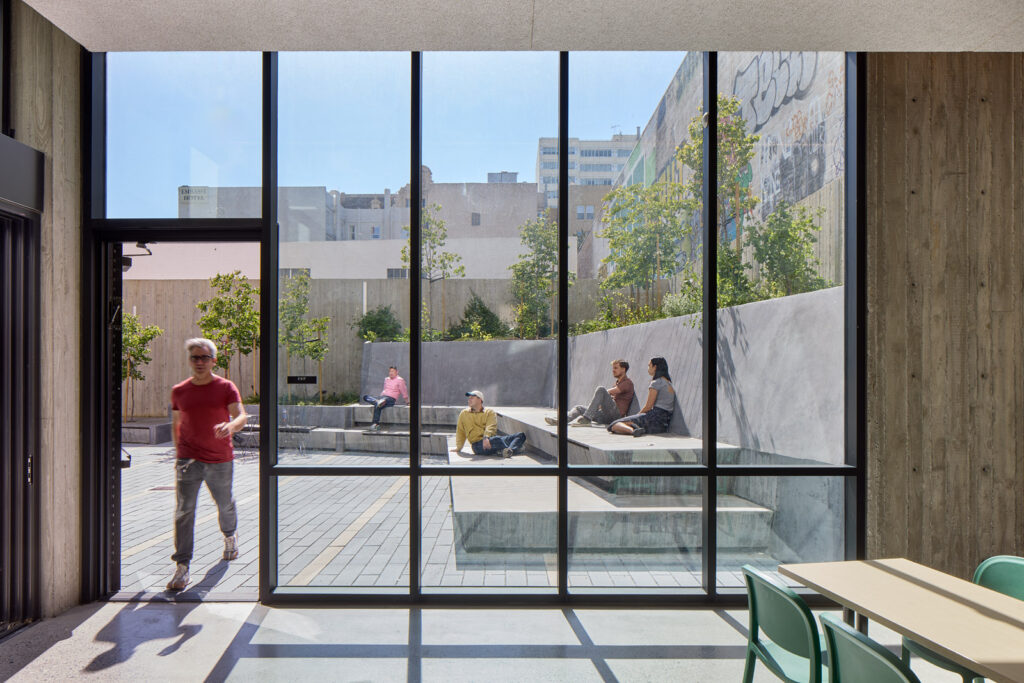
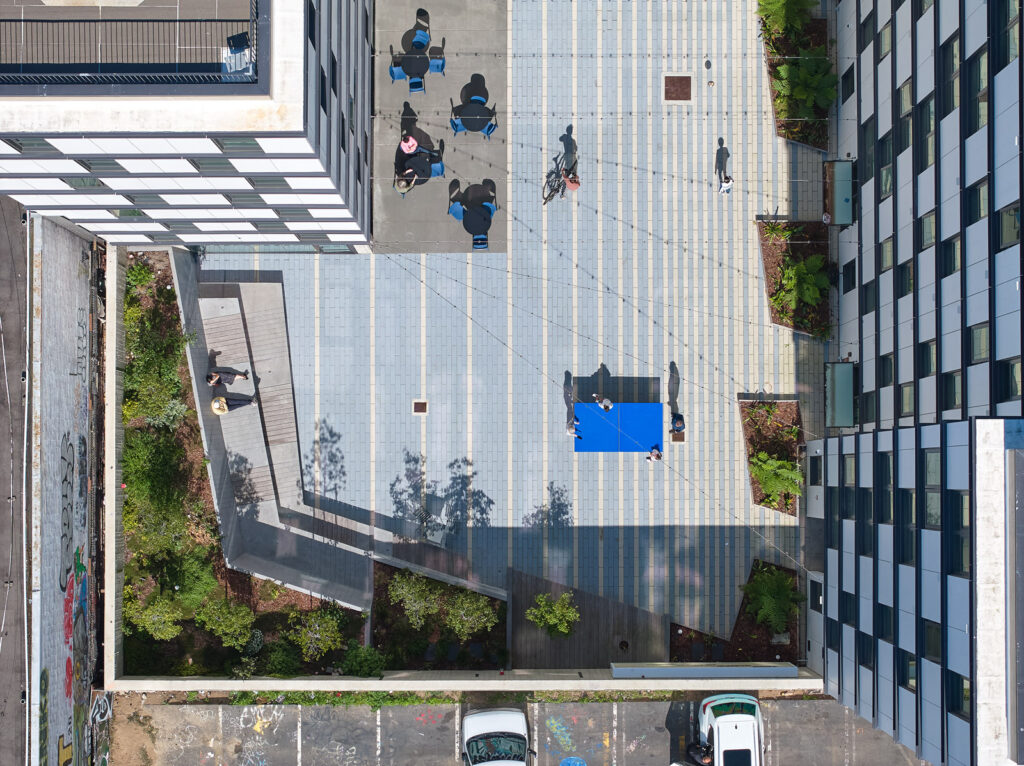
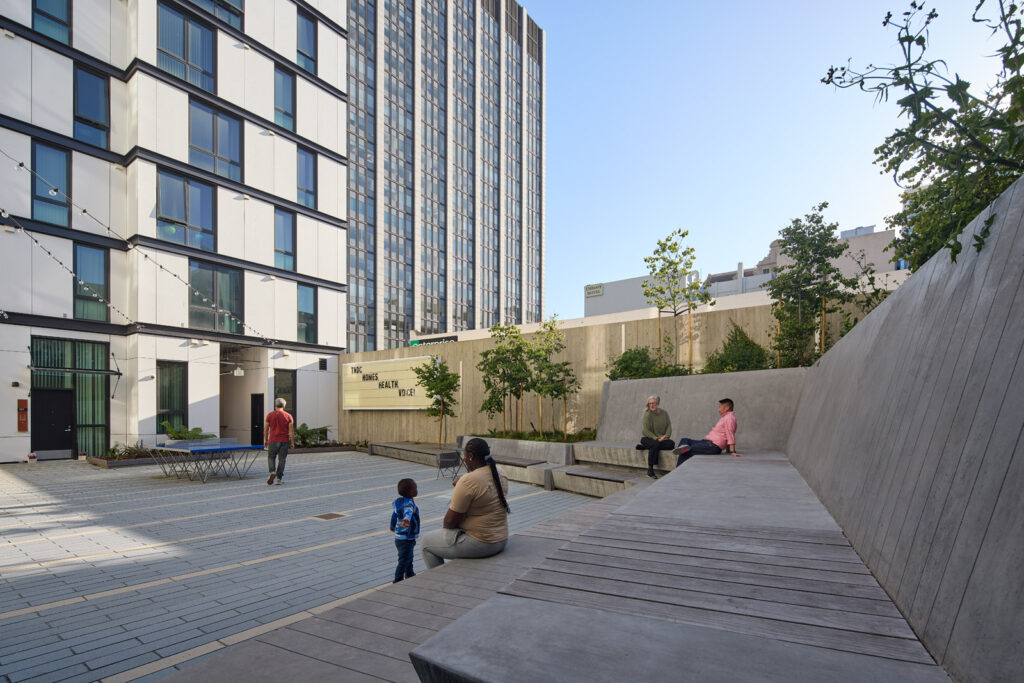
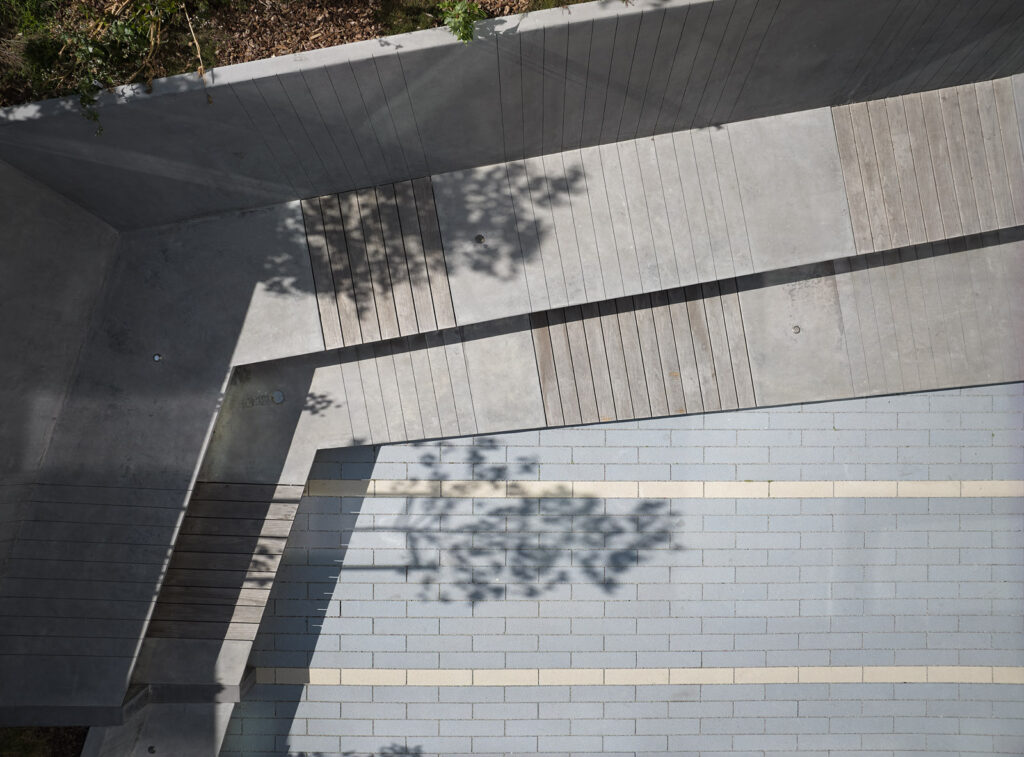
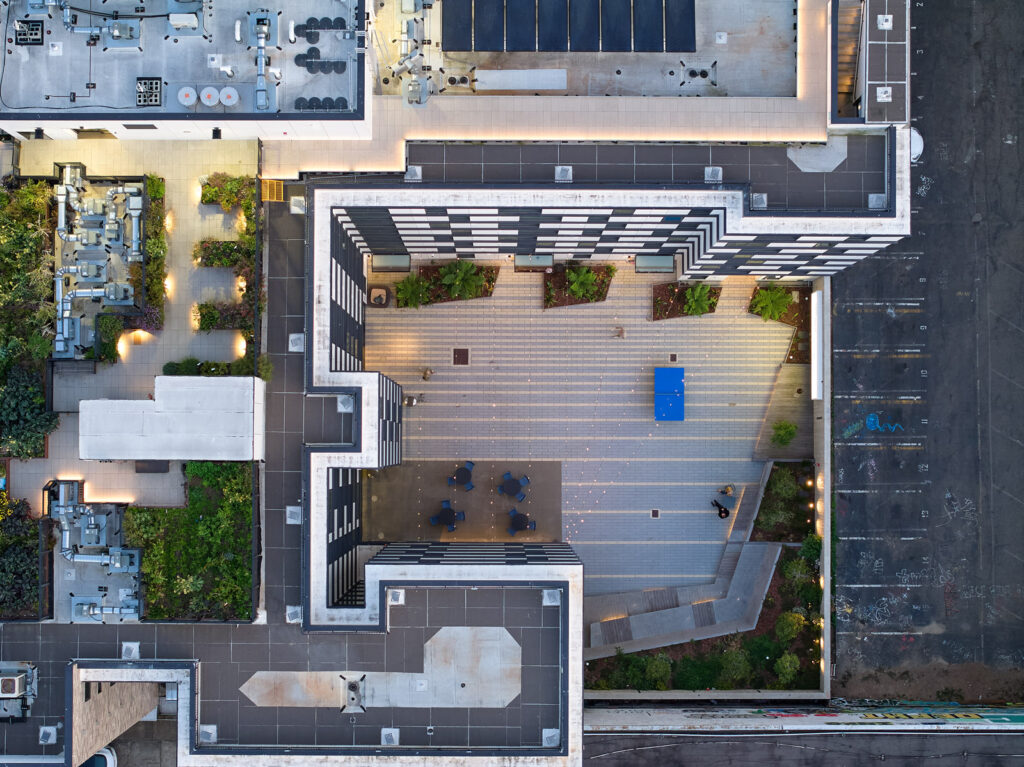
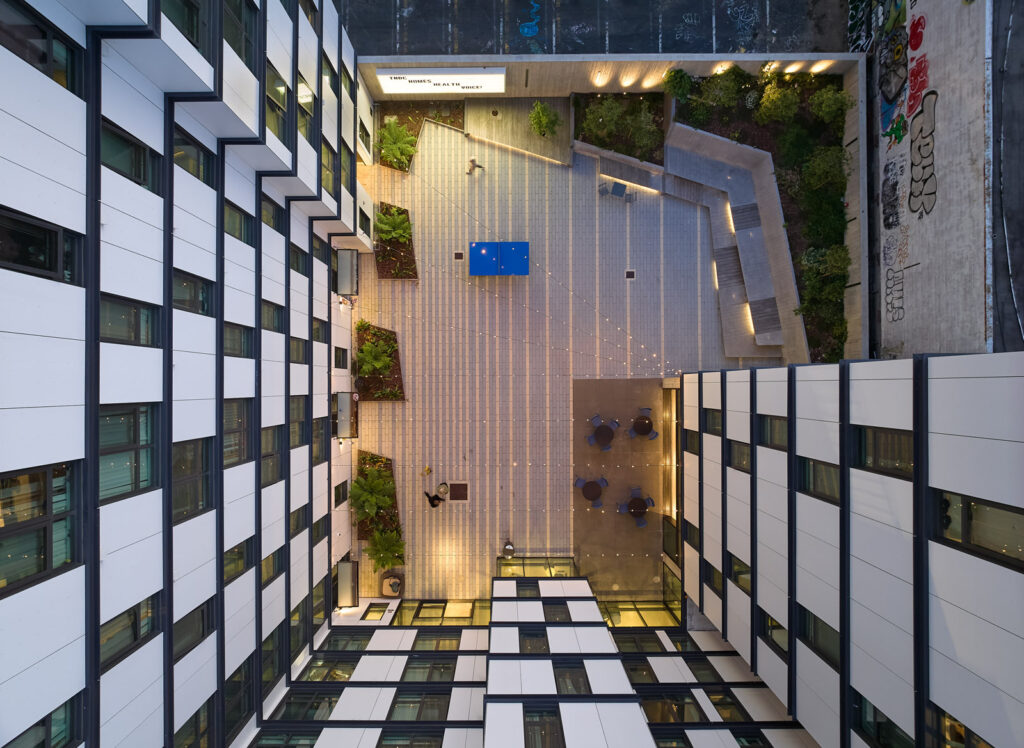
The courtyard landscape is at the heart of this project, acting as a place of relaxation, play, and community for the complex. INTERSTICE wanted to create a youthful space where those of all ages can enjoy a welcoming and playful environment. With close programmatic connections to the surrounding neighborhood, the ground and street level is designed to serve the community and contribute to environmental resiliency through the use of permeable paving throughout the courtyard and a soil support system in the sidewalks to improve the viability of the urban forest. A brightly-colored ping-pong table sits beneath overhead festoon lighting adjacent to the community room where residents can gather and socialize. Wooden sculptures meant for passive and imaginative engagement are situated in a loose circle, acting as a focal point for the courtyard. The terraced planter wraps around this centerpiece and provides wood-clad seating beneath the canopy of adjacent birch trees and ferns. INTERSTICE designed a banded textural paving pattern underfoot that extends from the planters at one edge of the courtyard to the foyer and to the ground-level studio apartments. These ground-floor apartments feature small planted garden spaces, providing a sense of private oasis at the residents’ front doors. The courtyard wall, meant to provide privacy and security from the neighboring Phoenix Hotel and surrounding buildings, is designed with vertical board form texture, reflective inserts, lighting, and quotes to create an activated and engaging perimeter.
A Beloved Billboard Reimagined
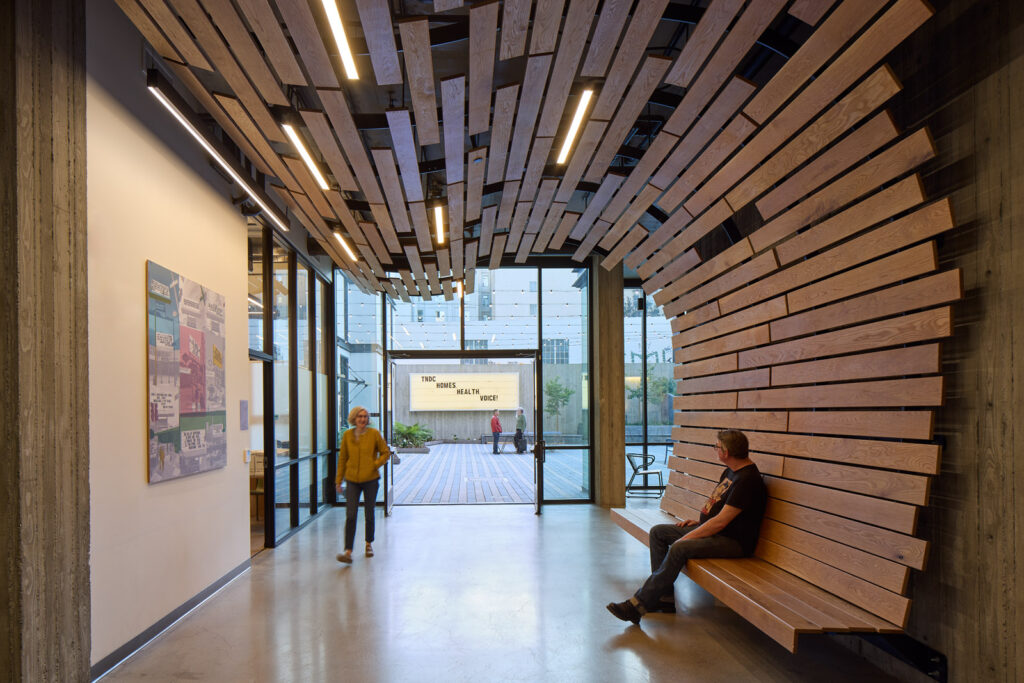
Kahn and Keville automotive garage was established in 1912 on Golden Gate Avenue—not far from 555 Larkin/500 Turk where it moved 23 years later. In 1956, the now famous letter board sign was erected at the corner of Turk and Larkin Streets as a way to amplify what had once been written on simple pen and paper inside the garage: quotes, poems, and observations soon appeared in bold, black letters above the intersection. The sign became a fixture in the Tenderloin neighborhood and the design team has integrated it into the new project. The sign can be seen from the front entry reception on Larkin and upon entry to the courtyard. Visitors and residents will continue to experience and honor the genius and history of its presence on this particular city block.
Location: Tenderloin Neighborhood, San Francisco
Owner/Client: Tenderloin Neighborhood Development Corp. / David Baker Architects
Scope: Courtyard Landscape & Streetscape
Status: In Progress
Photography: N/A
Castro Hillside Duplex
Castro Wedge Site
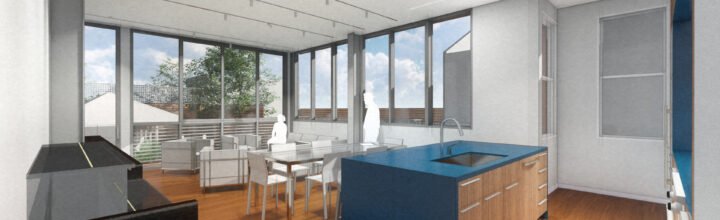
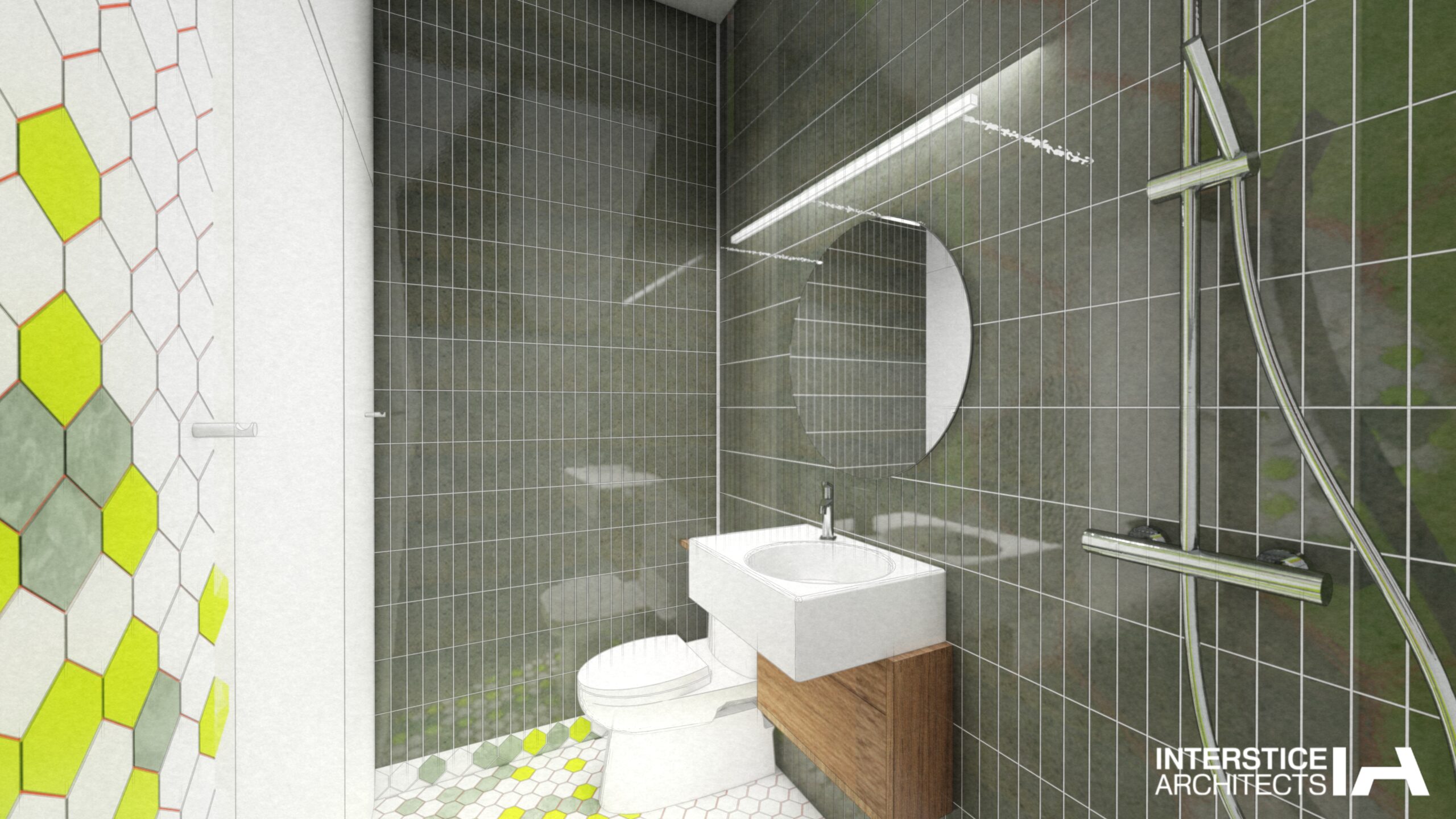
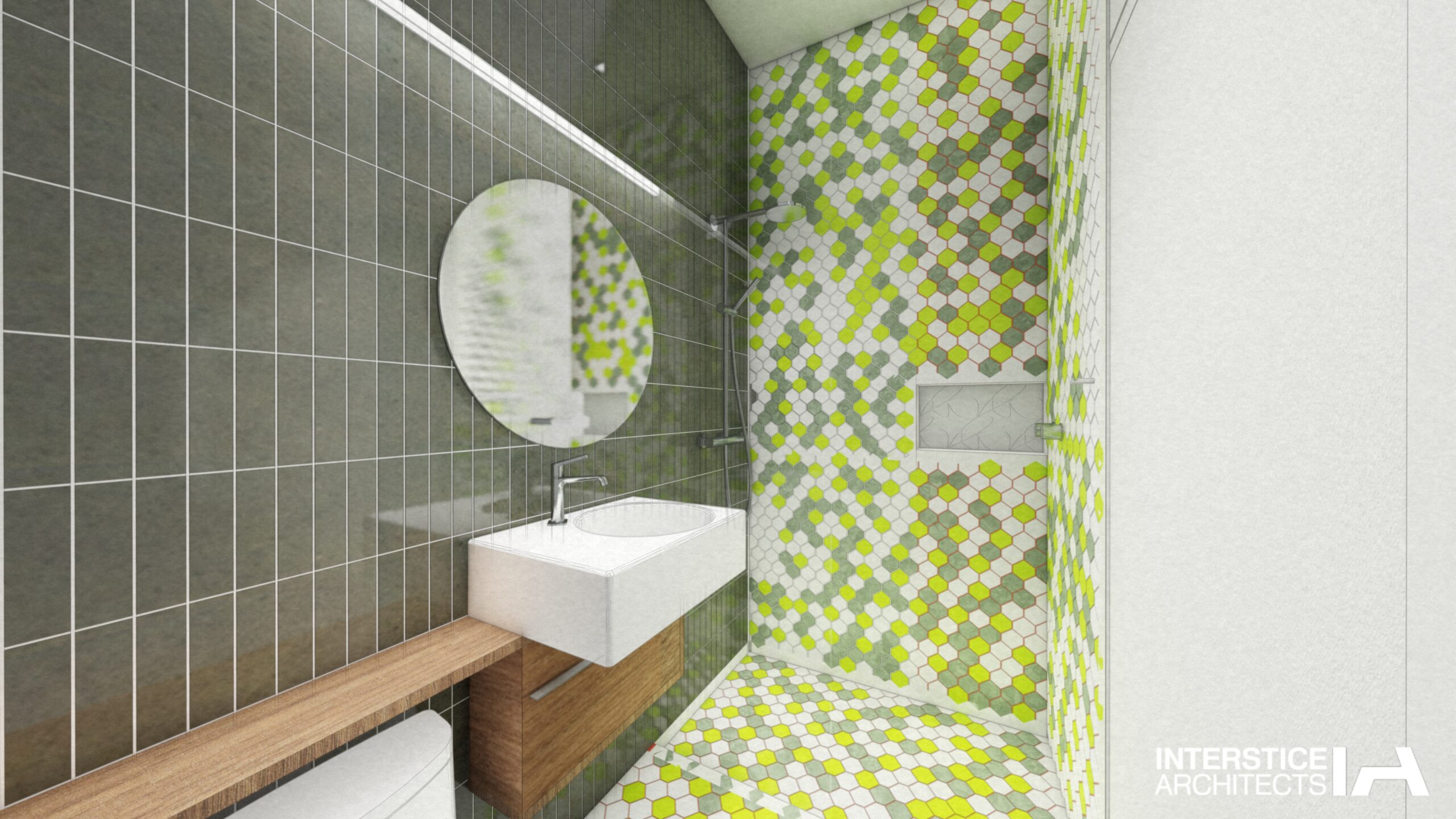
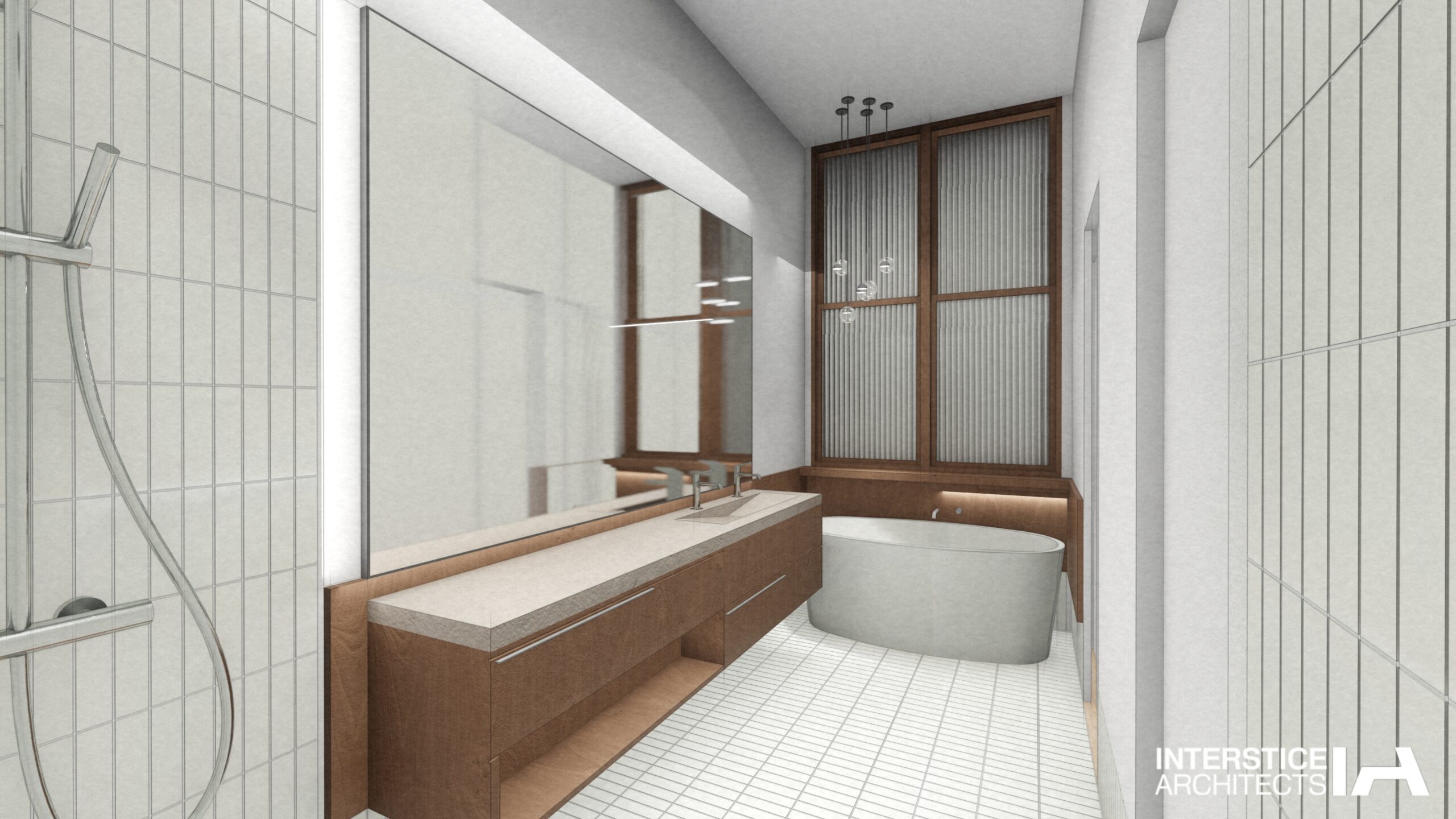
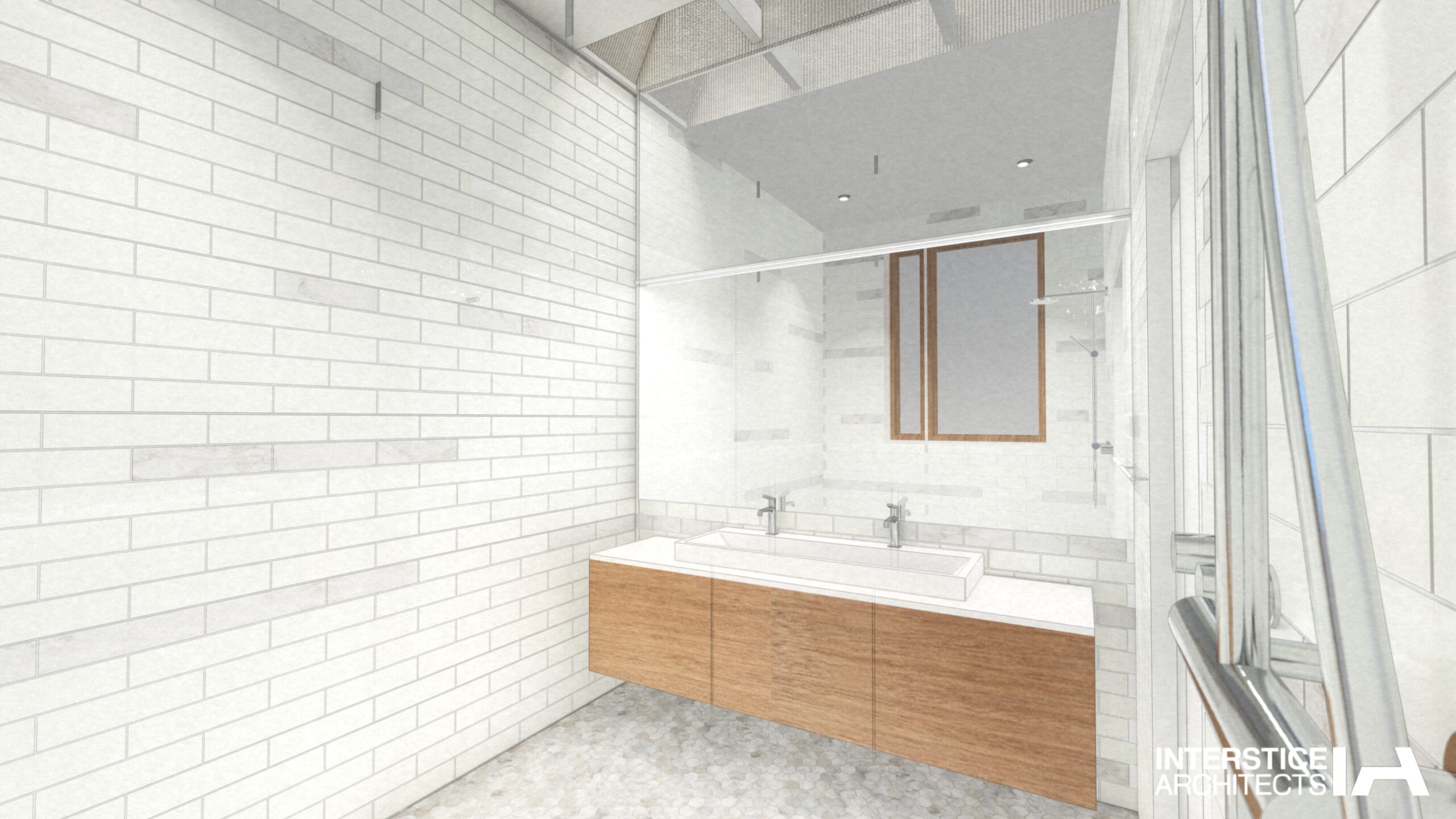
This two-story duplex is located on a classic San Francisco steeply sloped site in the Castro district. The building was in desperate need of a renovation of both its architecture, and its dilapidated site, which were working against one another. The lower unit was buried at the rear into the steep site, and the upper unit’s access further hampered the lower’s units light and possible ground floor use of the generous open space typical on these deep lots.
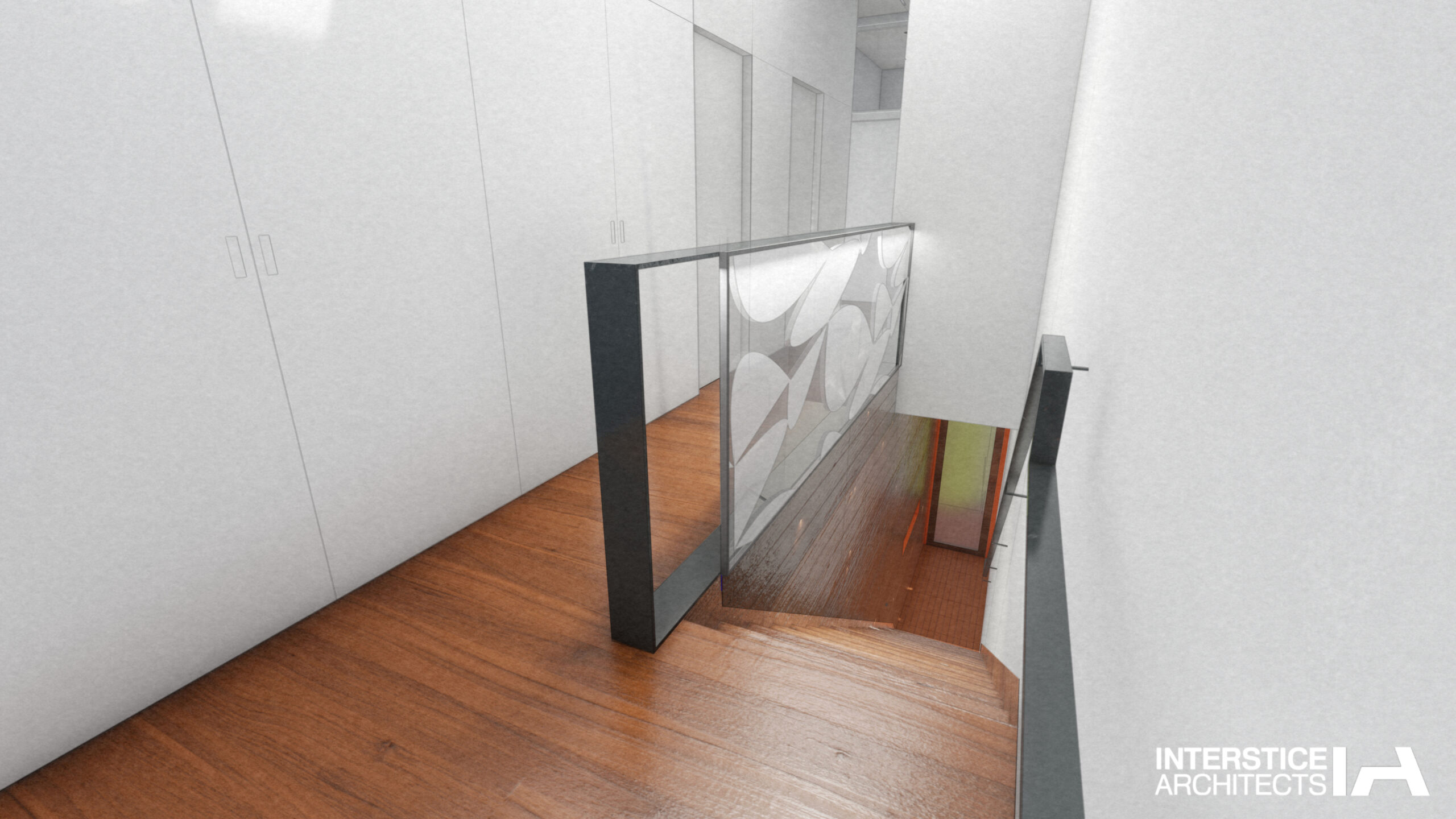
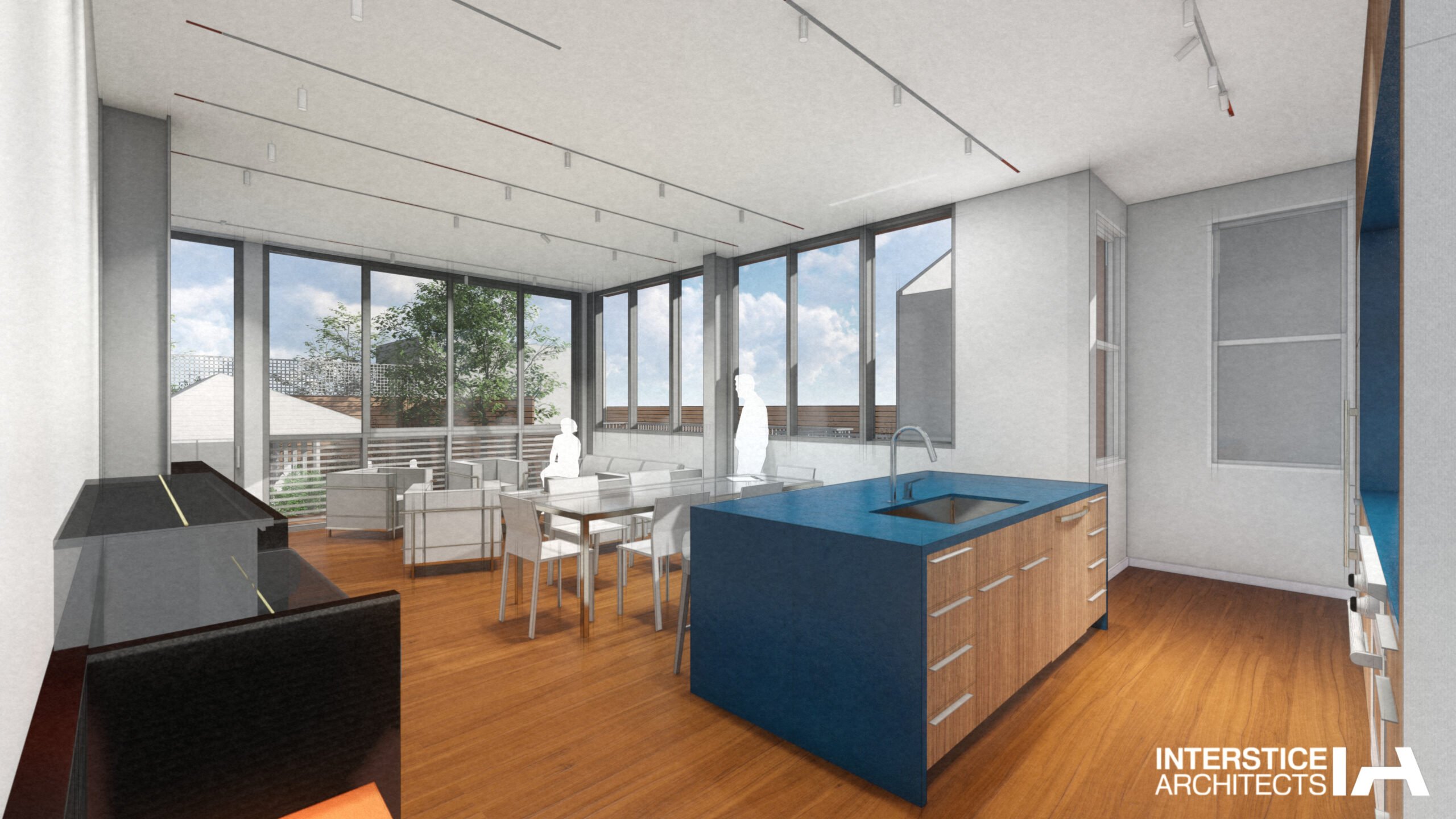
Historic Facade Dissolves into a Modern Garden Home
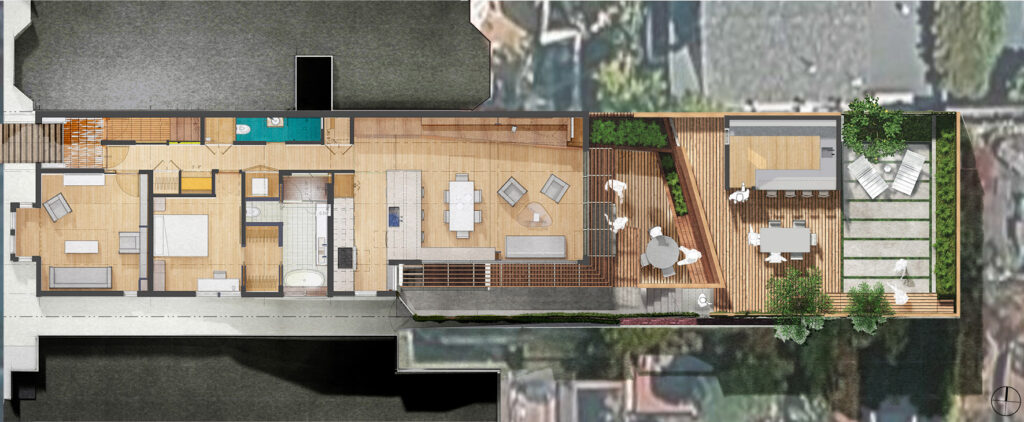
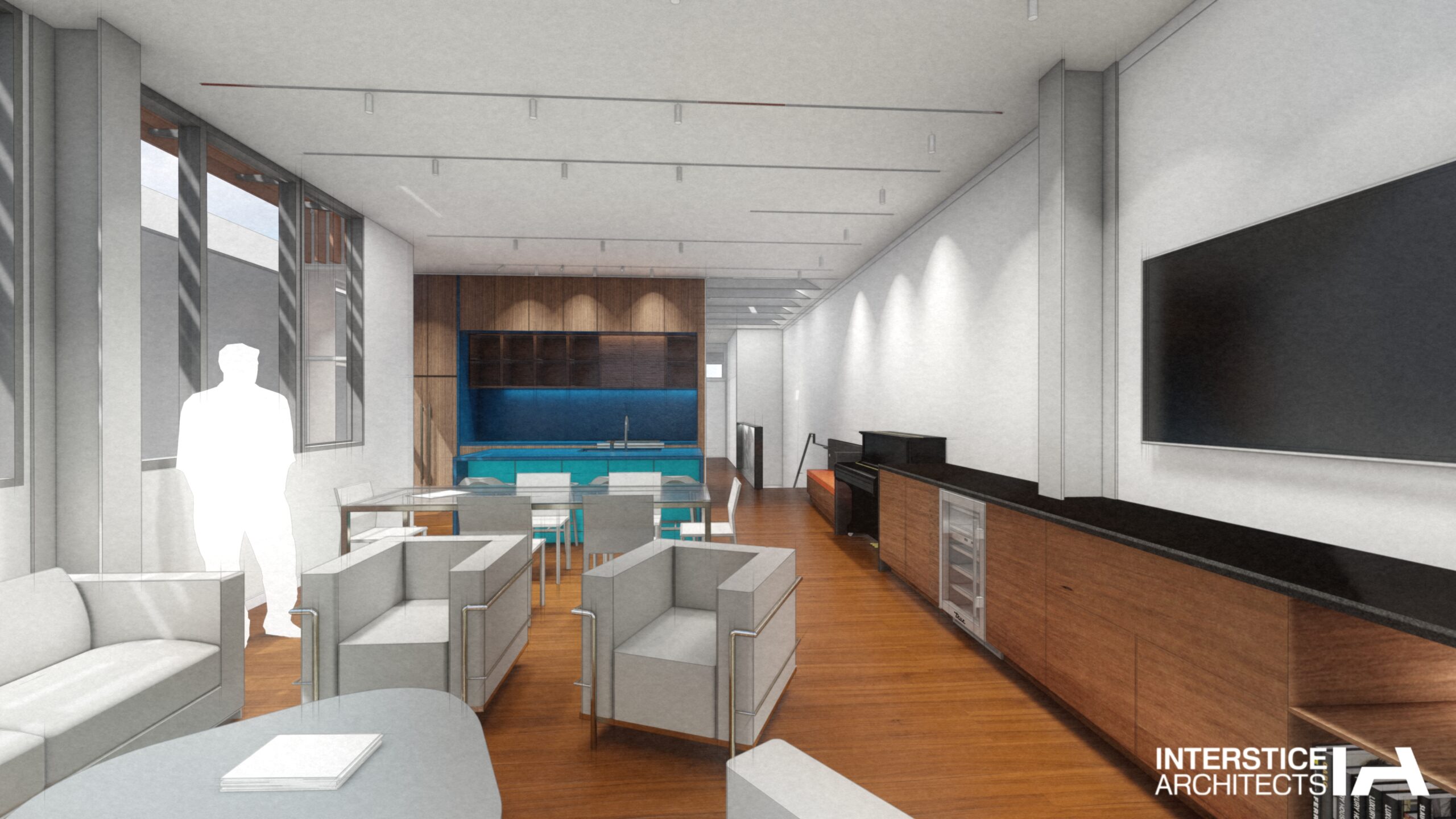
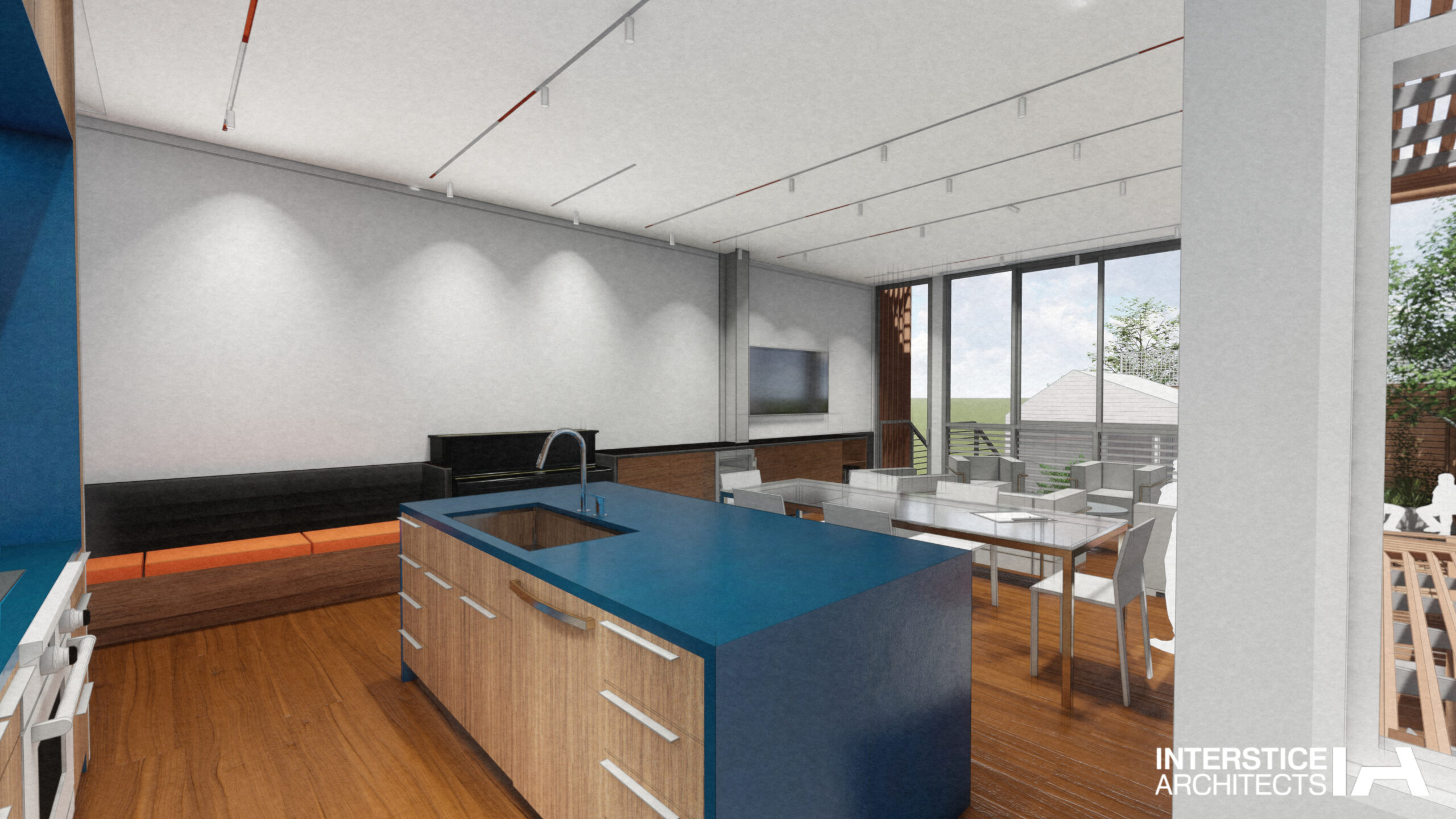
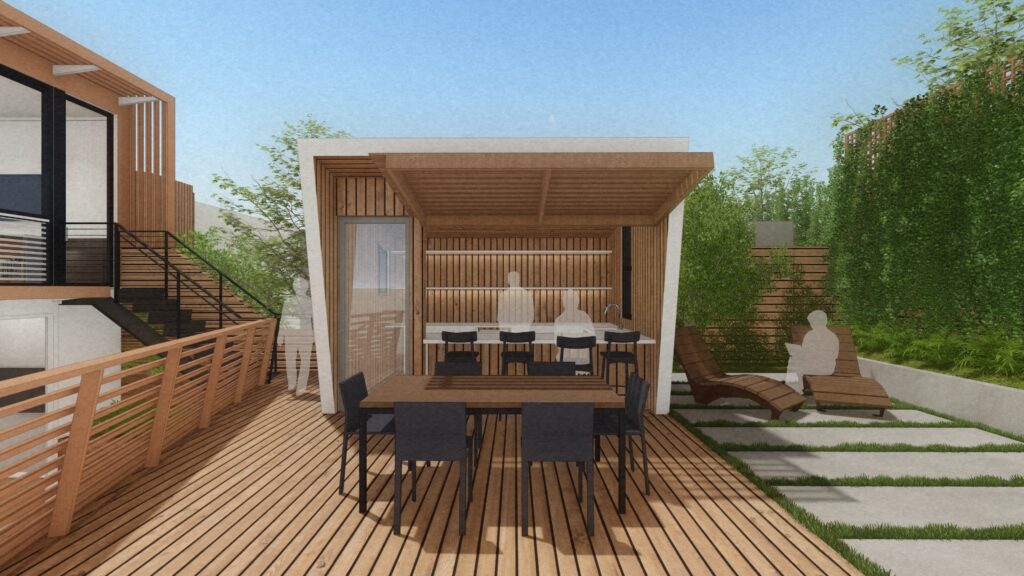
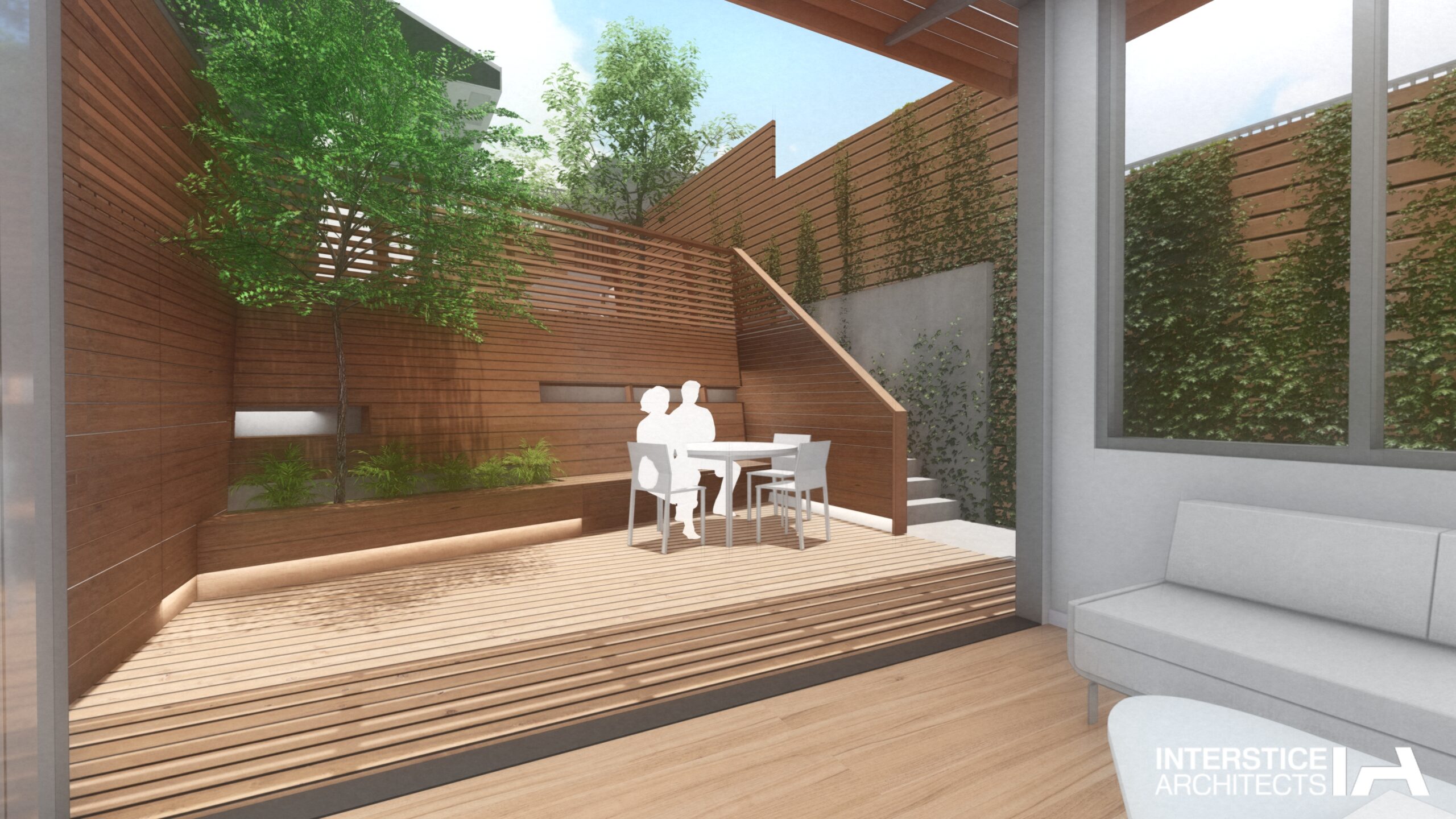
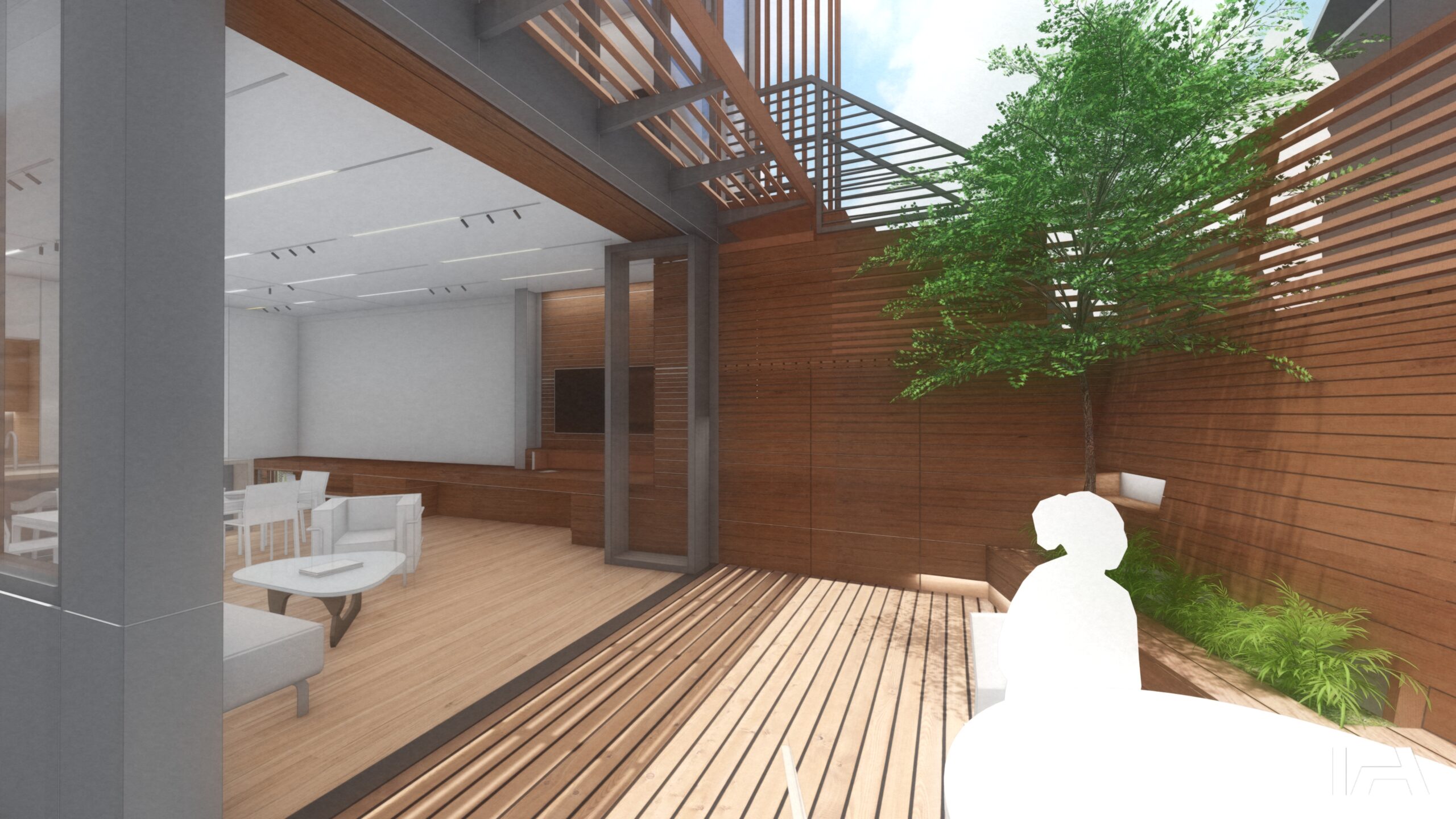
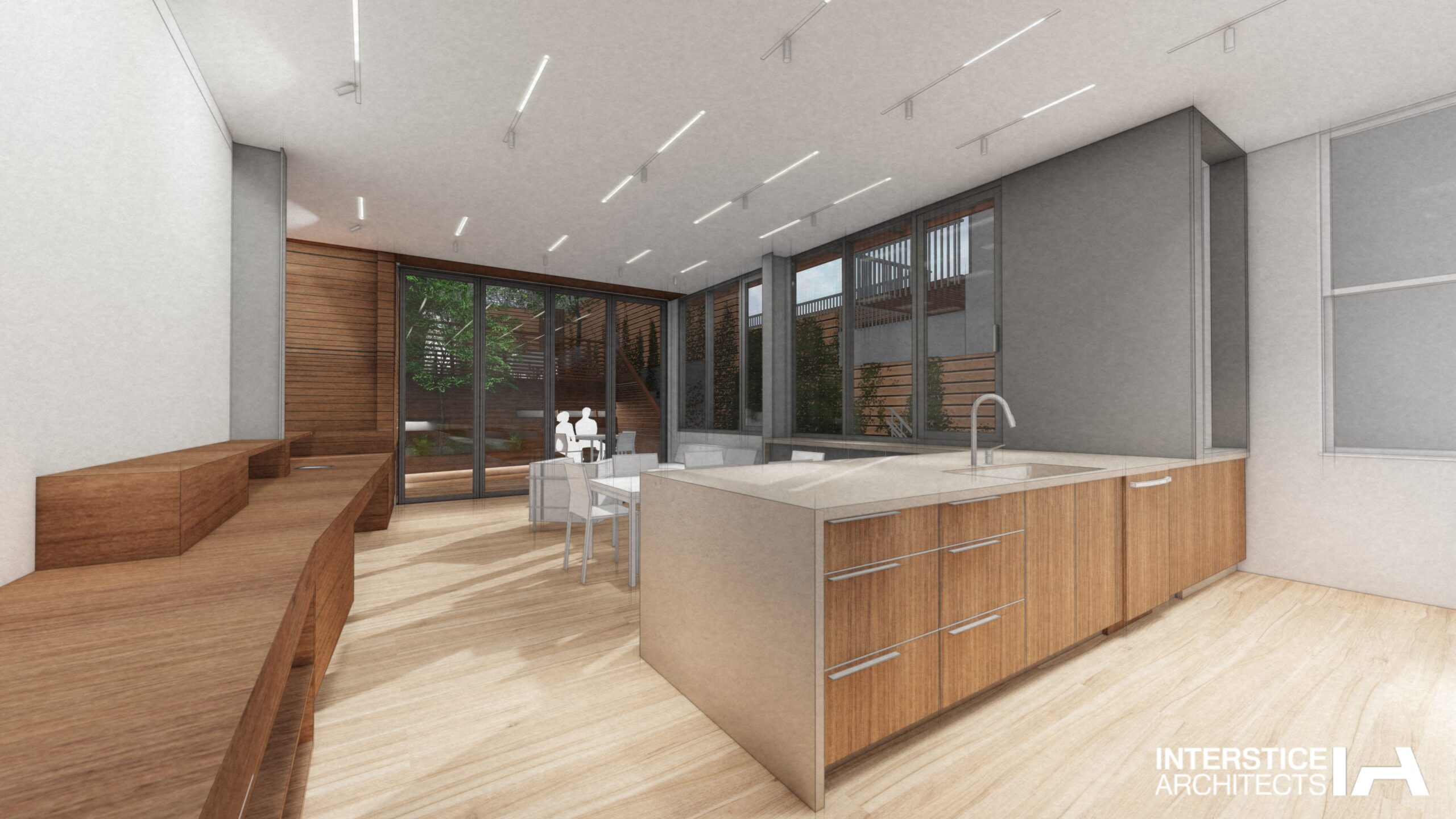
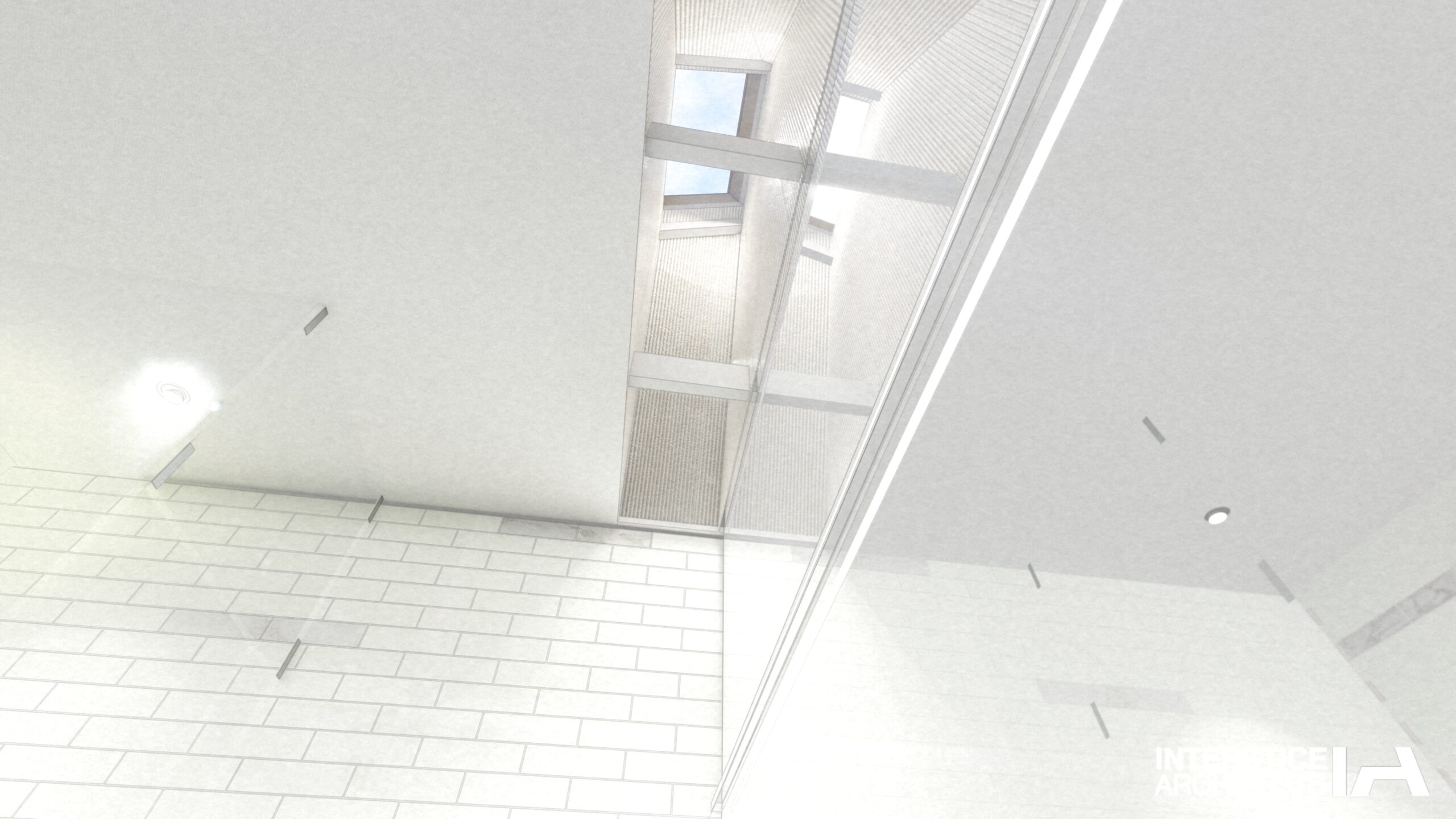
The Design leverages the site’s great orientation, and shared South alley to bring light into the long side of the building, and deep into the now opened-up public spaces of the two units. Starting at the street the project upgrades a forlornly stripped façade, to return it to its historical craftsman’s character, while the interiors are completely transformed into a fluid open “raumplan” that allows space to flow continuously, just as the envelope dissolves into glass towards the private rear garden, where patio decks terrace into the hillside allowing maximum use of this protected outdoor space.
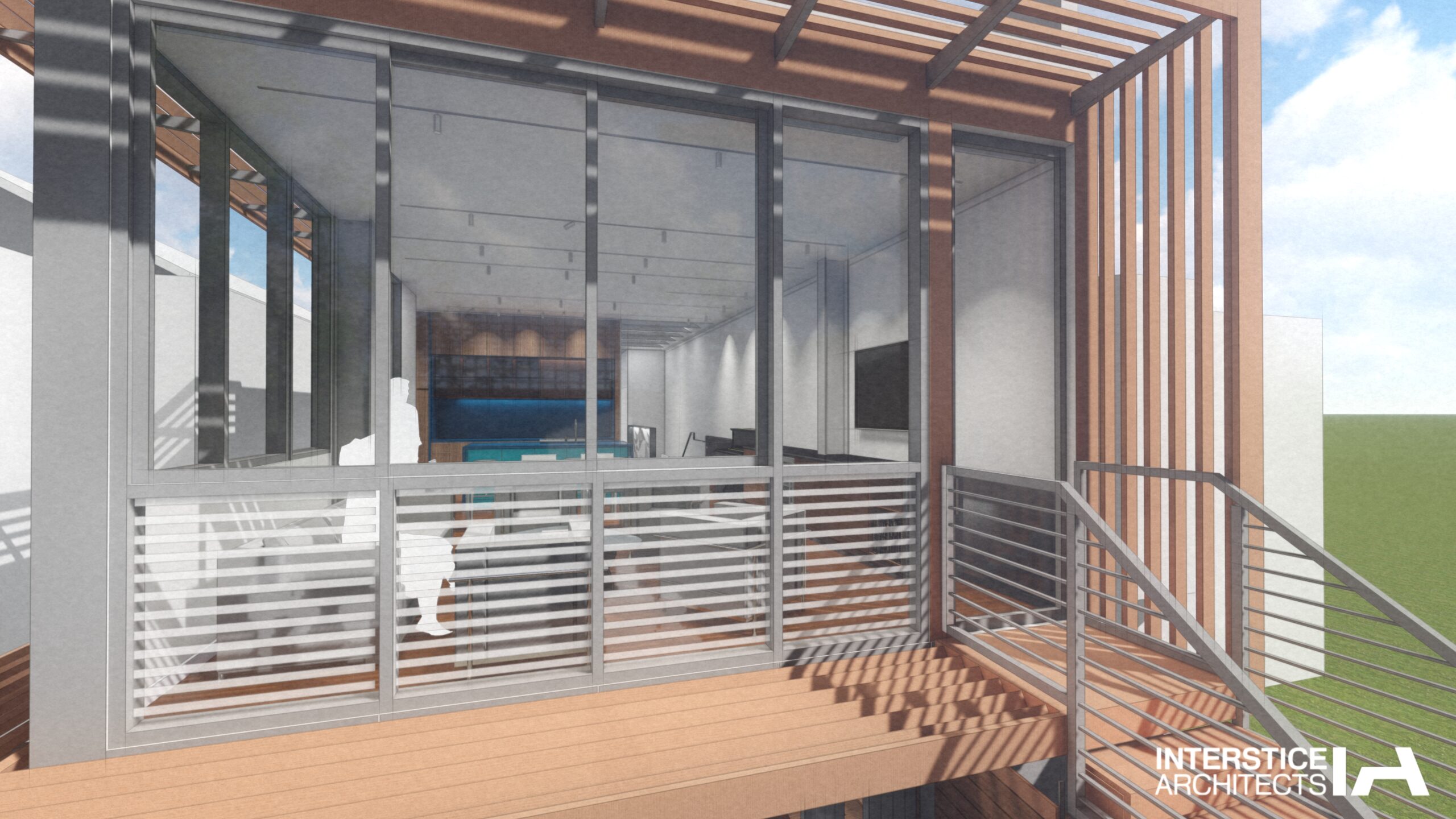
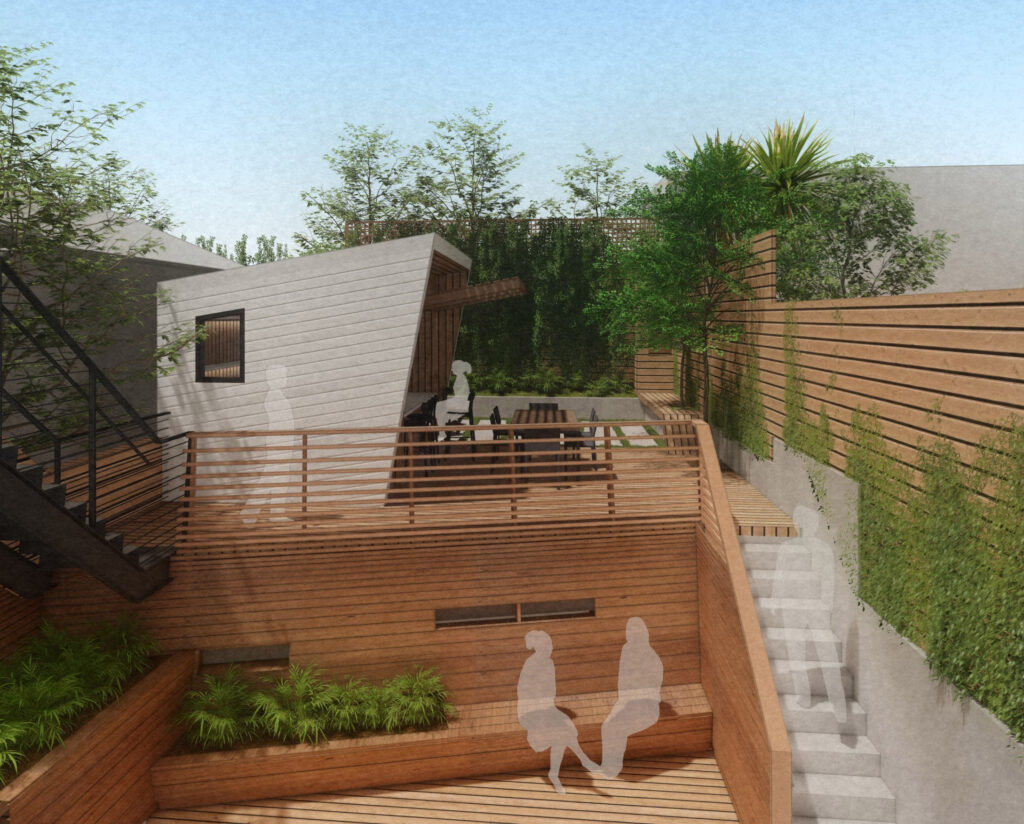
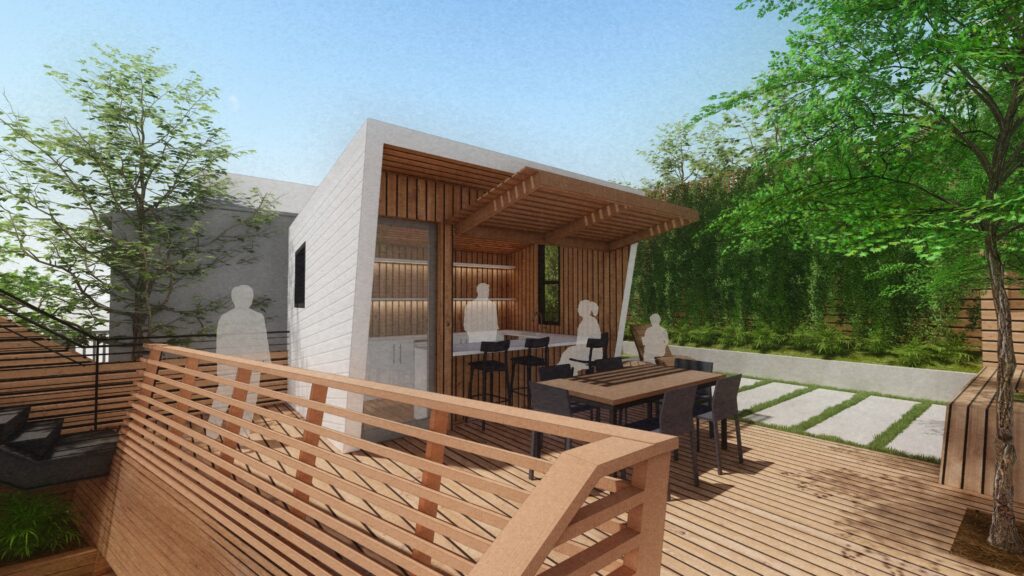
An Open Garden “Room”
A small existing shed becomes the focal point of the new landscape that creates an extended living room from the lower unit to a garden wall which provides an ample deck for the rear yard between new planting and fruit trees that provide shade and frame the volume of the rear shared social space of the backyard commons. Brick foundations were replaced, and steel infrastructure installed making the seamless open spaces possible – as the new home is now structurally up to code, and a perfect fit for the California lifestyle the is the hallmark of great modern architecture in the Bay Area.
Location: Hartford Street, Castro, San Francisco.
Owner/Client: Undisclosed
Scope: Residential Renovation & Garden Design
Status: Design
Ashbury Terrace Home
A High Home
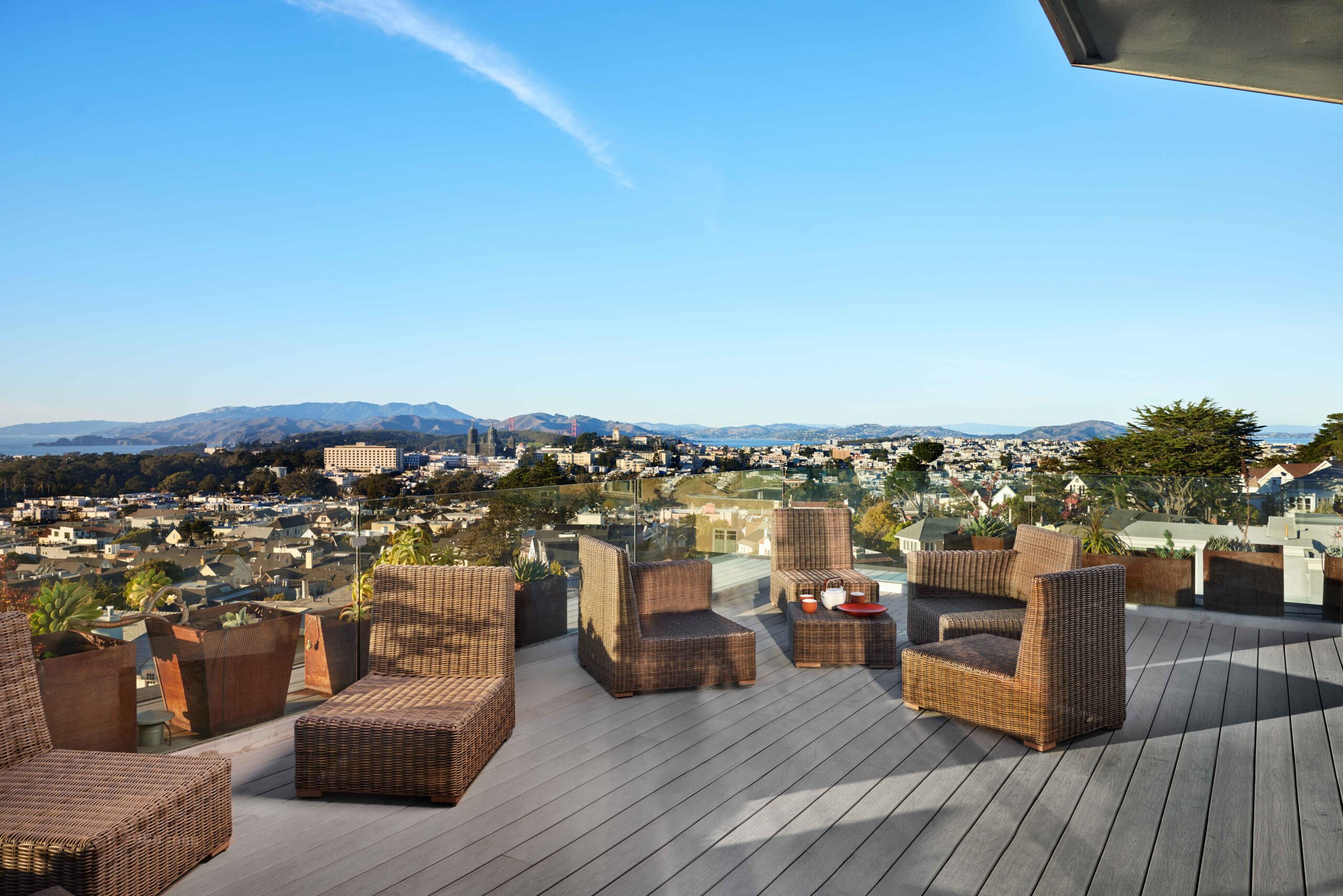
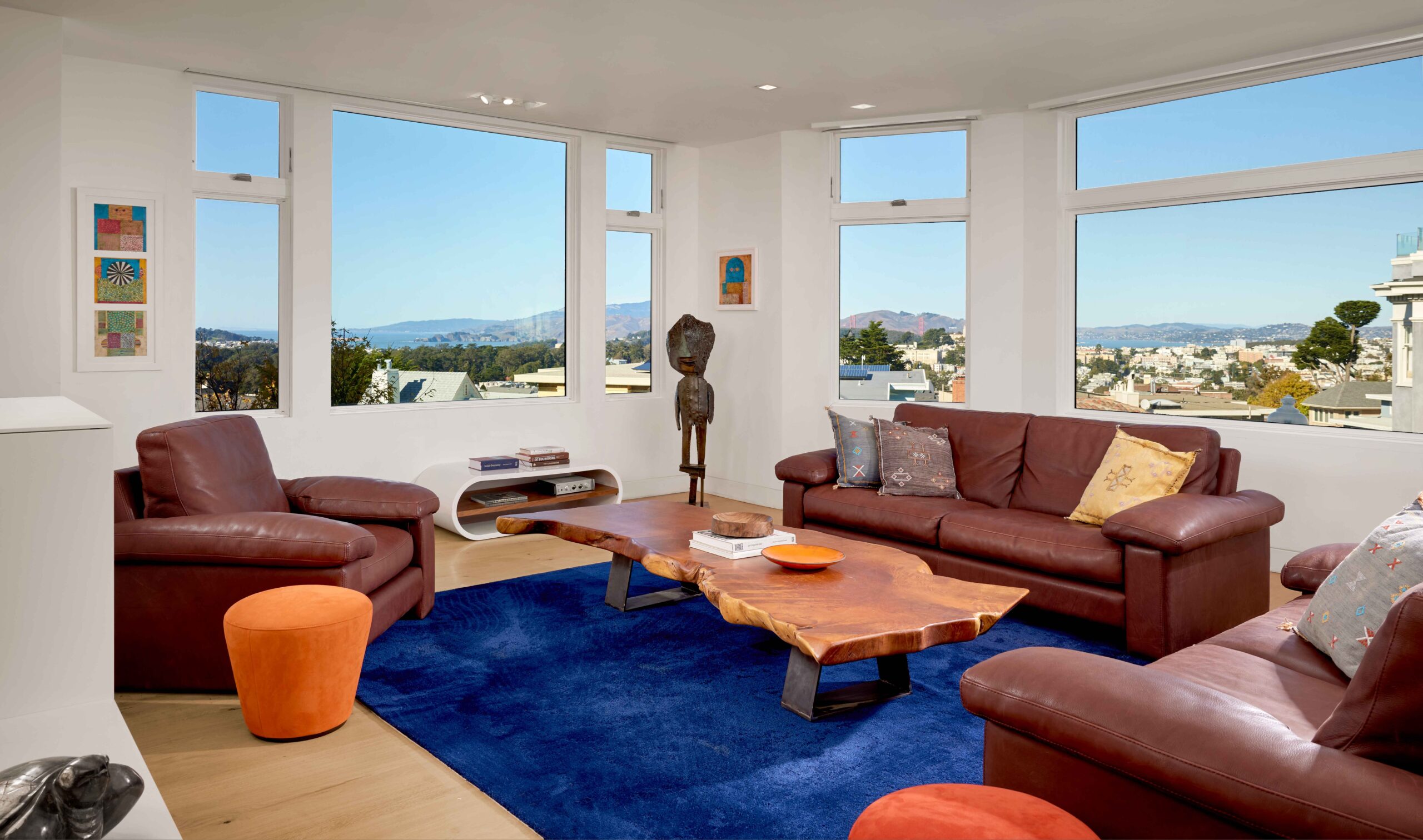
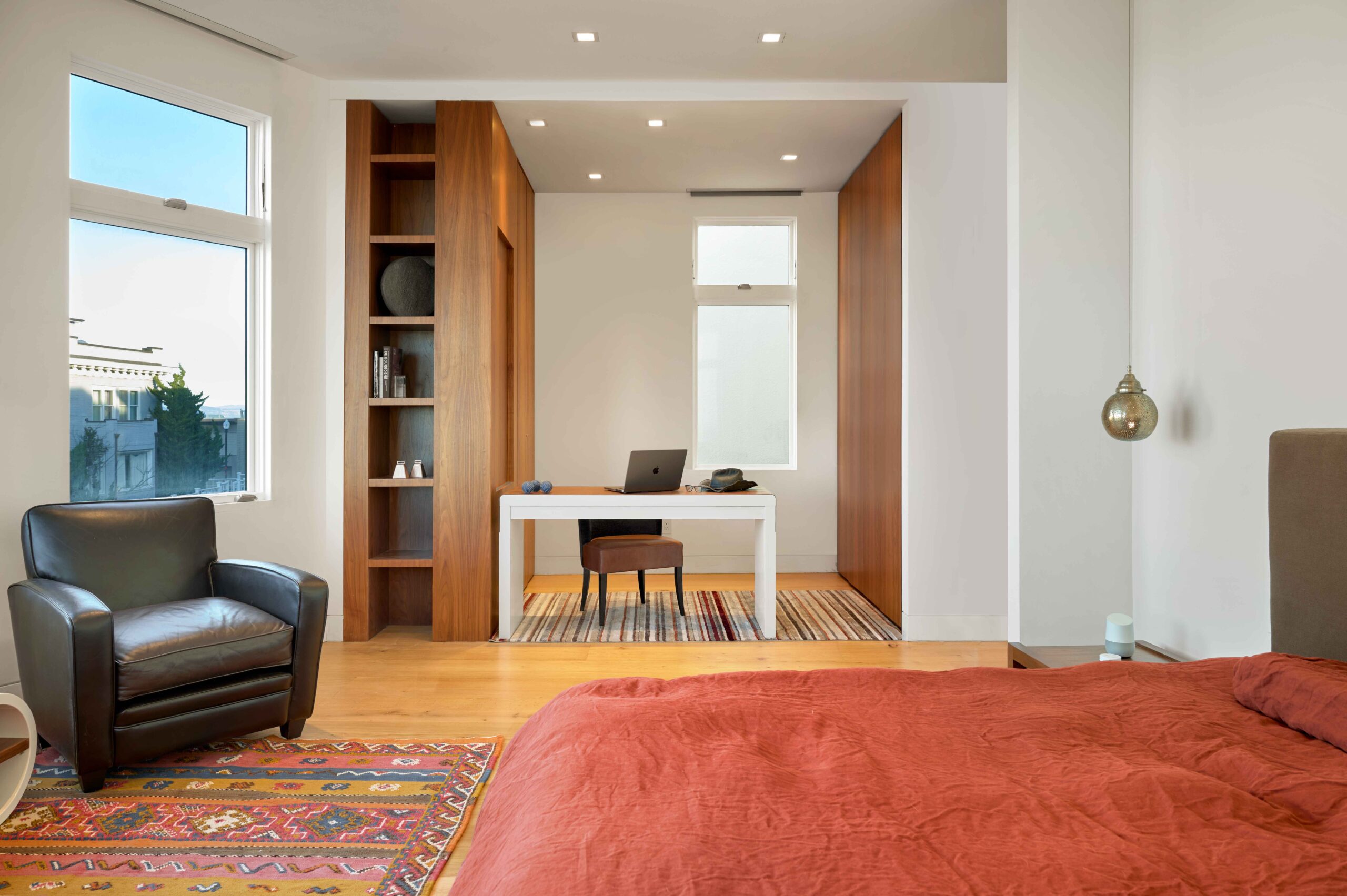
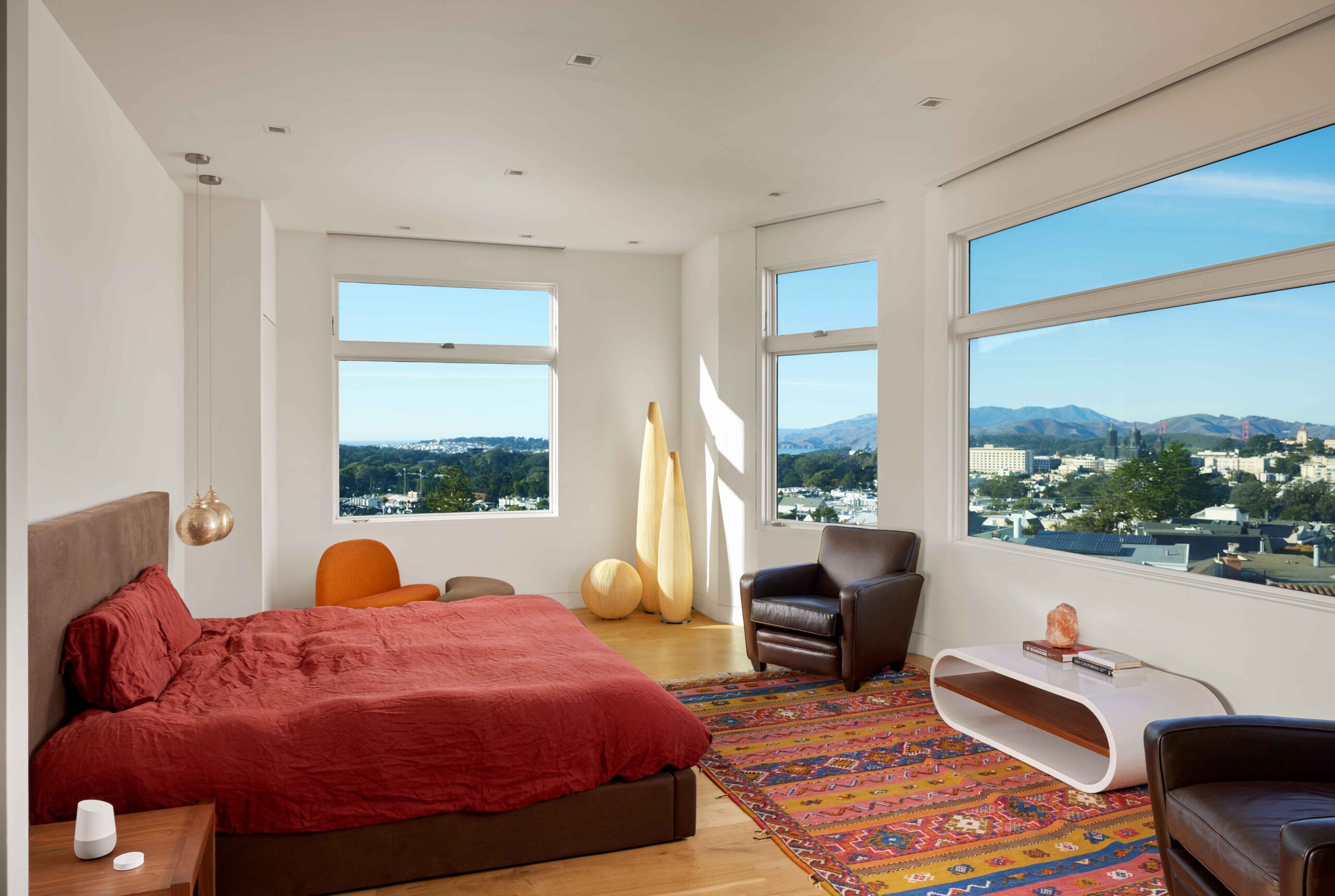
This Home in the heart of the City commands a spectacular view of the sweeping bay, framed by San Francisco’s seven hills. The Original early period home was very closed in, and chopped up inside, with low windows and an oppressively hierarchical circulation (borrowing from the hegemony of bygone servant eras) – unbecoming of such an opportune site in the northern California Climate so INTERSTICE was hired to transform the home in collaboration with its enlightened new owners.
Metamorphosis of Space
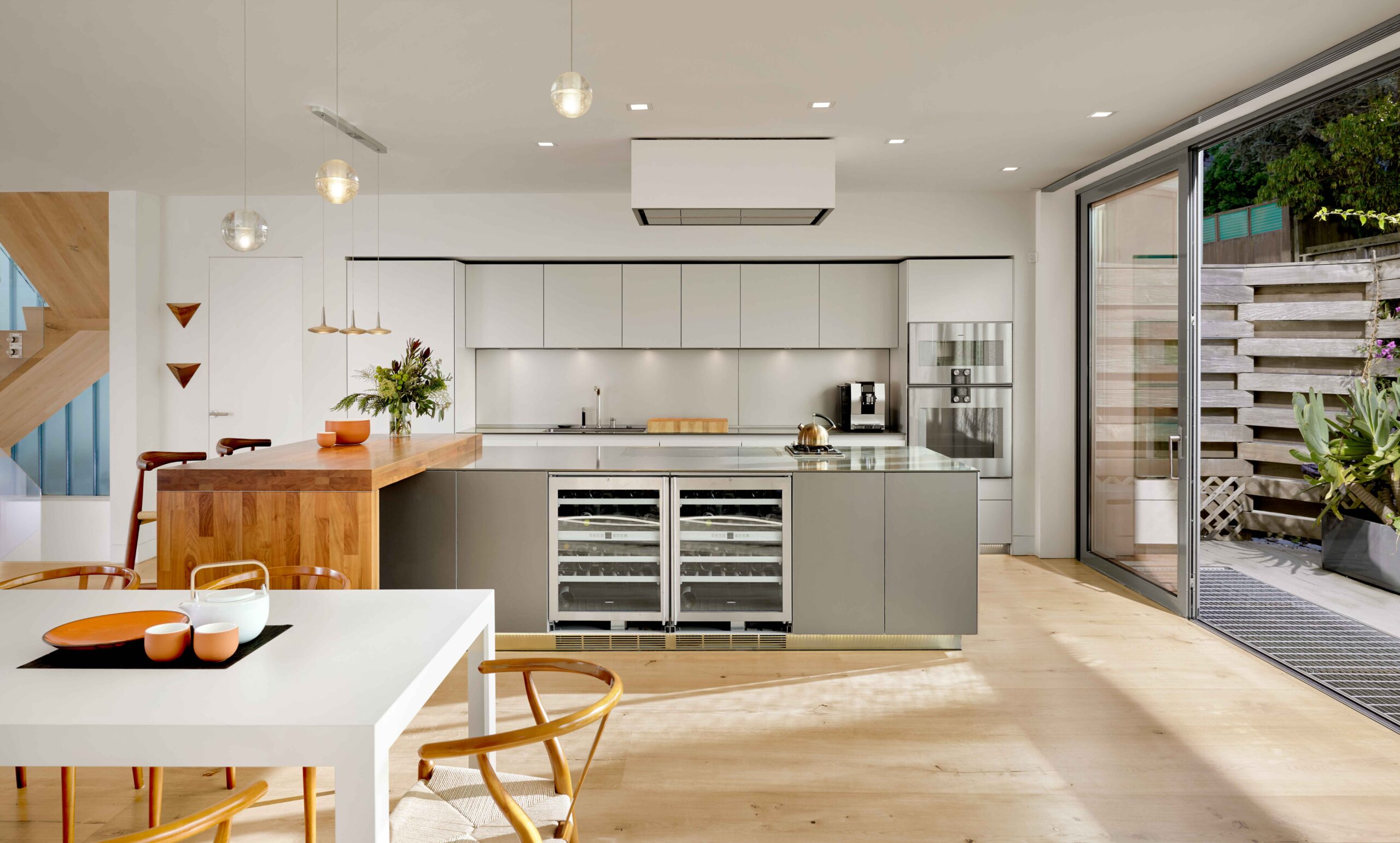
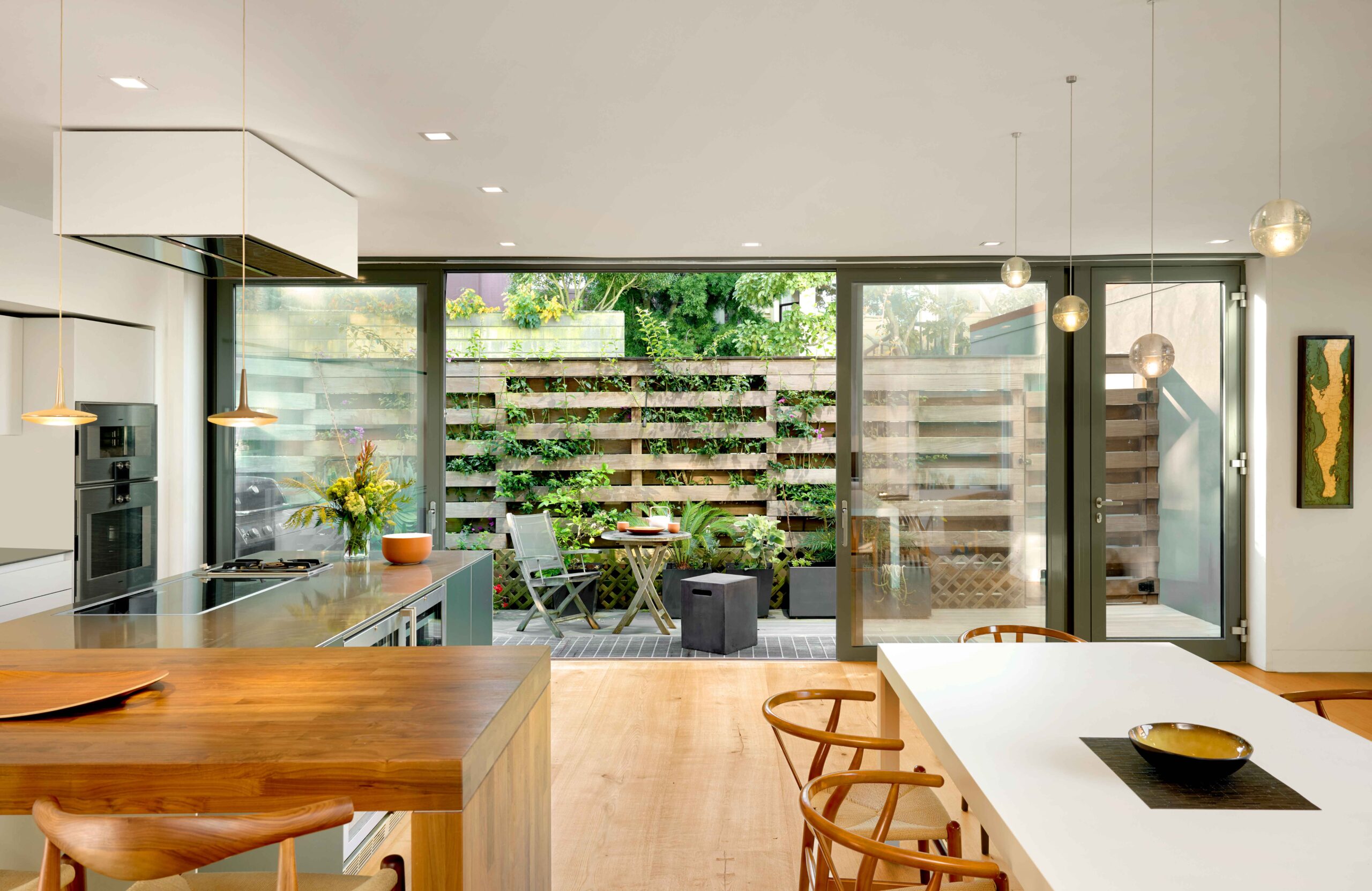
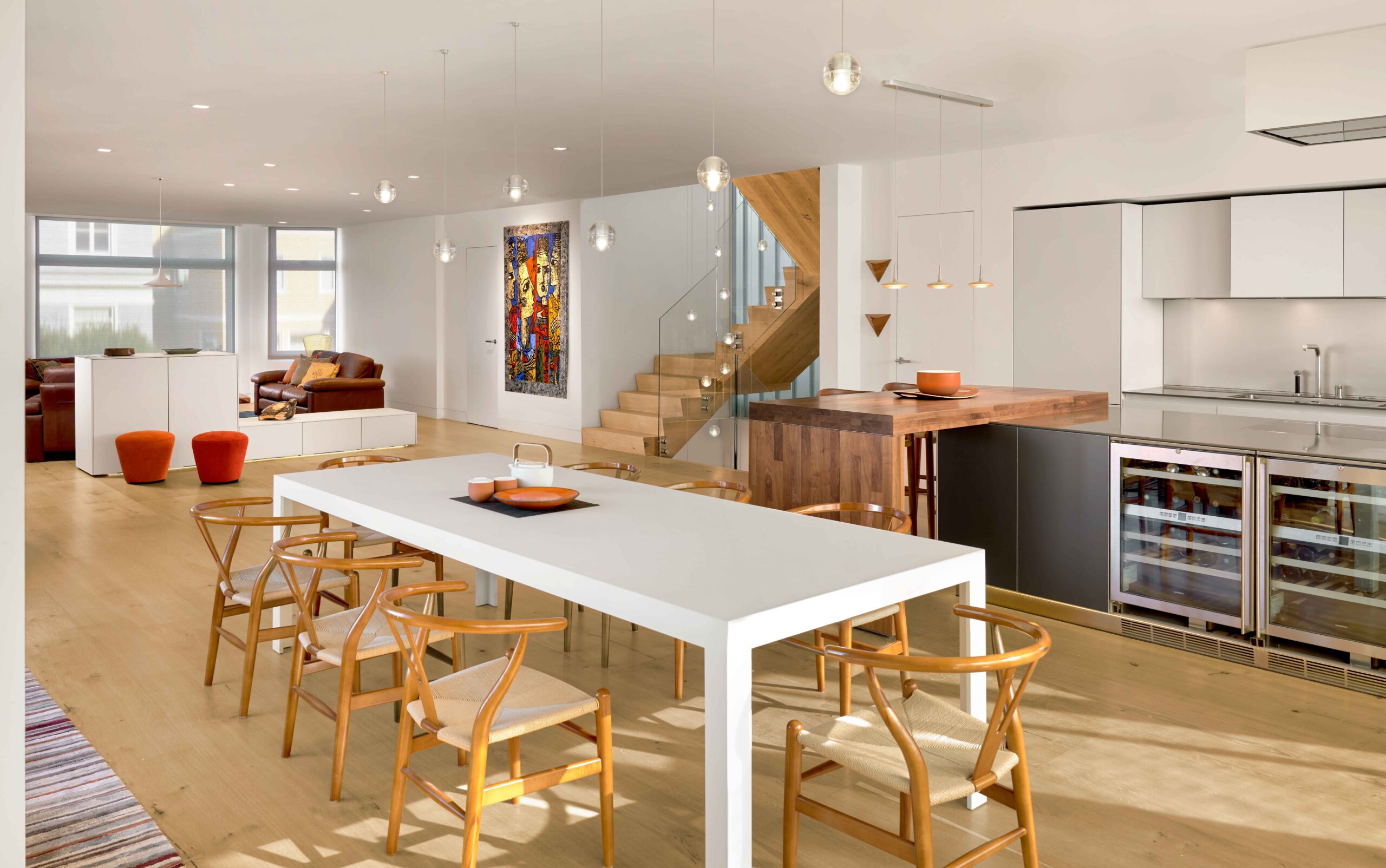
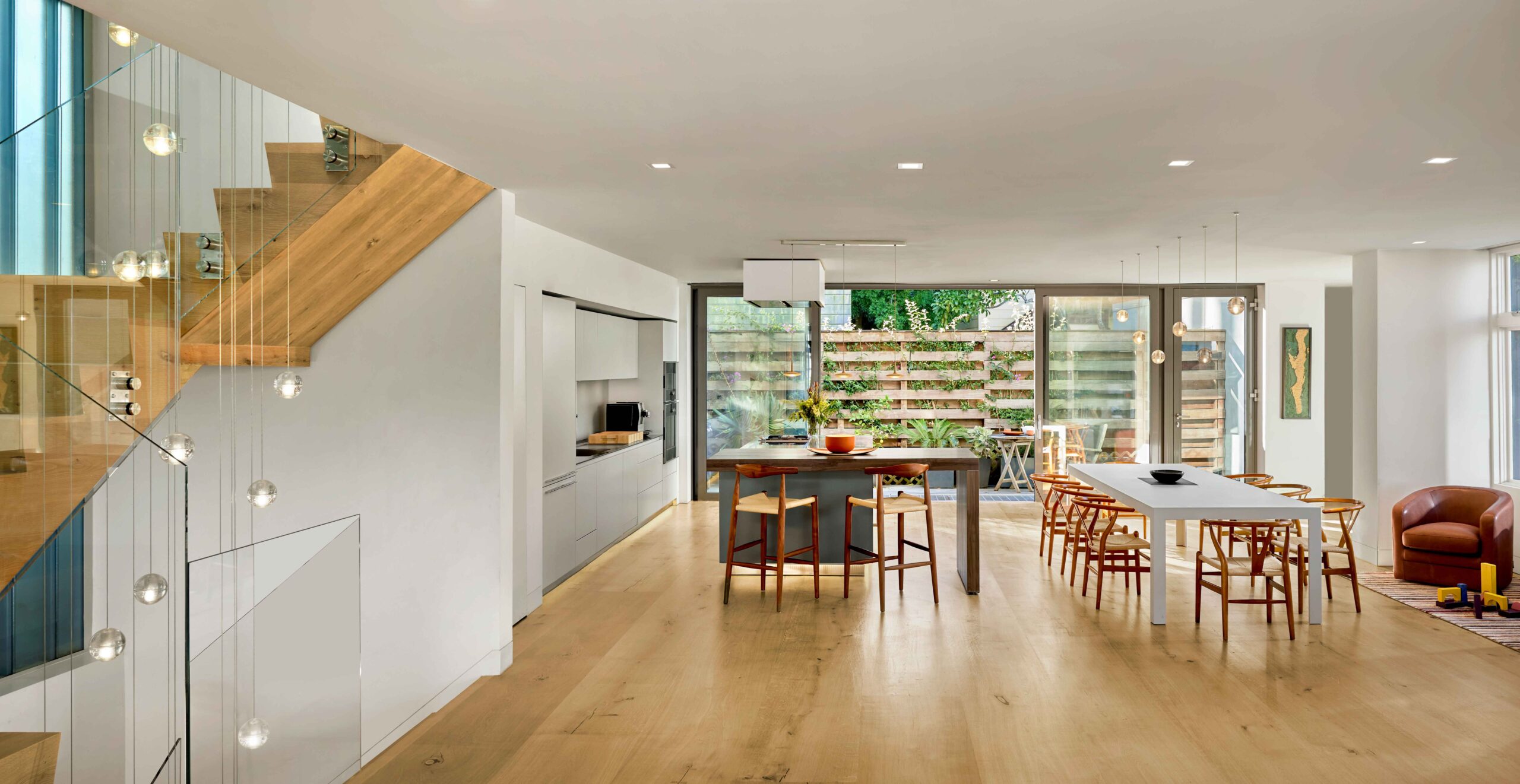
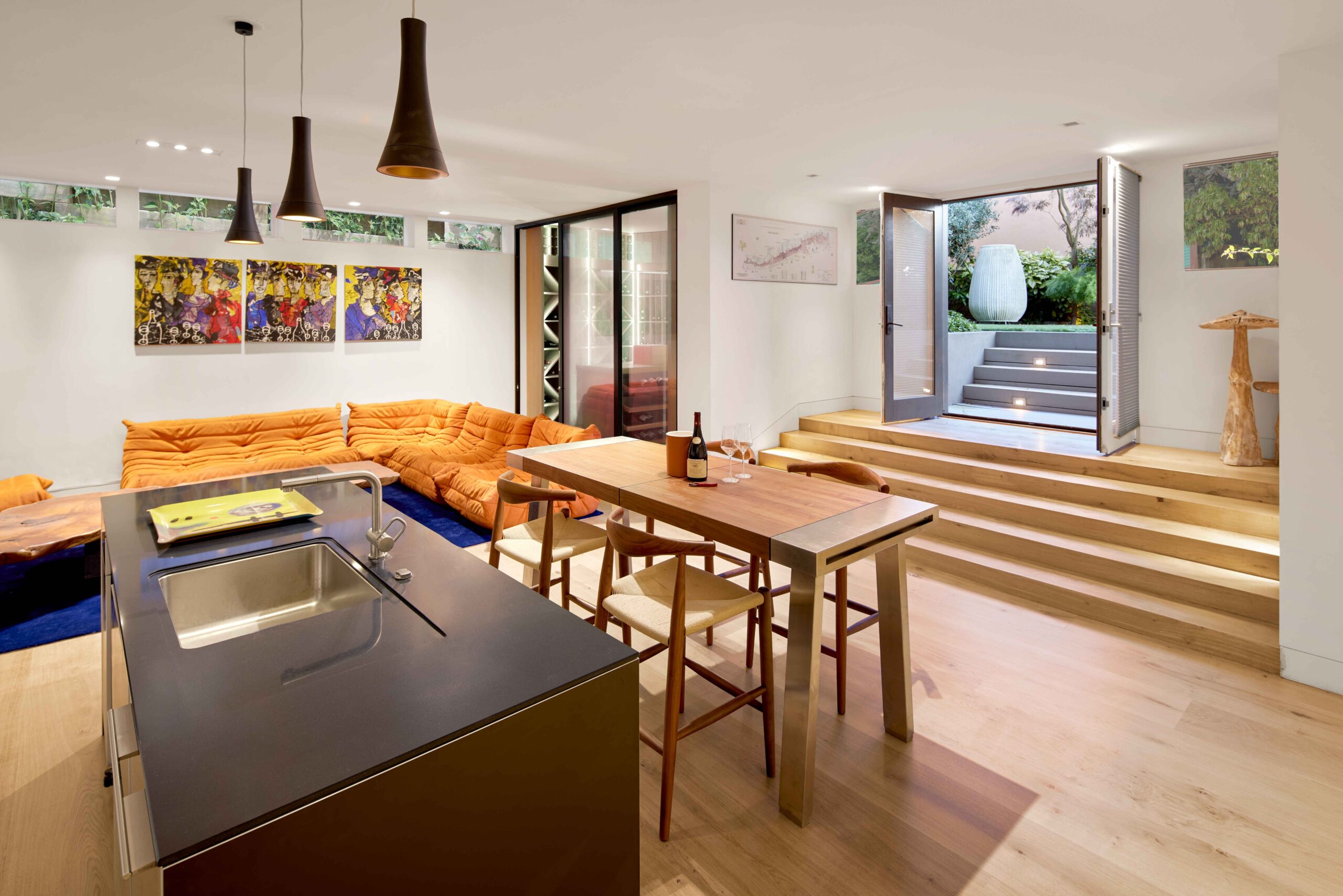
Its lower floor was a buried basement and unused space that further called for a total landscape and architectural reconfiguration: bedrooms were added, bathrooms and all the floors were gutted to start over. A vast seismic overhaul allowed us to open up the structure to create a flowing “Raumplan” that tied the sunny rear South-West paseo entry and new patio sitting areas into the kitchen, all the way through to the 70 mm Dolby-Stereo view to the North West across dining and living rooms all connected to the vista.
A Tower of Sunlight
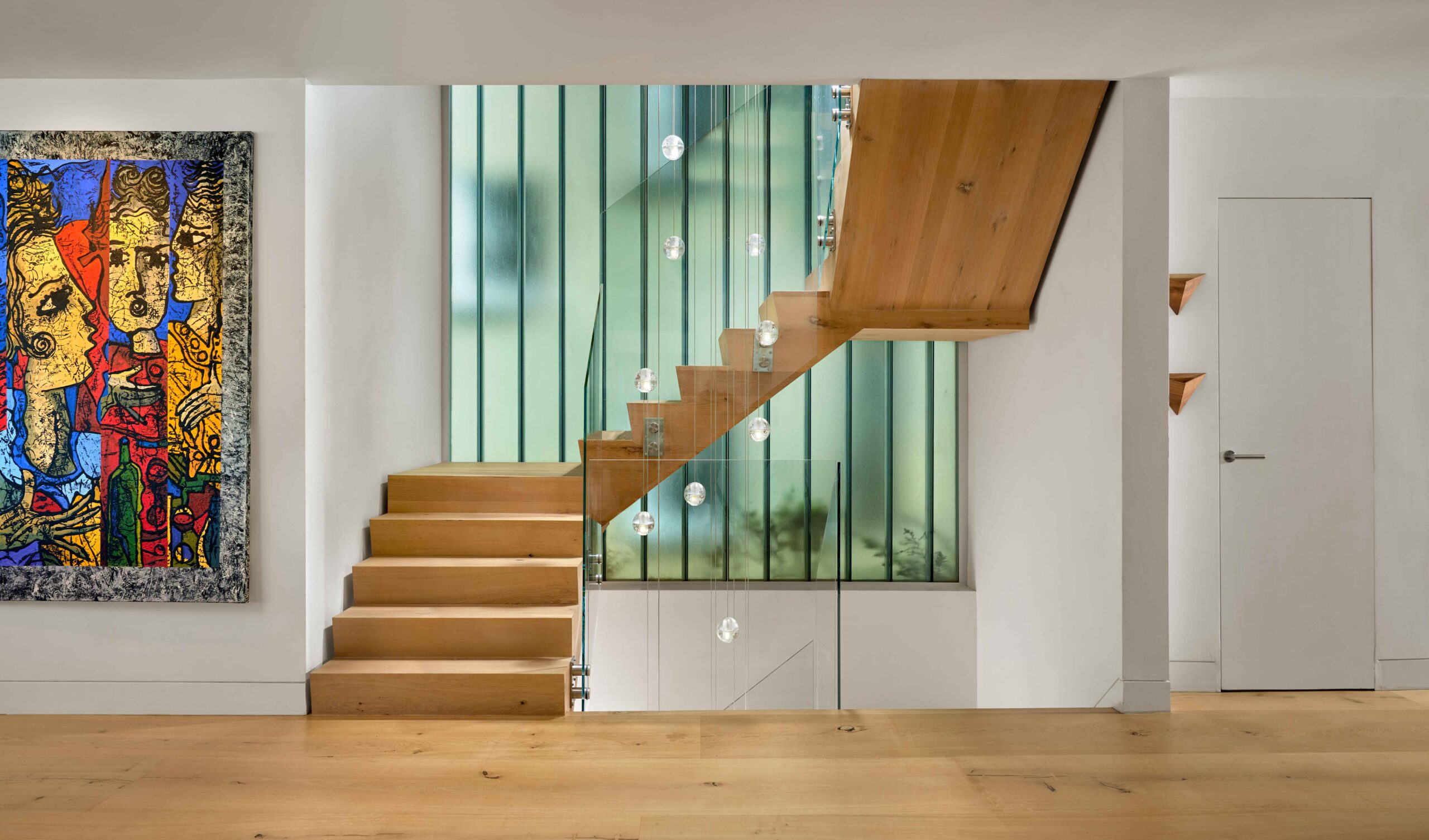
A new central stair was carved from the side of the structure. Clad in fluted channel glass ‘beams’ it creates a vertical sculpture of a solid wood monolith spiraling through a tower of light from the roof deck into the wine cellar and cozy sitting rooms that share the lower private family garden level. Bathrooms with Italian floor-to-ceiling single porcelain sheet tiles, and European solid wide plank floors, help to simplify surfaces, and allow the rooms to breathe in light and float on the soft warmth of natural materials on all three levels.
A Garden Lot
The Garden wraps the home in this generous lot and connects through large French doors to the lower level connecting bedrooms and family rec-rooms to the exterior play area at the lowest level where the hanging glass droplets of light end their cascade from the rooftop atrium down through pine of the new modern home.
1567 California Street
A Central Oasis
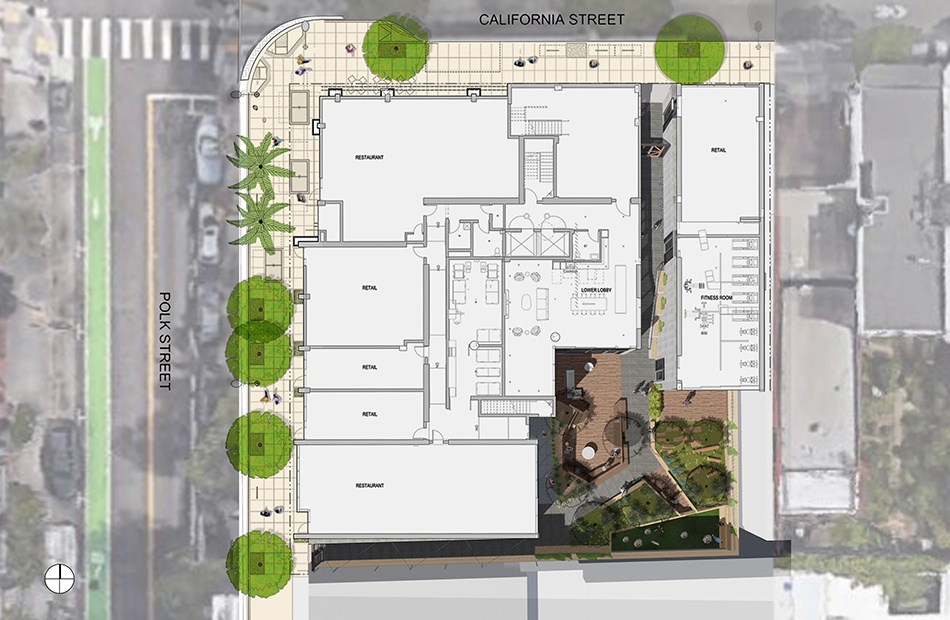
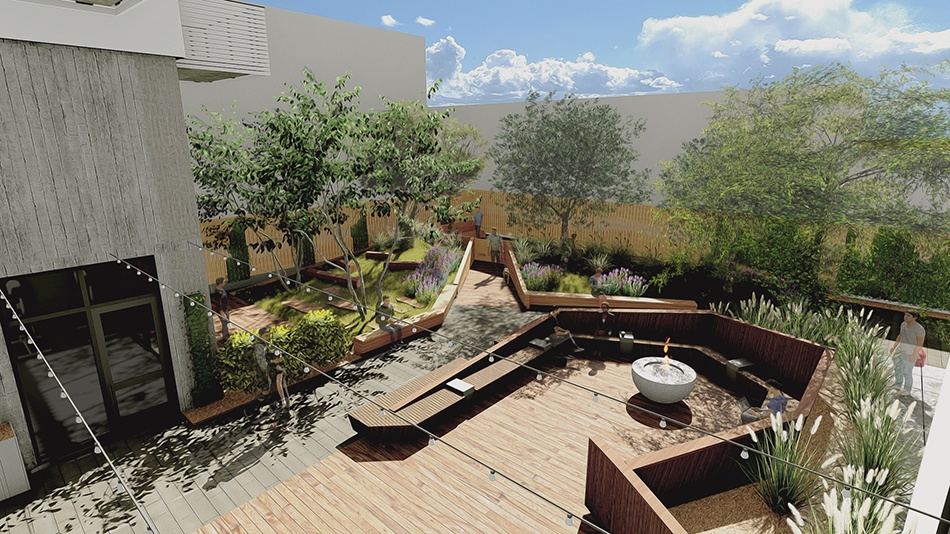
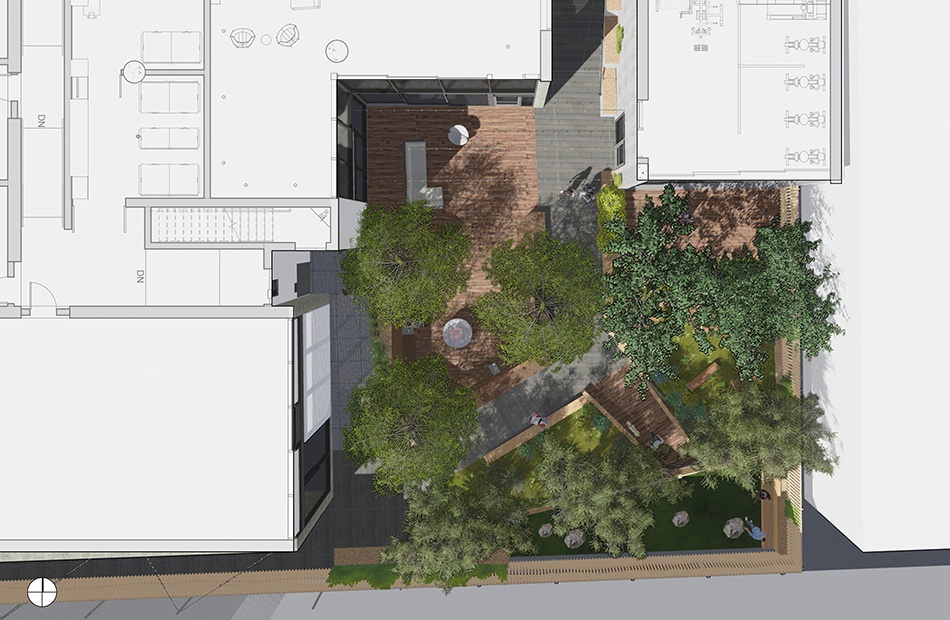
The busy intersection of California and Polk Streets is the north gate of the Polk Alleyways District, which punctuates the westernmost cable car stop in San Francisco. The landscape designed by INTERSTICE Architects complements this new, thoughtfully conceived building by David Baker. A multifamily unit residence creates our neighborhood canvas for a spacious new corner streetscape, while providing a new festoon lit alleyway access off of Polk Street that leads into a semi-private courtyard: an oasis at the center of the project.
Unfolding Organization
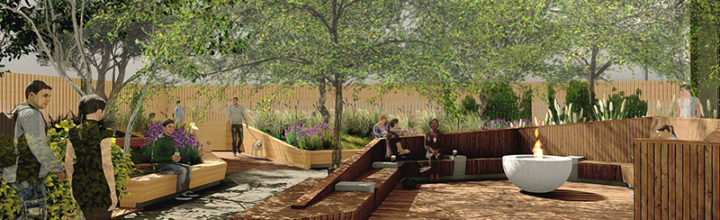
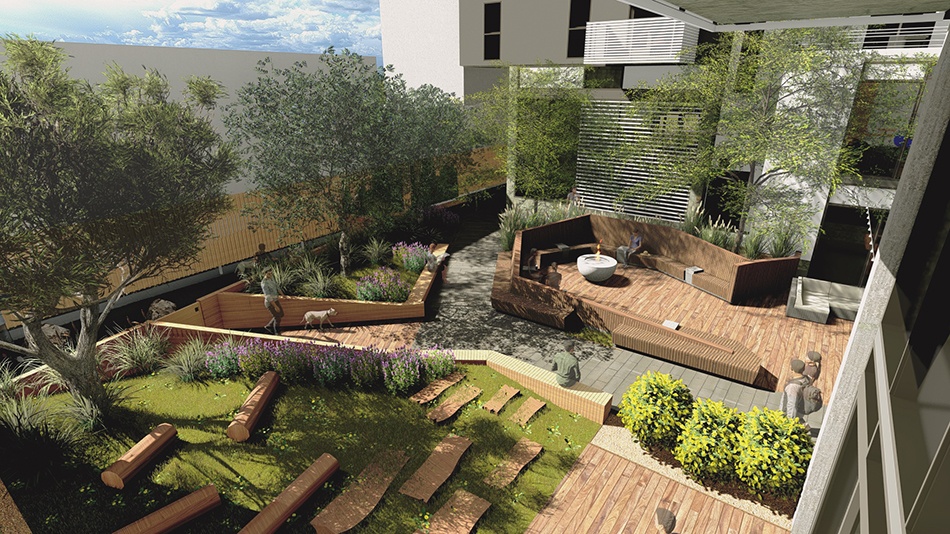
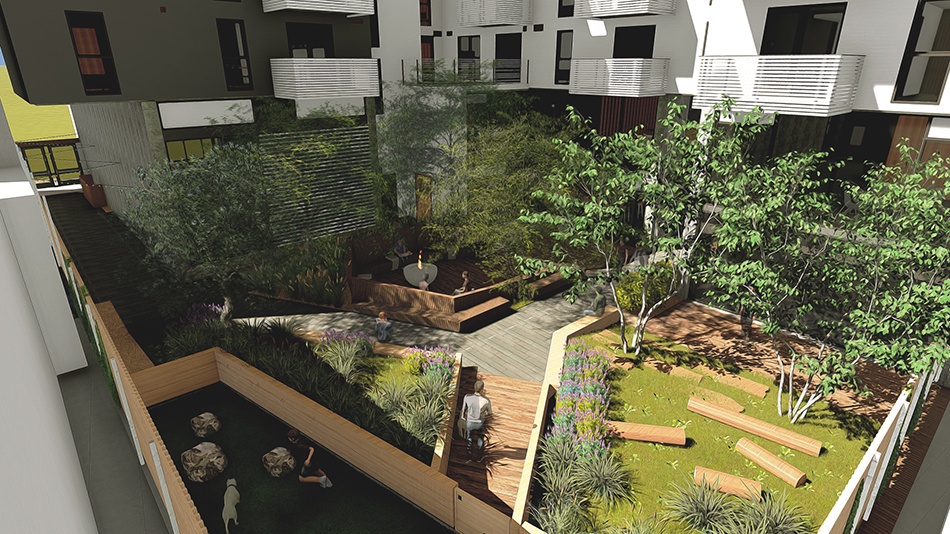
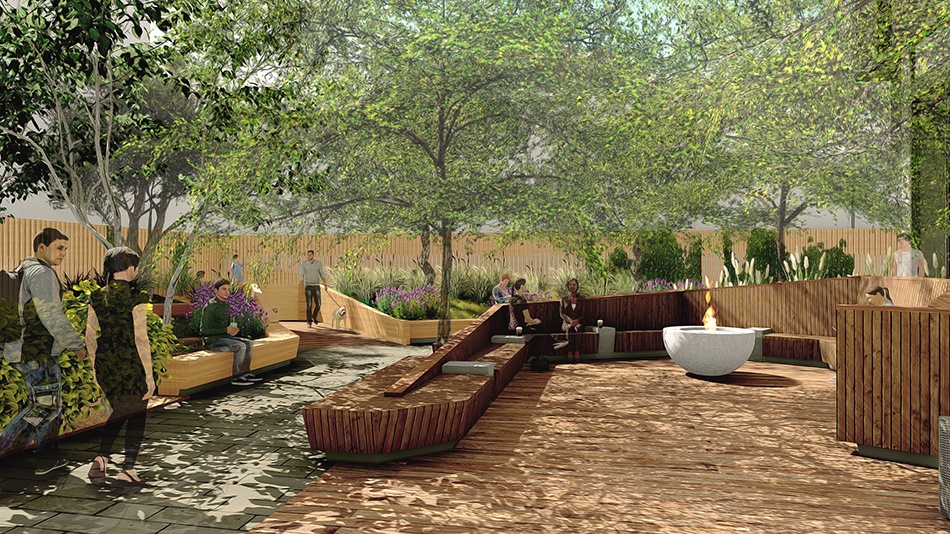
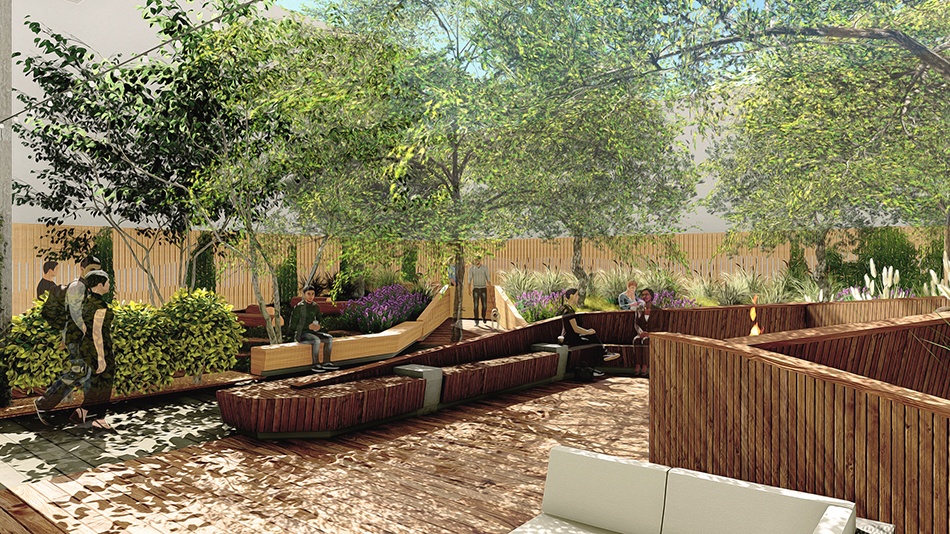
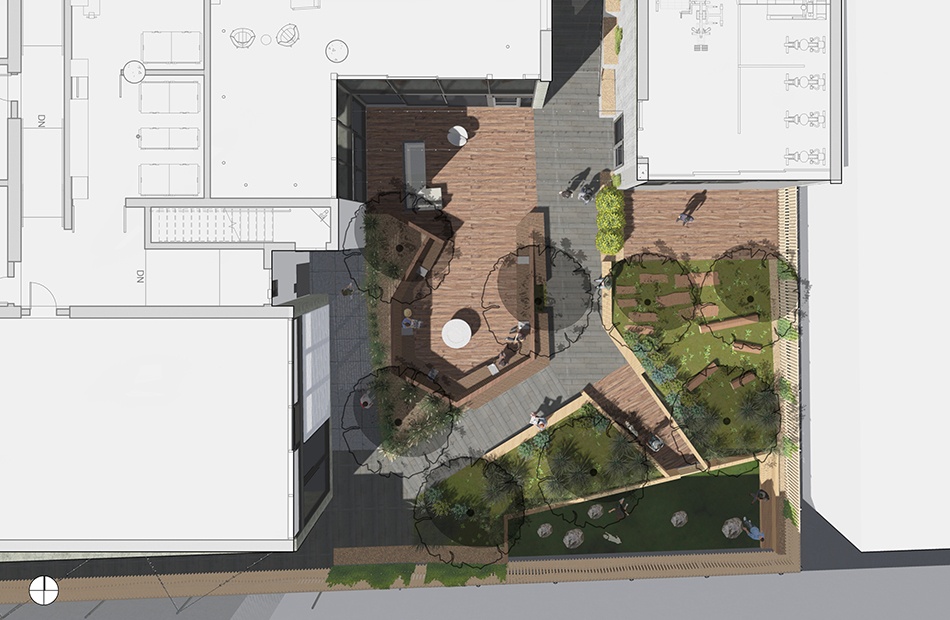
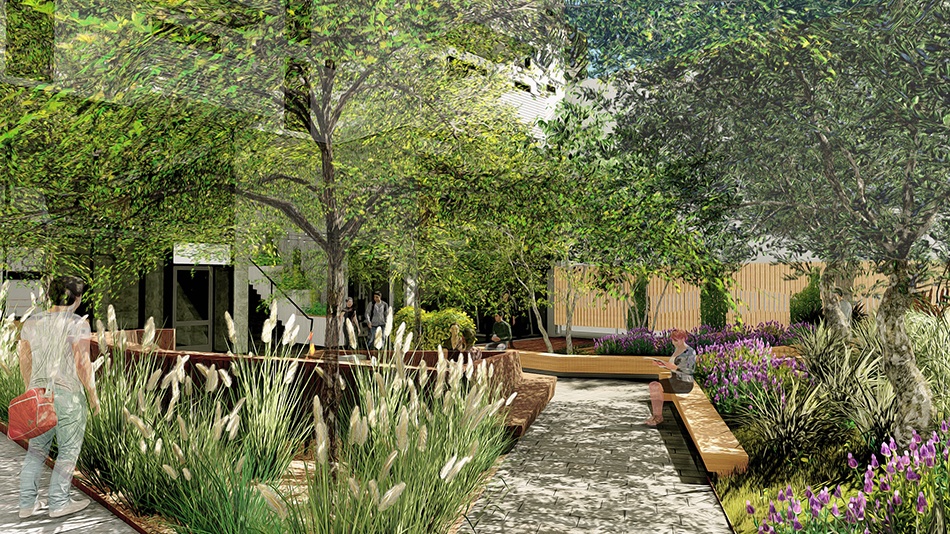
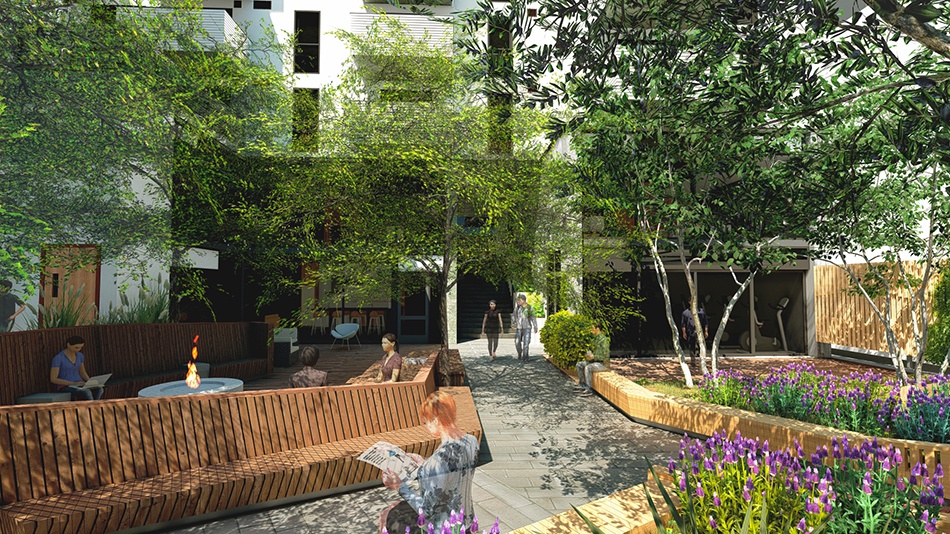
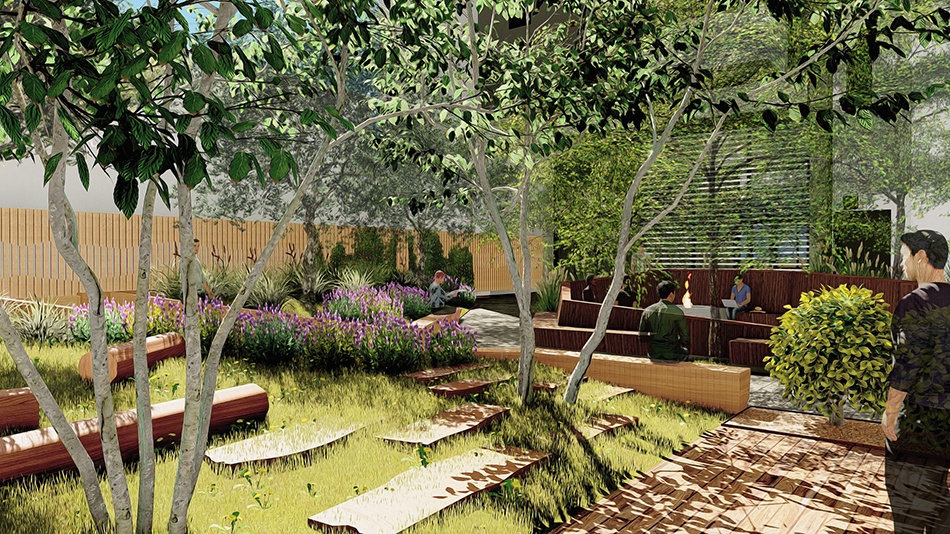
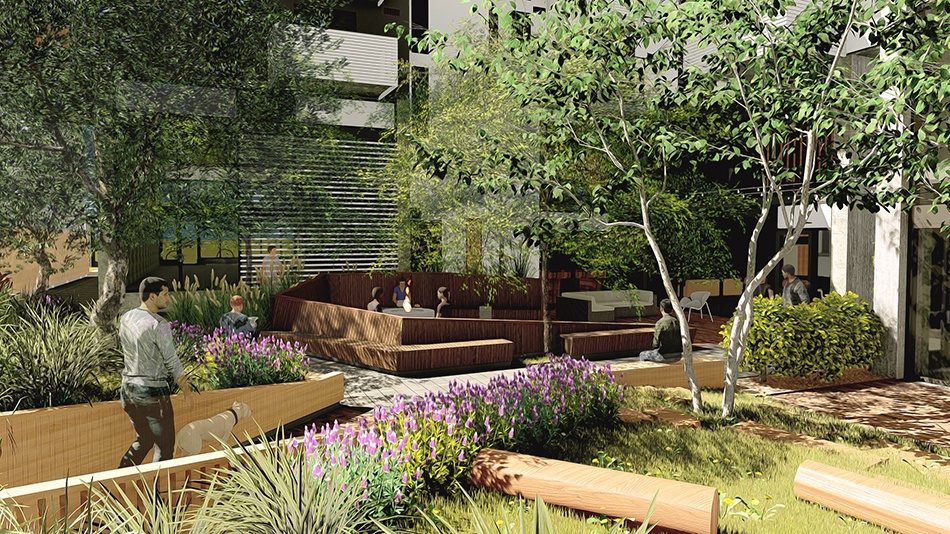
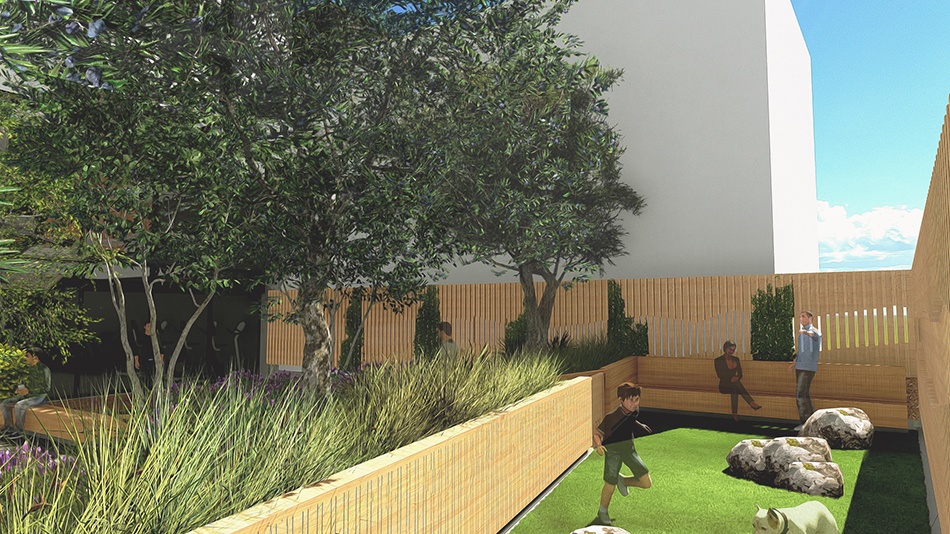
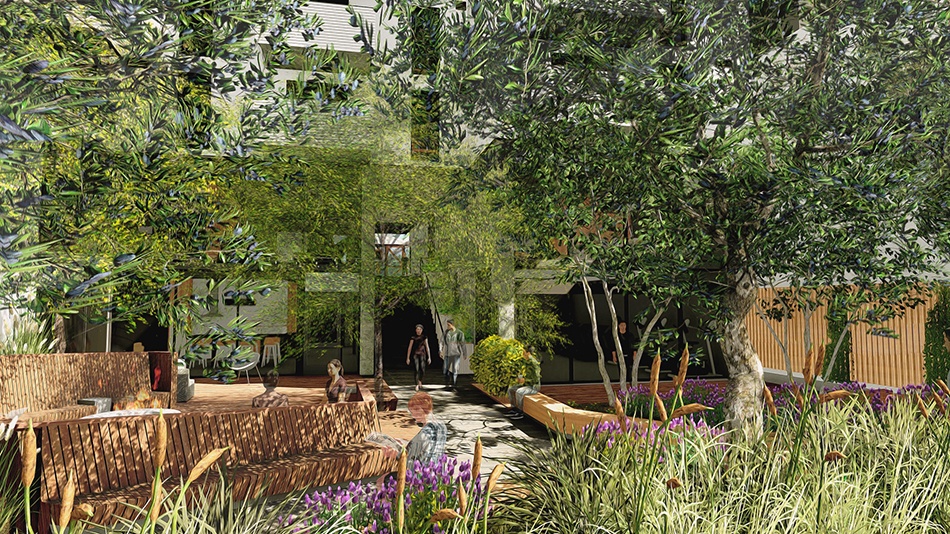
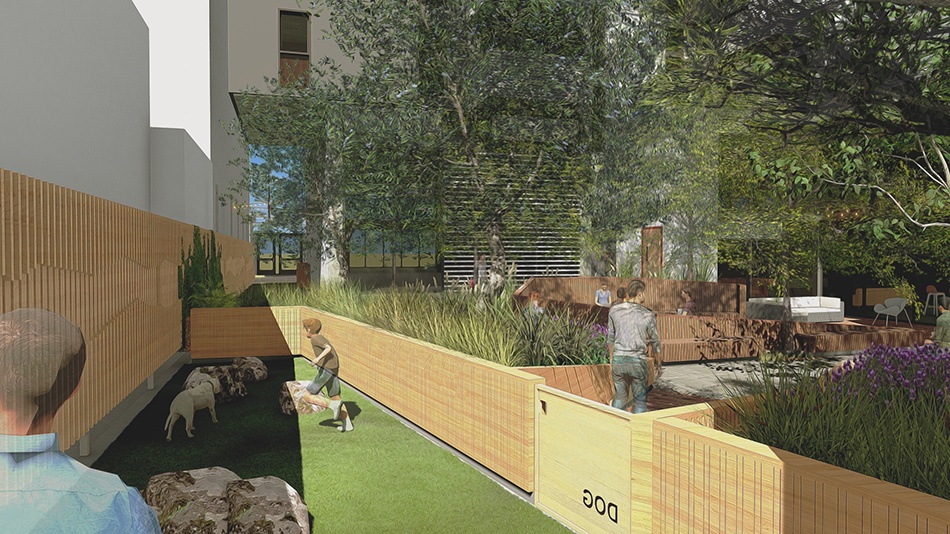
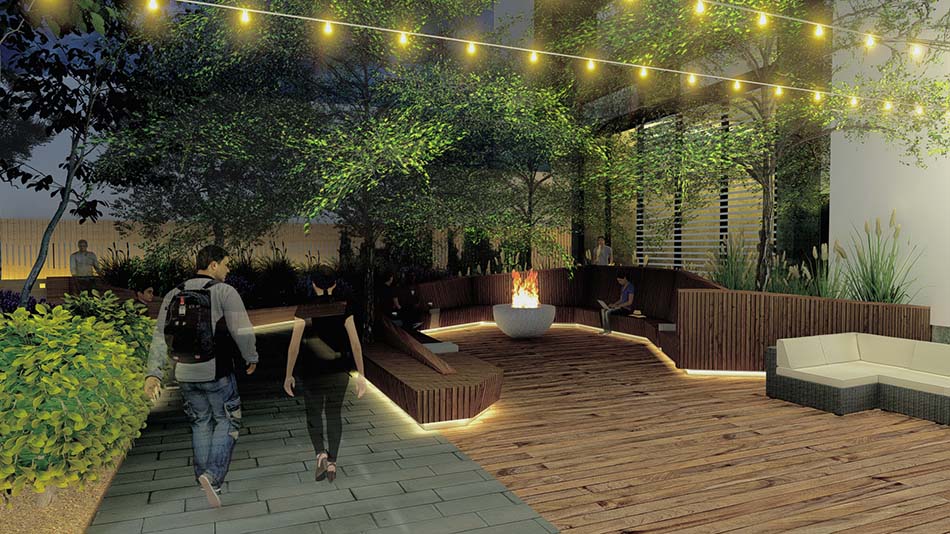
The courtyard is a pinwheel of programs designed around a central, nest-like intimate seating element. Around this custom wood enclosure, which undulates and unfolds under a grove of deciduous trees, are organized an exterior living room space, a restaurant view-scape, a yoga studio deck, and a mini dog-run for the building’s pets. The court connects the two entry levels on this sloped site from California and Polk Streets along a second planted exterior pathway. This path ascends from the inner court though an open air atrium up a planted stairwell to reach the California Street lobby paseo.
Green Meanders
Along the wire structures, vines climb to provide privacy and vertical green walls throughout the enfilade spaces. Alongside this green space, cut logs become pavers that lead the eye into the lushly planted areas meant to allow a more intimate, slow access to the courtyard complex, whether enjoying a brief pause in the space or meandering along the pathways. The grove’s shaded nest is both a furnishing and social concentrator: residents can choose to perch solitarily, or join in small groups. This quiet open space is perfect for imaginative play by the younger members of the extended housing community.
Garden Respite
This densely populated area of San Francisco is in desperate need of more green spaces. The 1567 California Street project offers a lushly intimate, park-like court that is a welcome respite from the bustling mercantile corridor just beyond the new housing project. Like a miniature Tivoli Gardens, it provides material richness and after-hours lighting to allow for an extended use into even the darkest seasons for its diverse community to enjoy throughout the year.

Location: California Street, San Francisco
Owner/Client: Michael Lee
Scope: Courtyard Space
Status: In Progress
Photography:
Myrtle Street BARK!let
For the Dogs
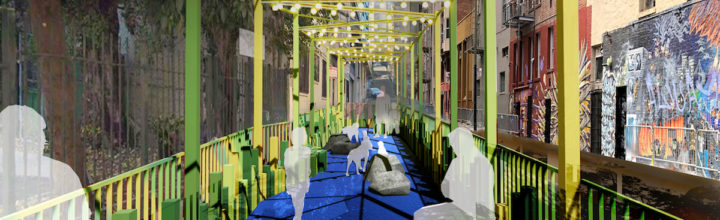
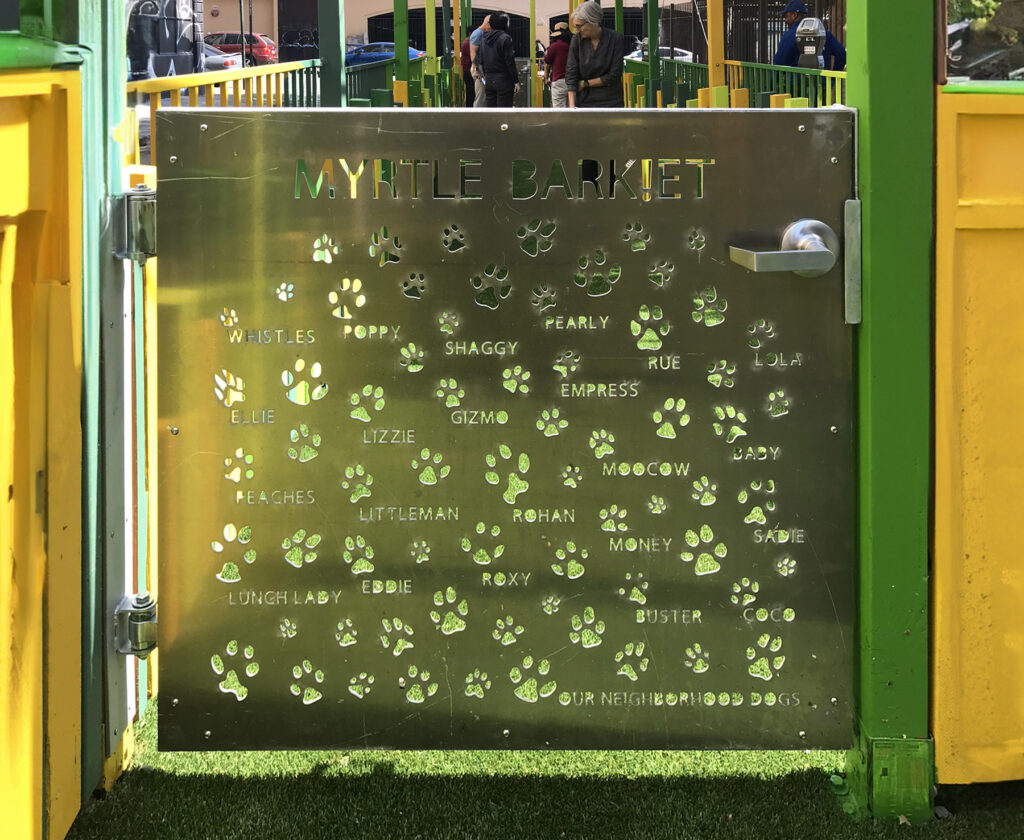
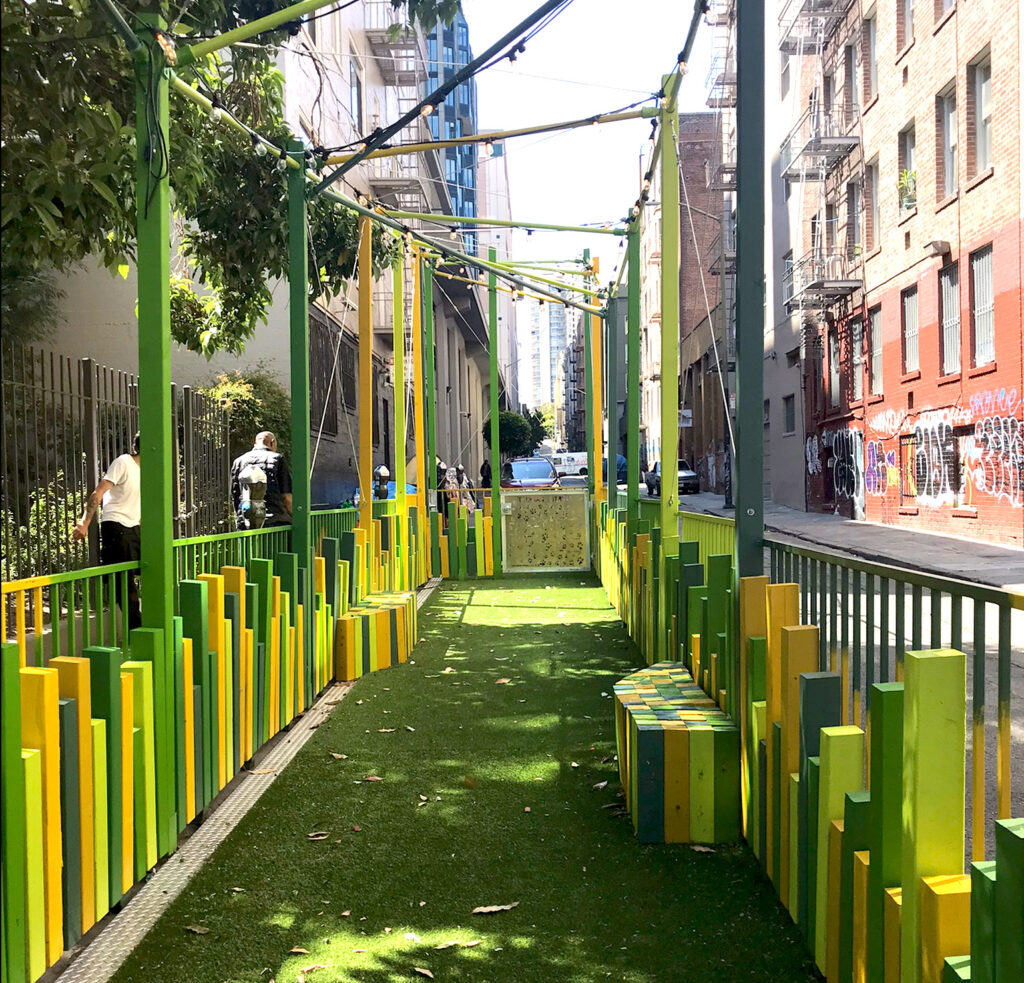
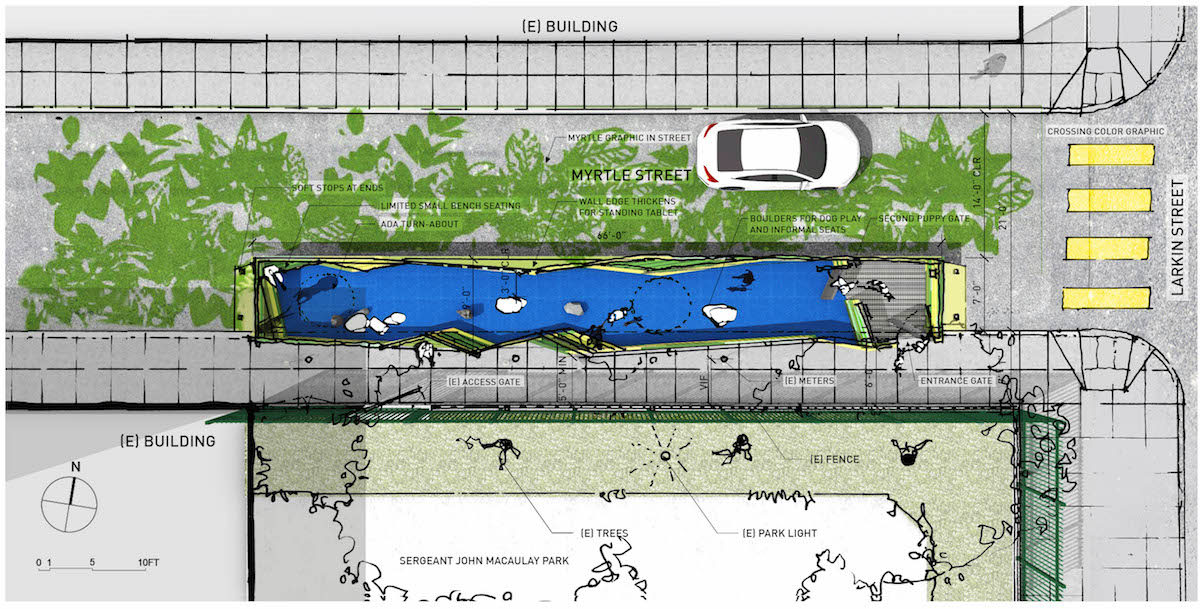
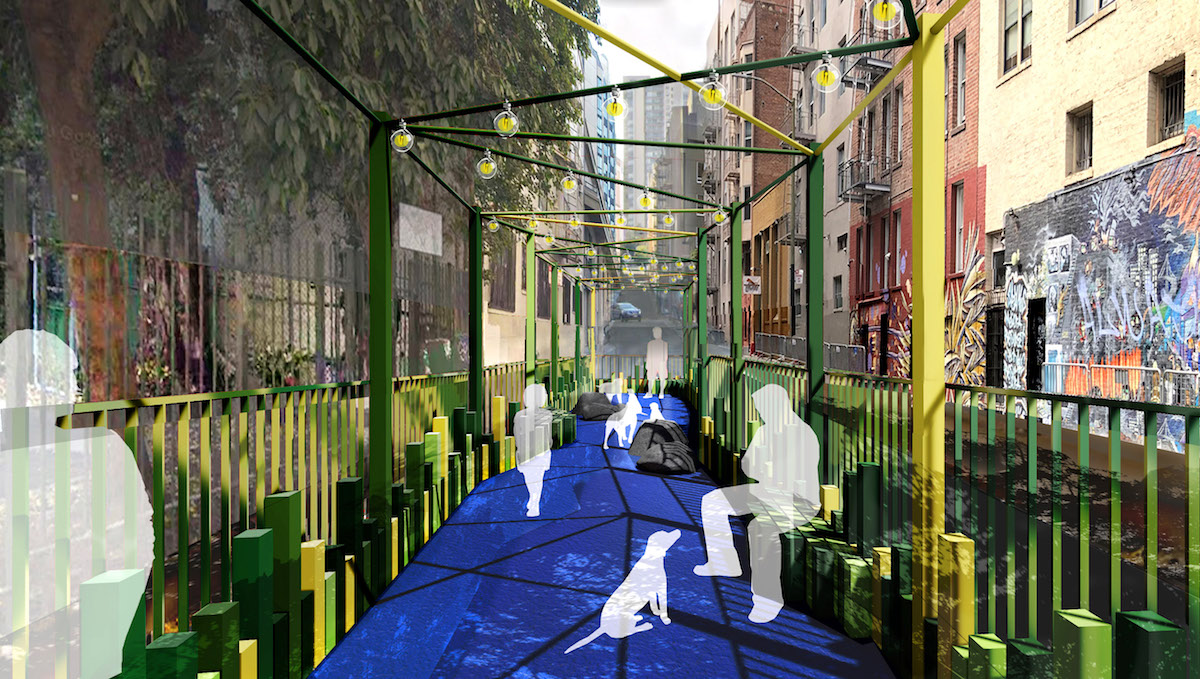
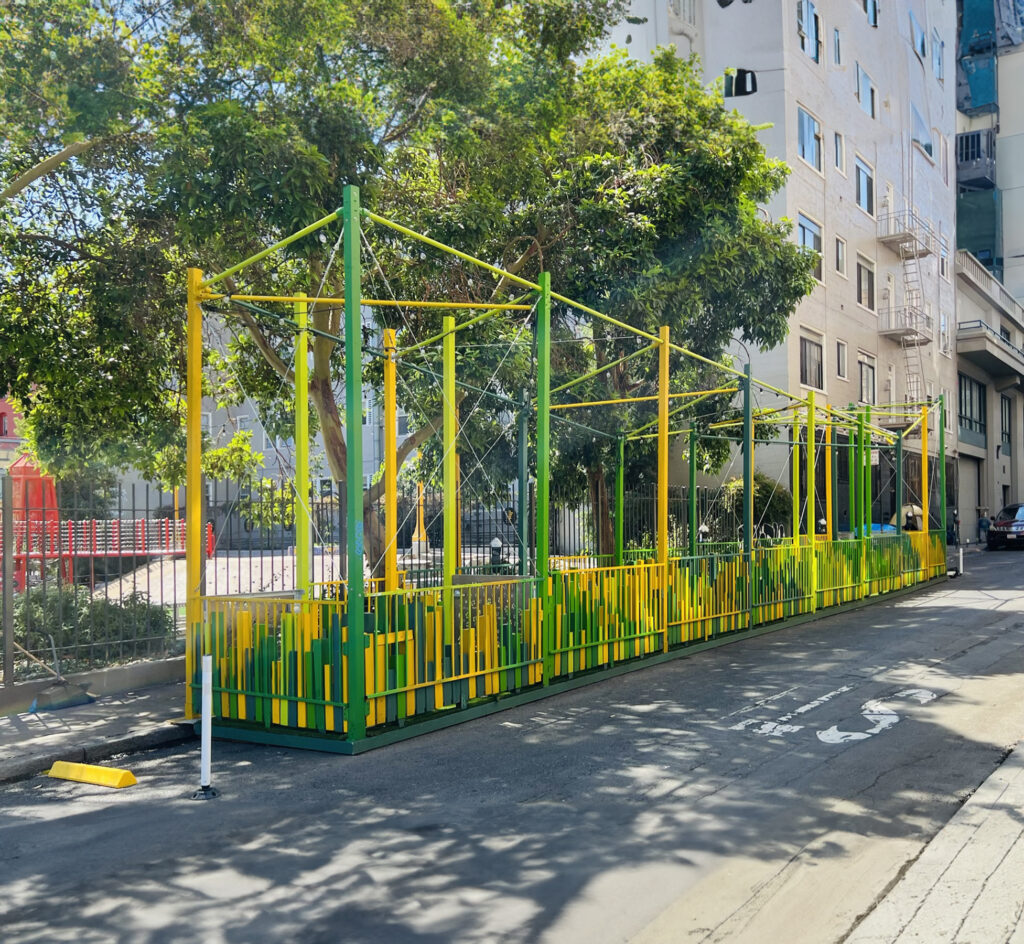
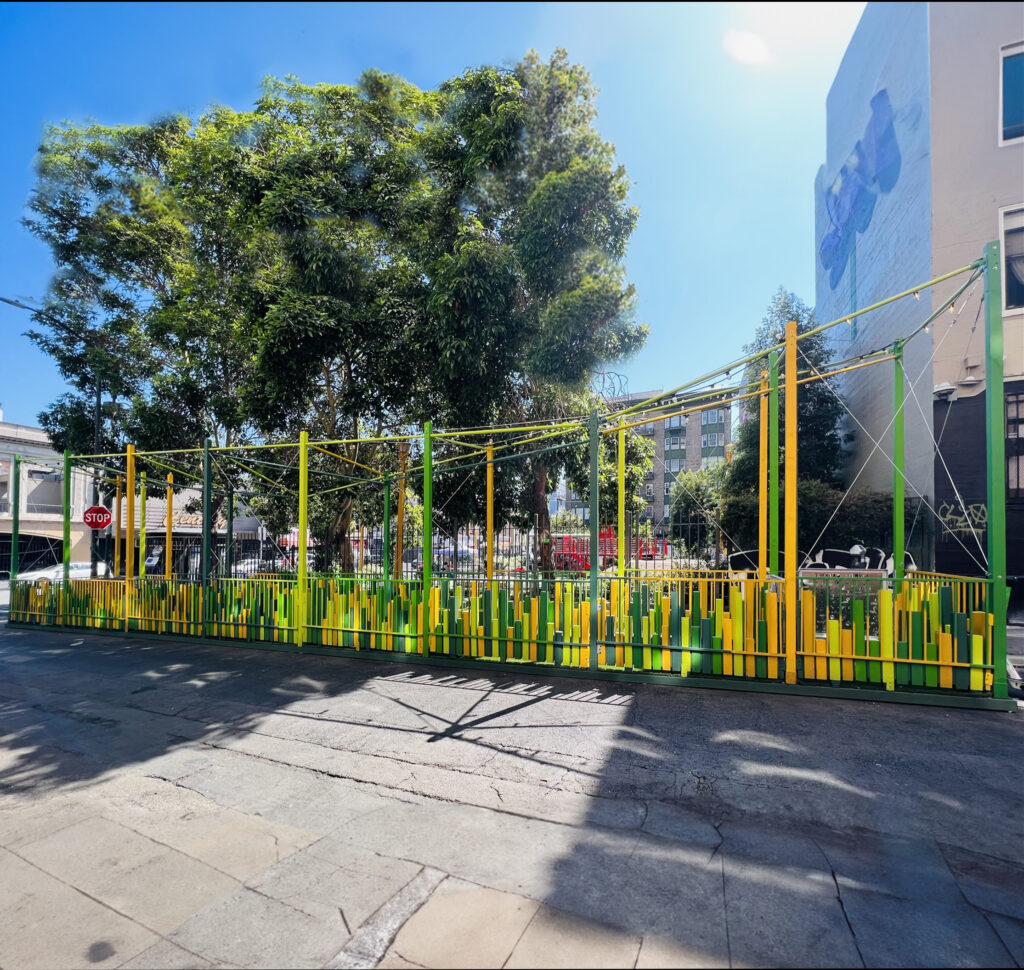
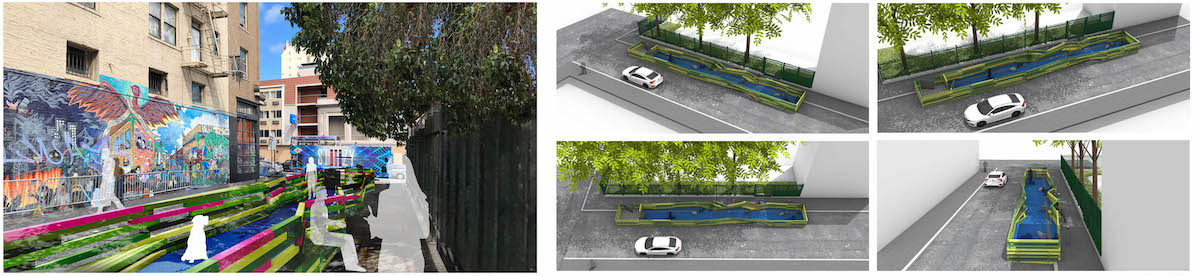
Myrtle Street’s new BARK!let transforms three public, on-street parking spaces into a 60-foot dog run at the heart of the San Francisco’s Tenderloin District. The Lower Polk Alleyways District Community Benefit District, and the Tenderloin Community came to INTERSTICE Architects in order to collaborate on the design of a new Parklet form: specifically, one for dogs to enjoy. And so the idea for a BARK!let was born.
Create New Spaces
In recognition that there was really no place to allow pets off-leash to play in the surrounding neighborhood, the Lower Polk CBD applied for a grant to design and permit a new BARK!let. The site beside McCauley Park was chosen for its location adjacent to the recently renovated children’s playground. In alignment with the Lower Polk Alleyways District Vision Plan in which Myrtle Alley aspires to be the “Park Alley,” the BARK!let focuses on the open space, and existing courtyards and park amenities.
Reclaiming the Streets
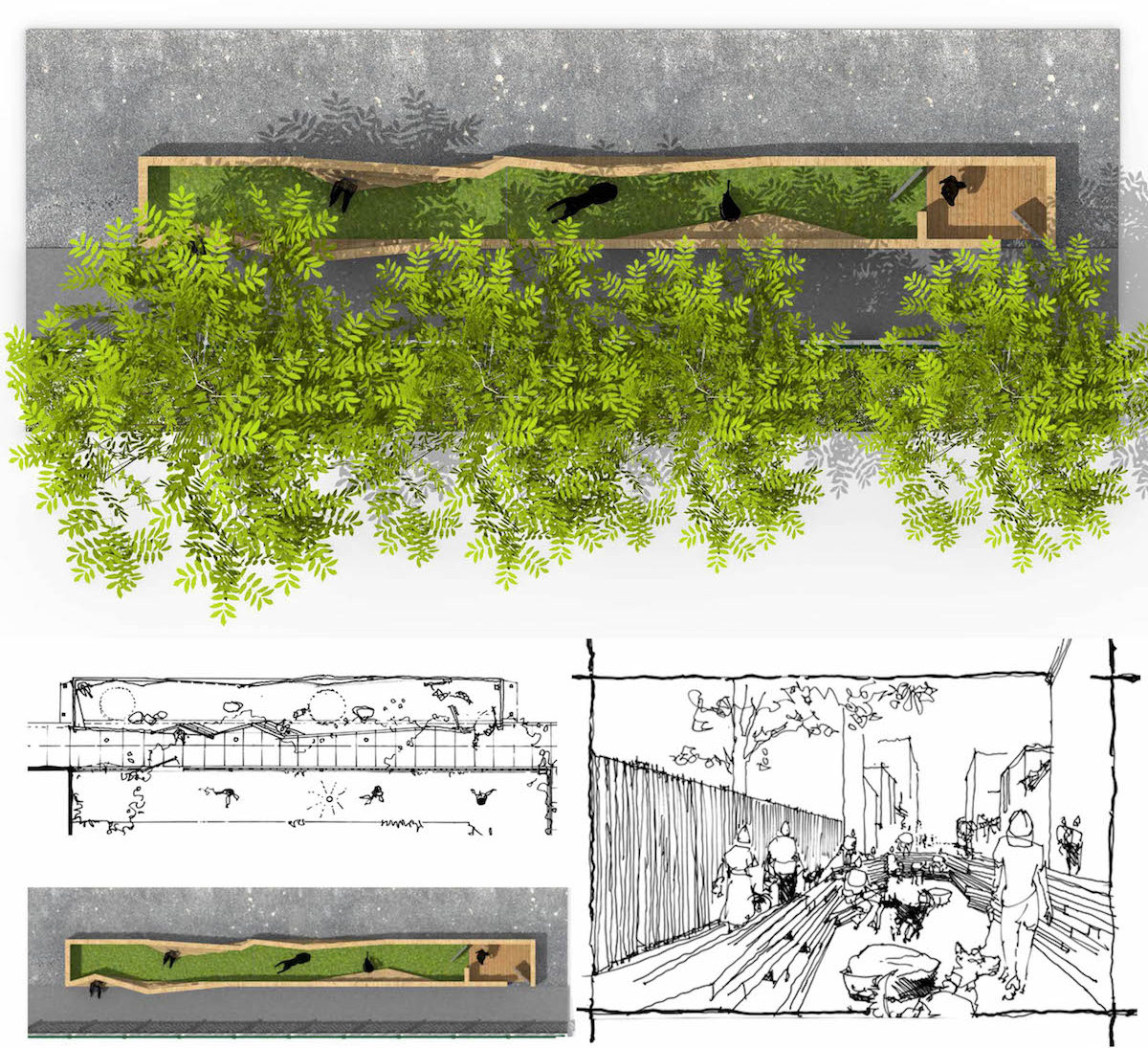
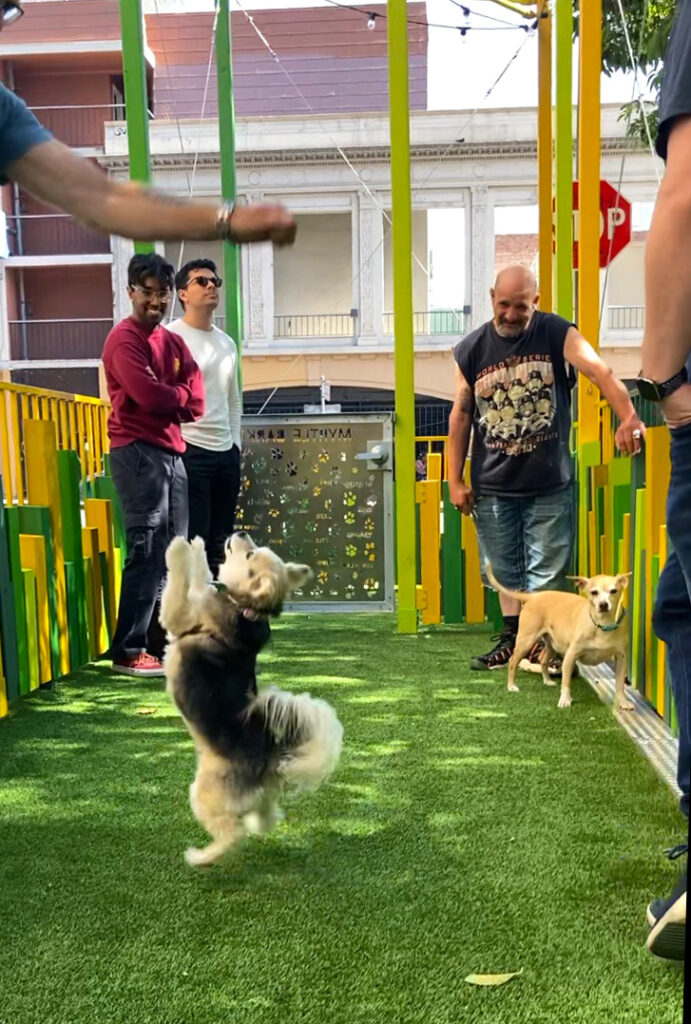
The Myrtle Street BARK!let will reclaim three on-street parking spaces in an effort to provide a shared space for the growing number of pet owners in this rapidly expanding residential mixed-use area. Why have our shared streets rented by the city for private vehicle parking, when we can all benefit from this same public space to enjoy as a linear park? The BARK!let creates space not only for pet relief, but also a place in the public commons where pet owners can gather safely to let their dogs enjoy each other’s company. The community was intimately involved in the design development. Over multiple presentations allowing input from stakeholders and pet owners, the design evolved towards more transparency, providing light for night-time use, and establishing regulations to help ensure safety and greater containment.
Designed for Play
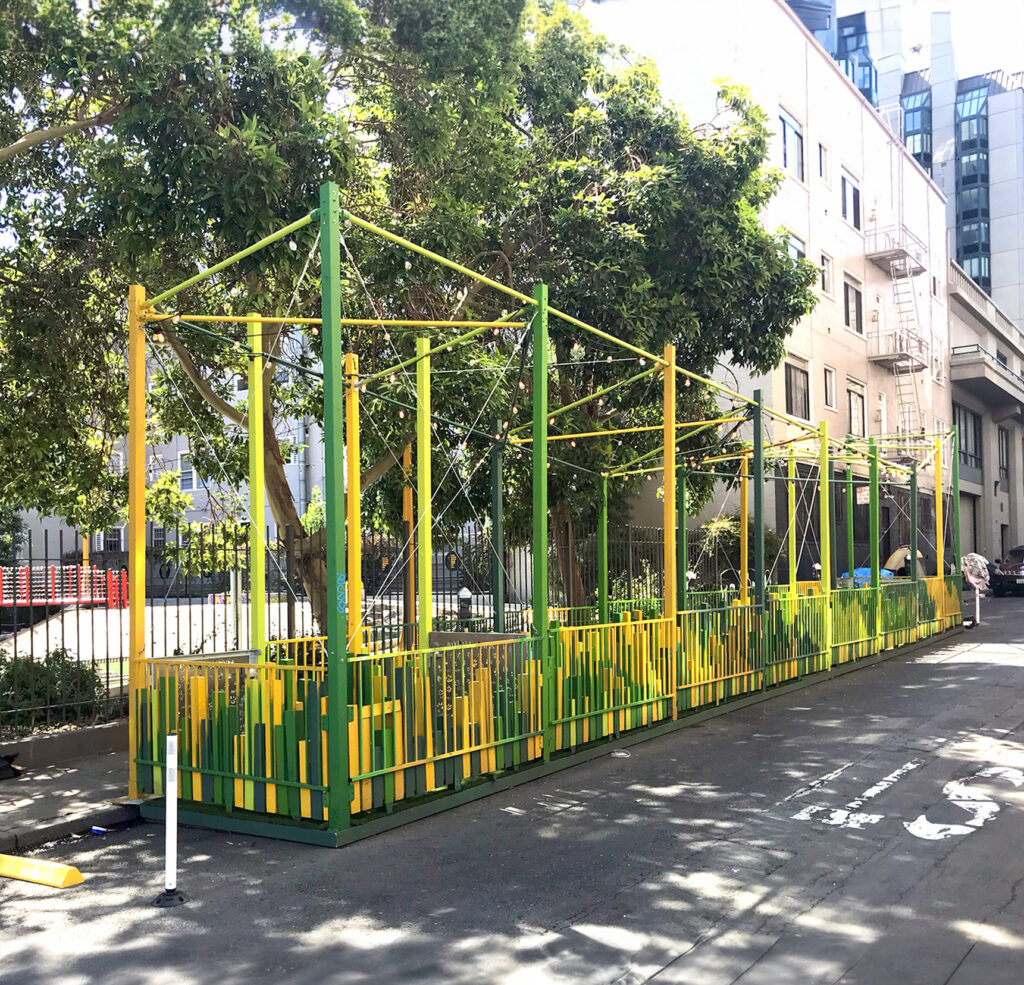
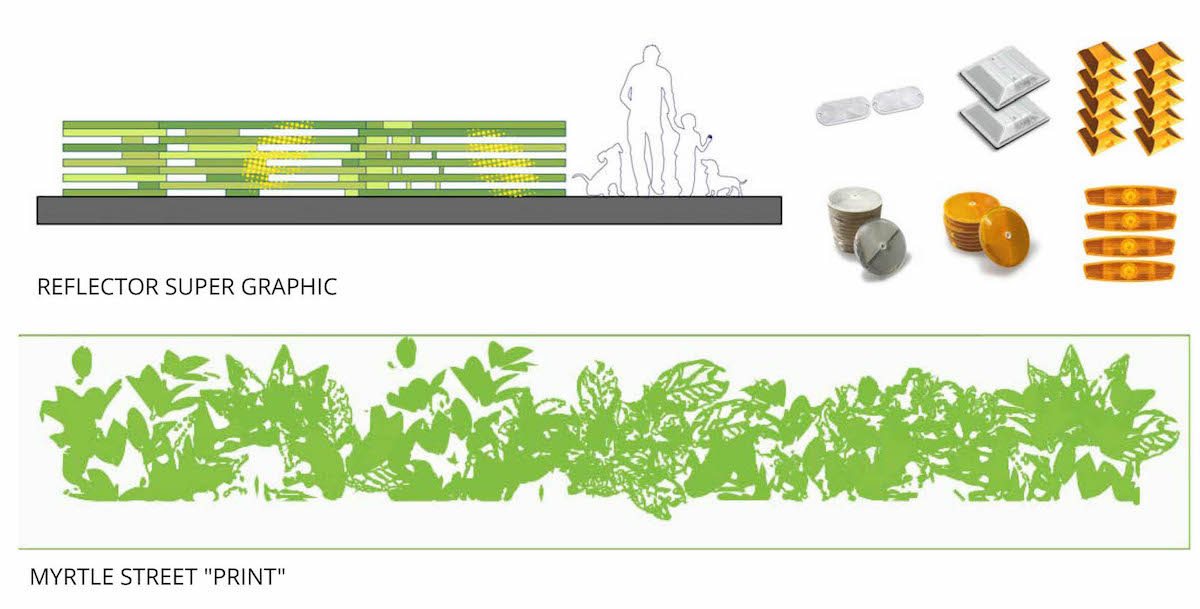
The BARK!let is six-by-nine-feet wide, and over 60 feet long with double gates at both ends made with a colorful graphic language of simple off-the-shelf component parts that are easily maintained. INTERSTICE added an anti-graffiti pattern derived from the myrtle tree’s leaves and flowers in honor of the street’s namesake. With lights, turf to match the blue park next door, and boulders, the park provides an exciting and playful environment for the community’s pups, both day and night.
Screenshot
Location: Corner of Larkin Street & Myrtle Street, San Francisco
Owner/Client: Lower Polk CBD
Scope: Parklet for dogs
Status: In Progress
Photography: N/A
Alley-Cat Bench / Fern Alley Prototype
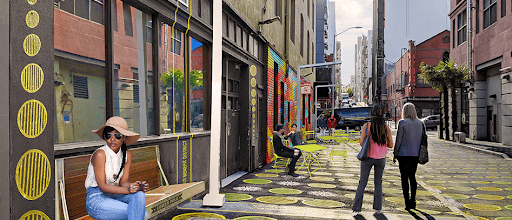
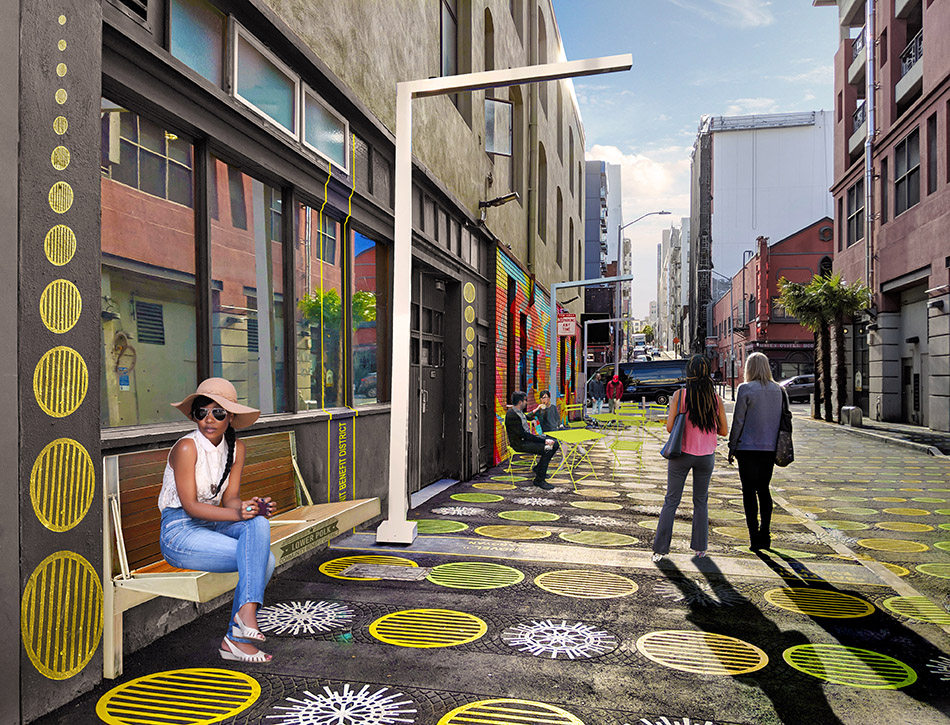
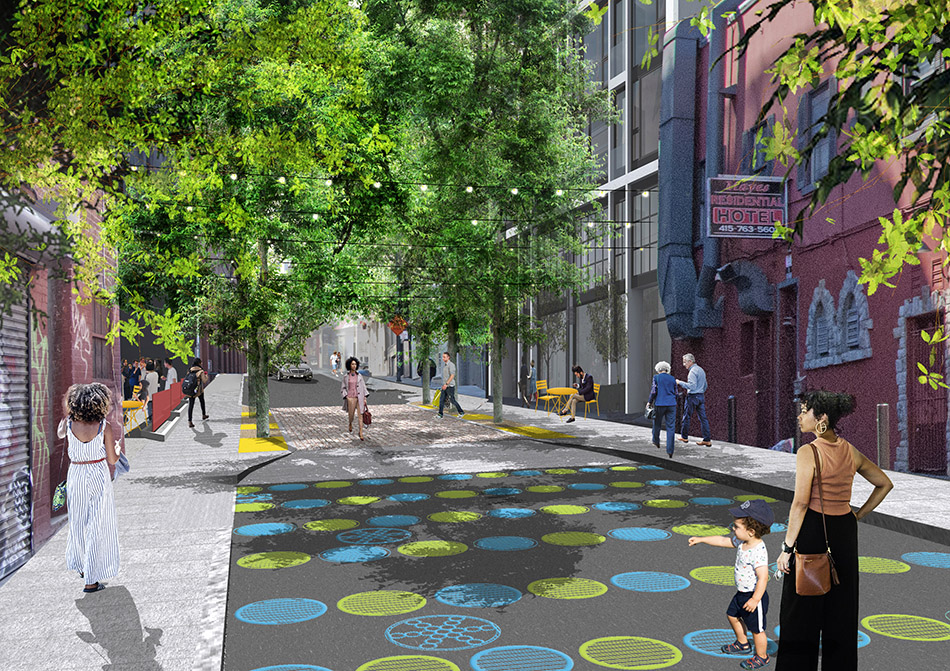
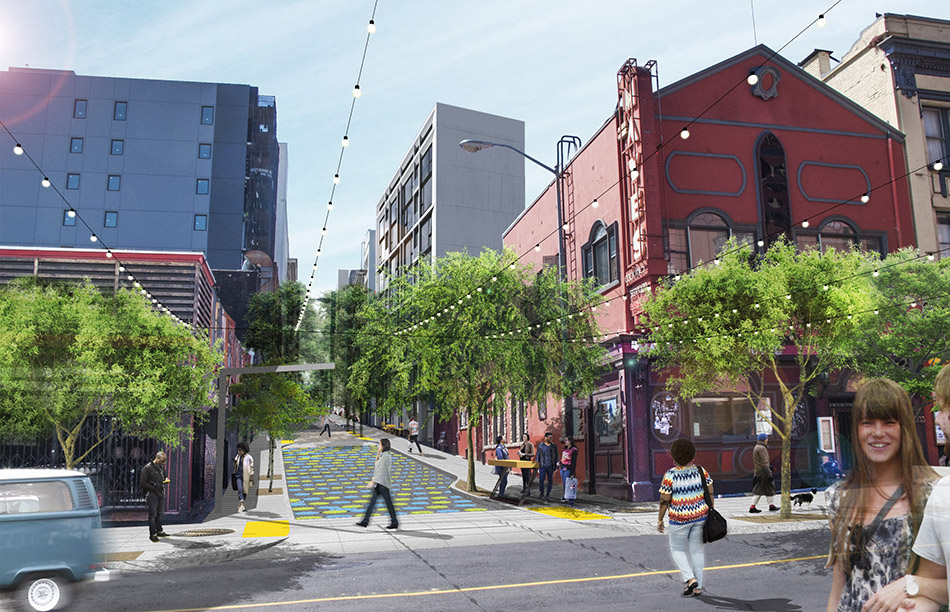
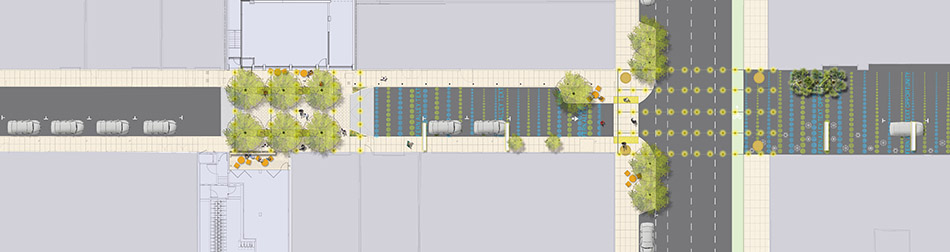
Fern Alley was one of the first Alley Alleys to be renovated under INTERSTICE’s Alleyways District Vision Plan sponsored by the Lower Polk Neighbor’s Neighborhood Association. Th Alleyway’s District Vison Plan (Link to master plan page) identified 12 alleys between Golden Gate and California Street for beautification towards making them publicly shared Green-Alley Commons spaces, focused on dining, and events and residential building entries, that enhance pedestrian street culture by leveraging the new adjacent housing development, and institutions like Music City and the Community Benefit district offices.
In collaboration with the city of San Franscisco and the department of Public Works (DPW), INTERSTICE hosted interactive community design meetings and developed this “Artists” alley specifically to honor the poets, musicians , writers and many creatives that have historically inspired this area. The Polk area once the original “Castro” district for the GLBTQ community from the time when the stonewall marches happened here in the late 70’s and its nightlife and eclectic mix of thrift stores, wine bars, music venues and funky shops and cafes which run the gamut from chic to shabby with something for everyone.
ALLEY-CAT Bench
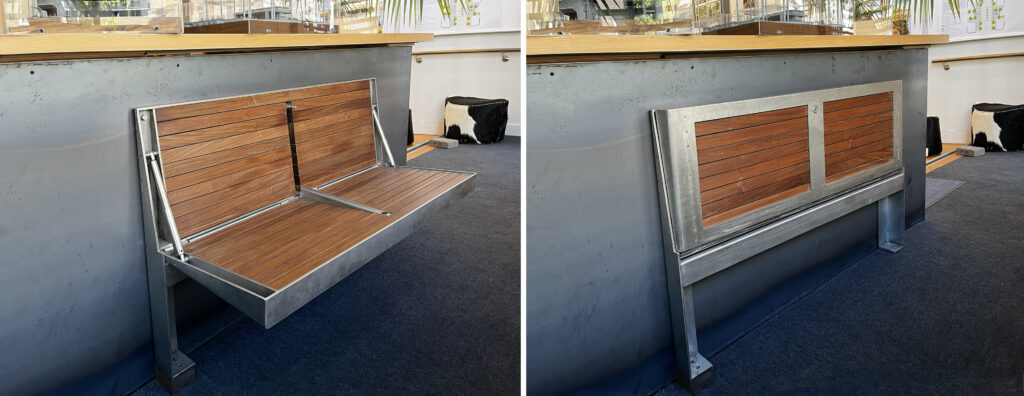
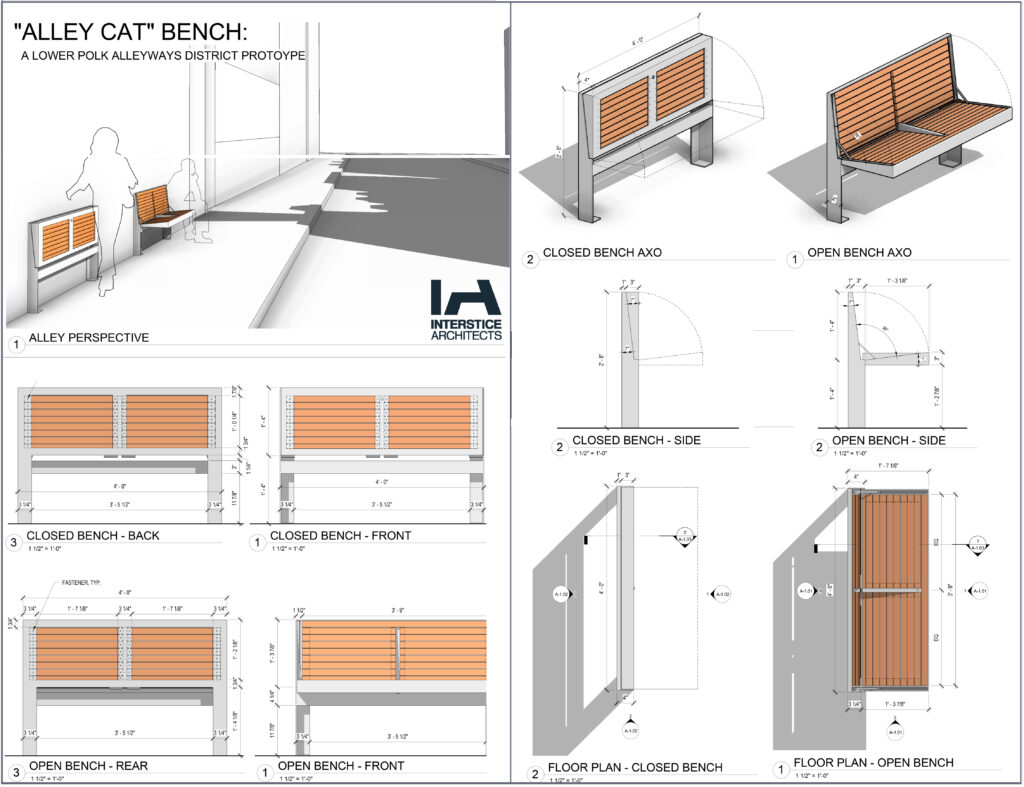
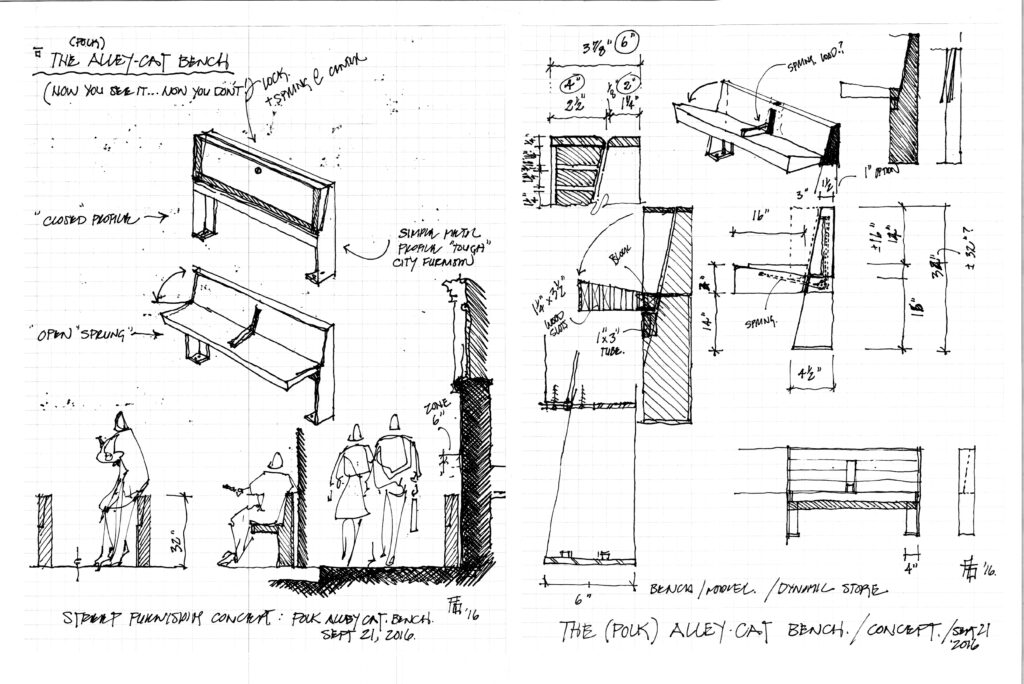
We designed The “ALLEY-CAT Bench” for these new alleyways – inspired by the need for public seating that could lock away, and “vanish” against the building facades at night to allow street cleaning and passage on already tightly cramped sidewalks typical of these smaller scale byways in the urban fabric.
This prototype is made of cold formed stainless steel and iron wood to make it Street-wise and very durable when opened as a comfortable bench for two – or when folded up to disappear like an Alley-cat in the wink of an eye. When locked it becomes a discrete and impenetrable rectangle of armored ¼” stainless steel.
In its locked Condition it farms a thin 4” profile and can be bolted directly against a façade into the sidewalk. This is the allowable projection from a building façade for a city sidewalk and so these benches can remain in place, in the public realm, to be deployed and controlled by the host business with a single key that opens and closes the folding street bench. Now you see it and now you don’t – The Alley cat bench is ready for roll-out. Contact us if you are interested in having one for your own street frontage!
Video courtesy of EnnisFlint TrafficScapes.
Location: Lower Polk, San Francisco
Owner/Client: Lower Polk Neighbors
Scope: Alleyways District Vision Plan & Concept Design
Status: Alleycat Bench Prototype Completed 2019
Photography: N/A