 INTERSTICE Architects
Project Tag: Residential
Sonoma Mini House
A Dwelling Cube
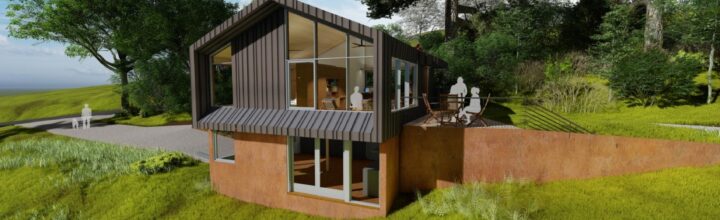
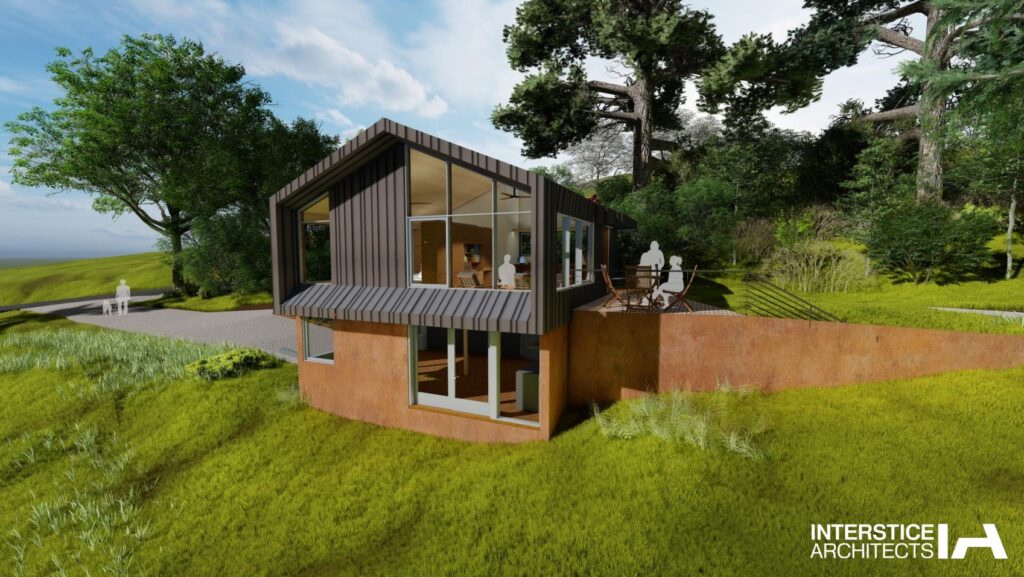
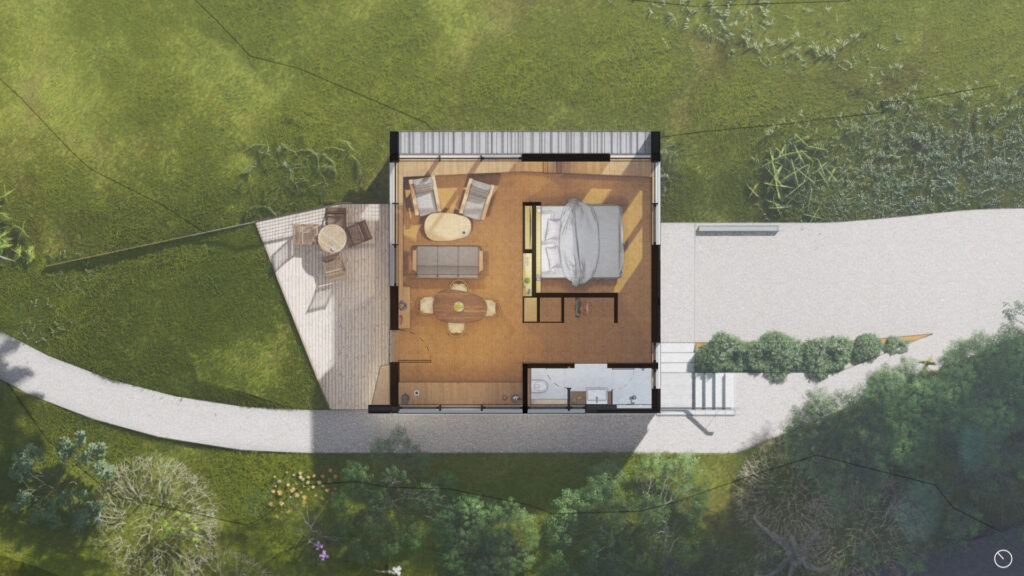
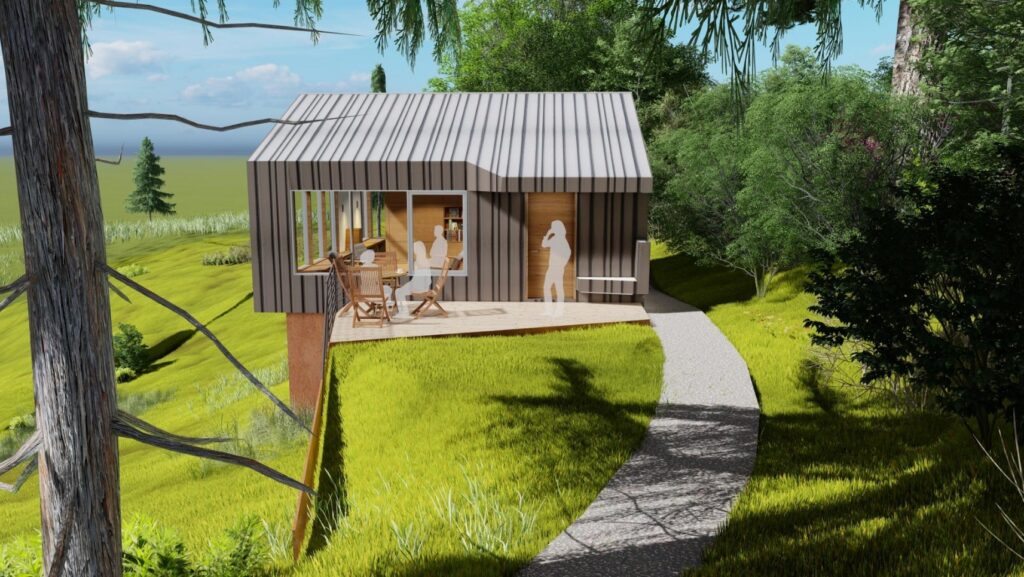
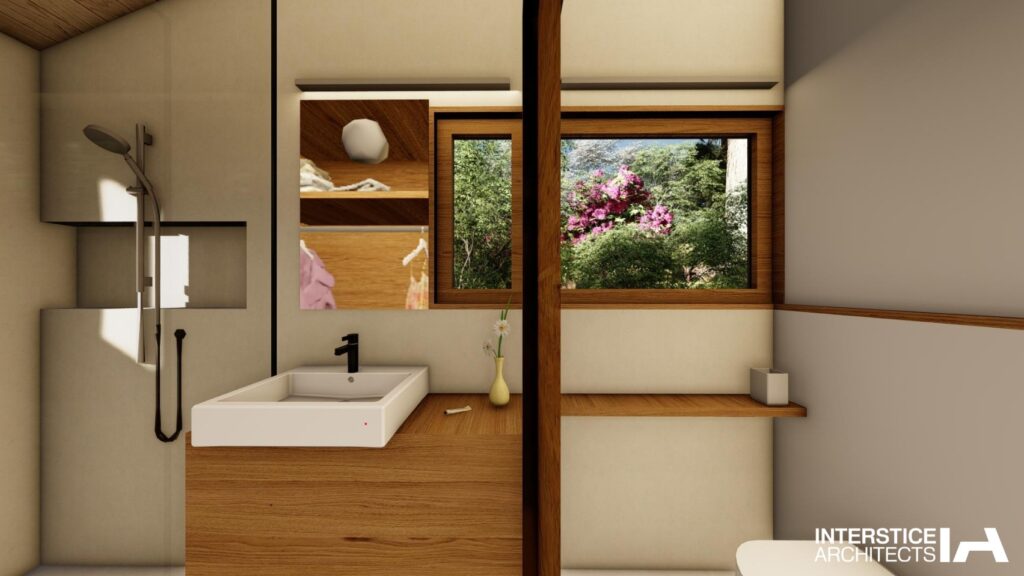
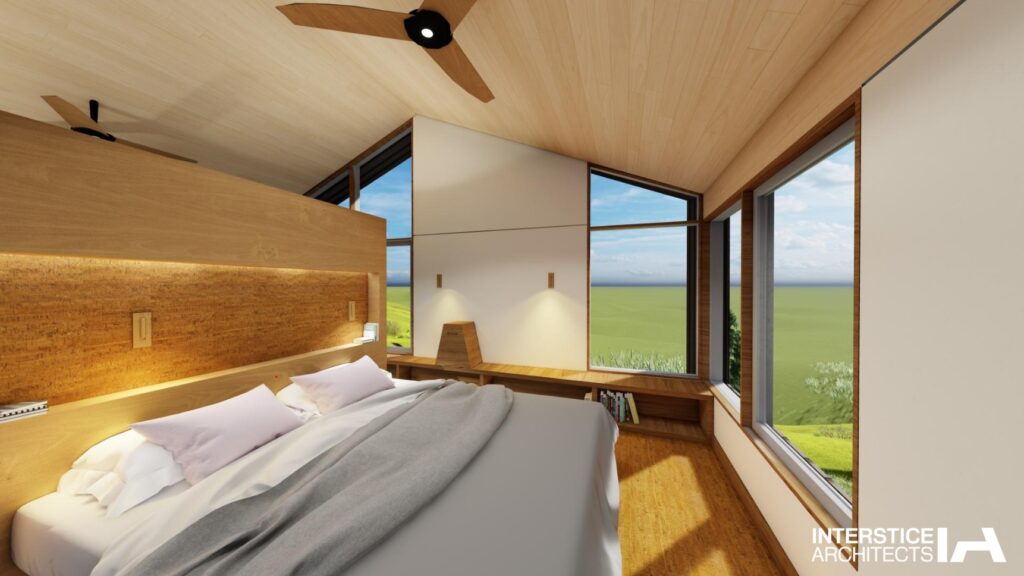
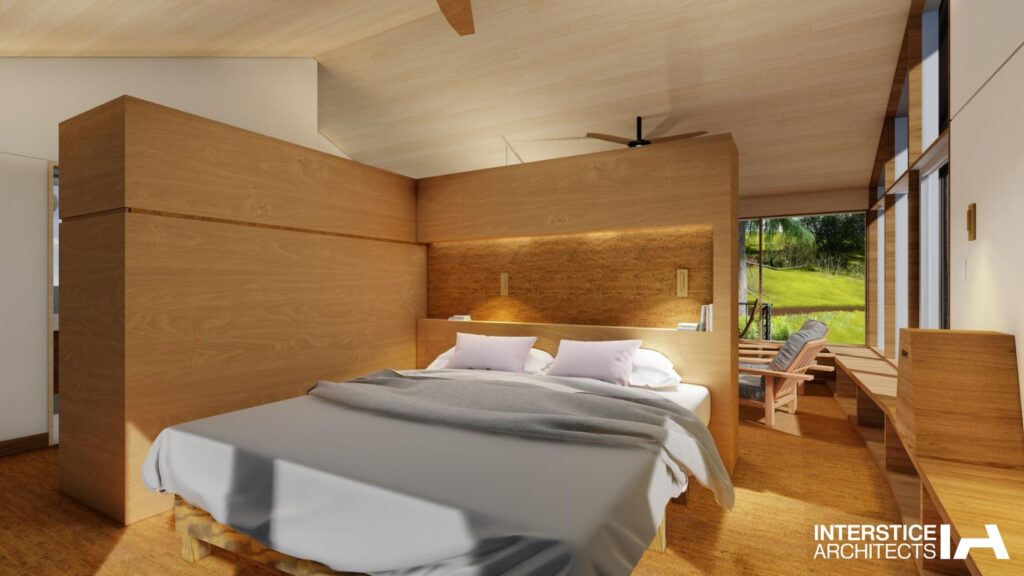
INTERSTICE was asked to design this tiny house to replace a previous home on a square 8×8 meter foundation embedded in a steeply sloped 1 acre site in the bucolic Sonoma County California countryside. This mini-house of 620 sq ft accommodates a compact dwelling footprint in an open plan around a single muti-purpose “pinwheel furnishing” that organizes the interior.
The Smart-Wall Core
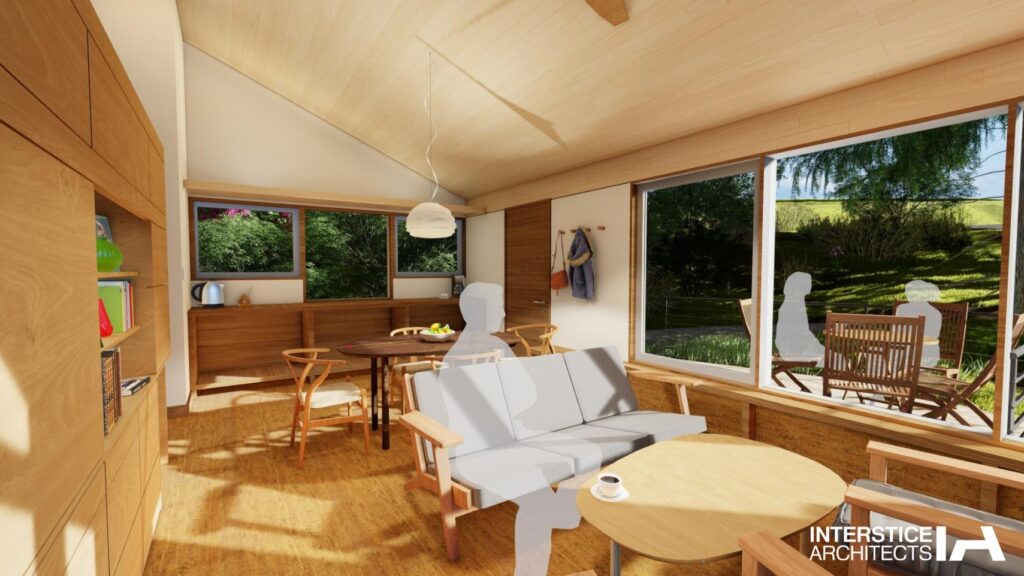
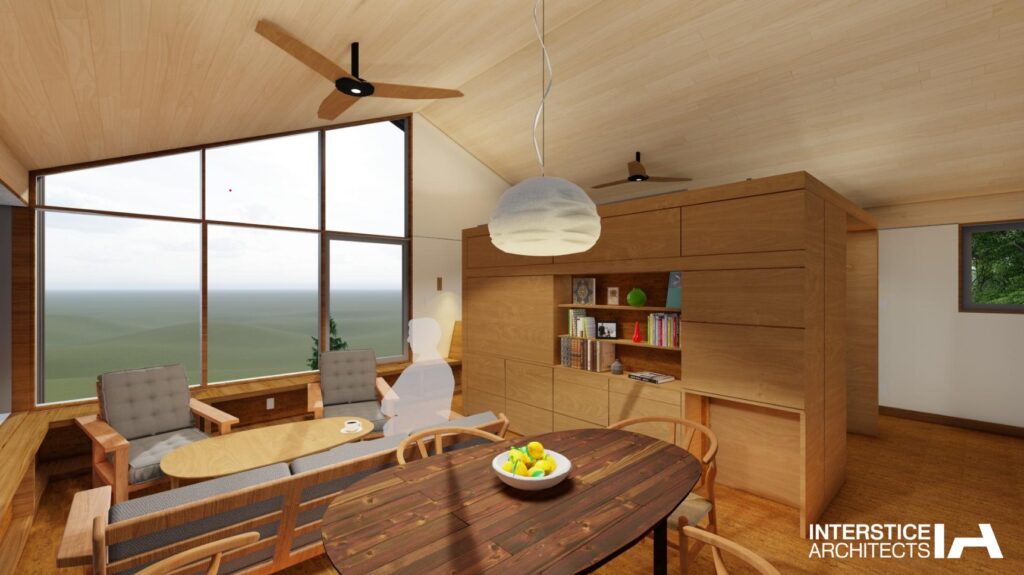
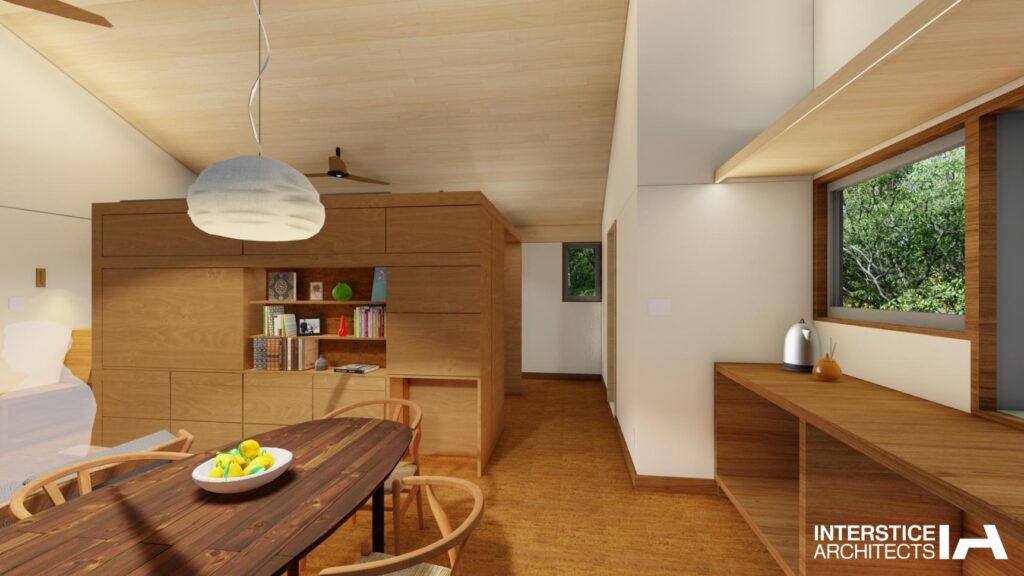
The central freestanding “smart-walled” object divides the program of the house into four discrete parts: one for eating, living, sleeping, and washing, all within the cathedral ceiling of the iconic gable box house volume while providing storage and amenities to each function. Wrapped in metal standing seam sheets, the home’s expansive floor to ceiling glass walls allow this small space to maximize light from all four sides and provides a spacious feel in this otherwise very concise floor plate.
A Fireproof Skin
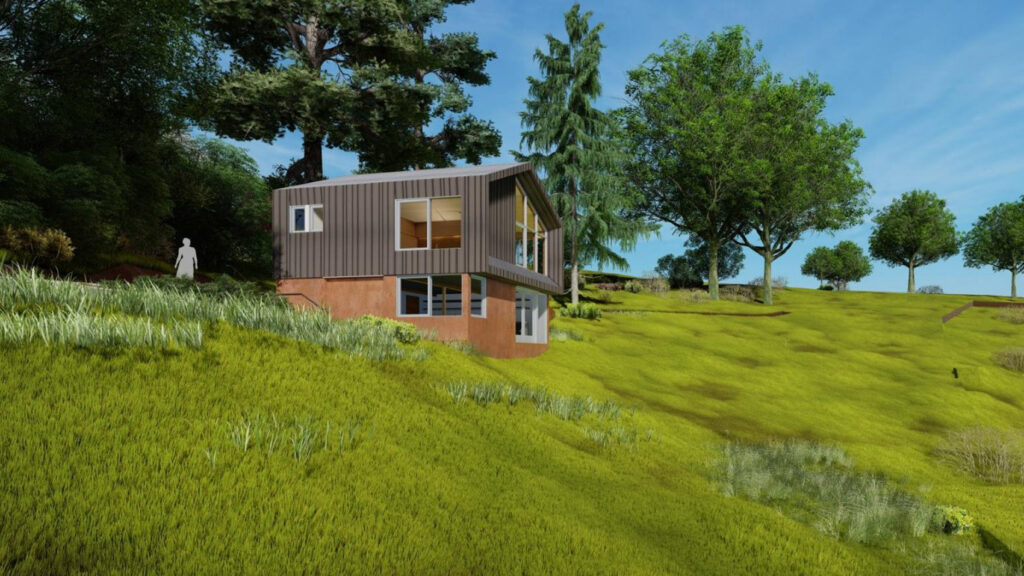
The tiny home is built on the original foundations which form the lower smooth Corten-steel plate clad garage and studio basement volume, that in turn, supports the more textured standing-seam clad home above forming an armored weathered skin against fire. The unheated lower level allows storage, mechanical and art-studio functions to spill out down slope from the drive way access and stretches out along the access path to the home above, with its own side deck which follows grade and takes advantage of the spectacular views of the valley meadows.
A Hygge Hut
In a nod to Nordic hospitality and simplicity, the interiors, are exposed warm woods, and rustic roof decking, which follow the classic form of the exterior envelope and exude a warm palette of cozy materials in contrast to the hardened and durable fireproof clad exteriors. The Danish concept of hygge was an important inspiration to the clean lines and soft touch of the view-oriented dwelling space. Decks extend into the landscape and the long fingered Corten retaining walls allow for a generous extension of the home into the landscape on both levels.



Location: Sonoma, California
Owner/Client: Undisclosed
Scope: Design
Status: Underconstruction
Photography: NA
Park Pavilions

A Forest of Buildings
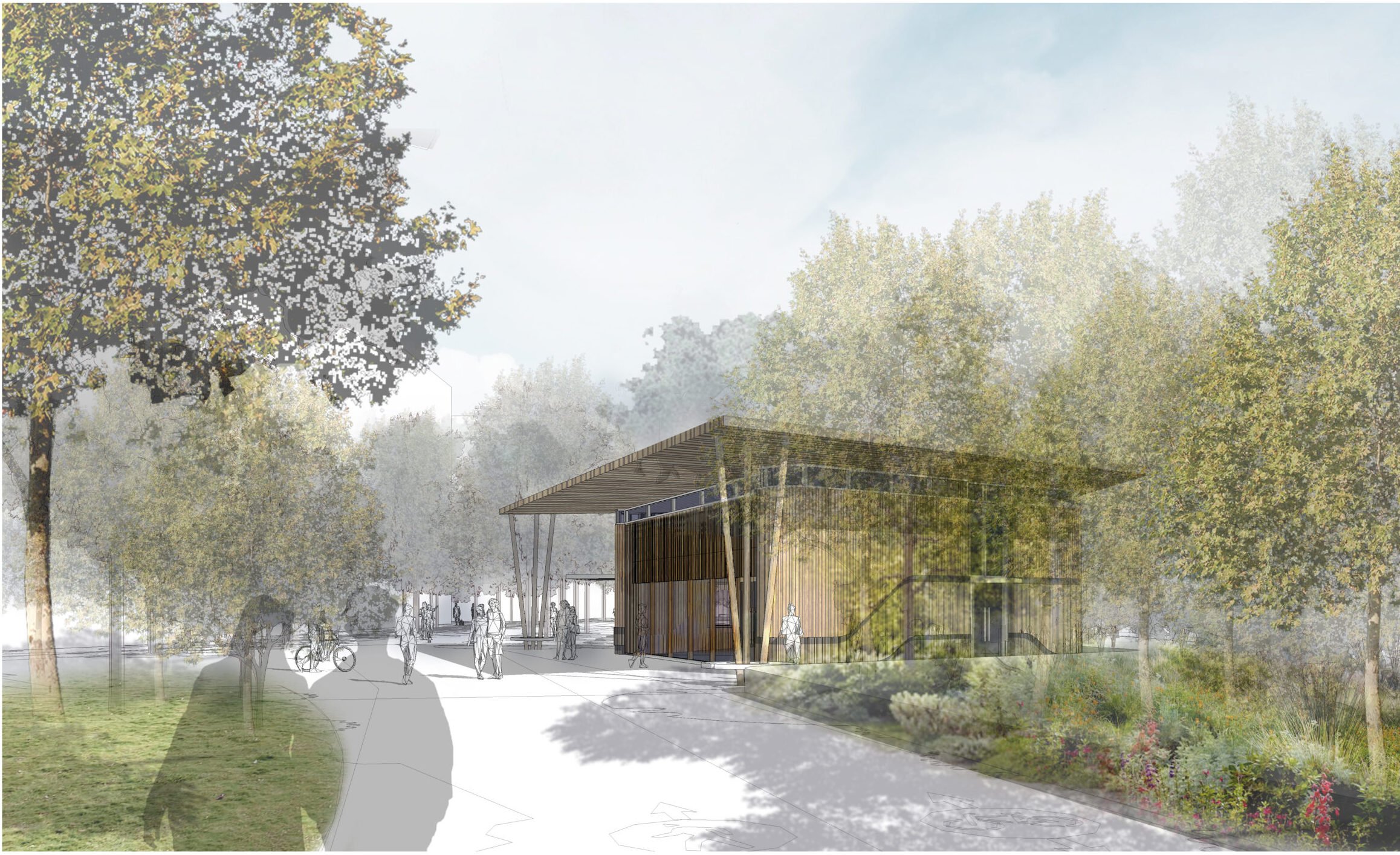
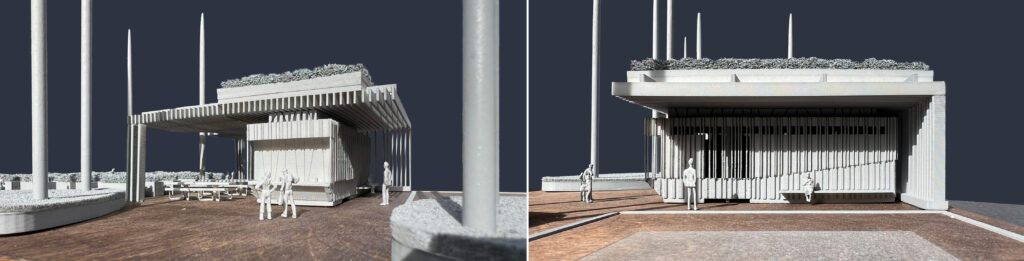
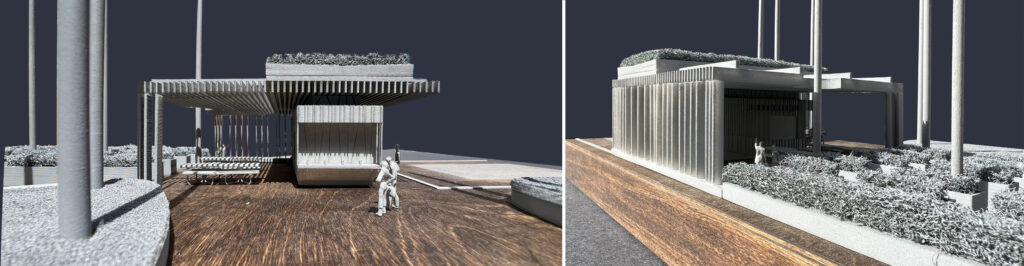
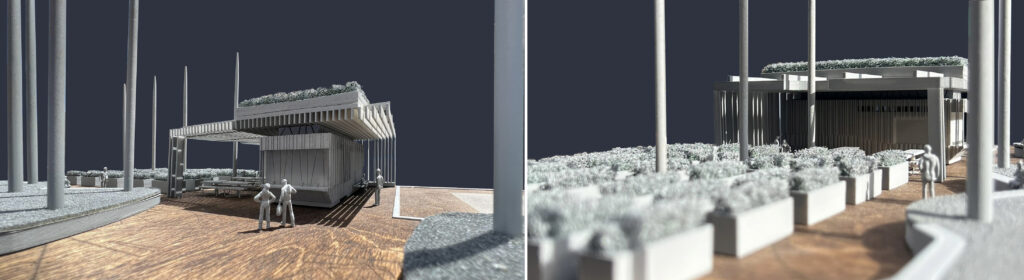
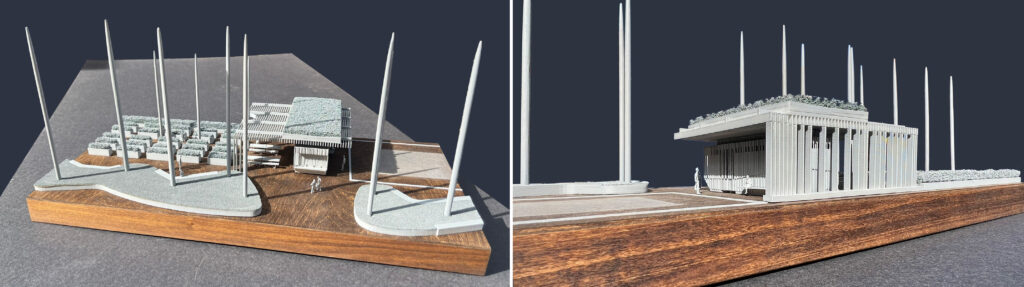
A new planned community serving thousands of new homes in mixed-use development will have as its central feature a large park that borders a regional transit line station. INTERSTICE was asked to design a series of five separate park structures from a shared Community Center, Food kiosk, Community Garden Trellis, Art Focused Orientation Beacon, and Transit Shelter that would be distributed along the 32-acre linear Park Promenade. The Park is to be a new forested amenity for the many medium-density buildings planned over the next ten years serving as the heart of the community-shared public commons.
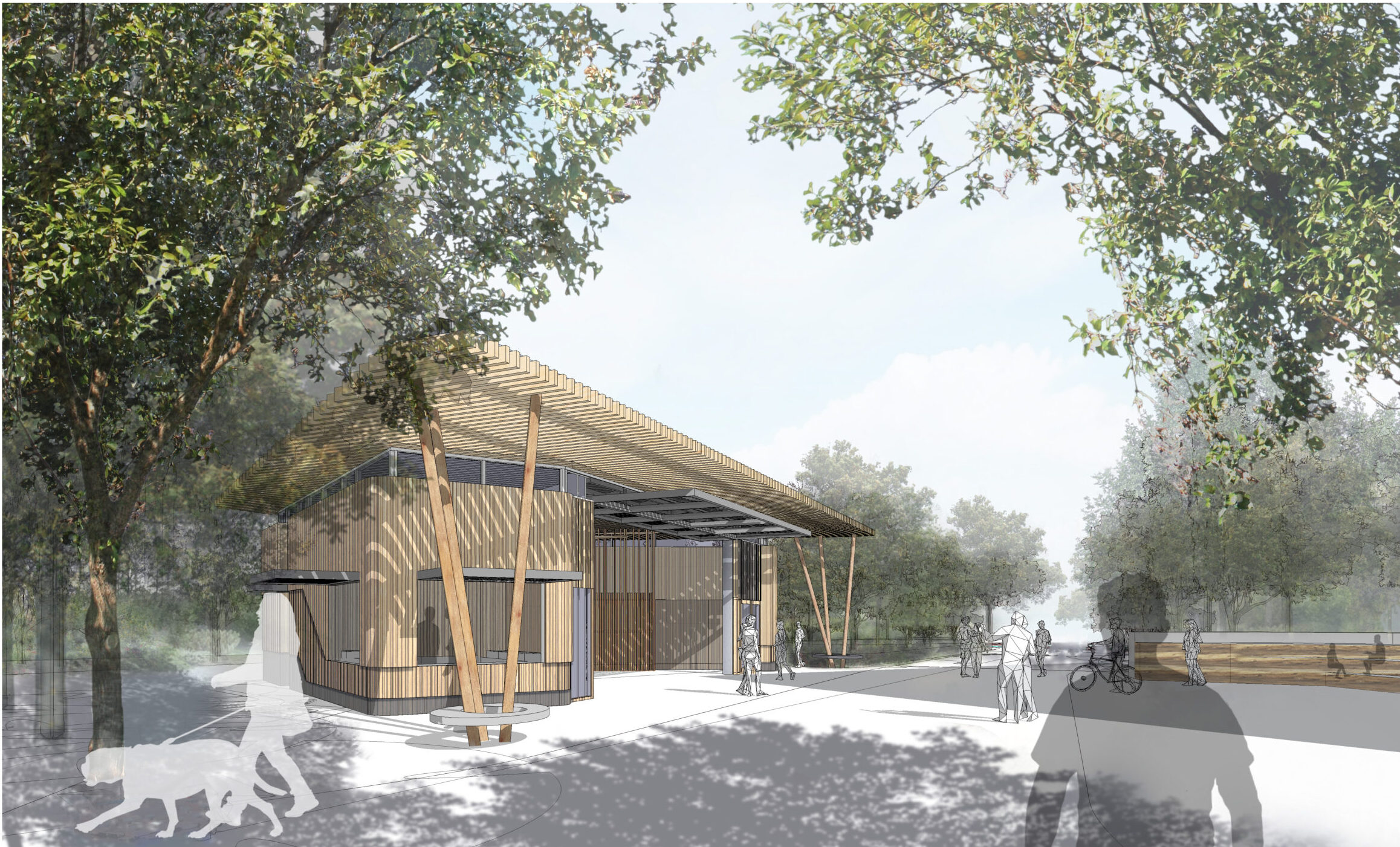
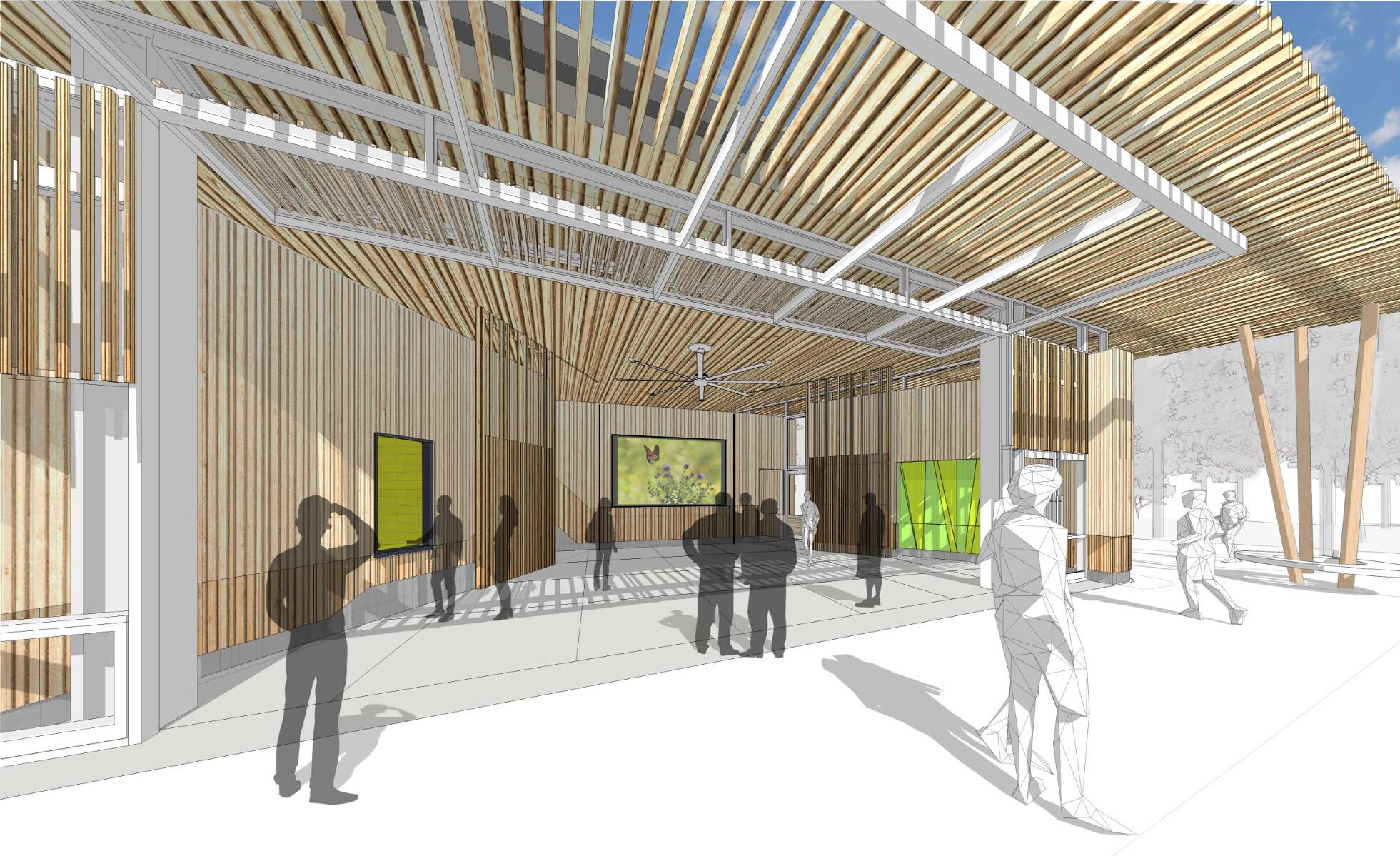
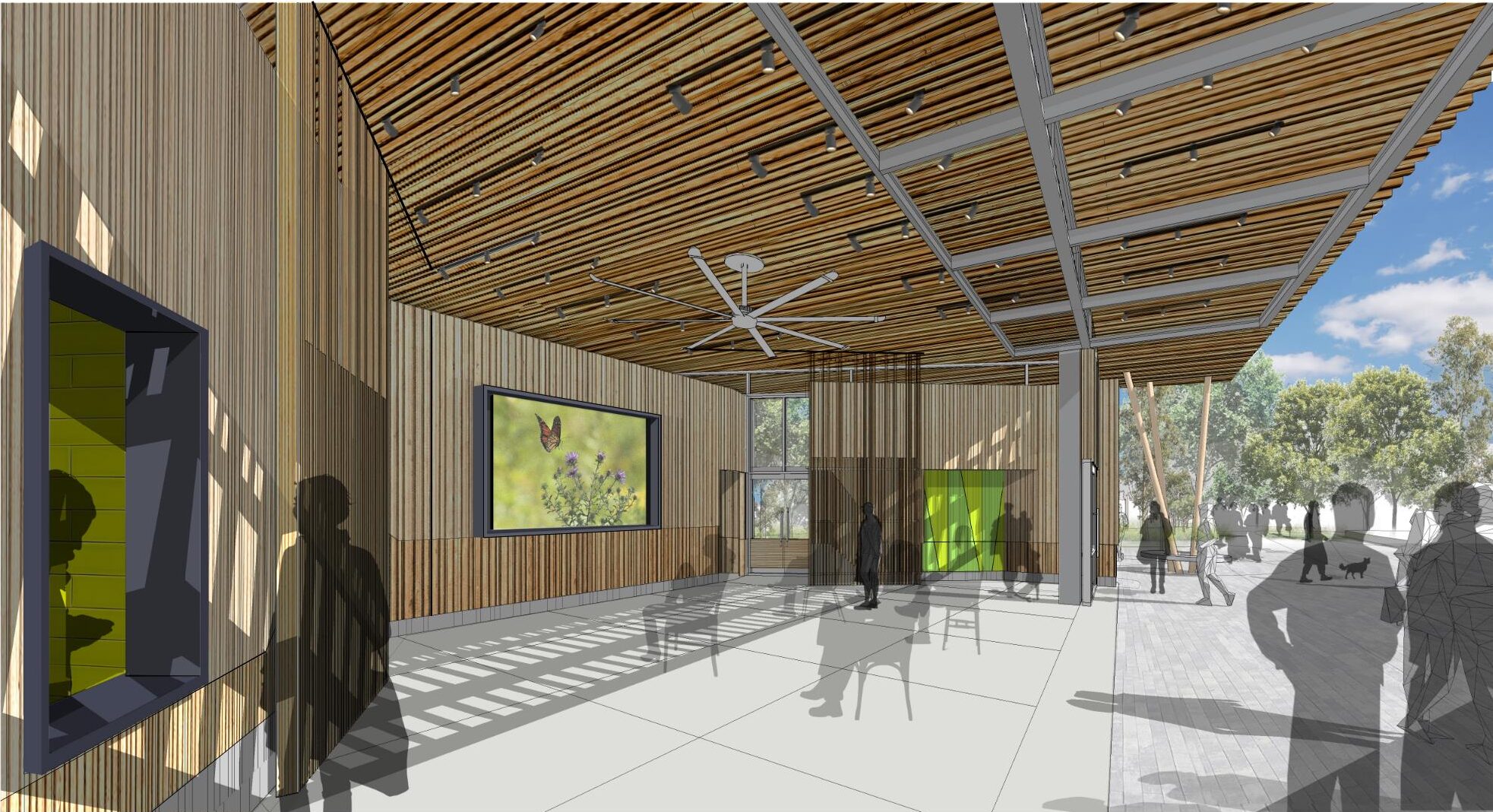
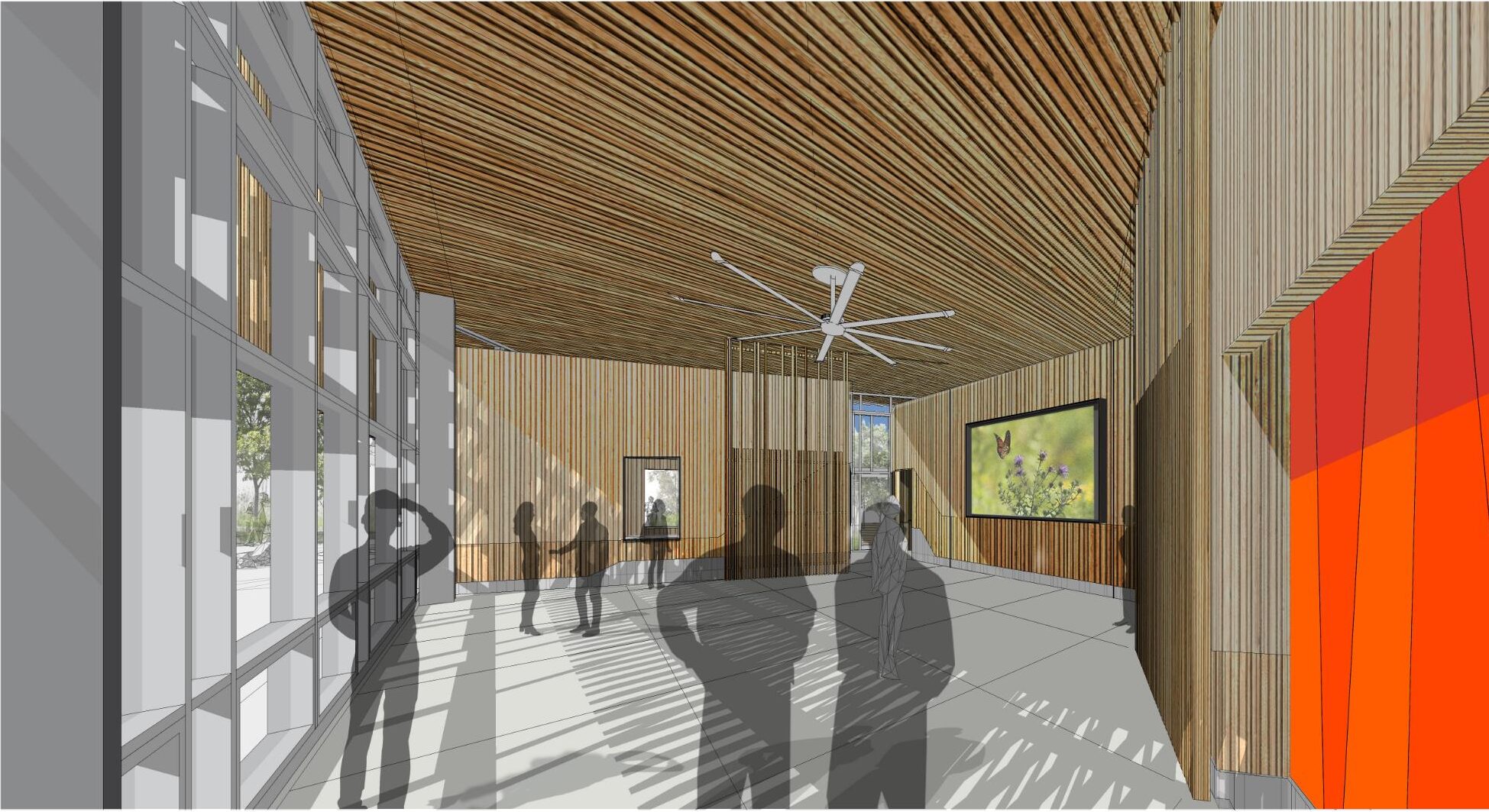
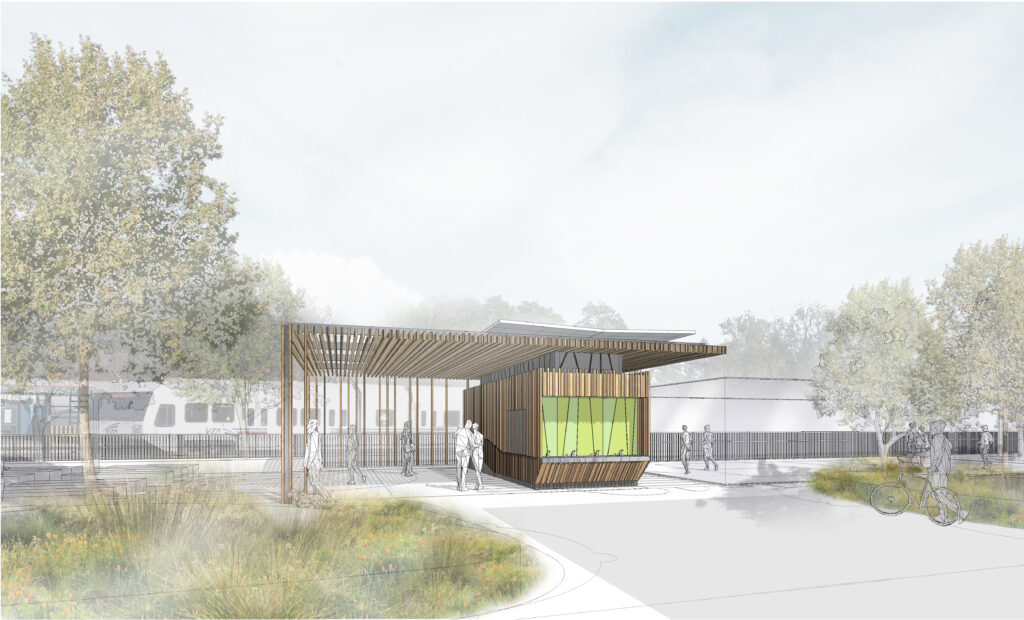
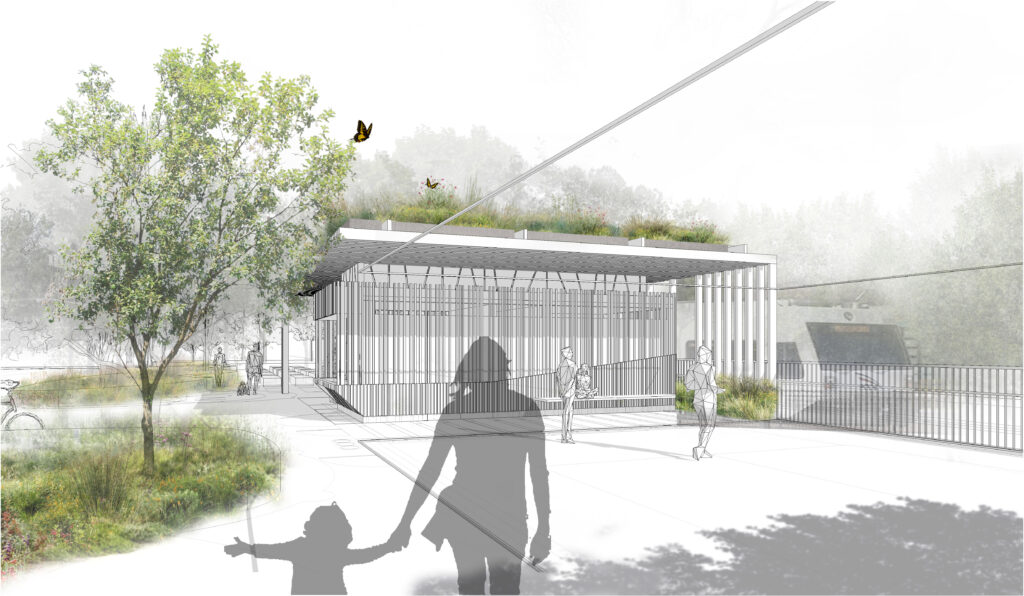
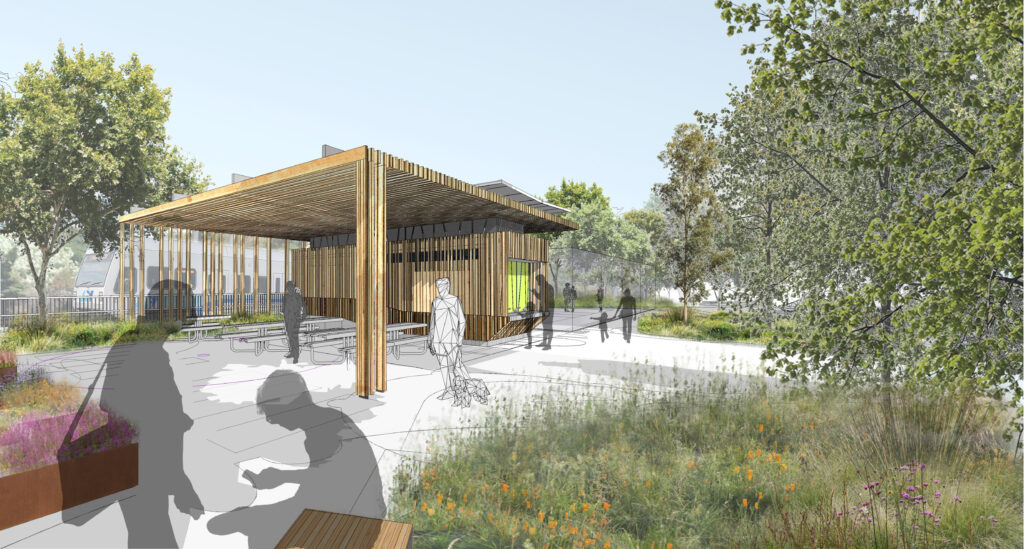
In this early design phase, three of the structures were developed to be complementary multi-use public pavilions with a shared architectural expression and formal language designed within the evolving forest and its maturation over time. The soft curvilinear forms clad in reclaimed woods from the surrounding landscape will blend into and extend the forest canopy of shade and filtered light.
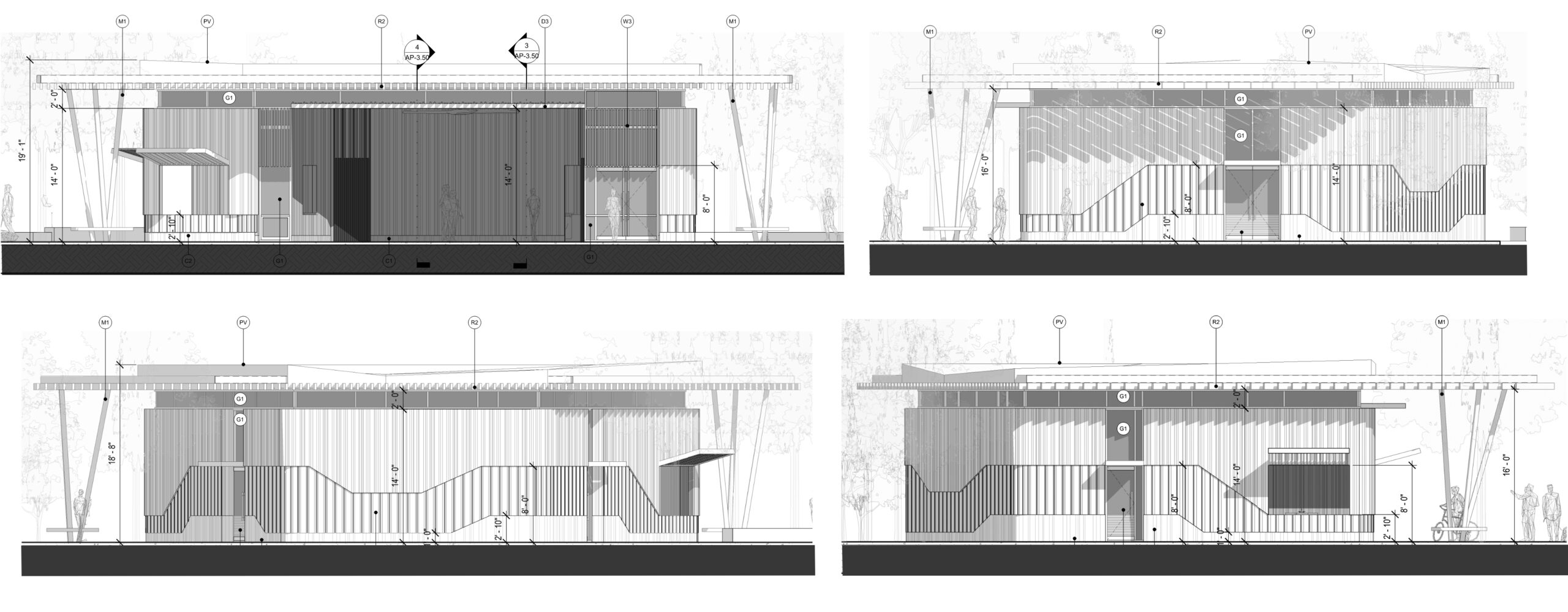



The porosity and shape of the pavilions allow for them to be read as both inhabitable “trunks” within the larger forest, and as porous social filters allowing space to flow between and around them; merging inside and outside spaces through dynamic walls and deep overhangs – while at night becoming lanterns that sparkle and glow within the parks seasonal vocabulary of change.
Location: Mountain View, CA
Owner/Client: Undisclosed Developer Joint Venture
Scope: Architecture
Status: Schematic Design
Project type: Civic/Institutional/Community
Mission Garden Unit
A Secret Garden
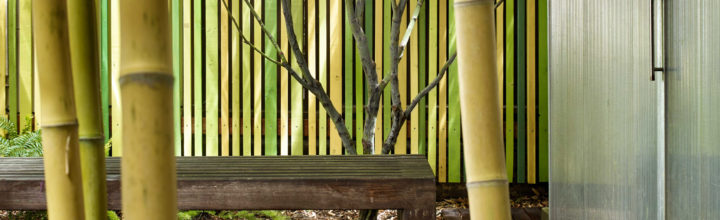
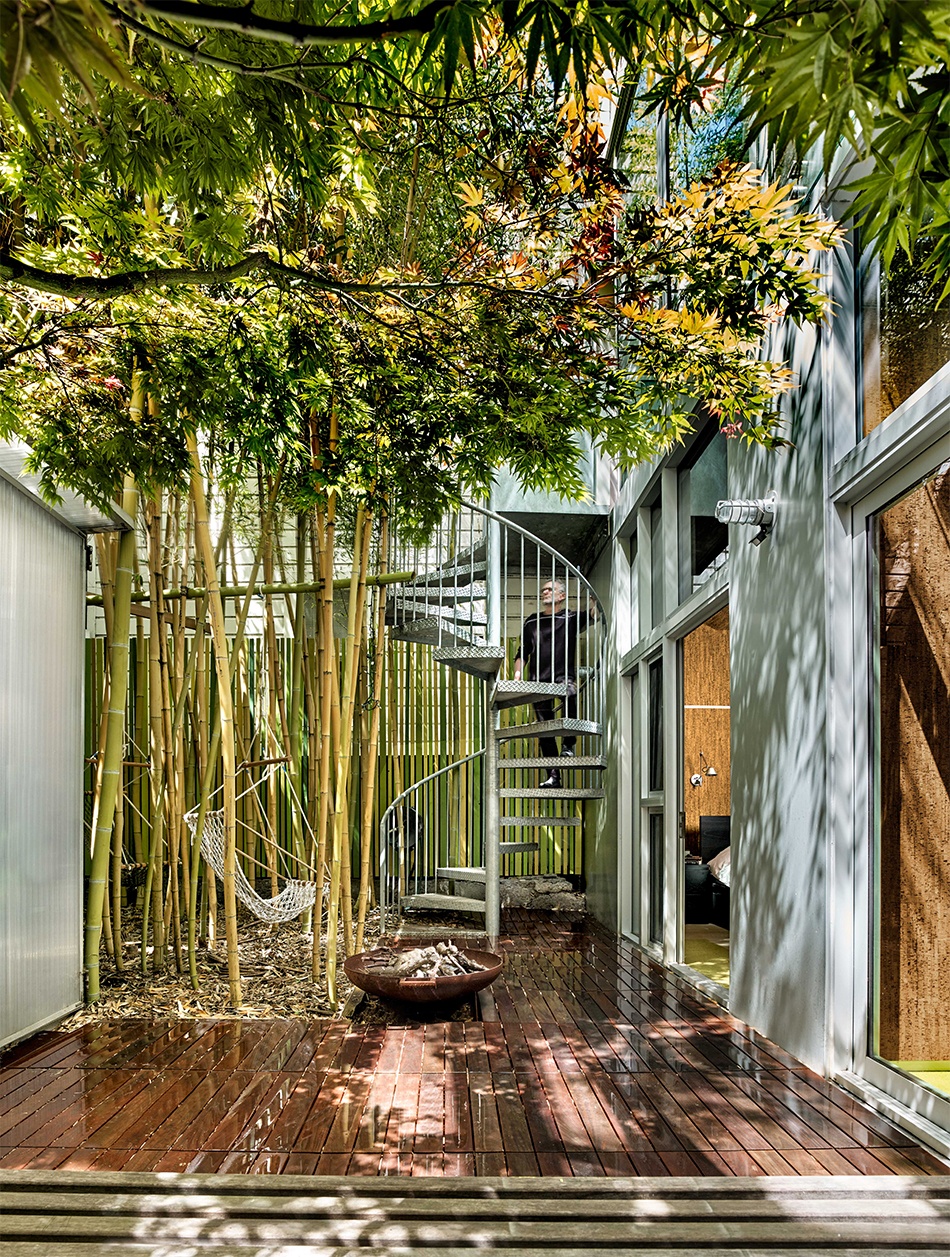
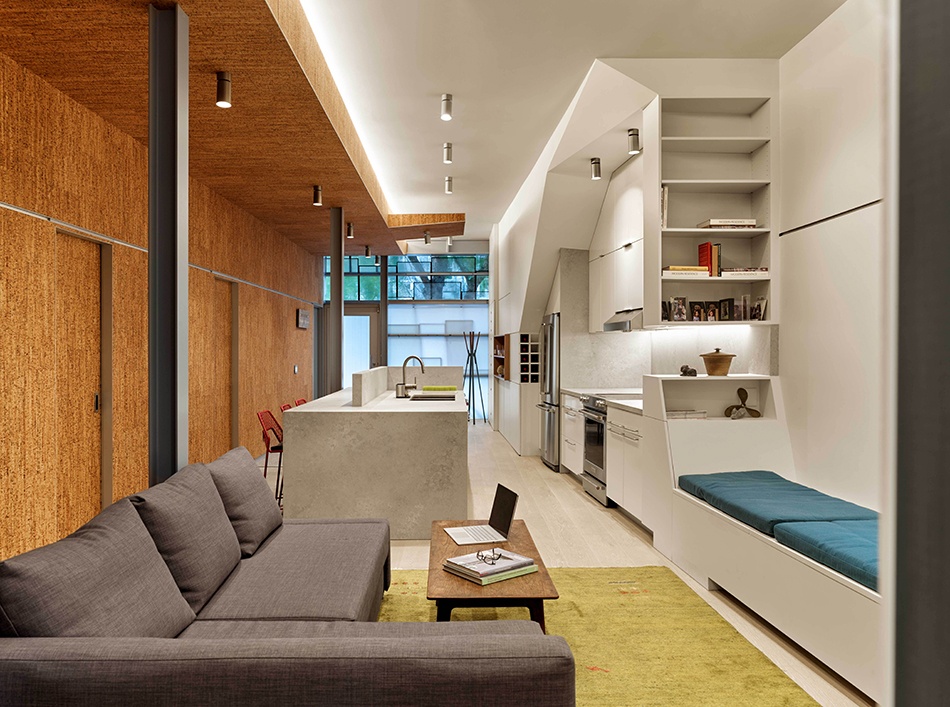
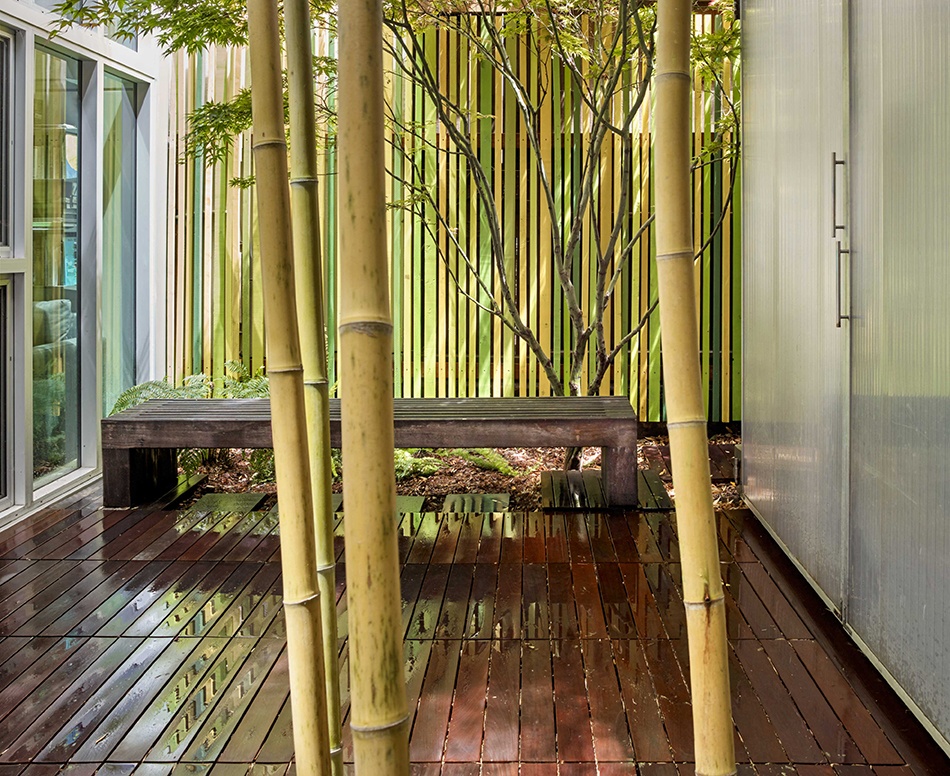
This once commercial unit in the heart of the Mission District of San Francisco was converted into a uniquely grounded single-family home. Historically, this century old 2-story wood frame building built in the 1890’s was part of a dispersed 26th Street merchant corridor, which over time has gradually migrated to nearby Mission and Valencia Streets, as housing pressures in the city have steadily increased. The shop front has been updated to a compressed front yard, while the rear “yard” is transformed into a completive garden – enclosed as is a typical condition in the dense Mission District, transformed here into a quiet, private and nature-animated oasis which the new home relies on for air, light, color and texture.
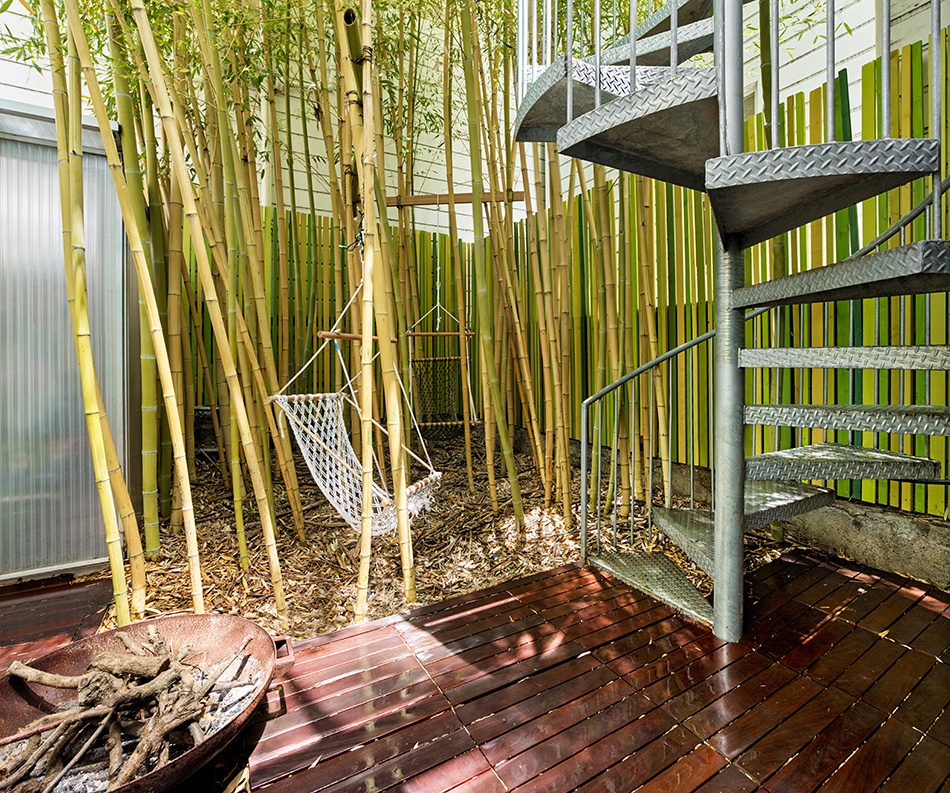
Space dissolves into a bamboo grove
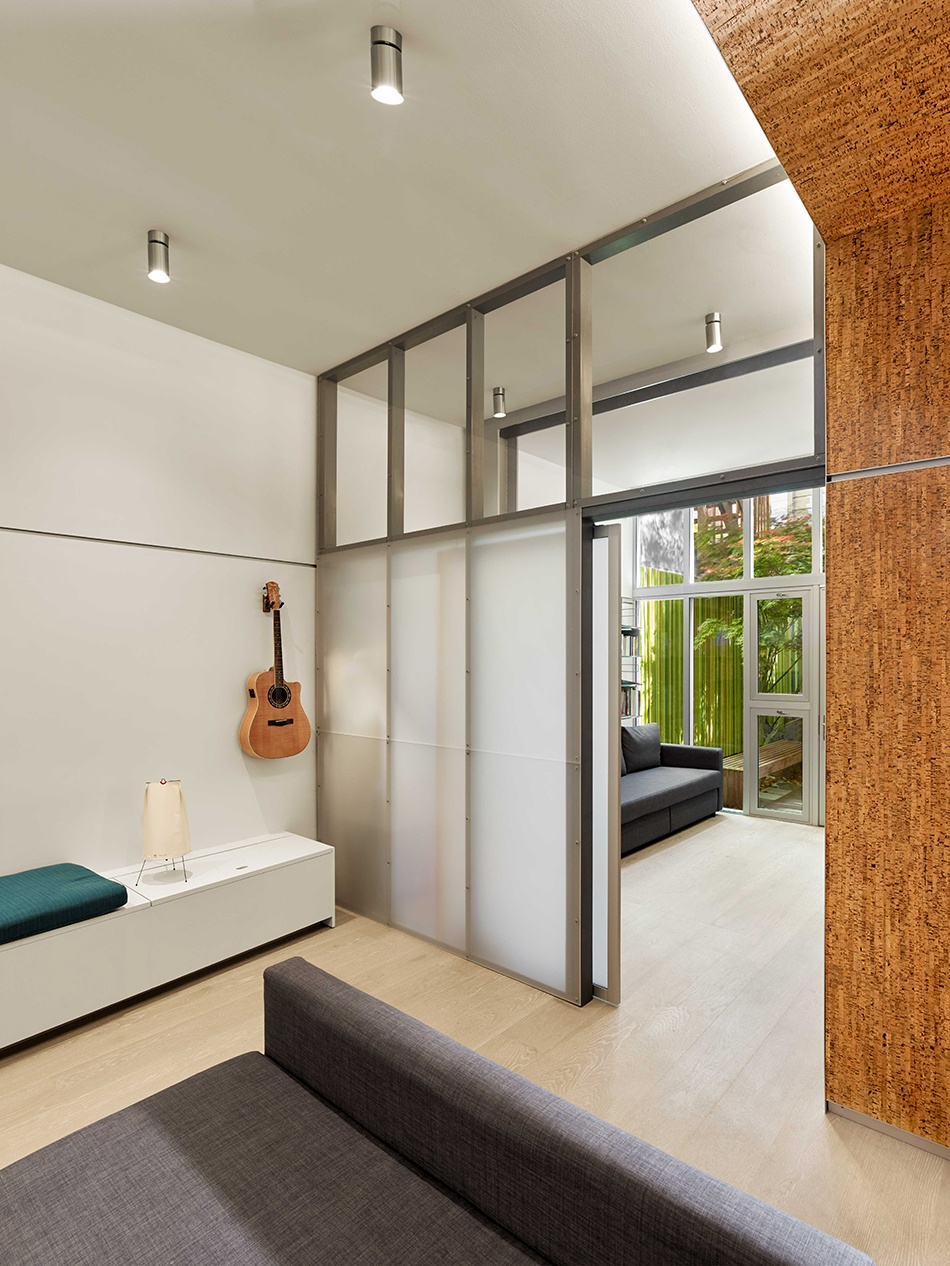
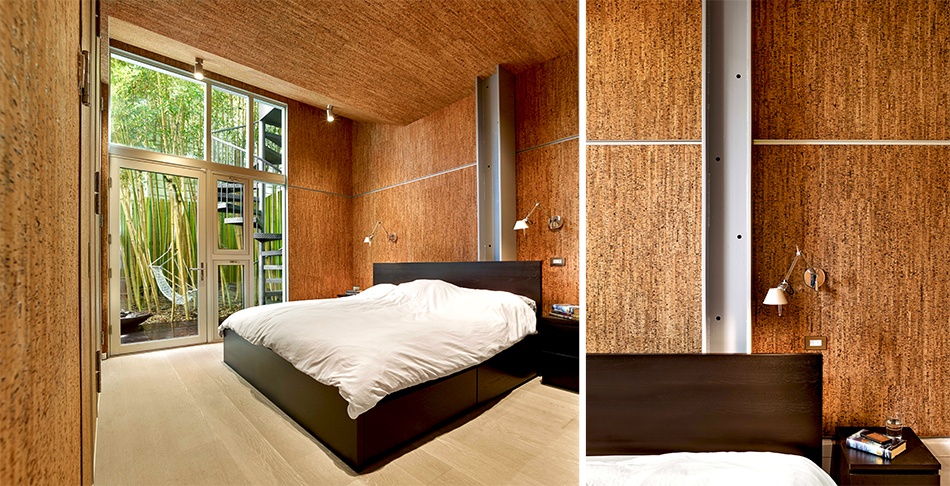
This new ground floor unit connects the busy street front through an ordered façade of 100% reclaimed glass arranged like scales in a steel matrix, to the quite rear grove of timber bamboo, ferns and Japanese maple. The architectural space moves through an open glass wall into dappled shade and the sound of wind rustles the 40ft lush canopy. A customized fence unifies the edges with a color palette derived from the life cycle of the timber bamboo trunks.
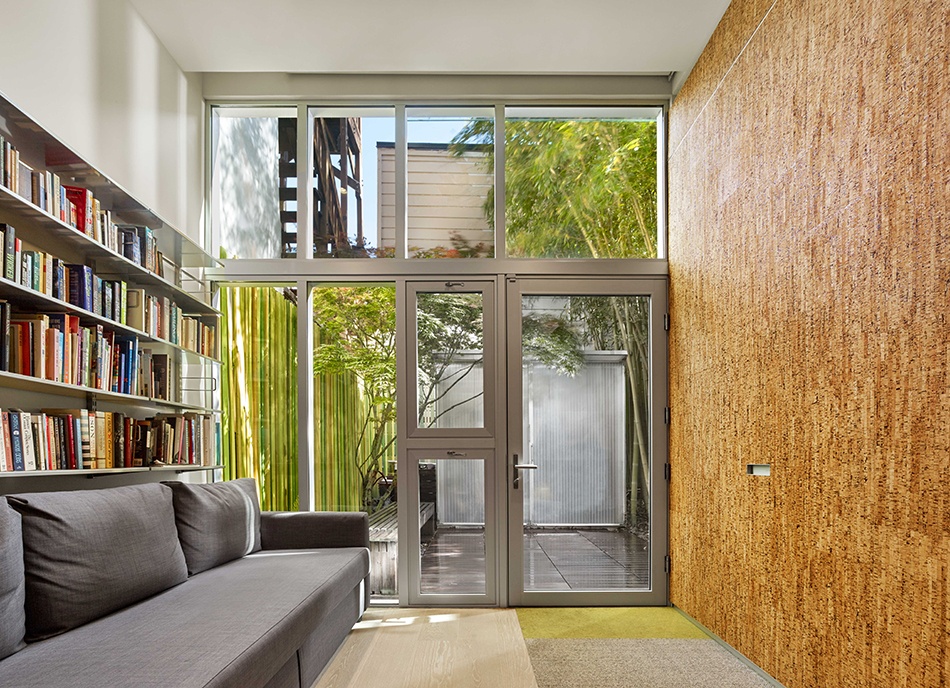
A river of cork runs through it
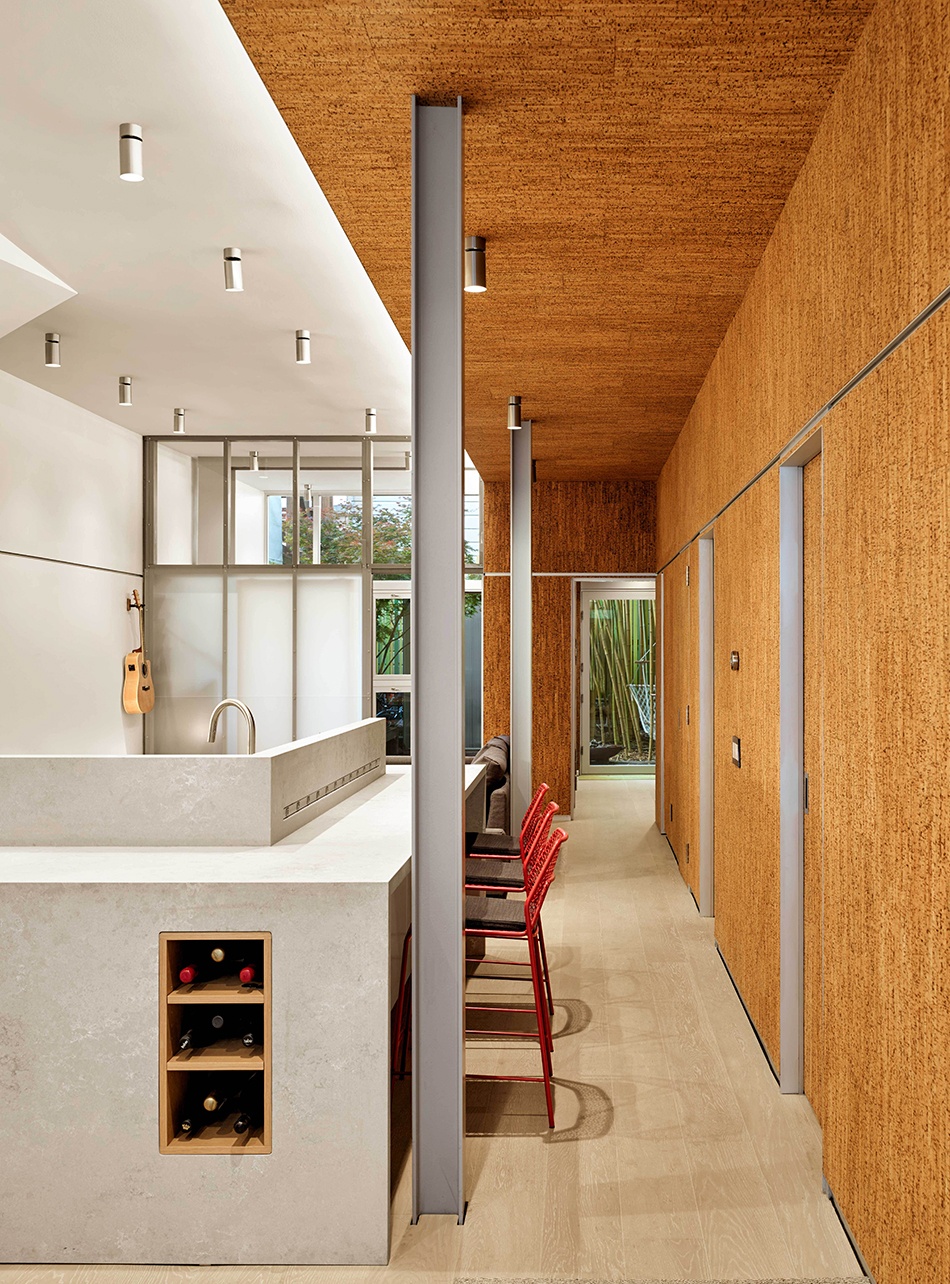
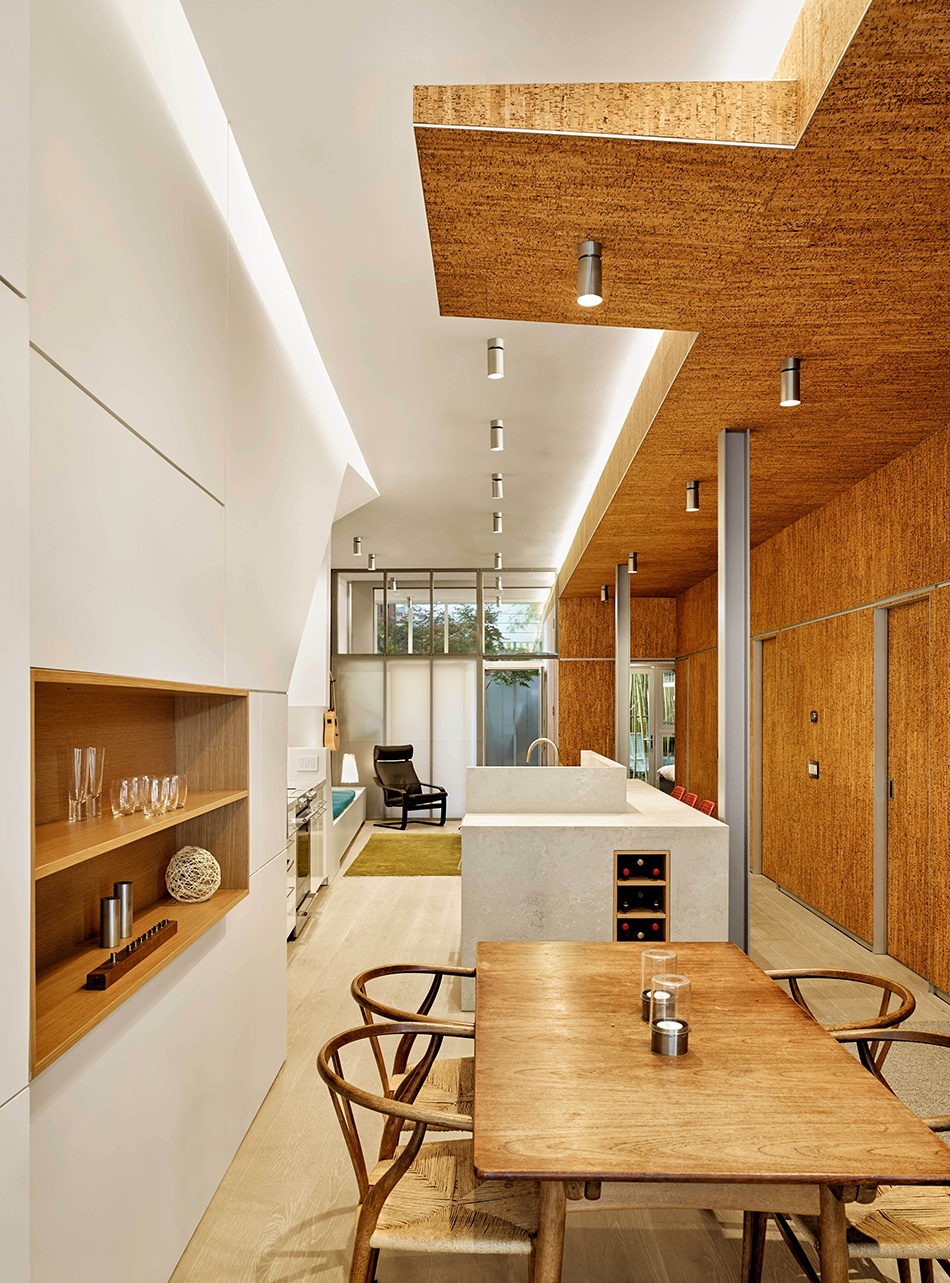
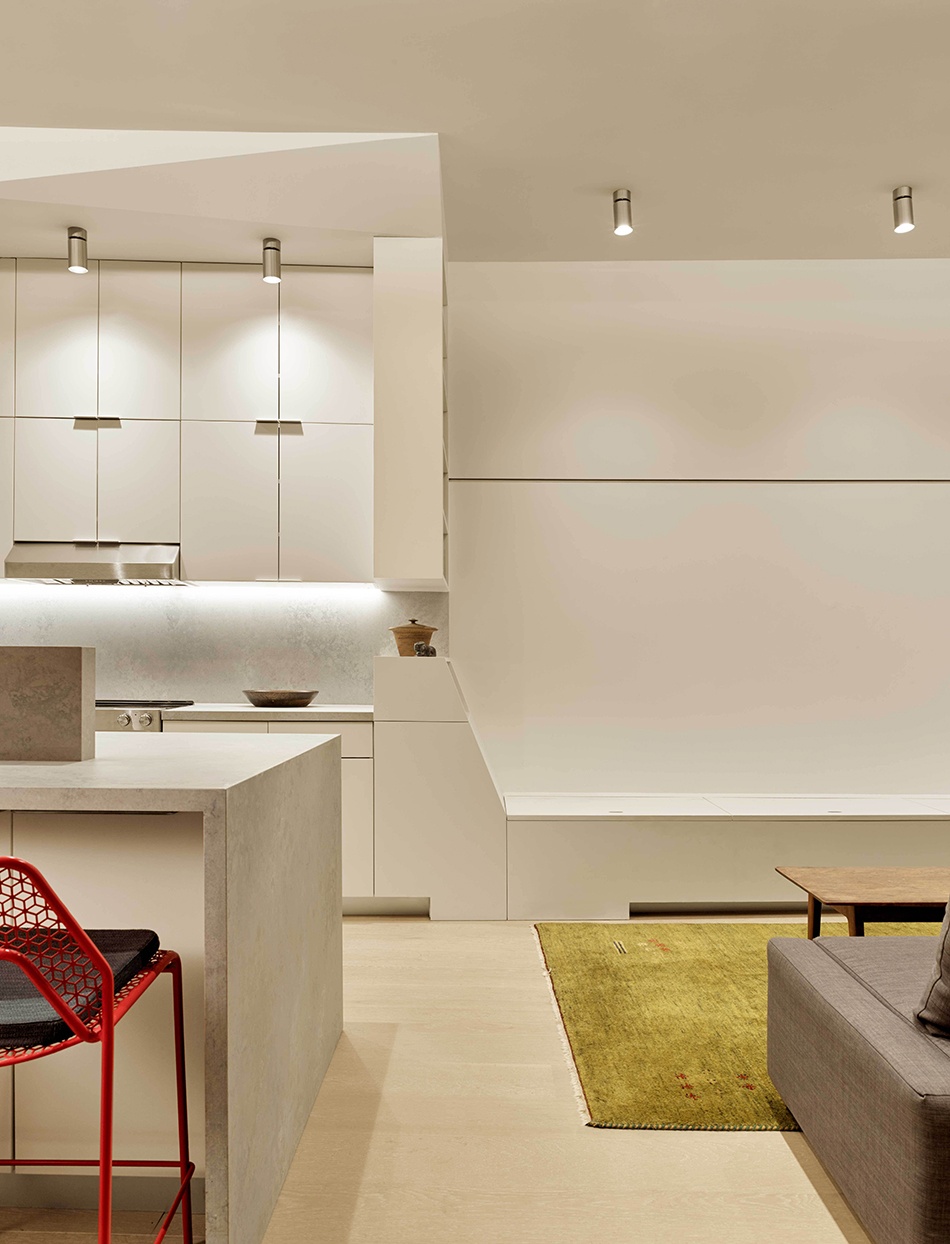
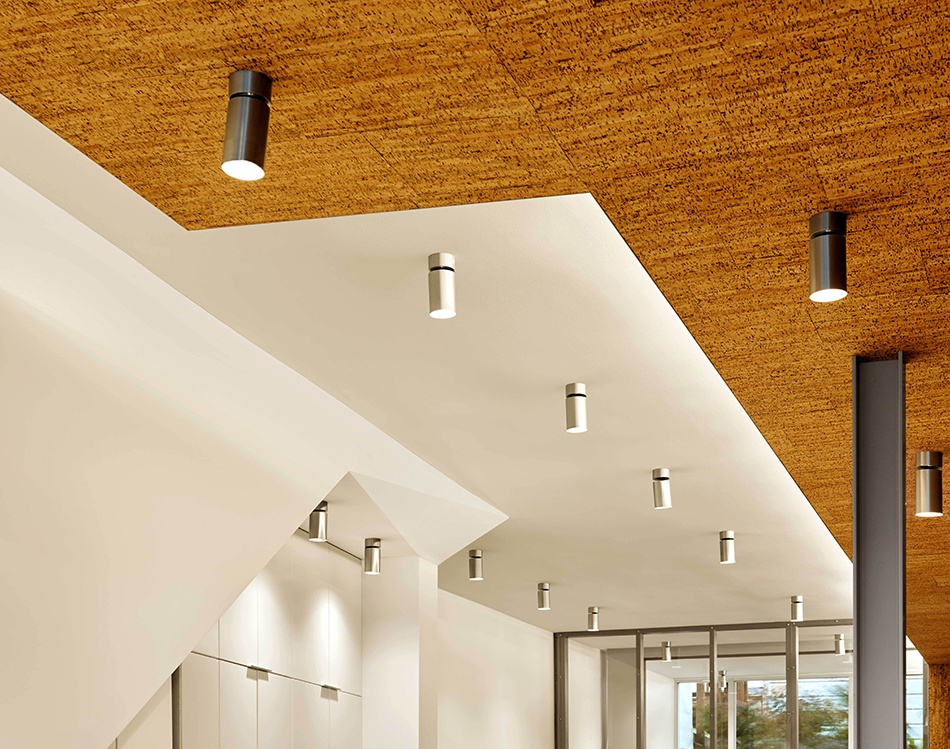
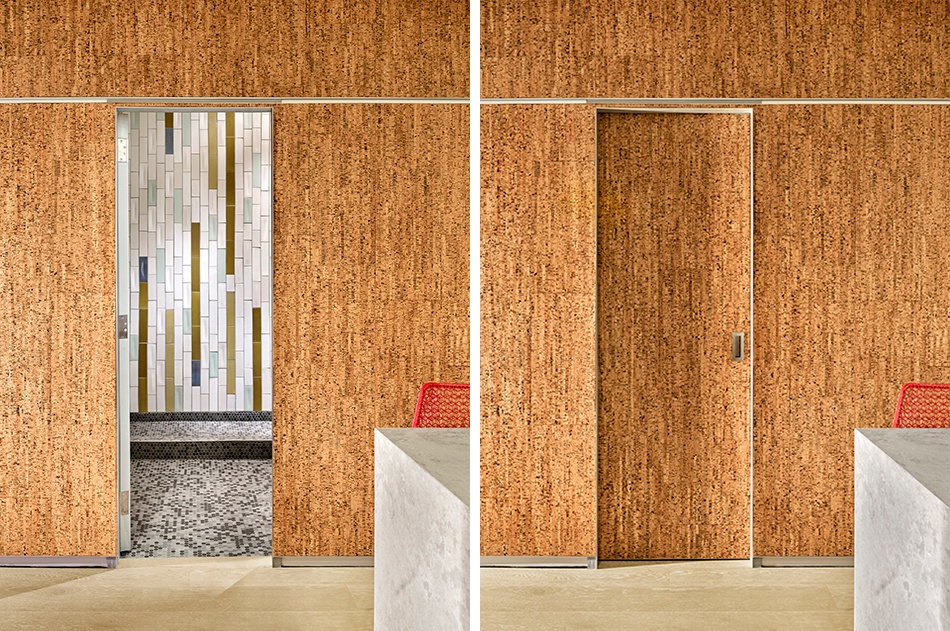
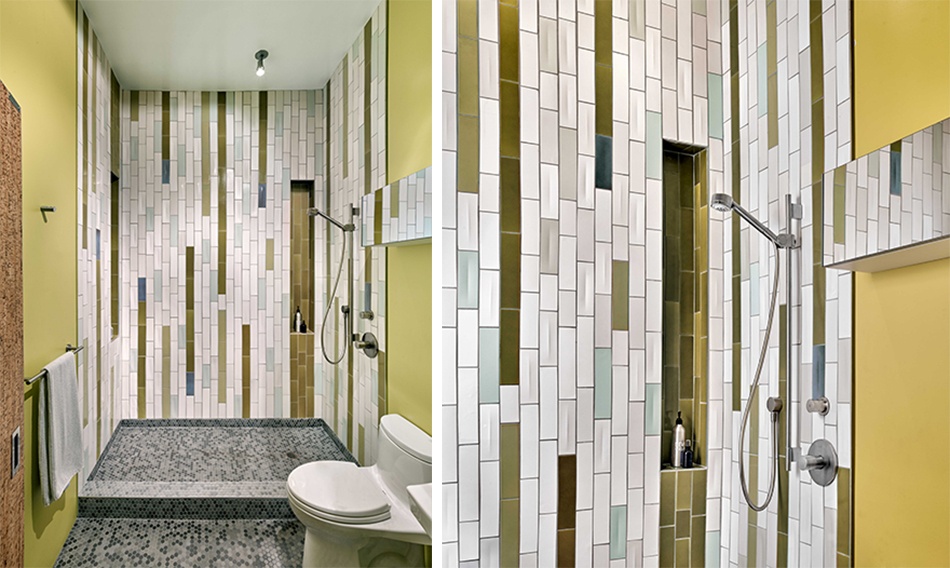
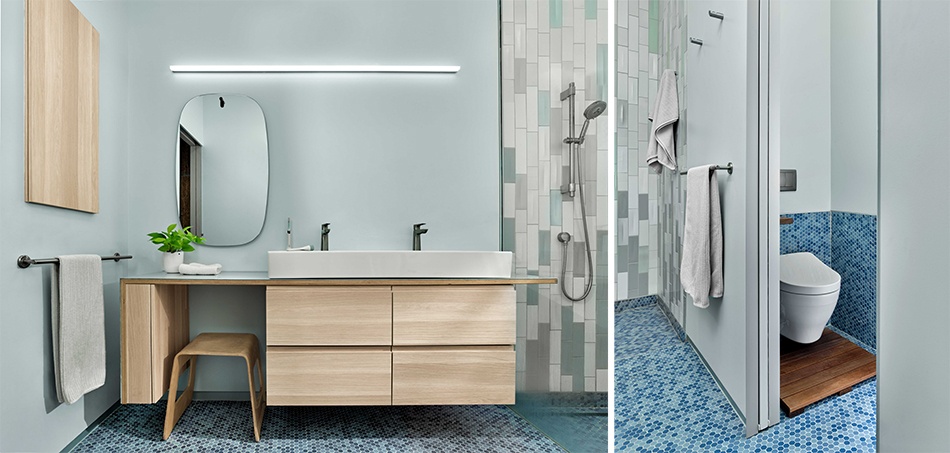
The interior plan is inverted – to provide bedroom and a private office off the garden while the core of the home is an open plan of living and dining around an open kitchen. The living space is organized by a continuous long and high surface of cork meant to create a soft acoustic environment and flexible display throughout the home, while also concealing the volumes for mechanical, storage and bathrooms. The floor to ceiling expanses of cork surface eventually envelope an entire sensual enclosure at the master bedroom, where the cork surround one on walls, doors and ceilings.
Space and Light in balance with Nature
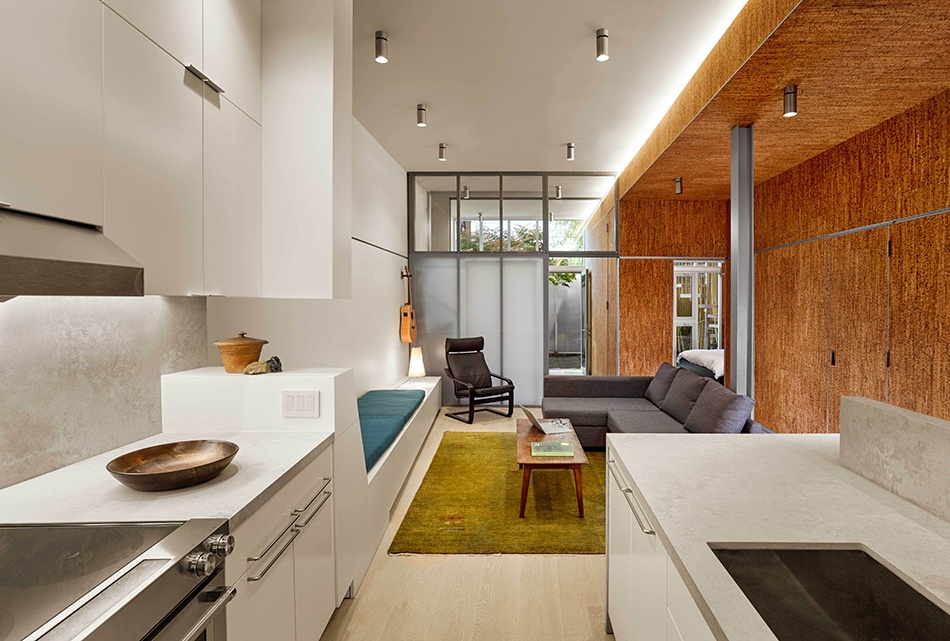
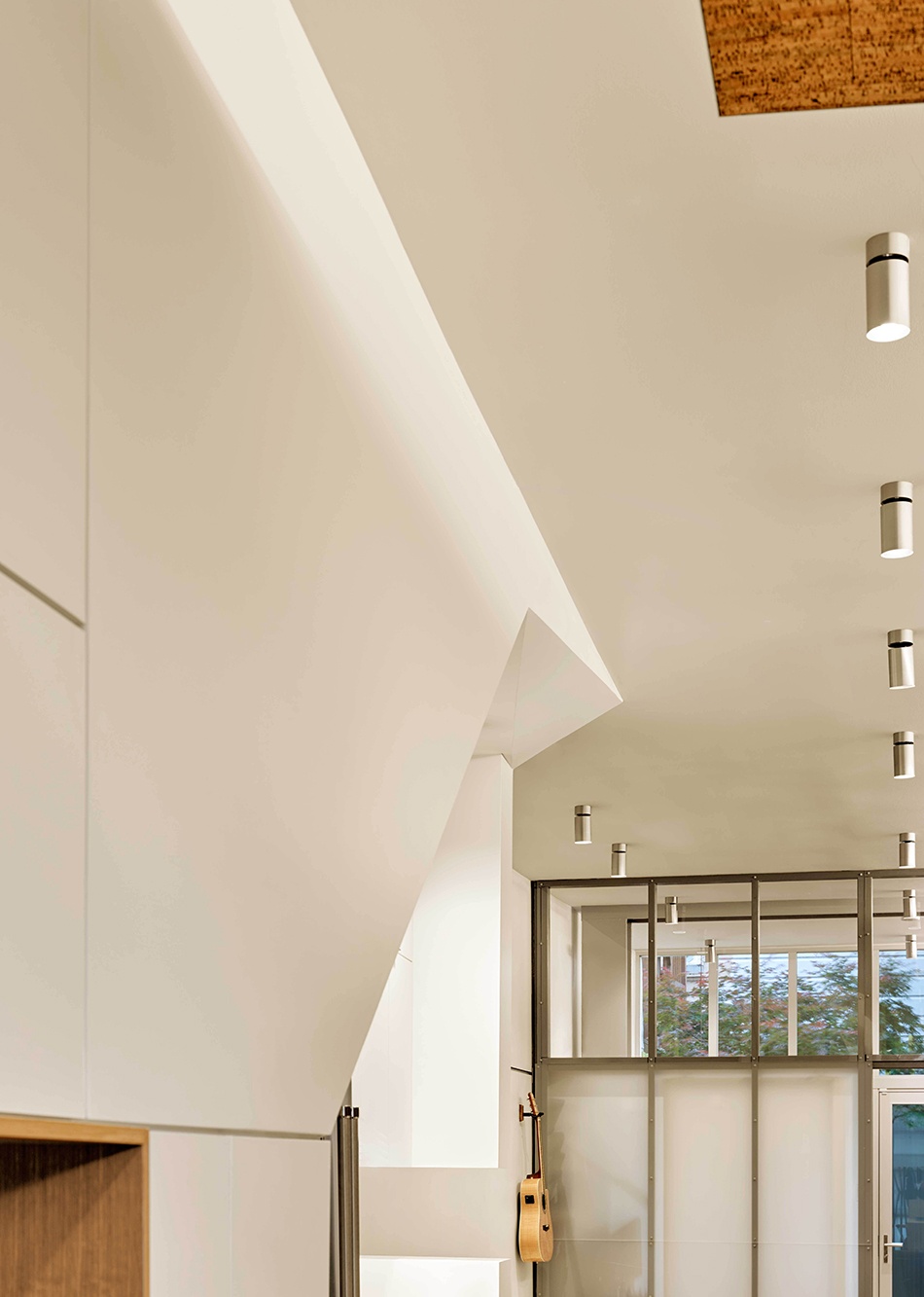
The interior space maximizes the limited 1,200 sf. floor plan by way of integrating storage within the sculpted cabinets and built-in seating volumes. The storage perforates and frames the unencumbered space, along with the use of glass walls and sliding partitions to allow for functionally distinct areas to work in concert with one another – providing openness, privacy and separation as needed, and allowing natural light to reach deep into the narrow home.
Location: San Francisco, California
Owner/Client: Undisclosed
Scope: Interior Renovation / Garden Space
Status: Completed 2020
Photography: Cesar Rubio
Candlewood Lake House
Reorienting a Home to Its Lake
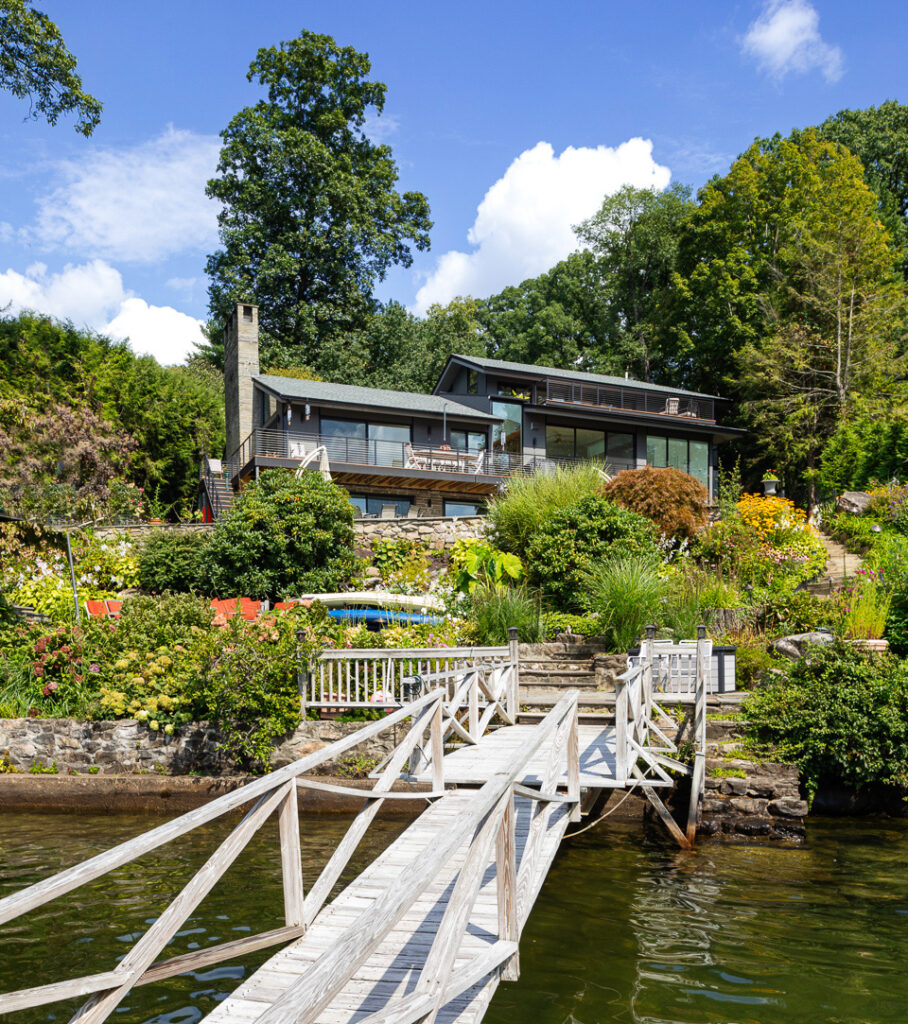
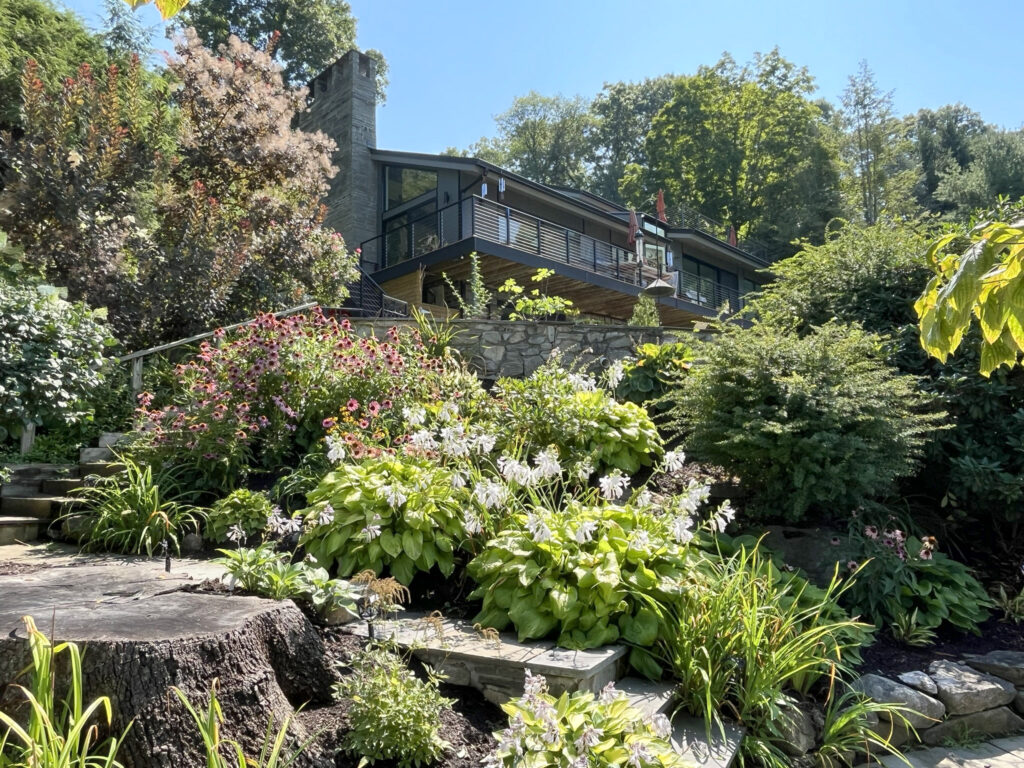
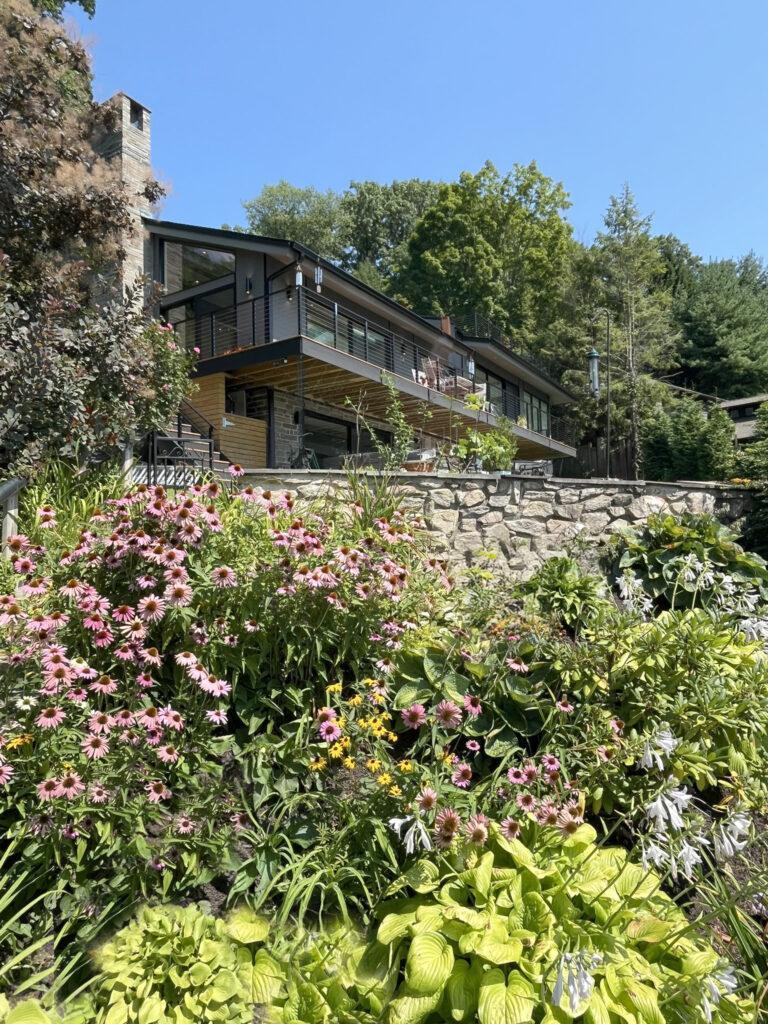
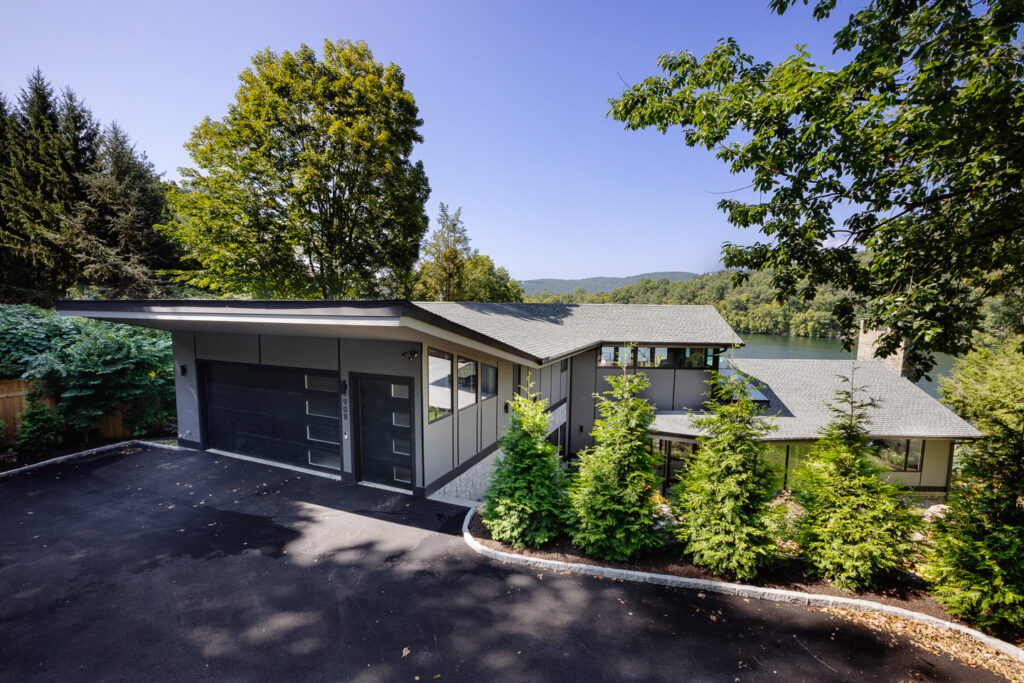
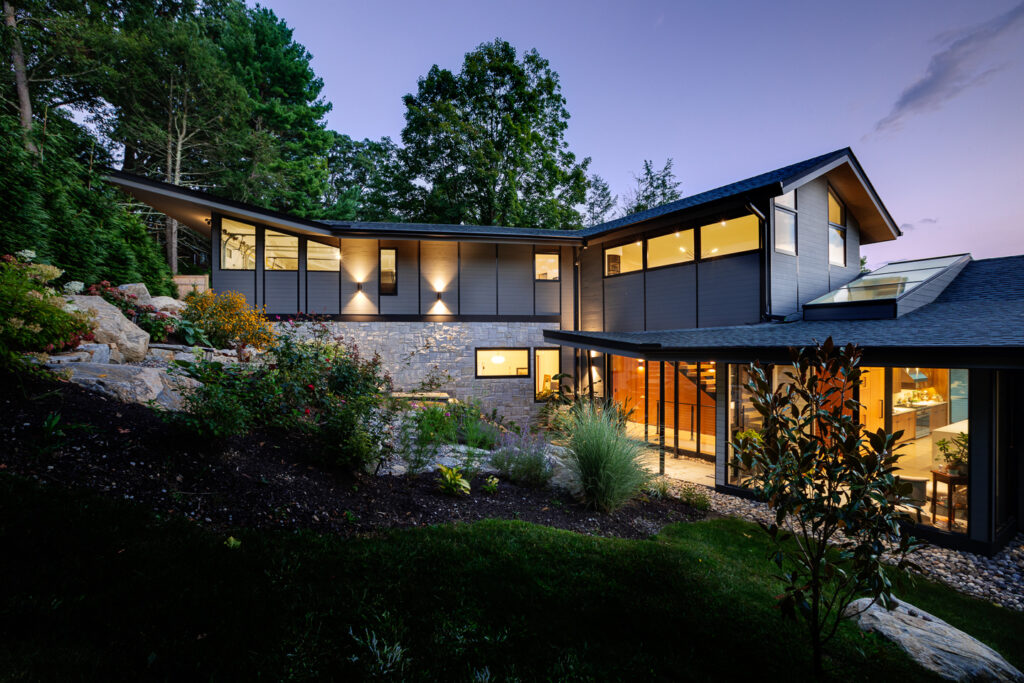
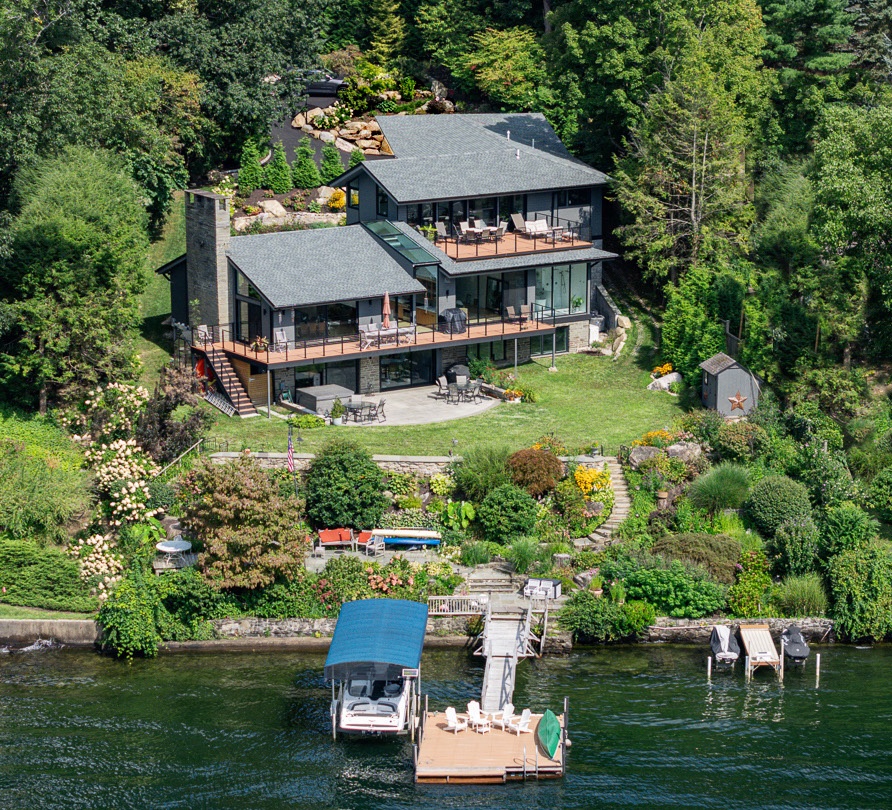
Transforming a two-story summer home on a steeply sloped site over Candlewood Lake in New Milford, Connecticut, into a year-round primary residence meant expanding the home, while opening it up to capture more light and intensify its relationship with the seasonal spectacle of the lakefront. The resulting home merges dramatic interior living space with the landscape using local, authentic materials and carefully choreographed transparency to connect the lived experience of the house with the place that inspires and defines it.
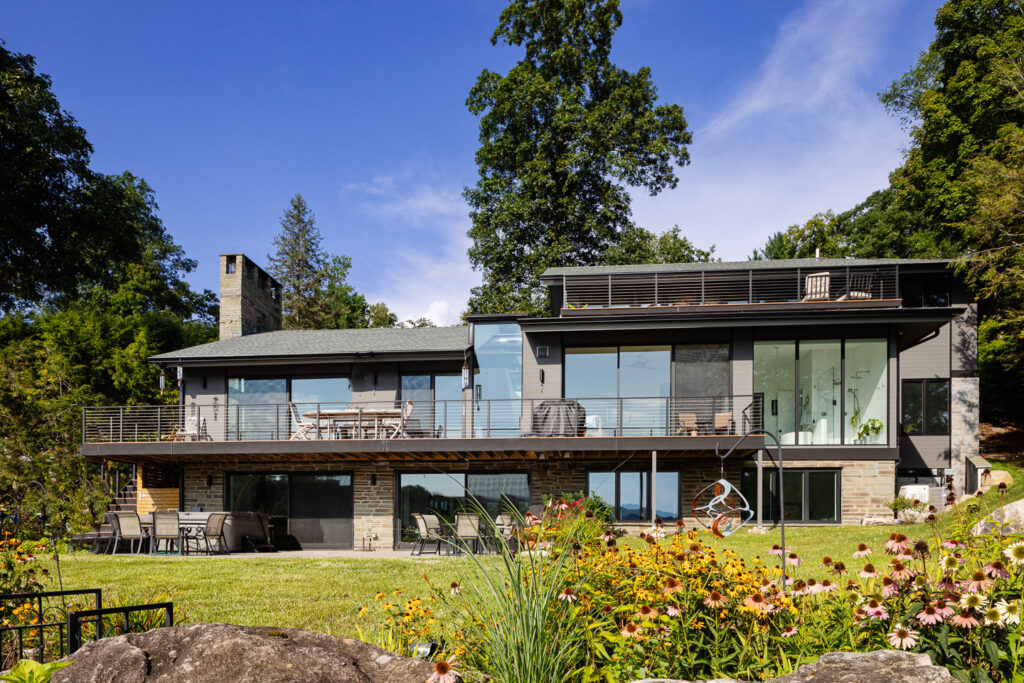
Lake Life
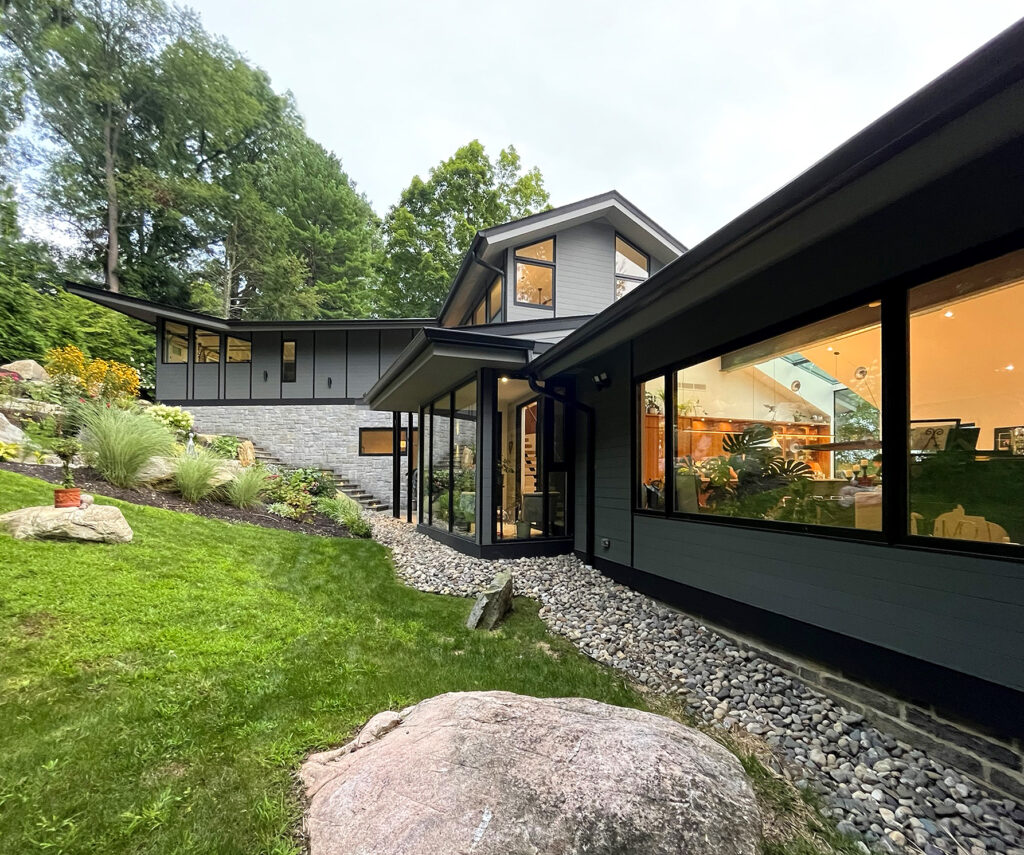
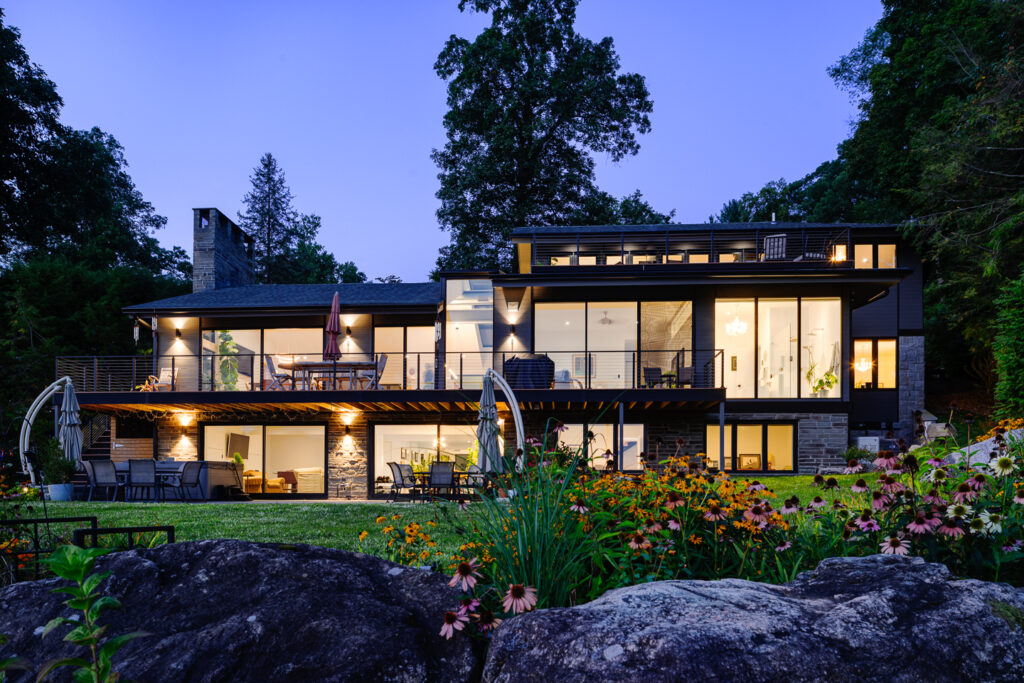
The existing home, built in the mid-20th century, was a modest self-contained gable structure, passively neutral to its spectacular surroundings and its privileged site. INTERSTICE Architects began from the premise that the home needed to be more than a house beside a lake—it needed to be a true expression of lakeside dwelling: it had to respond to its place in celebration of the rituals and daily experiences of New England lake life. Calling for an architecture that is in stronger dialogue with the exterior, the house needed to be more porous, yet protective, providing sweeping views both horizontally and vertically of its surroundings. From the upper canopy of the surrounding trees, down to the shoreline and the shimmering water below, the reimagined home engages the changing light, movement, and color of its setting.
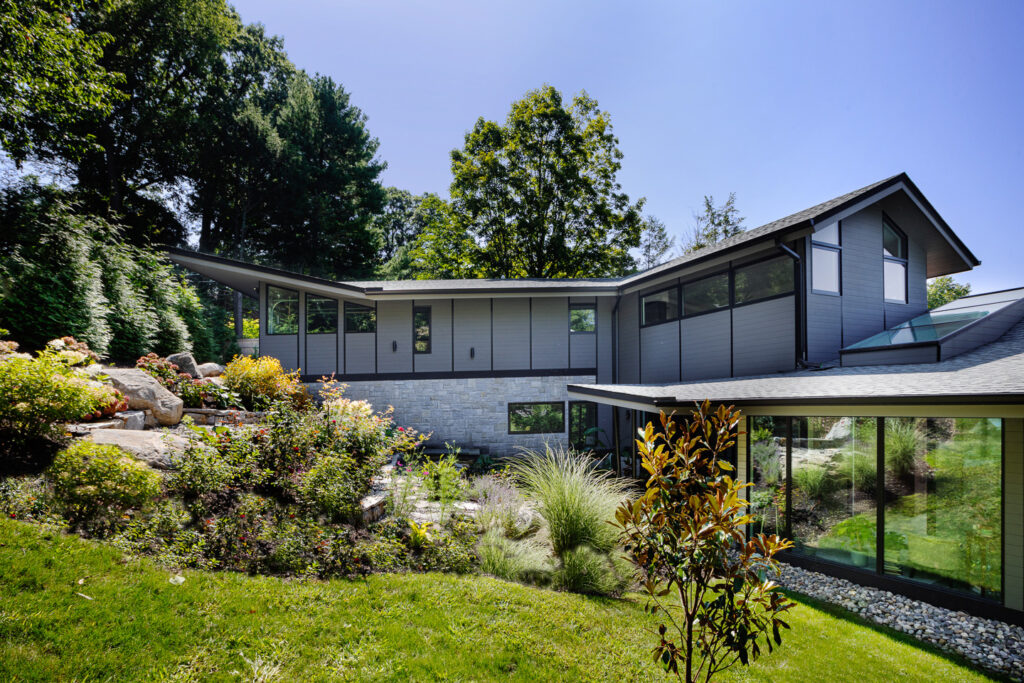
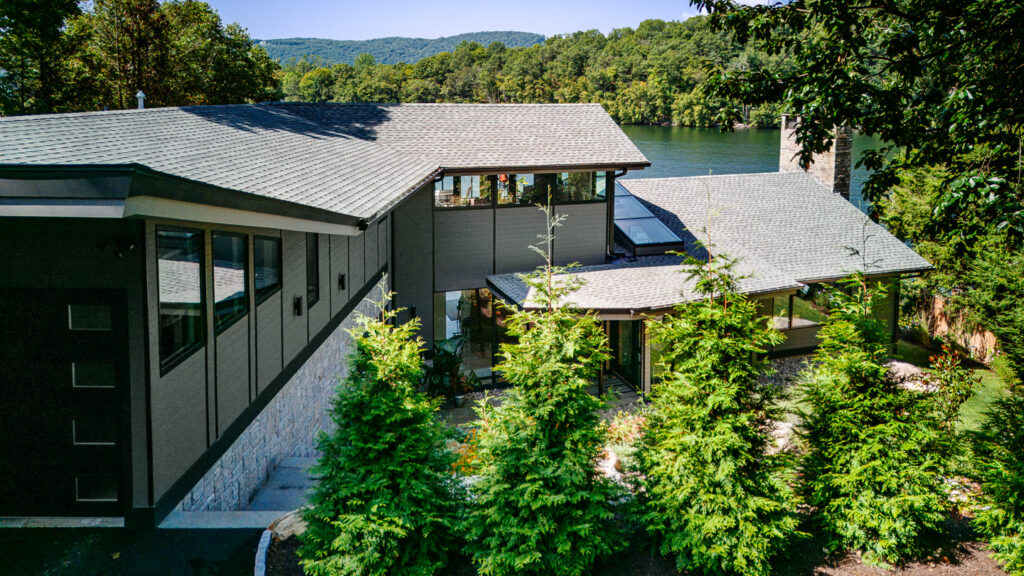
Exploring Ma
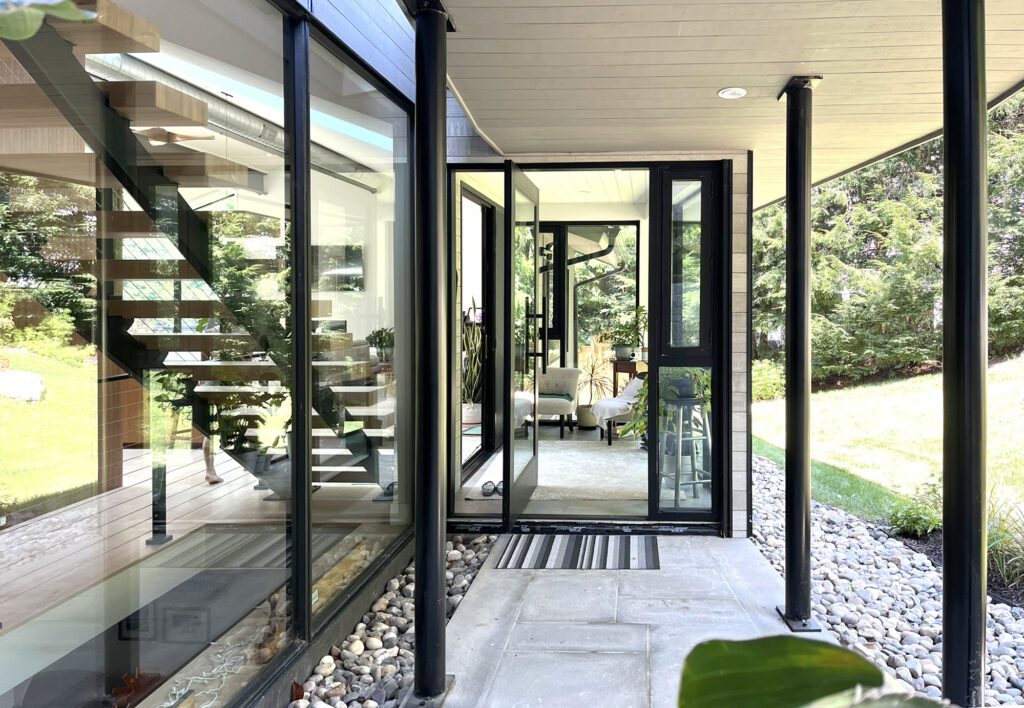
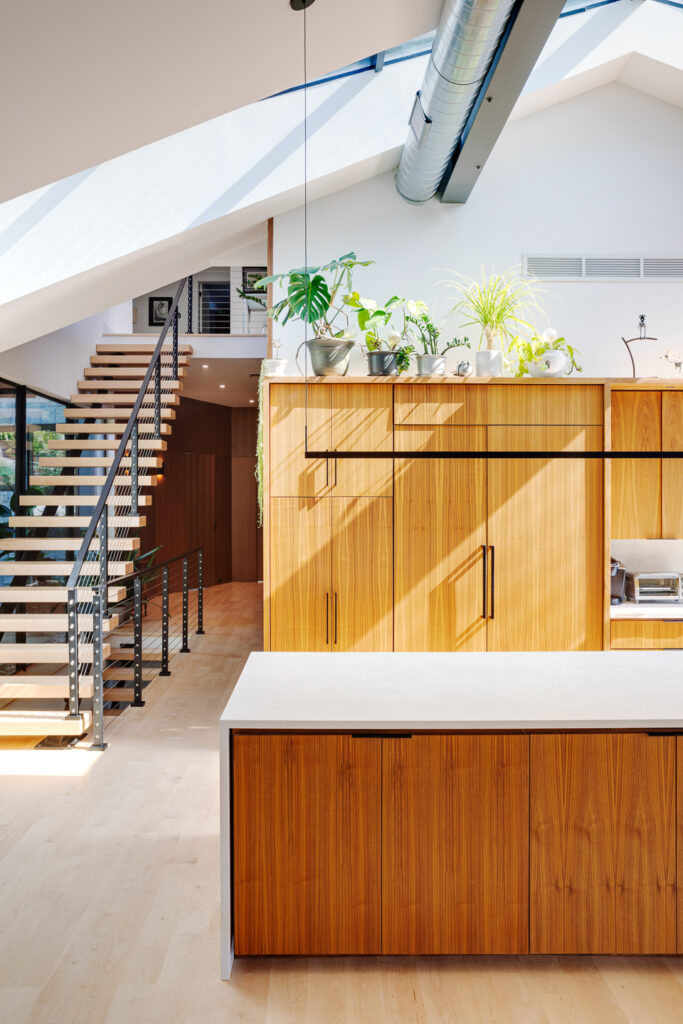
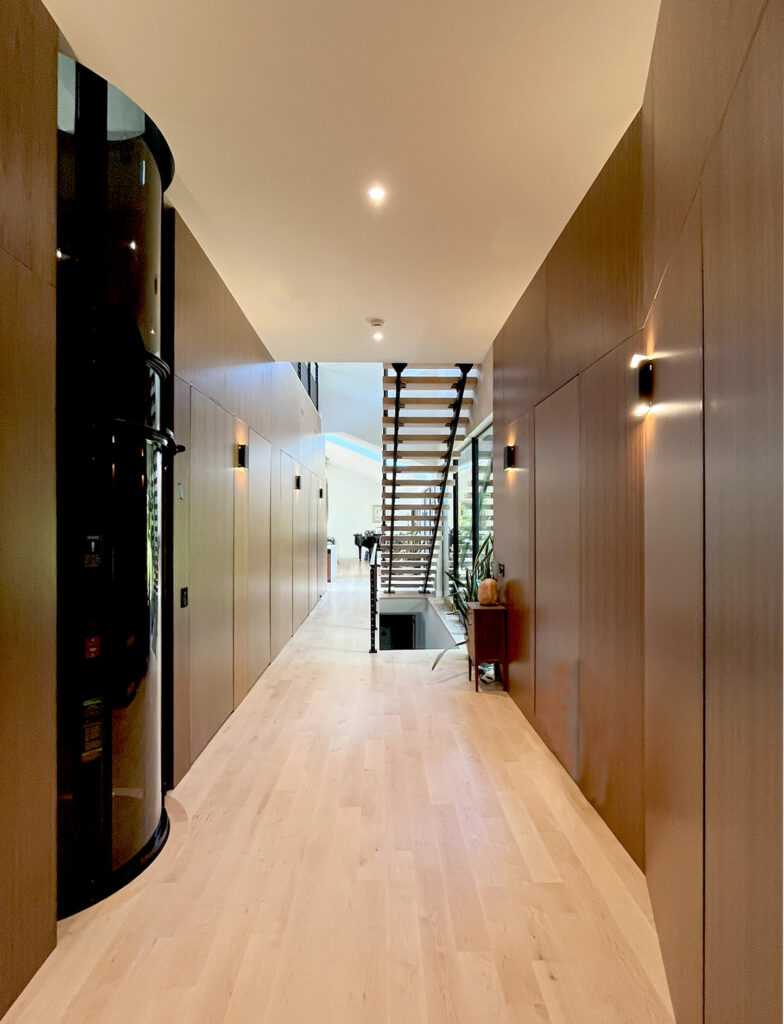
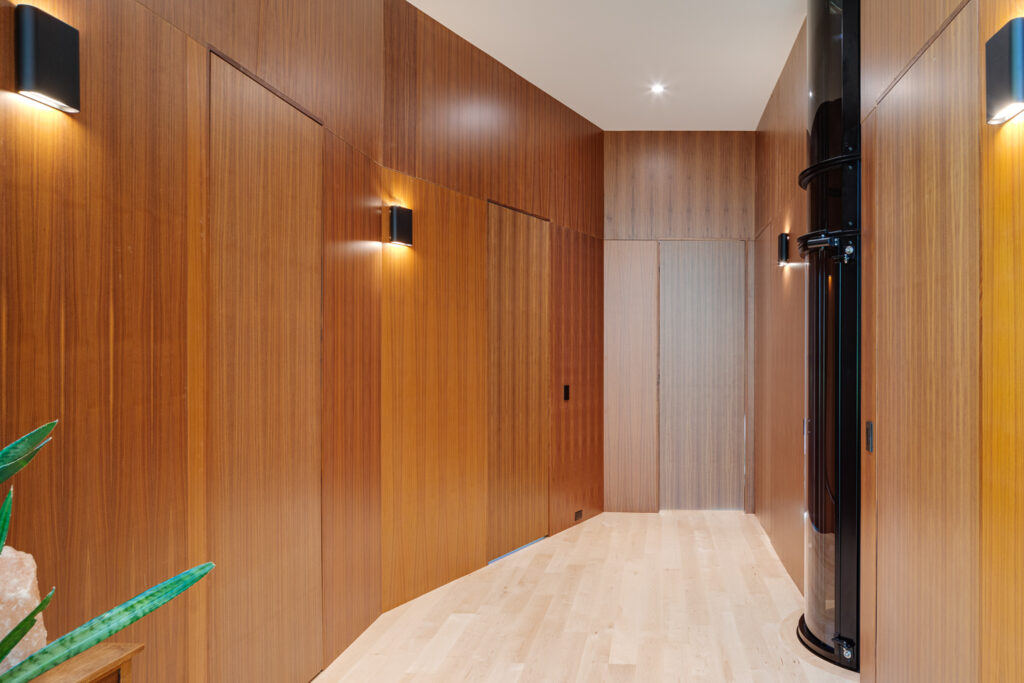
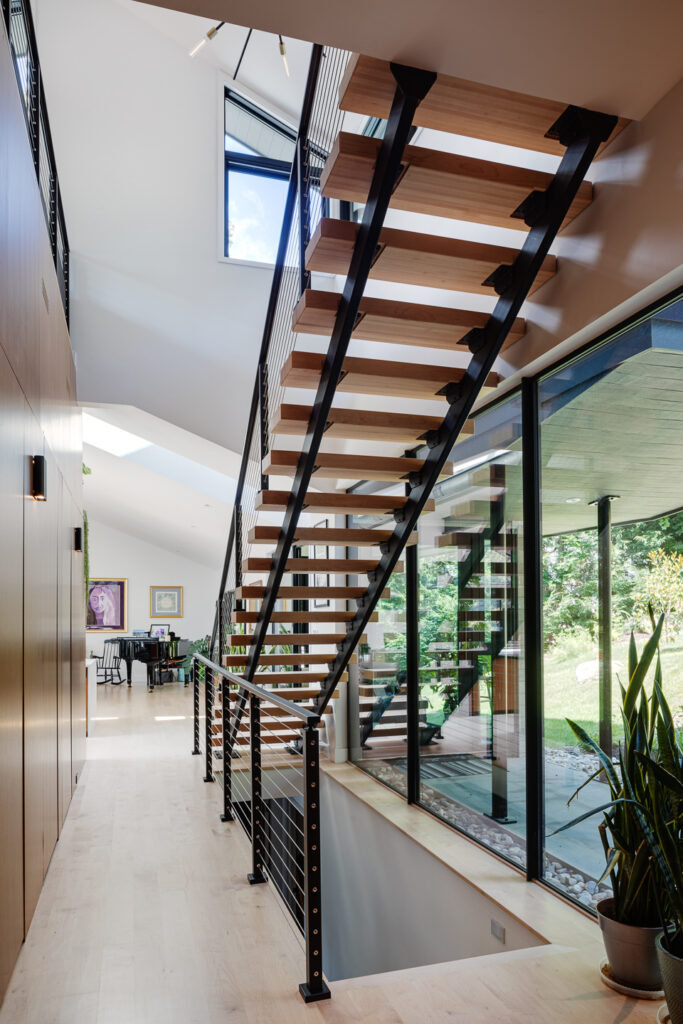
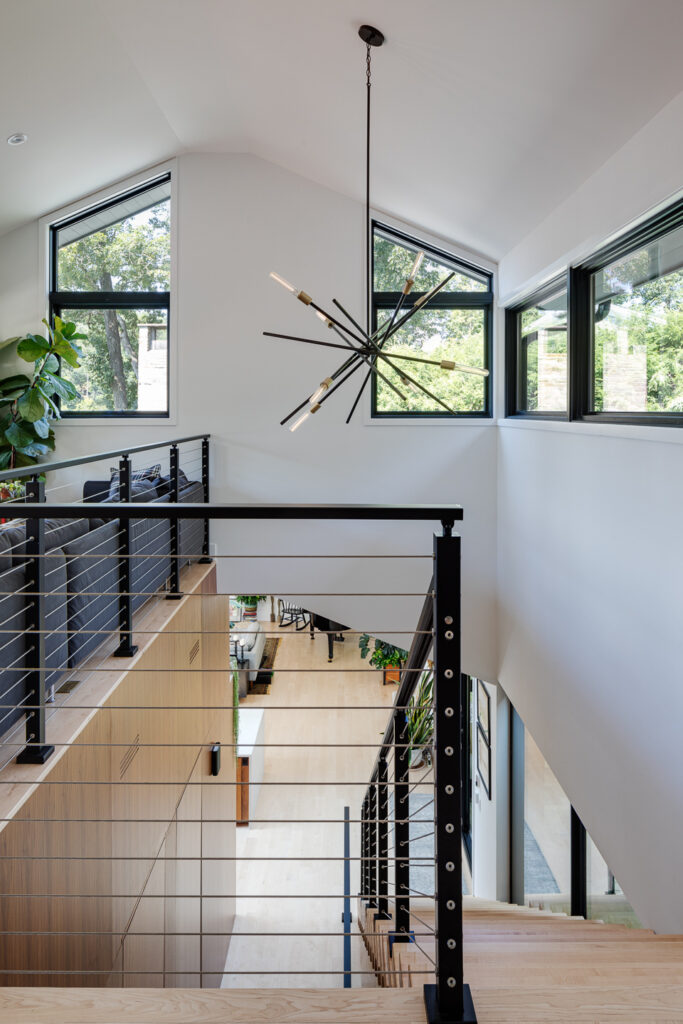
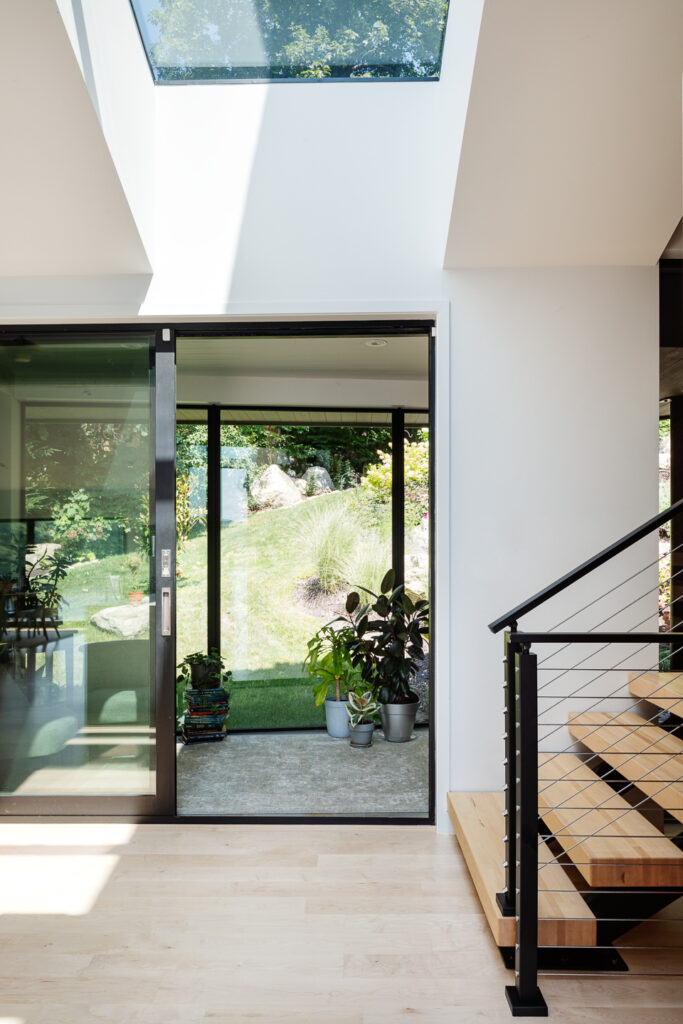
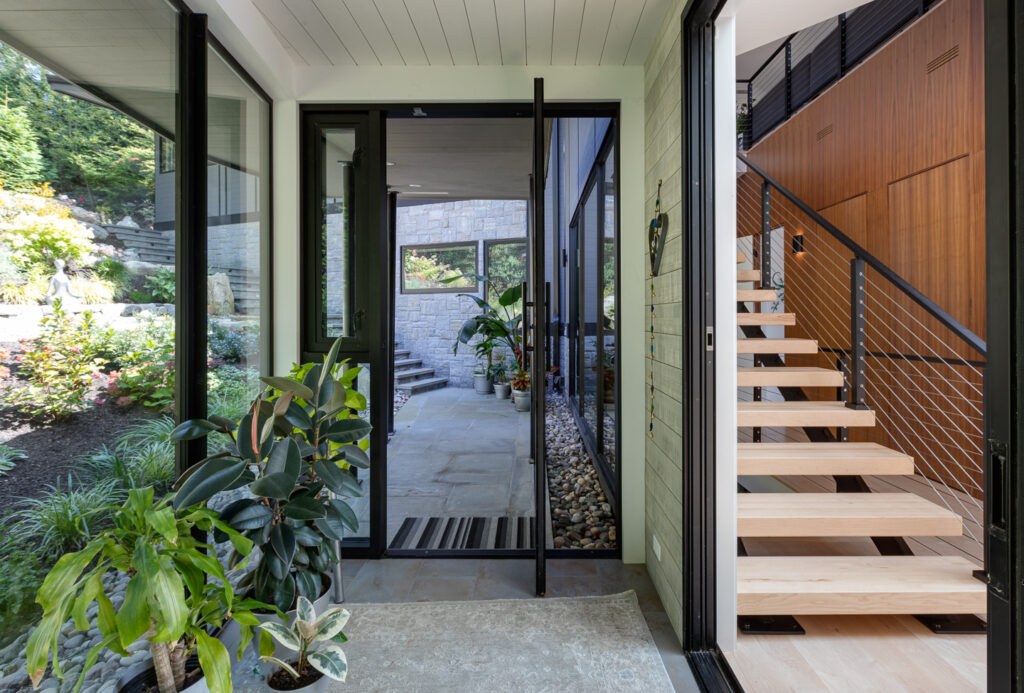
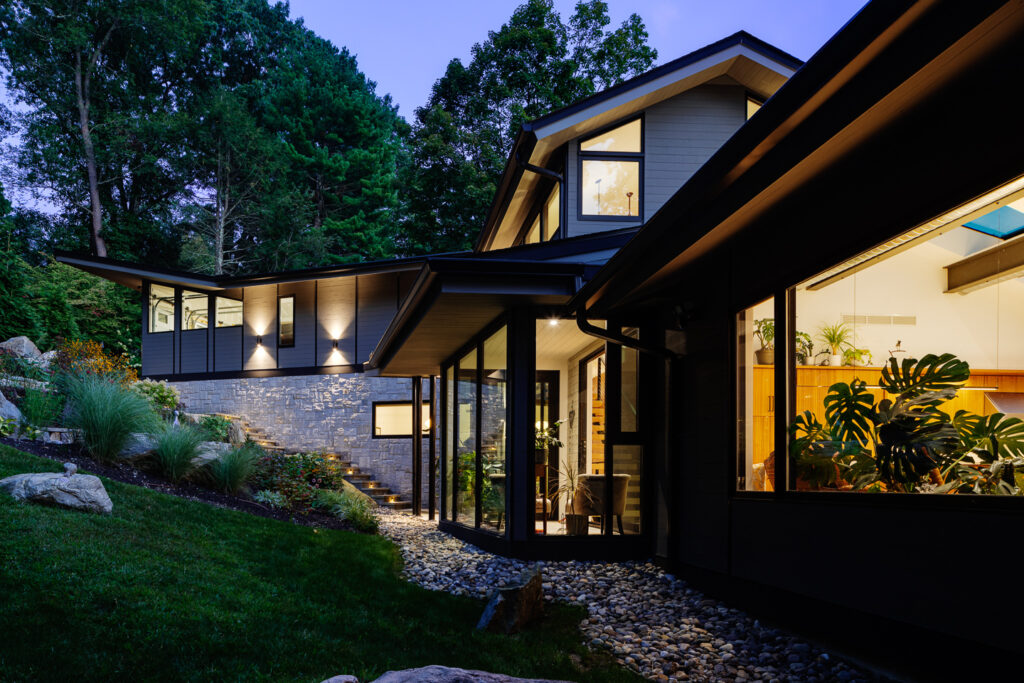
The layering and interweaving of space-time and becoming is best summed up in the Japanese spatial and temporal concept of ma. Guiding our design approach for the lake house spatial experience, this concept is demonstrated in the enfolding of interior space with the exterior world. The entry is where interior and exterior fuse and blur. This pivotal experience of the house orients the interior space and is a point of juxtaposition. A glass entry vestibule fans out from the main volume of the house, allowing the slope-side garden paving stones to flow seamlessly inwards at a slightly lower level than the main living spaces of the house. This gives the arrival experience a moment of pause and repose, between interior and exterior, before one steps up onto the warm hardwood floors of the home. Just within is the open stairway which occupies the transparent center of the home, an in-between space, that interconnects all three levels of the house, from office and studio lofts above, to the lower garden patio level facing the lake. The bright and social stairway allows light to penetrate deep into the structure.
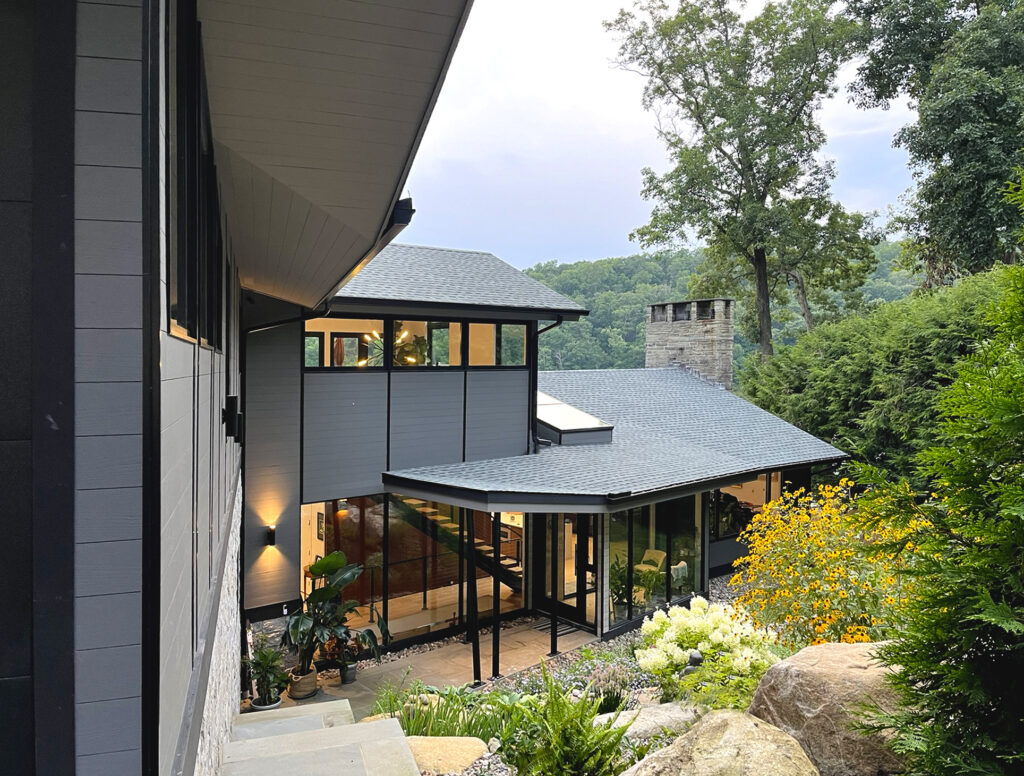
Lake and Sky
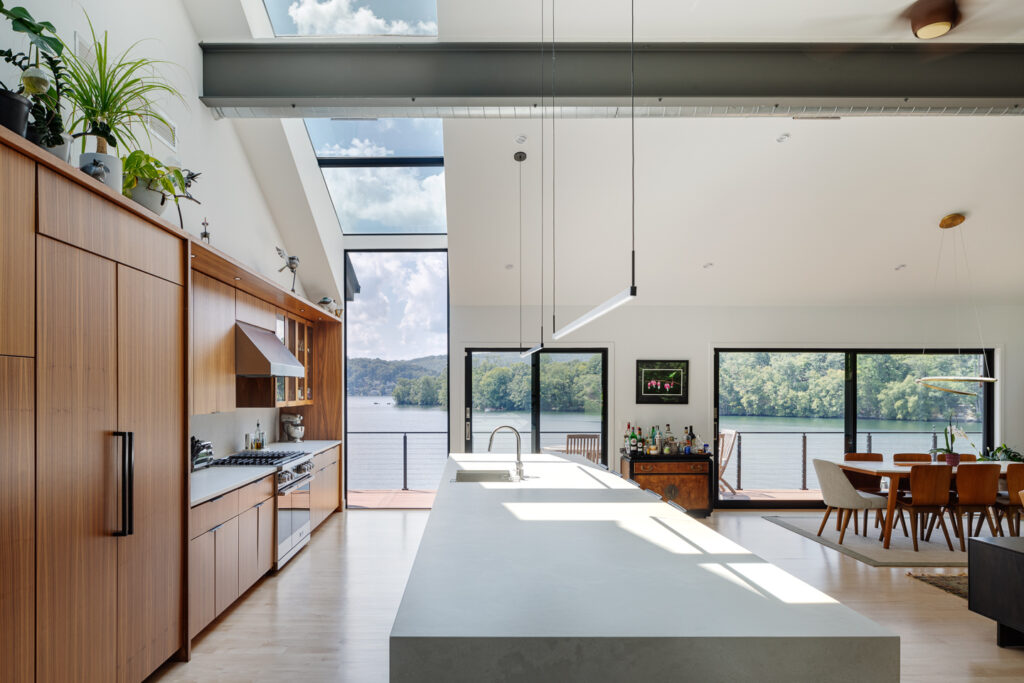
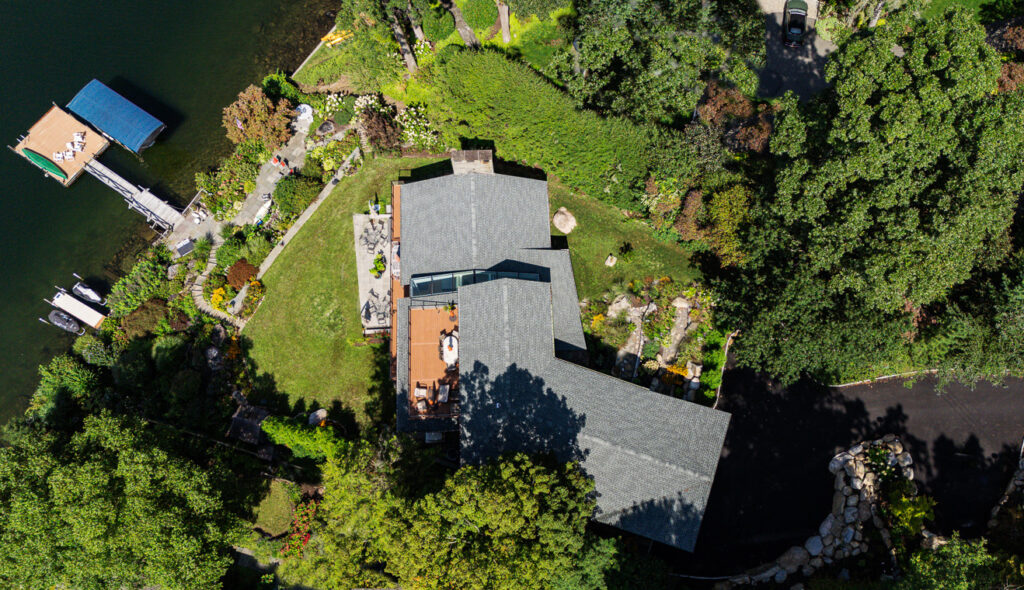
To “wake up and see only the lake and sky,” to always have a place to put everything away, and to experience the great reveal of the lake through the house, upon entry and “in every room,” were client aspirations expressed in the design brief. Walls that previously prevented the free flow of movement were removed, expanding spaces and merging volumes. New volumes are added to store vehicles, provide office space, and additional bedrooms, in a constant effort to reframe the lake and views to the forest landscape and garden. Roofs are lifted upwards in response to the slope, and the house is reconfigured so that volumes cascade down towards the shoreline. The main circulation is organized to be transparent to the landscape, allowing interior spaces to interact and connect along a central three-story space bathed in natural light.
An Oasis Within
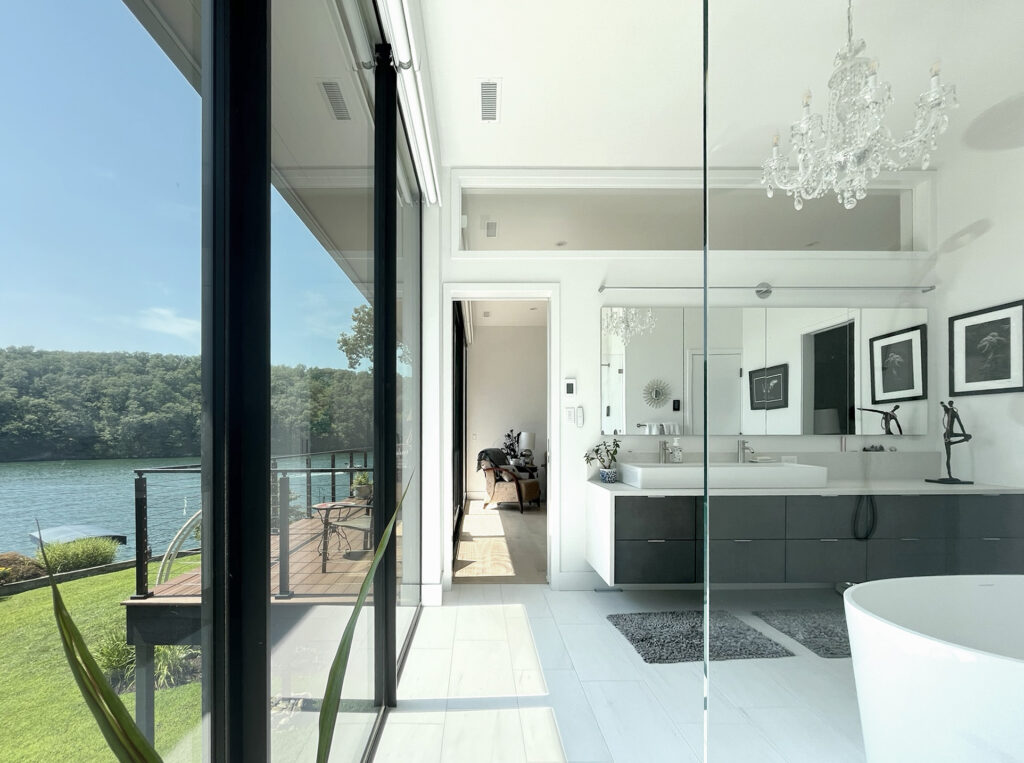
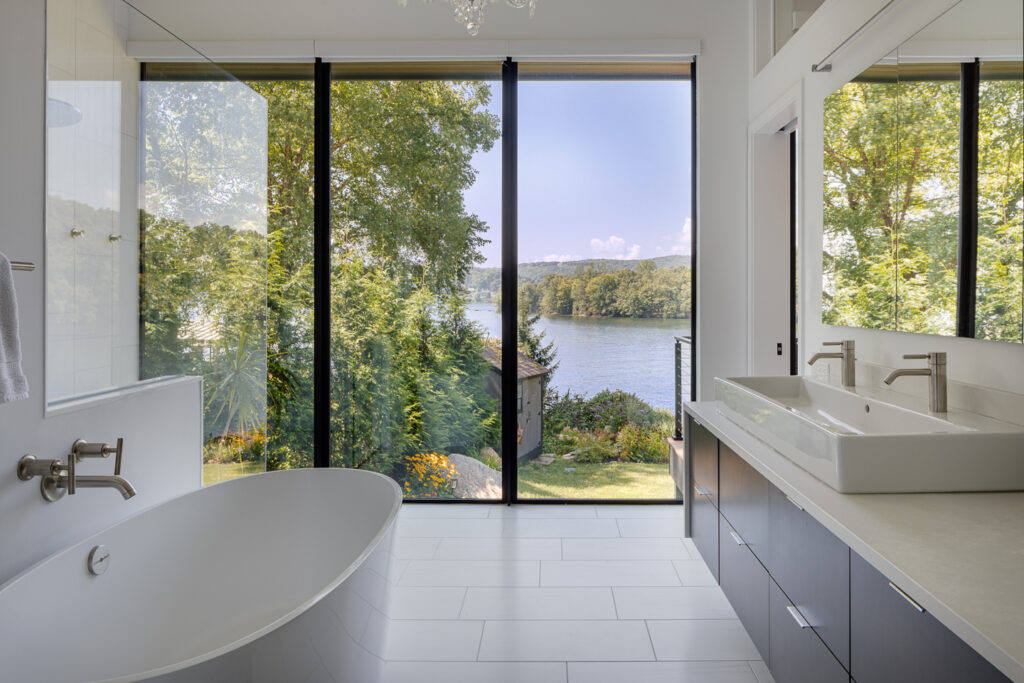
The master suite is designed to be an enclosed oasis within the house, a private sanctuary from guests at the heart of the home with ample closets, a private study, and a spacious bathroom. Glass and wood are used in floor to ceiling planes—a wall of glass facing southwest creates a uniquely intimate relationship with the lakefront and allows the bedroom sweeping views that descend to the lakeshore below, a year-round vista that changes seasonally.
A Slice of Sky
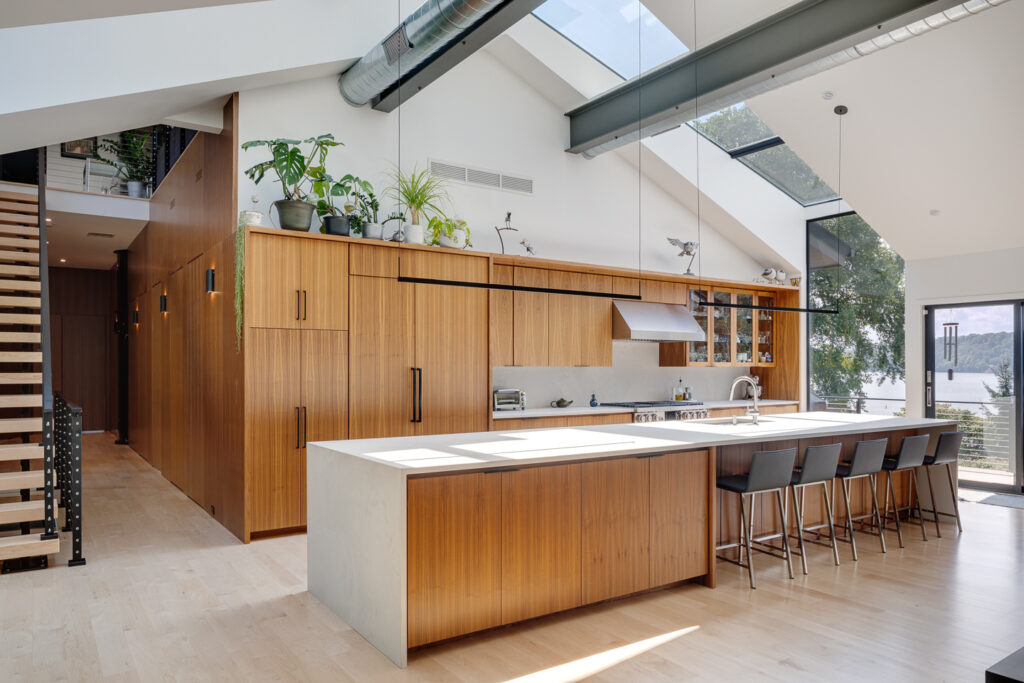
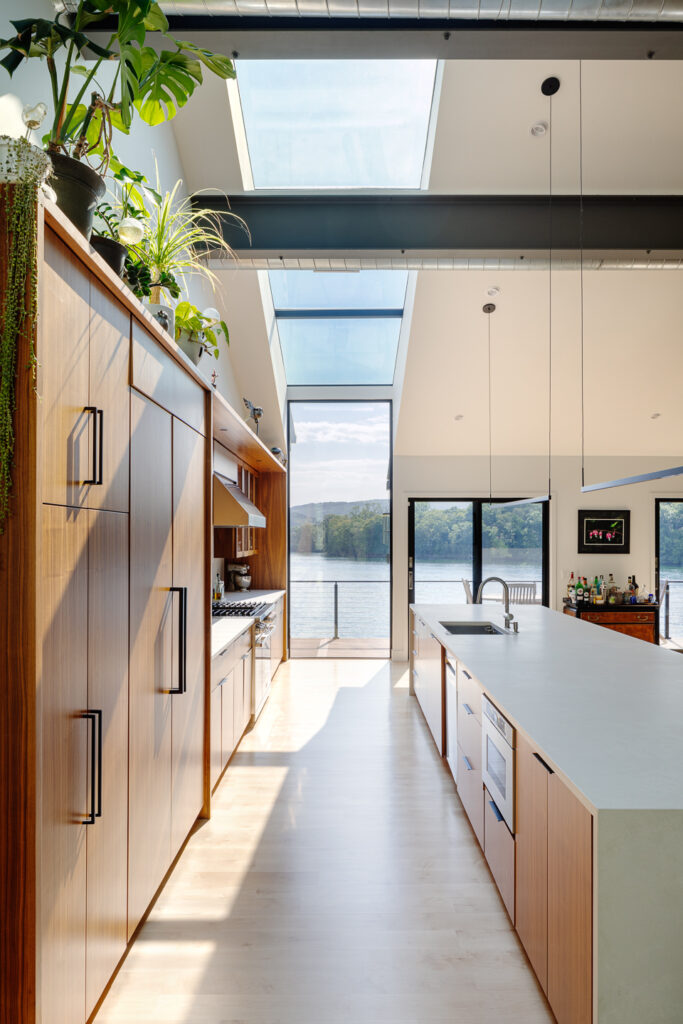
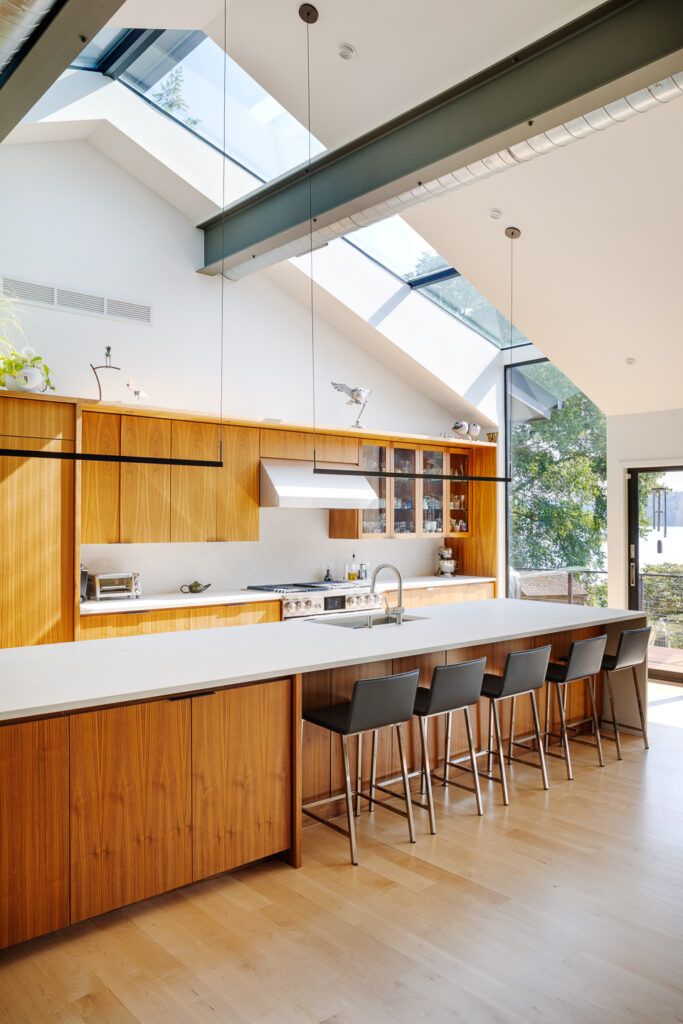
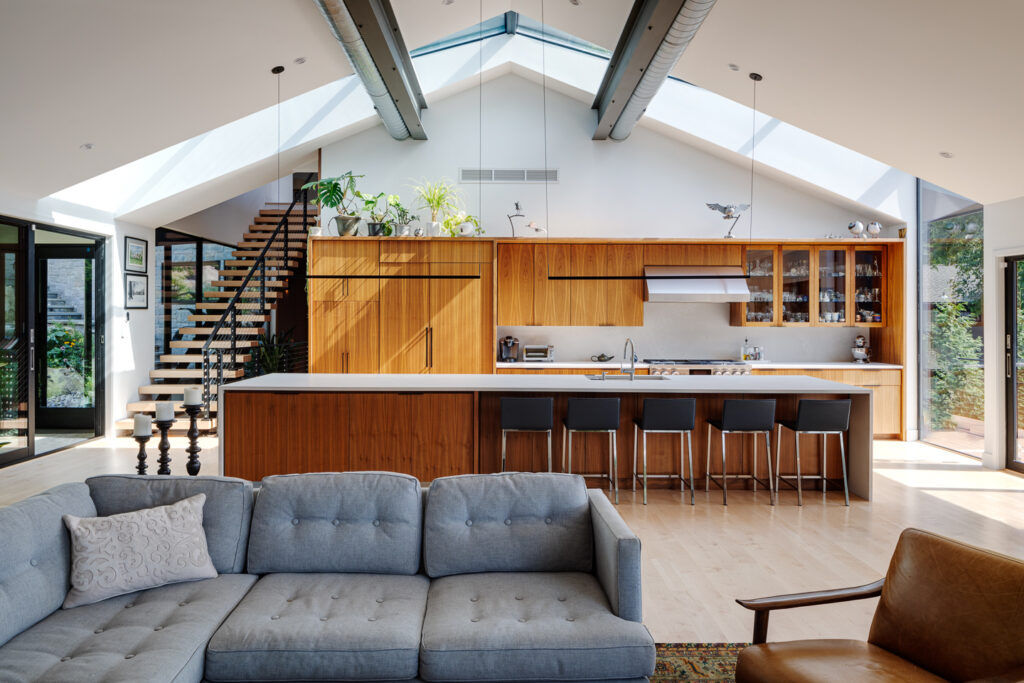
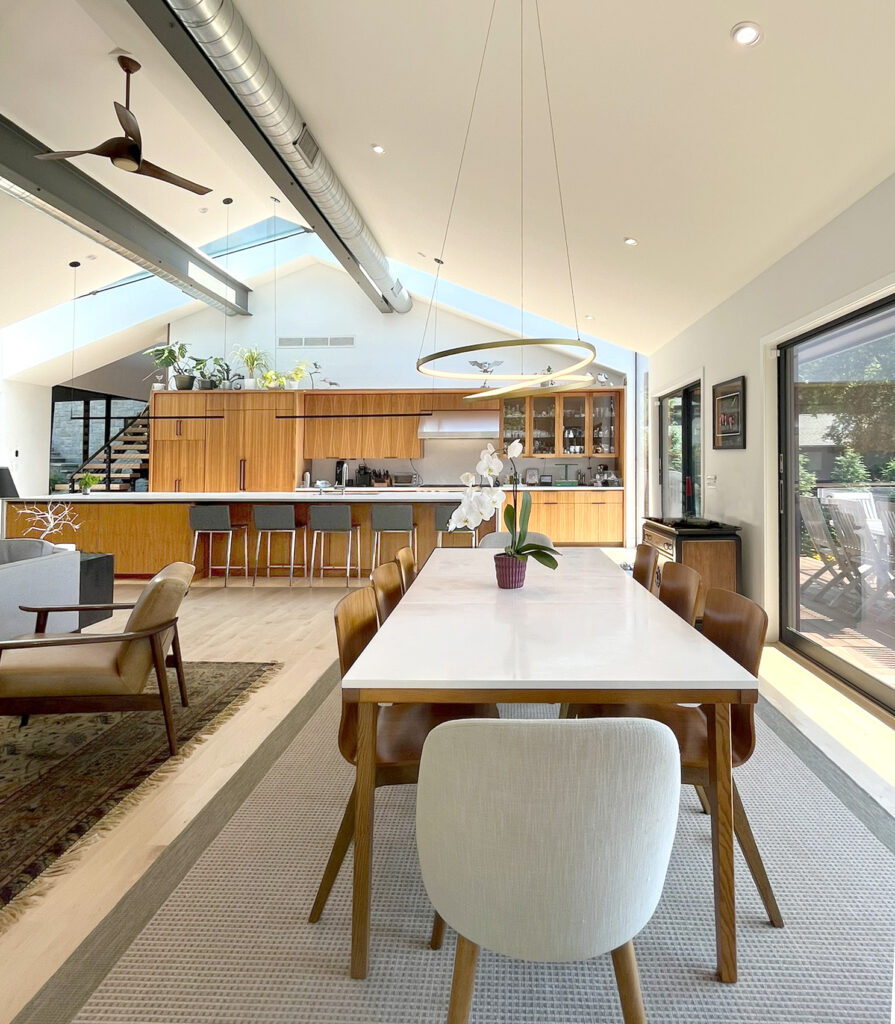
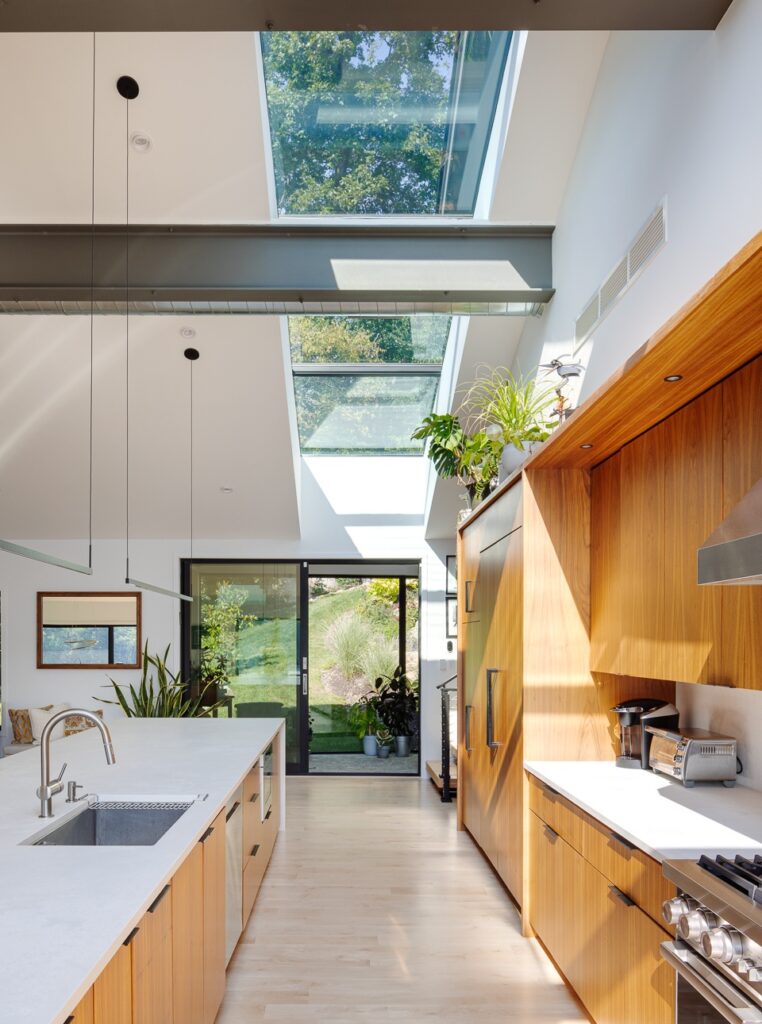
A continuous ribbon of skylights unfurls from the entry vestibule over to the great room, across the open kitchen to descend toward the lakefront façade, two stories down to the lower patio. The slice of light provides a dramatic interior experience of the landscape, and the sun’s rays transect across these connected spaces. The great room, combining all social functions—cooking, dining, living—is unified by the clients’ extensive indoor greenery collection displayed and fostered within the new open and naturally-lit space.
Location: New Milford, Connecticut
Owner/Client: Undisclosed
Scope: Residential Renovation
Status: In Progress
Photography: N/A
NANO:Condo

Room to Grow
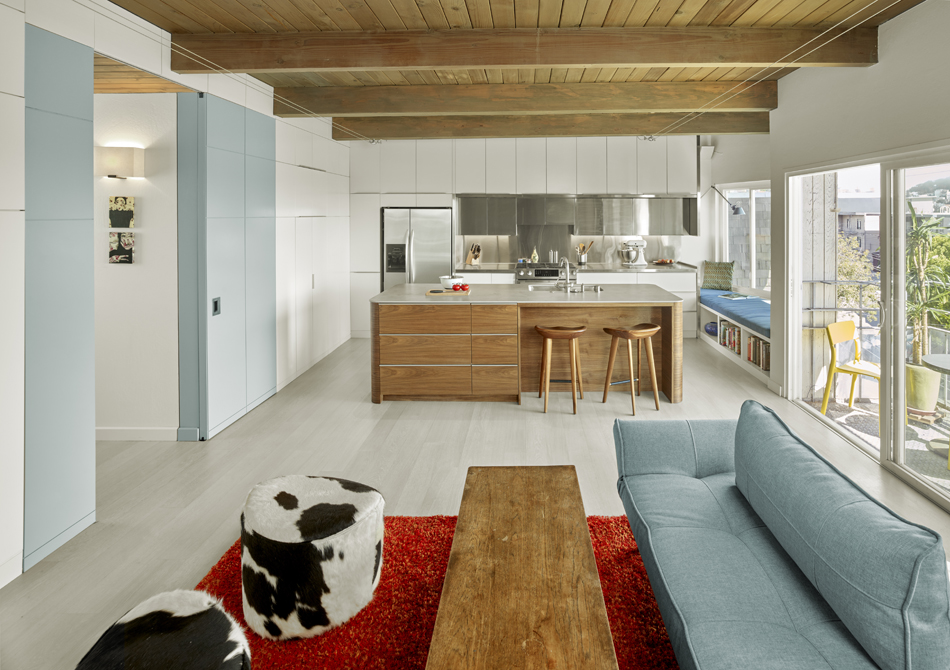
Located in the Eureka Valley neighborhood of San Francisco, this tiny, second floor 900-square-foot condominium boasts expansive views of the city. A family of four needed to transform their home from a cramped 2-bedroom apartment to a spacious home that could accommodate its growing children and overnight guests, as well as for entertaining. The complete overhaul of the unit’s interior created a great room overlooking the San Francisco Bay, along with a more dynamic space meant to accommodate the family’s lifestyle.
Inspiration from the Abstract
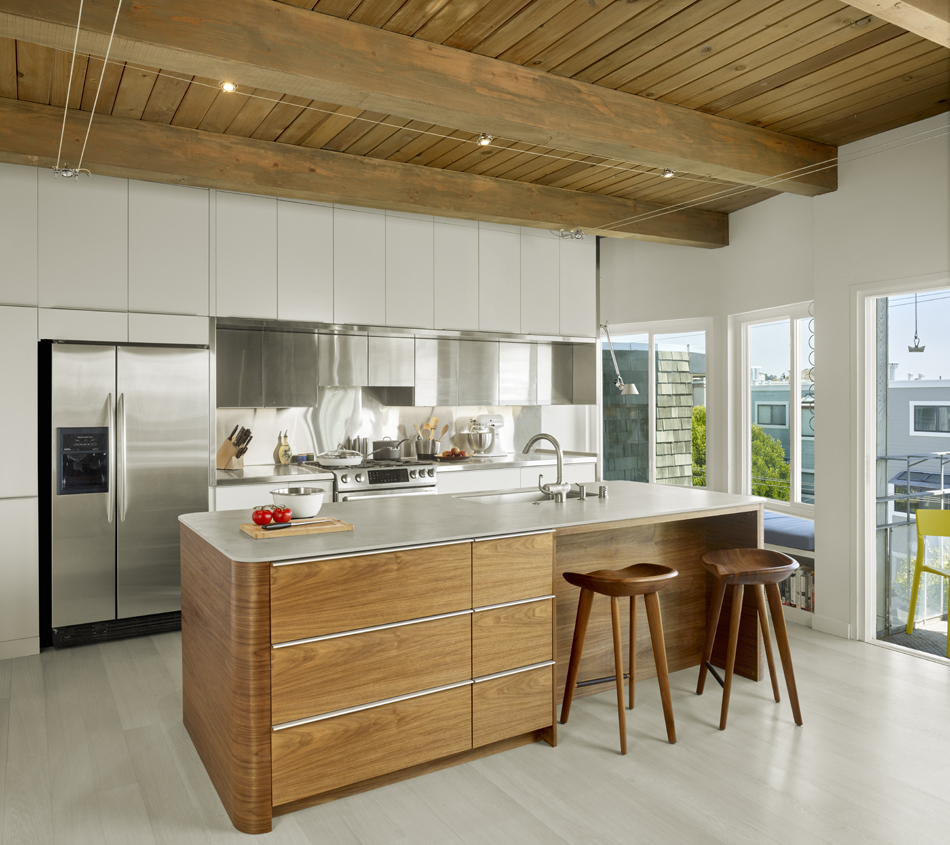
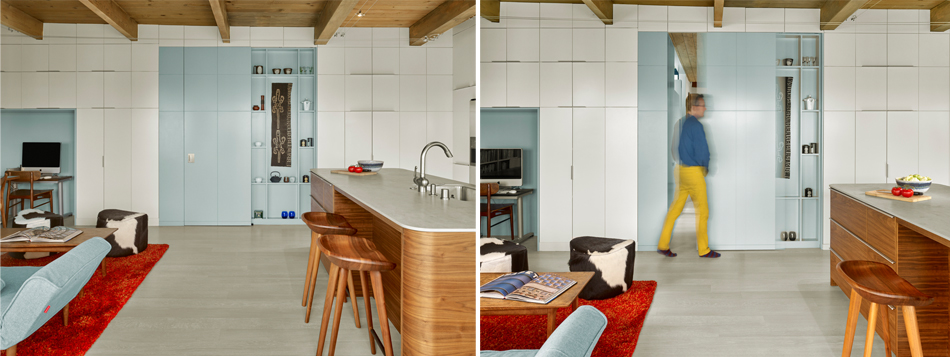
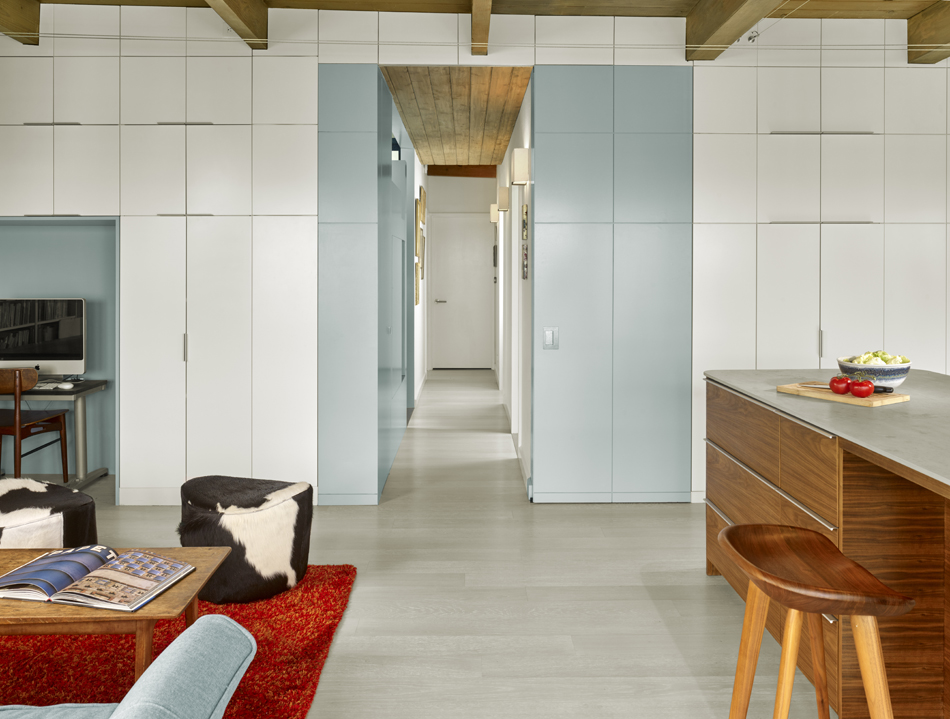
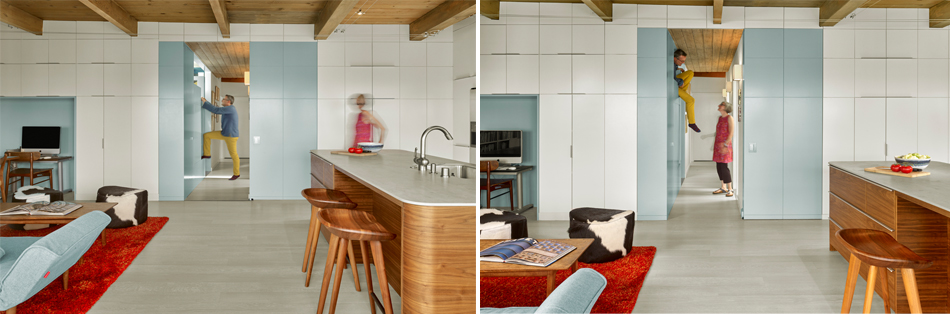
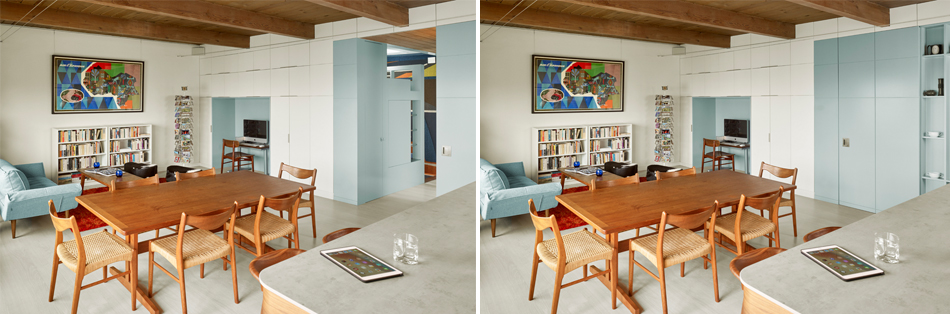
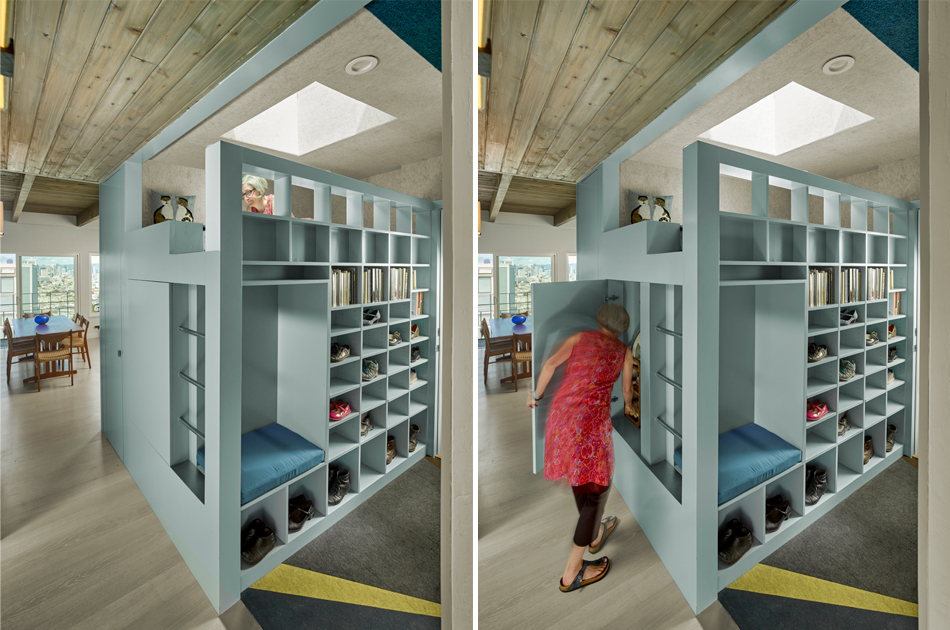
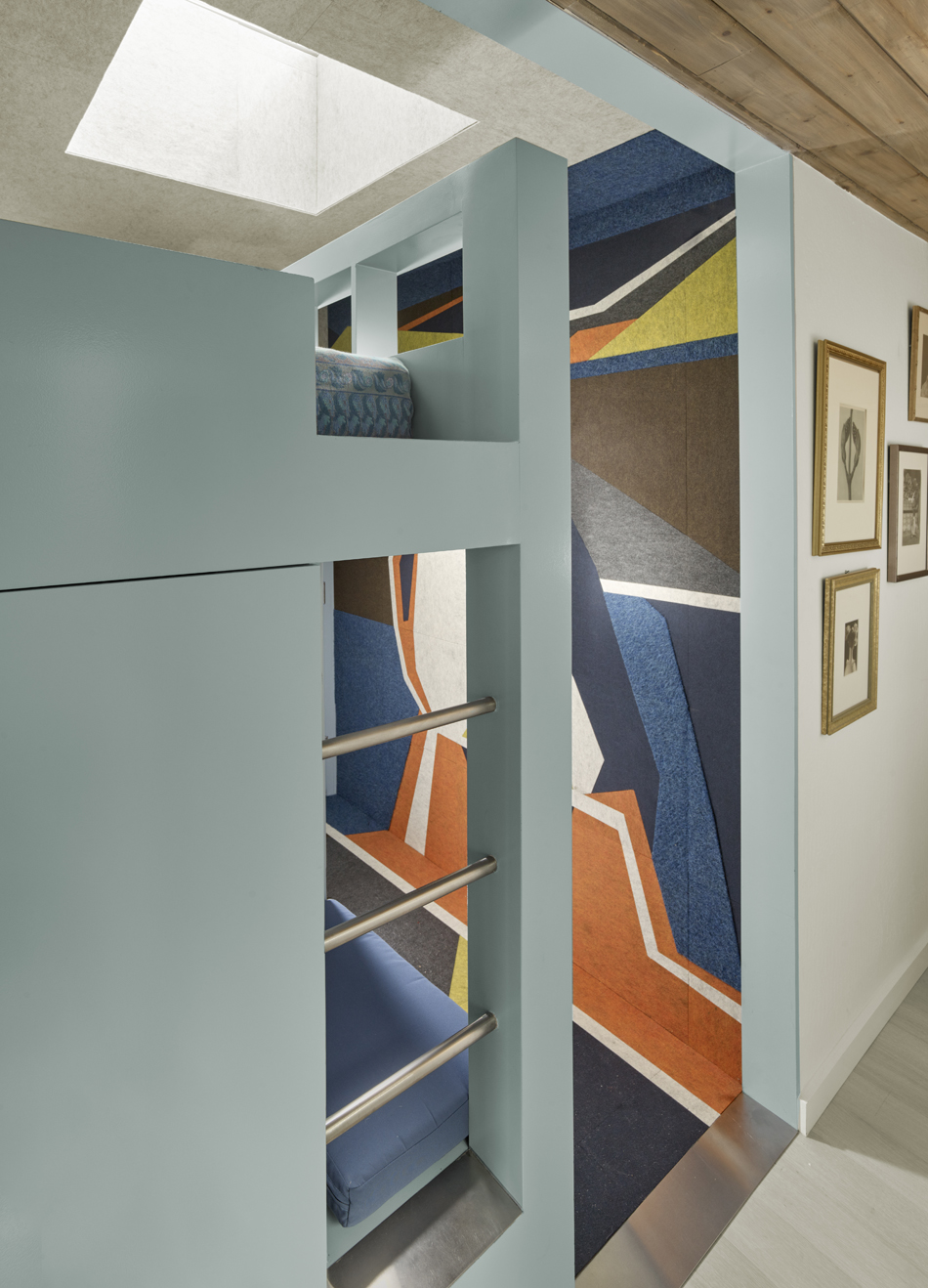
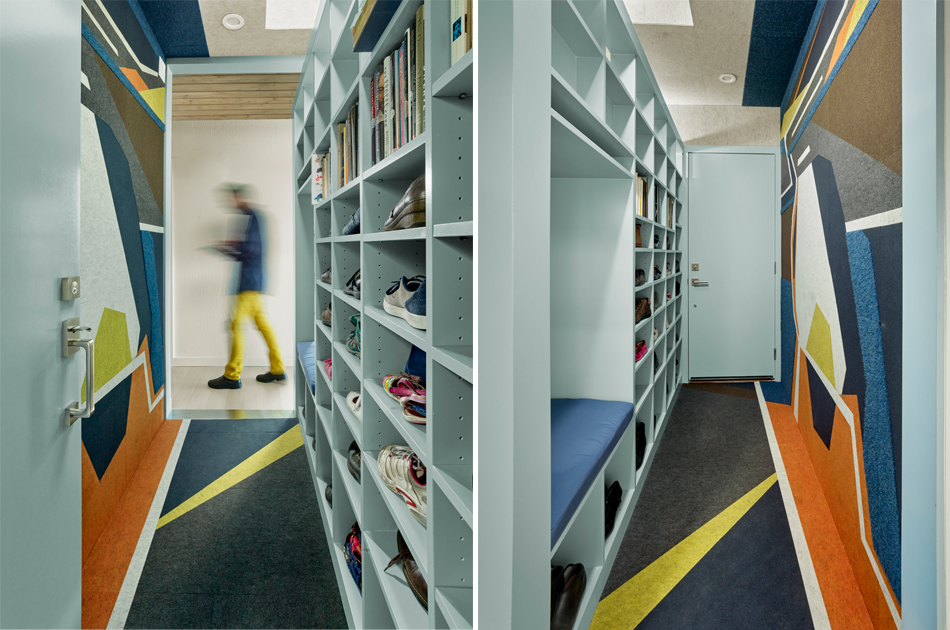
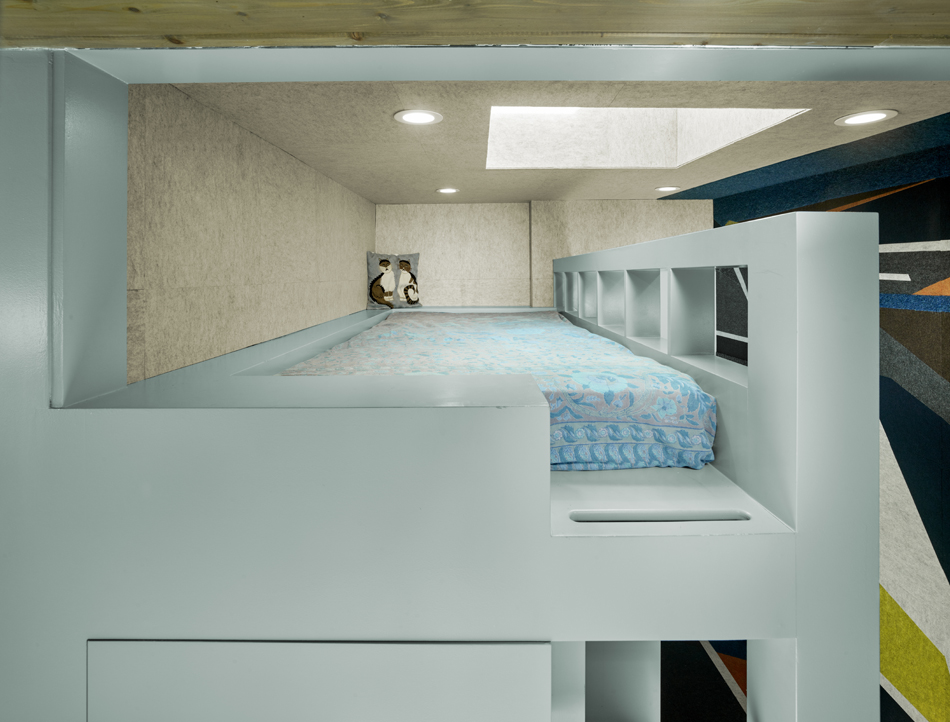
The kitchen, dining, and living areas were joined with a dynamic cabinetry smart-wall, which morphs into a sort of storage dove-cot closet and secret treehouse with a lofted, fourth bedroom for guests. A favorite Wayne Thiebaud painting became the inspiration for the abstract, felted entry enclosure. Existing wood ceilings were exposed and preserved, unifying the interiors of the now 4-bedroom, high performance micro-condominium.
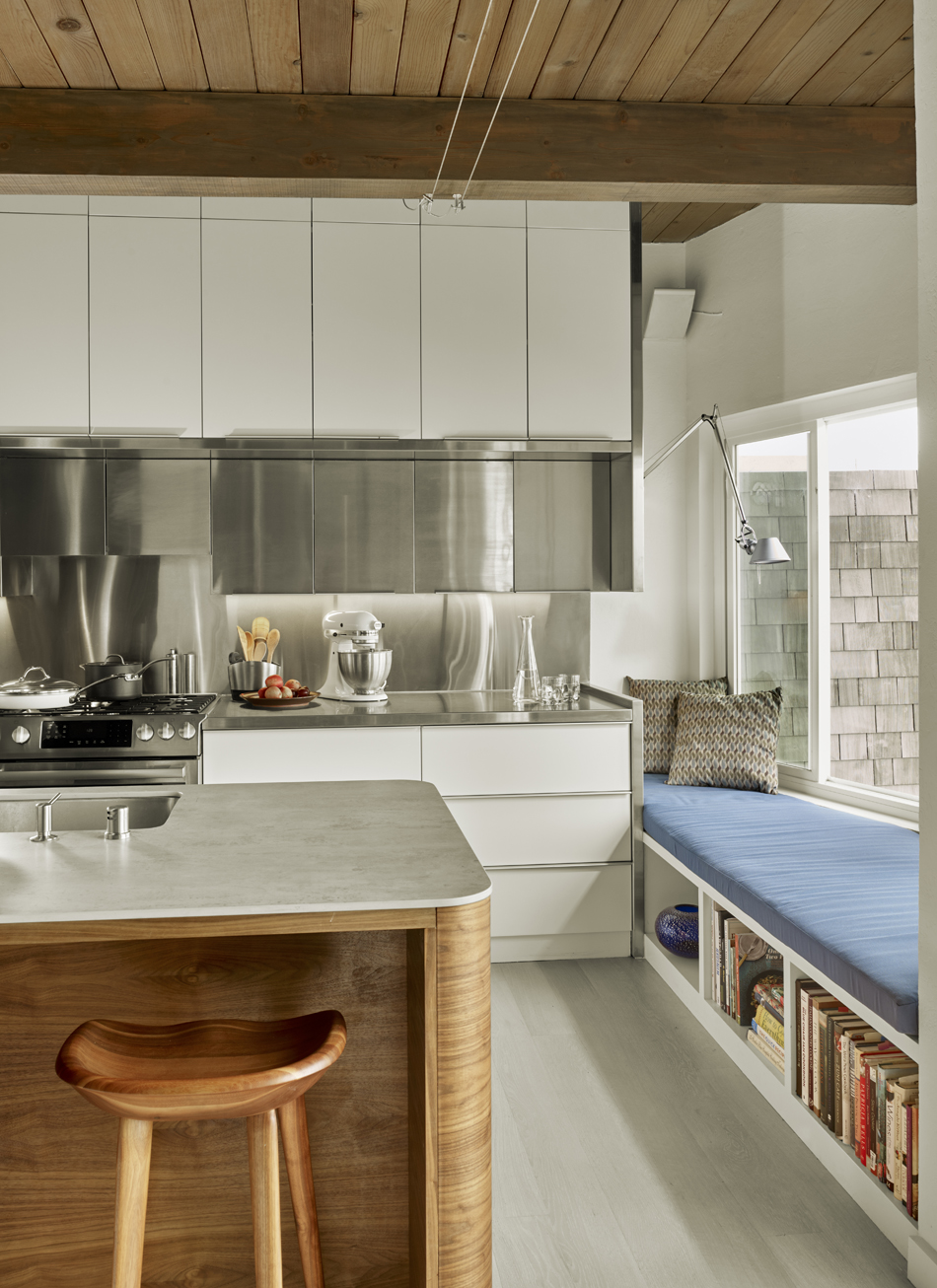
Division for More
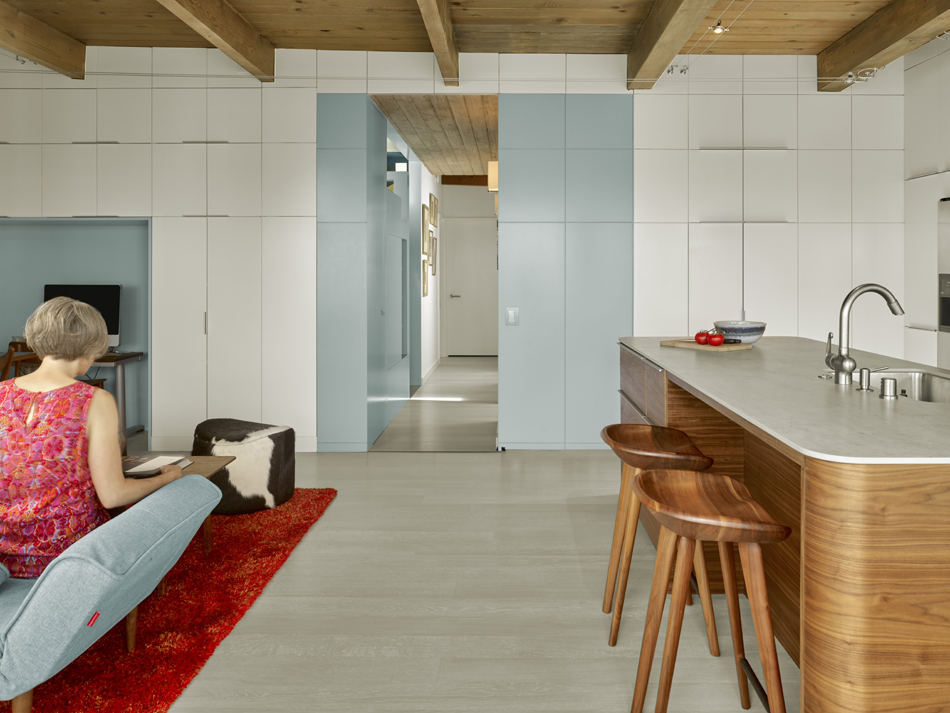
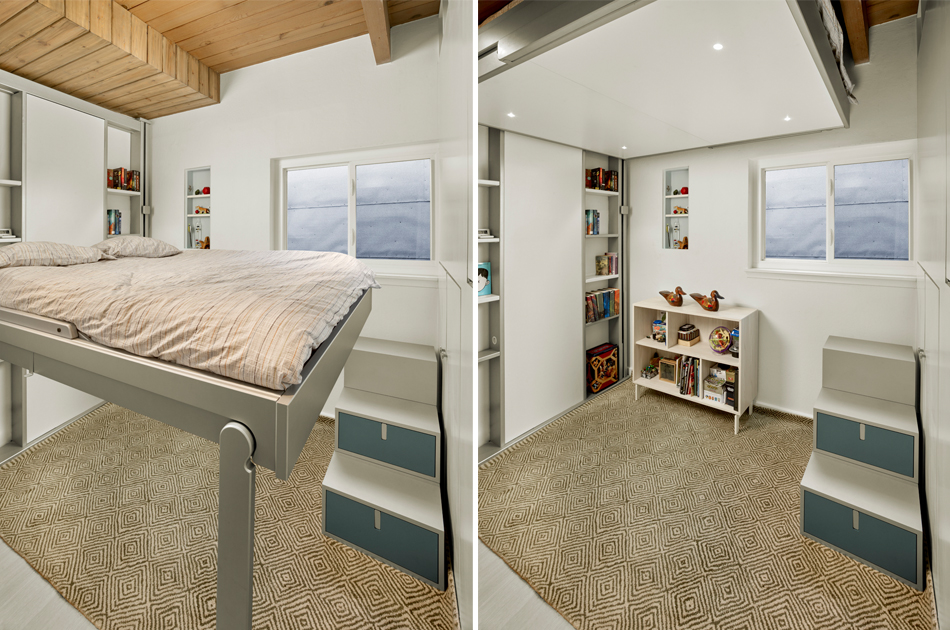
The single, central core of the NANO:Condo was deftly partitioned with sliding walls to create three partial bathrooms: a powder room, a shared half-bath, and master bathroom all in one with access from a master suite. A single larger bedroom was divided into two children’s bedrooms with counter-weighted beds that slide up and easily disappear into the ceilings to make room for desks, bookshelves, and play.
Cubbies and Nooks
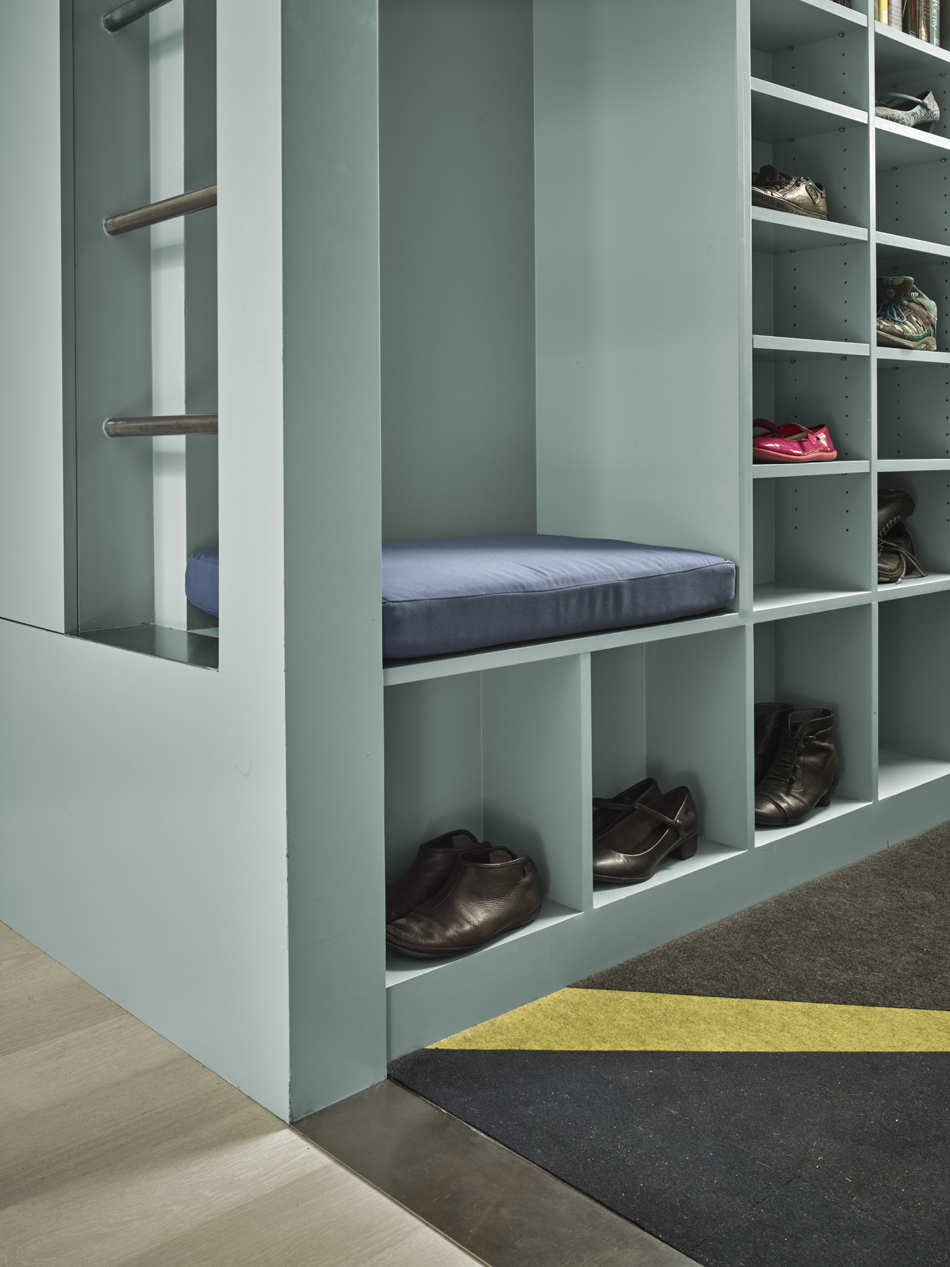
With the condo’s limited square footage, storage was found in custom cabinetry solutions where dividers function in a variety of ways—from shoe racks to play lofts, homework cubbies and reading nooks—which permeate all rooms. Wardrobe modules temporarily divide spaces into private areas and then slide away to allow the family to come together again.
Location: Eureka Valley, San Francisco
Owner/Client: Undisclosed
Scope: Interior Renovation
Status: Completed 2016
Photography: Cesar Rubio
Healdsburg Guest House

Building Into the Hillside
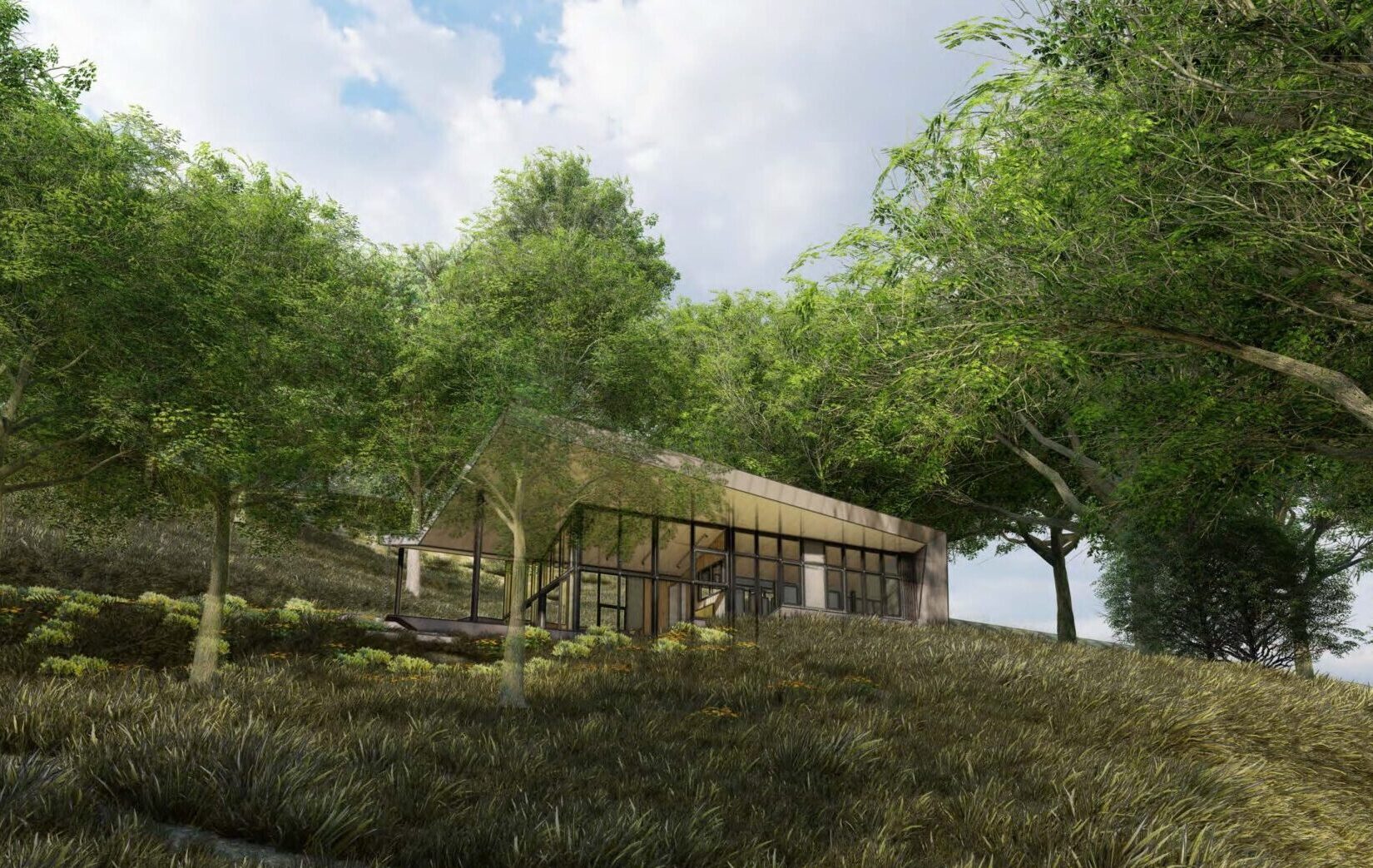
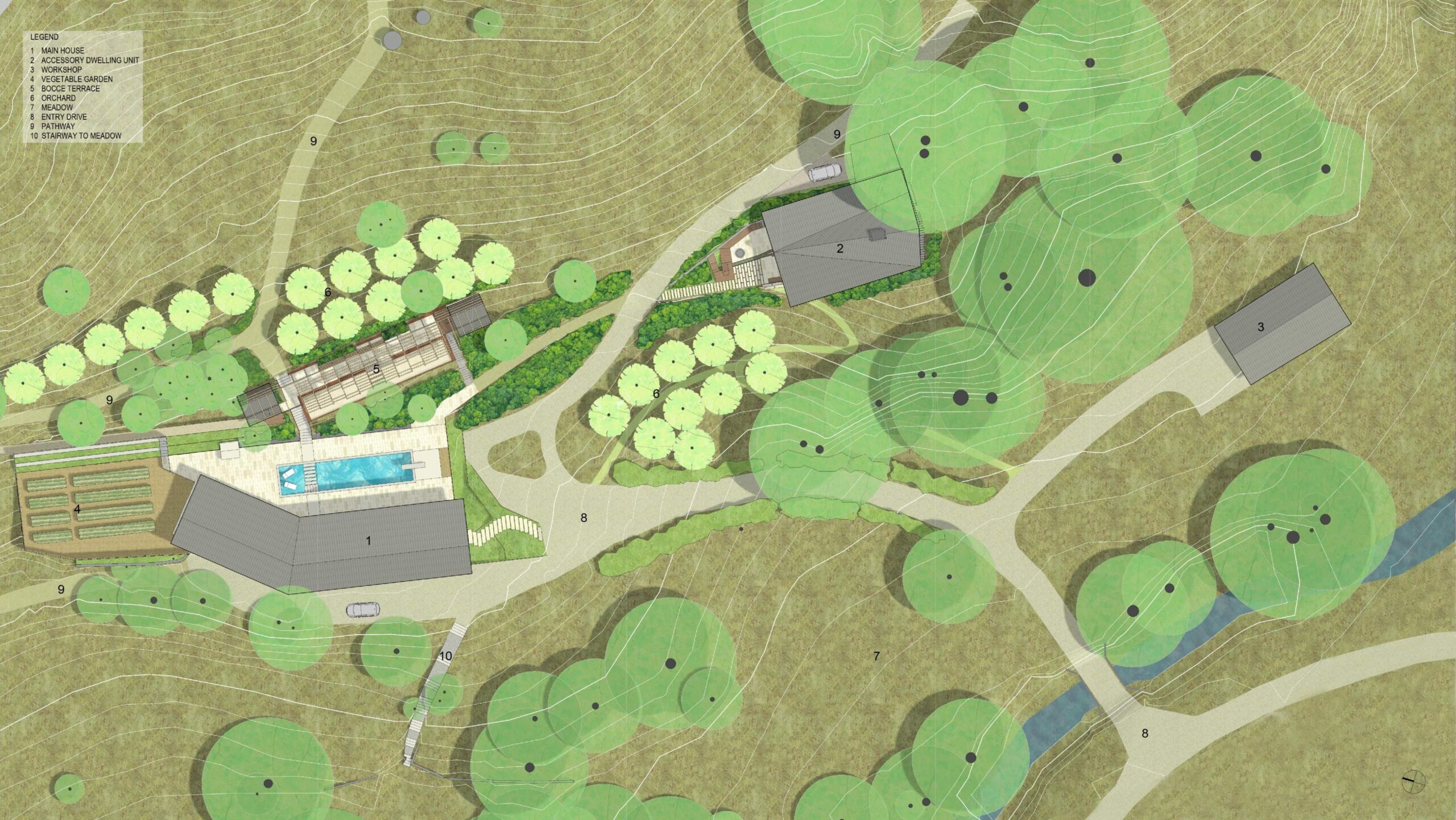
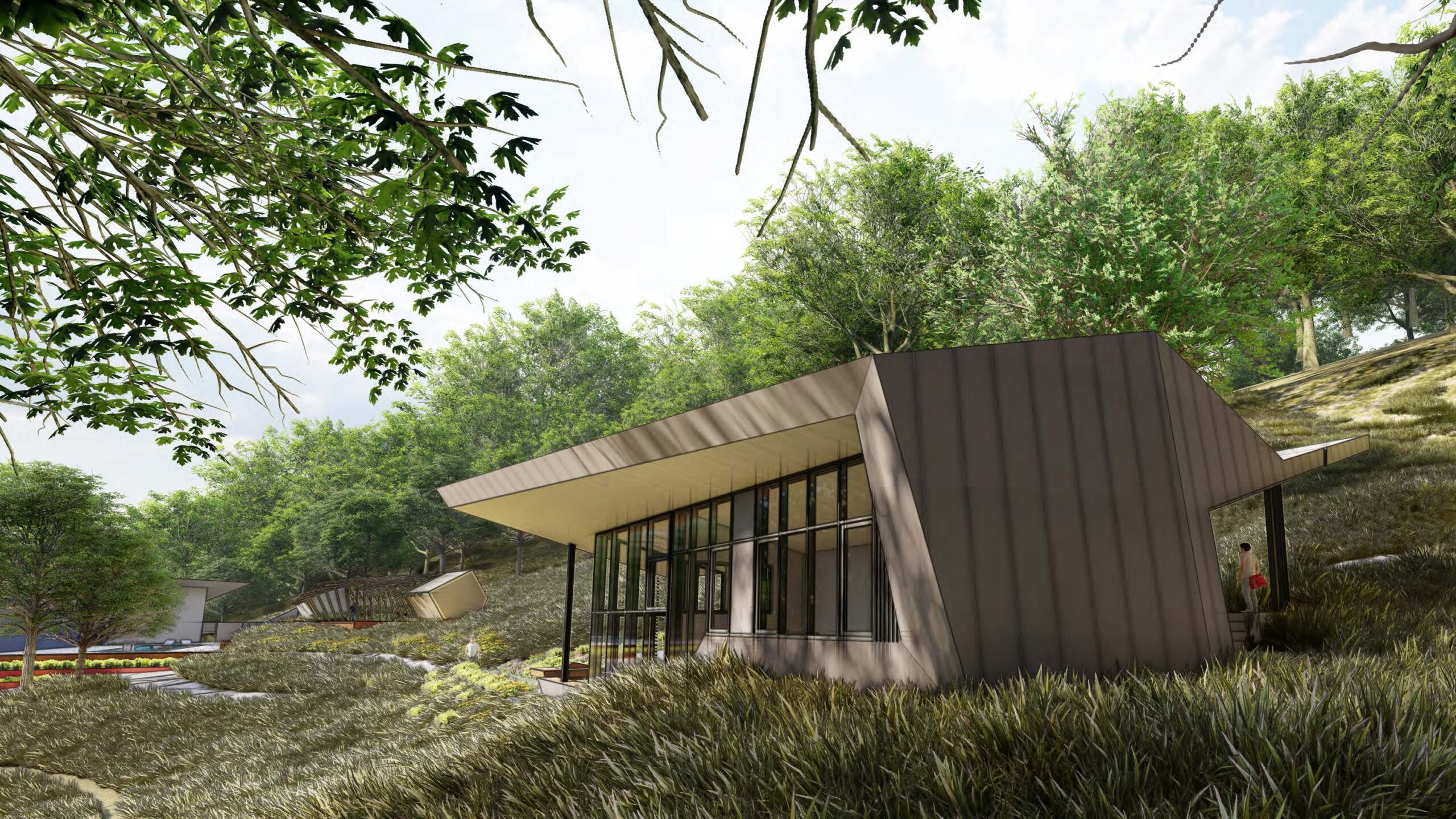
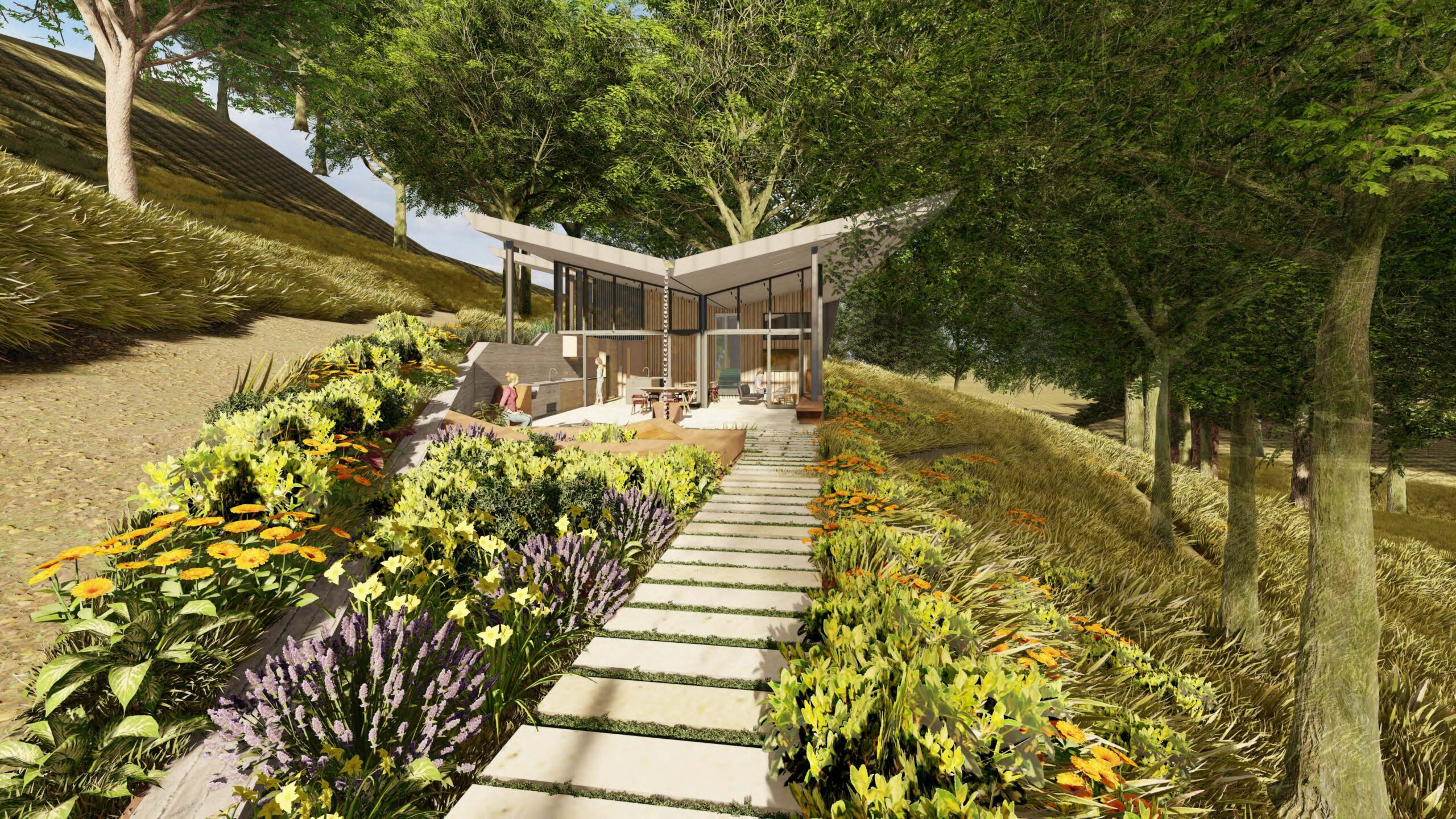
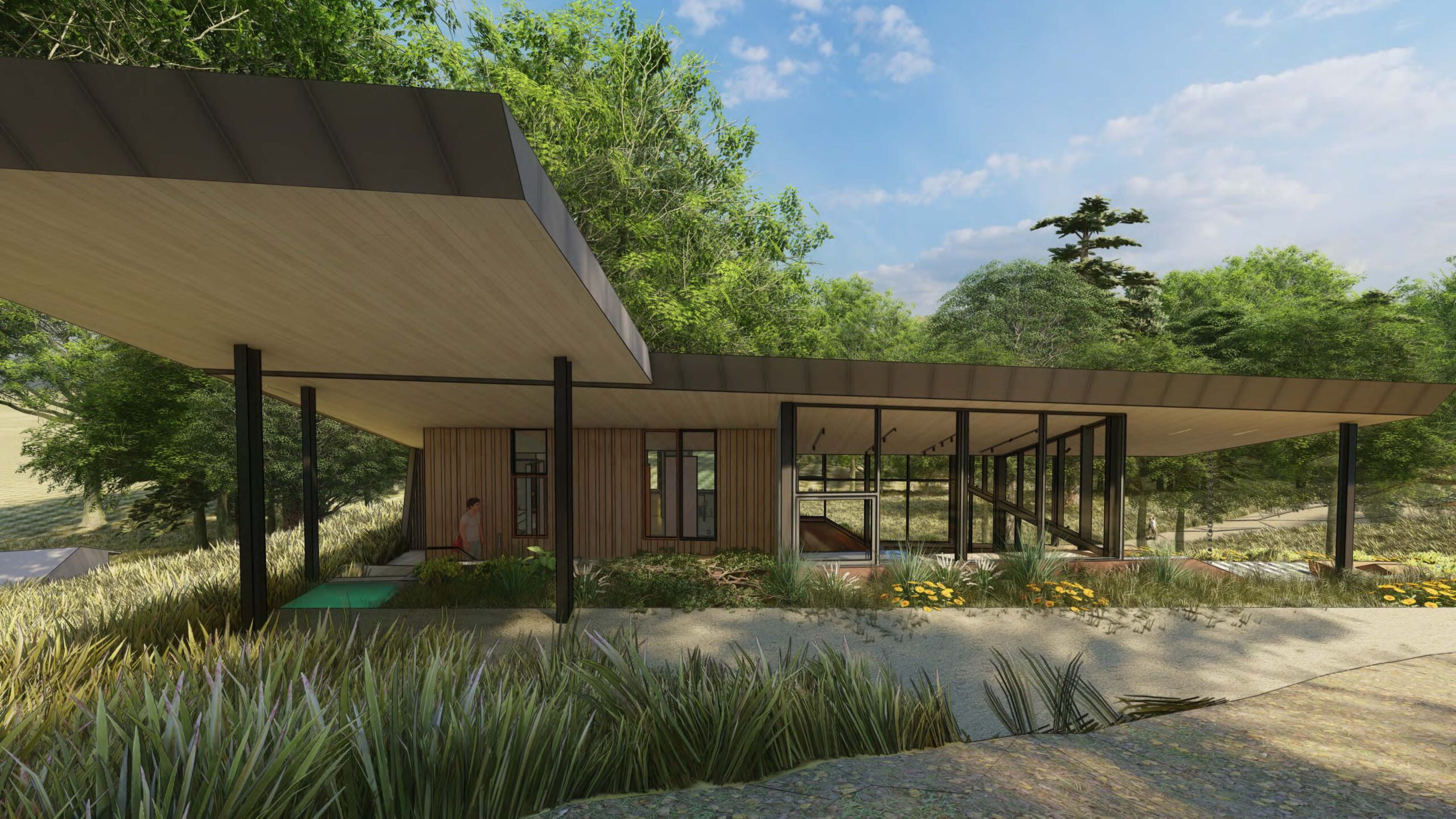
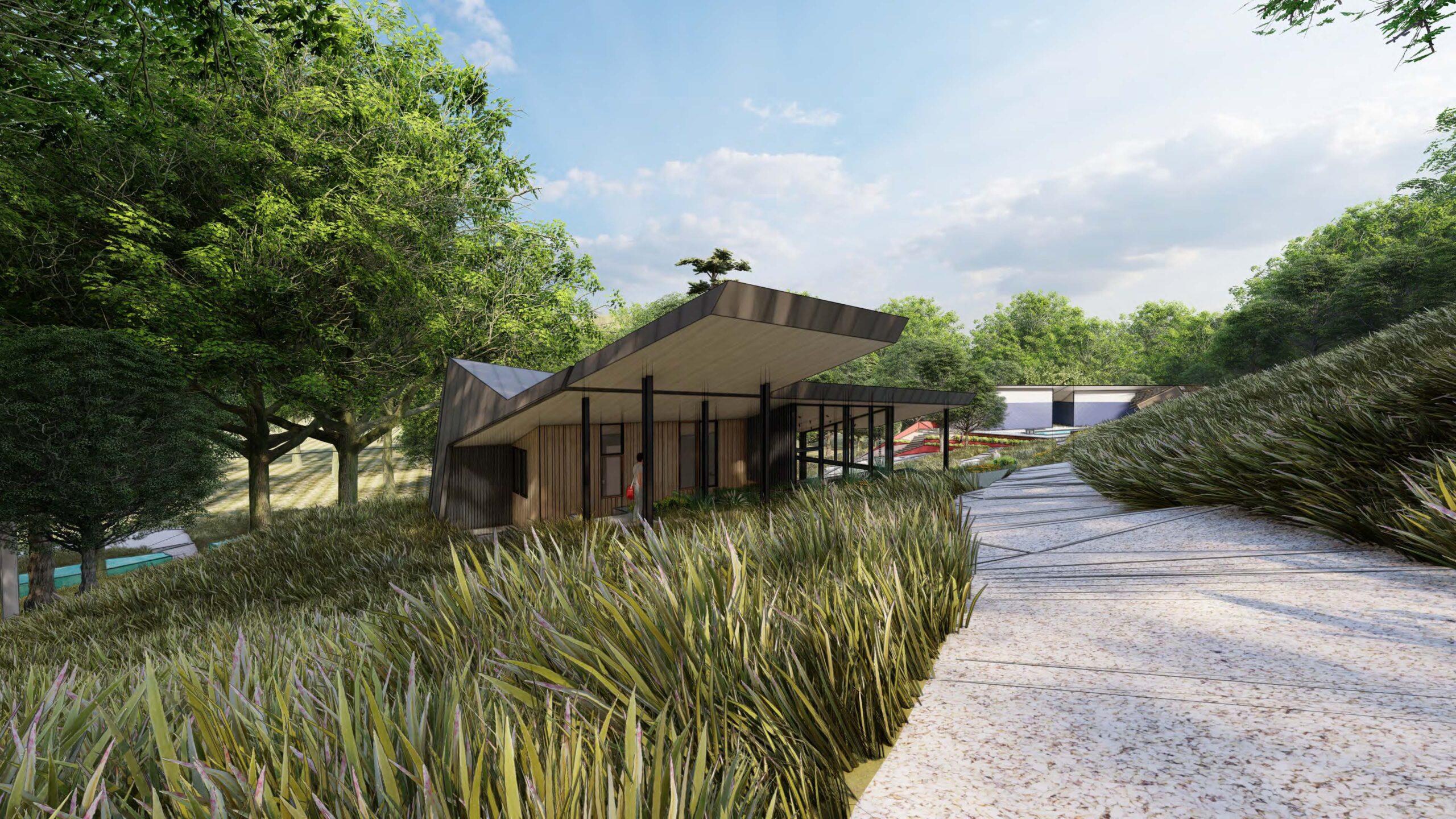
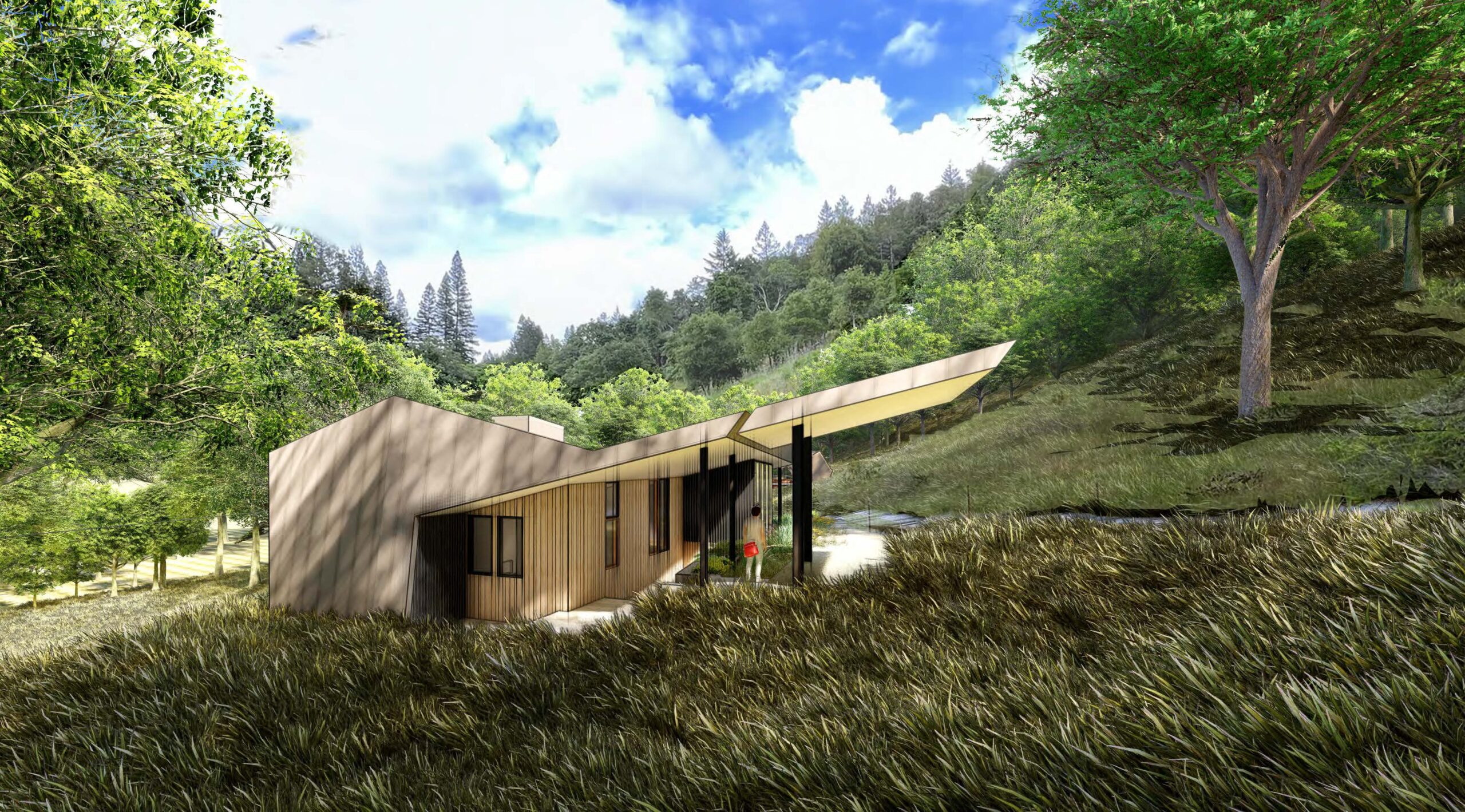
This new accessory dwelling is sited along a woodland path that leads from the larger main home to a favorite upland swimming spring on this 200-acre property in unincorporated Healdsburg, located deep in the Sonoma Valley foothills of Mount Jackson. The efficient open plan is split-level and partially buried into the sloping site allowing the private” Bedroom Block” to be elevated from the open “Living Porch” which extends outwards into the patio garden beyond the tall glazed surfaces extending the interior space under a wide cantilevered folded roof embracing the larger landscape and abundant open space.
En-Folded towards the Light
The butterfly-roof form allows views to the sun-speckled uphill meadows and also downhill towards the high mountain ridged horizon beyond the creek, where meadows cascade towards the road below, over orchards and gardens that serve the home. The Metal Roofs form an open shell that descends to enclose the rear forest-facing bedroom wing of the house while opening like wings to reveal the interior soft wood soffits that extend the interior ceilings outwards into the landscape.
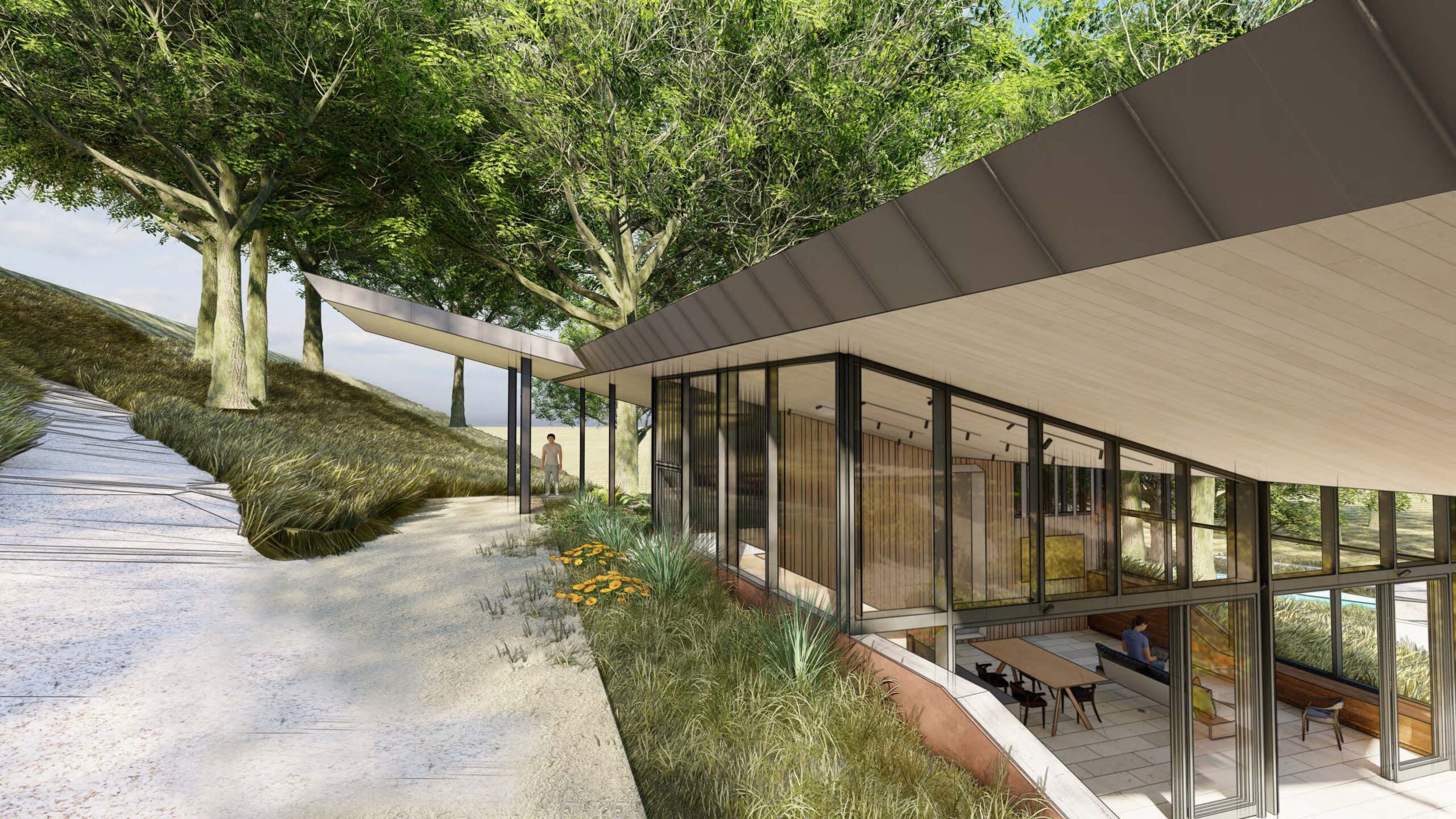
Exterior Connected Living
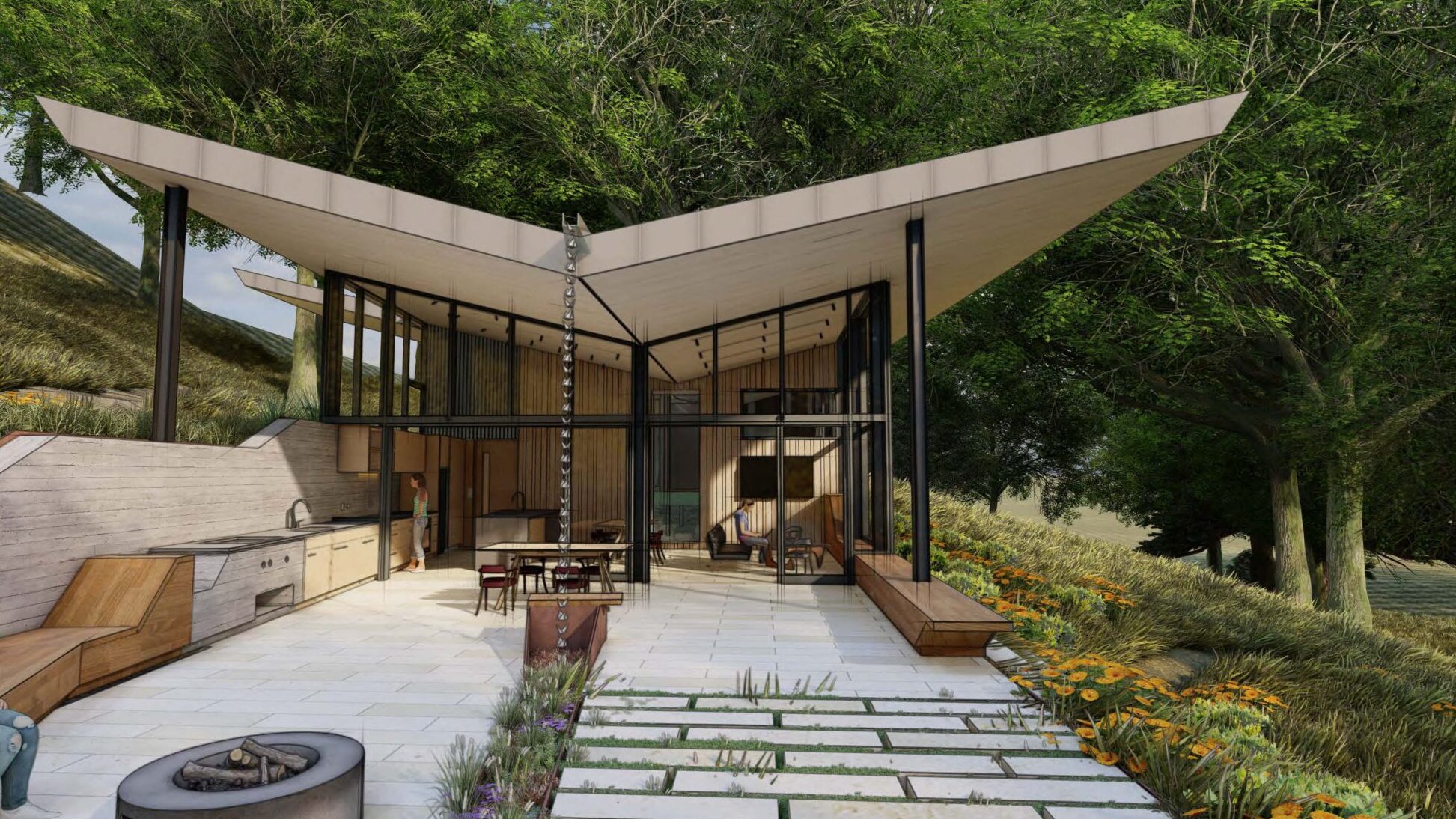
The exterior finishes travel inside just as those within travel outwards – and there is a breezy openness to the home that allows the family to live “outside” within the cozy, warmly textured interior. The bench-low walls extend the indoor kitchen outwards to an exterior kitchen and second living room focused on wide wood benches and a protected fire pit that catches the last rays of the setting sun each day.
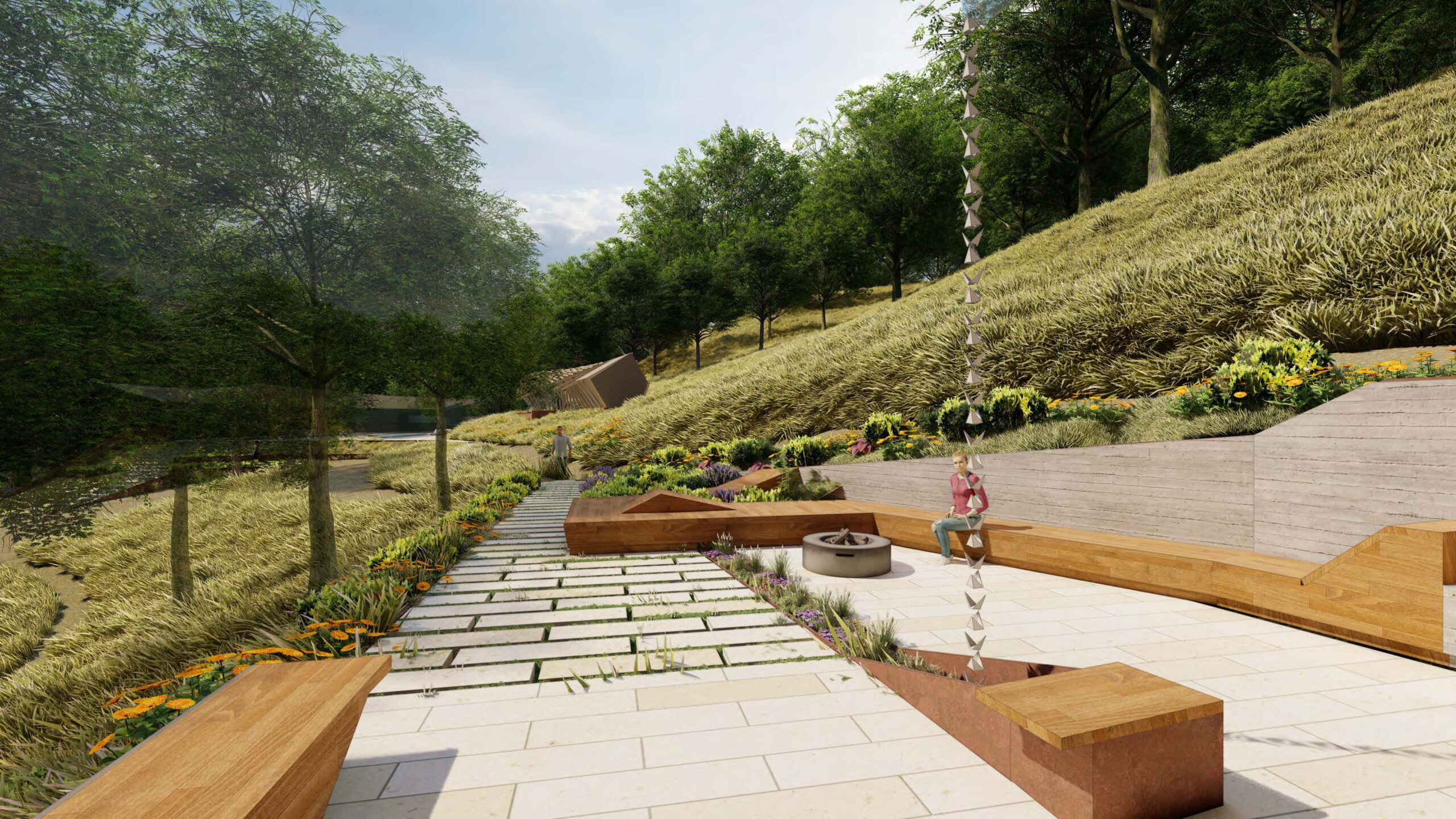
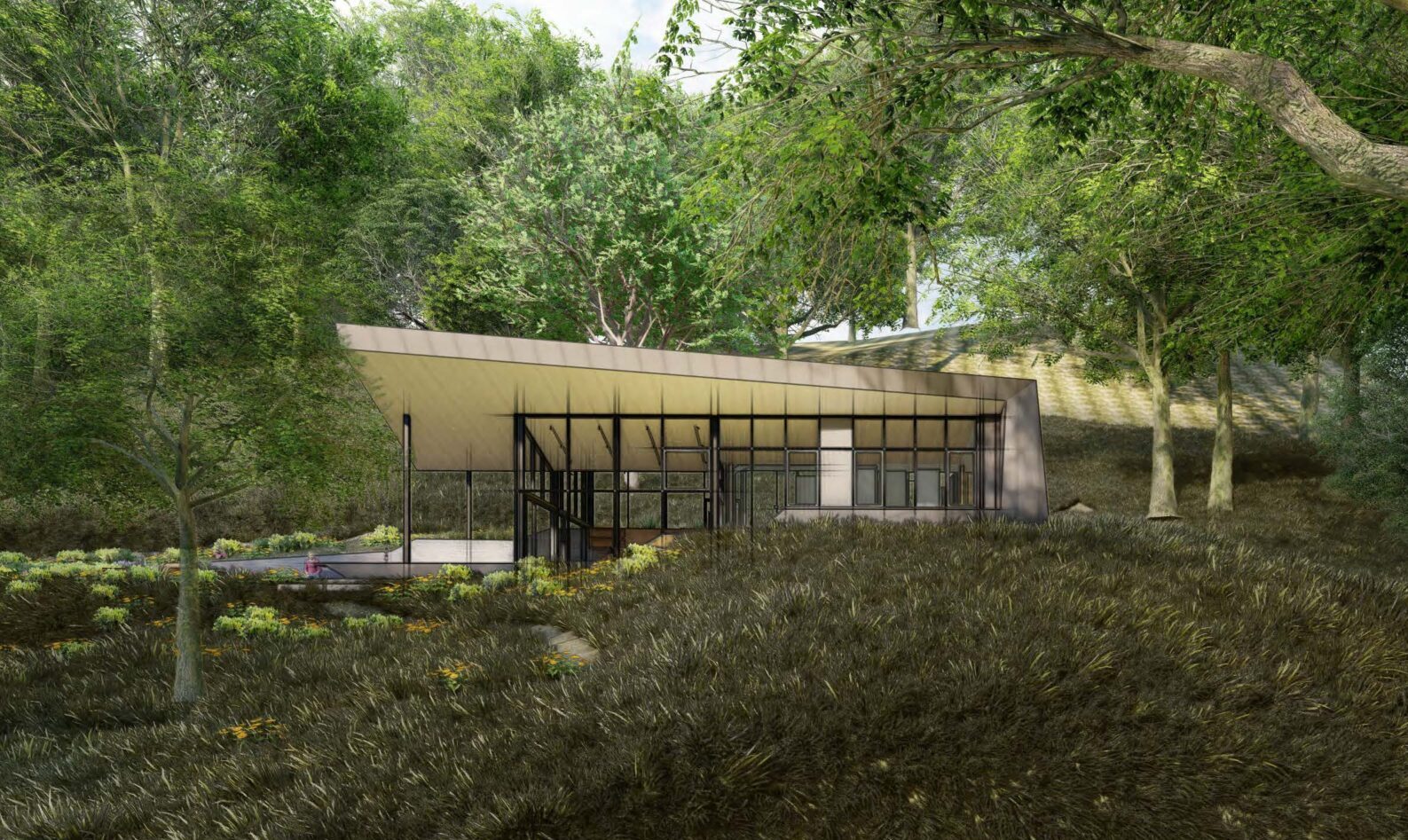
A Water’s Tale
The Solar paneled roof also collects and concentrates water towards the patio garden and herb beds that line the entry path beside the sunny orchards. A small corten steel channel bisects the patio social space becoming a vertical water feature with every storm while channeling water to the south where the gardens surround the sitting areas, pathways, and gathering spaces.
Location: Healdsburg, California
Owner/Client: Undisclosed
Scope: Design
Status: Construction
Vallejo Street Residence
Expanding Into the Outdoors
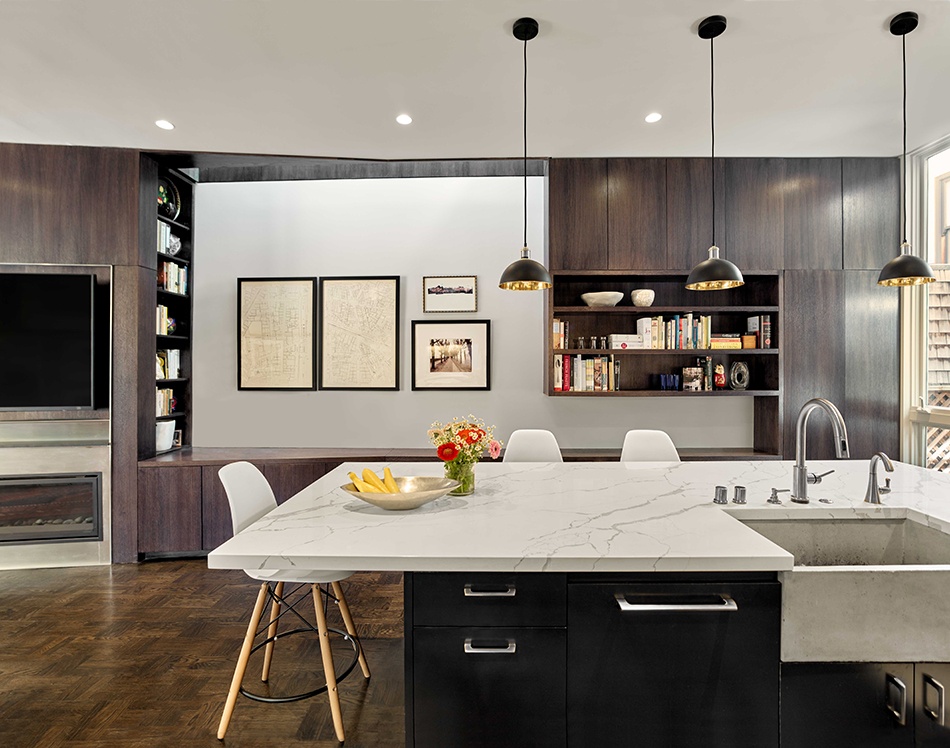
A home in the Pacific Heights neighborhood of San Francisco expands to create a garden connector, allowing a realigned kitchen to become the conduit between the original formal dining room and a new informal family room that opens out onto a transformed garden extending the home outdoors.
Home and Garden
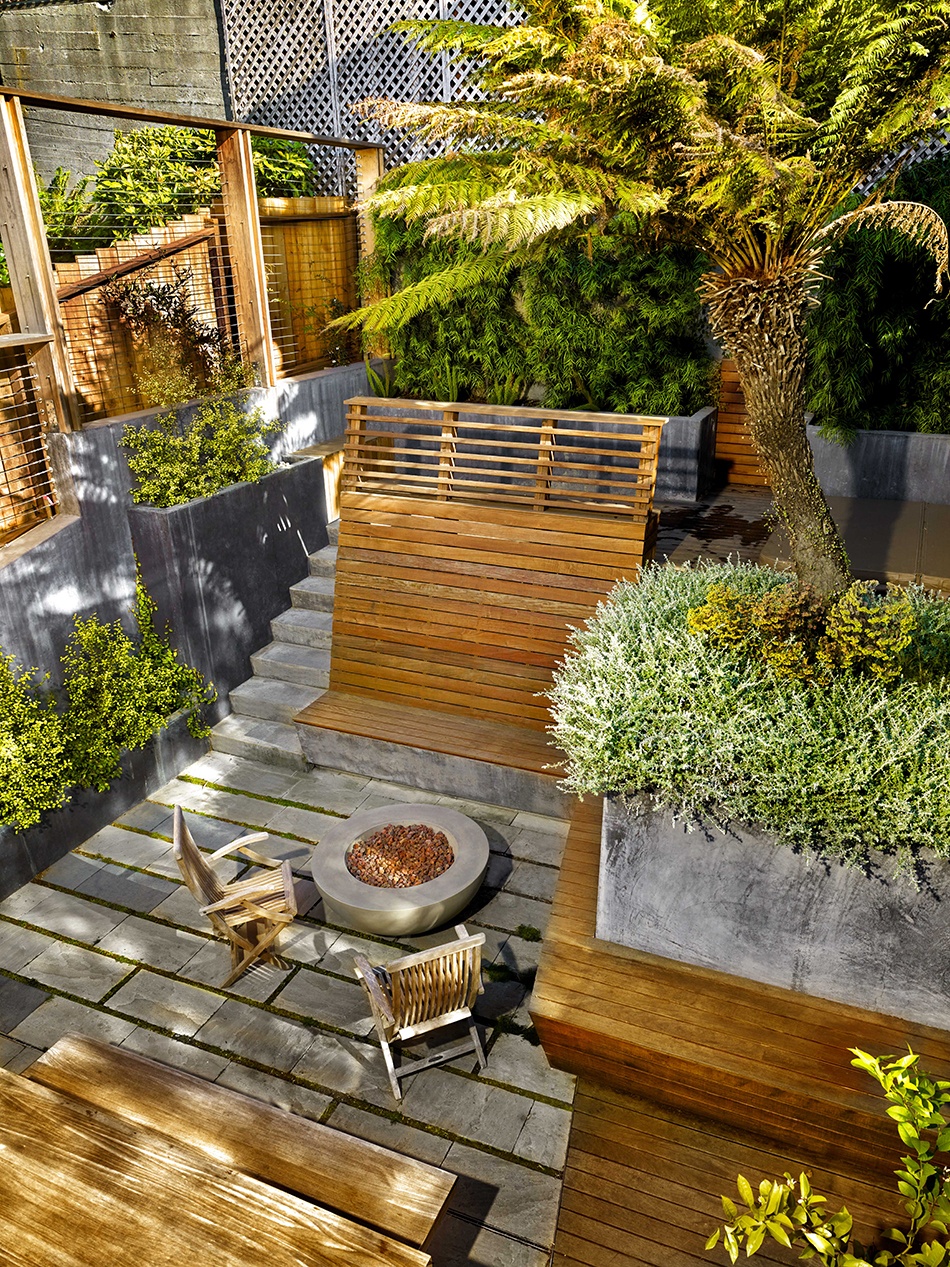
This elegant, historic Dutch-style home in San Francisco was in need of a better connection to its garden, an under-used and difficult-to-negotiate rear yard. INTERSTICE Architects knew the solution was both architectural and landscape-focused. It was a question of reconfiguration of both the kitchen and its awkward relationship to the steeply sloped site, which had limited the gardens usability for decades. The home was expanded and dug out to create new space at the lower level, while allowing the yard to establish a continuous relationship to the main living floor. The interiors were realigned to establish the kitchen as a connecting social space between the new informal, private family room, while the exterior garden was remade to be a clearly articulated extension of the social and entertainment level of the home.
Shaping the “Smart-Wall”
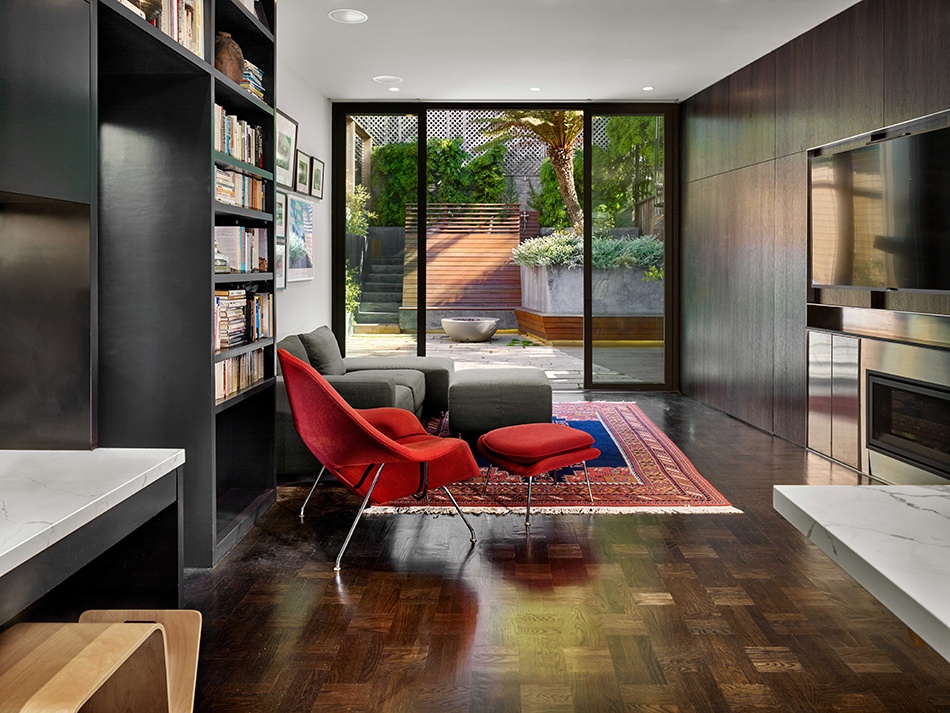
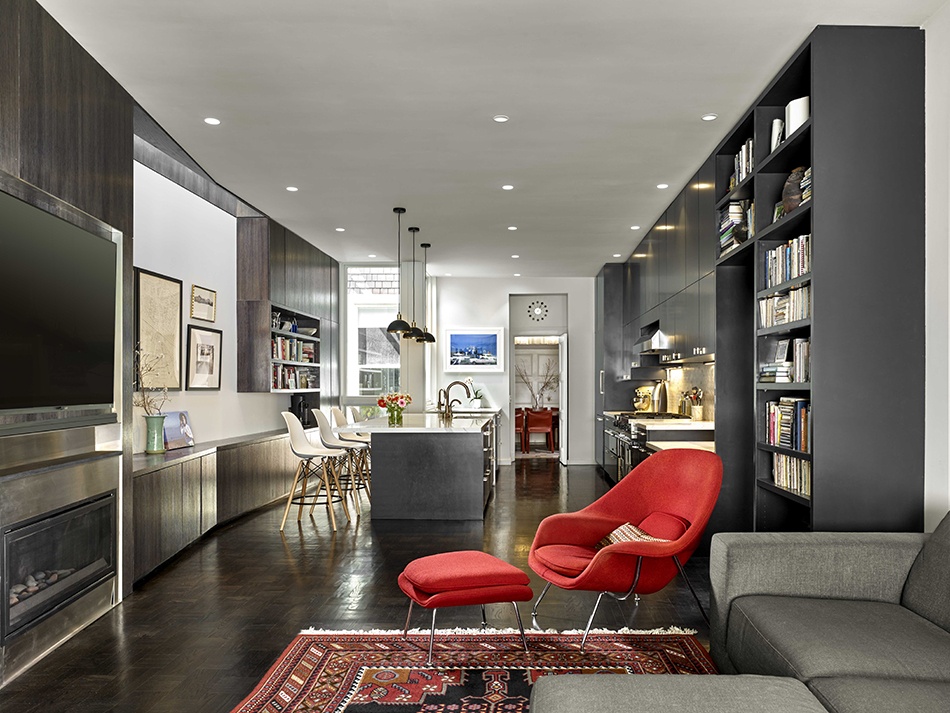
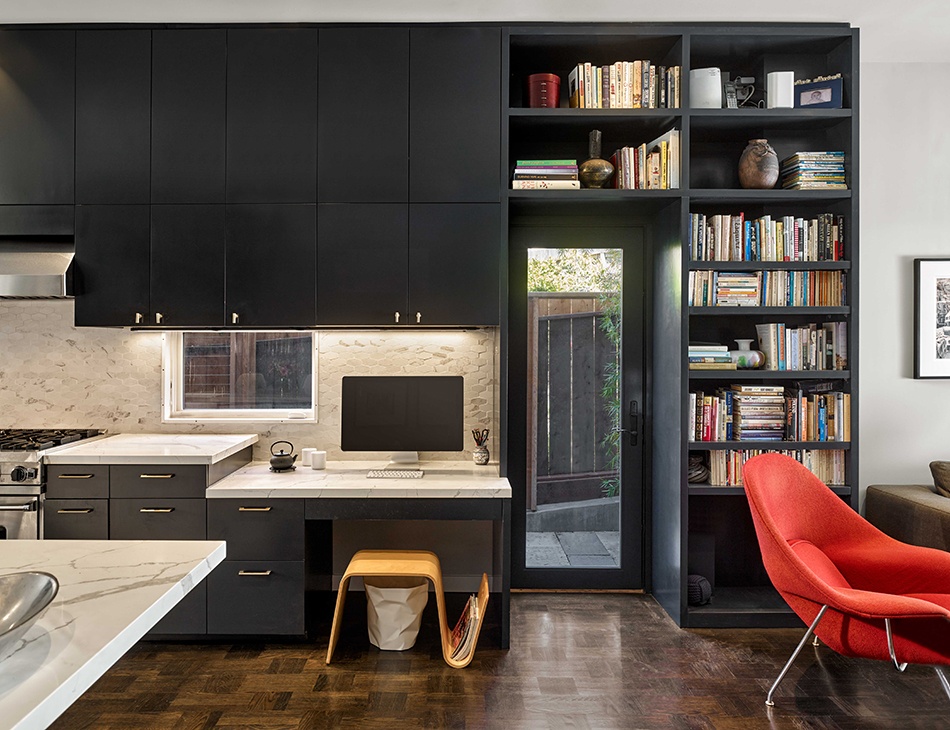
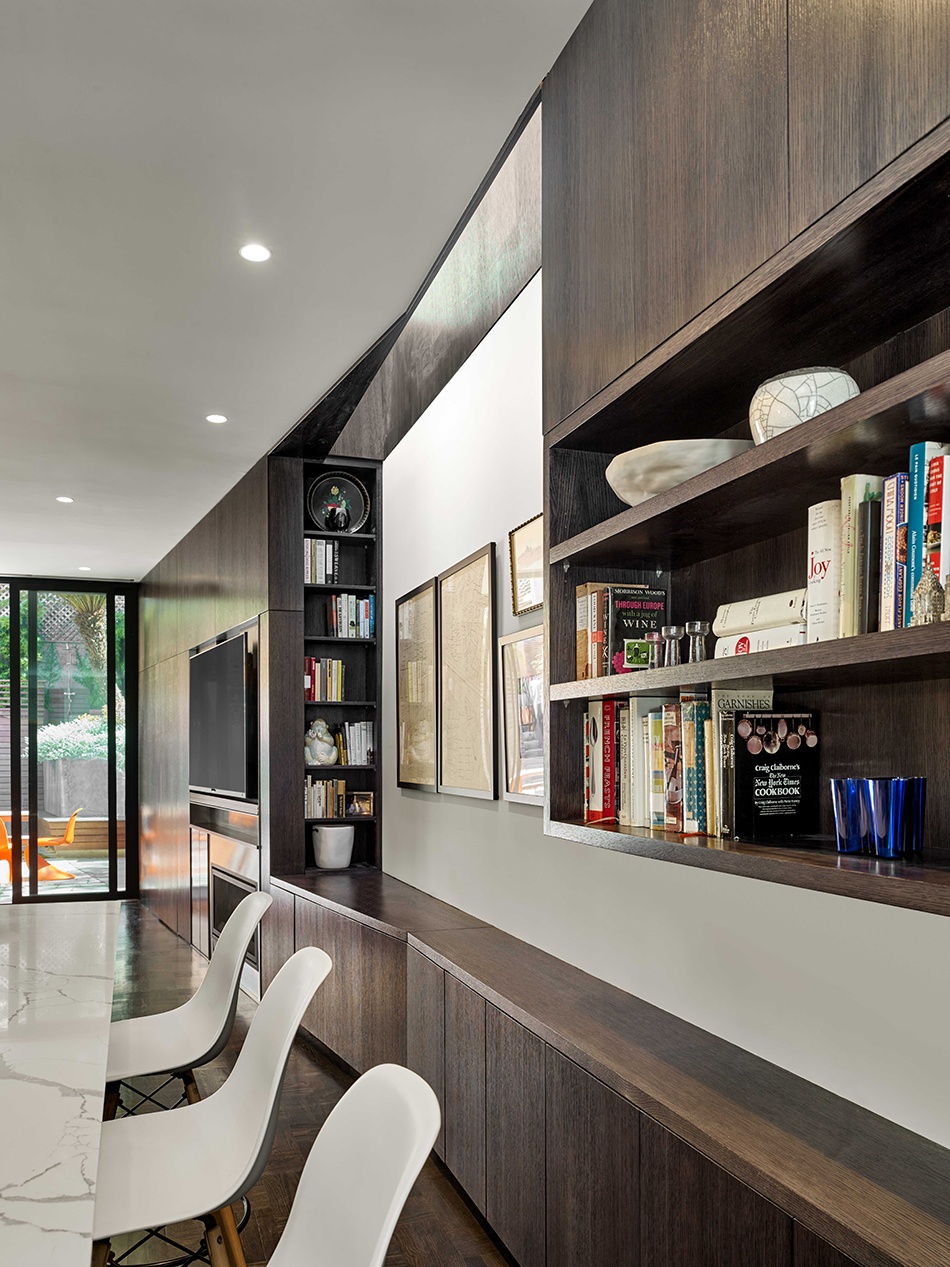
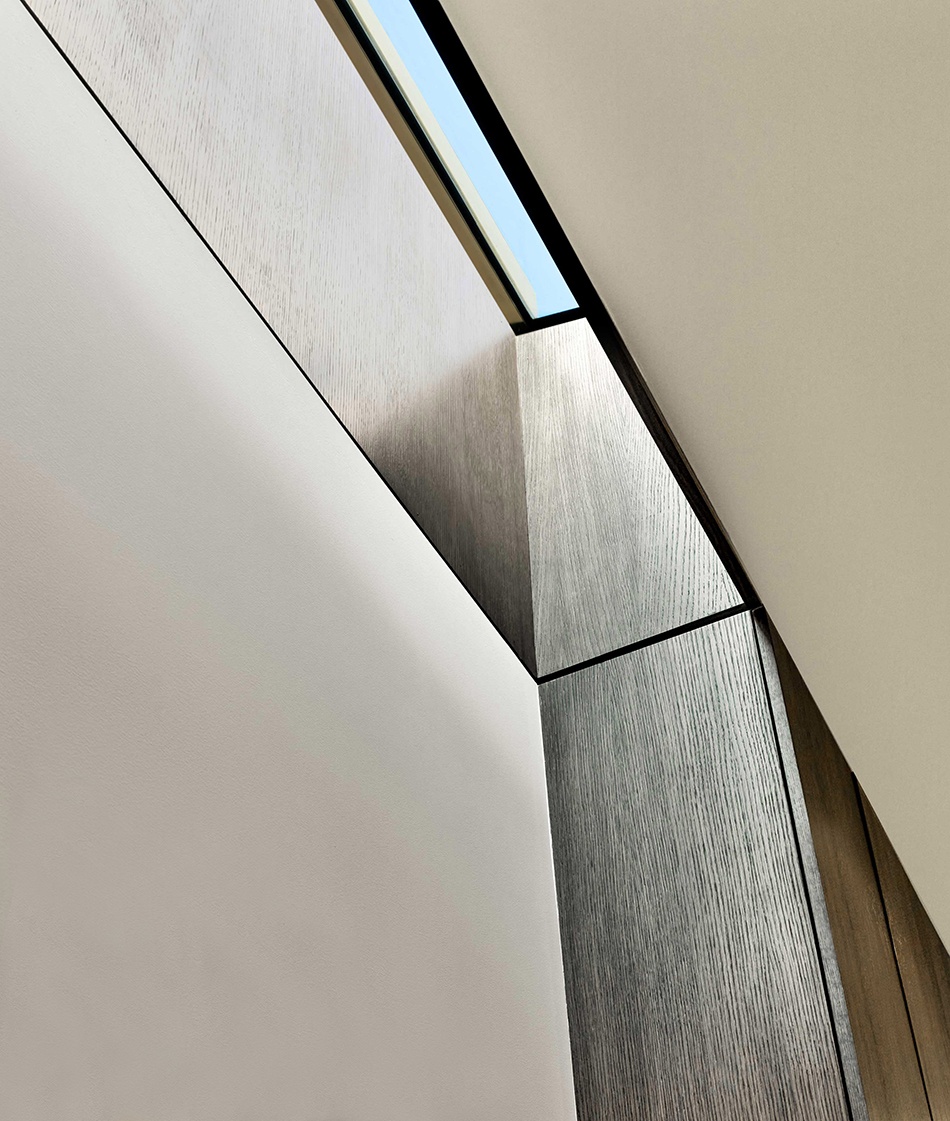
A full height cabinet “smart-wall” inside the residence epitomizes the key aspect of this project: the integration of spaces. This smart-wall establishes a material transition between the kitchen where it acts as a storage and shelving wall into the family room. From this living space, the design transforms, containing a new hearth, skylight, and entertainment center, before moving all the way through to the garden patio window wall where it thickens to conceal a secret, private full bathroom.
Framed by Wood
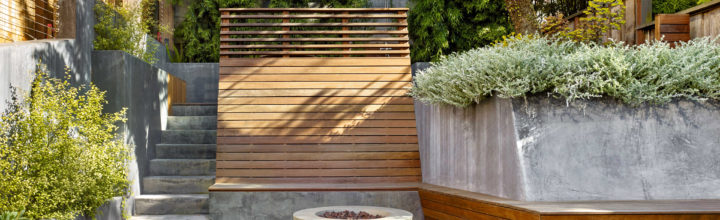
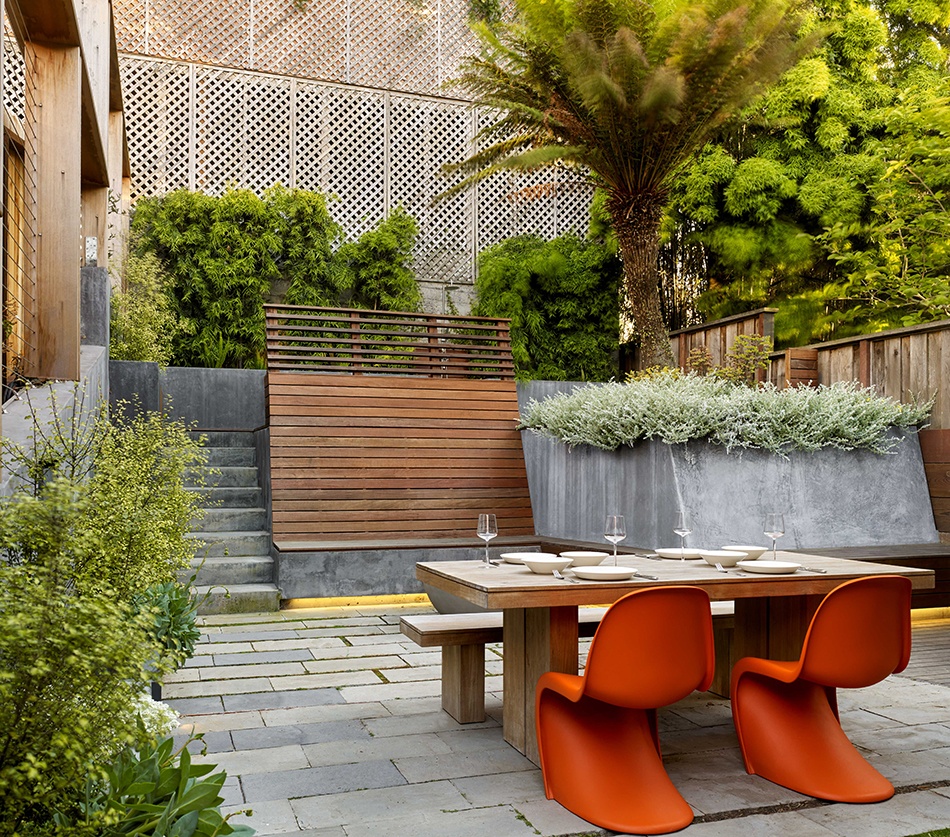
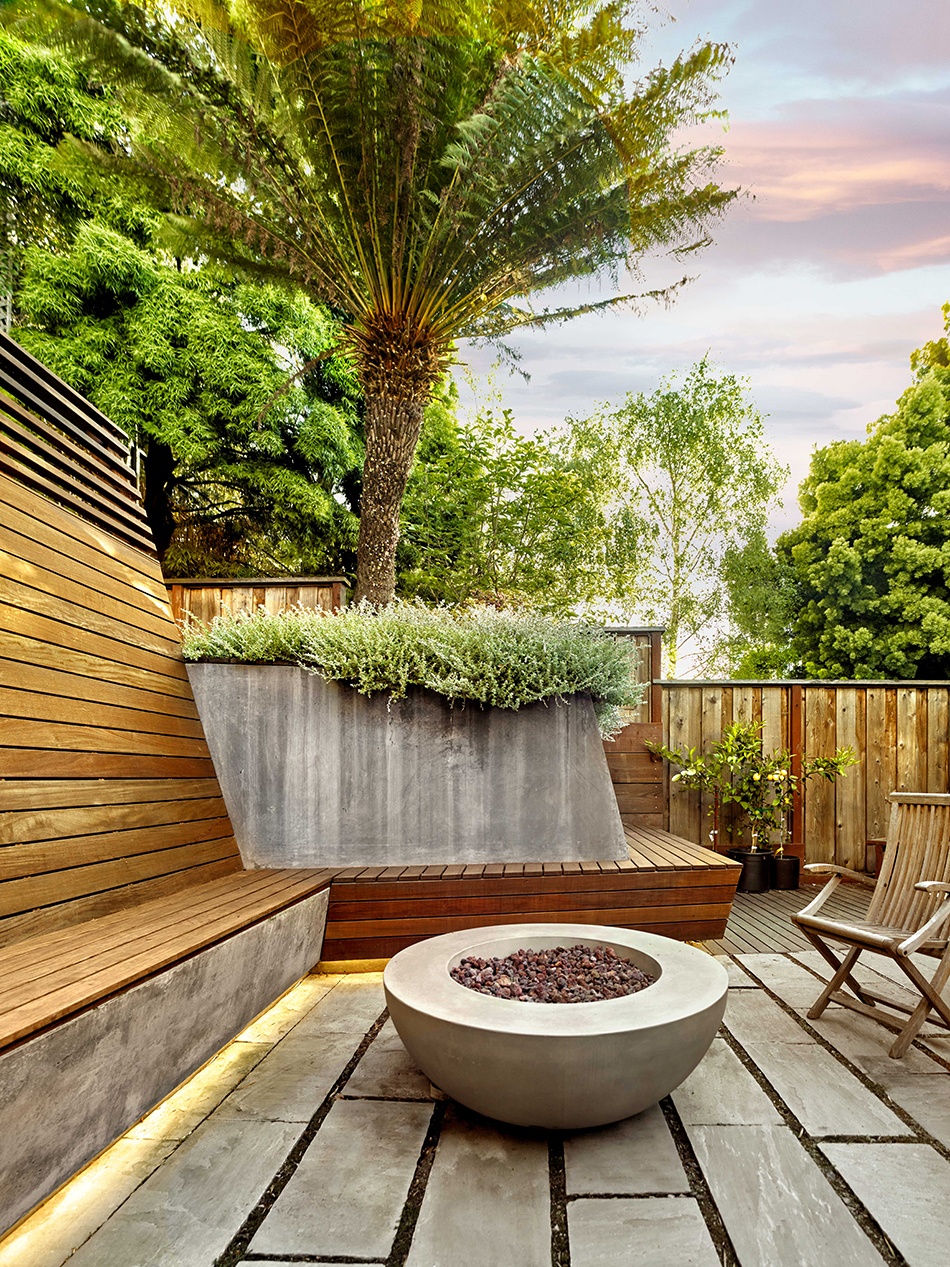
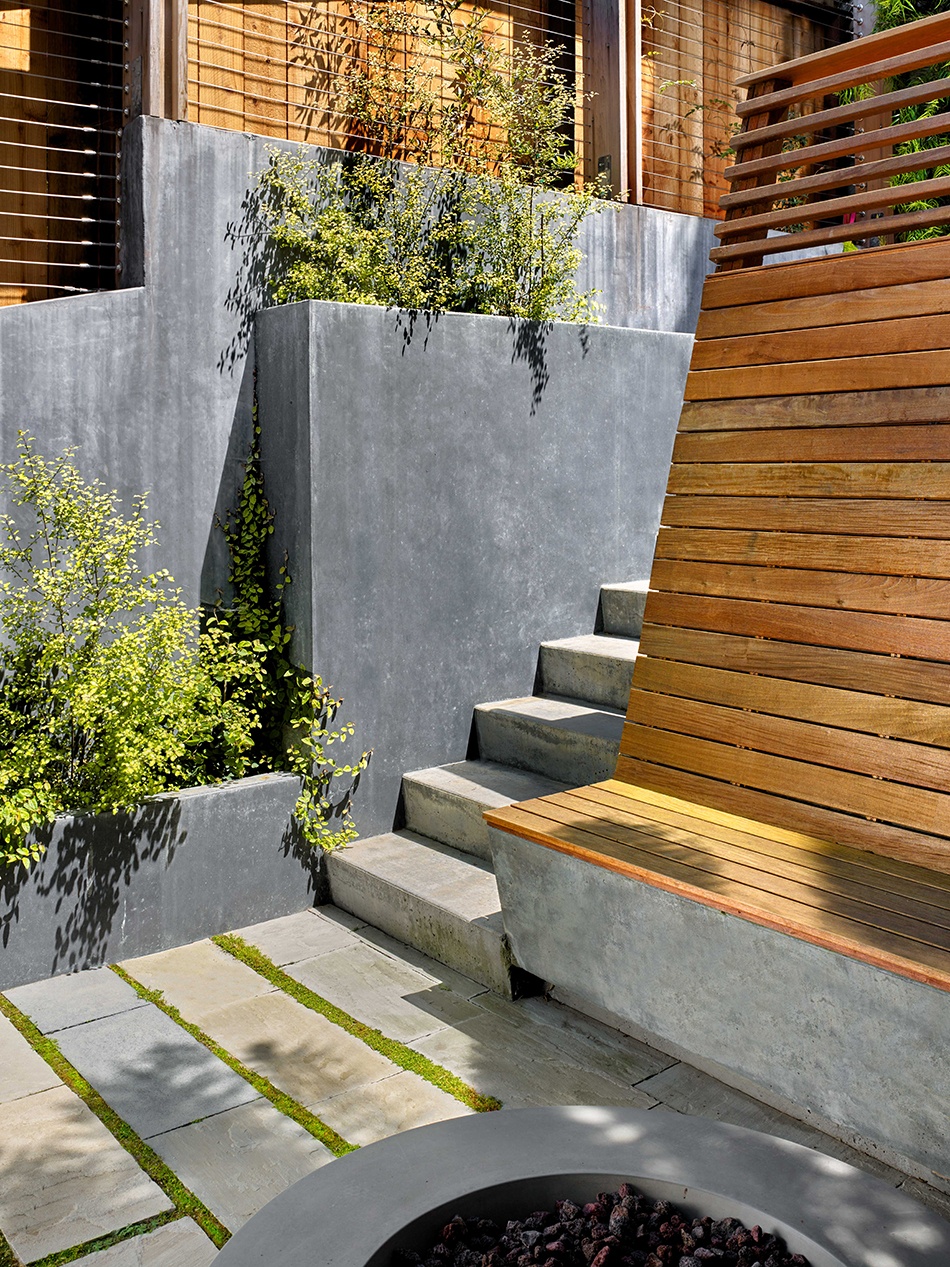
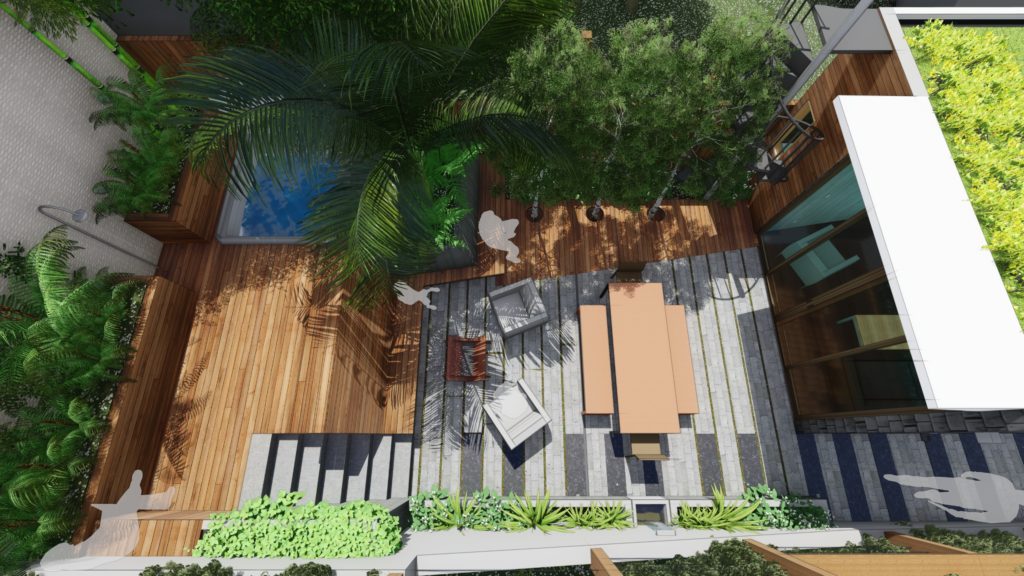
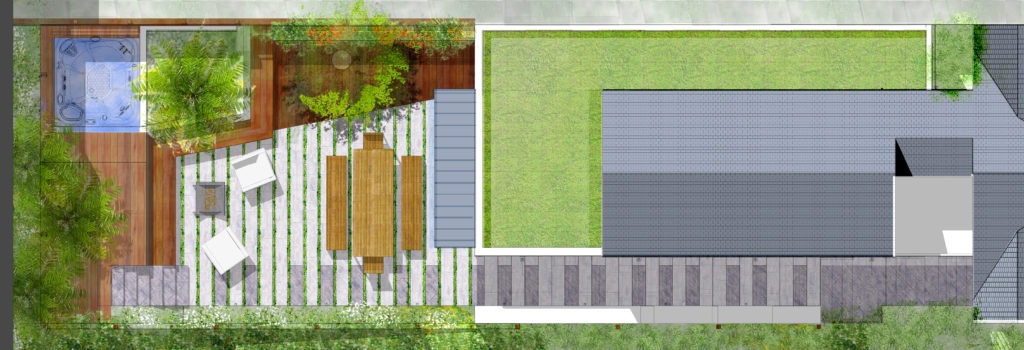
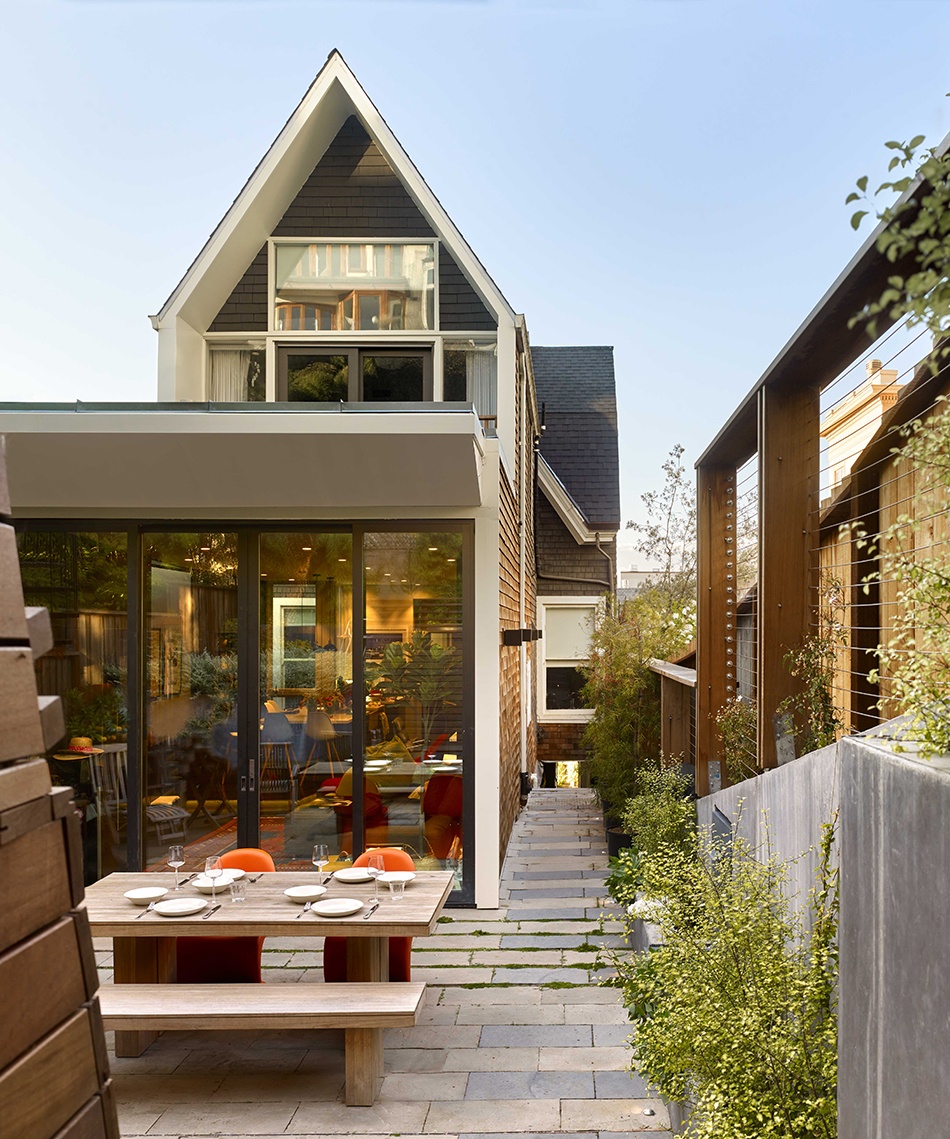
Outside, the landscape is restructured from three unusable levels into a spacious two-level terraced garden. The living level provides a patio deck beyond the dynamic glass wall of the family room for exterior dining. An in-wall fountain anchors one end, along with a wood clad raised sun garden and a cozy fireplace, all framed by the warmth of wood and dark, smooth concrete. Together these materials form a seat back that wraps the retaining walls and connects the more remote and private upper garden level. The upper garden is set on a wood clad deck with a sunken hot tub, an outdoor shower, and a hammock, all sheltered by deep plantings and mature tree ferns.
Natural as the Counterpoint
The predominance of natural exposed materials permeates the garden and the interior palette, allowing for a more sensual counterpoint from the rest of the formal and more traditional home. Warm materials and discreet lighting create an inviting and pleasant night presence, while communicating an easy comfort as the home dissolves from interior to outdoors across the expansive glass facade. Festoon lights above and a spiral stair to the upstairs extended green garden roof improve the second level private studio.

Bringing Light Down
INTERSTICE designed the kitchen and light-well as a light-emitting garden column planted with tree bamboo. This space was particularly meant to bring light down into the new, lower media and guest room, excavated to host service spaces including an independent laundry room and full bath that allows for connection or full separation from the home office level below, and for the owners to enjoy increased privacy.
Location: Vallejo Street, Pacific Heights, San Francisco.
Owner/Client: Undisclosed
Scope: Residential Renovation & Garden Design
Status: Completed 2020
Photography: Cesar Rubio
Baker Street Residence
A New Realignment
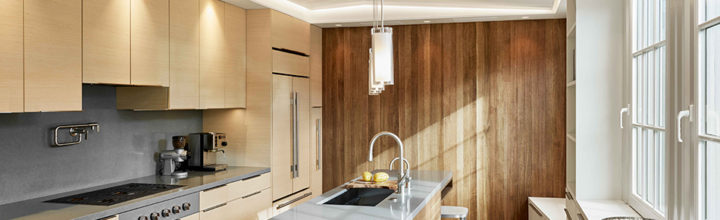
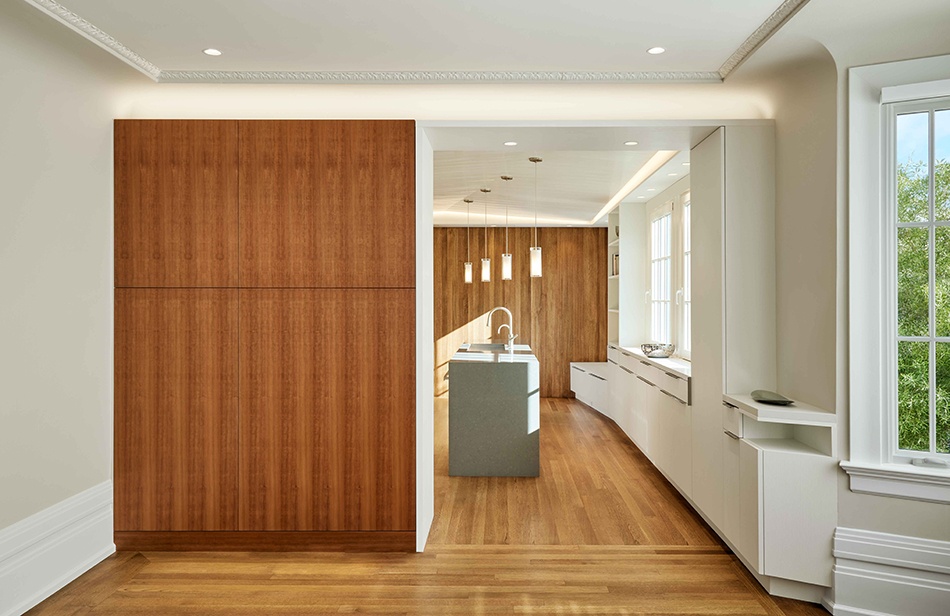
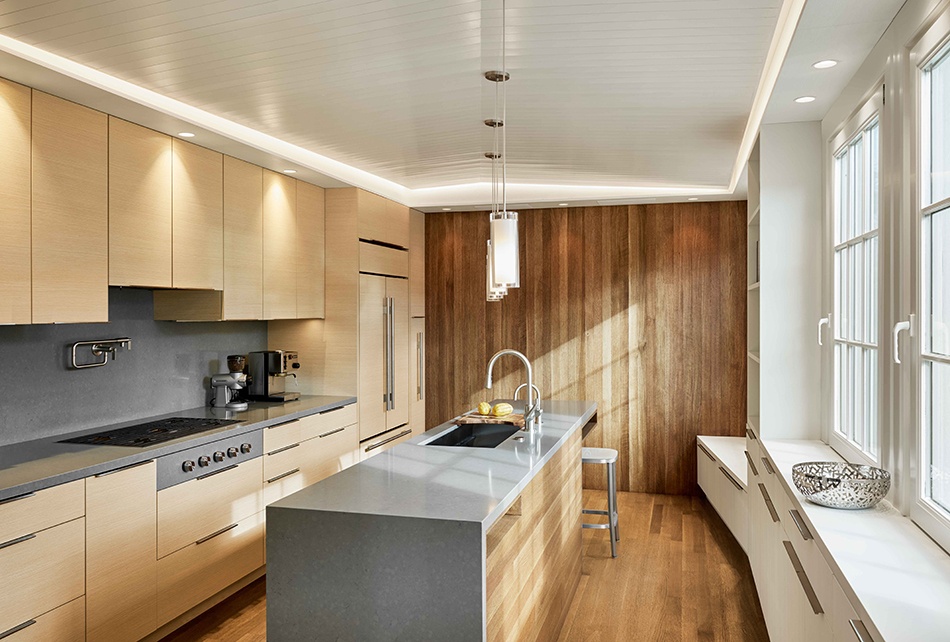
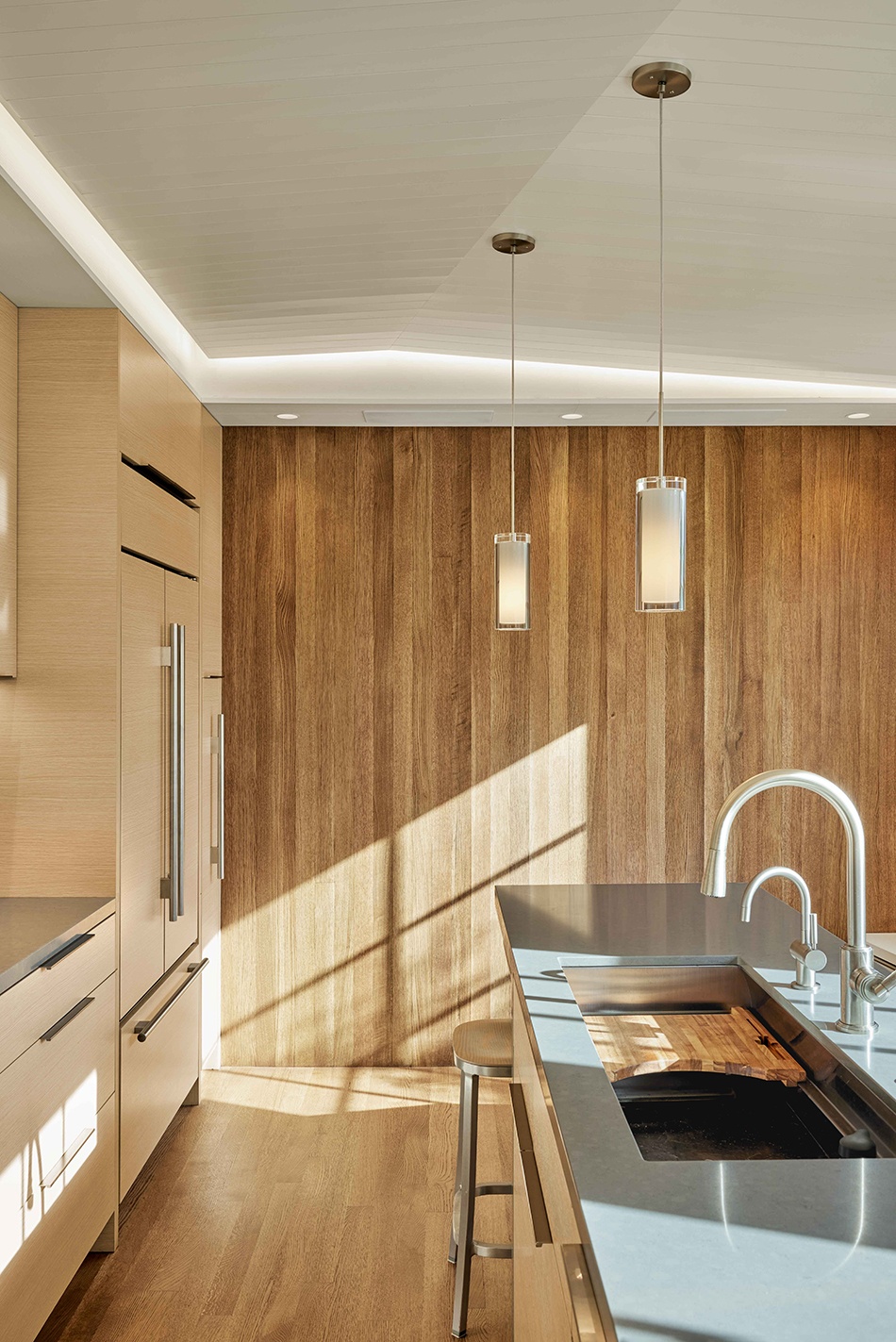
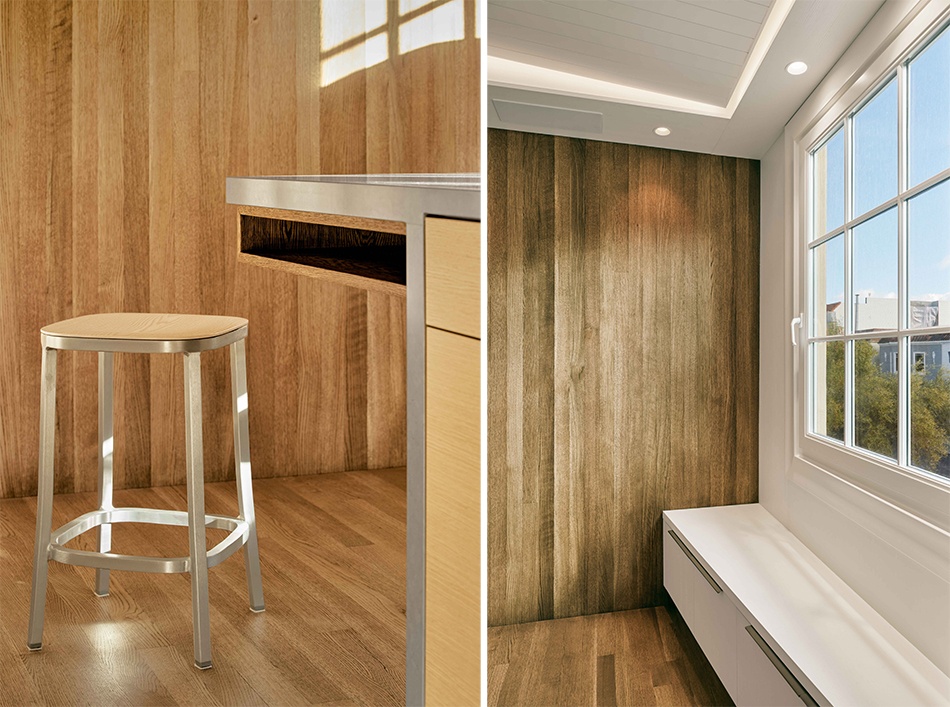
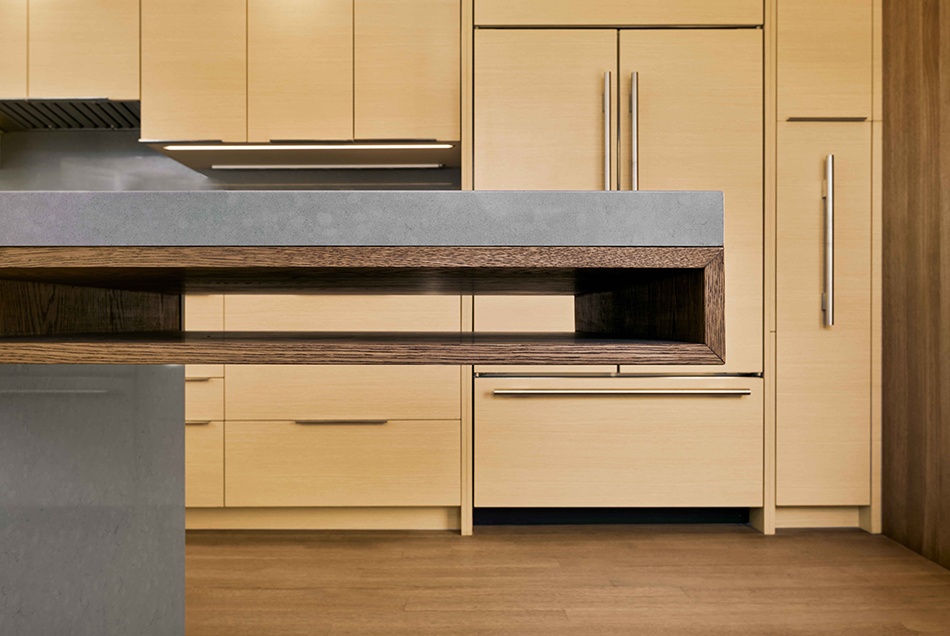
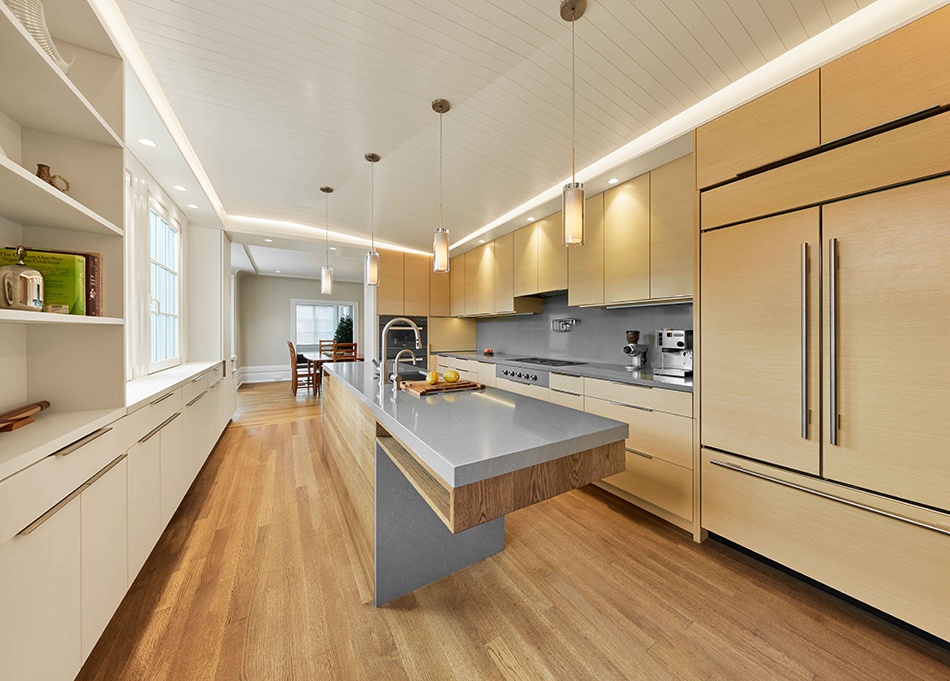
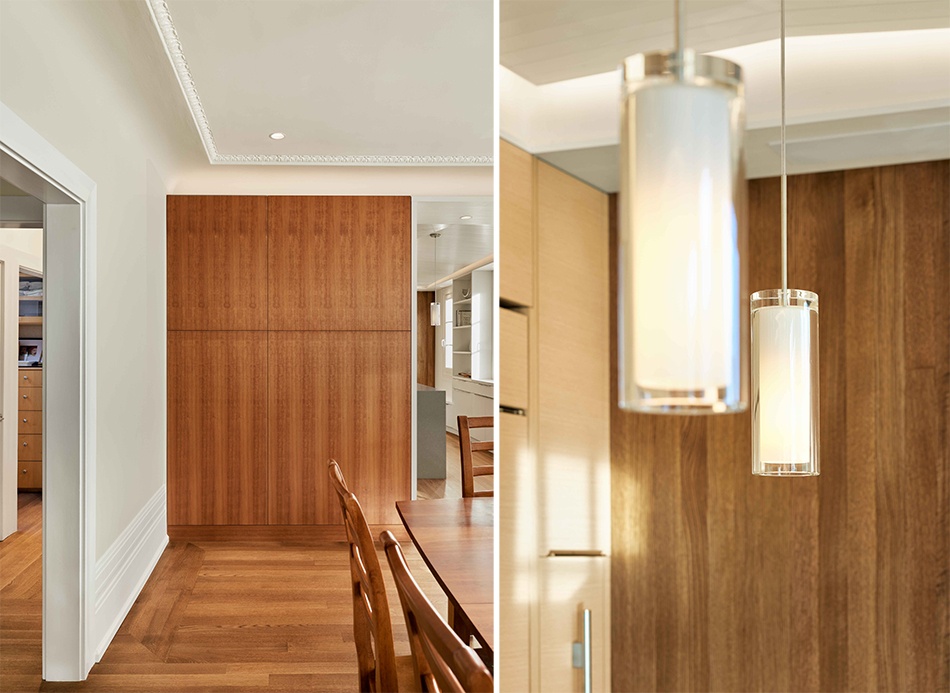
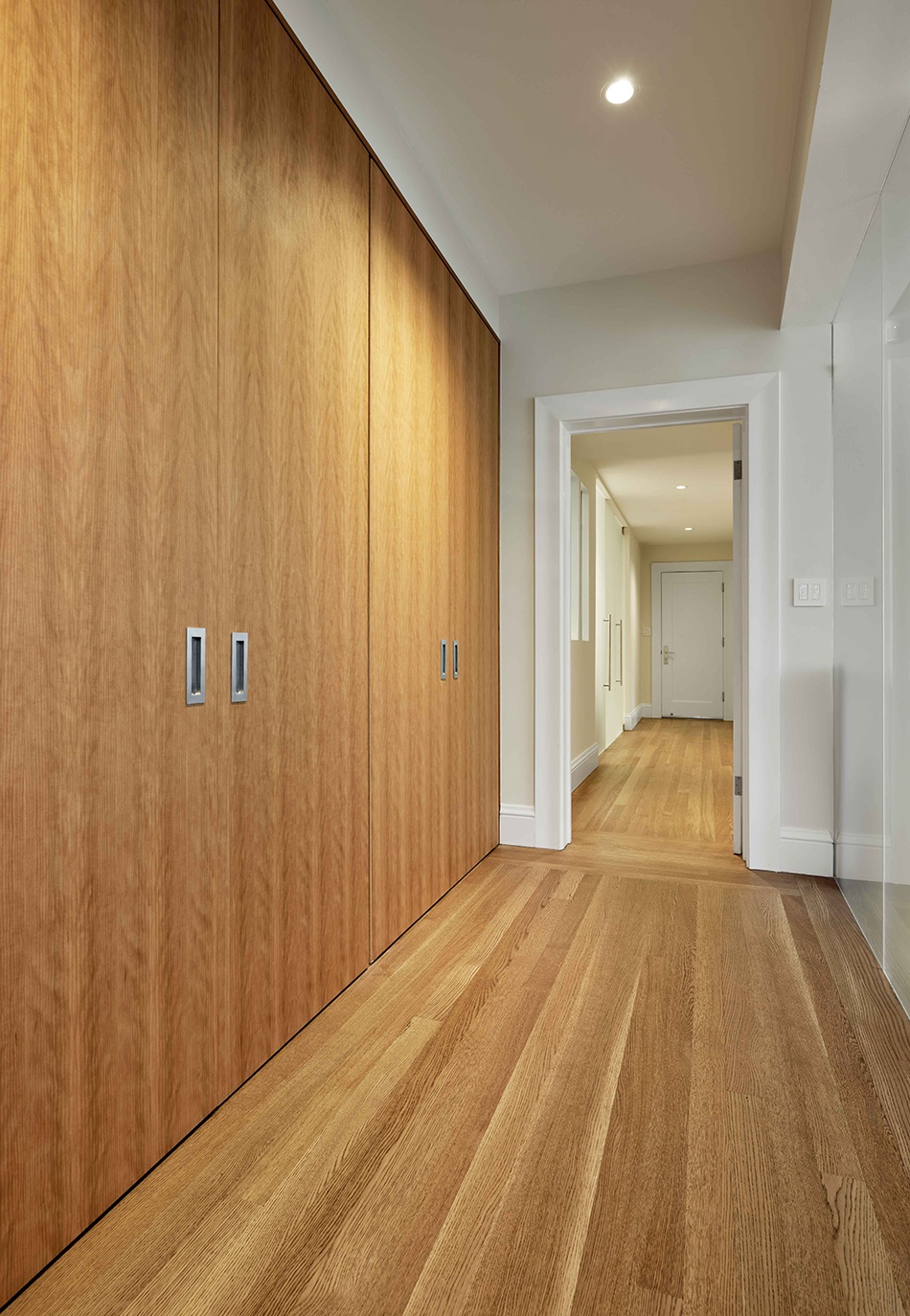
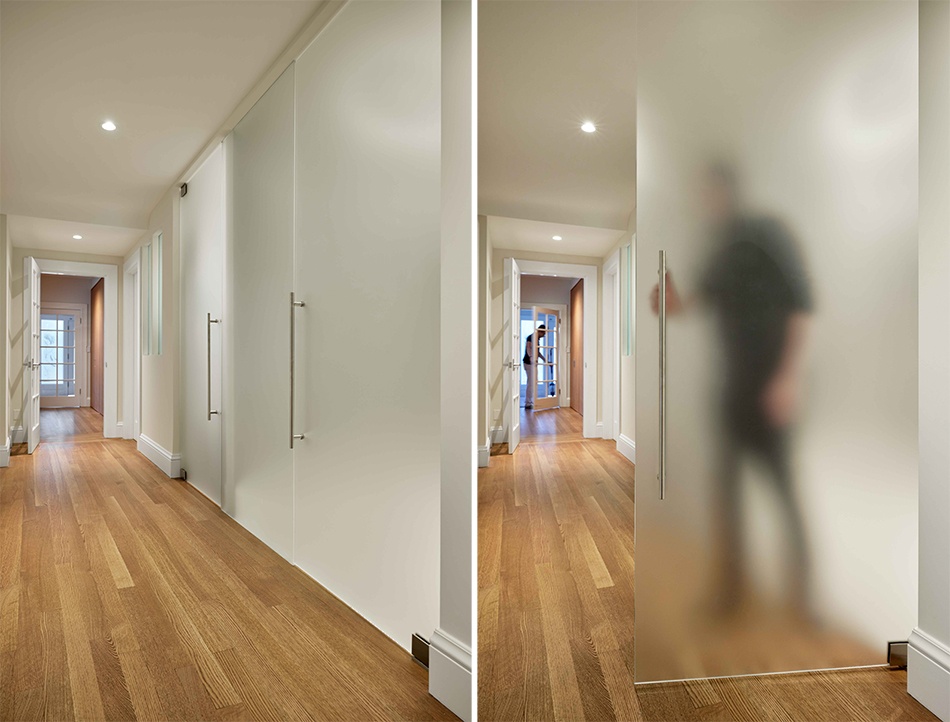
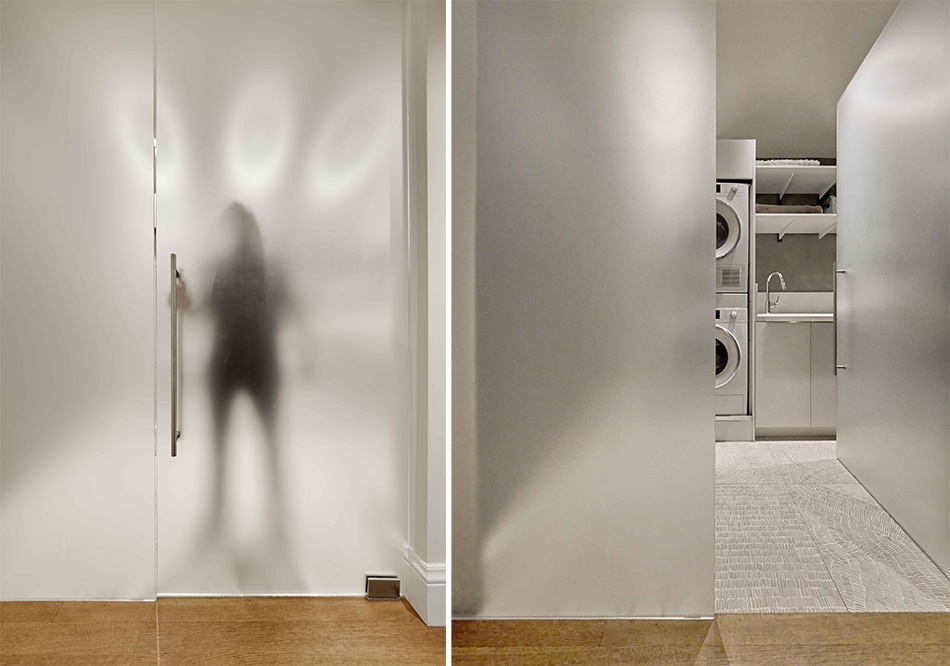
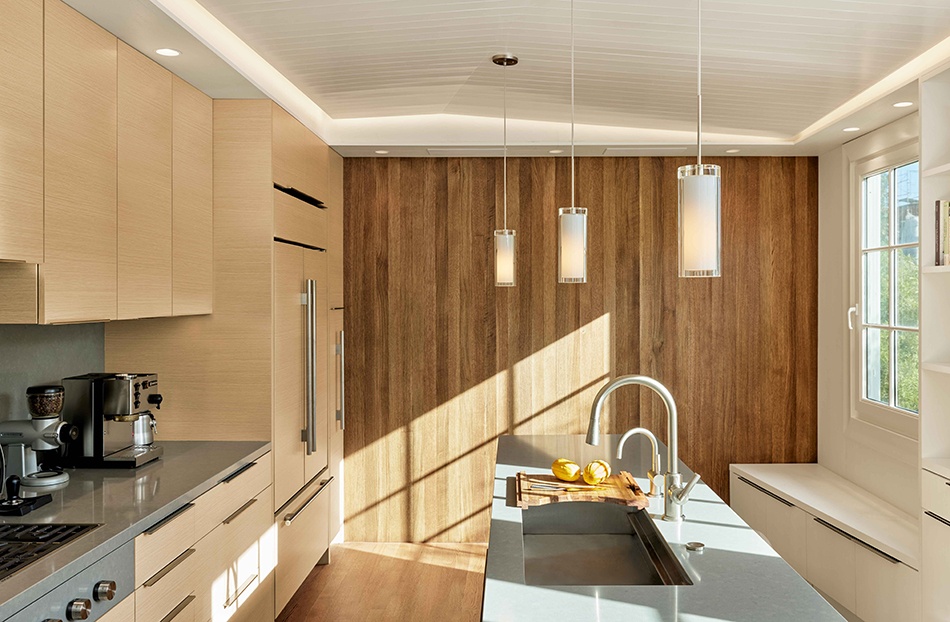
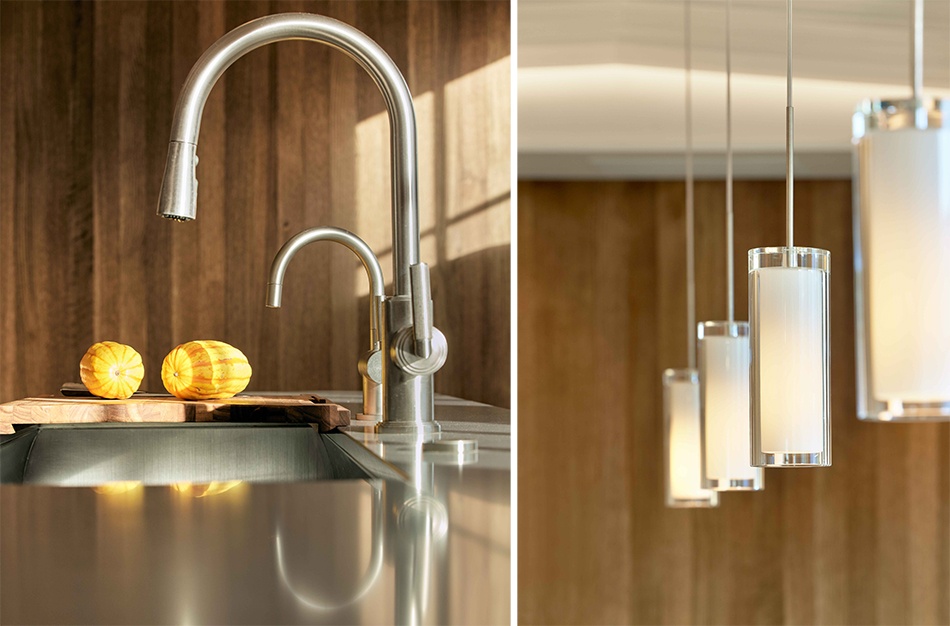
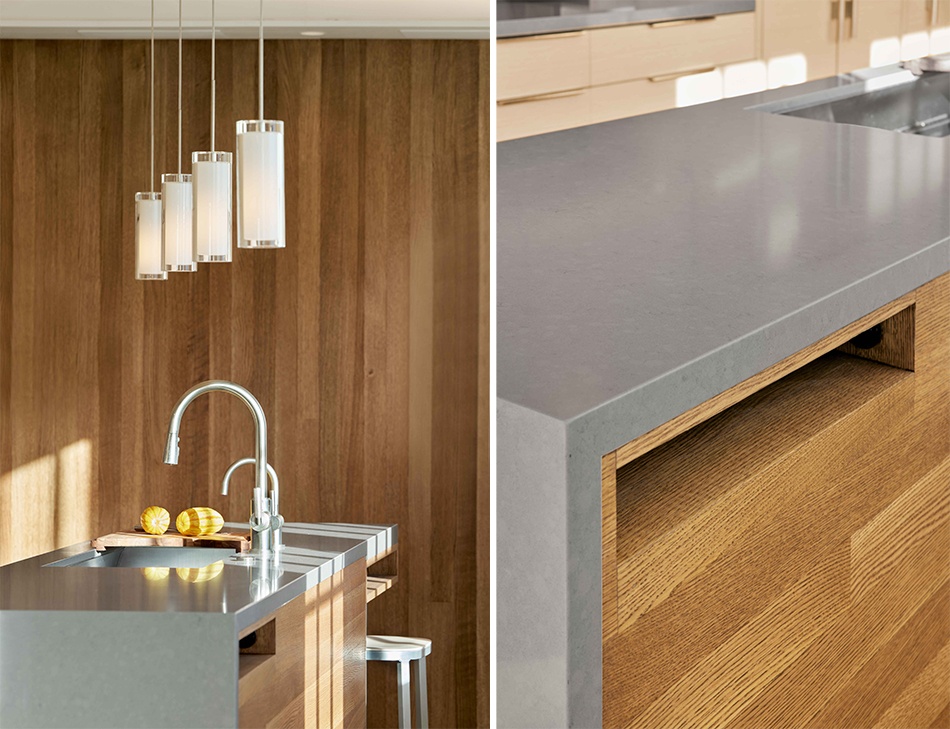
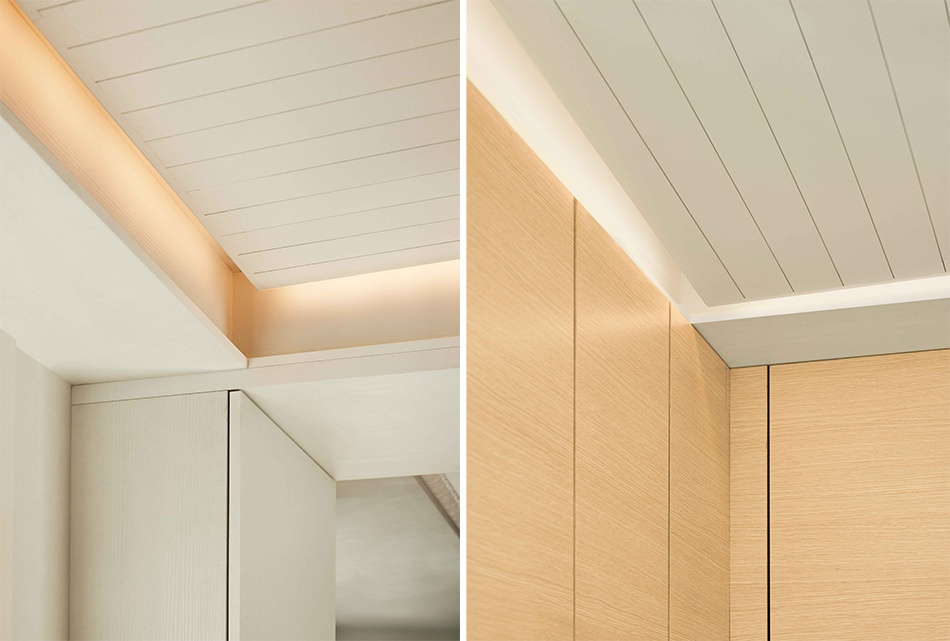
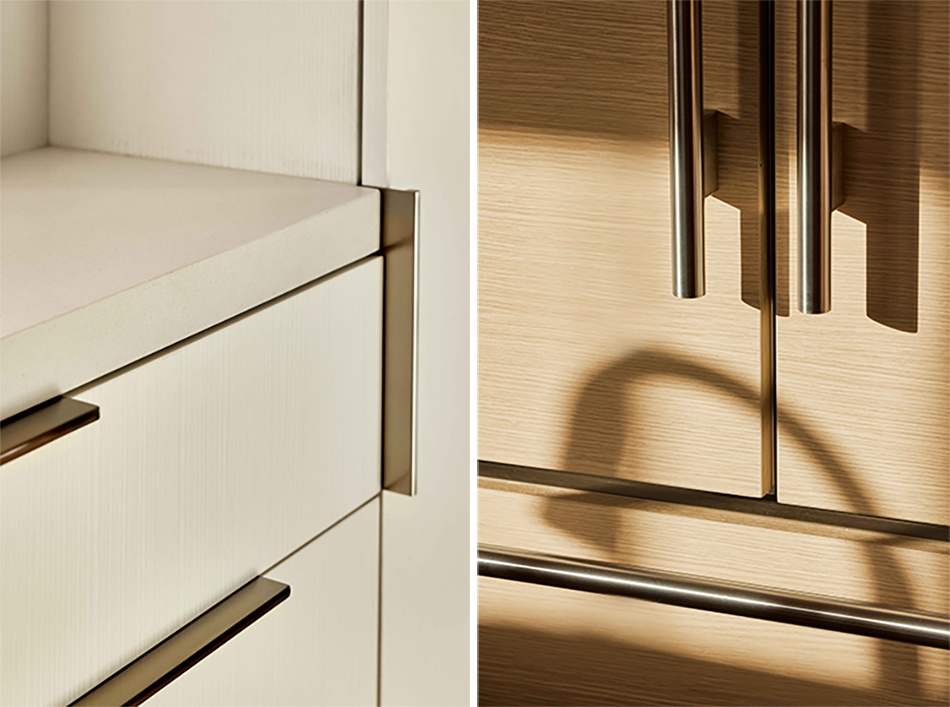
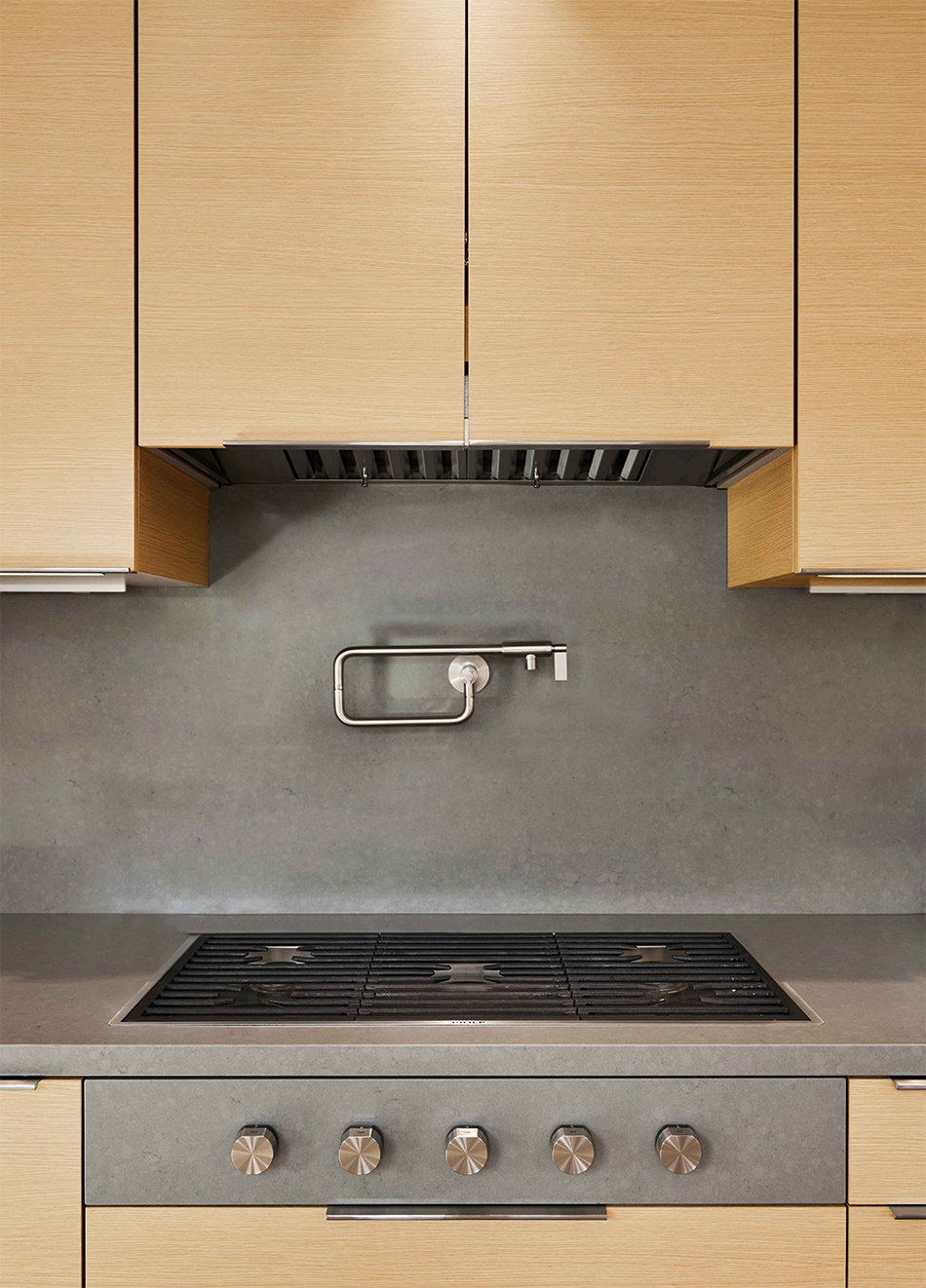
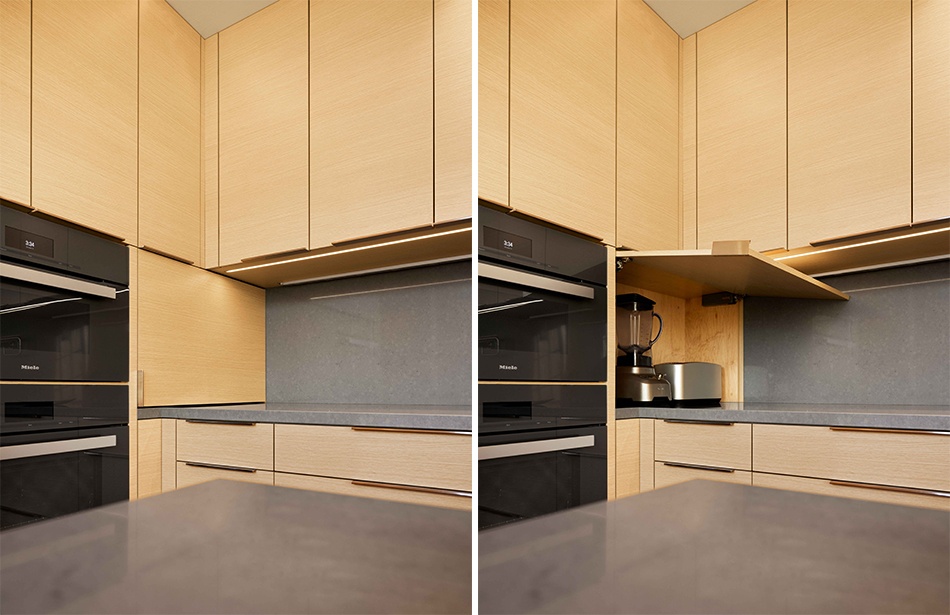
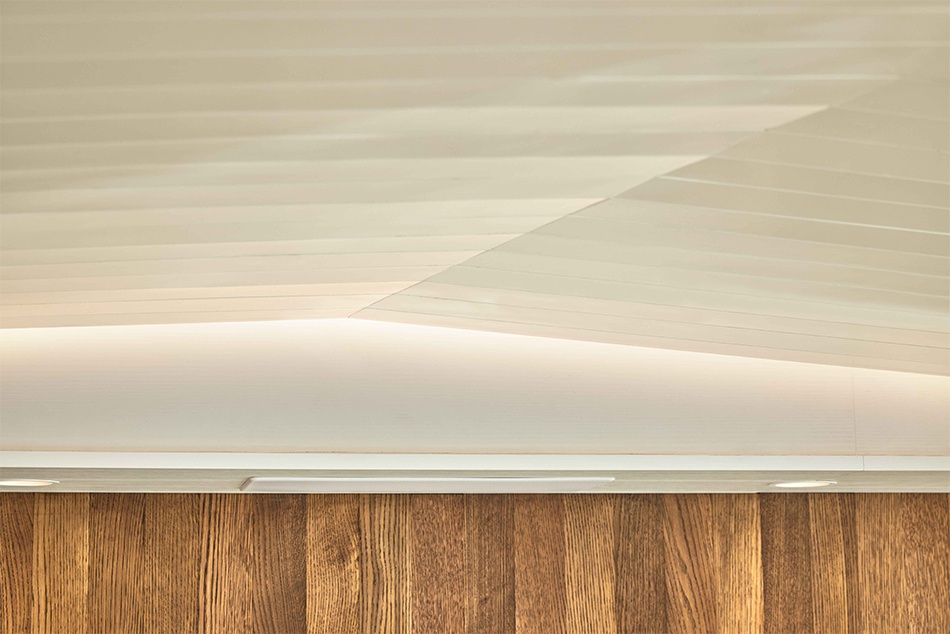
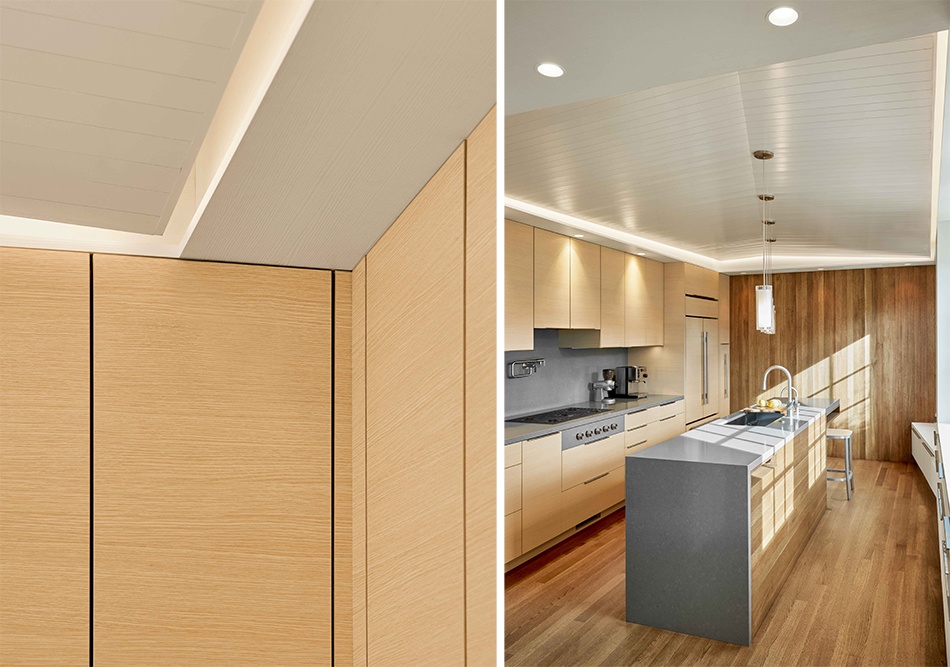
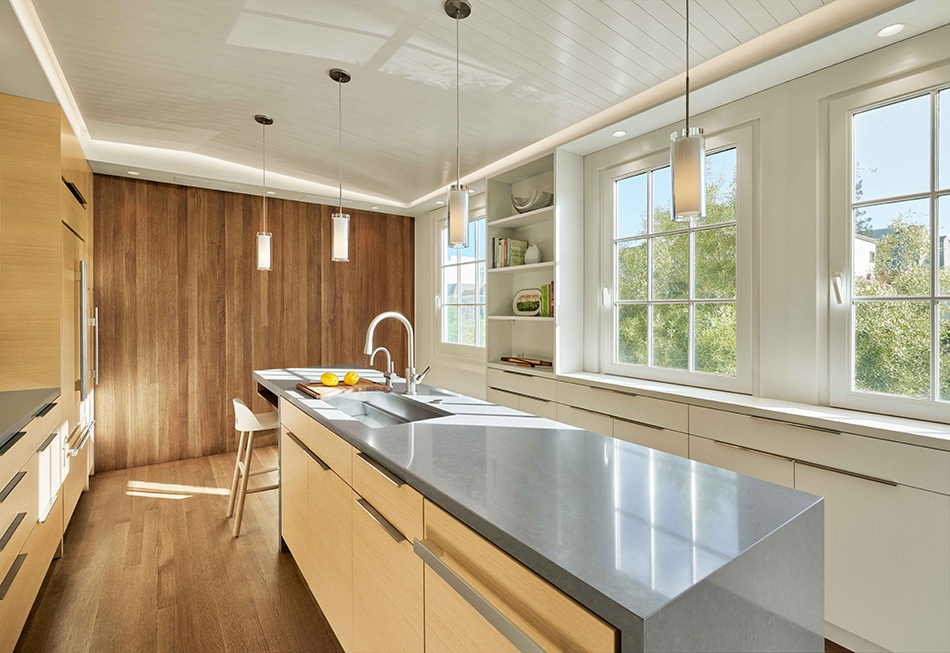
This project located in the San Francisco Marina District near the Palace of Fine Arts has expanded from a modest renovation of the living space and kitchen to a more comprehensive revamp on two levels, creating a more integrated, modern, and functional living environment. The flow of the house is realigned to take advantage of this corner lot’s ample natural light and southern exposure. The kitchen becomes a warm social center with bleached woods, warm highlights, nooks, and cubbies for working and spending time together in this informal family-oriented space. Downstairs, the den, guest space, and storage are now clearly defined and better-organized in relation to utility areas and natural light. New glass walls and open circulation allow south light to penetrate deeply into the central areas of the home, breathing light into the renewed structure.
Location: Marina District, San Francisco
Owner/Client: Undisclosed
Scope: Residential Renovation
Status: Completed 2021
Photography: N/A
Polk Plaza Vision Plan
Grass Roots Urbanism
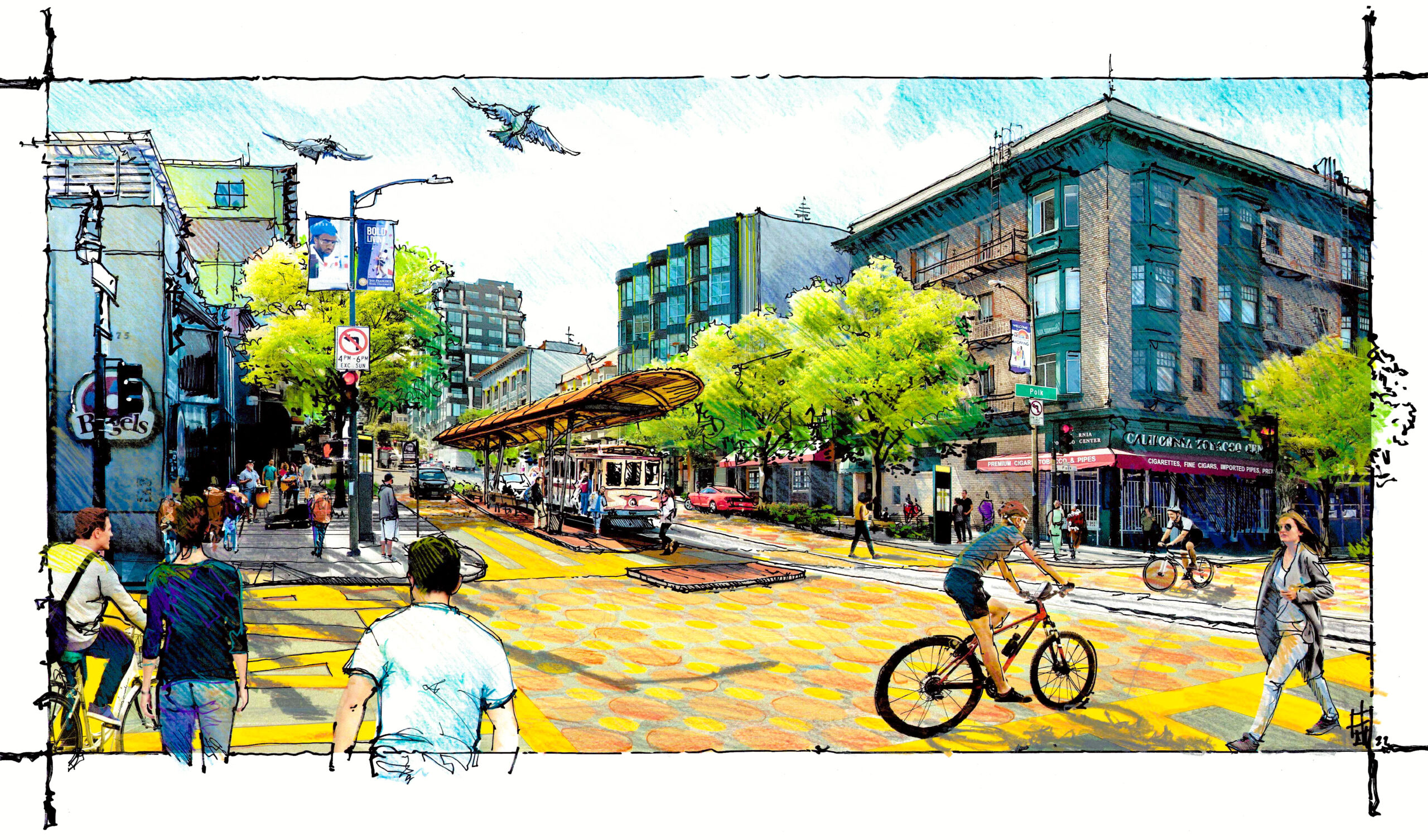
The culmination of many community-focused design workshops, and stakeholder input, that created the California Cable Car Turn-Around Vision Plan ignited the formation of a separate group committed to seeing this area become the gateway to the Polk Street mercantile corridor. The idea of creating a more formalized pedestrian focused transit node, away from the busy Van Nes corridor, here at the Polk intersection was the starting point for the Polk Plaza Vision
A New Cable Car Social Hub
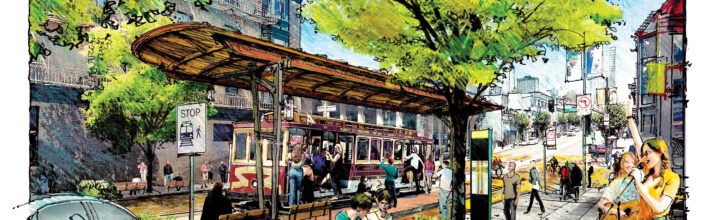
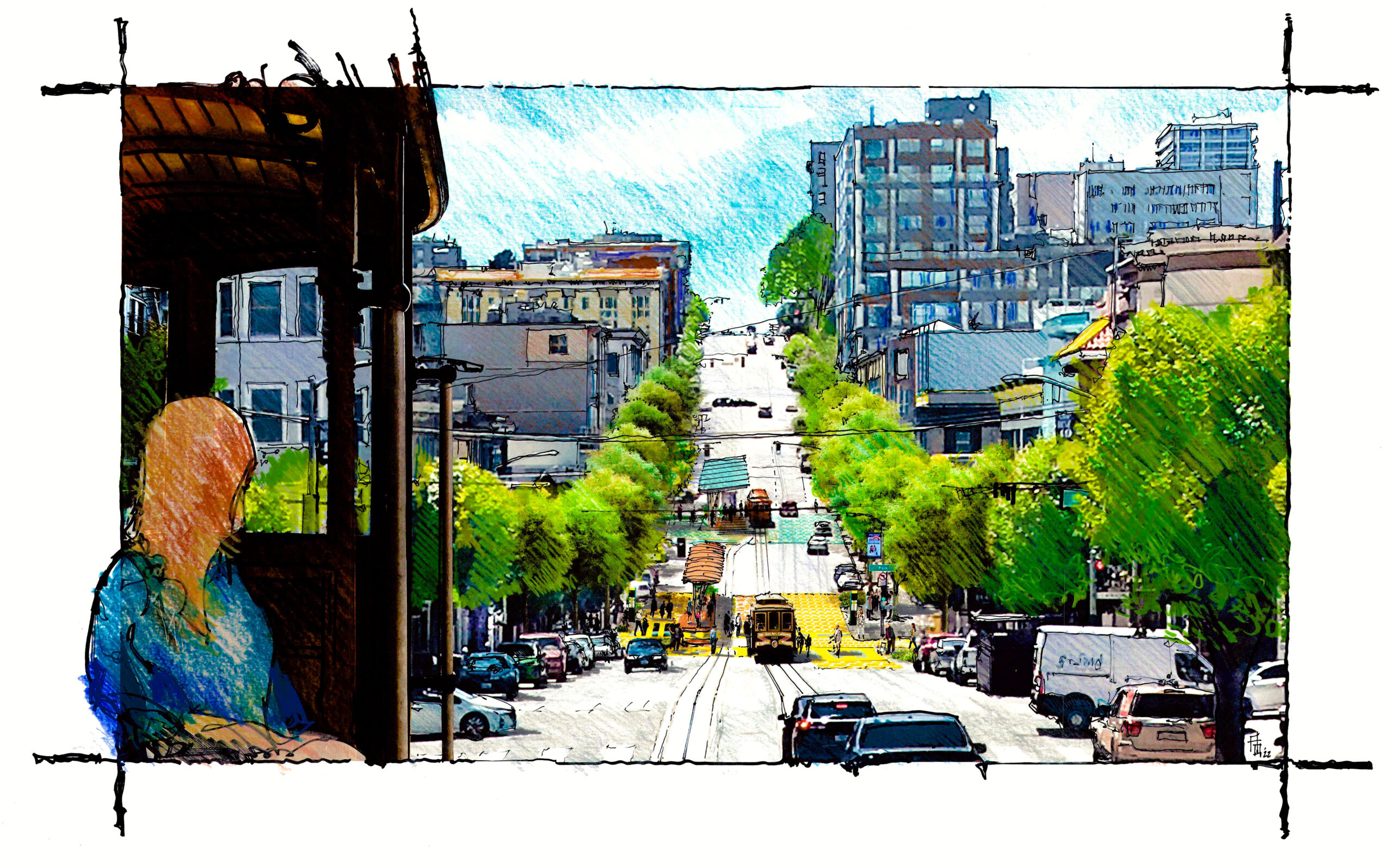
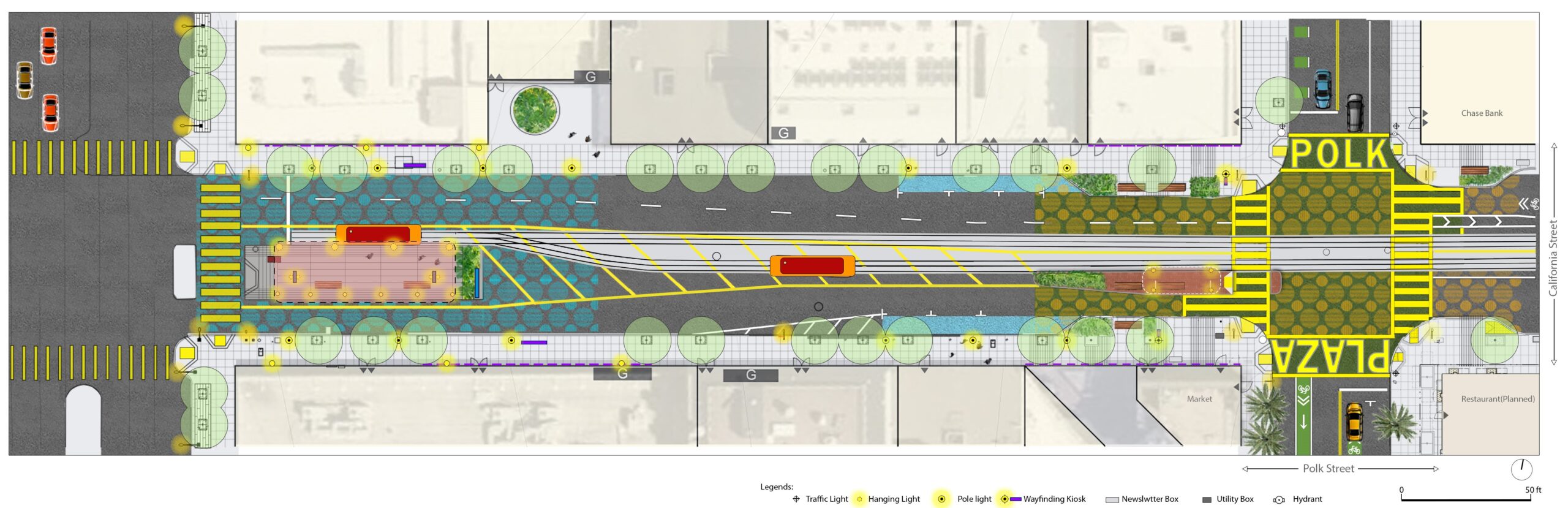
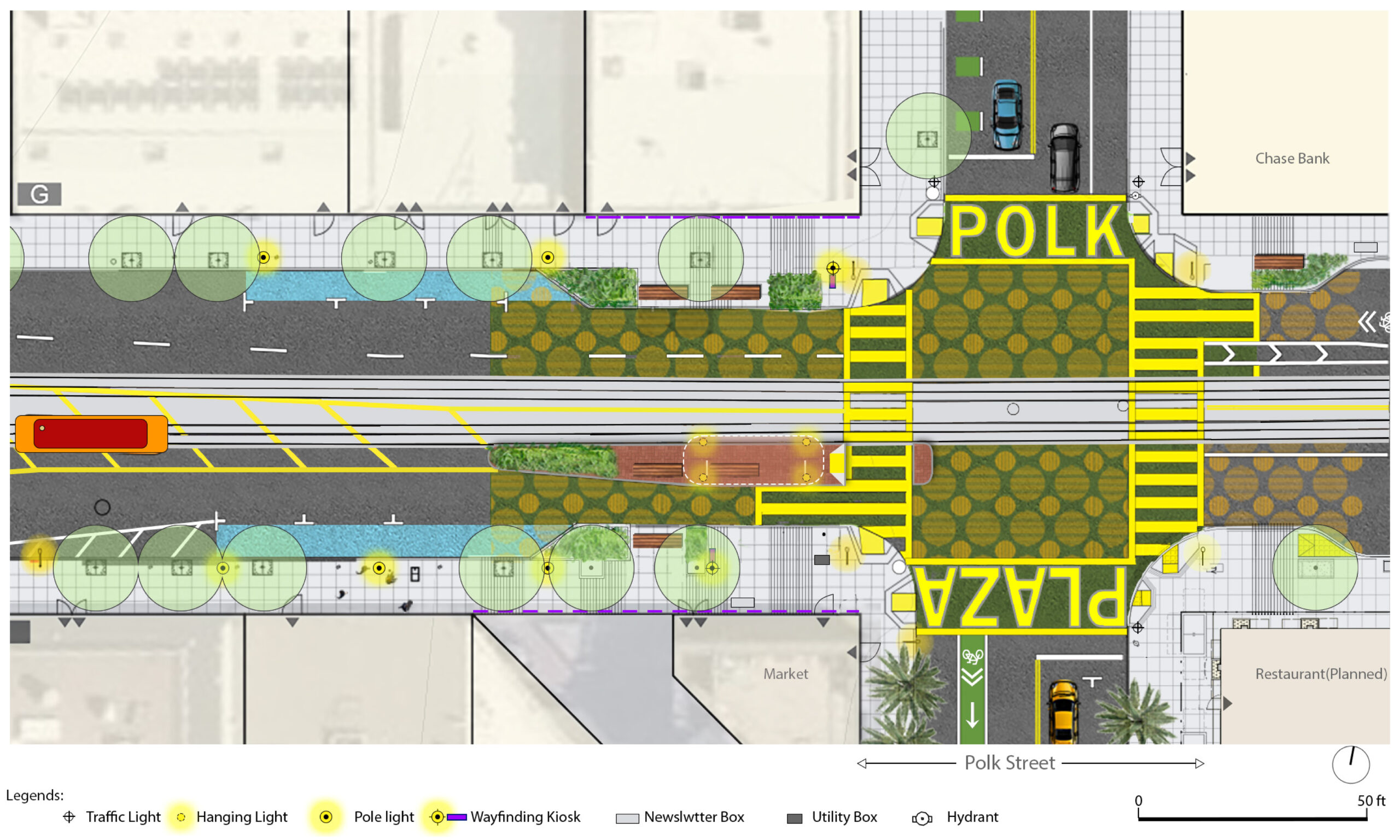
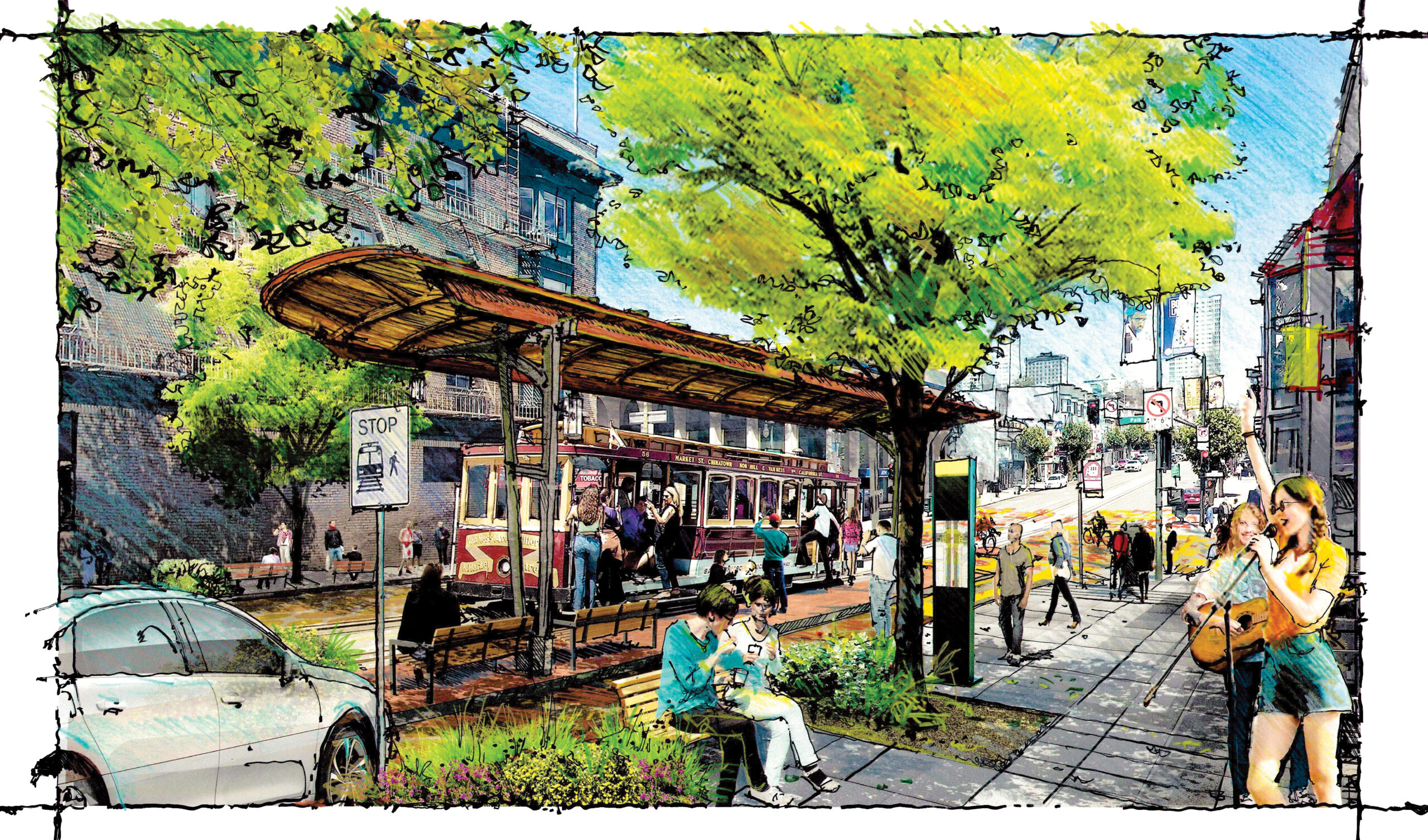
Working with the growing group of “friends” of Polk-Plaza, INTERSTICE was asked to create an addendum to the original vision plan that focused on the Polk intersection cable car stop, with its obvious connections to the community, and to the heritage of San Francisco’s iconic cable car past. The intersection is envisioned to serve as the gateway to the city’s western center – With widened sidewalks, bulbed curbs, street amenities and plantings at the four corners, the intersection at California street forms a larger hub connecting the bike lanes, and personal mobility routes to this very walkable neighborhood, with its heritage merchants, eateries and lively bars, that characterize this thriving Polk Gulch neighborhood.
From this new activated area, visitors and locals are just steps away from Nob Hill, Russian Hill, Cathedral Hill, Civic Center and the Tenderloin neighborhoods – so, it seemed the natural place to envision a lively orientation point at the western most terminus of the Cable car system.
Focusing Community
Here Street musicians would serenade the waiting commuters, the passing shoppers, and the tourists on their elevated journey over the hills – to and from the Embarcadero and Chinatown. The plan imagines a redesigned civic space that makes people welcome and provides opportunity for interpretive signage, wayfinding , and musical programming from the nearby Music City Studios and hotel. The entire Vision plan can be found here – with the Polk Plaza addendum published here as a standalone document.
Join the friends of Polk Plaza and the Polk Corridor Neighbors as we continue to work on the best public commons for our San Francisco neighborhood.
Location: California and Polk Streets, San Francisco.
Client: Lower Polk CBD and Friends of Polk Plaza
Scope: Urban Design
Status: Vision Plan
555 Larkin / 500 Turk
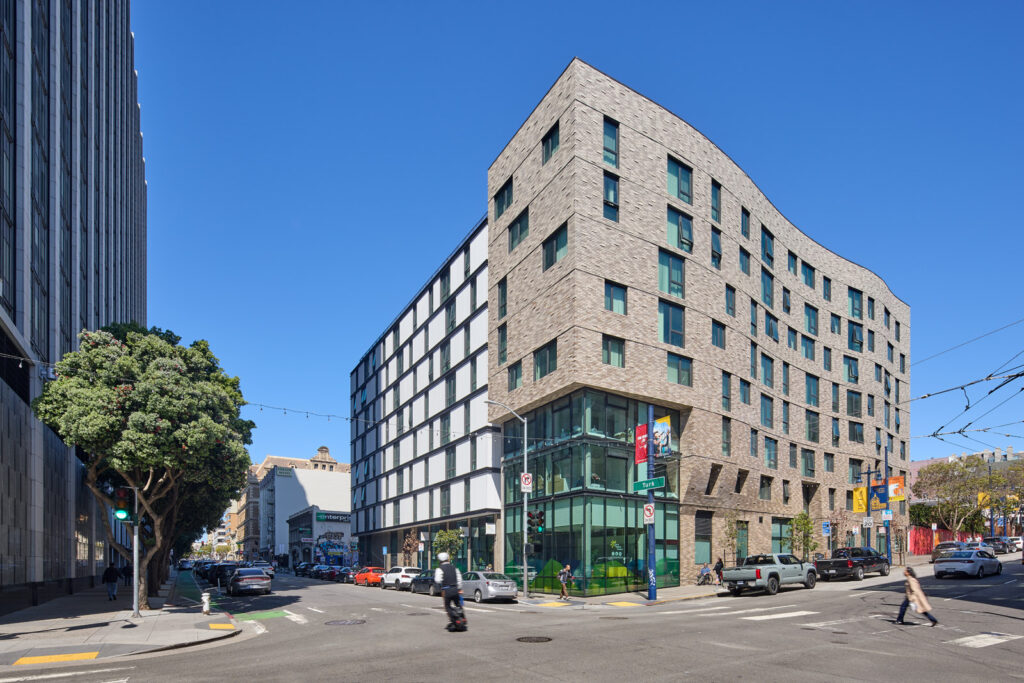
Honoring History through Revitalization
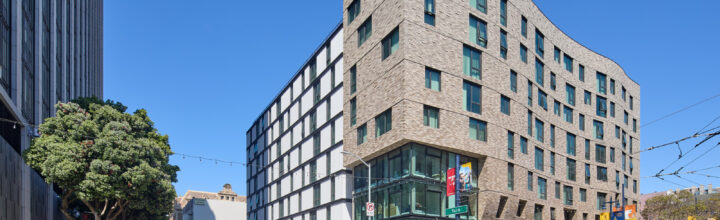
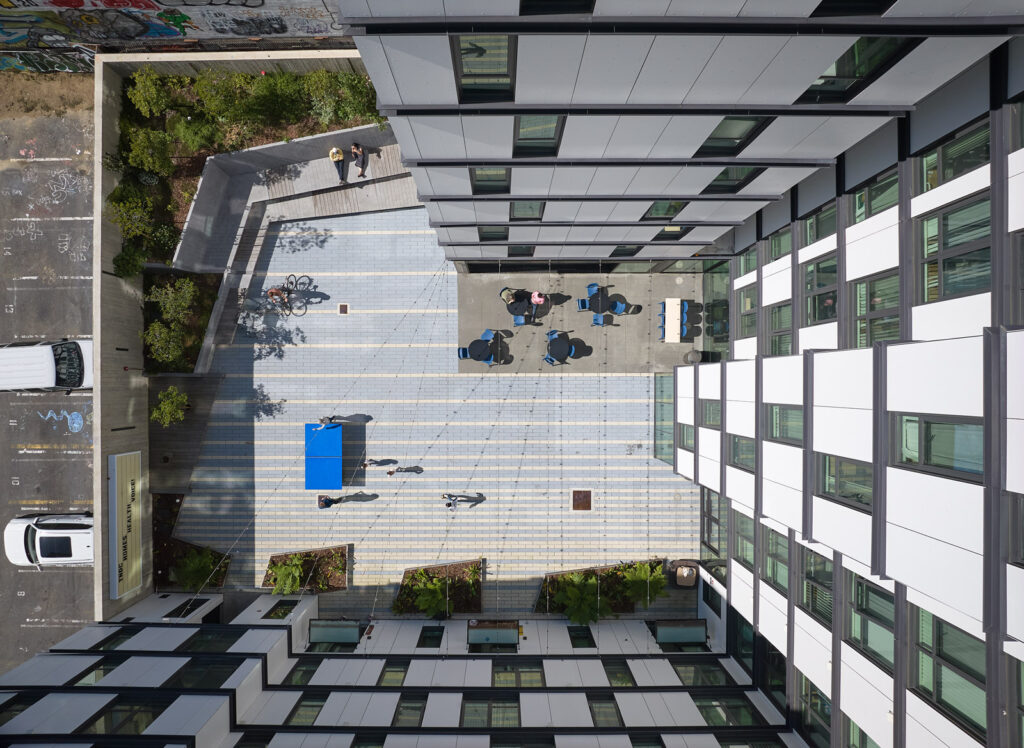
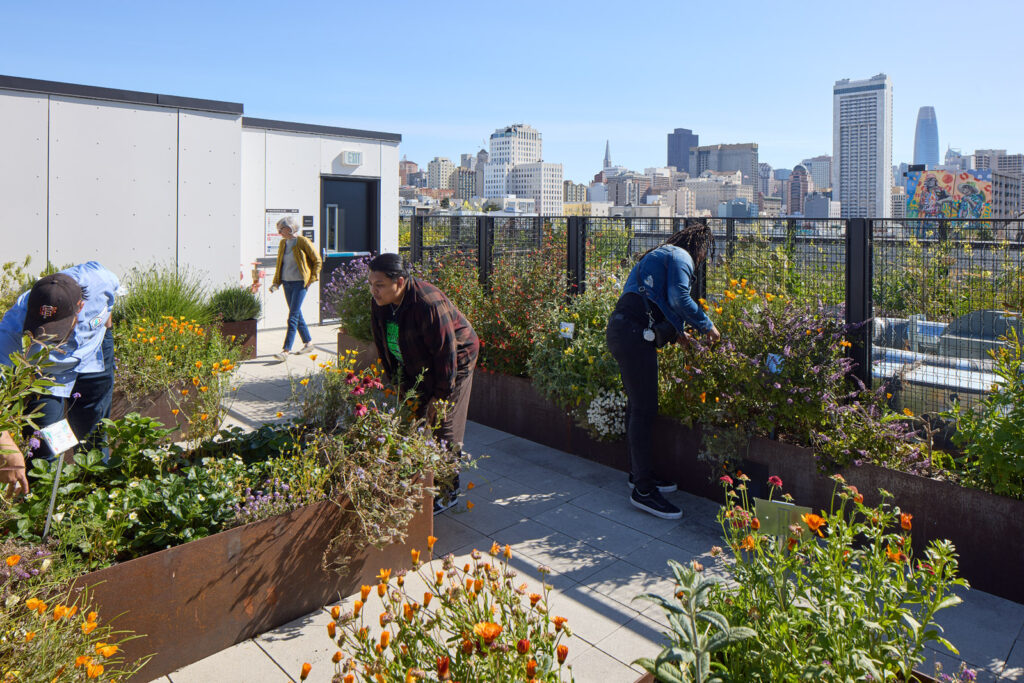
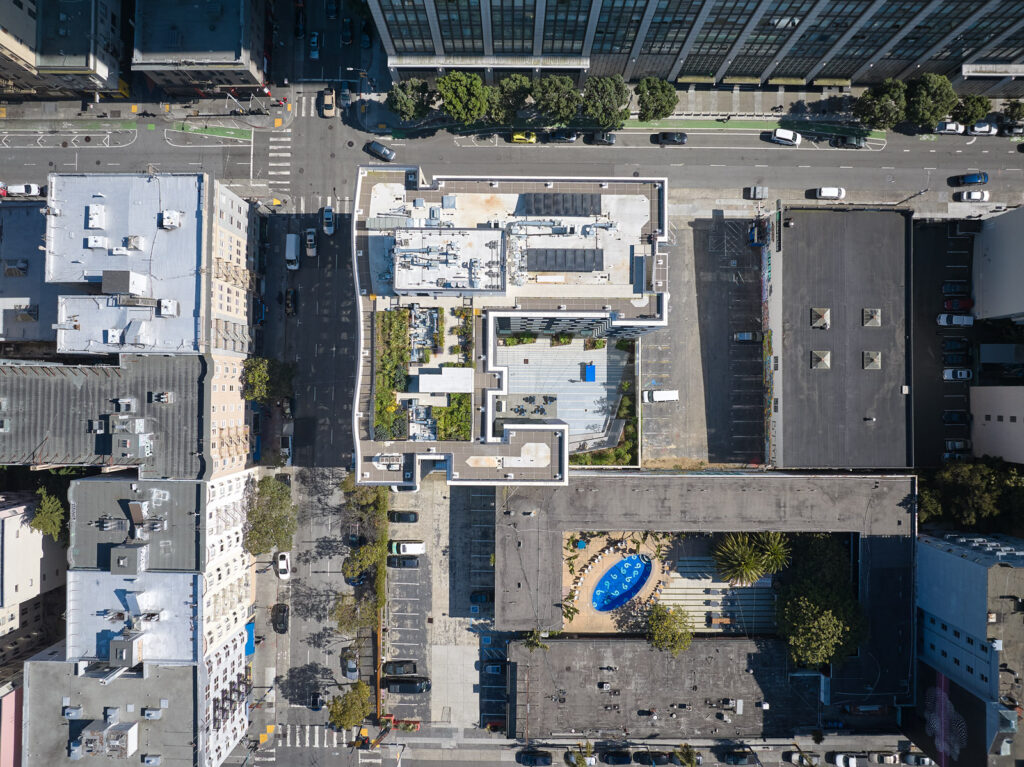
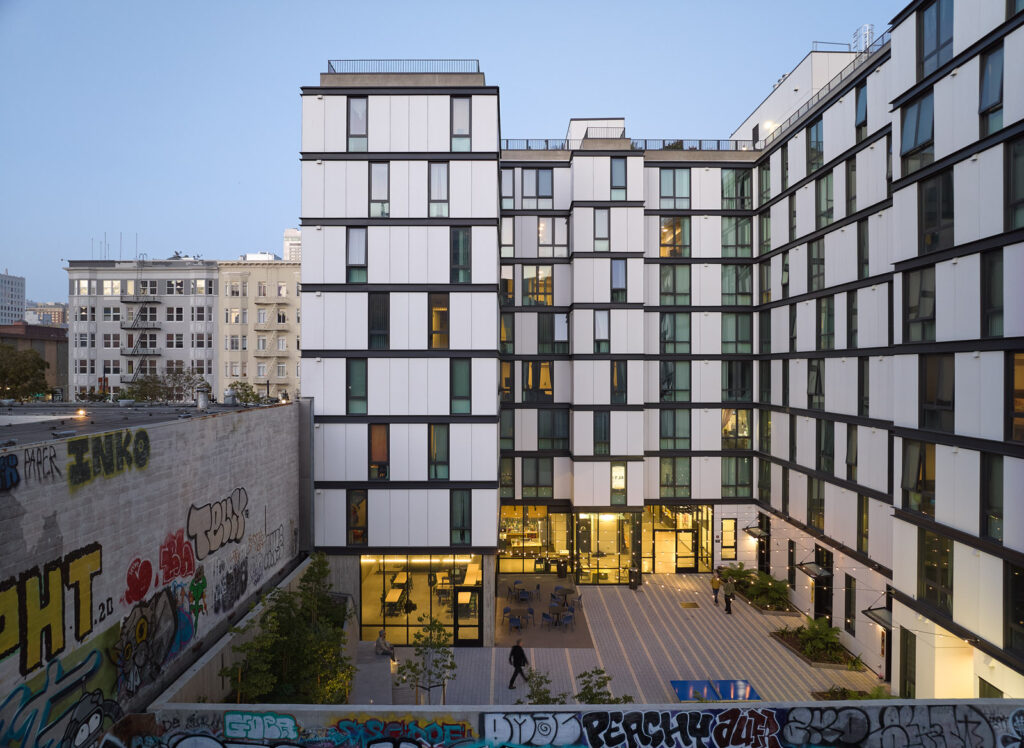
Located in the Tenderloin neighborhood of San Francisco, 555 Larkin/500 Turk Streets is a new mixed-use development comprising ground-floor retail space and 108 units of 100% affordable and supportive housing for formerly homeless residents, along with a shared courtyard, community room, and rooftop urban agriculture. INTERSTICE Architects is working with the Tenderloin Neighborhood Development Corporation (TNDC) to convert what was formerly Kahn and Keville automotive garage, a beloved Tenderloin business for over 100 years, into the lively, community-oriented development that will provide much-needed housing to this San Francisco neighborhood.
In the (Playful) Details
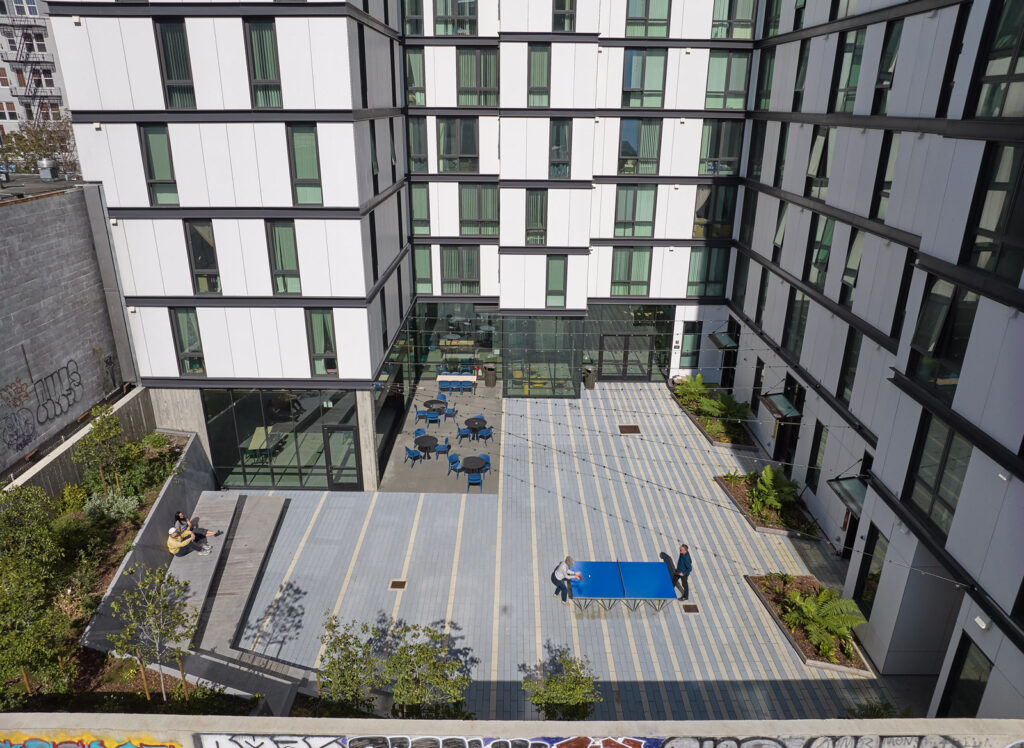
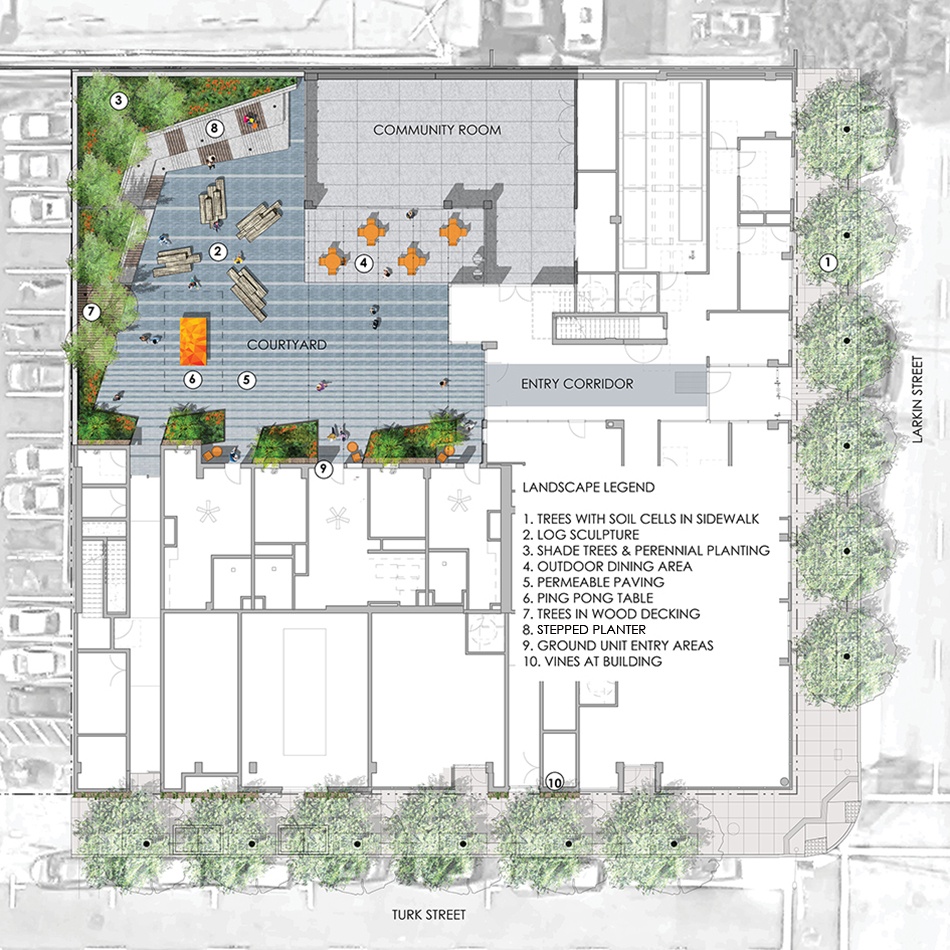
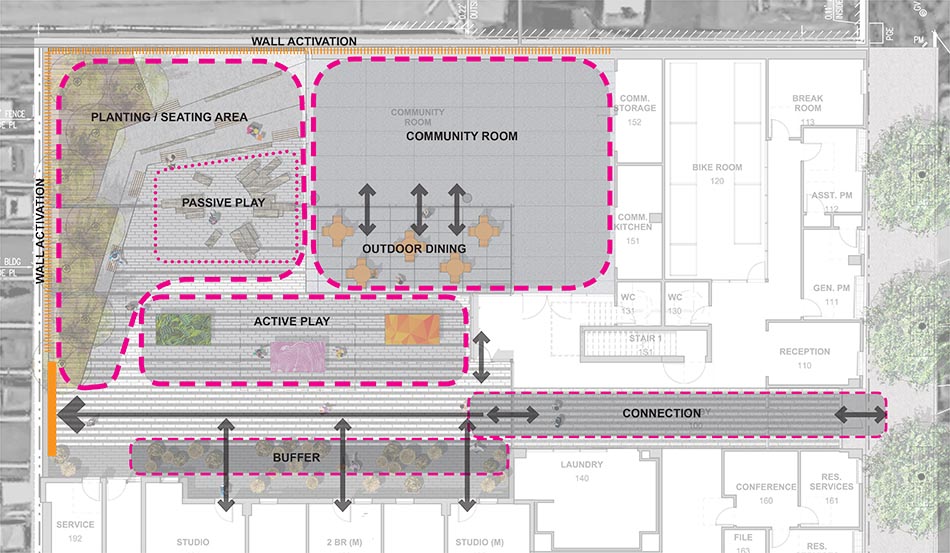
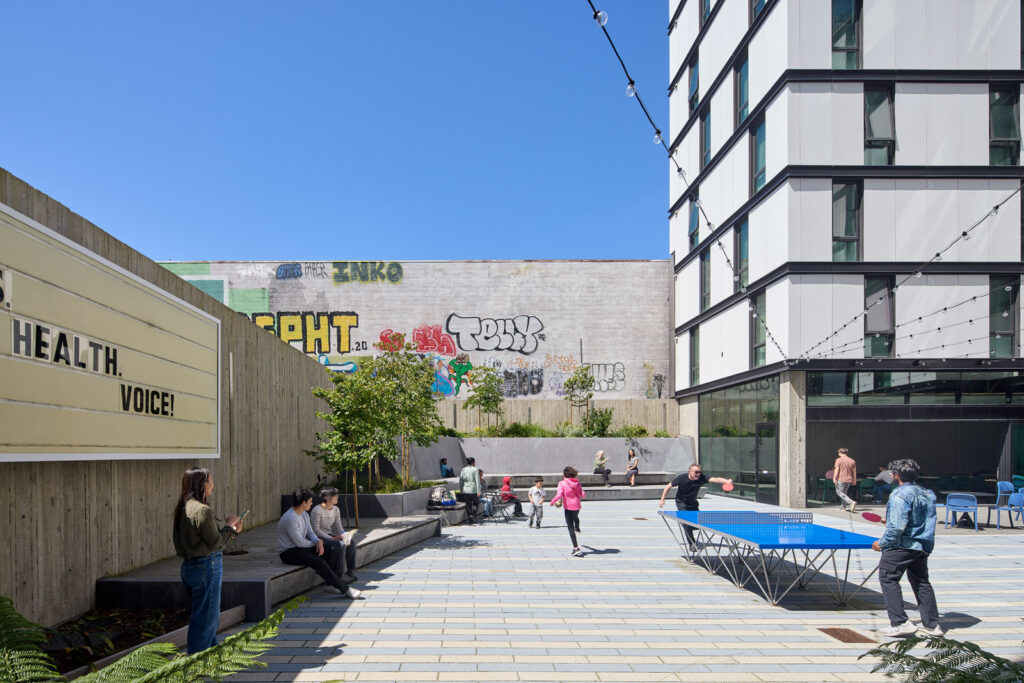
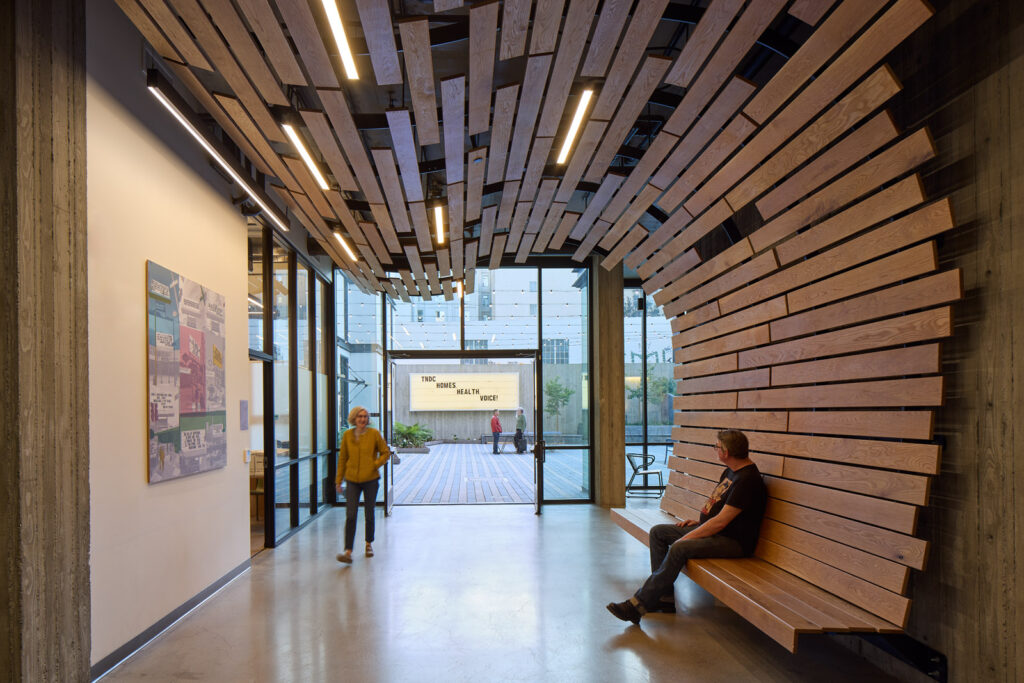
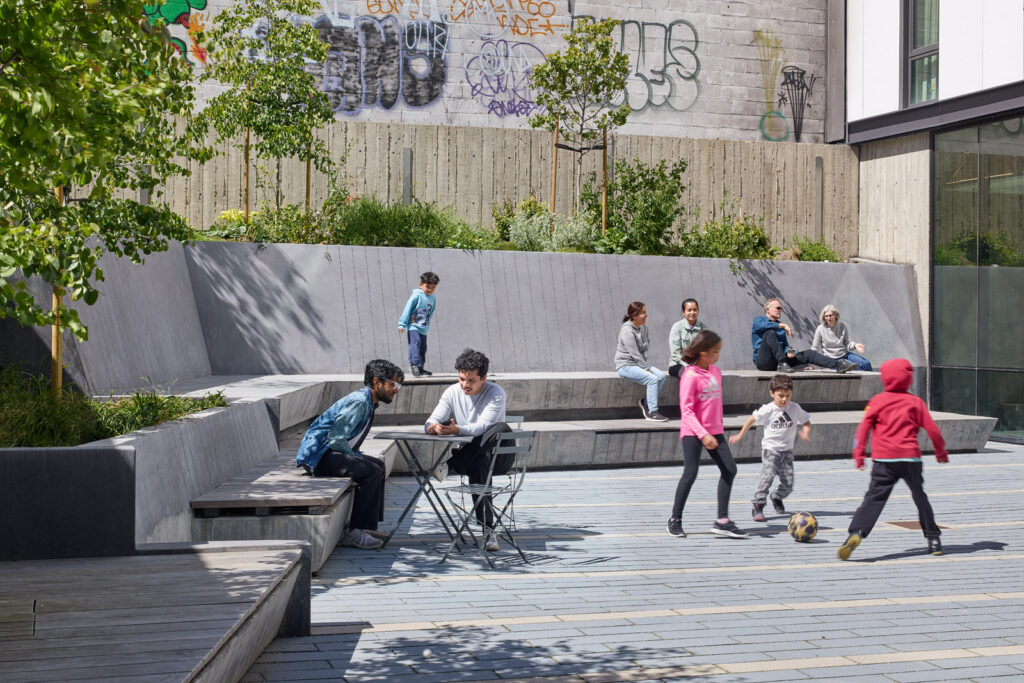
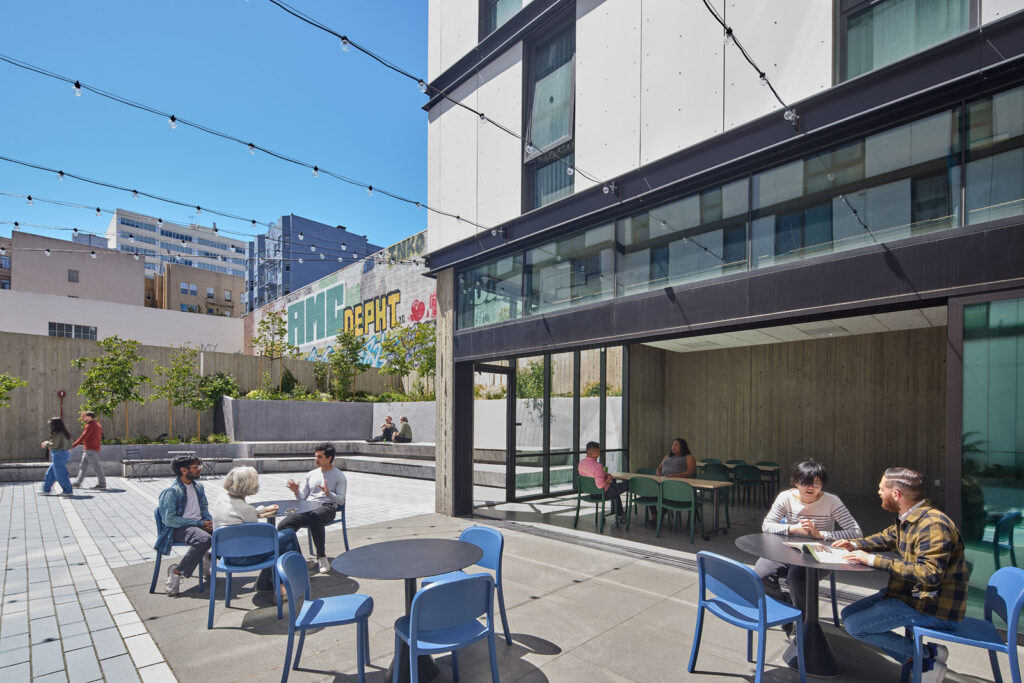
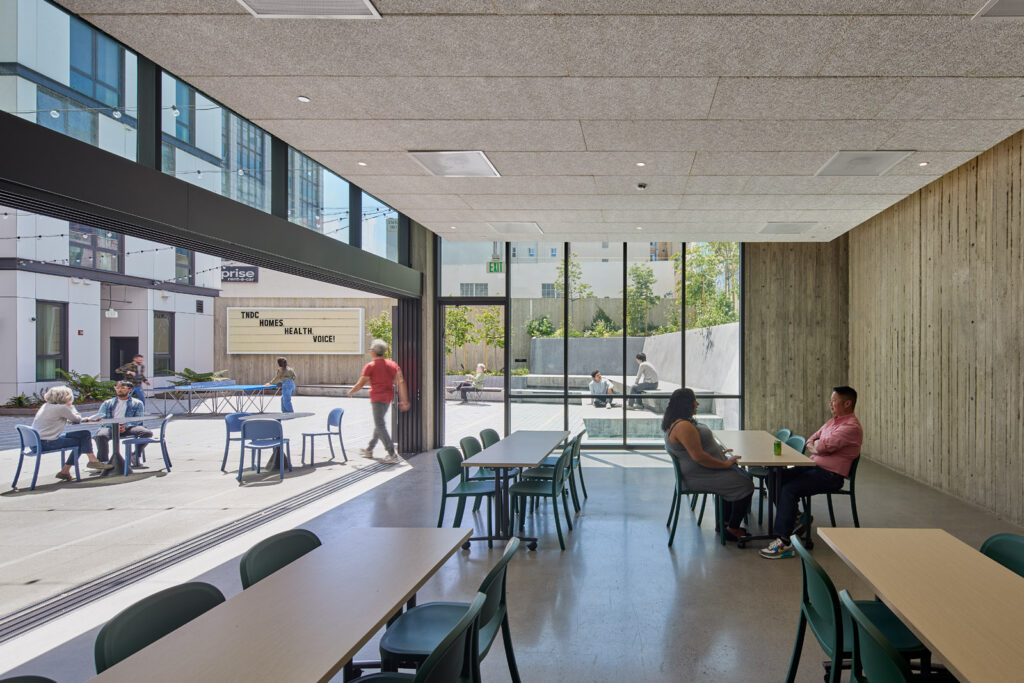
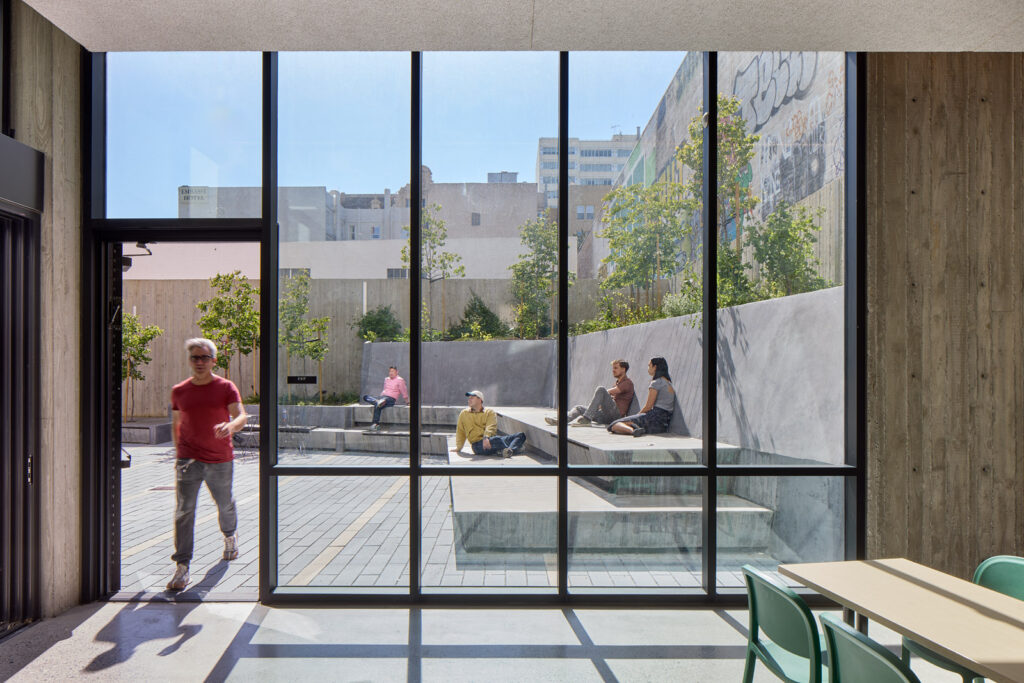
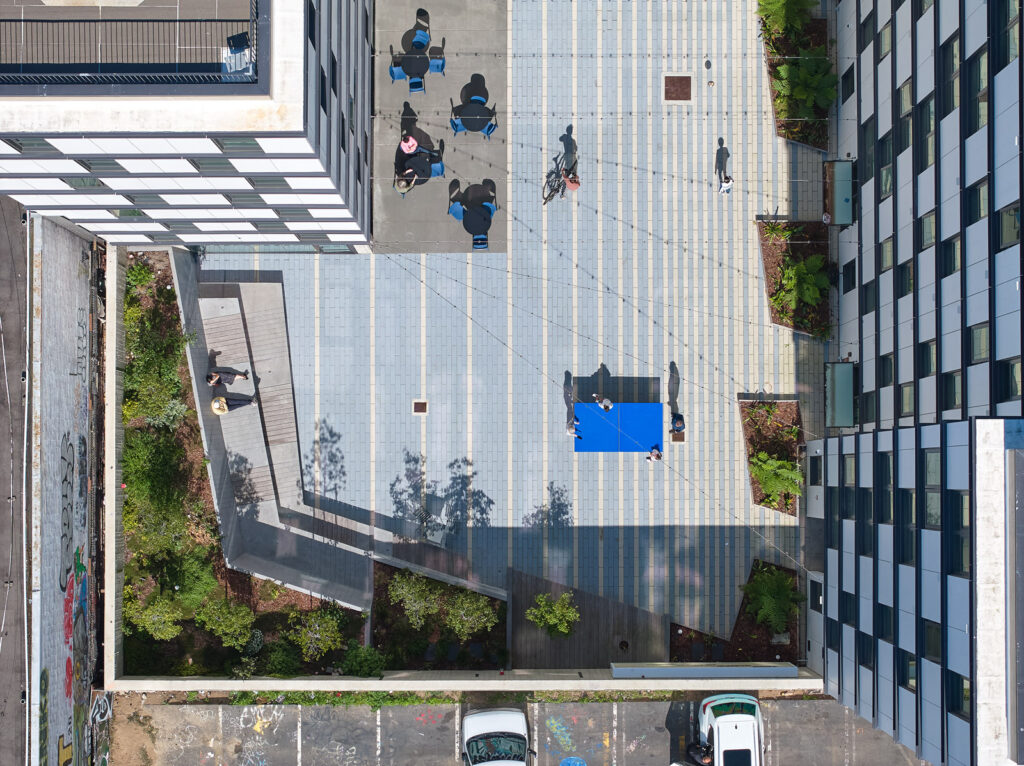
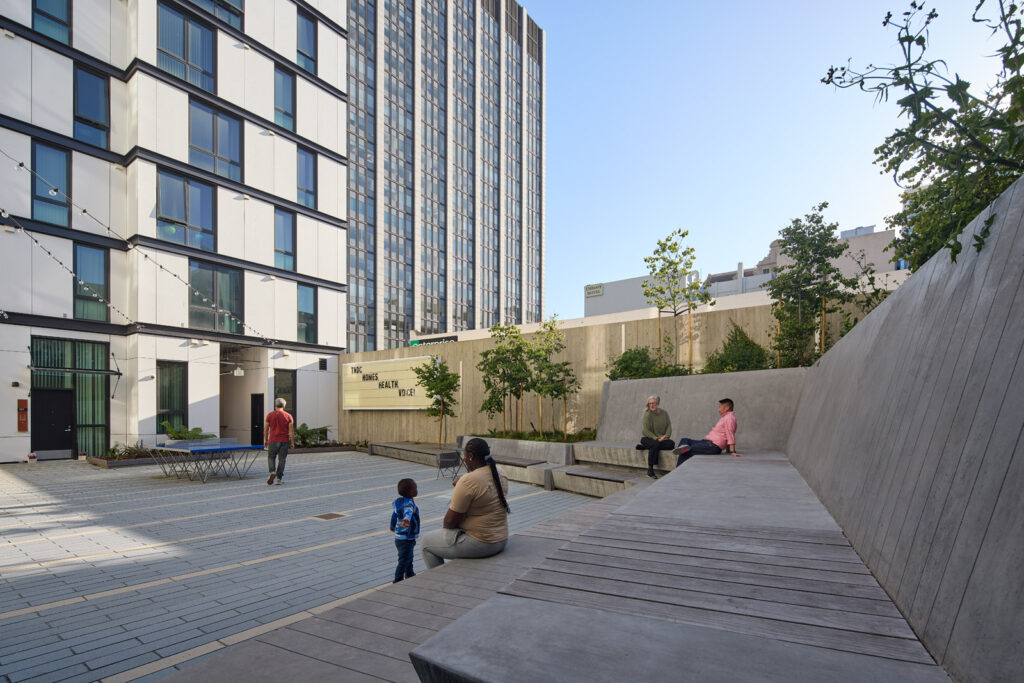
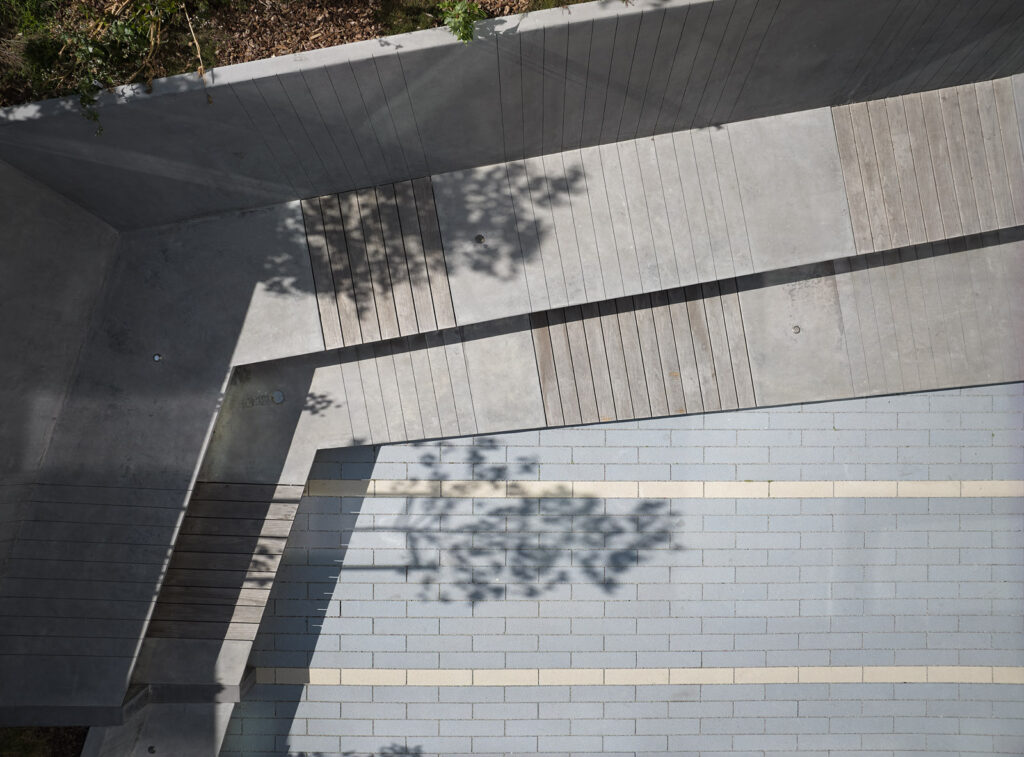
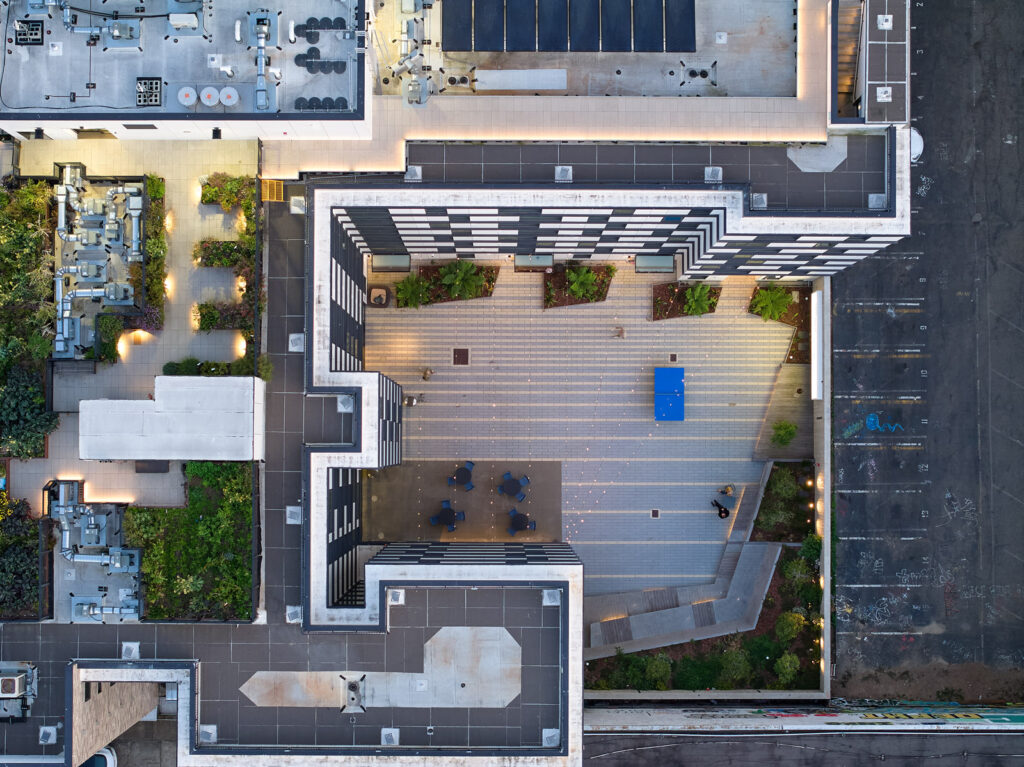
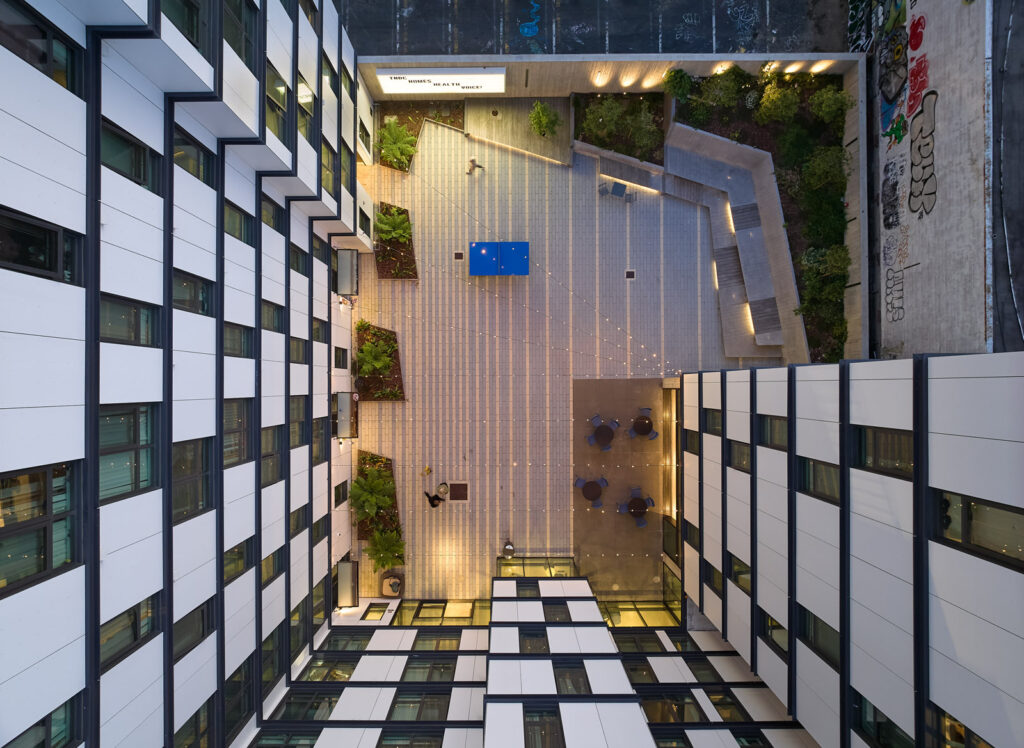
The courtyard landscape is at the heart of this project, acting as a place of relaxation, play, and community for the complex. INTERSTICE wanted to create a youthful space where those of all ages can enjoy a welcoming and playful environment. With close programmatic connections to the surrounding neighborhood, the ground and street level is designed to serve the community and contribute to environmental resiliency through the use of permeable paving throughout the courtyard and a soil support system in the sidewalks to improve the viability of the urban forest. A brightly-colored ping-pong table sits beneath overhead festoon lighting adjacent to the community room where residents can gather and socialize. Wooden sculptures meant for passive and imaginative engagement are situated in a loose circle, acting as a focal point for the courtyard. The terraced planter wraps around this centerpiece and provides wood-clad seating beneath the canopy of adjacent birch trees and ferns. INTERSTICE designed a banded textural paving pattern underfoot that extends from the planters at one edge of the courtyard to the foyer and to the ground-level studio apartments. These ground-floor apartments feature small planted garden spaces, providing a sense of private oasis at the residents’ front doors. The courtyard wall, meant to provide privacy and security from the neighboring Phoenix Hotel and surrounding buildings, is designed with vertical board form texture, reflective inserts, lighting, and quotes to create an activated and engaging perimeter.
A Beloved Billboard Reimagined
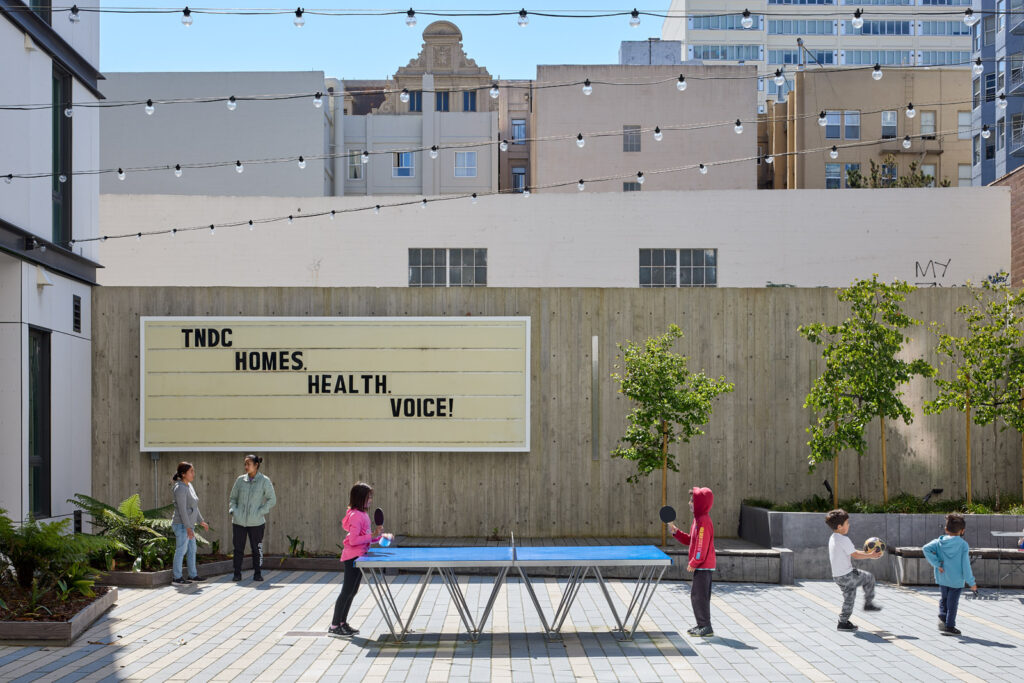
Kahn and Keville automotive garage was established in 1912 on Golden Gate Avenue—not far from 555 Larkin/500 Turk where it moved 23 years later. In 1956, the now famous letter board sign was erected at the corner of Turk and Larkin Streets as a way to amplify what had once been written on simple pen and paper inside the garage: quotes, poems, and observations soon appeared in bold, black letters above the intersection. The sign became a fixture in the Tenderloin neighborhood and the design team has integrated it into the new project. The sign can be seen from the front entry reception on Larkin and upon entry to the courtyard. Visitors and residents will continue to experience and honor the genius and history of its presence on this particular city block.
Location: Tenderloin Neighborhood, San Francisco
Owner/Client: Tenderloin Neighborhood Development Corp. / David Baker Architects
Scope: Courtyard Landscape & Streetscape
Status: In Progress
Photography: N/A