 INTERSTICE Architects
Project Tag: Residential
Castro Hillside Duplex
Castro Wedge Site
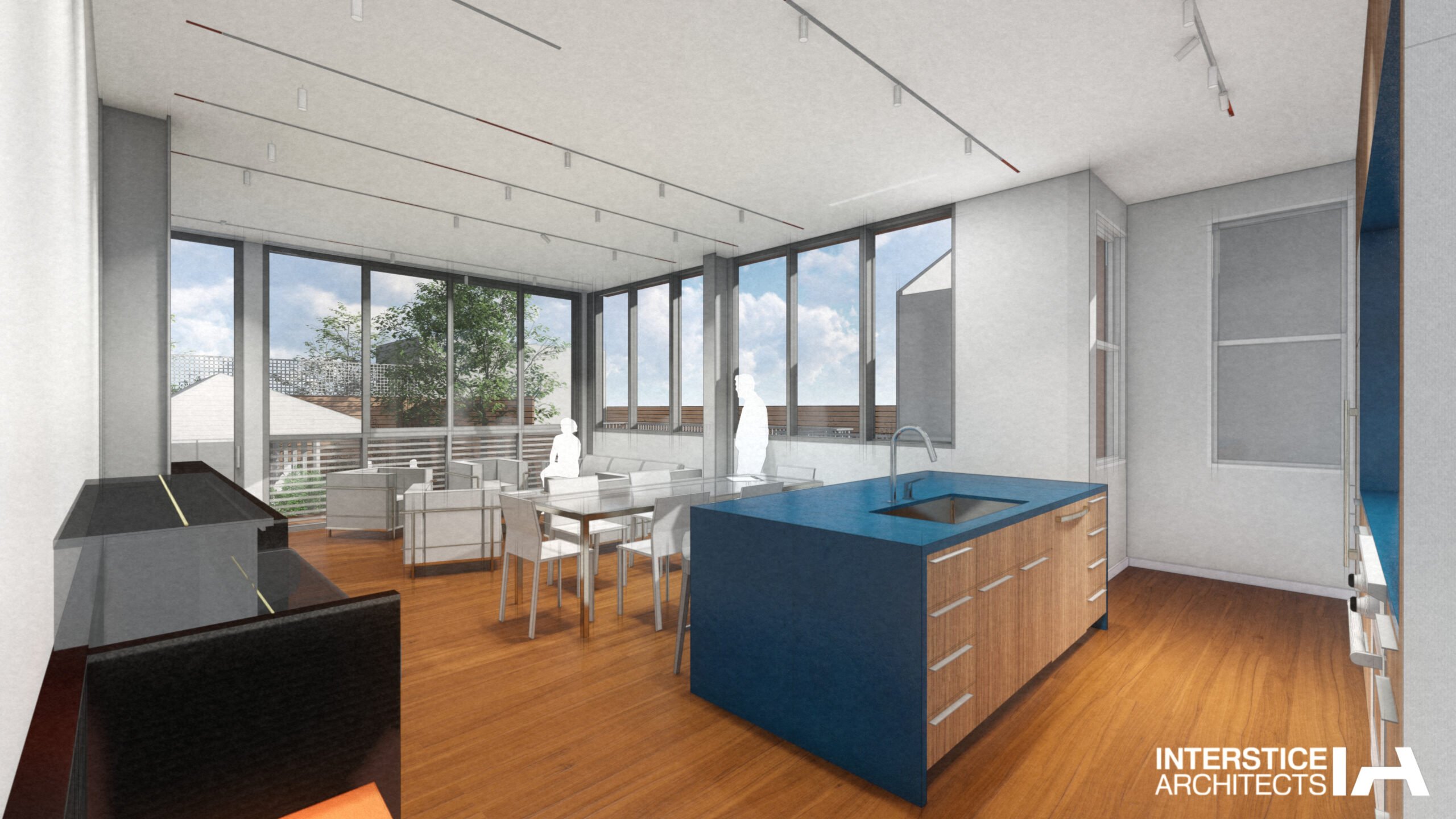
This two-story duplex is located on a classic San Francisco steeply sloped site in the Castro district. The building was in desperate need of a renovation of both its architecture, and its dilapidated site, which were working against one another. The lower unit was buried at the rear into the steep site, and the upper unit’s access further hampered the lower’s units light and possible ground floor use of the generous open space typical on these deep lots.
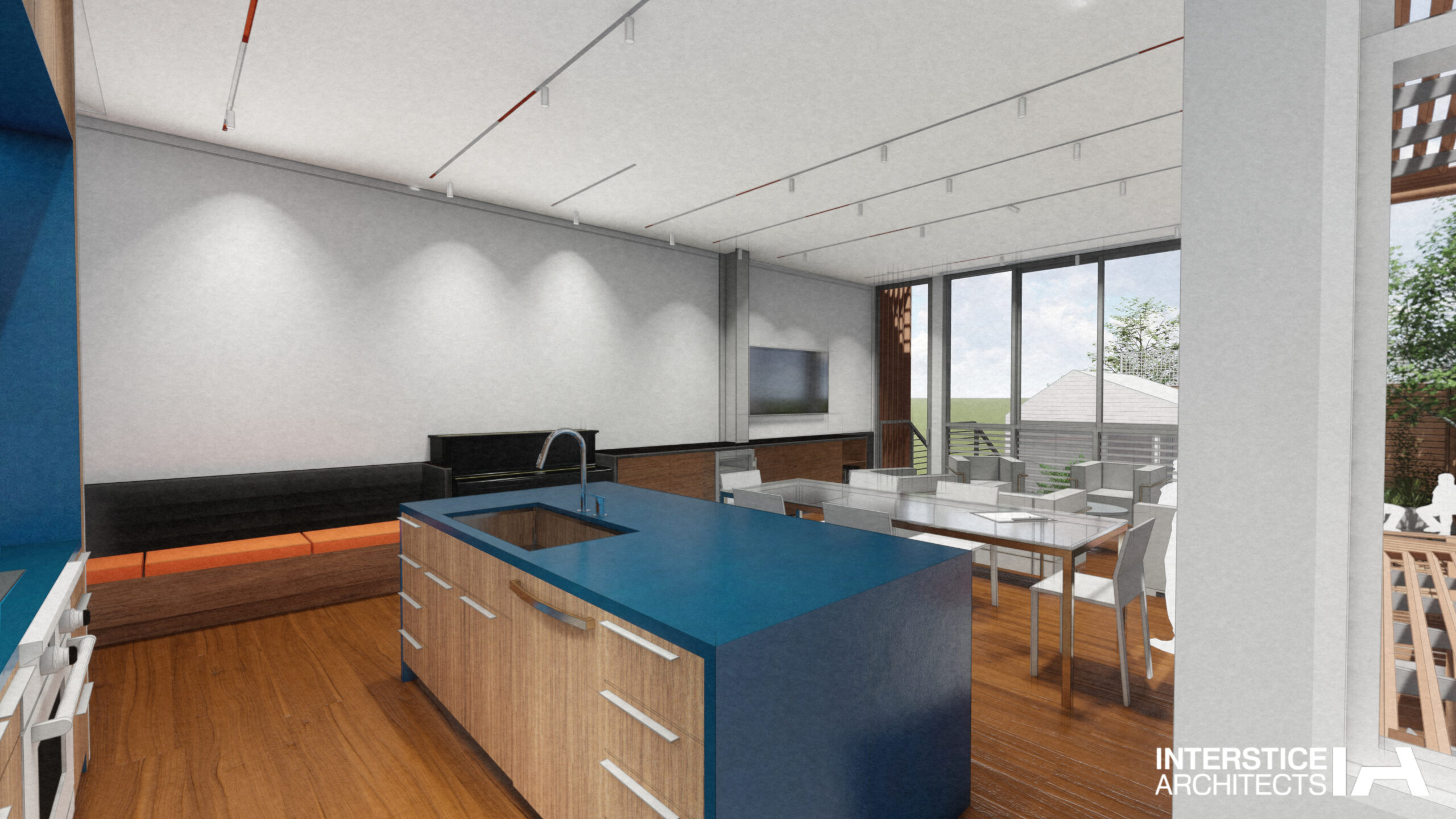
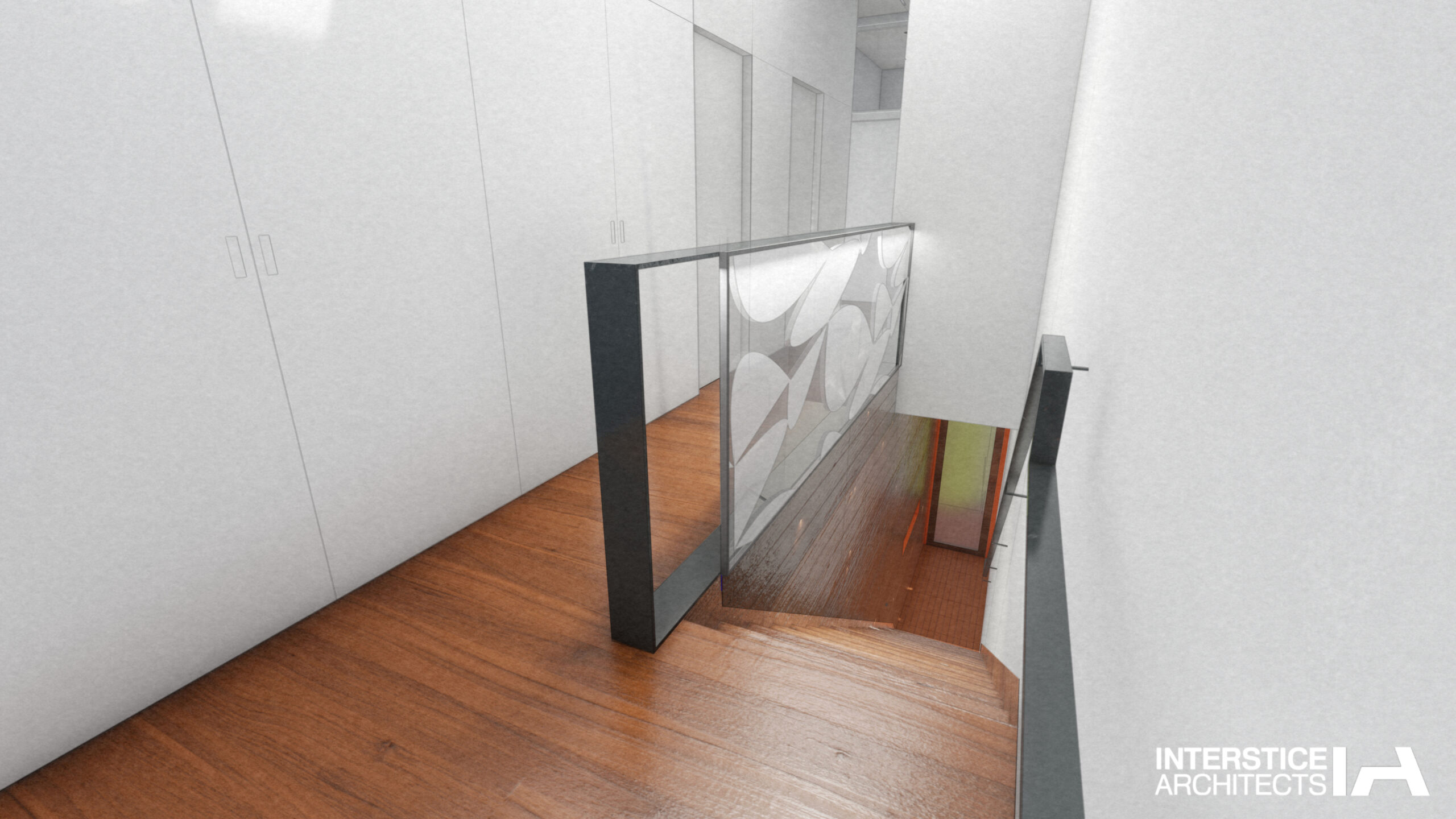
Historic Facade Dissolves into a Modern Garden Home
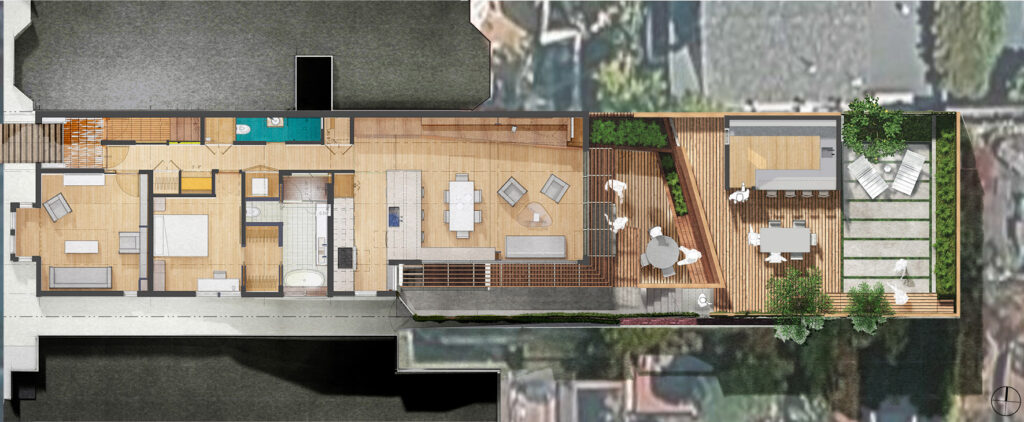
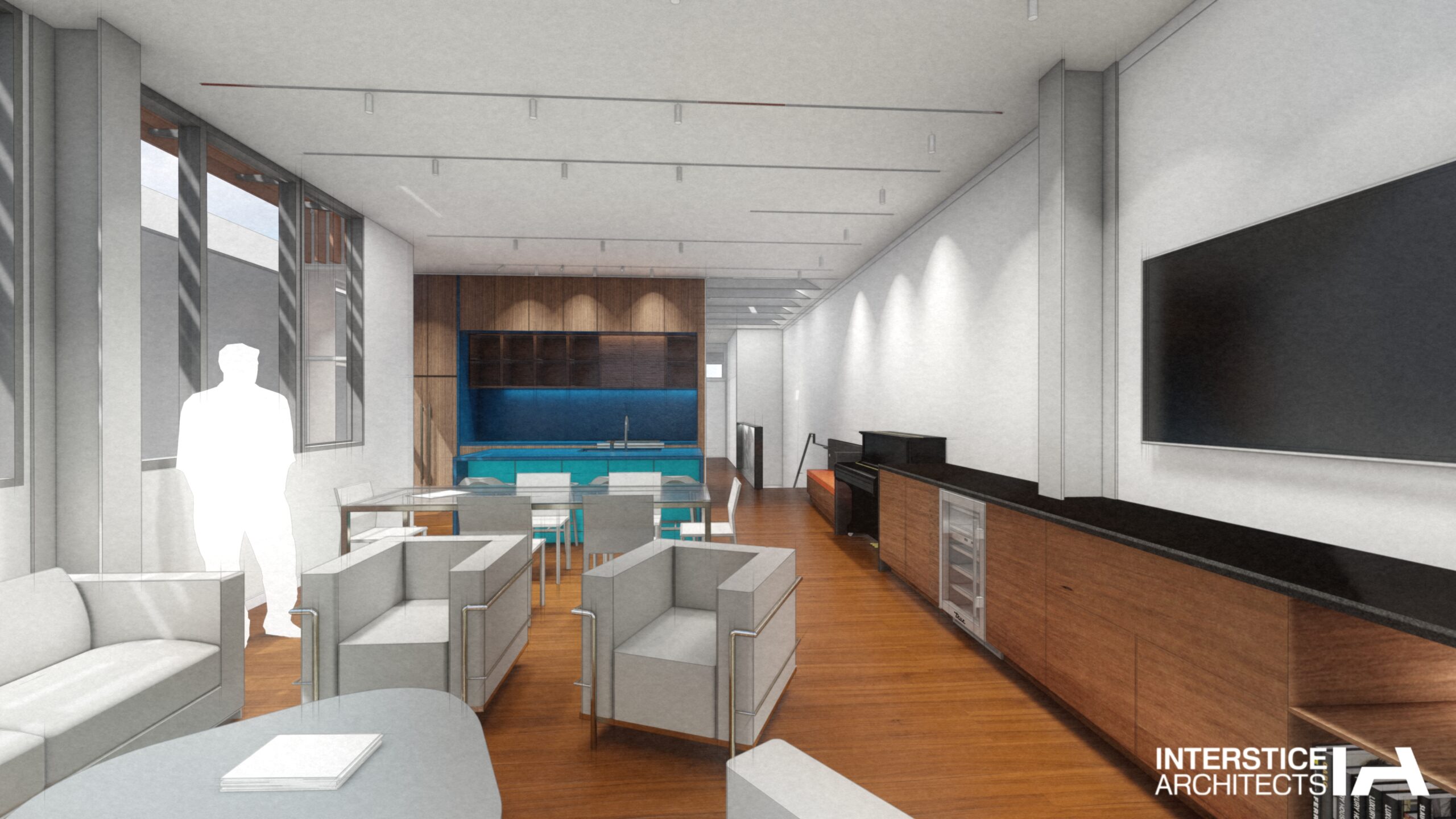
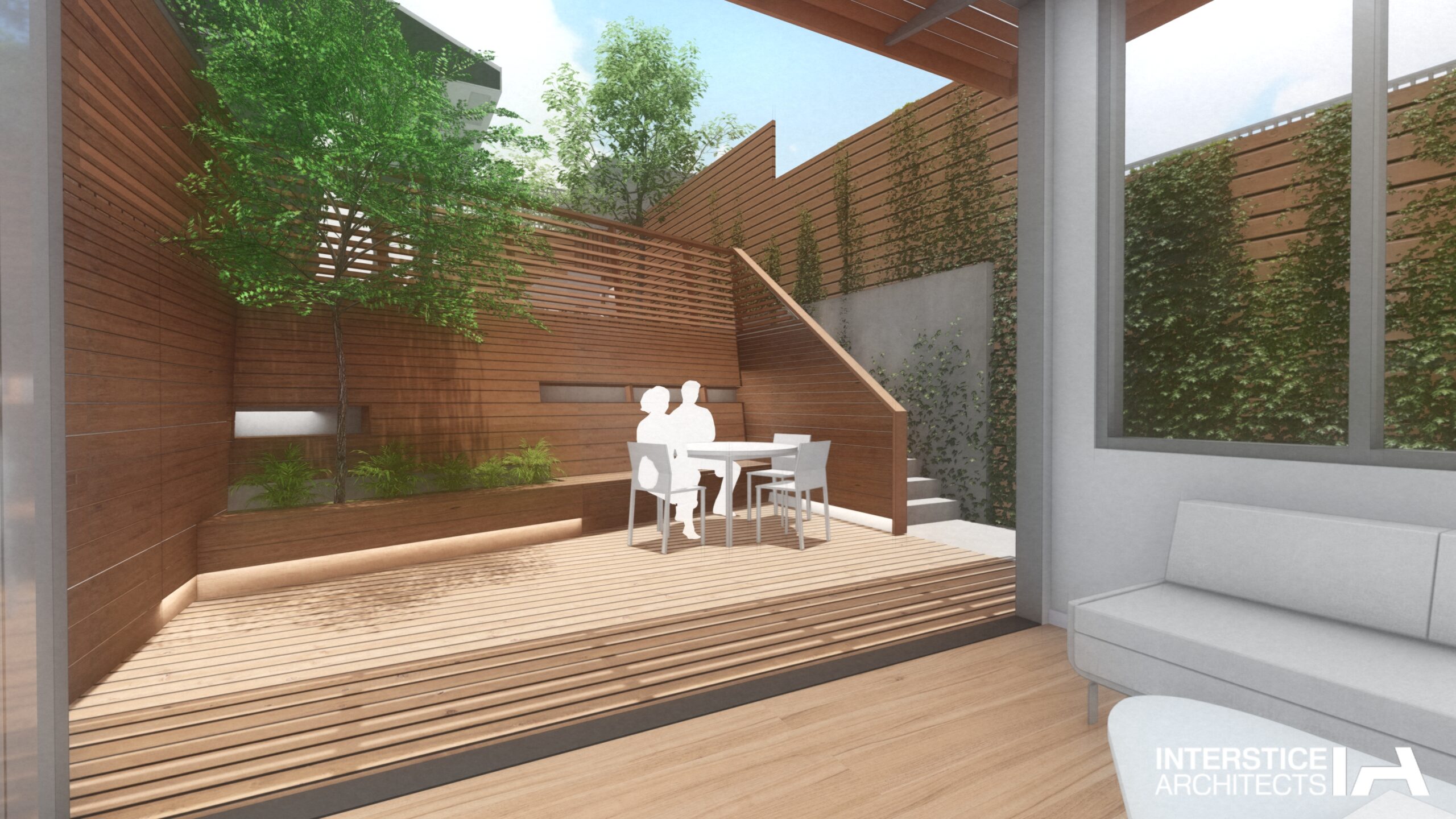
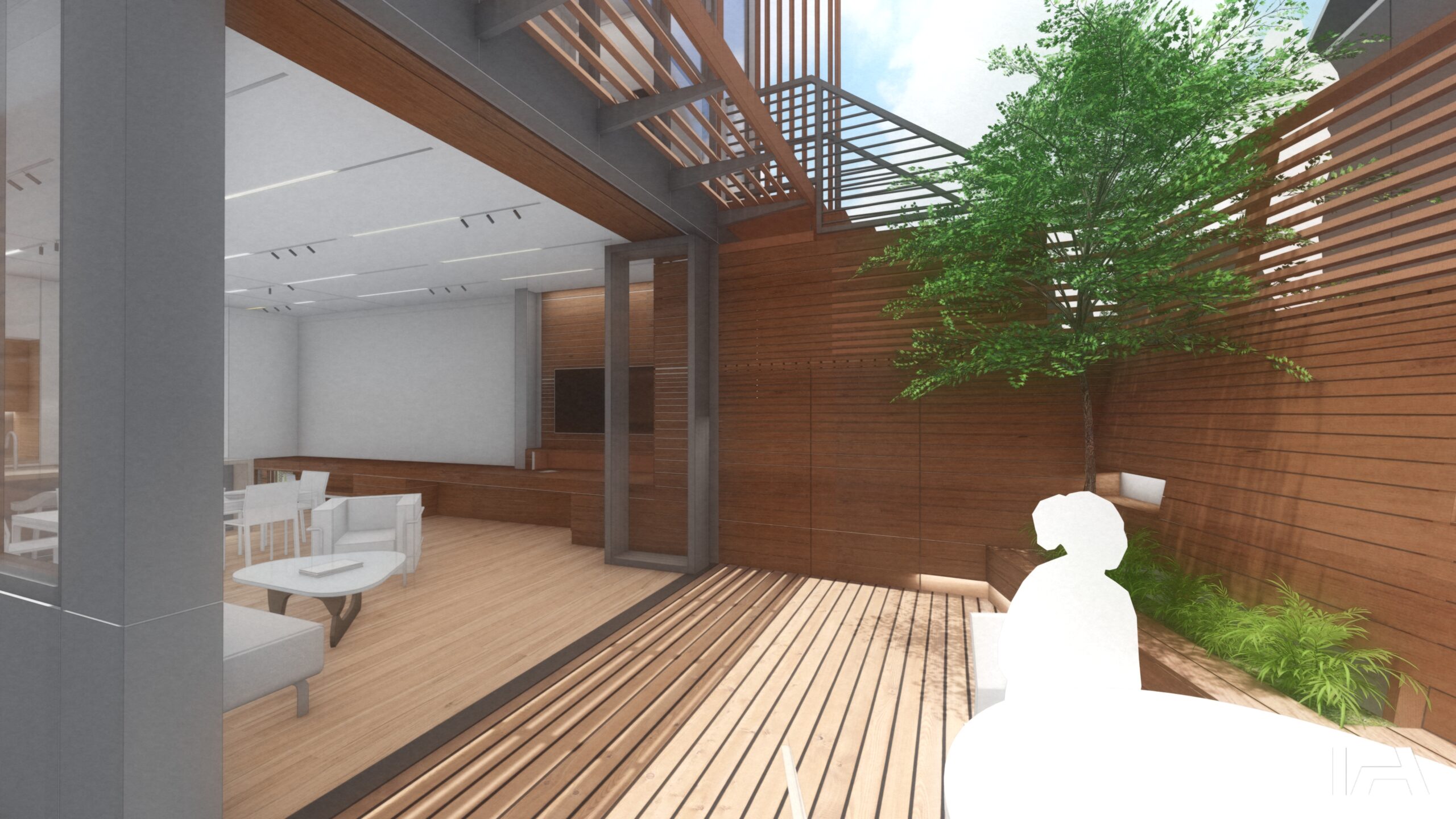
The Design leverages the site’s great orientation, and shared South alley to bring light into the long side of the building, and deep into the now opened-up public spaces of the two units. Starting at the street the project upgrades a forlornly stripped façade, to return it to its historical craftsman’s character, while the interiors are completely transformed into a fluid open “raumplan” that allows space to flow continuously, just as the envelope dissolves into glass towards the private rear garden, where patio decks terrace into the hillside allowing maximum use of this protected outdoor space.
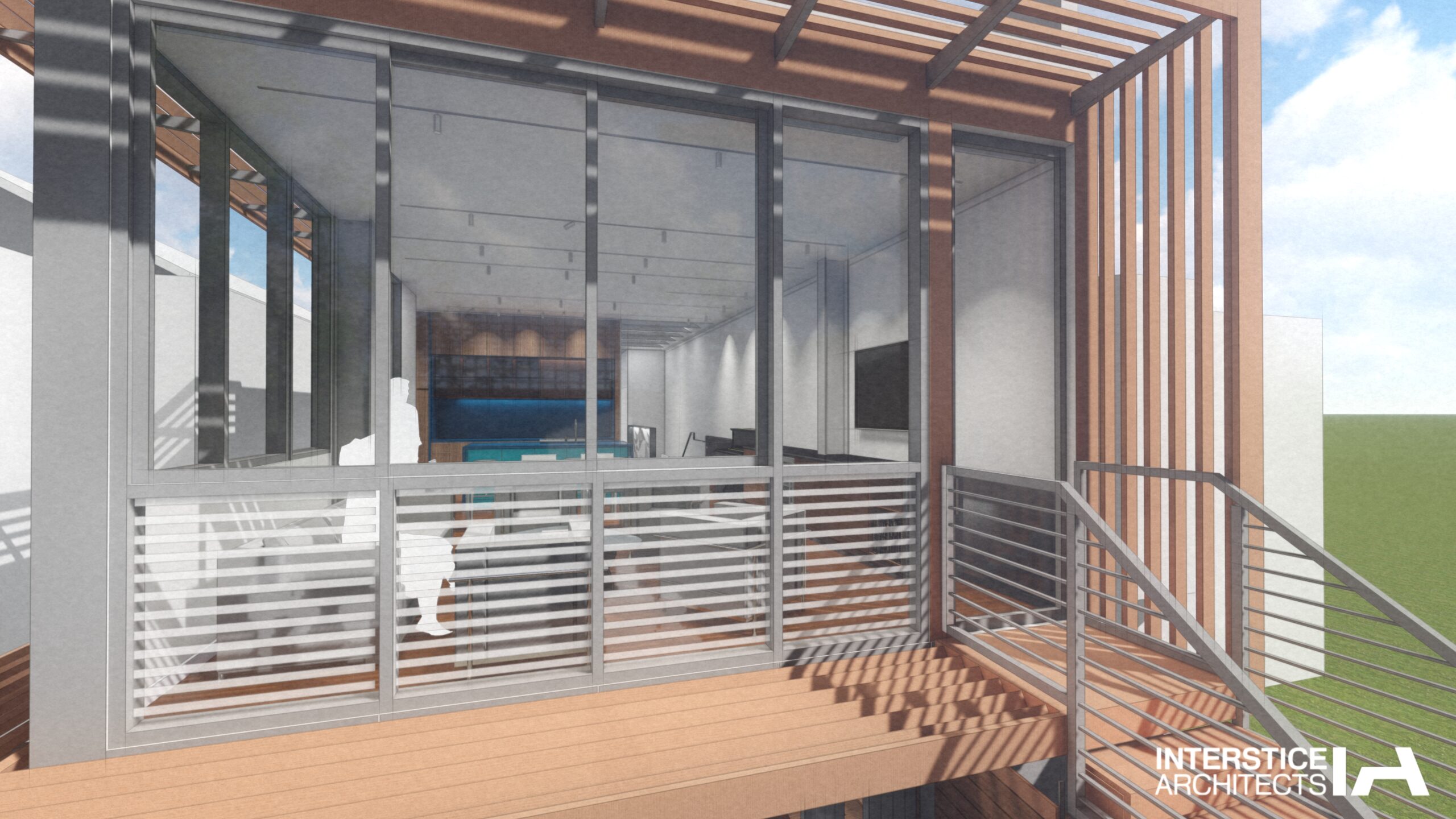
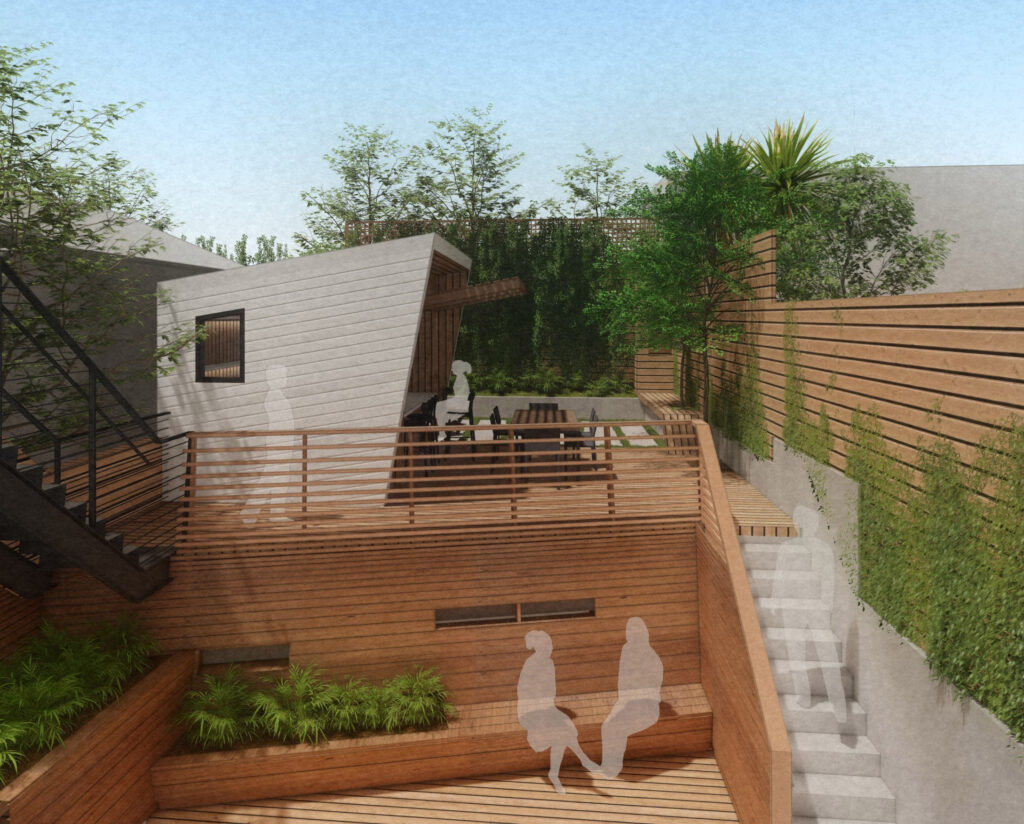
An Open Garden “Room”
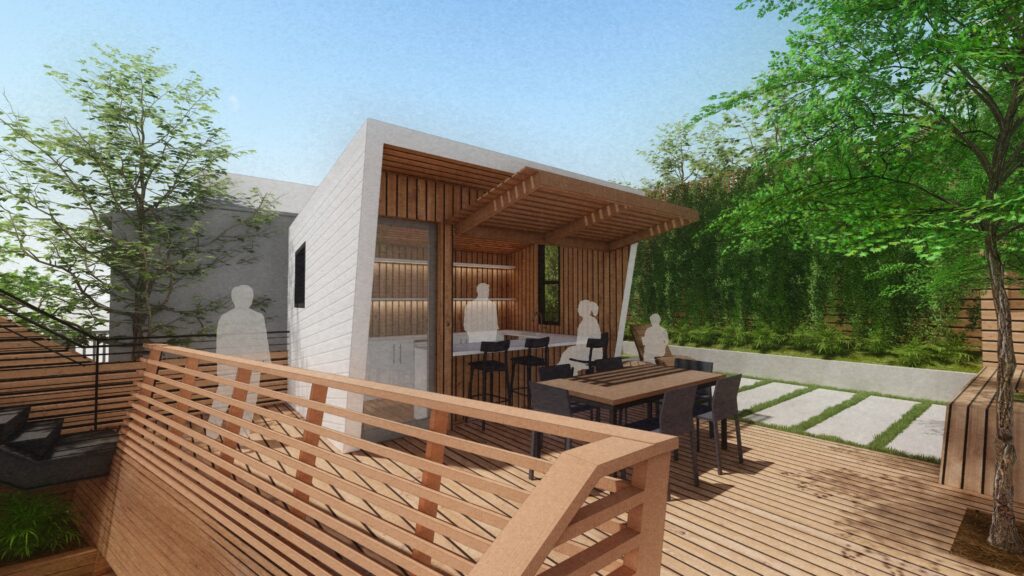
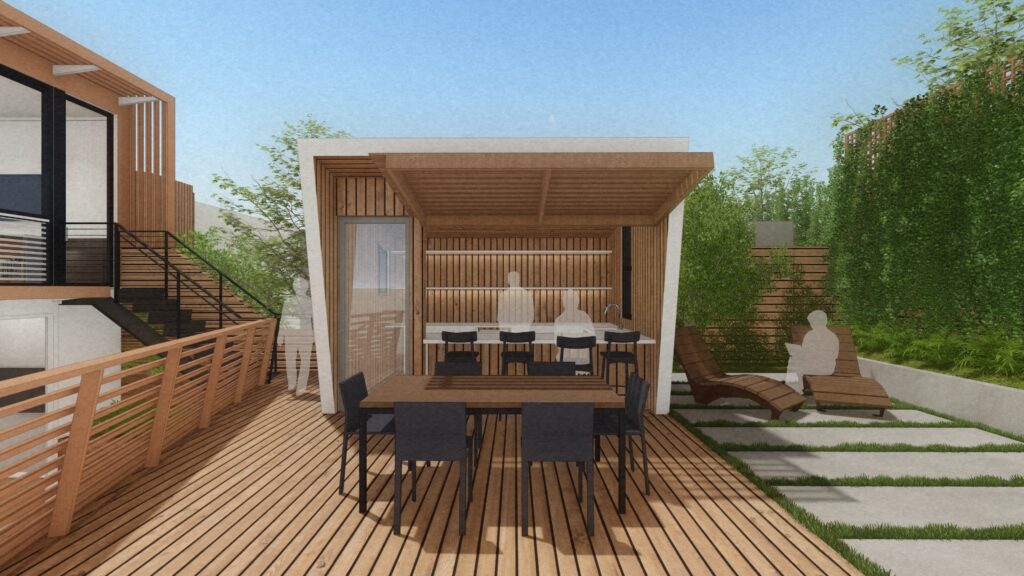
A small existing shed becomes the focal point of the new landscape that creates an extended living room from the lower unit to a garden wall which provides an ample deck for the rear yard between new planting and fruit trees that provide shade and frame the volume of the rear shared social space of the backyard commons. Brick foundations were replaced, and steel infrastructure installed making the seamless open spaces possible – as the new home is now structurally up to code, and a perfect fit for the California lifestyle the is the hallmark of great modern architecture in the Bay Area.
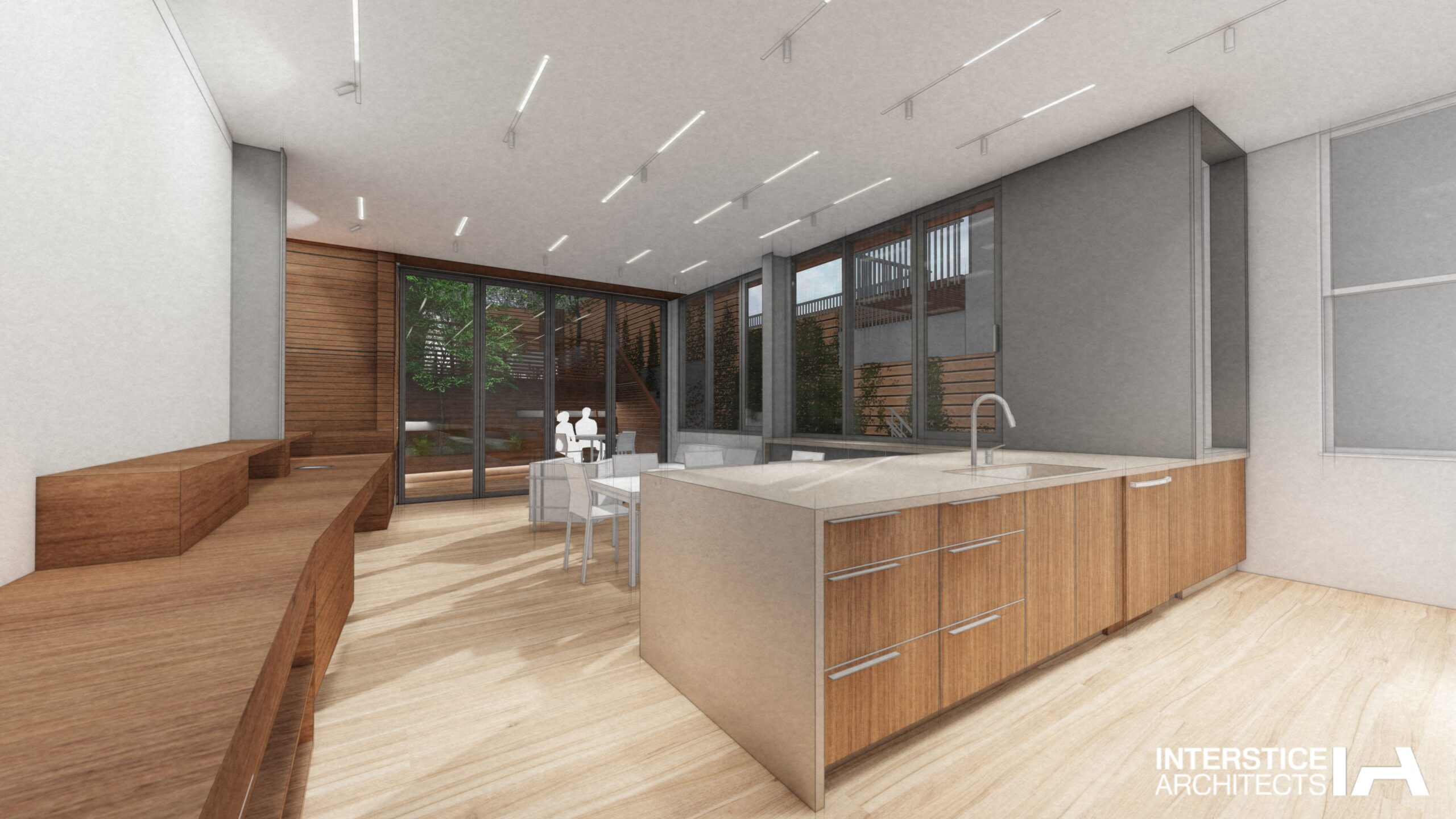
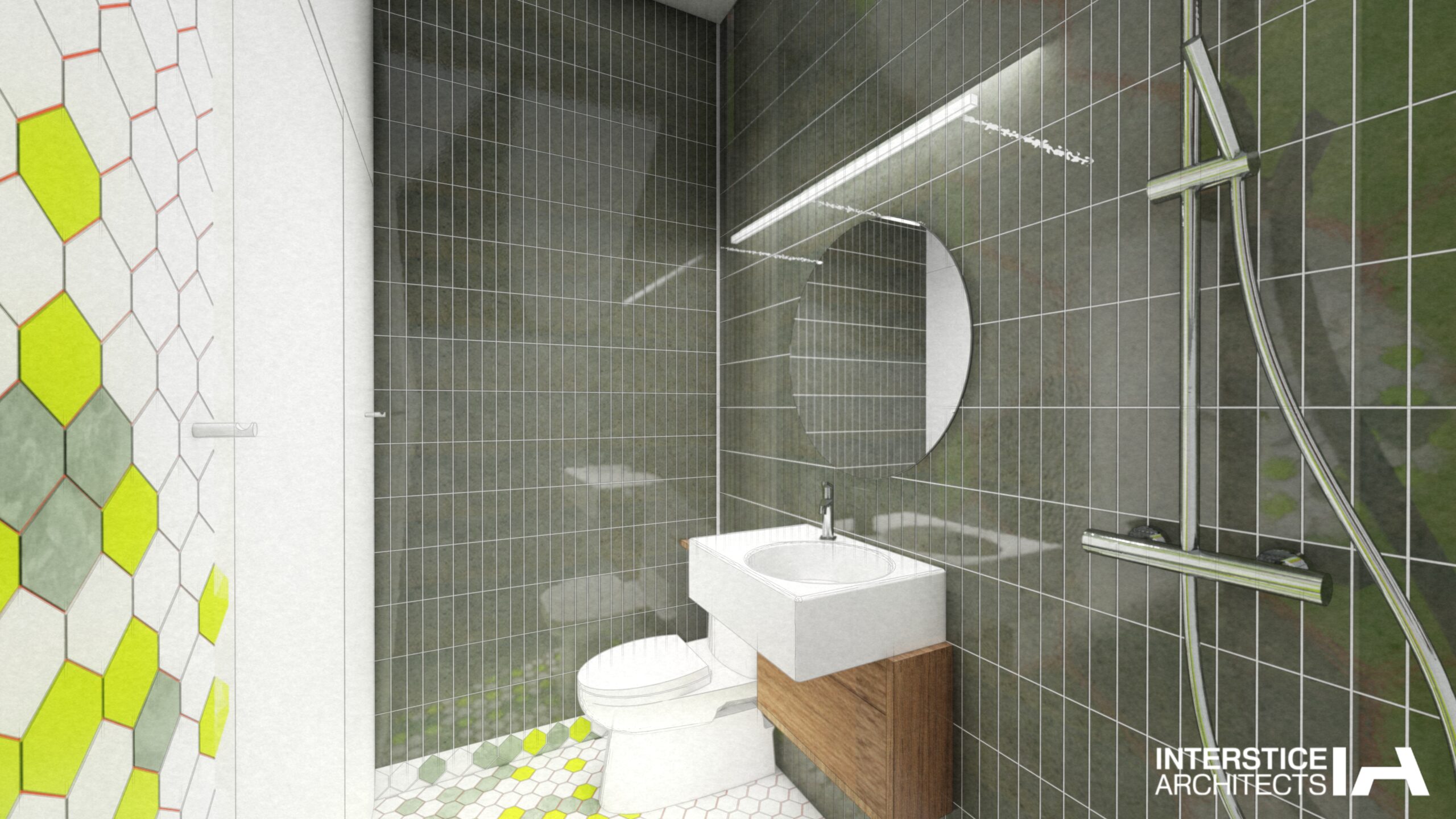
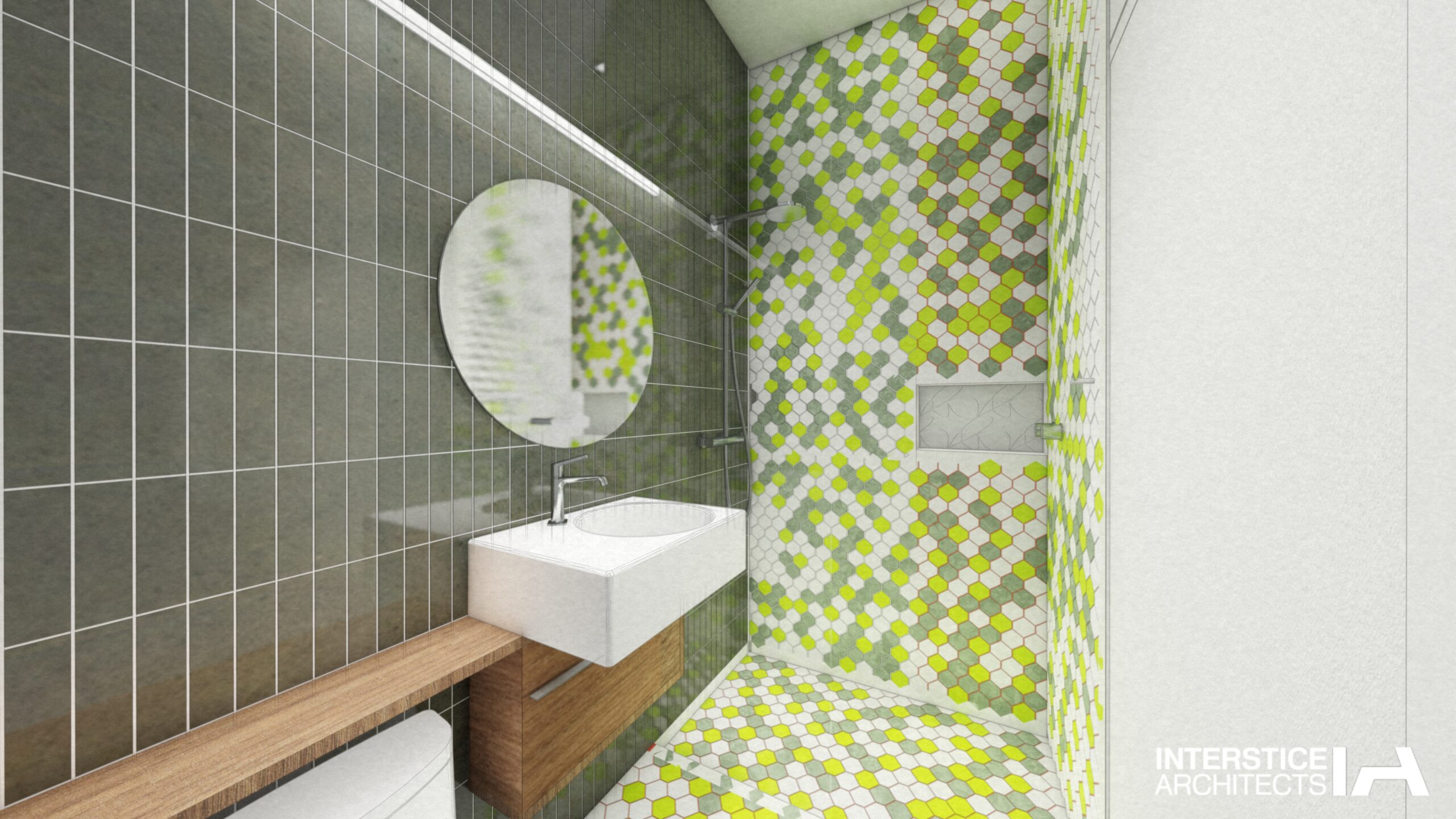
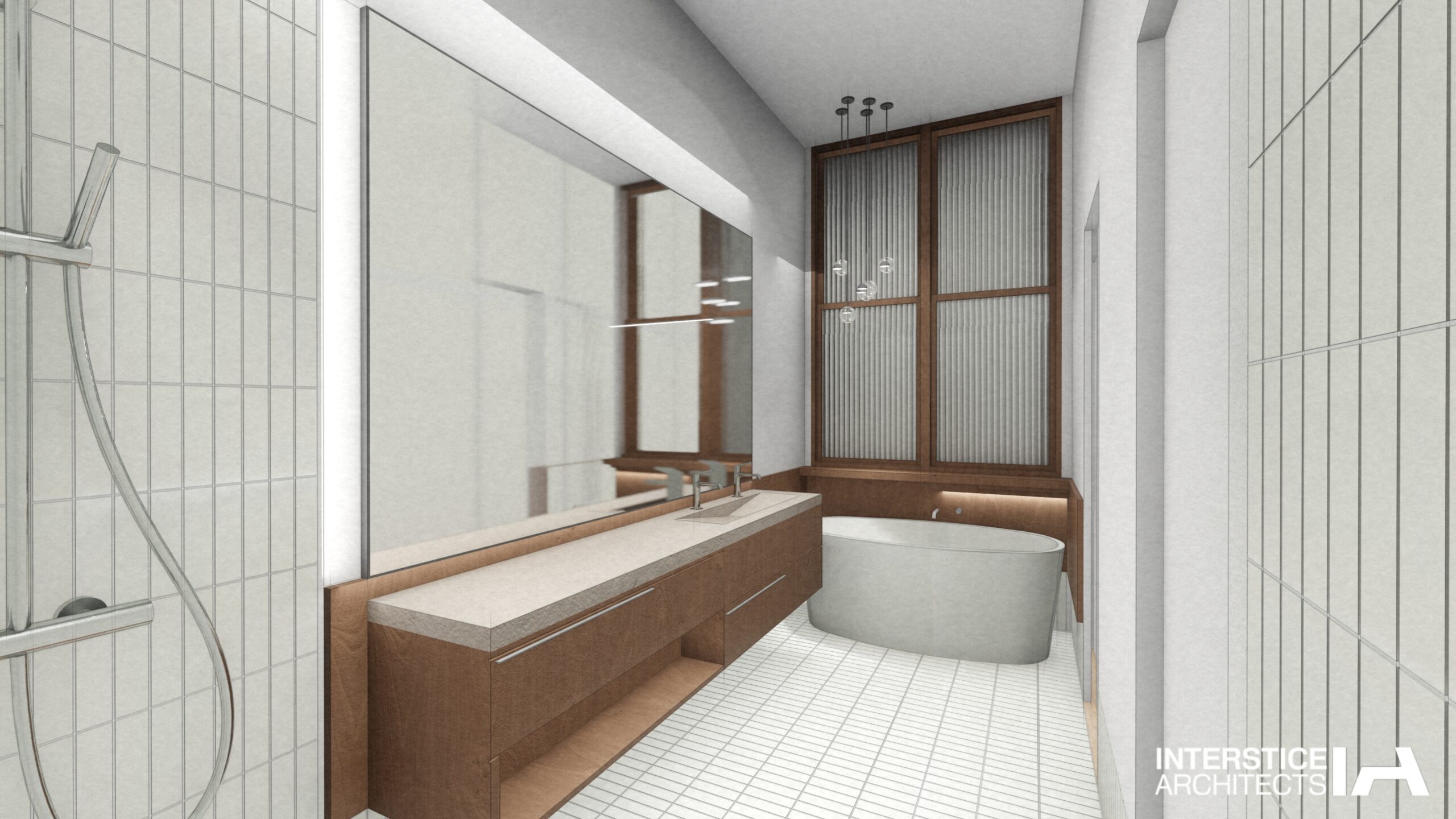
Location: Hartford Street, Castro, San Francisco.
Owner/Client: Undisclosed
Scope: Residential Renovation & Garden Design
Status: Design
Ashbury Terrace Home
A High Home
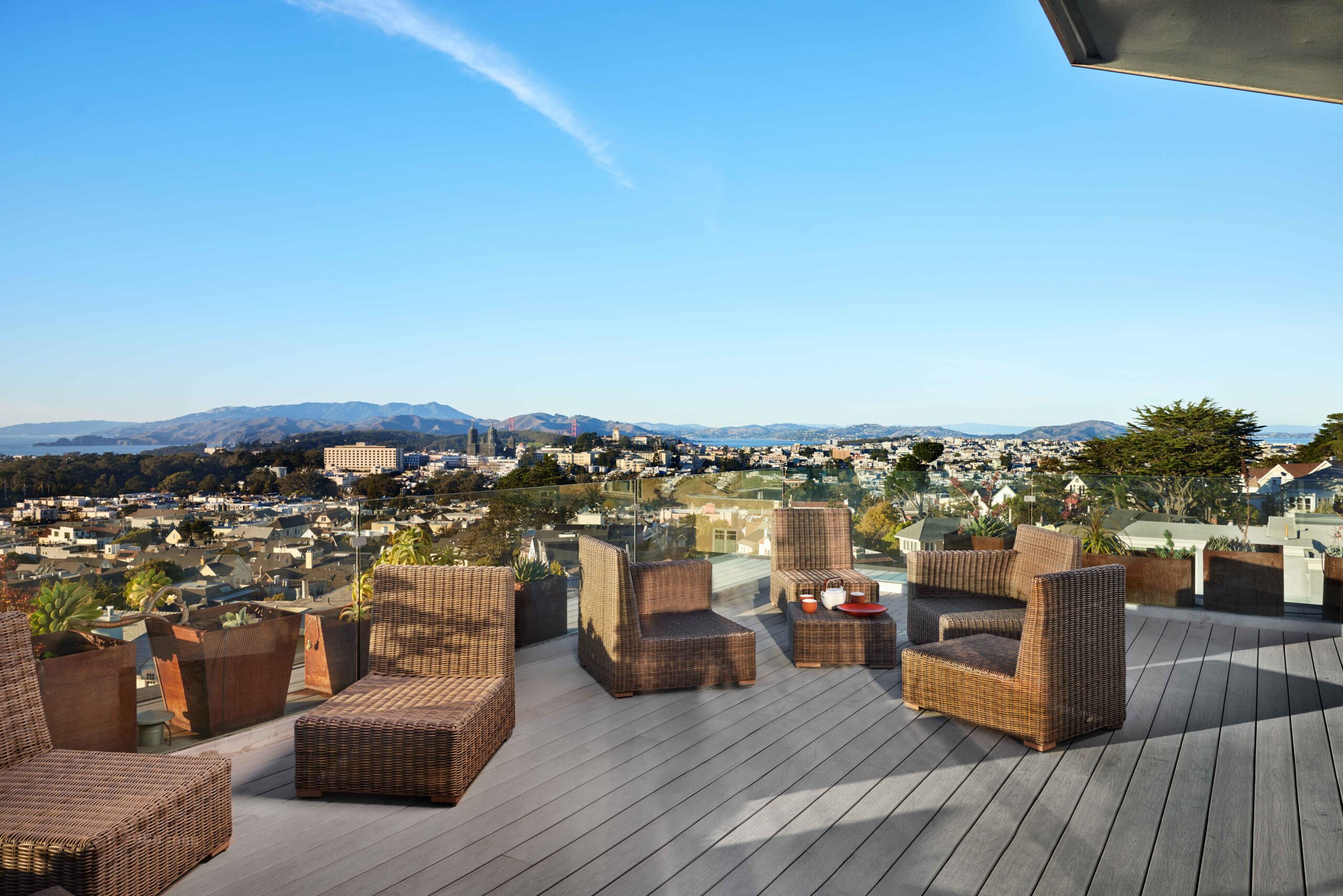
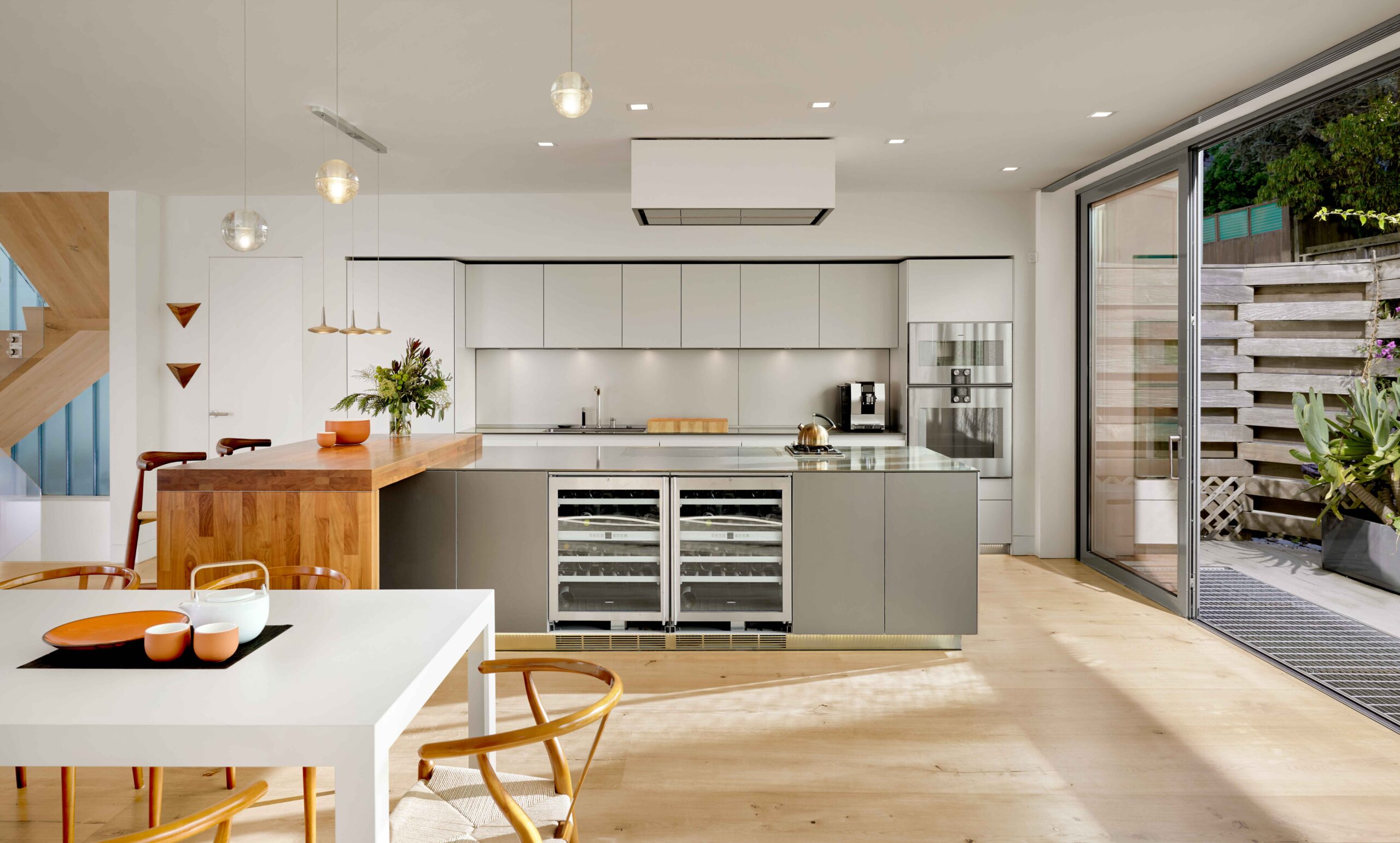
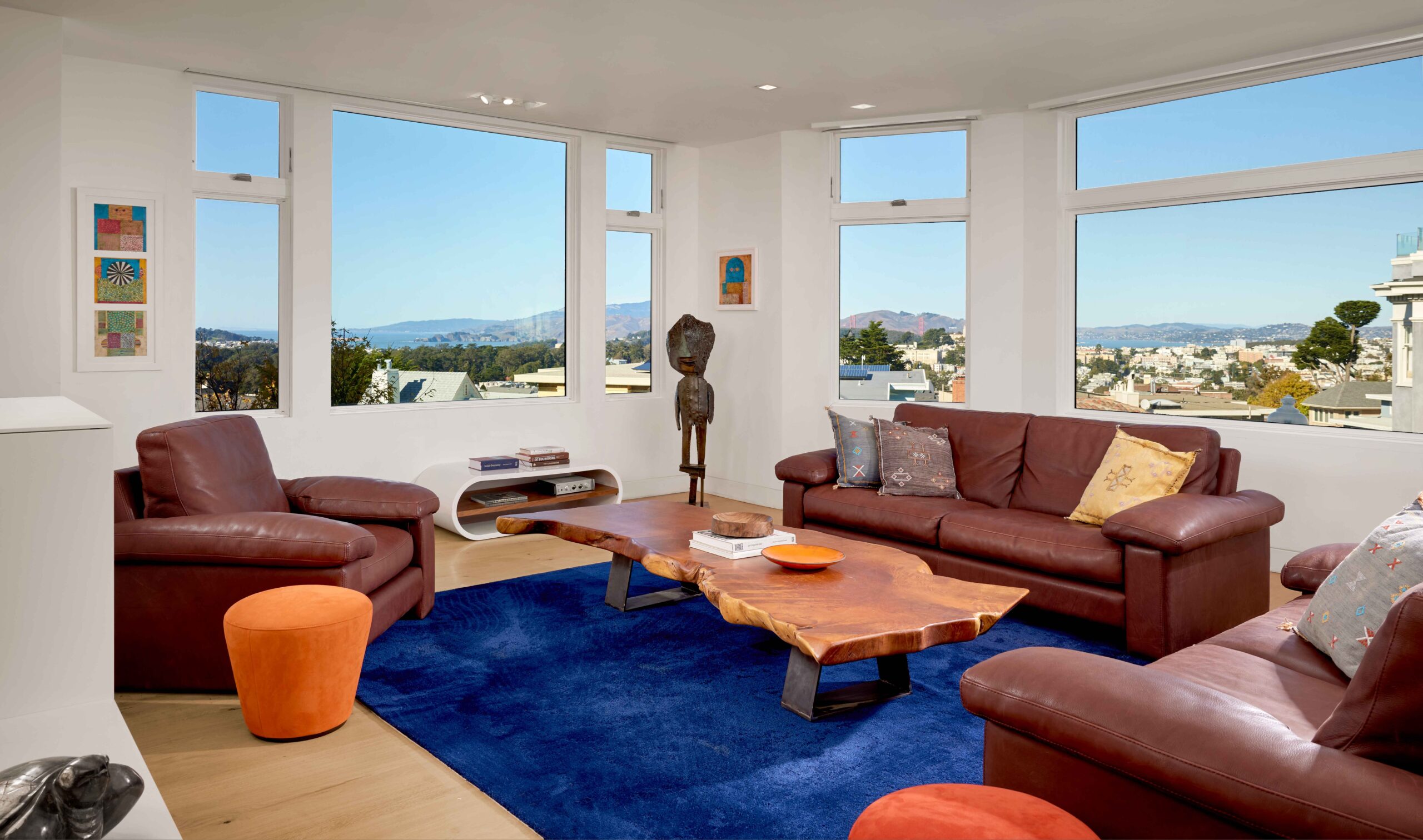
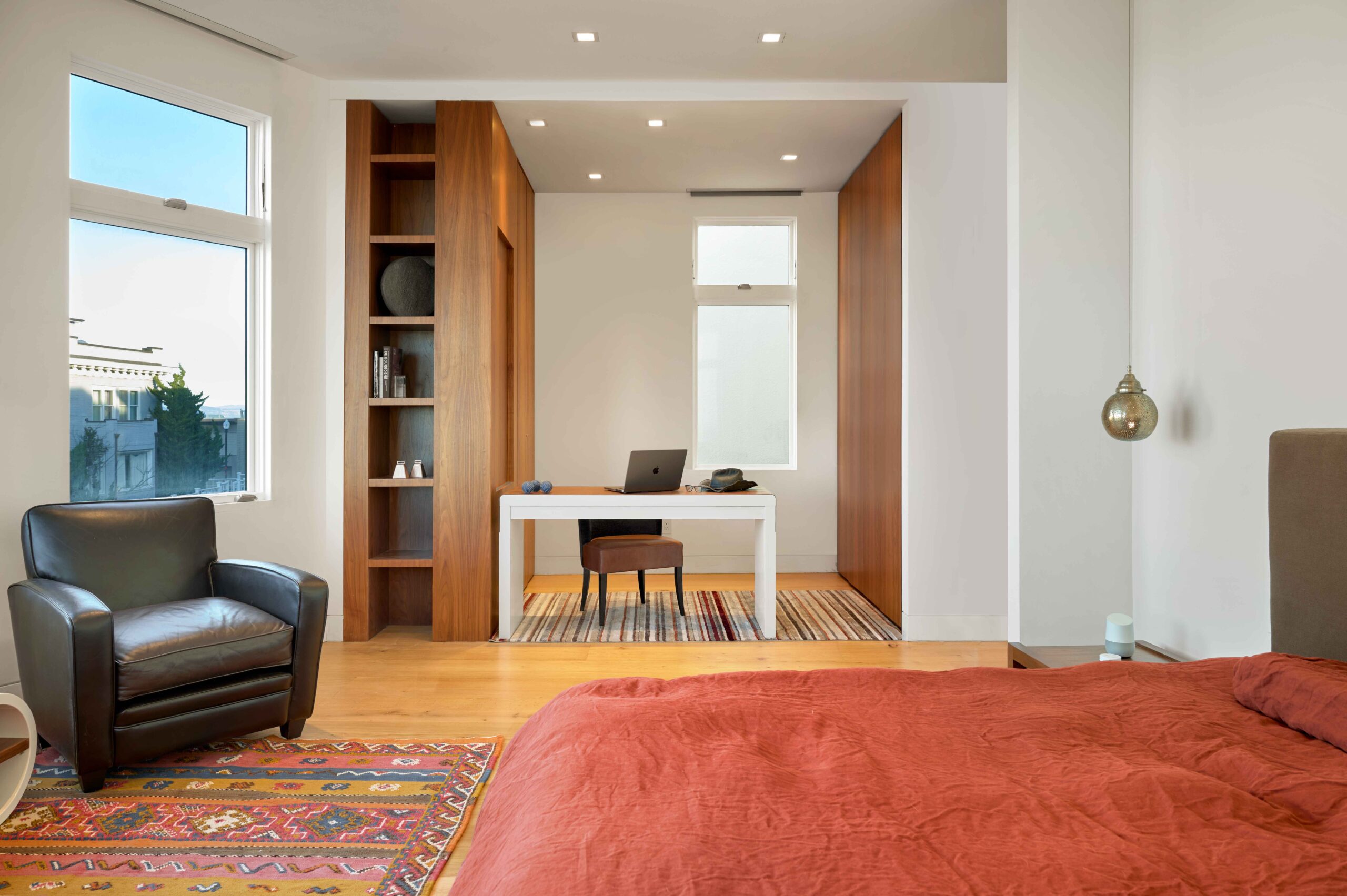
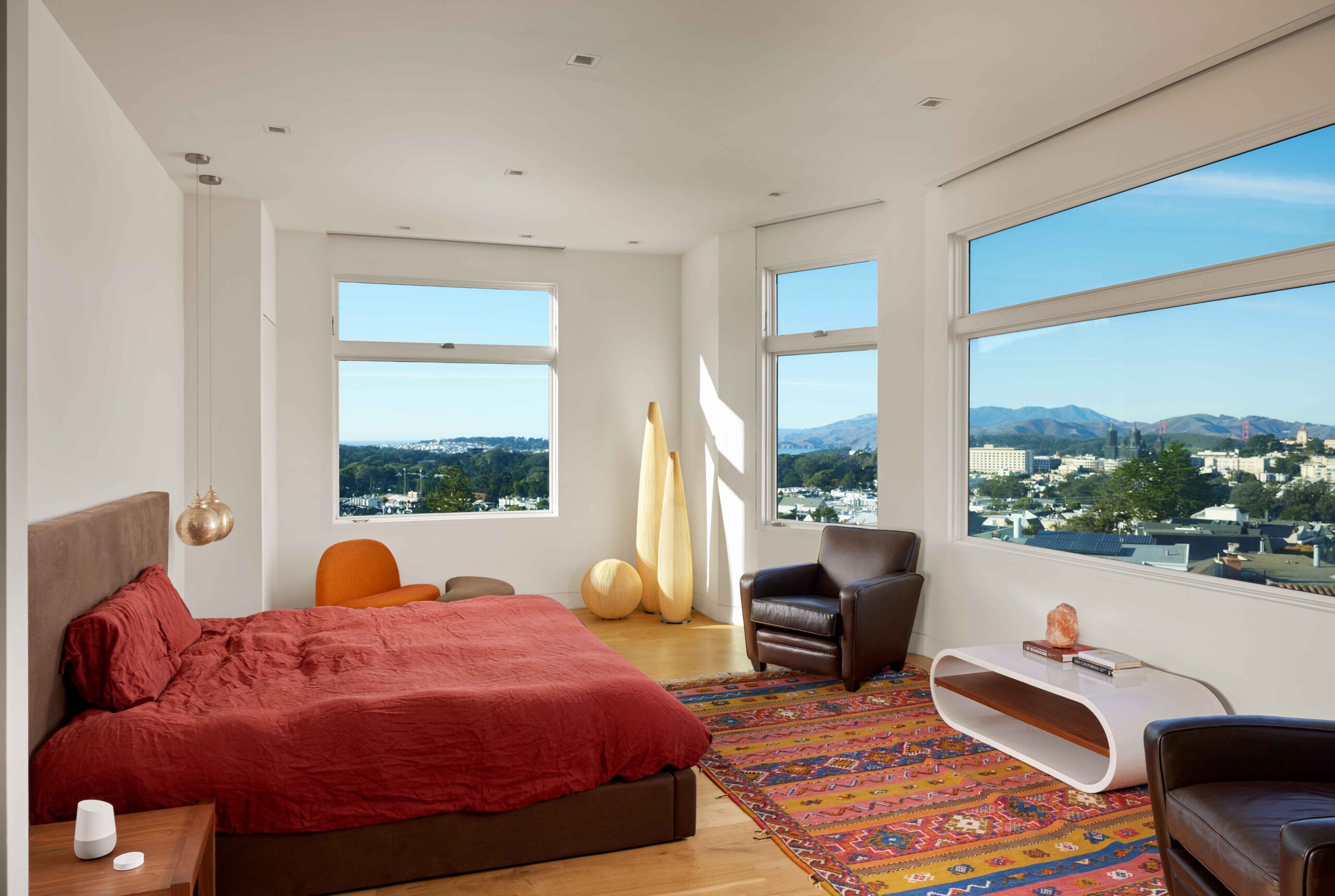
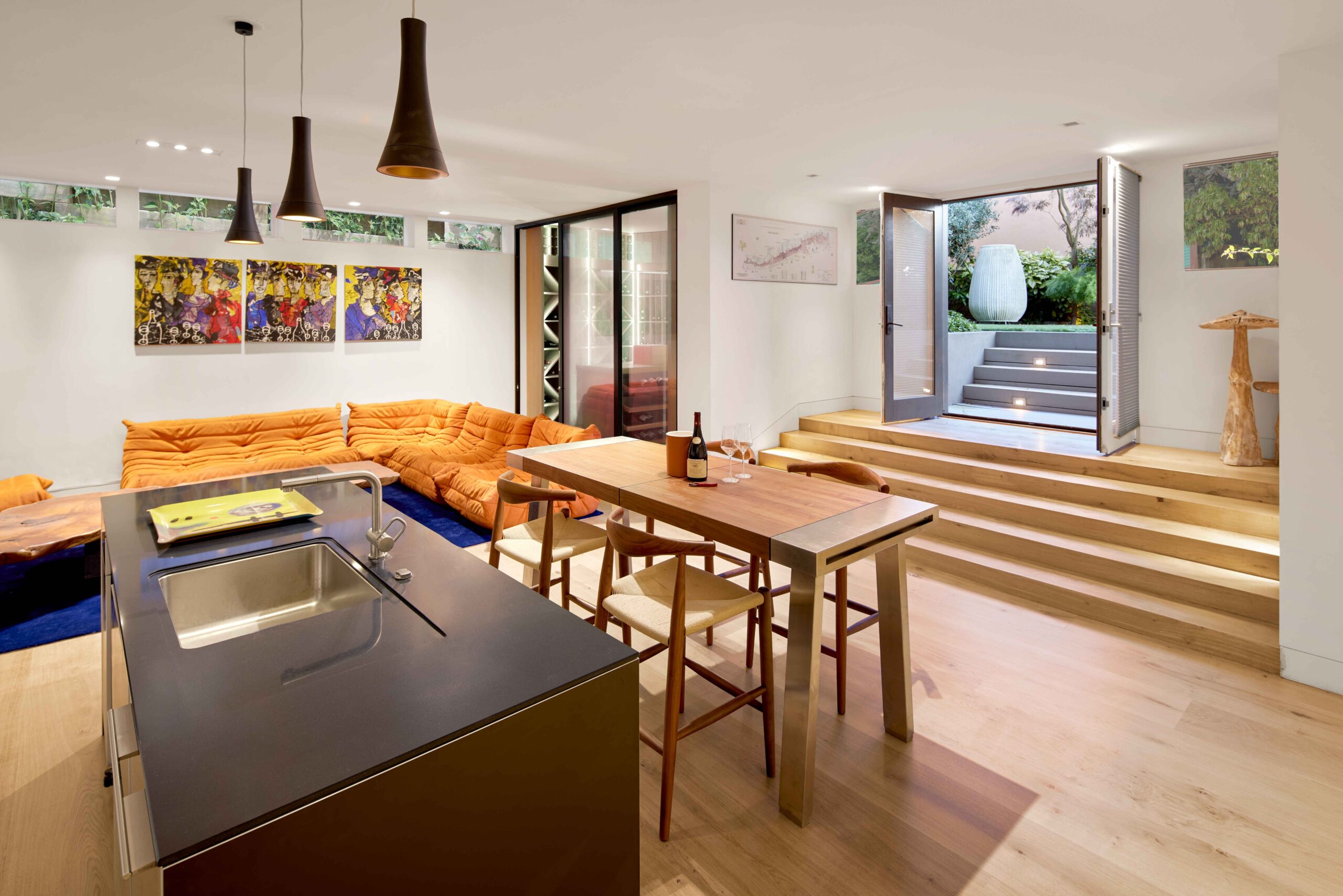
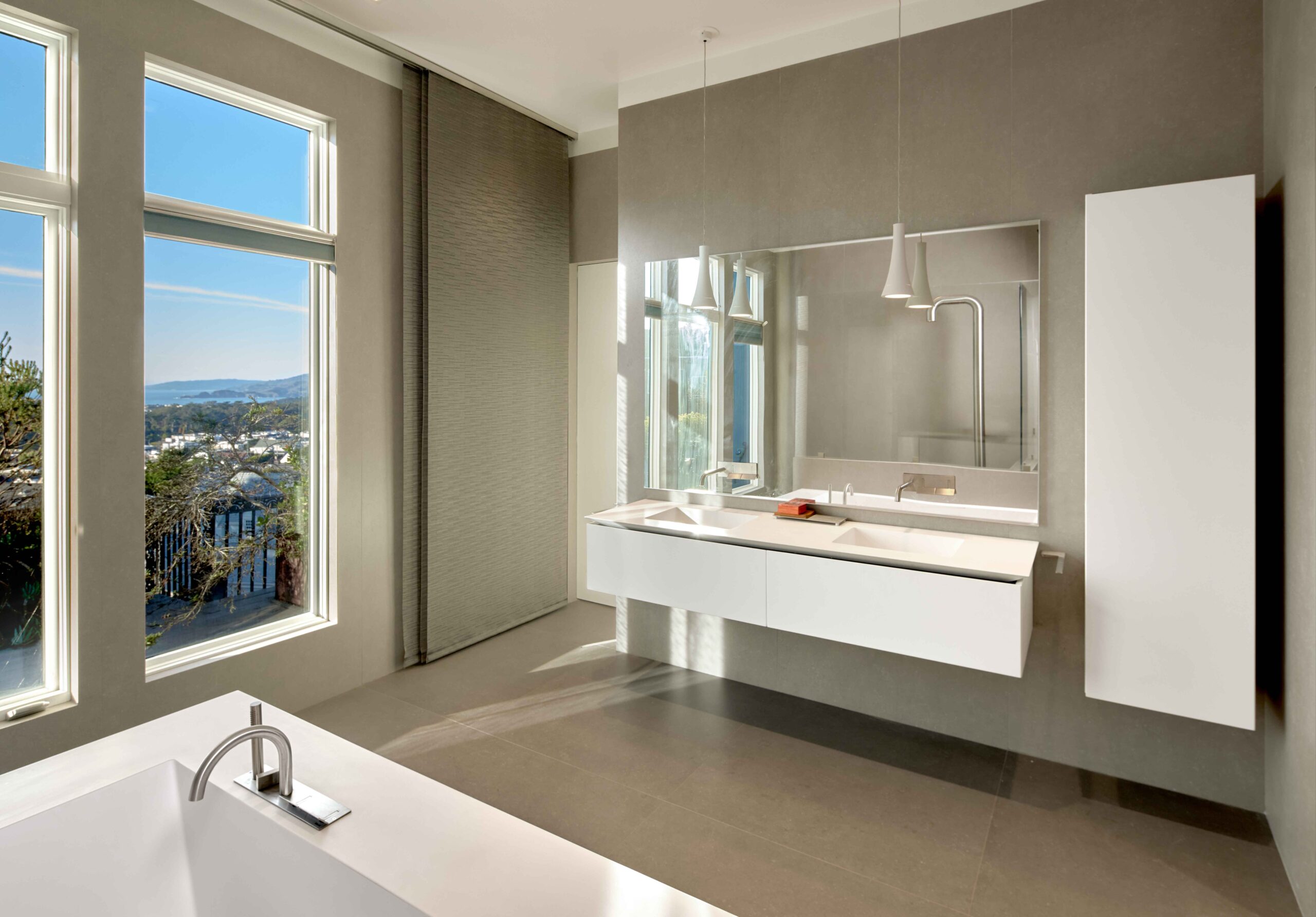
This Home in the heart of the City commands a spectacular view of the sweeping bay, framed by San Francisco’s seven hills. The Original early period home was very closed in, and chopped up inside, with low windows and an oppressively hierarchical circulation (borrowing from the hegemony of bygone servant eras) – unbecoming of such an opportune site in the northern California Climate so INTERSTICE was hired to transform the home in collaboration with its enlightened new owners.
Metamorphosis of Space
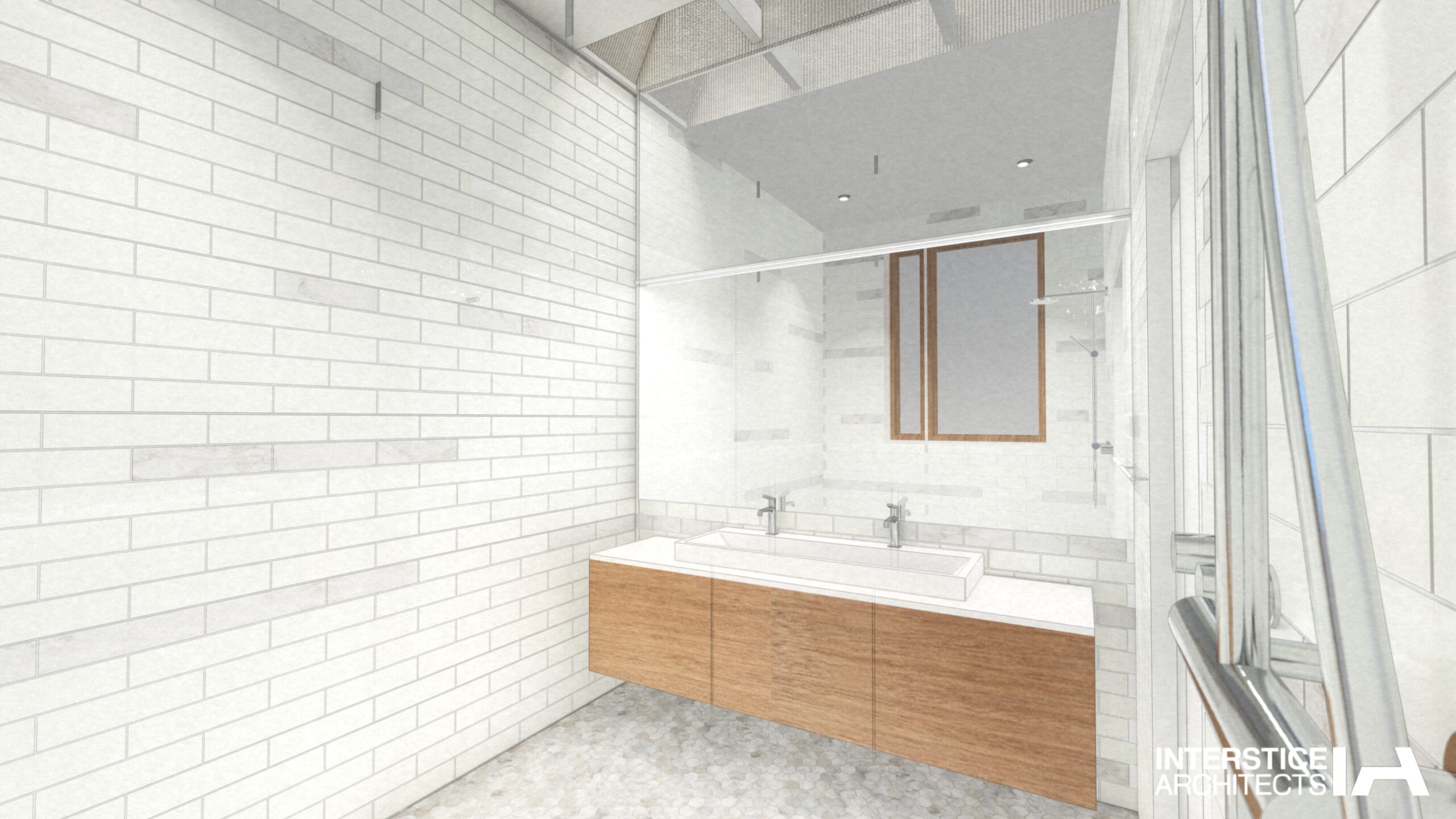
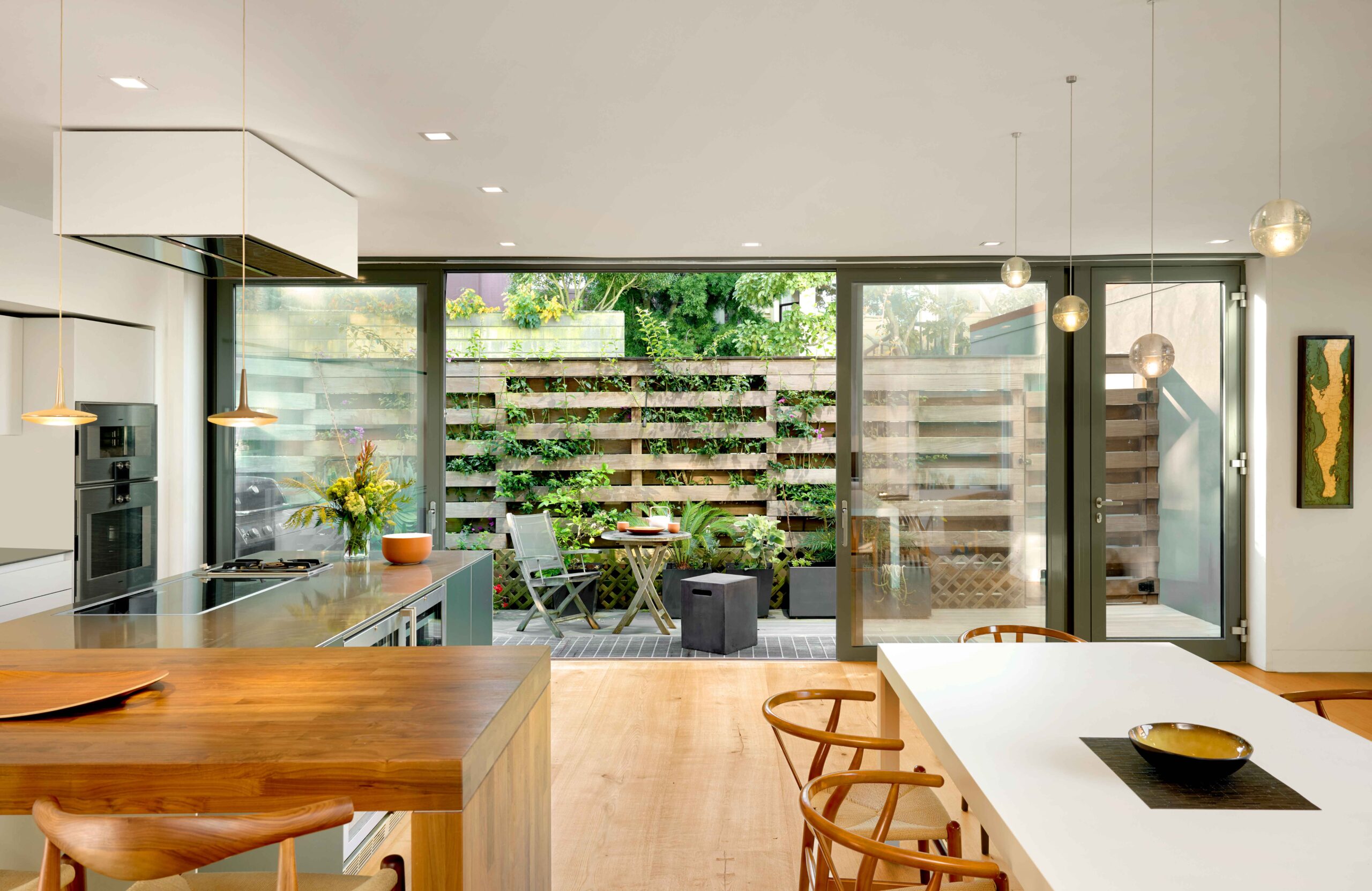
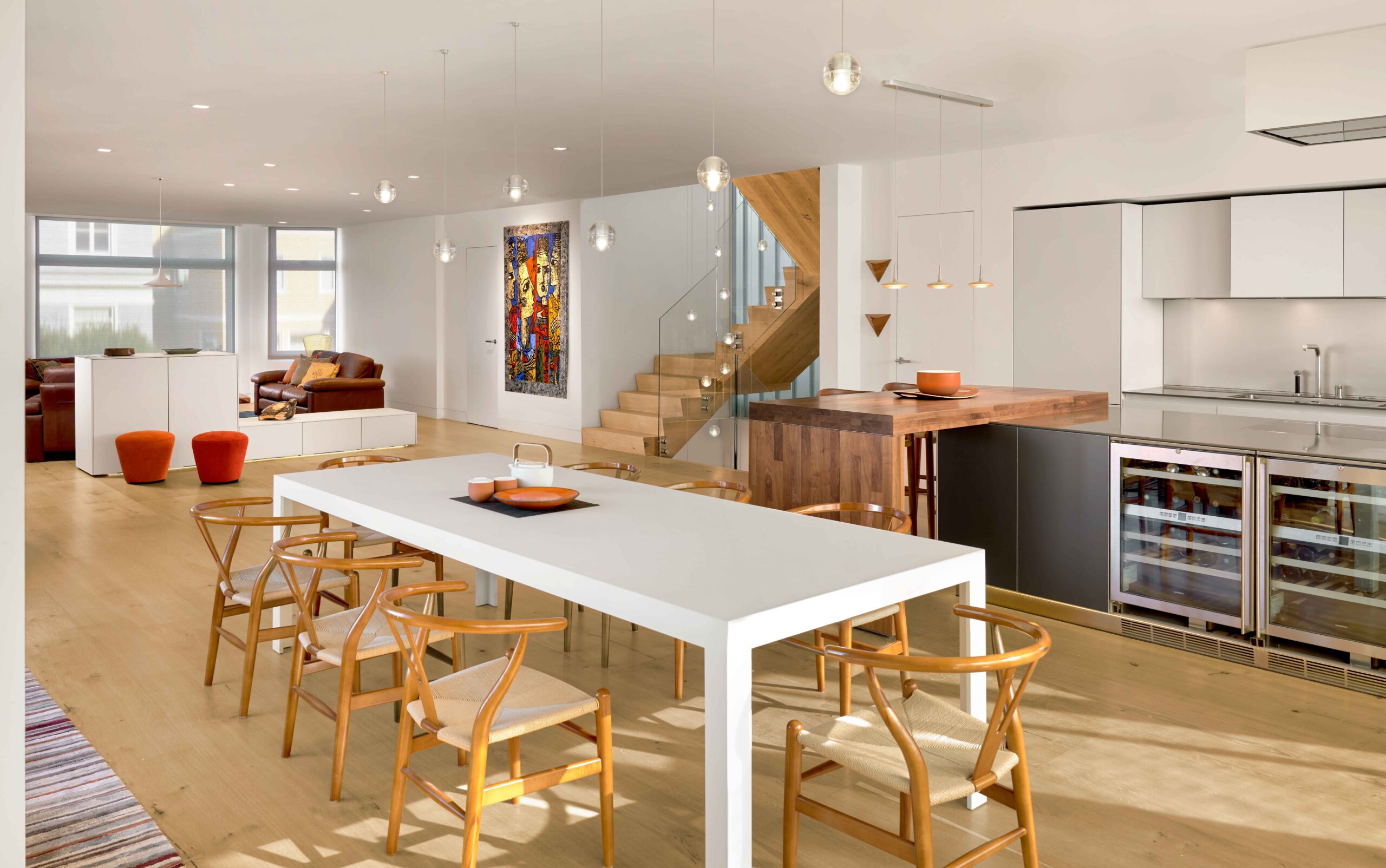
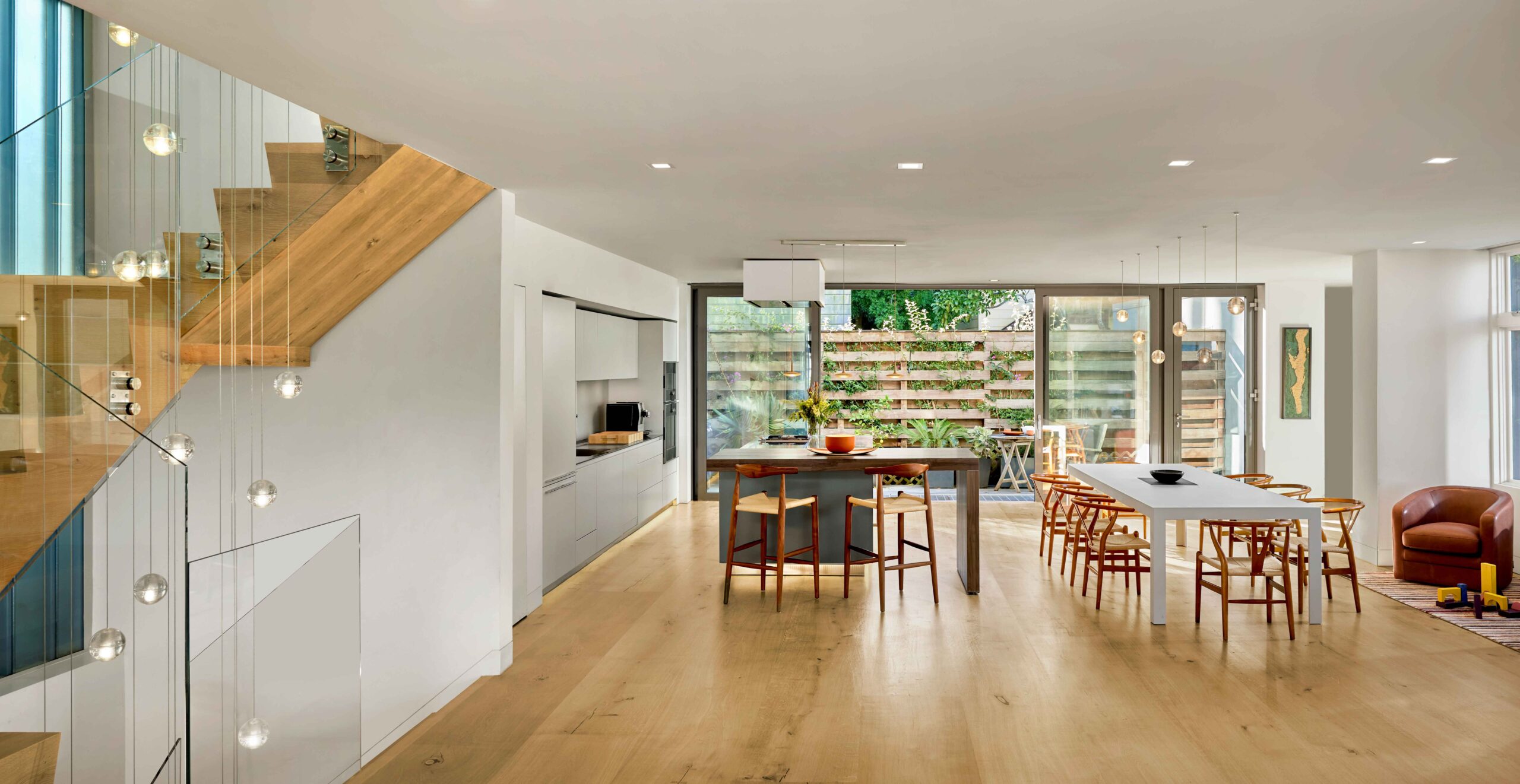
Its lower floor was a buried basement and unused space that further called for a total landscape and architectural reconfiguration: bedrooms were added, bathrooms and all the floors were gutted to start over. A vast seismic overhaul allowed us to open up the structure to create a flowing “Raumplan” that tied the sunny rear South-West paseo entry and new patio sitting areas into the kitchen, all the way through to the 70 mm Dolby-Stereo view to the North West across dining and living rooms all connected to the vista.
A Tower of Sunlight
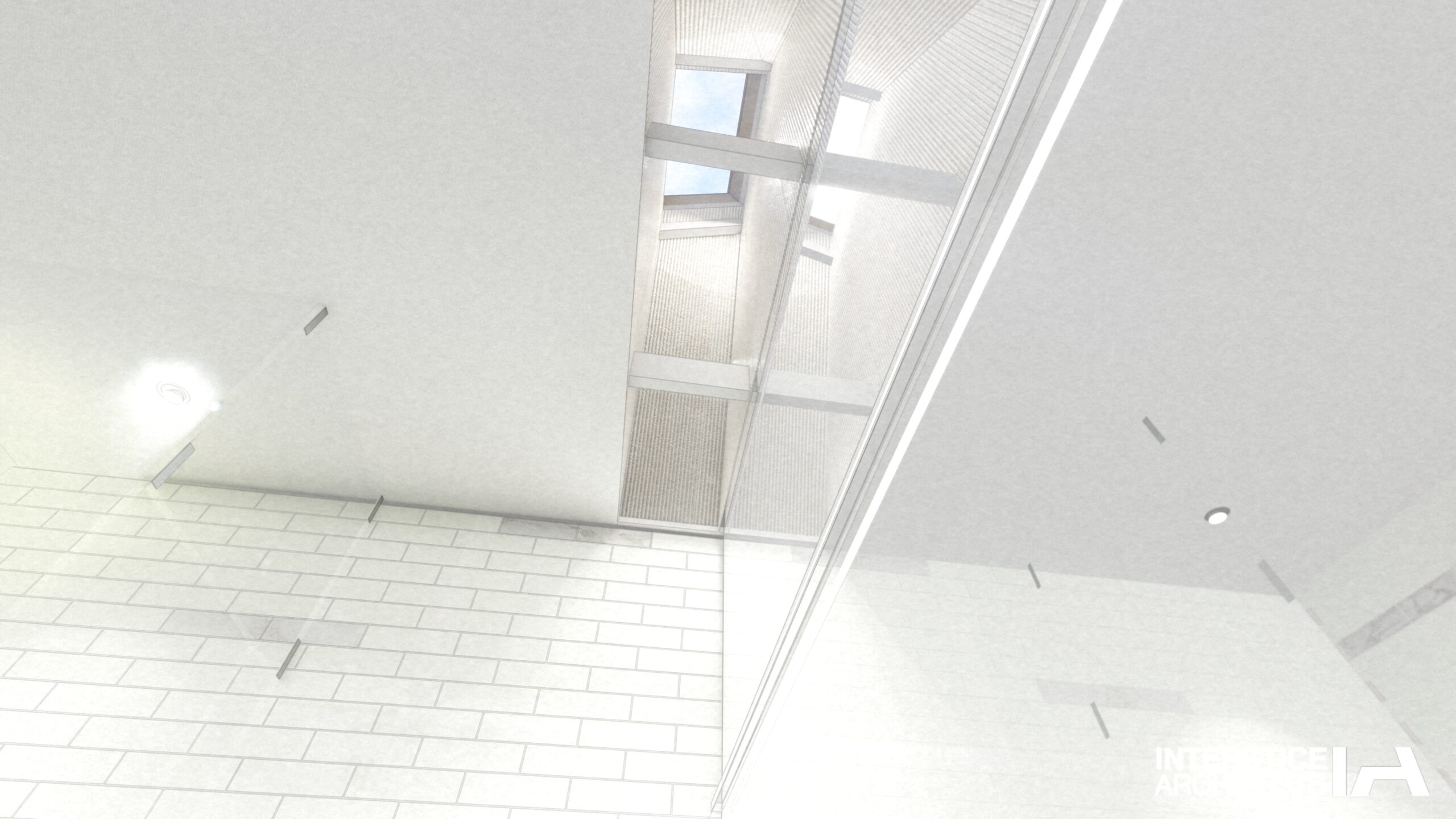
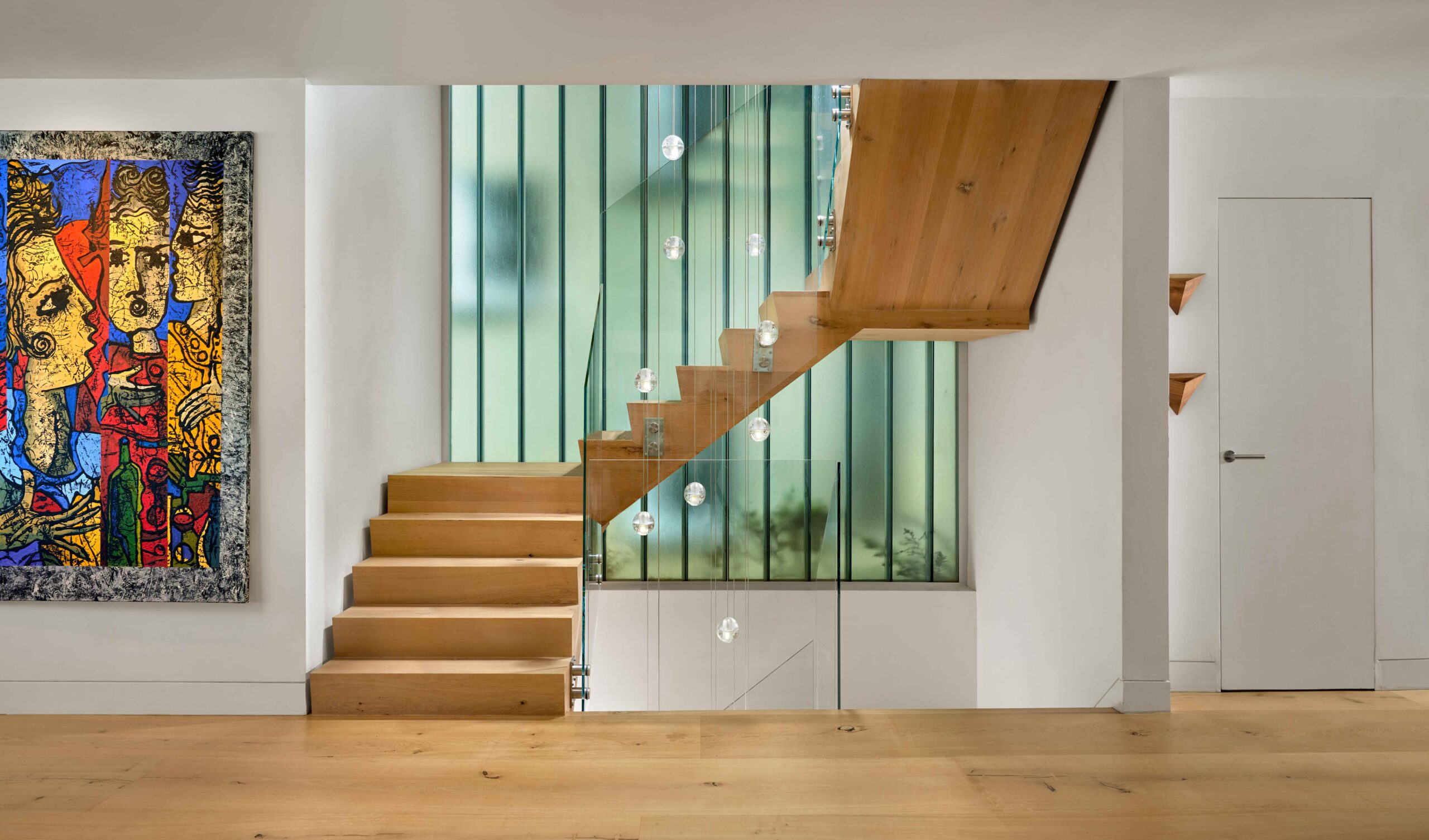
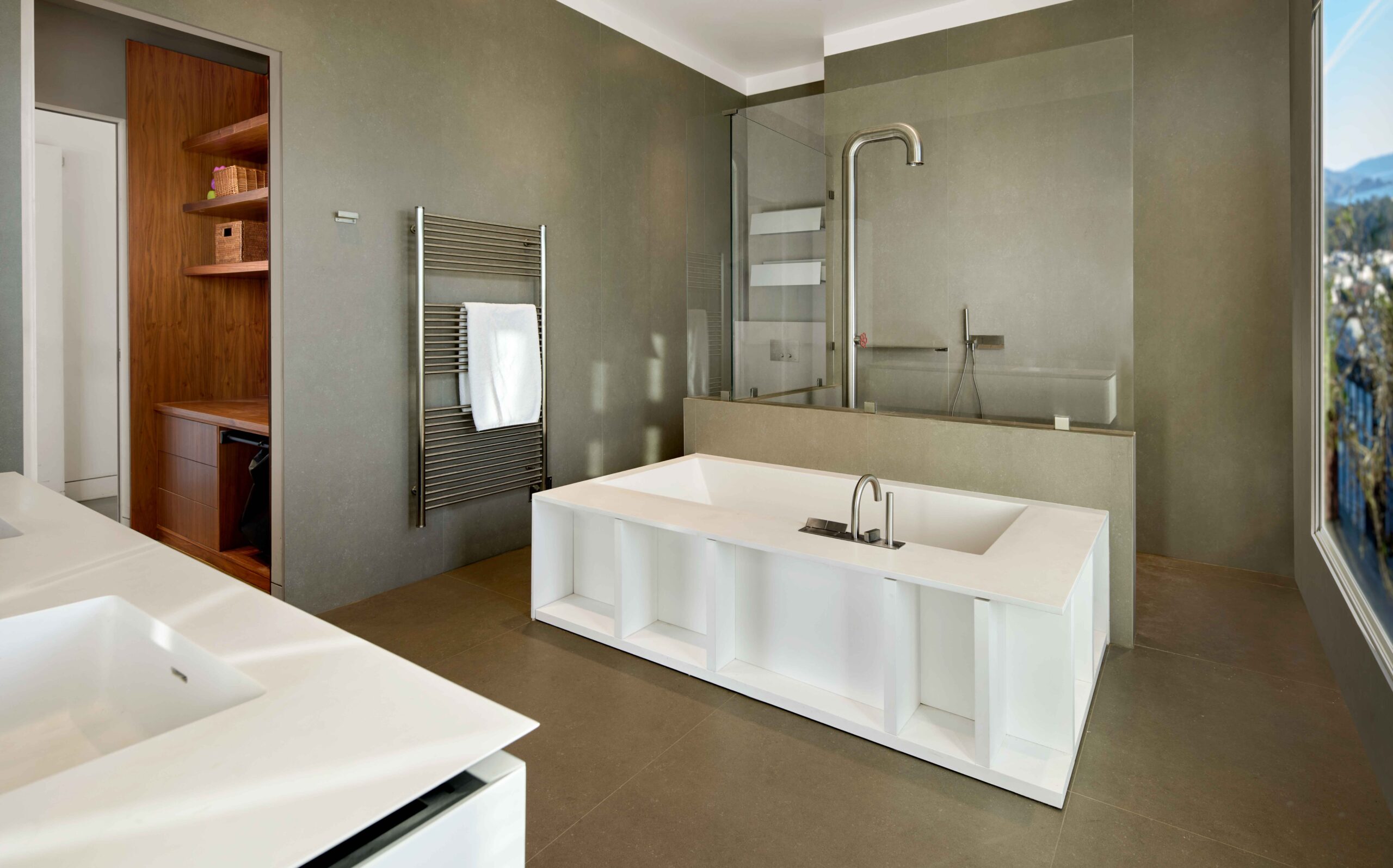
A new central stair was carved from the side of the structure. Clad in fluted channel glass ‘beams’ it creates a vertical sculpture of a solid wood monolith spiraling through a tower of light from the roof deck into the wine cellar and cozy sitting rooms that share the lower private family garden level. Bathrooms with Italian floor-to-ceiling single porcelain sheet tiles, and European solid wide plank floors, help to simplify surfaces, and allow the rooms to breathe in light and float on the soft warmth of natural materials on all three levels.
A Garden Lot
The Garden wraps the home in this generous lot and connects through large French doors to the lower level connecting bedrooms and family rec-rooms to the exterior play area at the lowest level where the hanging glass droplets of light end their cascade from the rooftop atrium down through pine of the new modern home.
Russian River Residence
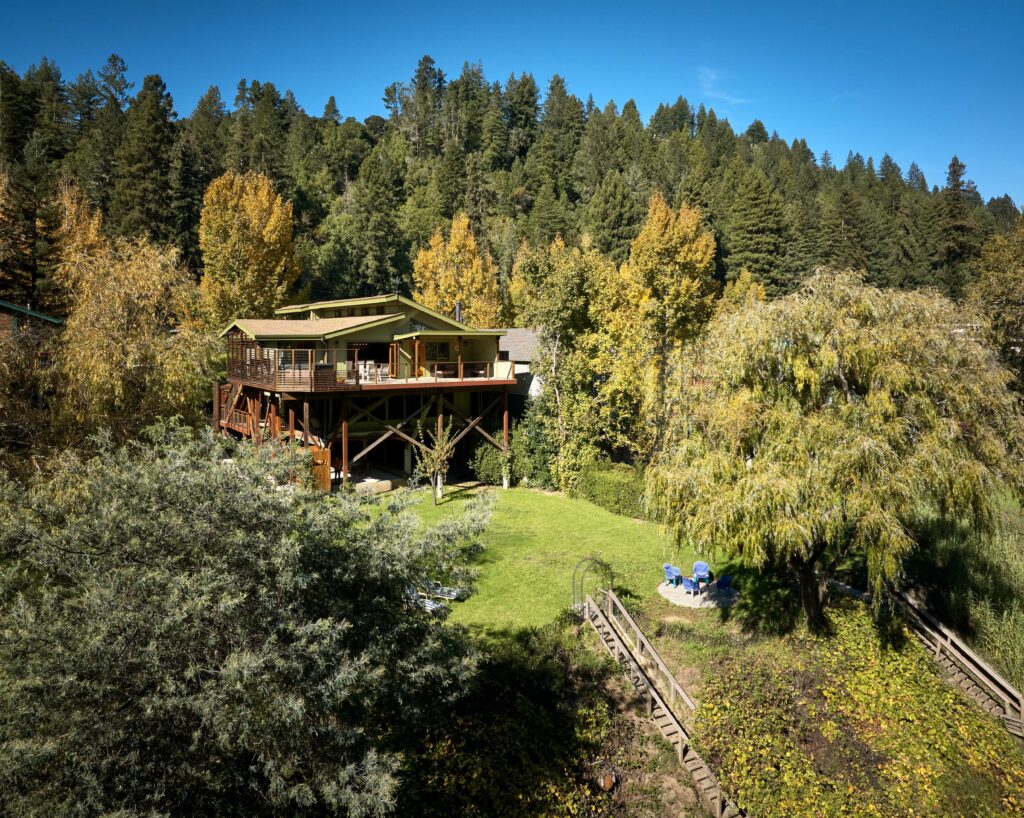
The River House
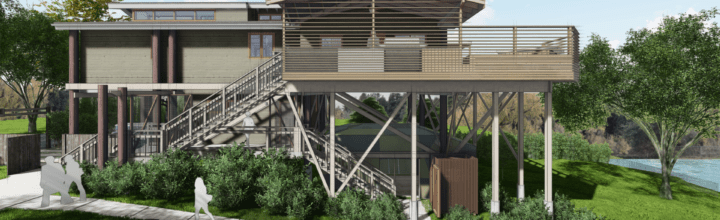
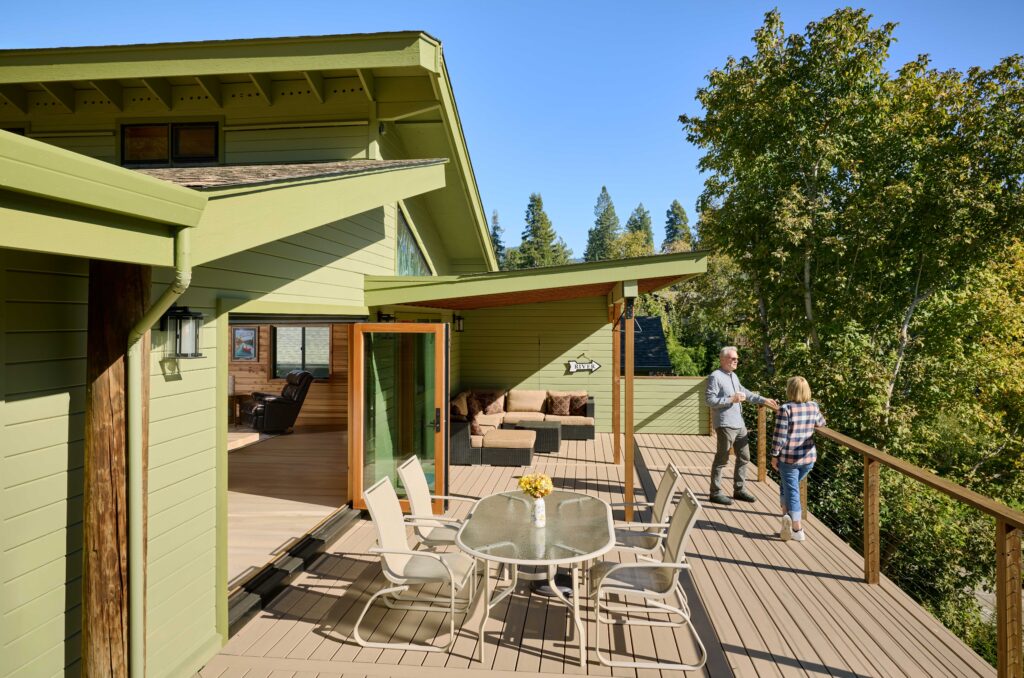
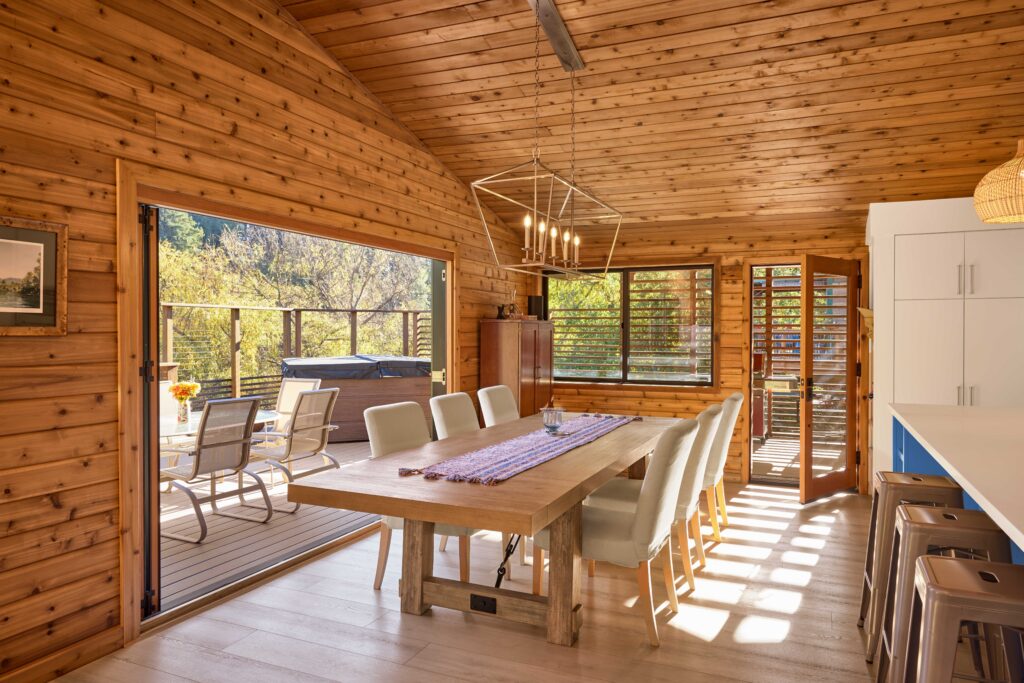
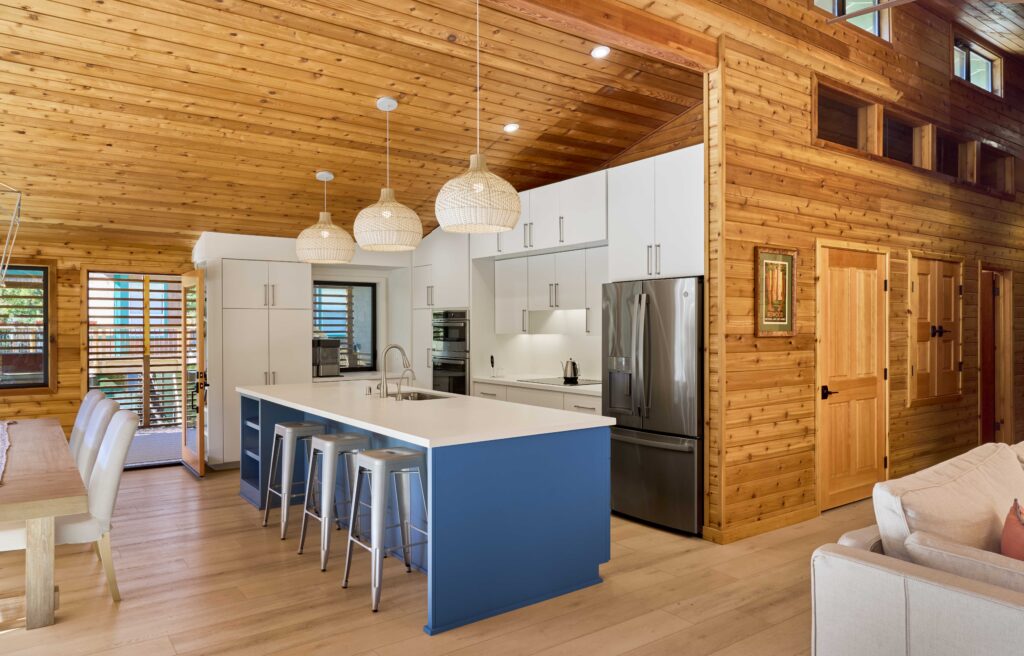
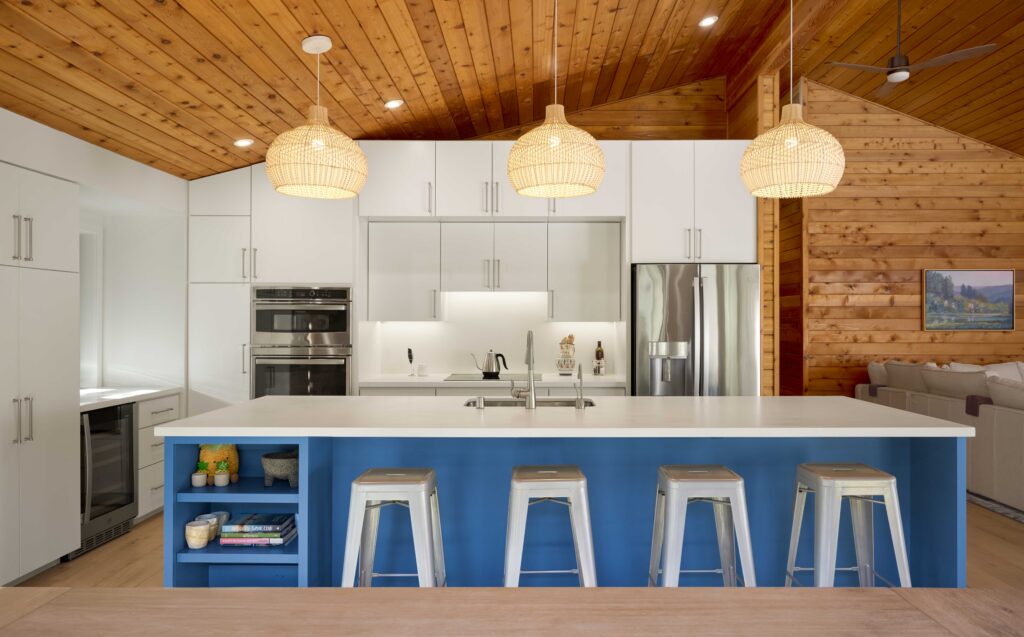
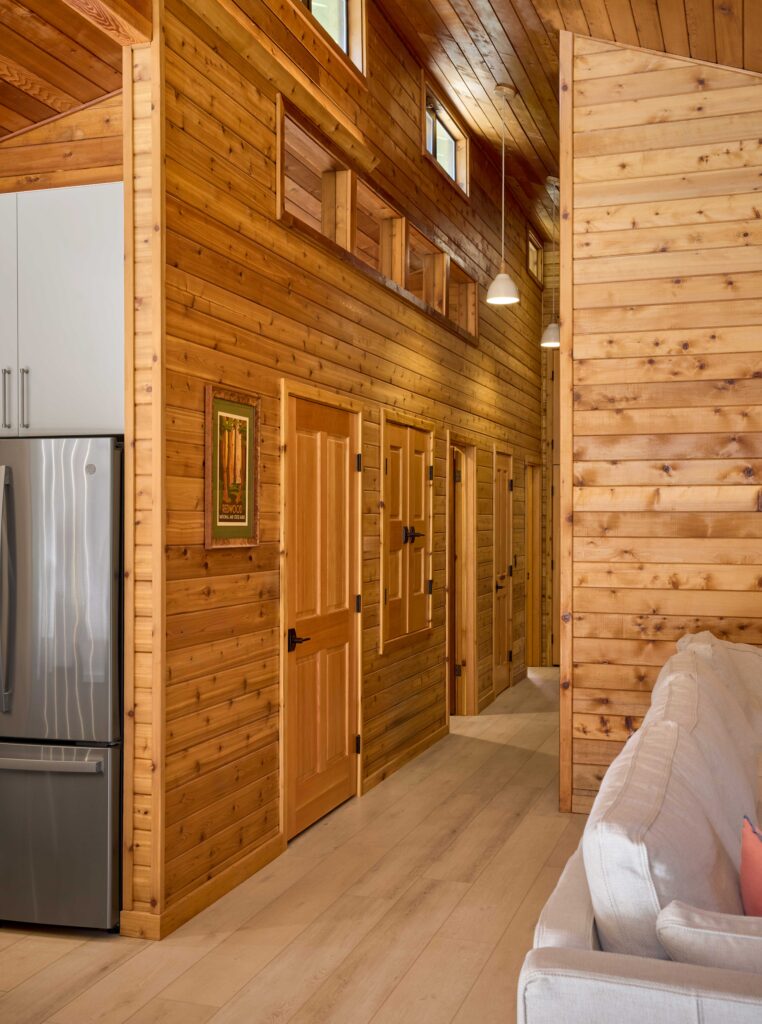
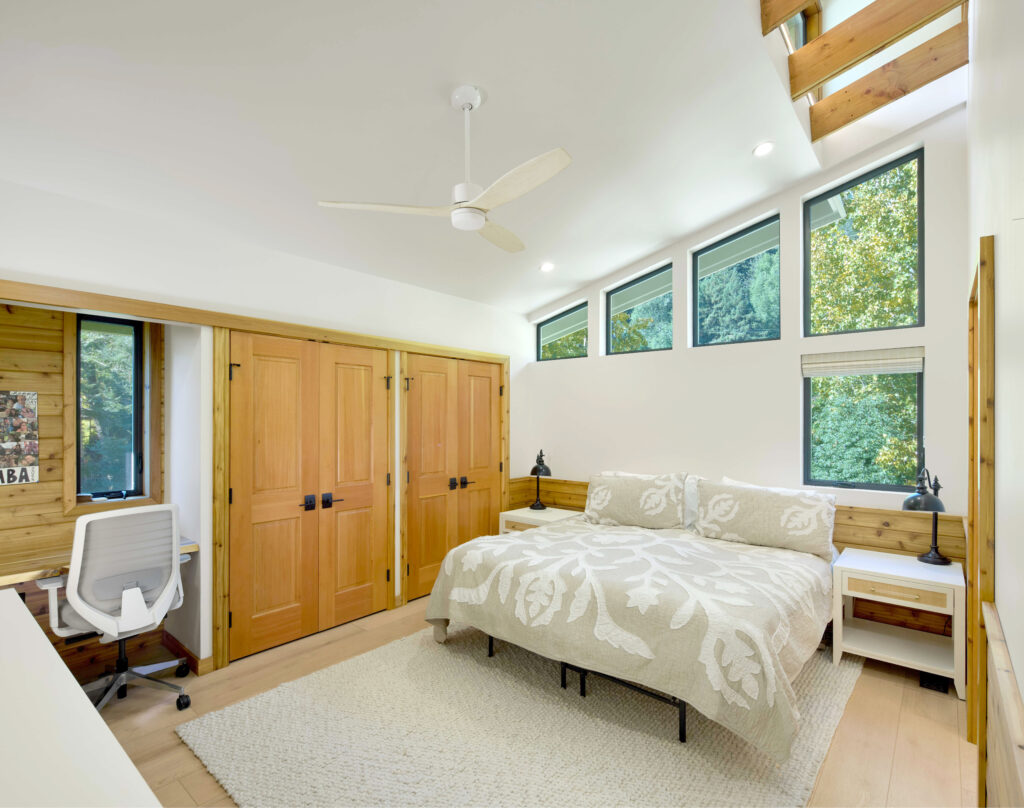
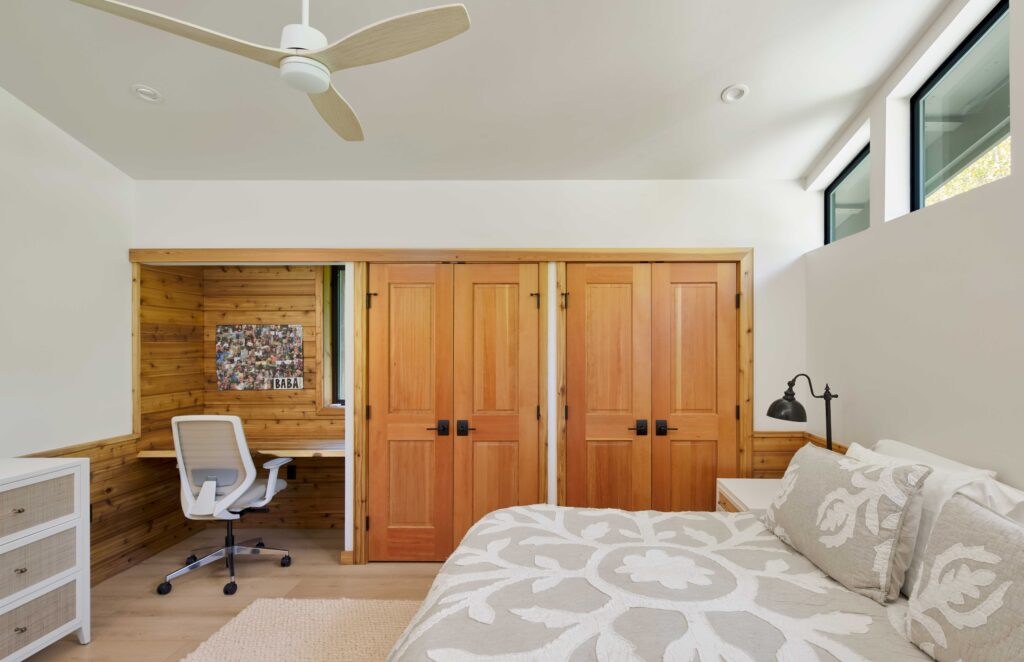
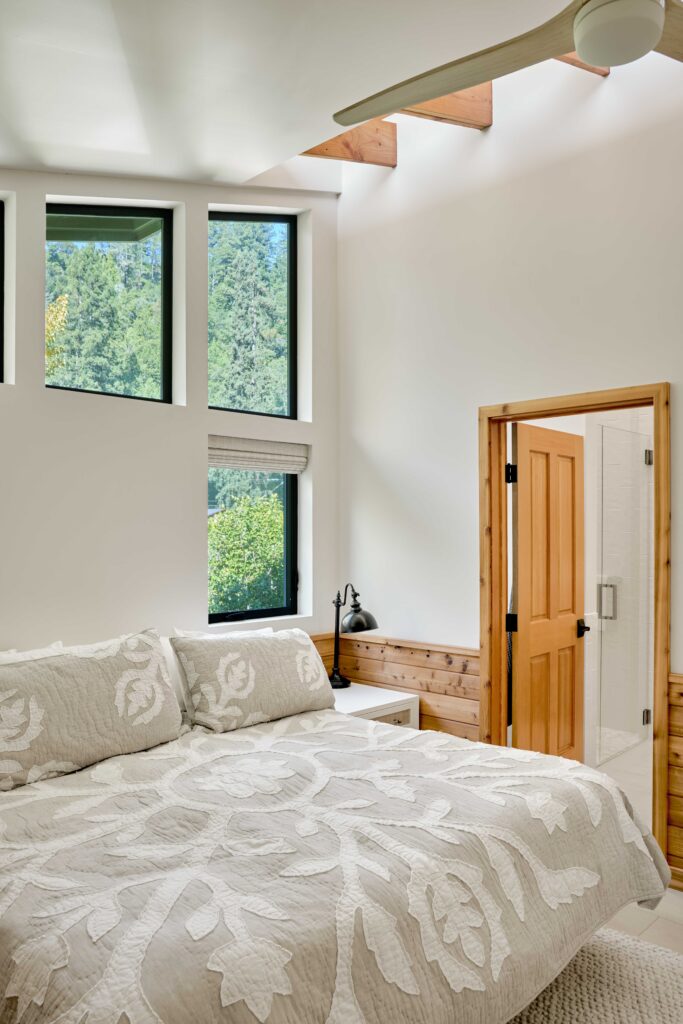
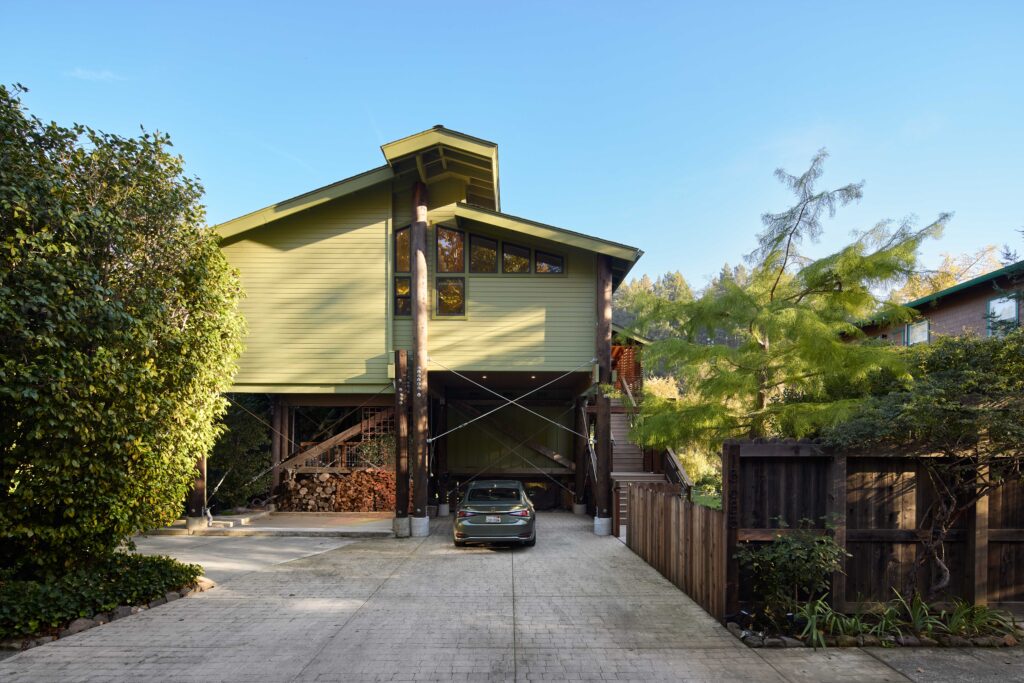
The Russian River is a major riparian system that carries water from the snowcaps of the Sierra Range to the Pacific Ocean – Running cool and softly in the summer months, to a lazy flow in the autumn, it can flood over 50 feet in the storms or winter and completely overrun its narrow banks presenting an interesting challenge to seasonal use and floodproof construction. INTERSTICE renovated a beloved family home to help it better house three generations with expanded living space, new bedrooms and baths, new kitchen and “below decks” a game room, a camping platform with exterior shower, and covered car and boat storage.
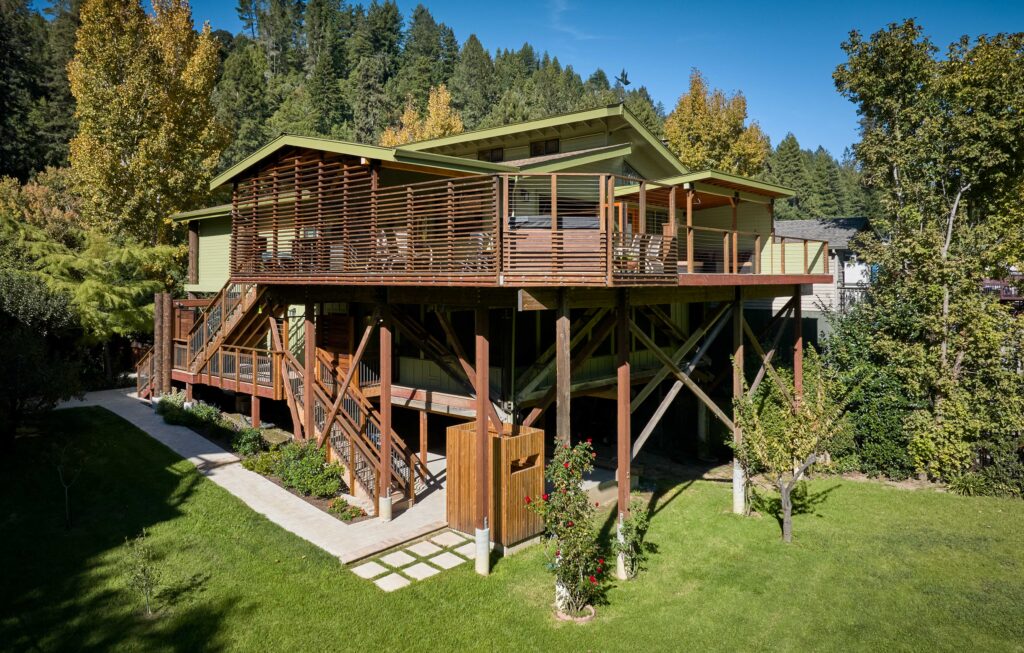
An Elevated Living
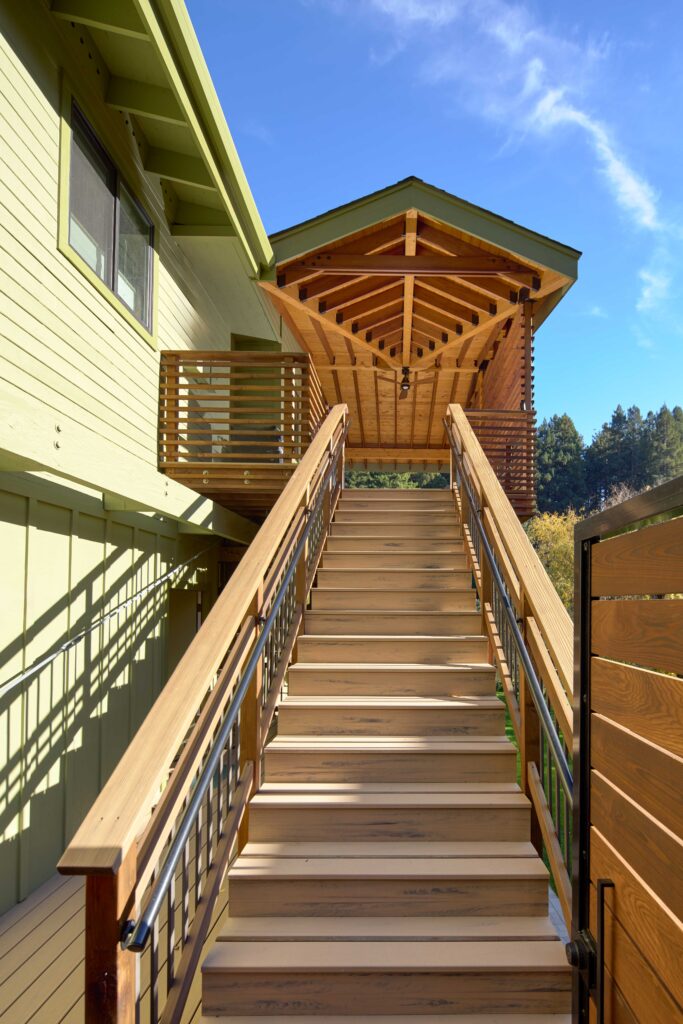
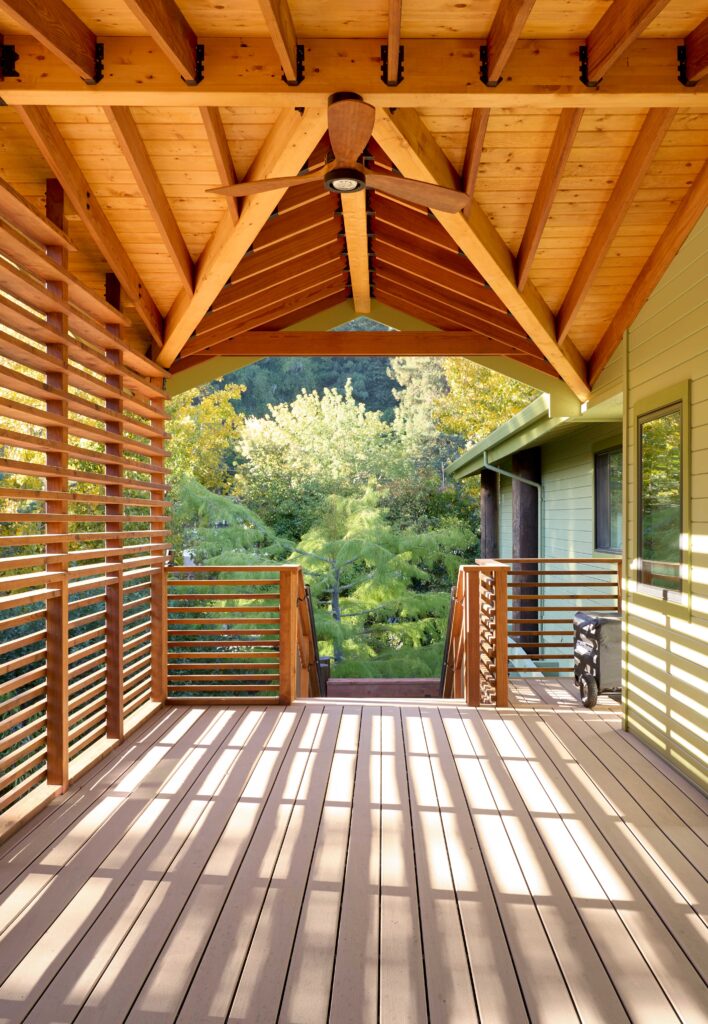
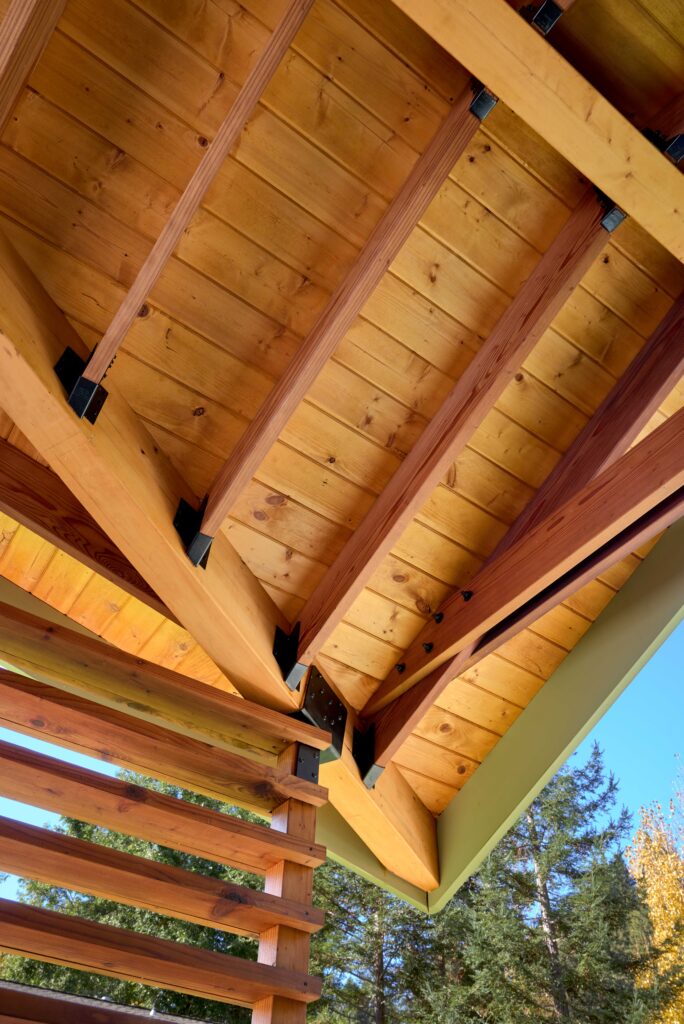
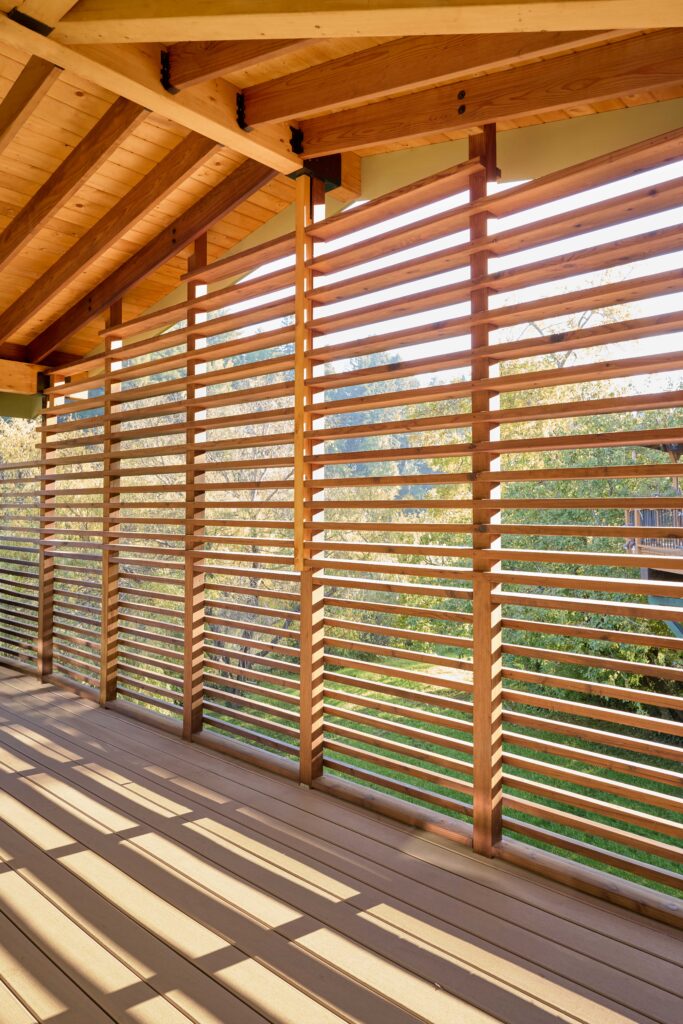
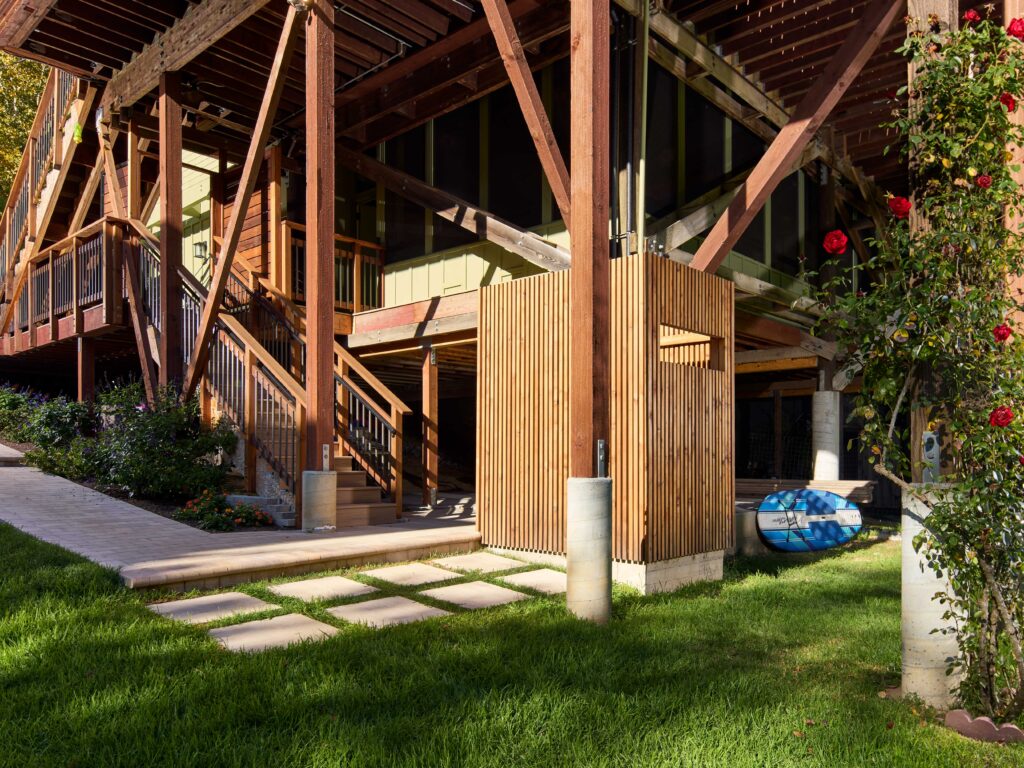
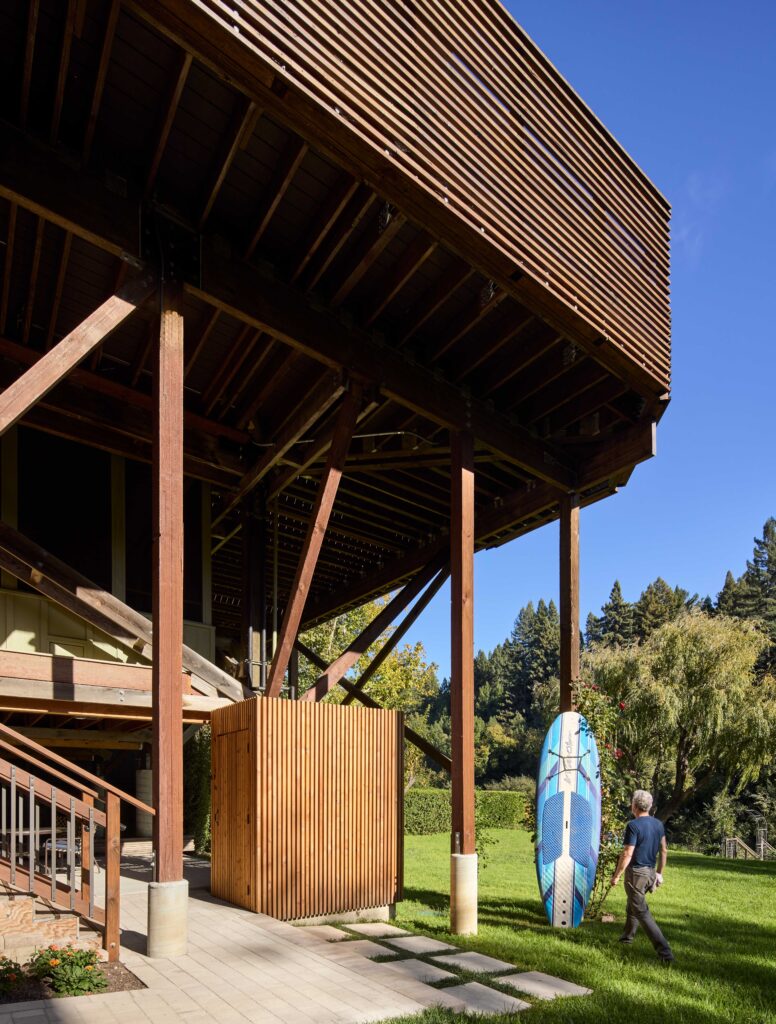
Up on telephone 40 foot stilts to avoid the 500-year flood level, the house is 30 feet up in the air – and so, its vertical circulation was the first challenge. A new stairwell weaves a lacework of wooden slats up the south façade – shading the decks, and providing privacy, while gracefully interconnecting the three levels of use. The lush lawns, and shaded garden patio are always busy in the summer months, with dogs and children everywhere. The tree house needed both an elevator and a sculptural stairwell to allow quick access from the river and laneway to all levels. Like a home perched between giant redwood peers, the original structure is enlarged to provide a lighter, expanded home, better connected to the river, and the new shared social spaces – some of which occupy the comfortable shade of the flood zone volume “Under the Boardwalk.”
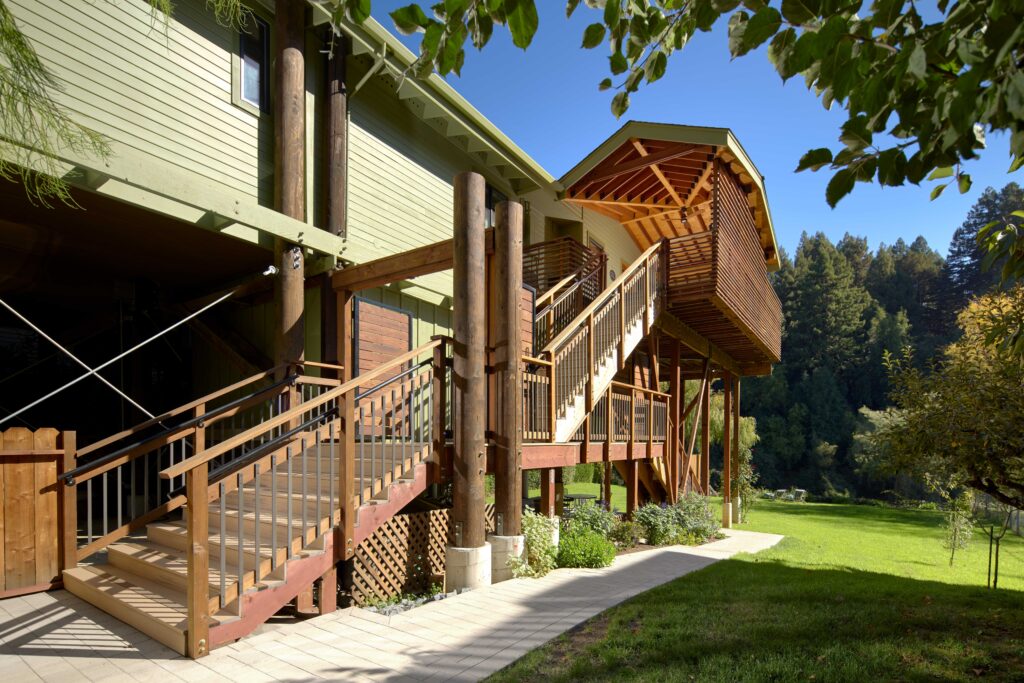
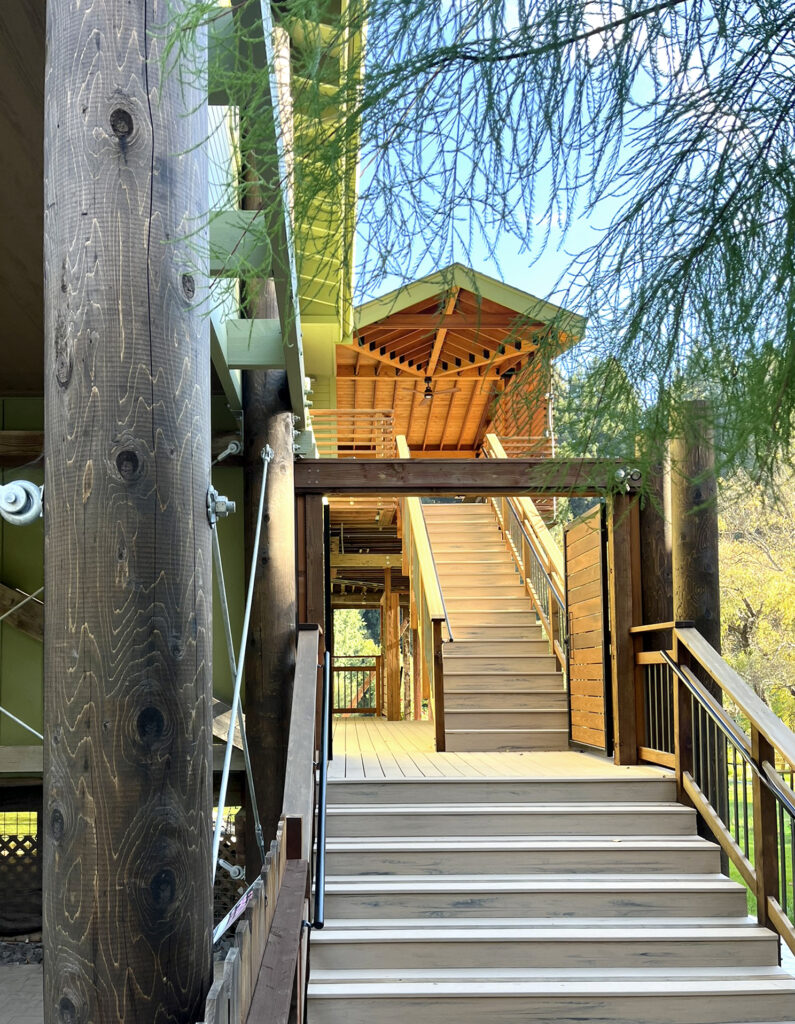
Extruding the Section
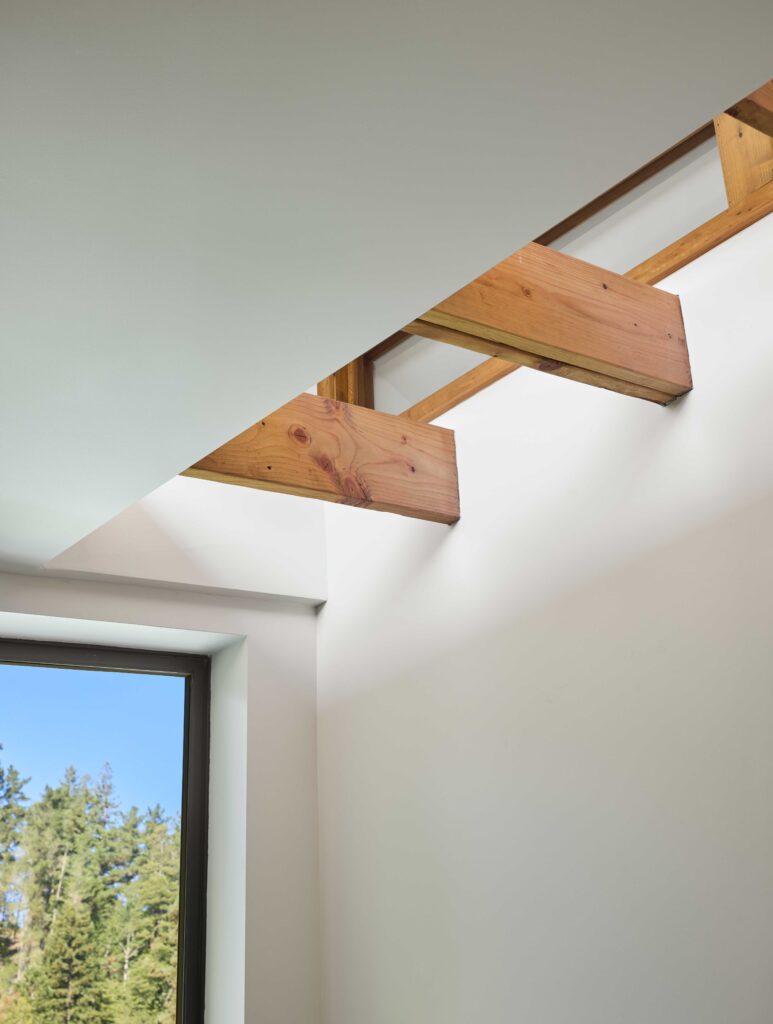
To honor the earlier structure INTERSTICE designed the extension to extrude the clerestory roof so that it could provide an organizing feature along the spine of the building, providing more light into the core areas of the home. In connecting the rooms with natural light this element is then expressed as an entry feature toward the laneway. New stairs on peers allow a simple direct route past the screened outdoor games porch, connecting the lower camping platform with its outdoor shower, gardens, boat shed, utility rooms and elevator, form water-toy storage, all the way up to the new BBQ deck and hot tub at the uppermost living level, and back again.
The Lower Peers
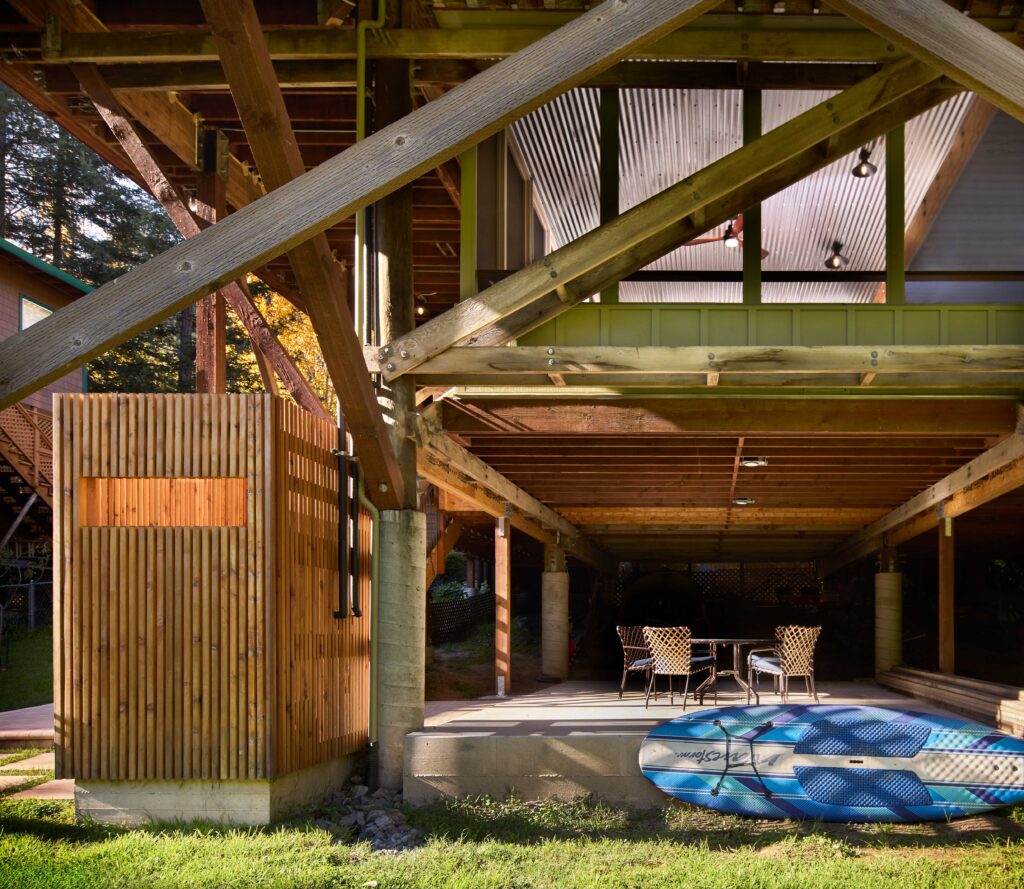
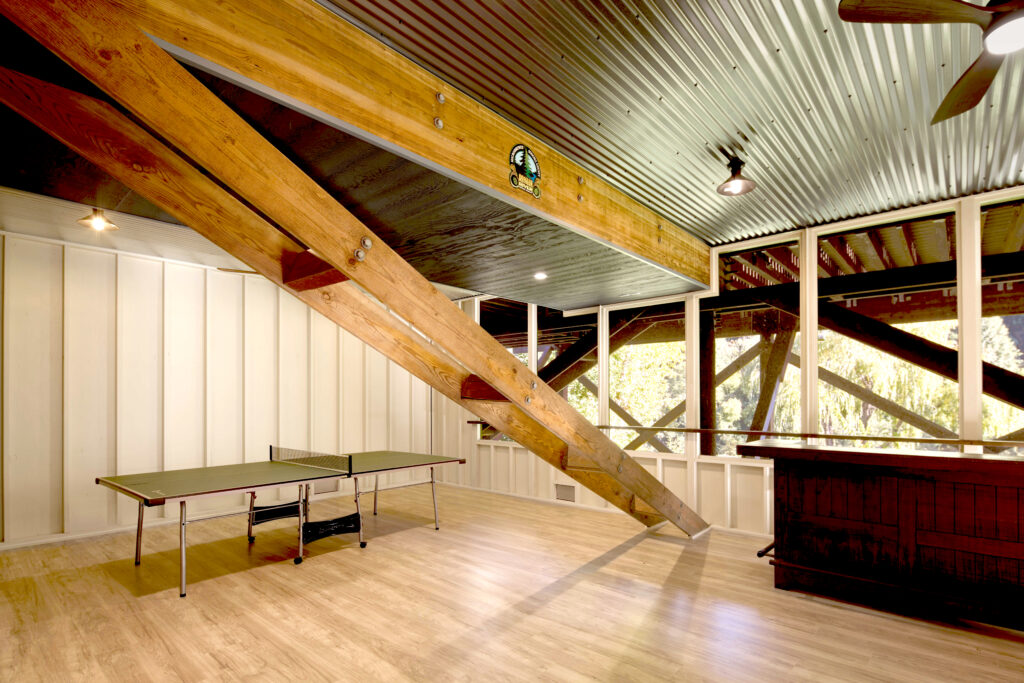
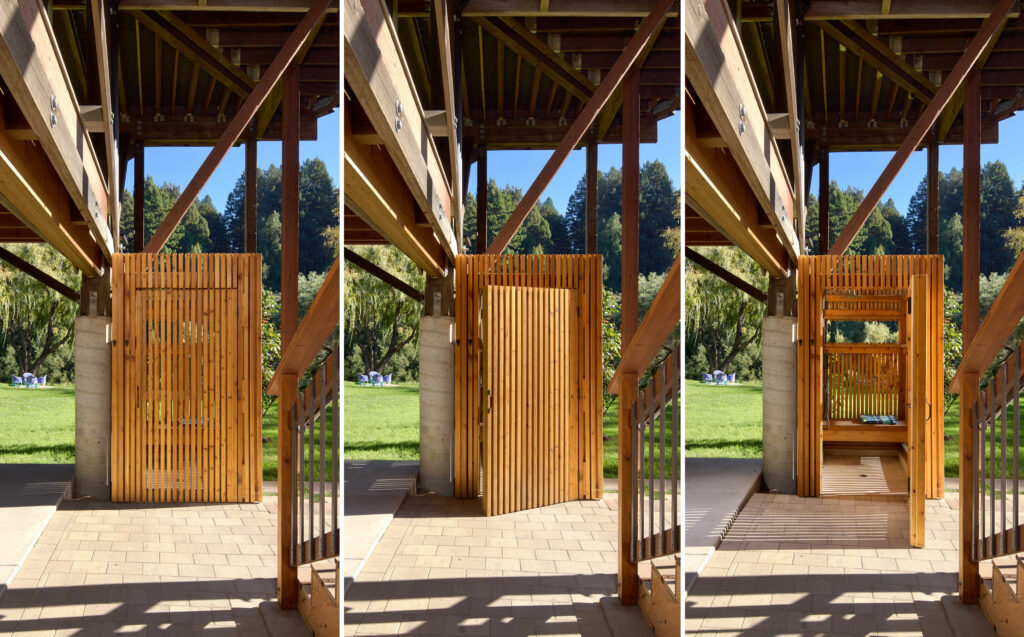
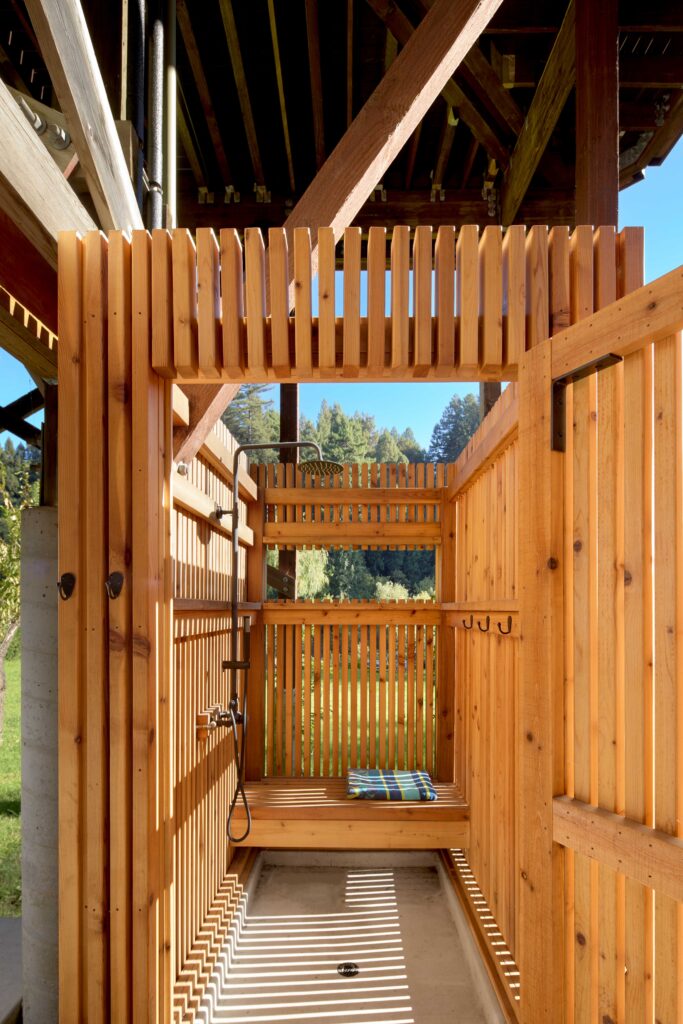
The space below the house is not to be wasted. Here mechanical and storage rooms and open-air car charging ports are designed for inundation. A raw finished screen loft is built in the cool space below the upper social decks with corrugate steel ceilings. It is crossed with redwood struts and pierced by telephone pole pine peers. This informal living platform below the house is an open-program suspended porch hovering over an informal boat shed, and camp-out space platform with its own wood screened rinse-off shower. The rest of the under-peers provides at grade enclosure for recreation paraphernalia. Here fiber-concrete panels and flow through flood ports help resist flood damage, allowing water to flow through and easily hosed down after major seasonal flood events; which are more common with every passing year.
Location: Guerneville, CA
Owner/Client: Private
Scope: Addition & Renovation; Architecture, Interiors, Landscape
Status: Under Construction, Complete 2024
Project type: Residential
1567 California Street
A Central Oasis
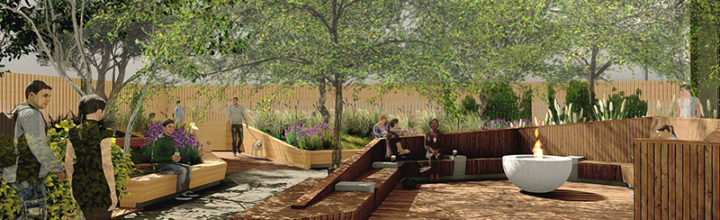
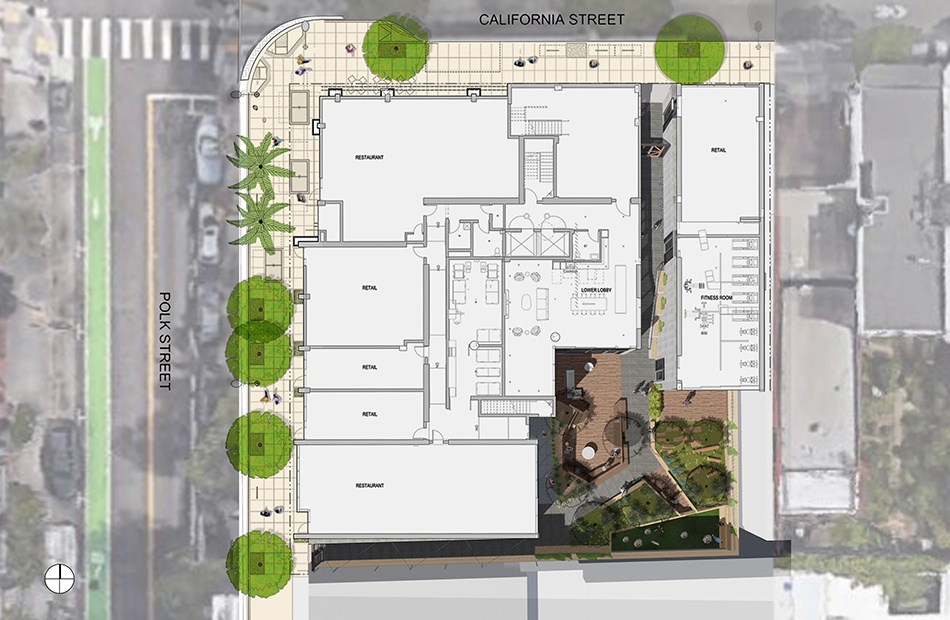
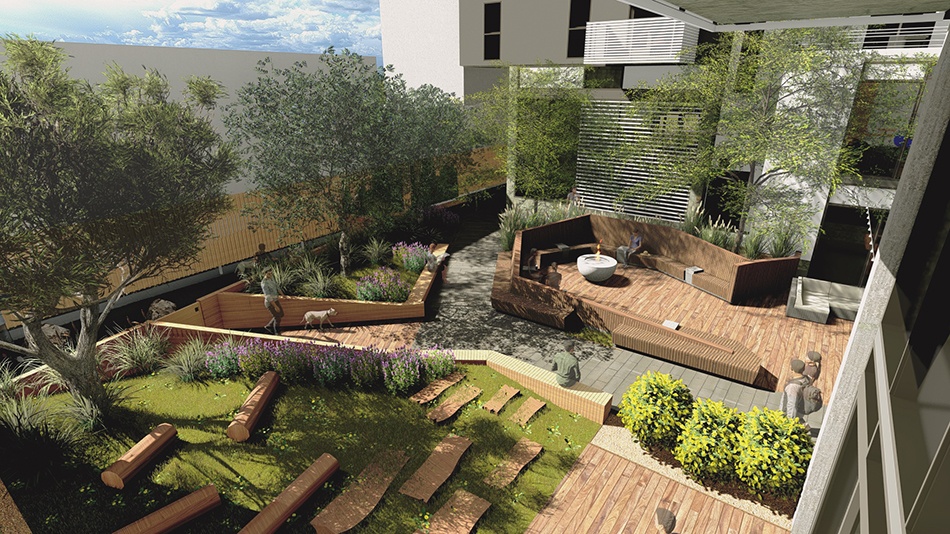
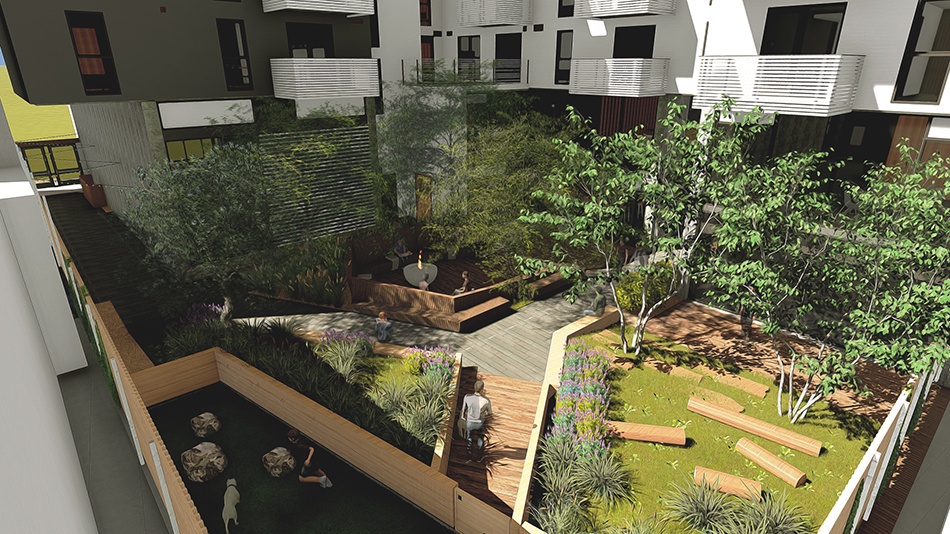
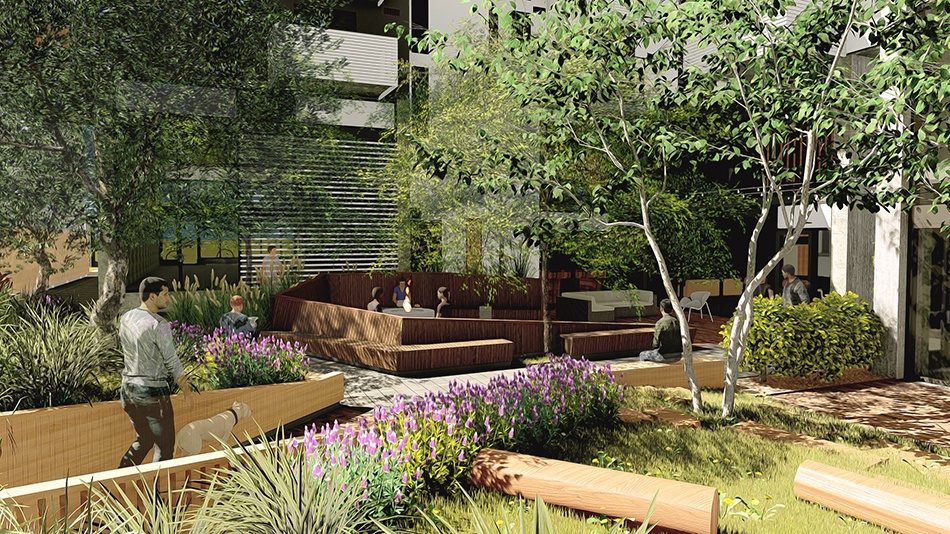
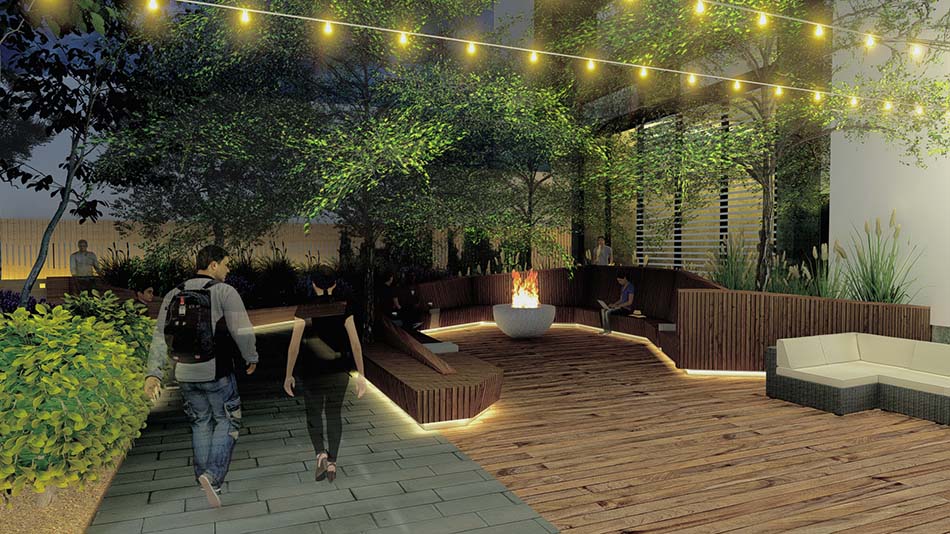
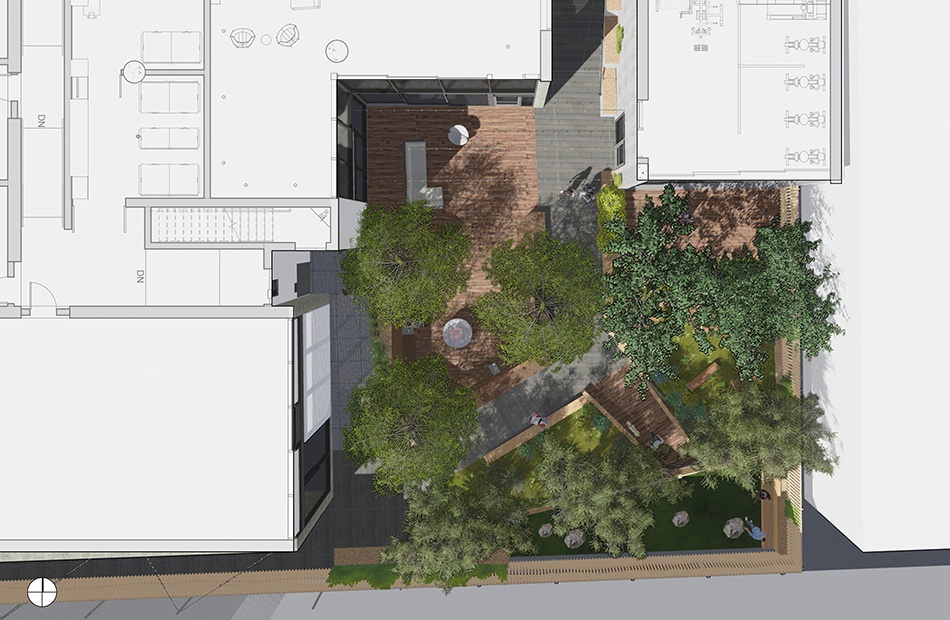
The busy intersection of California and Polk Streets is the north gate of the Polk Alleyways District, which punctuates the westernmost cable car stop in San Francisco. The landscape designed by INTERSTICE Architects complements this new, thoughtfully conceived building by David Baker. A multifamily unit residence creates our neighborhood canvas for a spacious new corner streetscape, while providing a new festoon lit alleyway access off of Polk Street that leads into a semi-private courtyard: an oasis at the center of the project.
Unfolding Organization
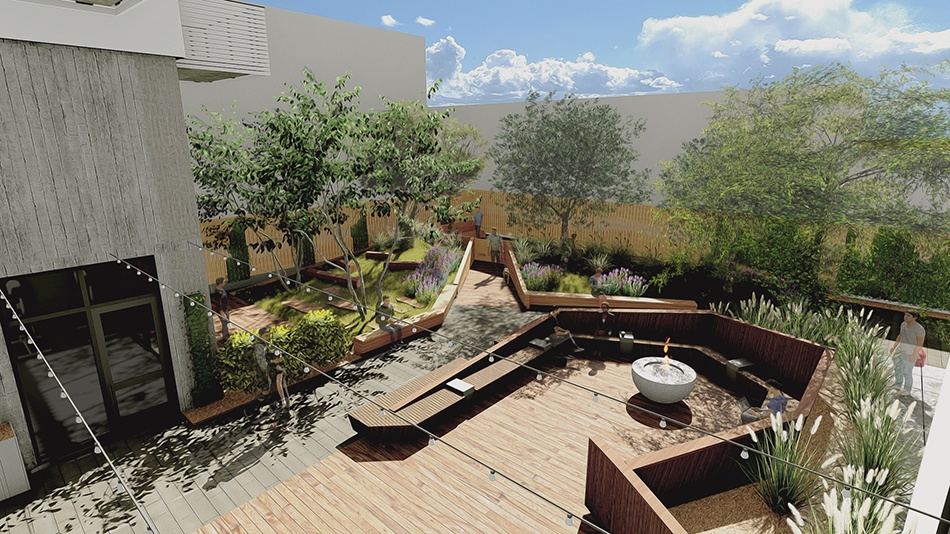
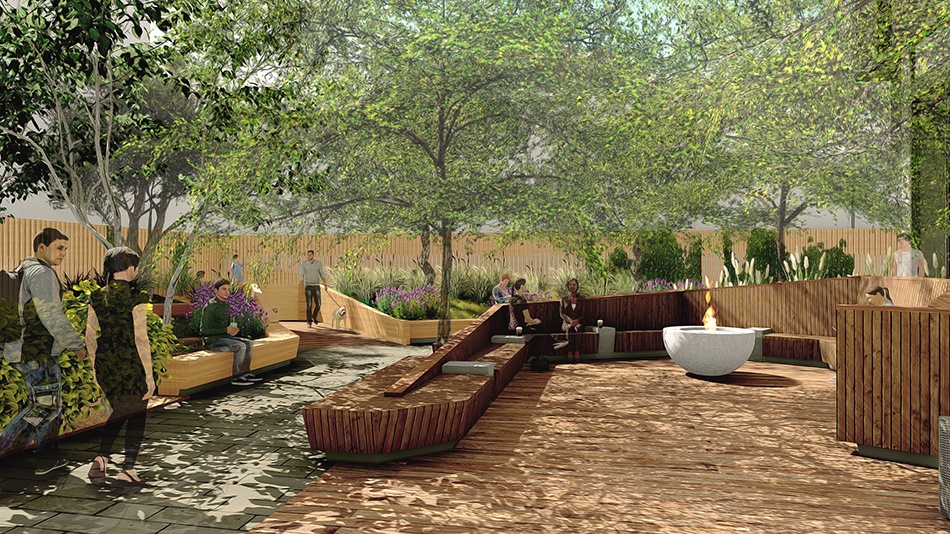
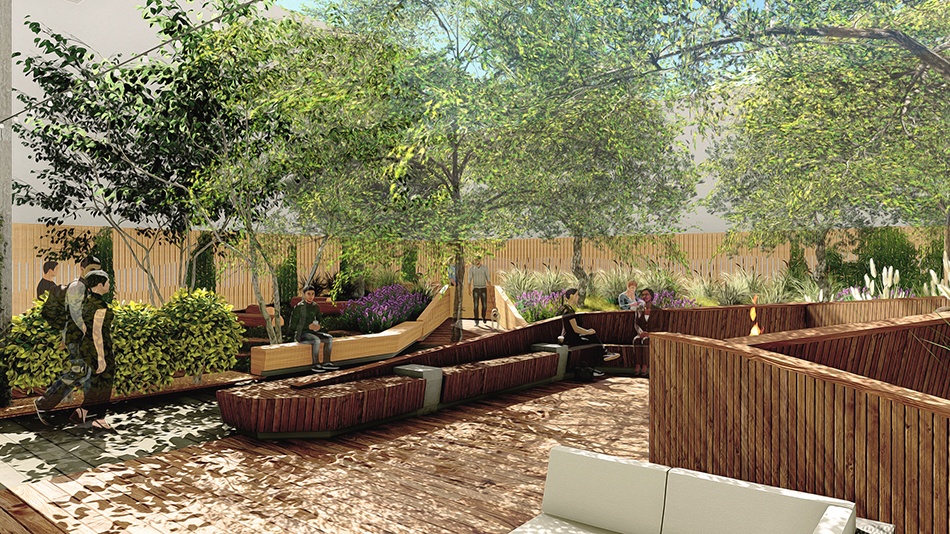
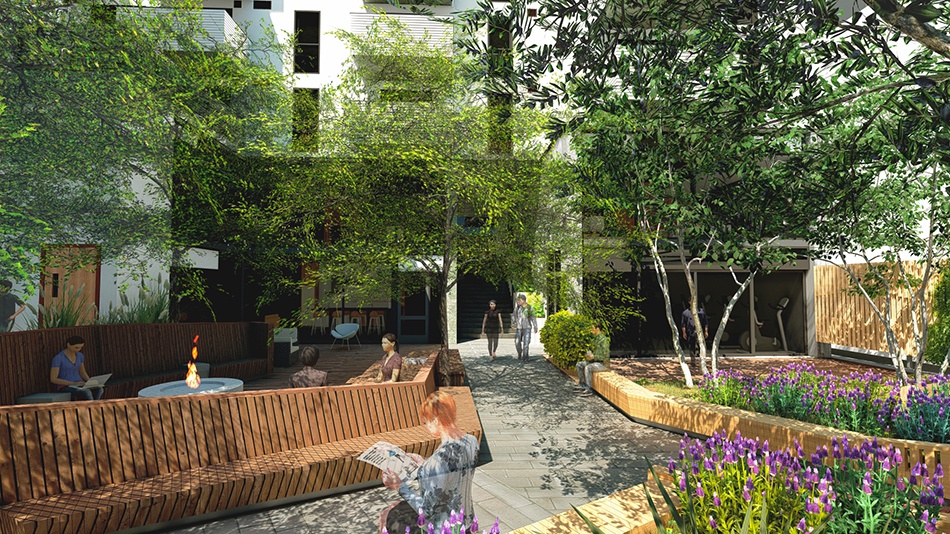
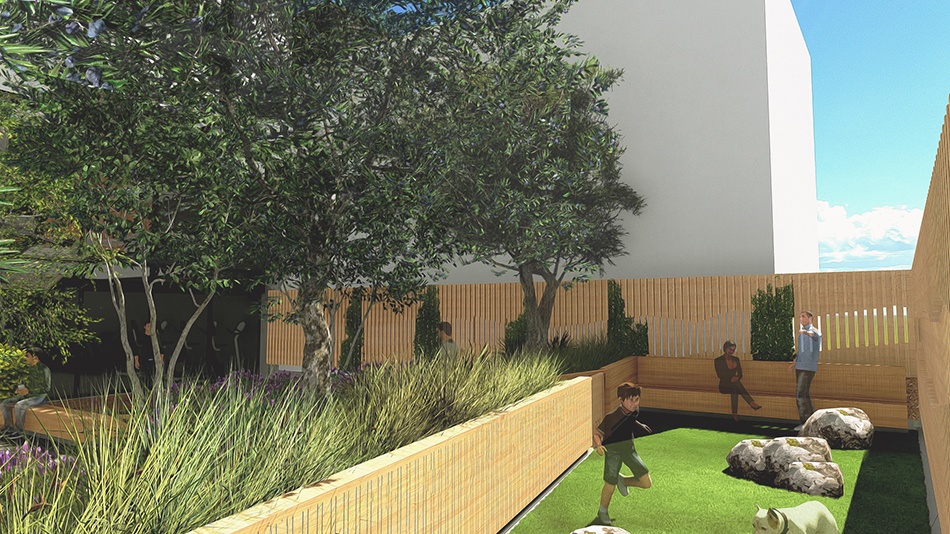
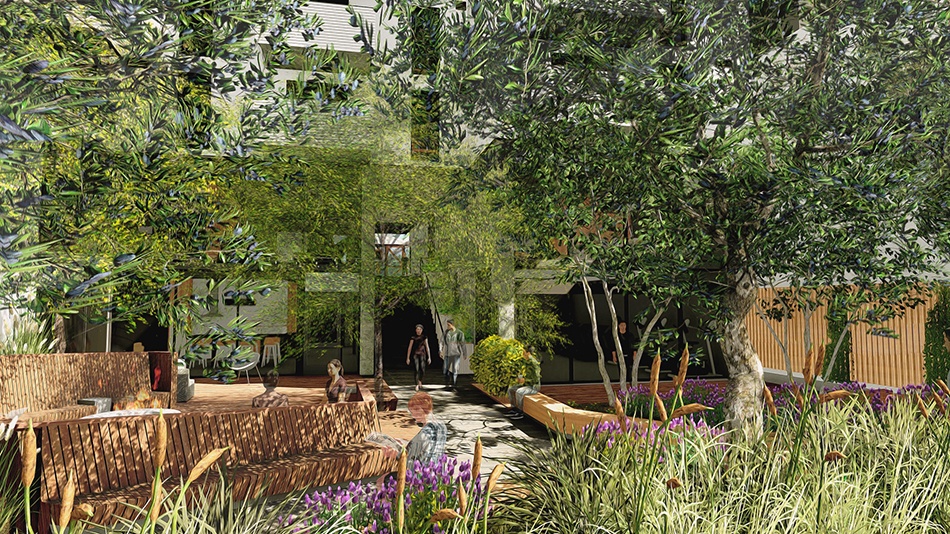
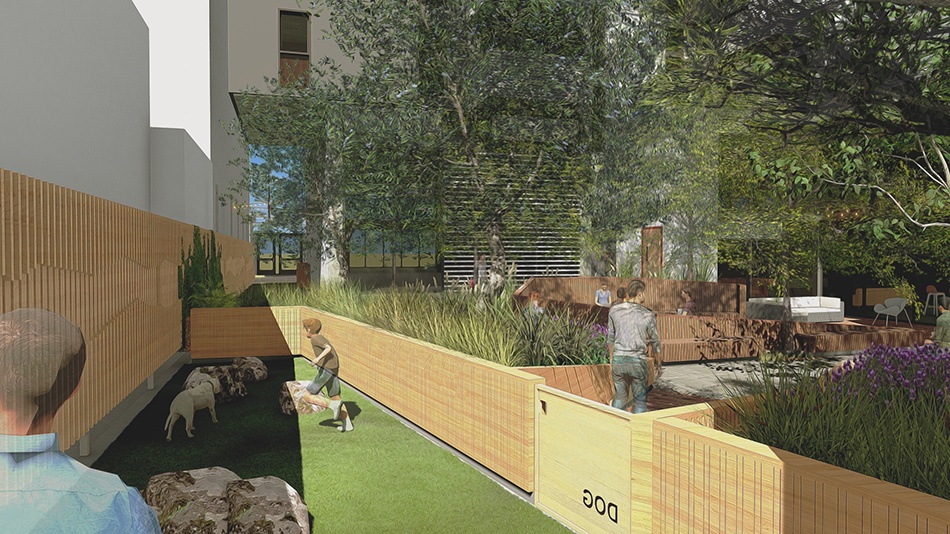
The courtyard is a pinwheel of programs designed around a central, nest-like intimate seating element. Around this custom wood enclosure, which undulates and unfolds under a grove of deciduous trees, are organized an exterior living room space, a restaurant view-scape, a yoga studio deck, and a mini dog-run for the building’s pets. The court connects the two entry levels on this sloped site from California and Polk Streets along a second planted exterior pathway. This path ascends from the inner court though an open air atrium up a planted stairwell to reach the California Street lobby paseo.
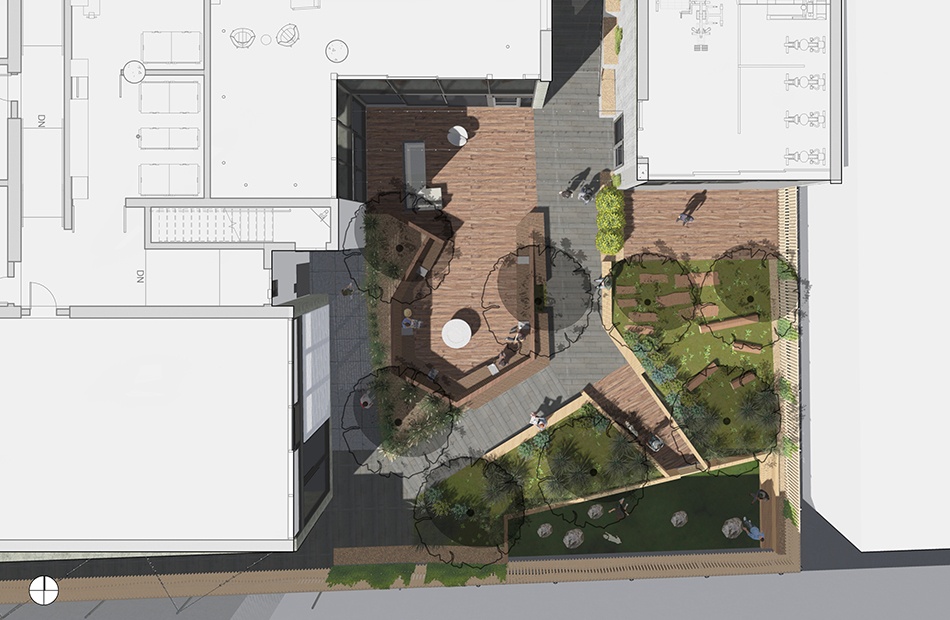
Green Meanders
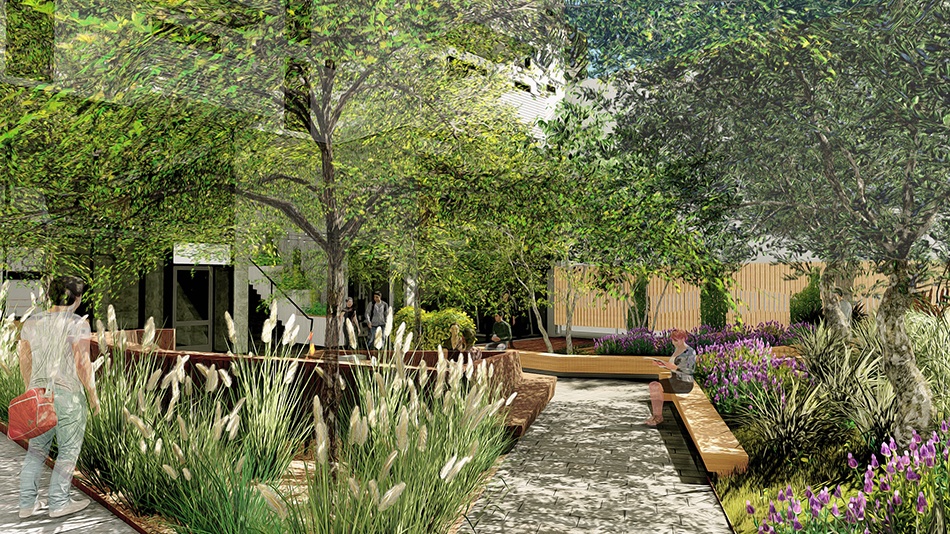
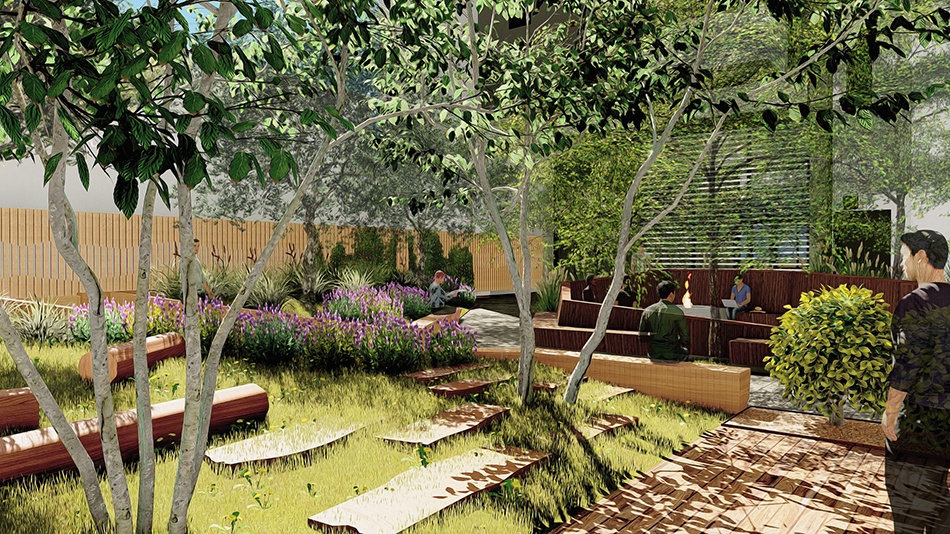
Along the wire structures, vines climb to provide privacy and vertical green walls throughout the enfilade spaces. Alongside this green space, cut logs become pavers that lead the eye into the lushly planted areas meant to allow a more intimate, slow access to the courtyard complex, whether enjoying a brief pause in the space or meandering along the pathways. The grove’s shaded nest is both a furnishing and social concentrator: residents can choose to perch solitarily, or join in small groups. This quiet open space is perfect for imaginative play by the younger members of the extended housing community.
Garden Respite
This densely populated area of San Francisco is in desperate need of more green spaces. The 1567 California Street project offers a lushly intimate, park-like court that is a welcome respite from the bustling mercantile corridor just beyond the new housing project. Like a miniature Tivoli Gardens, it provides material richness and after-hours lighting to allow for an extended use into even the darkest seasons for its diverse community to enjoy throughout the year.

Location: California Street, San Francisco
Owner/Client: Michael Lee
Scope: Courtyard Space
Status: In Progress
Photography:
Berkeley House
 Cesar Rubio
  Cesar Rubio
  Cesar Rubio
  Cesar Rubio
  Cesar Rubio
  Cesar Rubio
  Cesar Rubio
  Cesar Rubio
  Cesar Rubio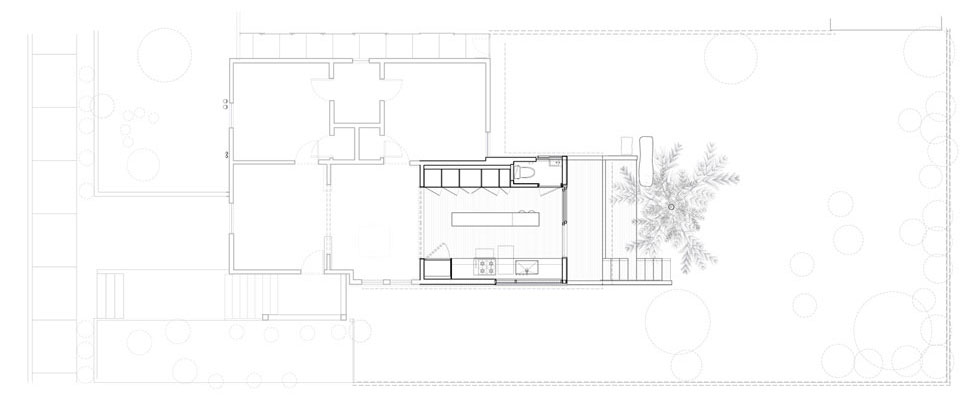
SITE: Berkeley, California / SIZE: 360 sq. ft.
SCOPE: Kitchen and Deck Addition
DATE: Completed 2008 / CLIENT: Nola Burger
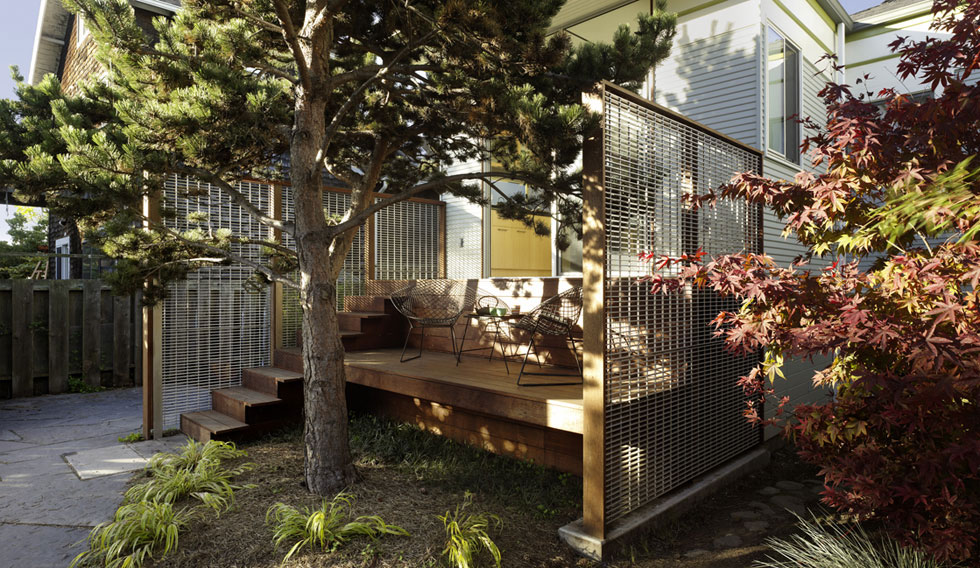
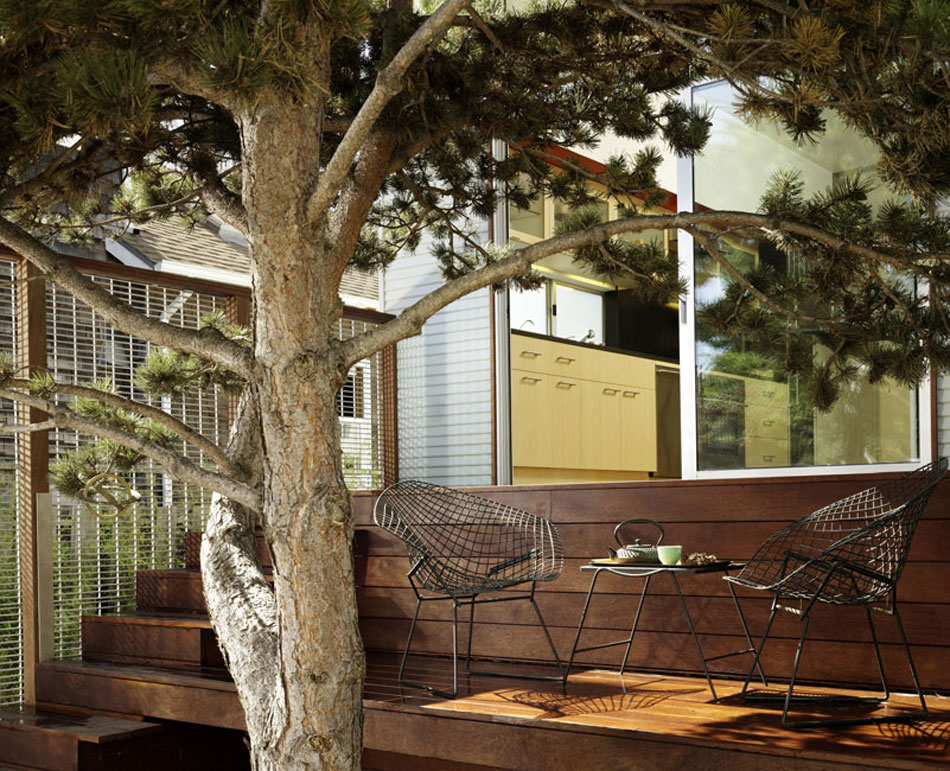
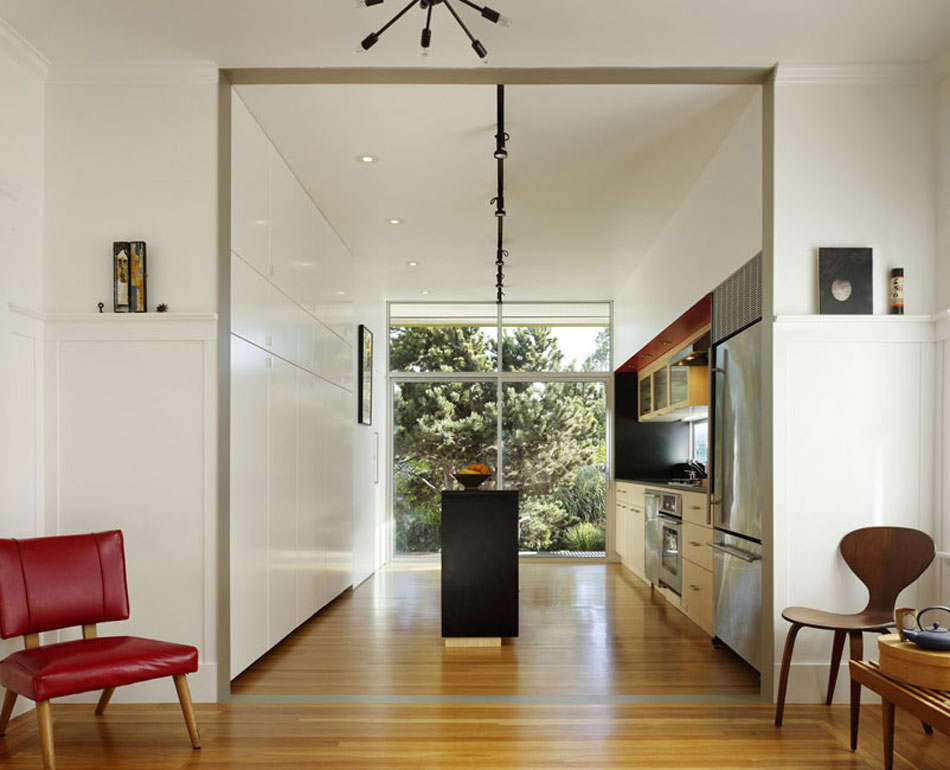
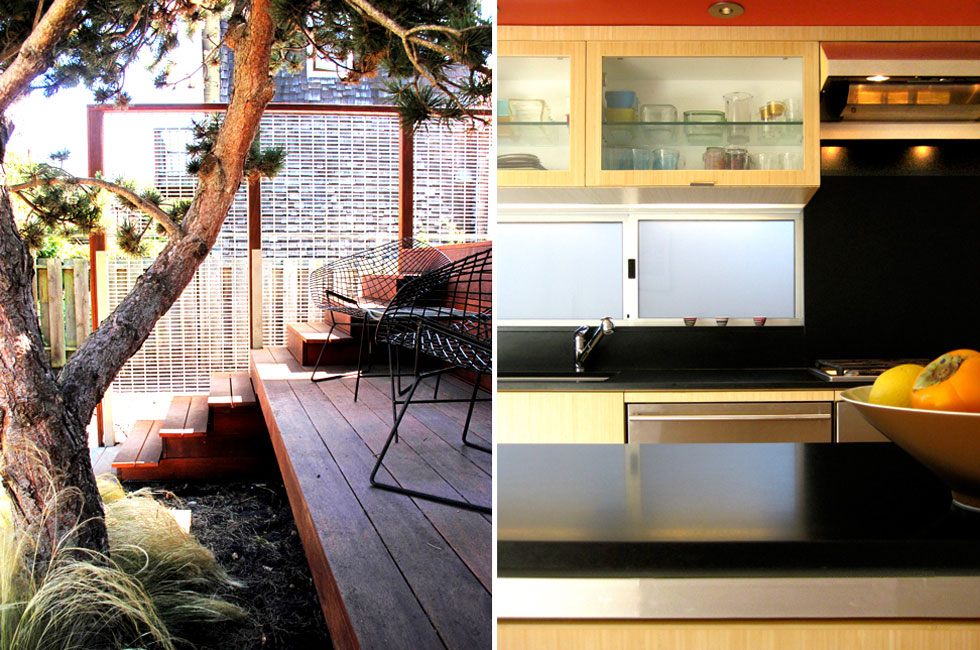
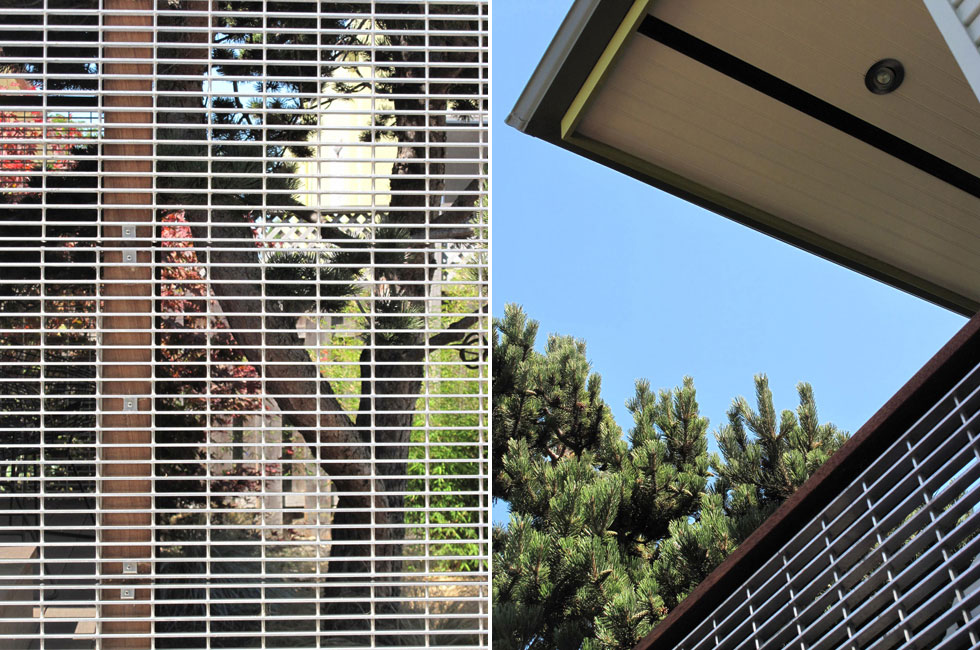
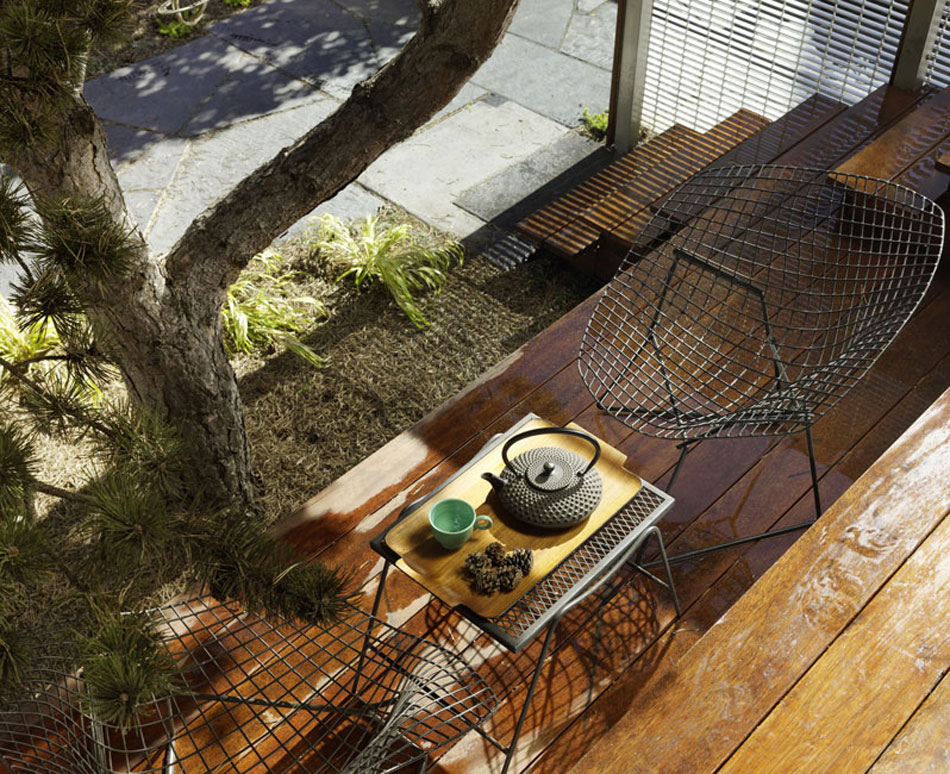
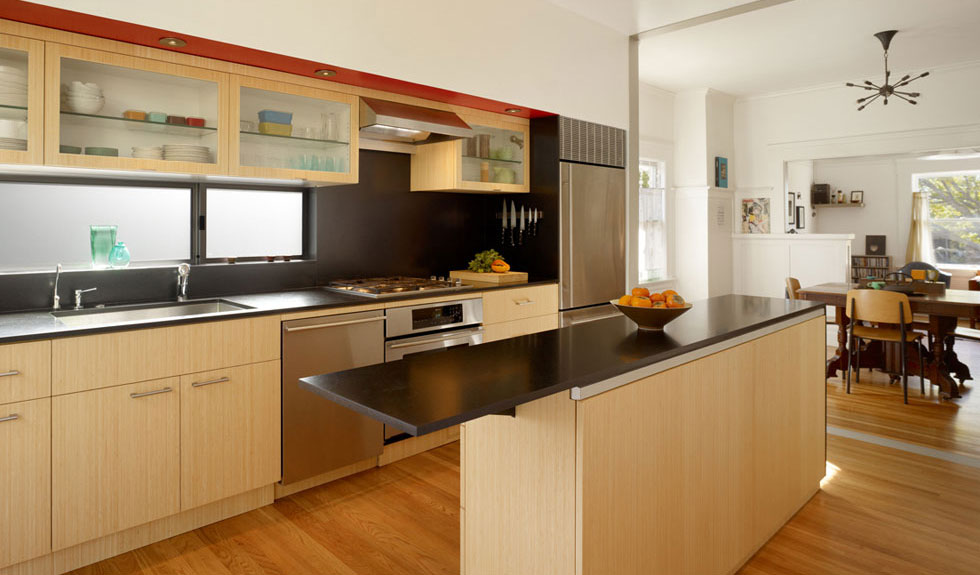
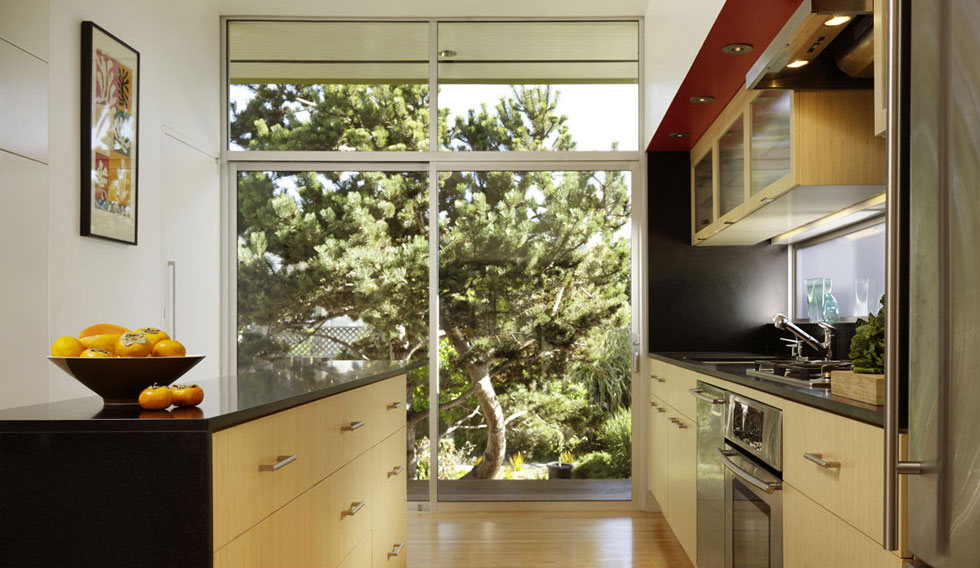
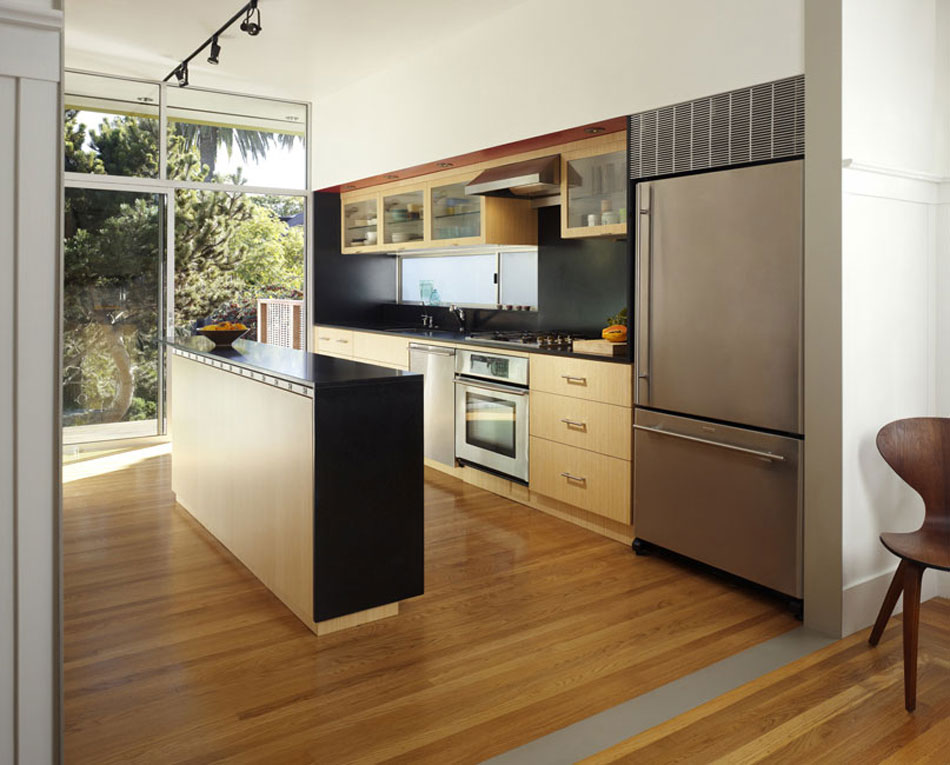
The kitchen in NANO:House frames a view of the garden and opens to the rear deck that steps down into the lush planted landscape. The kitchen space is split into two spaces: one, featuring a white wall of storage and a concealed water closet, and the other with all the needs of a kitchen. Bamboo and black granite form the cabinetry and counters. The Merbau wood deck steps down, offers a place to sit beside a tree, and provides access to the garden beyond. Guardrails of aluminum grating form privacy screens, and provide an intimate space for the lower levels of the deck.
Eichler Remodel
The Eichler Opportunity
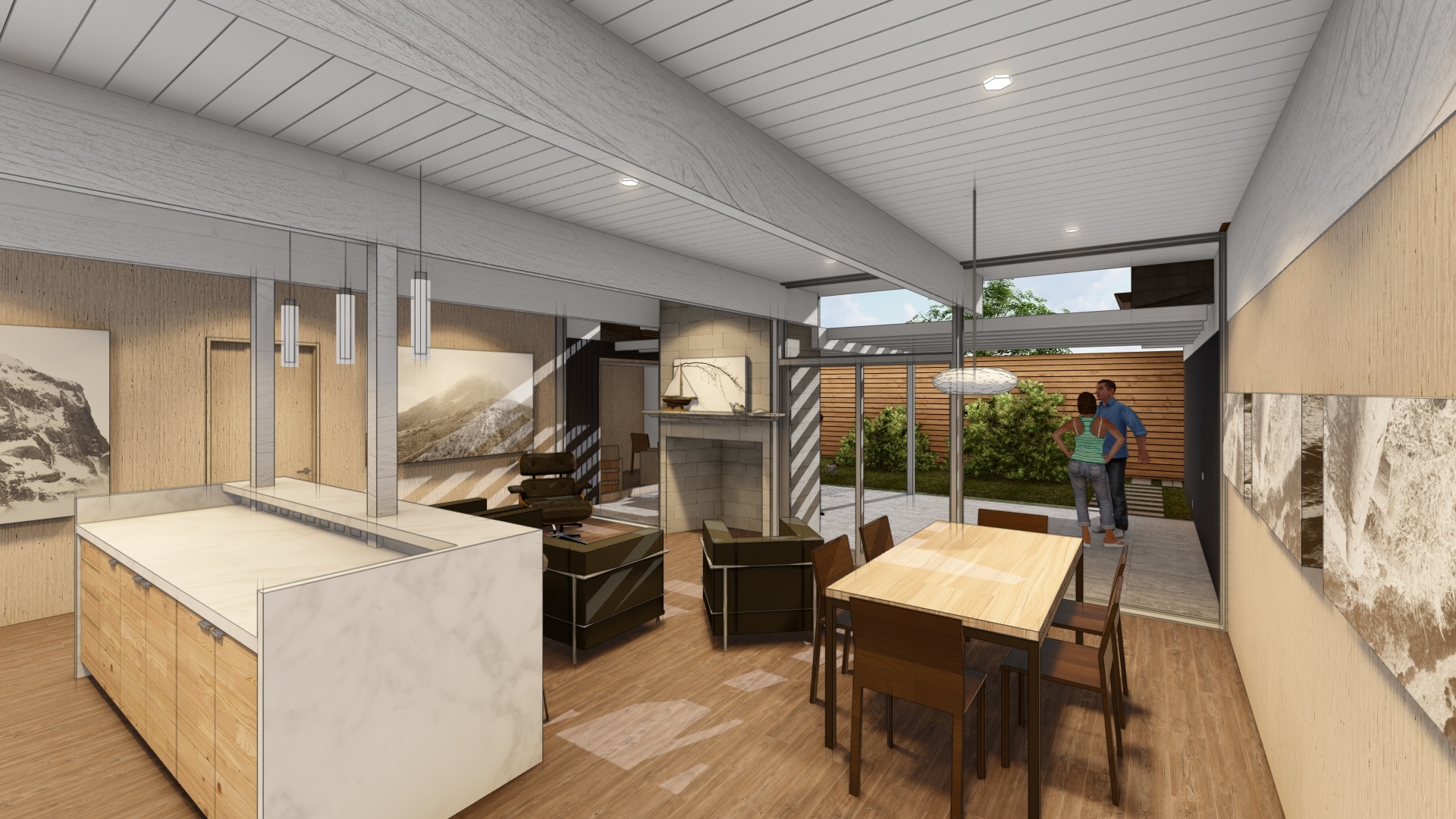
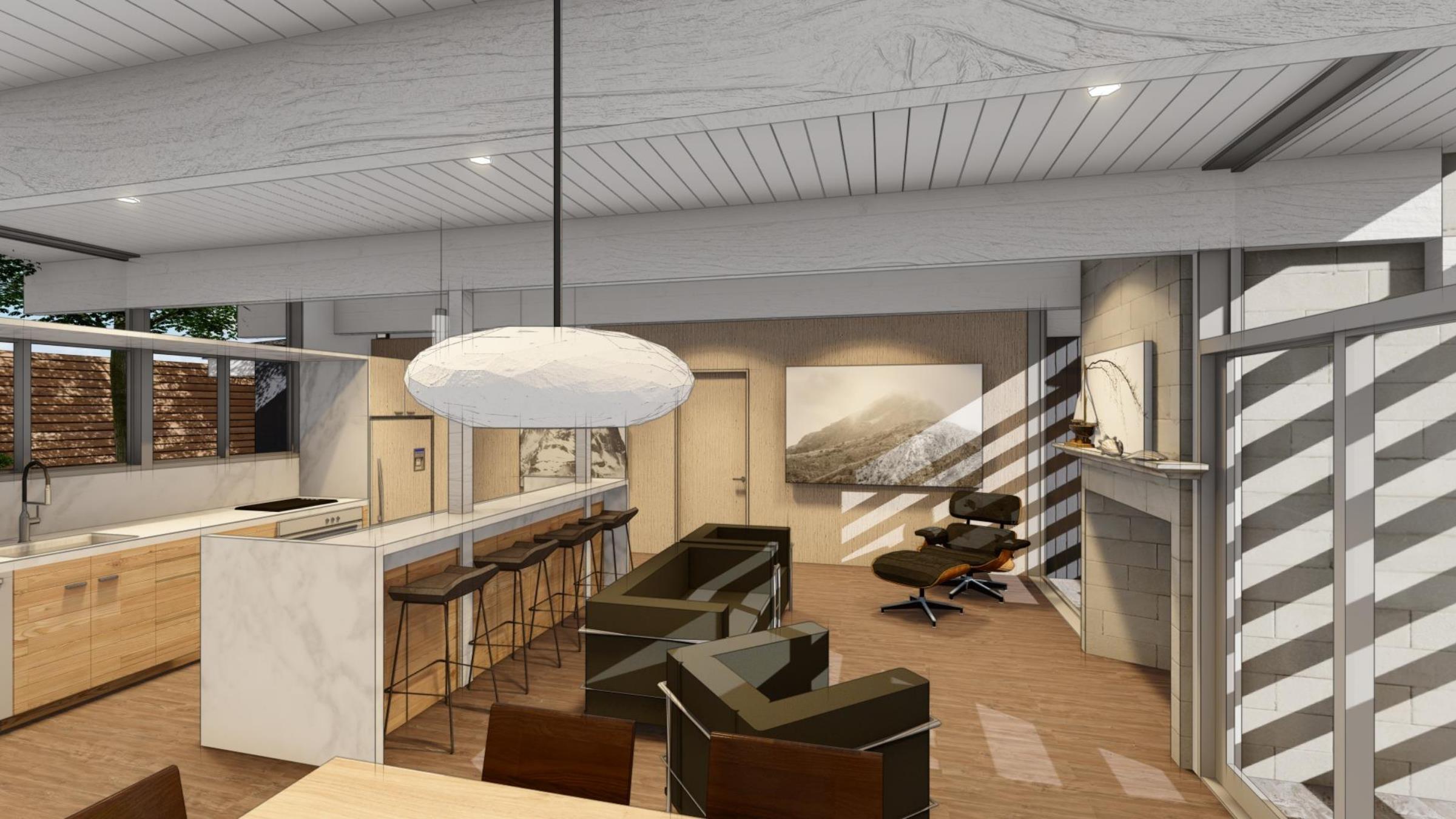
At INTERSTICE we love California Modern’s deep tradition of open simplicity, fluidity of space, and clear elegant structure, that is perhaps best characterized by the design boom of post-war housing across the entire mid-century period during its expansionist development. Joseph Eichler, a prolific 20th century California developer inspired by modernist architects such as Richard Neutra and Frank Lloyd Wright, was able to bring quality affordable architecture to millions of Californian families. These ubiquitous single-family dwellings were more than just homes, they were a way of living; iconic designs that merged interiors with exteriors. They have become synonymous with the California lifestyle
Reversing the Sprawl
The suburban legacy these homes created was unfortunately a low-density “sprawl”, outwards from the metropolitan areas, and with them came extended infrastructure and new roadways in an outward dispersal of resources and energy, but that may not be the end of the story. … Due to their simple open and elegant structure, clear core to peripheral planning, and expansive open-glazed spans – they are also easily converted and expanded. INTERSTICE was asked to tackle the Eichler in the Marin County suburbs and found an opportunity to leverage new ADU legislation and state tax incentives to help turn around the negative legacy of sprawl and densify the suburbs one Eichler at a time.
Case Study E-1
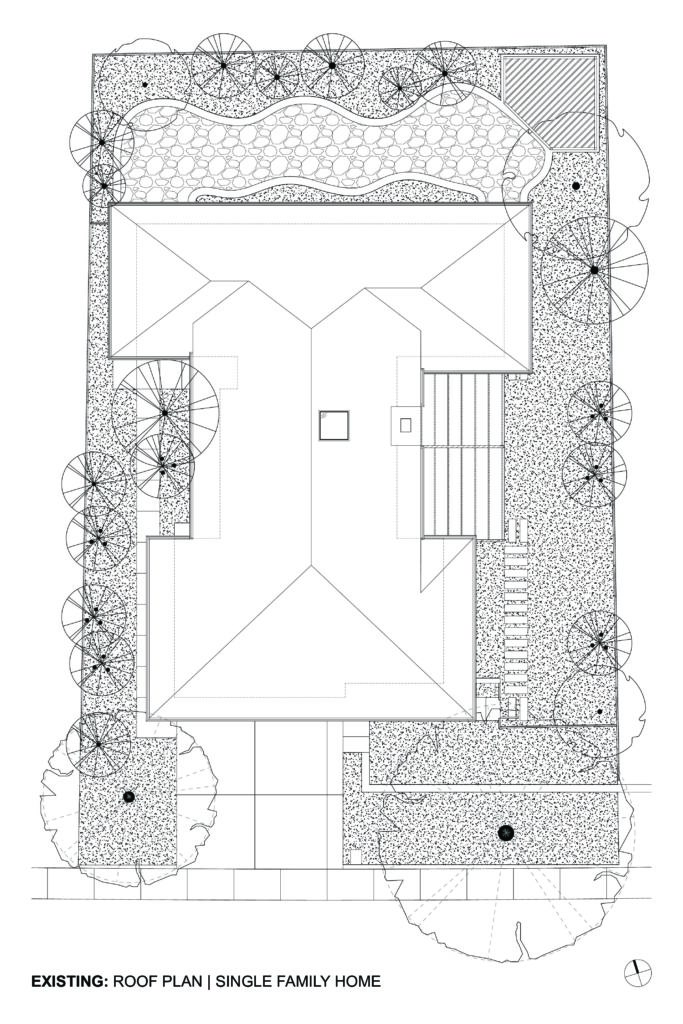
Our first Eichler became a Case Study for our team (“Eichler#1”), for us to see what opportunities there were for this classic California building typology. The owner’s young family was evolving. They hoped to modernize and renovate over the next ten years, as children grew and matured, aging parents needed support, and extra room and revenue became paramount. We realized this larger home could serve more than just one purpose. Through good design it could be made better: more flexible, more functional, and intensified to serve these new 21st-century needs.
Fractal Living
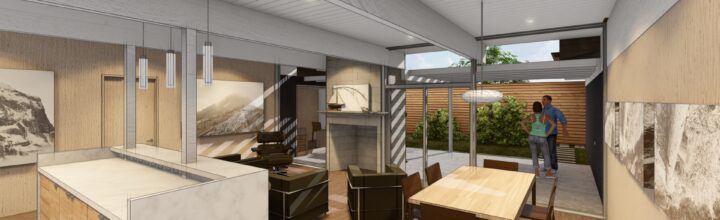
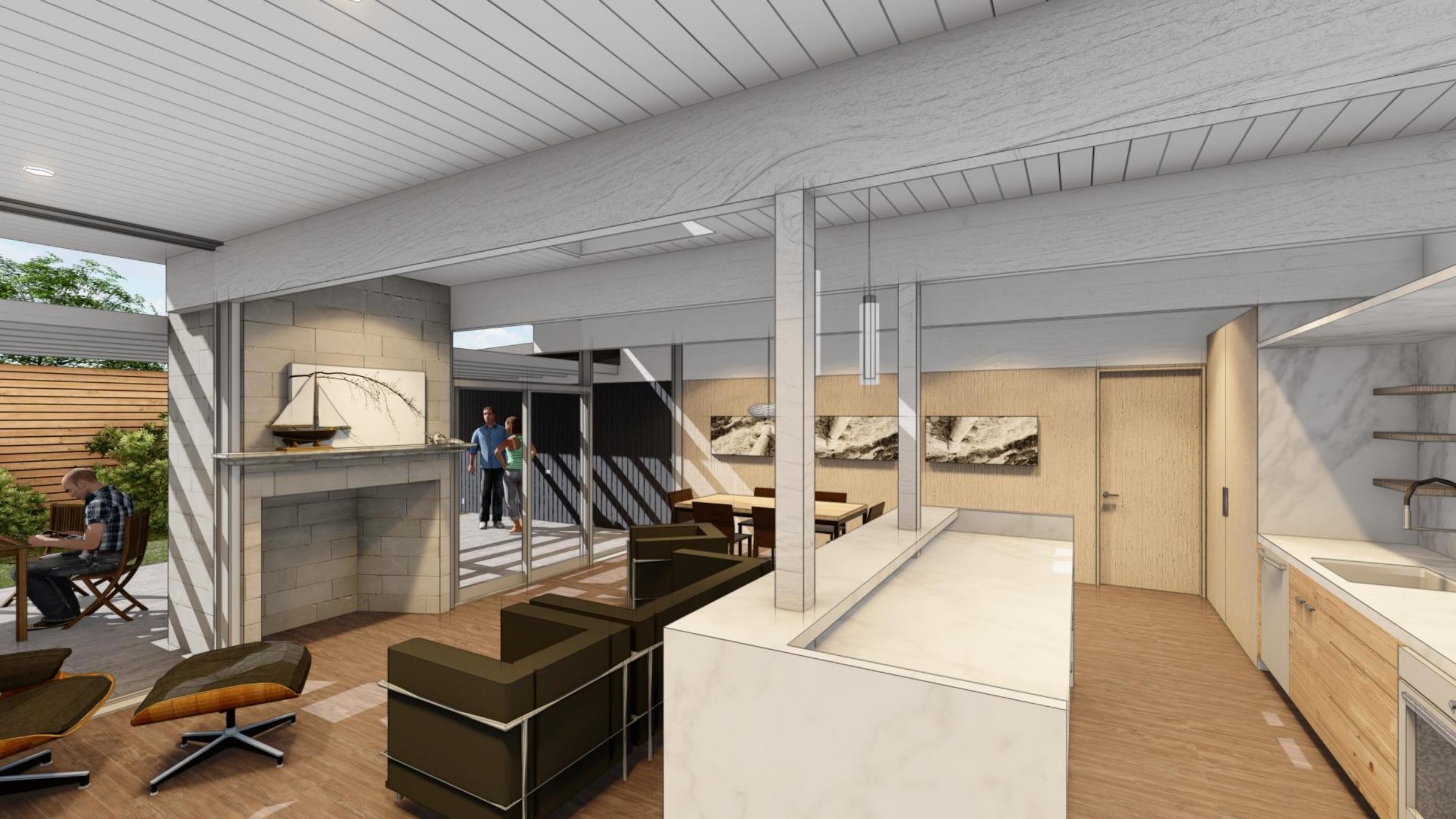
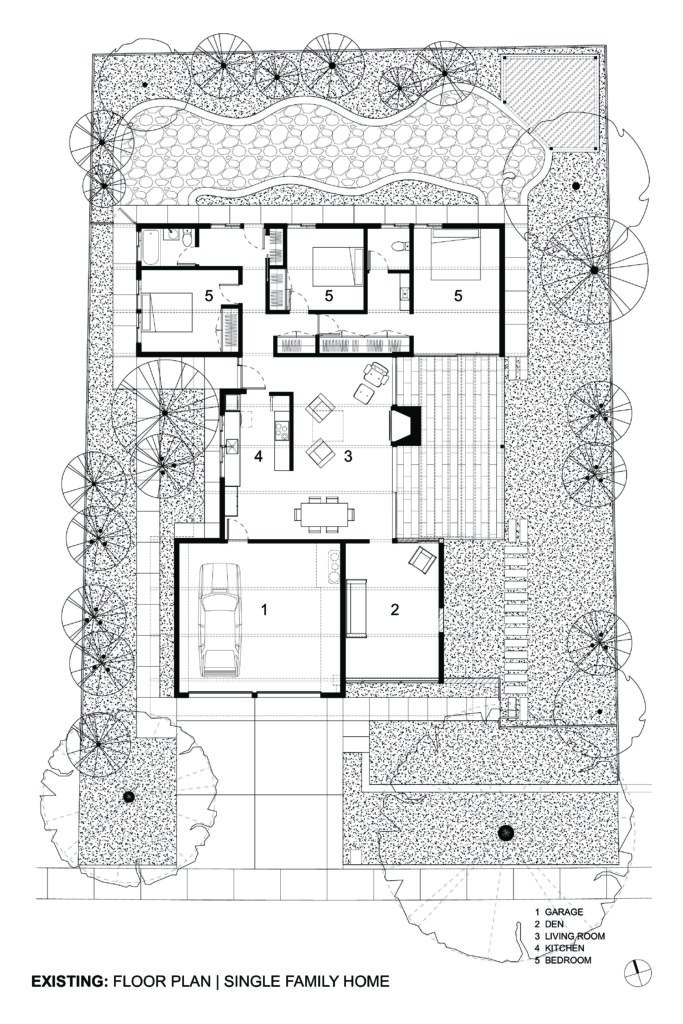
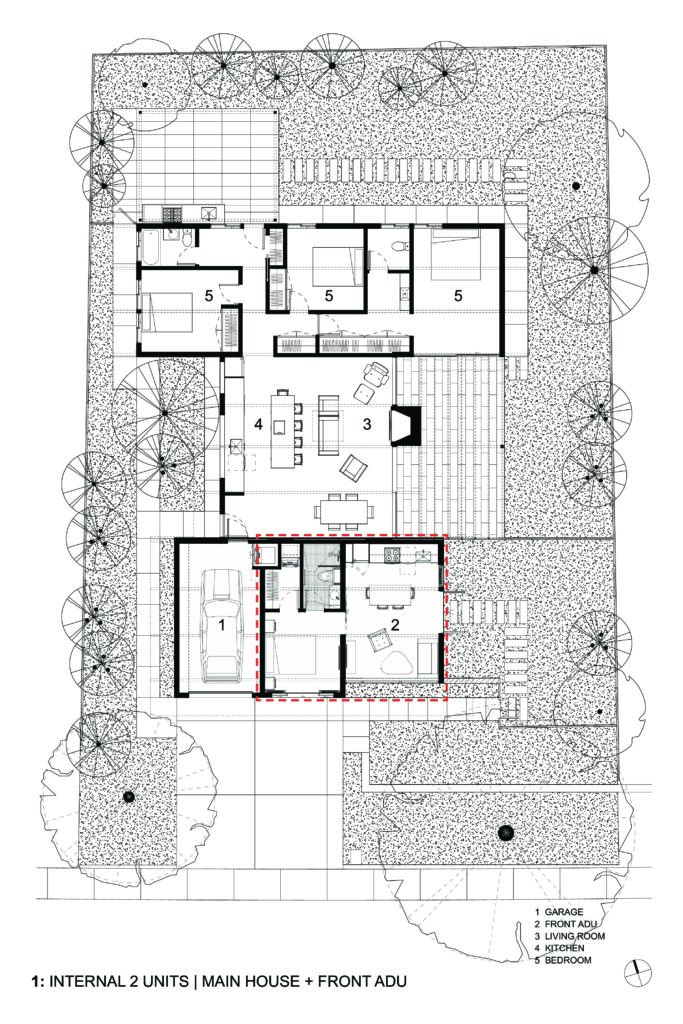
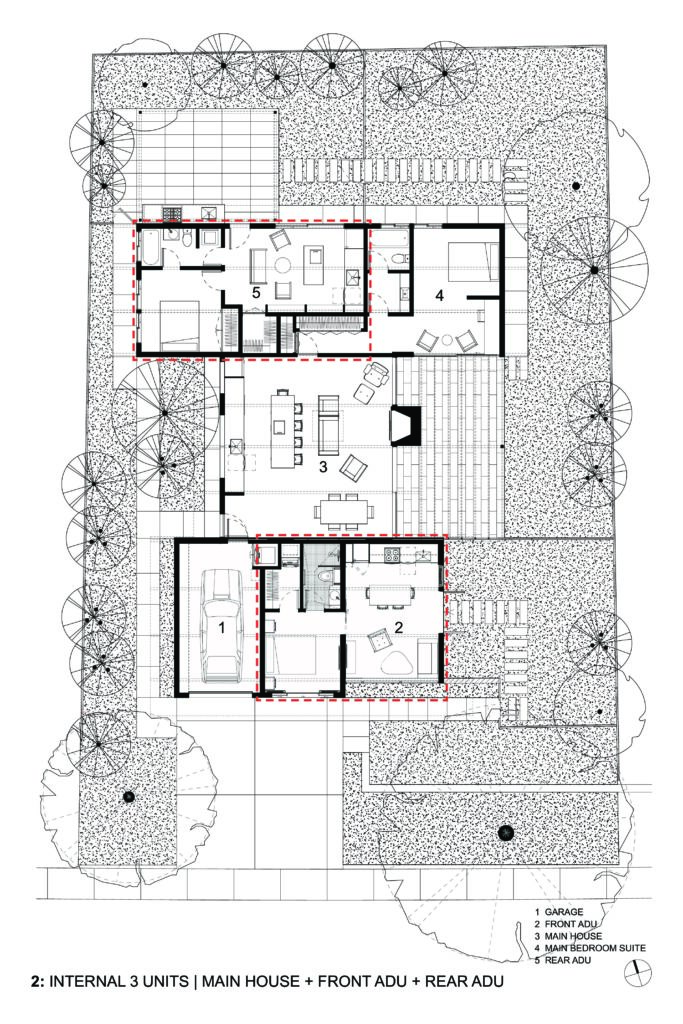
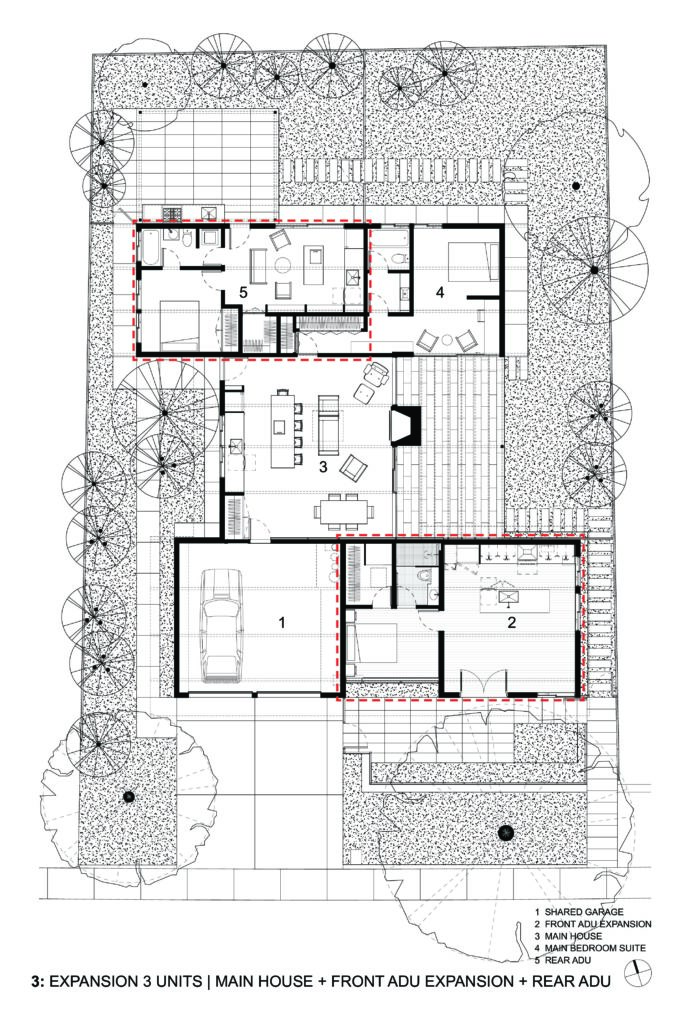
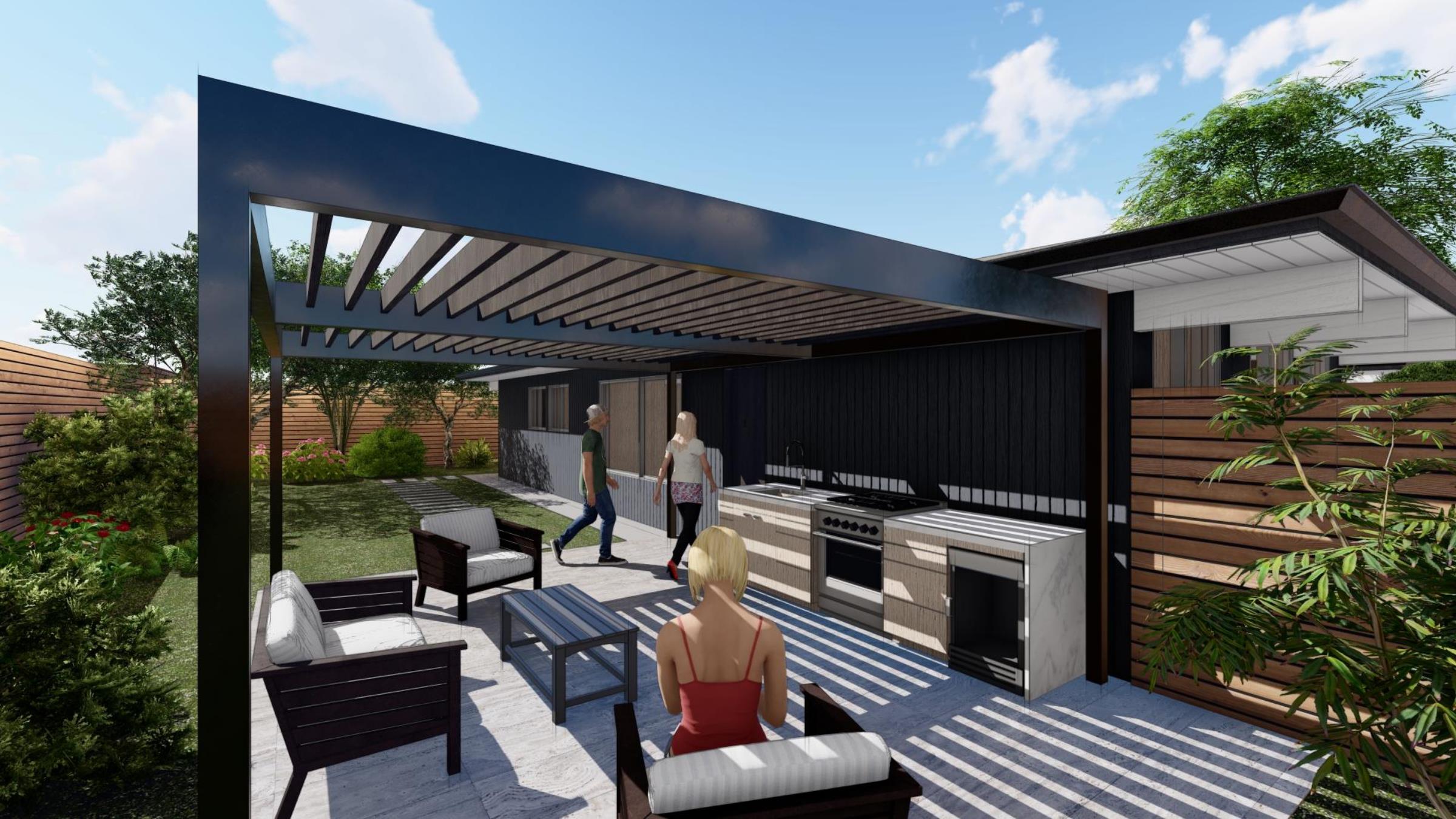
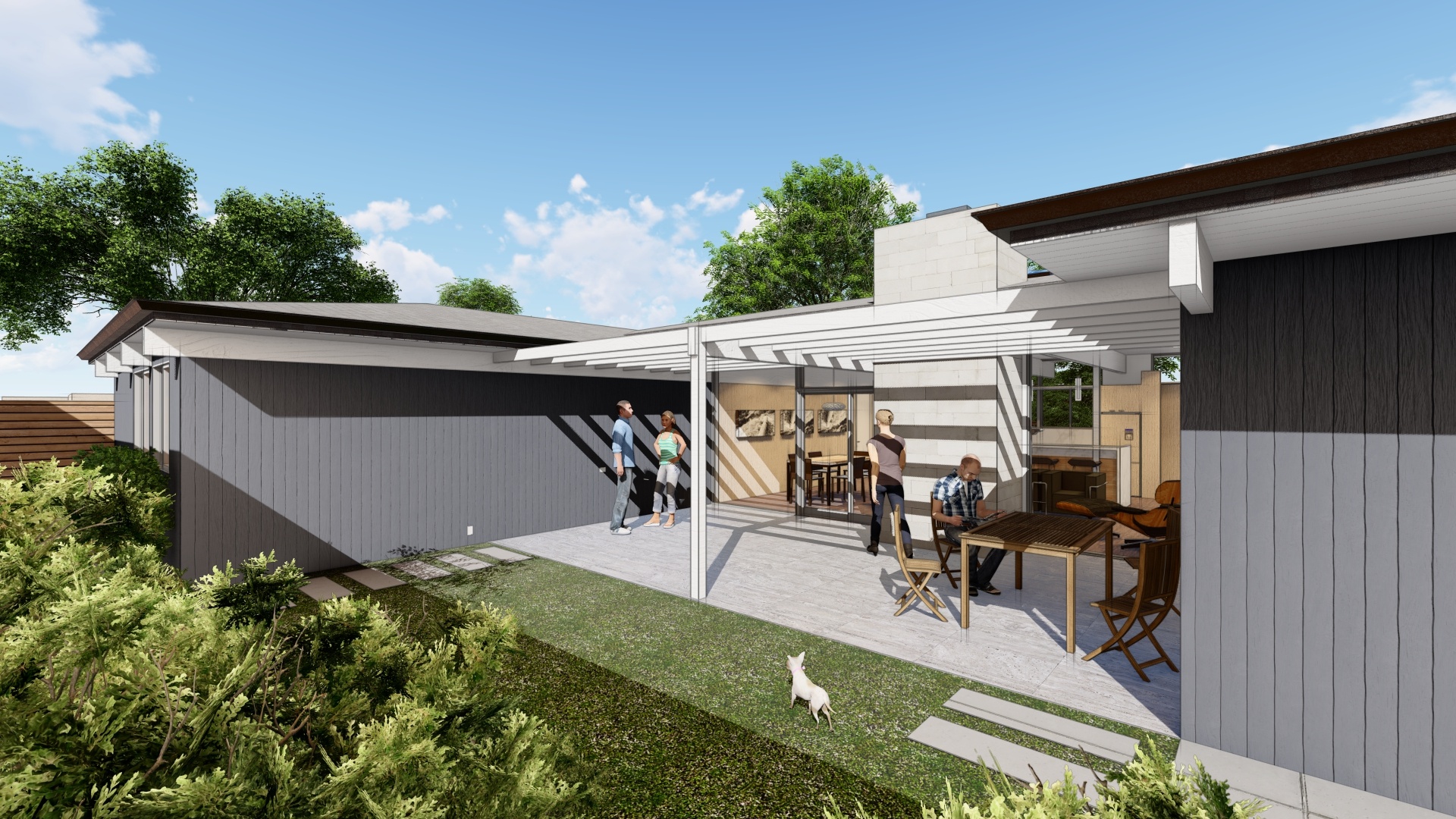
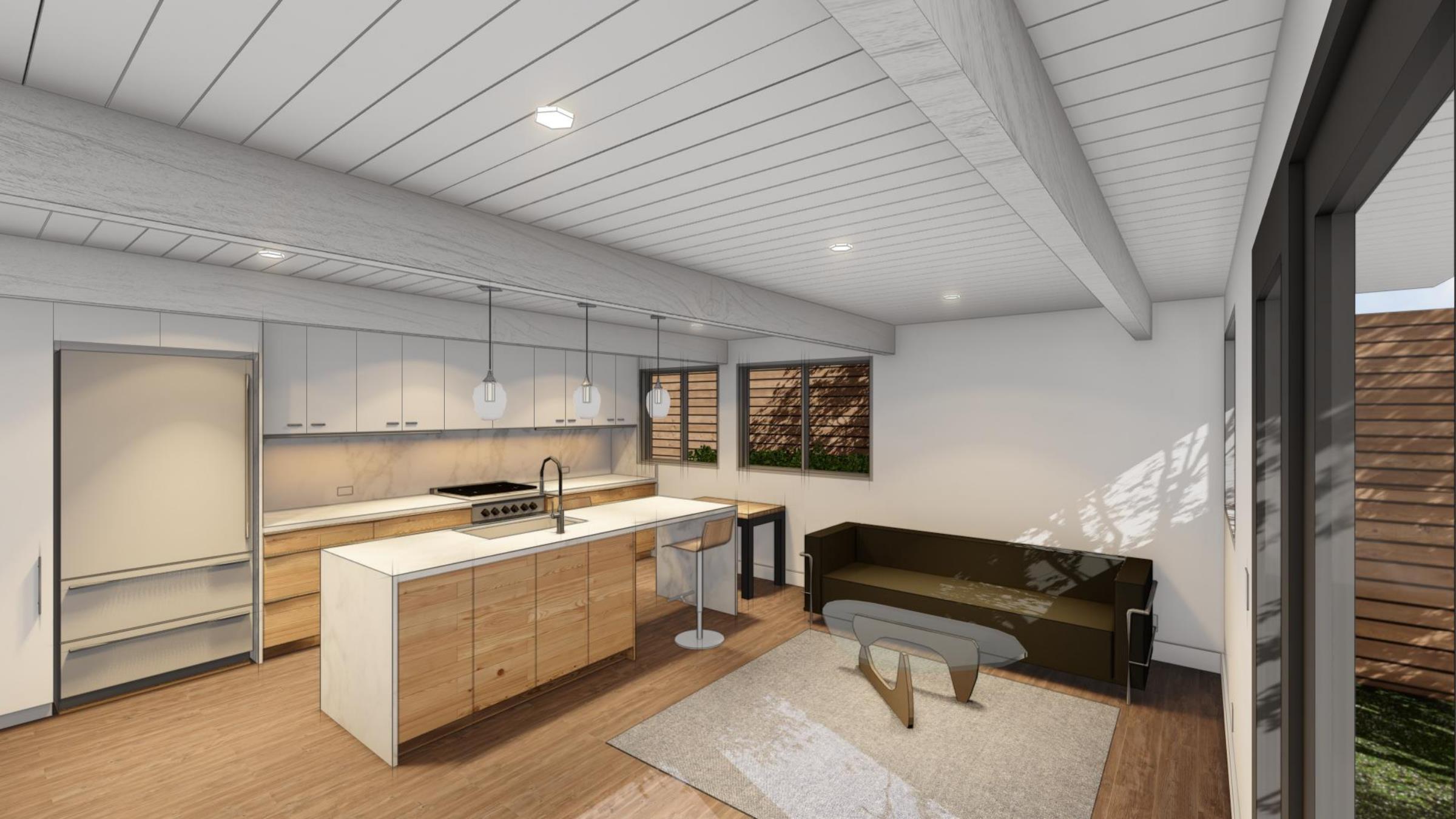
Looking at the spiral unfolding from public to private space typical of the Eichler plan disposition, from garage and entry, the home naturally moves from the most public of spaces at its core, towards more and more private spaces. We discovered these outer areas to be fractal-like in their ability to become new “accessory micro-dwelling units” in their own right. Keeping the material palette simple and circulation to a minimum, extra bedrooms and dens become new semi-detached homes, designed with direct access to private exterior space; now designed to be completely functionally independent from the original Core Main Home.
What Was One – Is Now Three
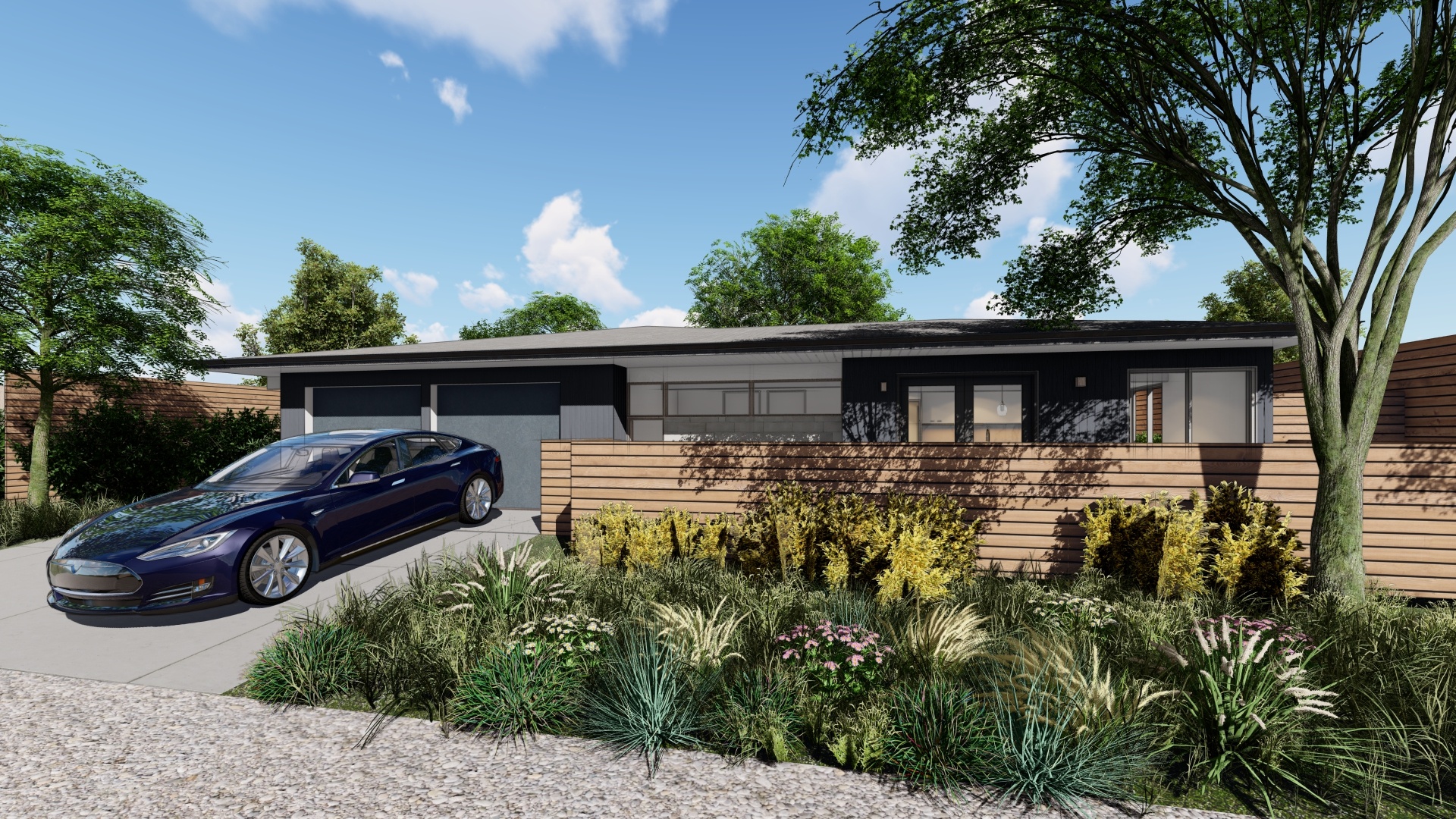
The three-bedroom home with den is Converted in Phase 1: To a 1-bedroom ADU + 3-bedroom main home. Phase 2: Creates a second 1-bedroom ADU bracketing the original now 1-bedroom main home. All 3 homes have their private entry, associated yards, and access to a shared garage with a central workshop and off-street storage. The once “Single-family Home” becomes a three, smaller home community, all on the same site, with minimum investment, and little to no expansion to the envelope. With the first phase complete, and the new exterior kitchen installed Phase 2 is that much closer to realization in the next five years. An affordable conversion that triples the density of each parcel without consuming more land or resources. We see it as an Eichler win-win.
Main House:
Exterior Views:
Accessory Dwelling Unit:
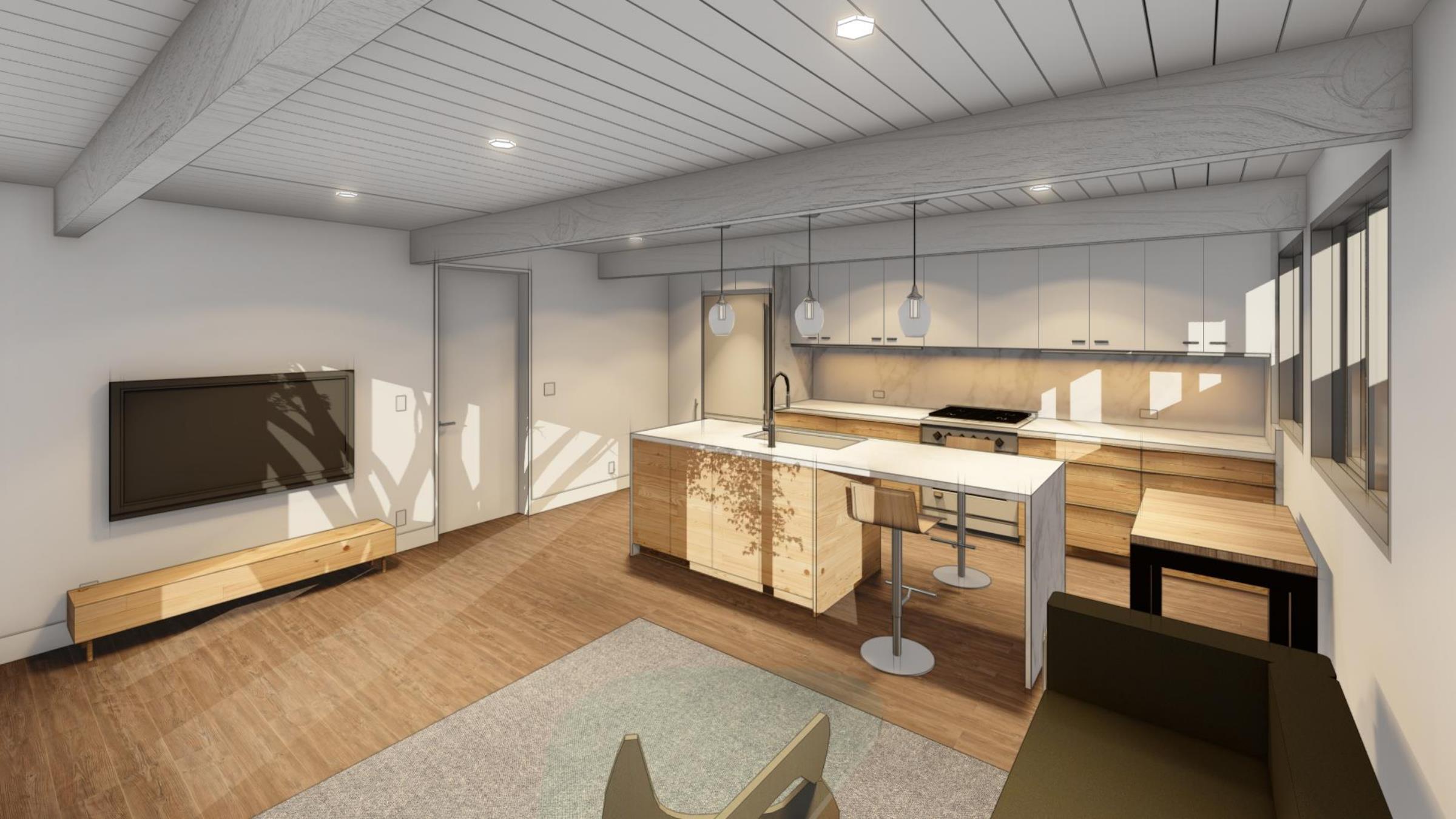
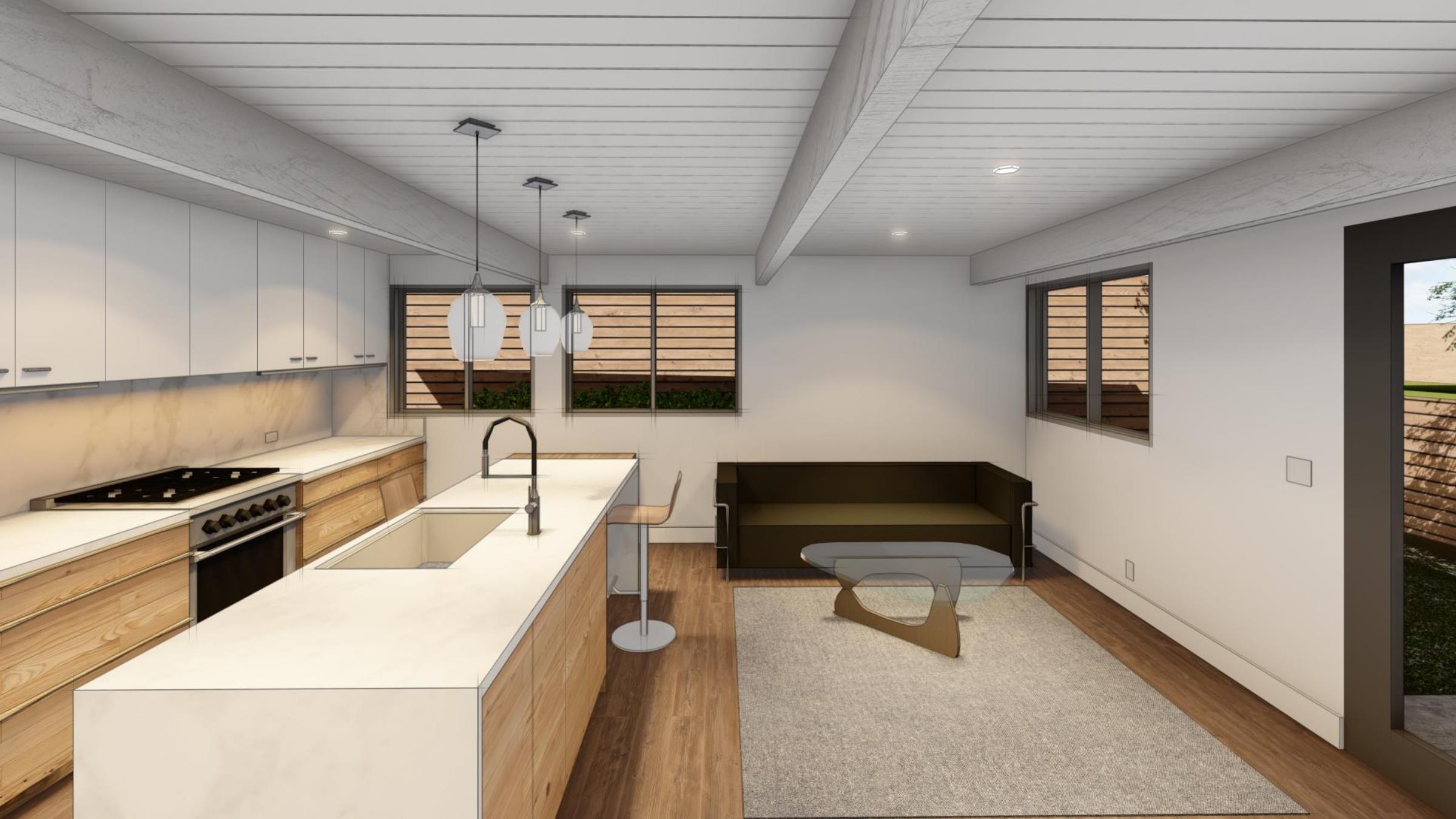
Forestville Family Retreat
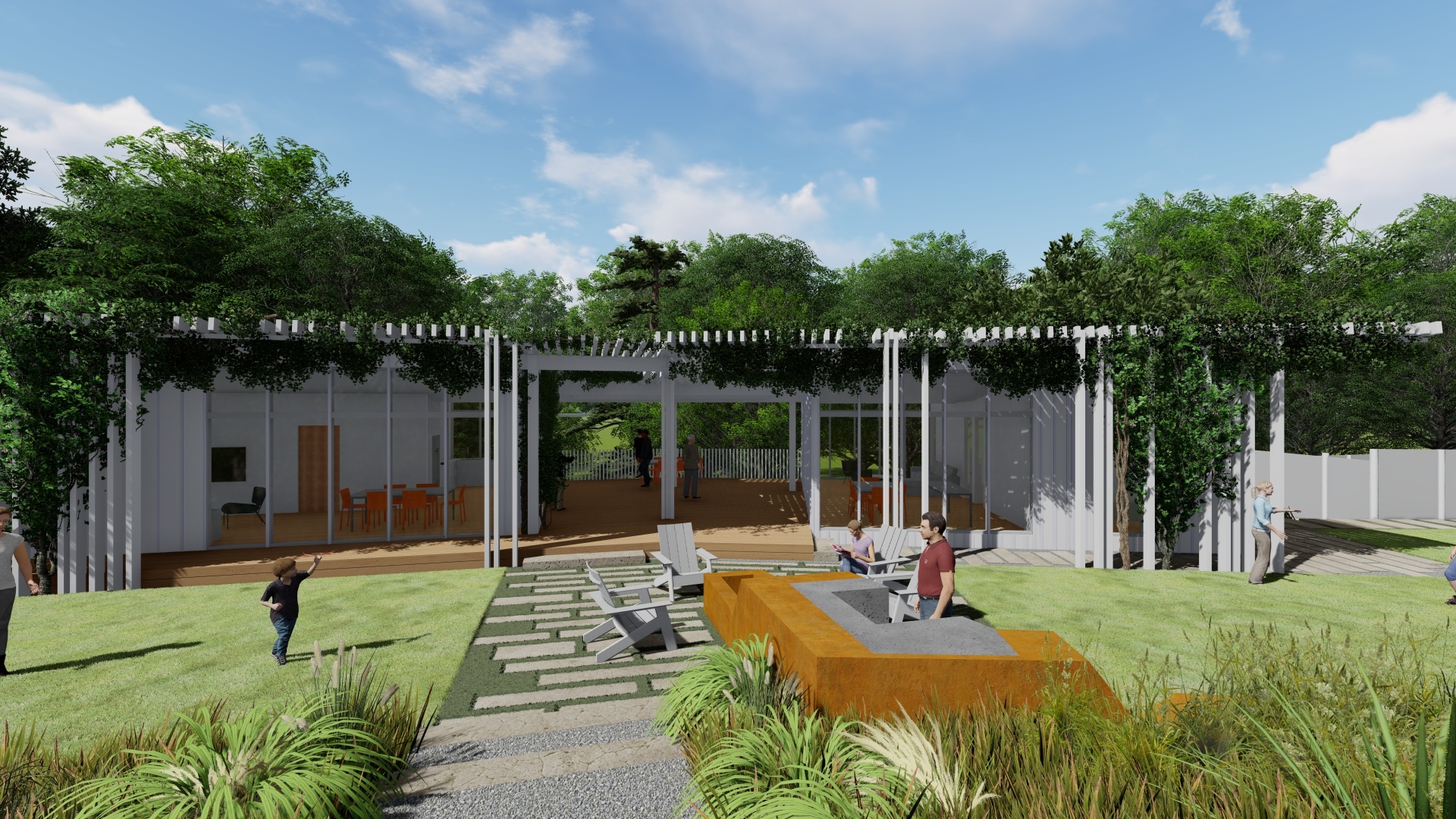
Shared Tiny Homes
The family wanted two “tiny” super-space efficient houses connected by a shared shade trellis roof that spans between the two structures. One structure would have the communal kitchen and interior dining while the other the shared living room – which both face inward toward the shaded vine-screened “Porch” allowing the interiors to expand between the units – to create a large exterior open program space.

A Grounded Perch
The guest house and primary dwelling are designed to be closely connected to the steeply sloping landscape with its north side porch at grade with the upslope patio; while its river-facing edge to the south looks into the riparian tree canopy. From this elevated cantilever, over the drive below, the west deck descends as a cascading porch; half sculpture half-giant furnishing it conceals the lower carport entry under the westernmost structure.

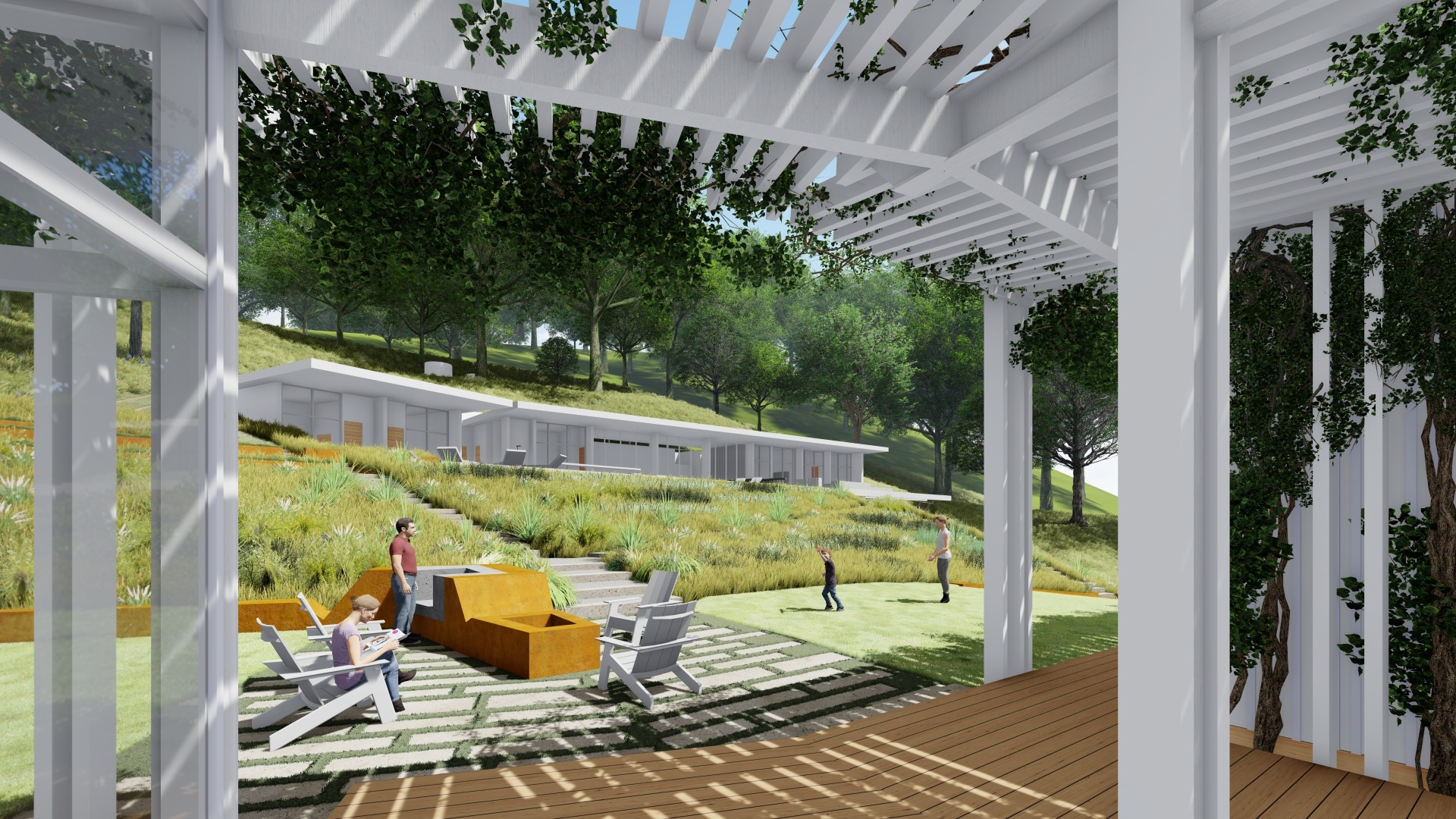
A Gathering Form
On the uphill side, the ground forms a naturally protected valley between the orchard slopes above, and the dwelling. Here the fire pit and outdoor cooking bench retain the hill edge and provide a social center for the home with room to play and gather – passing through the shady porch which looks out over the seasonally fluctuating riverway below.
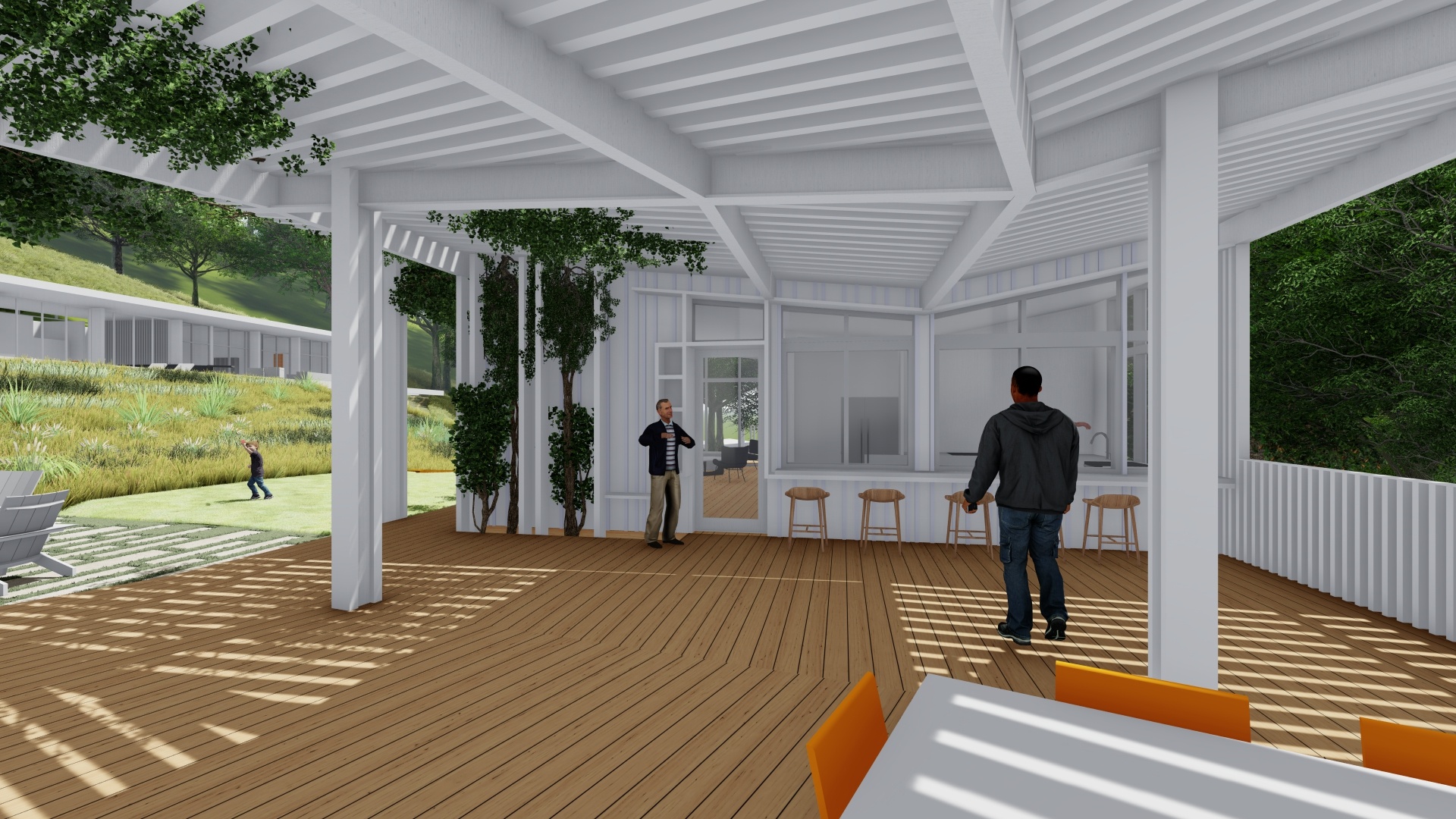
Folded Canopy
The roof is flexed and folded to look out upwards on both sides. Looking over the river’s southern high opposite ridge on one side and deflecting up toward the open hillside views to the east where hardwoods and meadows provide space for sunnier activities, like gardening, and games in the newly planted orchards and oak stands that will grow to meander up the southern facing slopes.
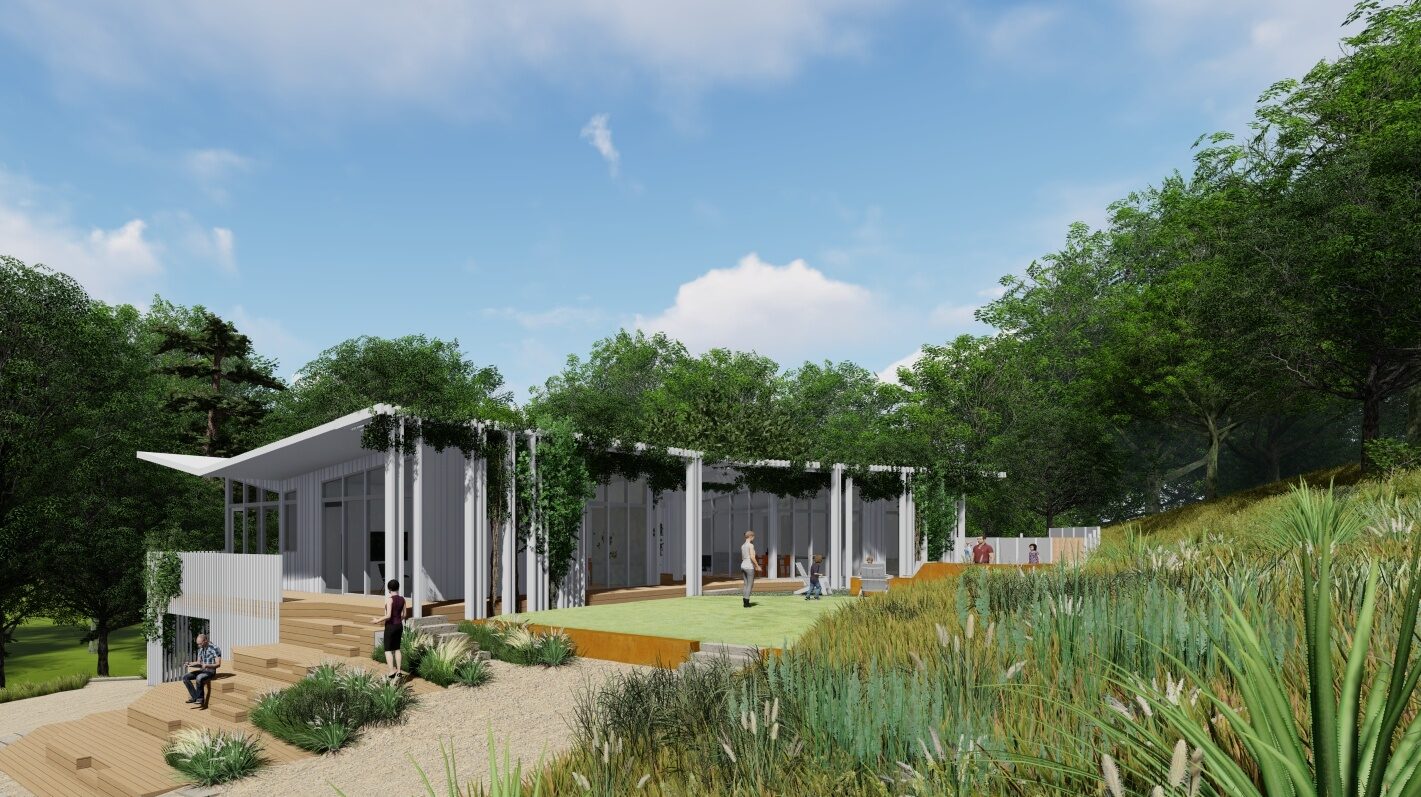
A Stone to Fire
The home is fireproof. With a Metal Roof and Clad in strips of fiber-cement board & bat that open and spread to become trellised vine supports for grape-vines the home is a perfect Sonoma Valley host for grapes to spread up and over between – like a filigree of stone this pale lacework of mineral screens glass from sun, forms guardrails, roof soffits and protects walls while integrating its permanent and maintenance-free fingers into the landscape to blend with the greenery that surrounds it.
Location:
Owner/Client:
Scope:
Status: